Osaka was built on water. In the Edo period it ran on canals the way a modern city runs on roads, which earned it the old nickname “the Venice of the East.” Most of those waterways have been paved over, but four big ones still cut through the centre, and an Osaka river cruise remains one of the most underrated ways to read the place. The catch is that there are at least six different boats, they cost different amounts, and they show you completely different cities. Pick wrong and you’ve spent ¥1,800 on the version you didn’t want.
So this is a decision guide first and a list second. Below I break down every major Osaka boat tour, the 20-minute neon Tombori run, the 55-minute Aqualiner that circles the castle, the gold-leaf Gozabune in the moat, the Santa Maria out on the bay, the longer Wonder Cruise, and the amphibious Duck, with real prices, departure points, and the honest verdict on who each one is actually for.

Which Osaka cruise should you take? Start here
Answer one question, what do you most want to see, and the choice basically makes itself.
- Neon Dotonbori at night? Tombori River Cruise. 20 minutes, ¥1,500. The signature short ride.
- Osaka Castle and the skyline? Aqualiner. 55 minutes, ¥1,700. Indoor, all-weather, the scenic workhorse.
- The historic angle? Gozabune at the castle. 20 minutes, ¥1,500. A gold boat in the inner moat.
- Travelling with young kids? Santa Maria. 45 minutes, ¥1,800. A replica galleon around the bay.
- Tombori but longer? Wonder Cruise. 40 minutes, ¥1,500. A wider loop off the main canal.
- Pure novelty? Osaka Duck Tour. 75 minutes, ¥3,500. A bus that drives into the river.
1. Tombori River Cruise, the one everybody takes
This is the default Osaka river cruise, and for good reason. It’s a 20-minute round trip on the Dotonbori Canal that pushes off from the pier by Don Quijote Ebisu Tower, right under the Glico sign, loops through the neon-walled stretch and comes back. The boat is open-air, seats around 35, and runs live narration in Japanese with English handouts. From water level the signage closes in over your head in a way the bridge crowds never get, and at night it’s the kind of thing you replay in your memory later.
Be honest with yourself about the hour, though. In daylight it’s pleasant but unremarkable. The whole point is the neon, so aim for after dark.
- Duration: 20 minutes.
- Price: ¥1,500 adult, ¥800 child.
- Hours: 11:00 to 21:00, departures every 30 minutes.
- Departure: Don Quijote Ebisu pier, by the Glico sign.
- Best time: 19:00 to 20:30 for the full neon effect.
2. Aqualiner, the scenic all-rounder
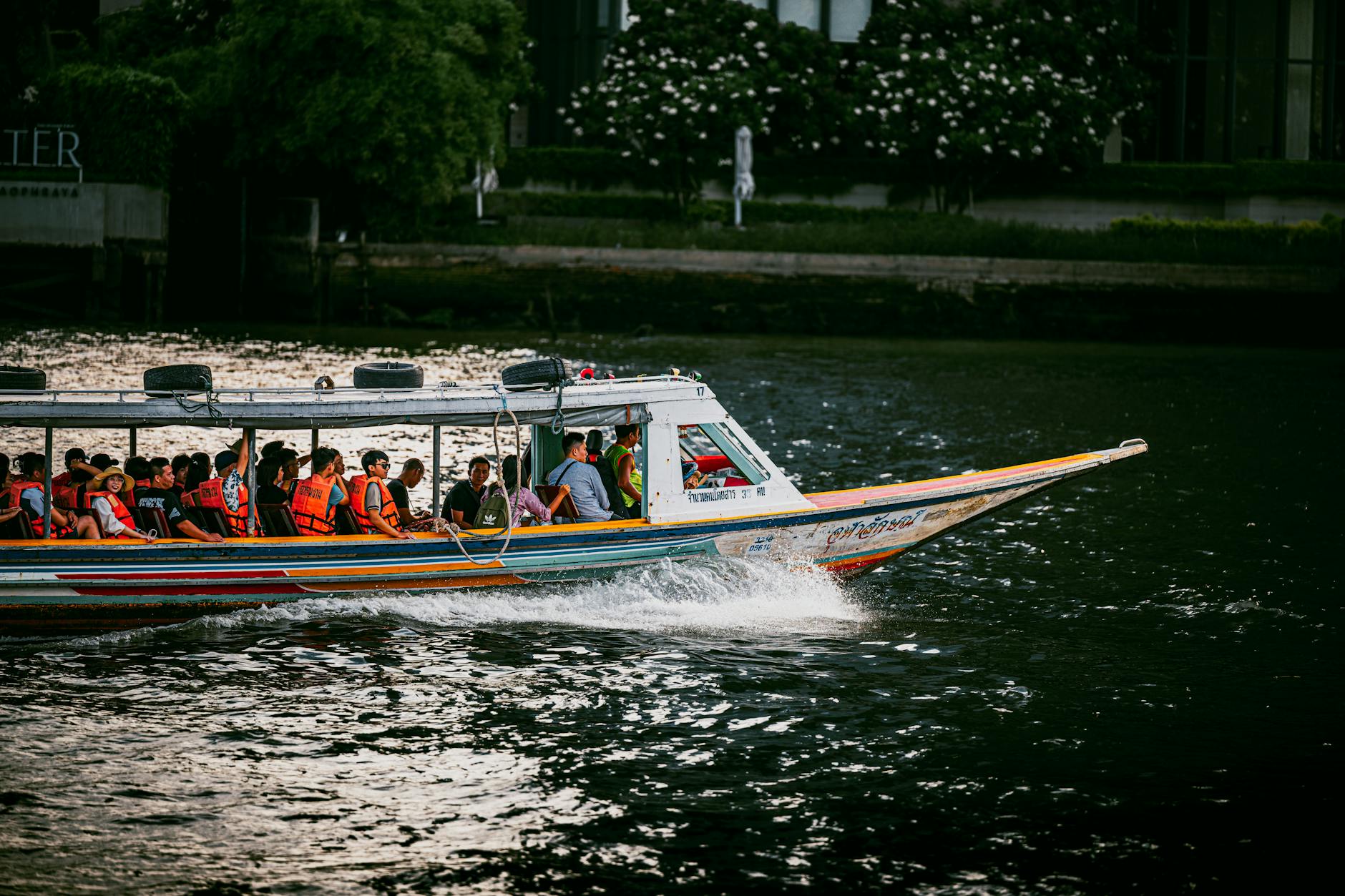
If you want the most actual sightseeing per yen, this is it. The Aqualiner is the flagship water-bus cruise, a 55-minute loop on the Okawa River that circles Osaka Castle, slides past Nakanoshima, and passes beneath more than 30 bridges. It runs an enclosed, air-conditioned, glass-roofed boat, which makes it the cruise to take when it’s pouring or when the August heat is brutal. On a hot day or a wet one, the climate control alone justifies the choice over the open-air boats.
- Duration: 55 minutes.
- Price: ¥1,700 adult, ¥850 child (¥2,000 / ¥1,000 during cherry blossom peak).
- Hours: Hourly departures from each pier.
- Piers: Osaka Castle Pier (:00), Yodoyabashi (:20), Hachikenyahama (:30), OAP Pier (:40).
- Best time: Late March to early April, when the riverbank sakura is in bloom.
3. Osaka Castle Gozabune, the historic one
A 20-minute float on a gold-leaf boat in the castle’s inner moat, styled after the barges feudal nobles once travelled in. It’s small, just 12 passengers, open-air, and it gives you a moat-level look up at the keep that no other cruise can touch. If you’re already at the castle, it’s a natural add-on. The honest caveat: it runs at the mercy of the weather and gets suspended in heavy rain or wind, so it’s not something to build a whole plan around.

- Duration: 20 minutes.
- Price: ¥1,500 adult, free under 6.
- Hours: 10:00 to 16:30, weather permitting.
- Departure: Inner moat at Osaka Castle.
- Pair with: A keep visit; do the boat right before or after.
4. Santa Maria, the family pick out at the bay
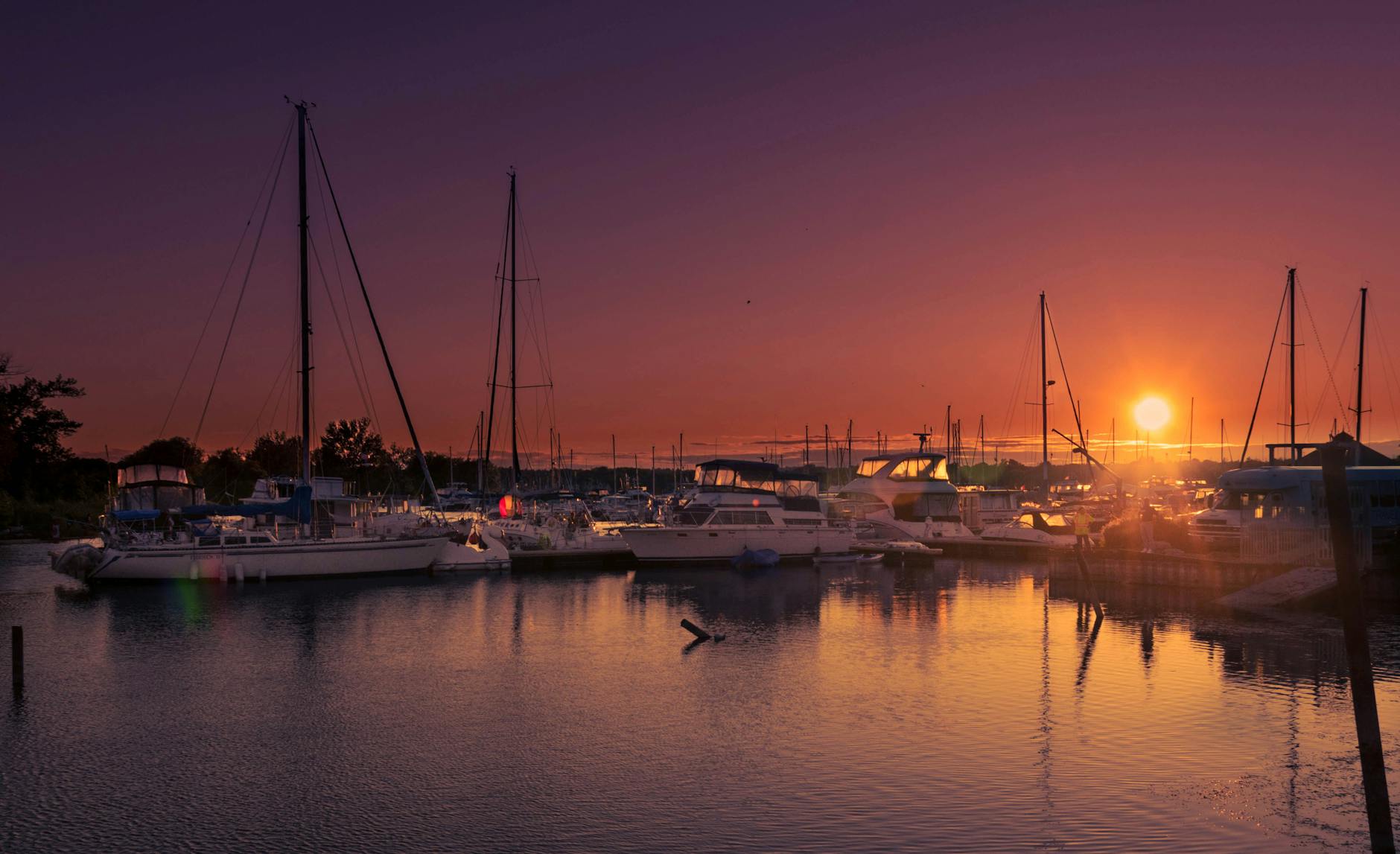
A two-thirds-scale replica of Columbus’s Santa Maria running 45-minute loops around Osaka Bay from Tempozan Pier, right beside the Aquarium Kaiyukan and the big Ferris wheel. There are indoor and outdoor decks, and the views take in the harbour cranes and Universal Studios off in the distance. As scenery it’s fine rather than spectacular, but for kids the ship itself is the attraction, and it slots perfectly into a half-day at the bay built around the aquarium.
- Duration: 45-minute day cruise, 60-minute twilight cruise.
- Price: ¥1,800 day adult, ¥2,400 twilight adult.
- Departure: Tempozan Harbor Village.
- Best for: Pairing with the aquarium as a bay half-day.
5. Wonder Cruise, more time on the water
A 40-minute loop from Nipponbashi Dock that takes the central Tombori canal and adds a wider riverside extension on top. You cover more ground than the standard Tombori run for roughly the same money. It’s the pick for travellers who liked the idea of the Tombori cruise but felt 20 minutes was over before it started. Open-air, same neon-after-dark logic applies.
- Duration: 40 minutes.
- Price: ¥1,500 adult, ¥1,000 student, ¥500 child.
- Hours: Weekdays 13:00 to 21:00, weekends 11:00 to 21:00.
- Departure: Nipponbashi Dock, three minutes from Nipponbashi Station.
6. Osaka Duck Tour, the gimmick that works
The Duck is an amphibious vehicle that drives through central Osaka on the road, then rolls straight off a ramp into the river for the second half. It is unapologetically touristy. It is also a genuine hit with kids, because the moment the bus splashes into the water earns a guaranteed shriek every single time. At ¥3,500 it’s more than double the price of a boat-only cruise, so it’s really a call for families rather than a scenic choice. Book ahead; it sells out.
- Duration: 75 minutes.
- Price: ¥3,500 adult, ¥1,800 child.
- Departure: Various central pickup points; reservations strongly recommended.
- Best for: Families with kids roughly 4 to 12.
Open-air or covered? The choice that actually matters
Beyond which sights you want, there’s one practical fork that decides a lot of comfort: whether the boat has a roof. It sounds minor until you’re on the water in August or a March drizzle.
The Aqualiner is the only fully enclosed, air-conditioned, glass-roofed option, which is exactly why it’s the default in summer heat and on wet days. You trade the open-air immediacy for climate control and a clean view through glass, and on a 35-degree afternoon that trade is no contest. The Santa Maria splits the difference with both indoor and outdoor decks, so you can step inside when the wind picks up.
Everything else, the Tombori, Gozabune, Wonder Cruise, and the Duck, is open to the sky. That’s a feature at night, when the neon or the moat sits right above you with nothing in between, and a liability in bad weather. The open boats run rain or shine and only cancel in real storms, so the practical move is to carry a packable rain jacket and check the forecast the morning of. In peak summer, an open-air daytime cruise can be genuinely uncomfortable; shift it to the evening or pick the Aqualiner.
One more comfort note: seating. The Tombori seats around 35 and the Gozabune just 12, so on busy evenings you may wait for the next departure rather than squeeze on. The Aqualiner is the largest and the easiest to walk onto without a wait outside of cherry blossom season.
Side by side
| Cruise | Length | Price (adult) | Best for | Covered? |
|---|---|---|---|---|
| Tombori | 20 min | ¥1,500 | Dotonbori at night | Open-air |
| Aqualiner | 55 min | ¥1,700 | Castle + Nakanoshima | Glass roof |
| Gozabune | 20 min | ¥1,500 | Castle moat | Open-air |
| Santa Maria | 45 min | ¥1,800 | Bay + family | Both decks |
| Wonder Cruise | 40 min | ¥1,500 | Longer Tombori area | Open-air |
| Duck Tour | 75 min | ¥3,500 | Families with kids | Open-air |
The one window that changes everything: cherry blossom season
For about two weeks a year, the river cruises stop being a nice-to-do and become a genuine highlight. The cherry blossom corridor along the Okawa River between Osaka Castle and Tenmabashi is one of Japan’s longest, more than 4,000 trees over nearly 4 kilometres of bank. During peak bloom (usually late March to mid-April) the Aqualiner runs a premium-priced Cherry Blossom Cruise with extended time along this stretch, and several operators add evening sakura-illumination runs. If your trip overlaps with the bloom, book one of these one to two weeks ahead, because they fill.
Why Osaka is best read from the water
It’s worth understanding what you’re actually looking at, because it changes how the cruise lands. In the Edo period, Osaka was the commercial engine of Japan, the place rice and goods from across the country were traded, and the canals were how all of it moved. Merchants built their warehouses to open onto the water, not the street. The city was nicknamed the “city of 808 bridges,” and while that number was always more poetry than census, the point stands: this was a place organised around boats.
Most of those canals were filled in during the 20th century as roads and rail took over, which is why modern Osaka reads as a dense concrete grid. But the four big rivers that survived, the Dojima, Tosabori, Okawa, and the Dotonbori canal, trace the old skeleton of the city. From a boat you see the backs of buildings, the underside of bridges, and the way the centre still bends around the water. It’s a genuinely different perspective from the street-level crush, and it’s the closest you’ll get to seeing the Osaka that made the city rich.
That history also explains why the cruises cluster where they do. The Tombori boats work the old entertainment canal; the Aqualiner and Gozabune circle the seat of power at the castle; the bay cruises run out to the modern port that replaced the canals as Osaka’s link to the world. Each boat is, in its way, showing you a different chapter.
Booking and boarding, the practical bits
- Tombori: walk-up is usually fine except weekend evenings. Booking online via Klook tends to save 5 to 10 percent.
- Aqualiner: reserve two weeks out for cherry blossom season; the rest of the year, walk-up works.
- Santa Maria: the twilight cruise sells out on summer weekends, so book that one ahead.
- The Osaka Amazing Pass includes the Tombori cruise free and discounts the others; one cruise plus two or three attractions usually makes the pass pay for itself.
- Weather: the open-air cruises run rain or shine and only cancel in serious storms. Pack a light rain jacket for the Tombori, Gozabune, and Wonder.
- Bathrooms: the Aqualiner and Santa Maria have them onboard. The Tombori and Wonder do not, so go before you board.
Common mistakes to avoid
- Taking the Tombori in daylight. The most frequent regret. It’s a fine 20 minutes, but the neon is the whole reason the cruise exists. Go after dark or do a different boat.
- Booking the Aqualiner on a clear spring day without a reservation. During cherry blossom season it fills, and walk-up travellers get turned away at the exact moment the cruise is at its best. Reserve two weeks out.
- Expecting the Santa Maria to thrill adults. It’s a family boat first. Without kids, you’ll get more out of the Aqualiner’s scenery or the Tombori’s neon for similar money.
- Paying full price when you hold an Osaka Amazing Pass. The pass includes the Tombori free and discounts others. Check before you buy a separate ticket.
- Forgetting the bathroom. The Tombori and Wonder have none onboard. Twenty to 40 minutes is long enough to matter, so go before boarding.
- Underdressing in the open-air boats at night. The wind off the water drops the temperature noticeably after dark, even in spring and autumn. A light layer makes the difference between enjoying it and counting the minutes.
Three ways to build a cruise into your day
Castle plus cruise, half a day
9:00 the keep and Stone Wall Museum. 11:30 the Gozabune in the moat (¥1,500). 12:00 lunch at Jo-Terrace. 13:30 walk to Osakajo Pier. 14:00 the Aqualiner’s 55-minute circuit (¥1,700). Wrapped by 15:00, with the castle seen from inside, above, and below.
Evening neon plus dinner
17:00 wander Hozenji Yokocho. 18:00 the Tombori cruise (¥1,500) for the neon loop. 18:30 dinner at Kani Doraku or one of the canal-side spots in Dotonbori. 21:00 one last slow walk along the water.
Family day at the bay
9:30 the Aquarium Kaiyukan (about two hours). 12:00 lunch at Tempozan Marketplace. 13:30 the Santa Maria’s 45-minute cruise (¥1,800). 15:00 the Tempozan Ferris wheel. A full, easy half-day without ever leaving the waterfront.
Osaka river cruise: FAQ
Are Osaka river cruises worth it?
The Tombori at night and the Aqualiner during cherry blossom season, absolutely. They give you angles on the city that a walking-only trip never sees. The daytime short cruises are pleasant but easier to skip if you’re tight on time.
Which Osaka cruise has the best view?
For neon, the Tombori around 19:30. For history, the castle Gozabune in the inner moat. For a broad sweep of urban Osaka, the Aqualiner’s full 55-minute loop.
Can I use the Osaka Amazing Pass for a cruise?
Yes. The 1-day and 2-day passes include the Tombori River Cruise free and discount the Aqualiner and Santa Maria. Do one cruise plus a couple of attractions and the pass generally pays for itself.
How long is the Tombori River Cruise?
Twenty minutes, with departures every 30 minutes from 11:00 to 21:00.
Is the Santa Maria worth it for adults without kids?
It’s built for families first. Adults travelling without kids will get better scenery out of the Aqualiner or the night-time Tombori.
Build the rest of your day around the water
A cruise pairs naturally with Osaka’s biggest landmarks. Sort the rest of the day with the Osaka Castle visitor guide and, for the bay itinerary, the Aquarium Kaiyukan guide. For the bigger picture, the full things to do in Osaka overview lays out how the boats fit alongside everything else, and the free things to do in Osaka list covers the Nakanoshima riverside walk if you’d rather see the water for nothing.