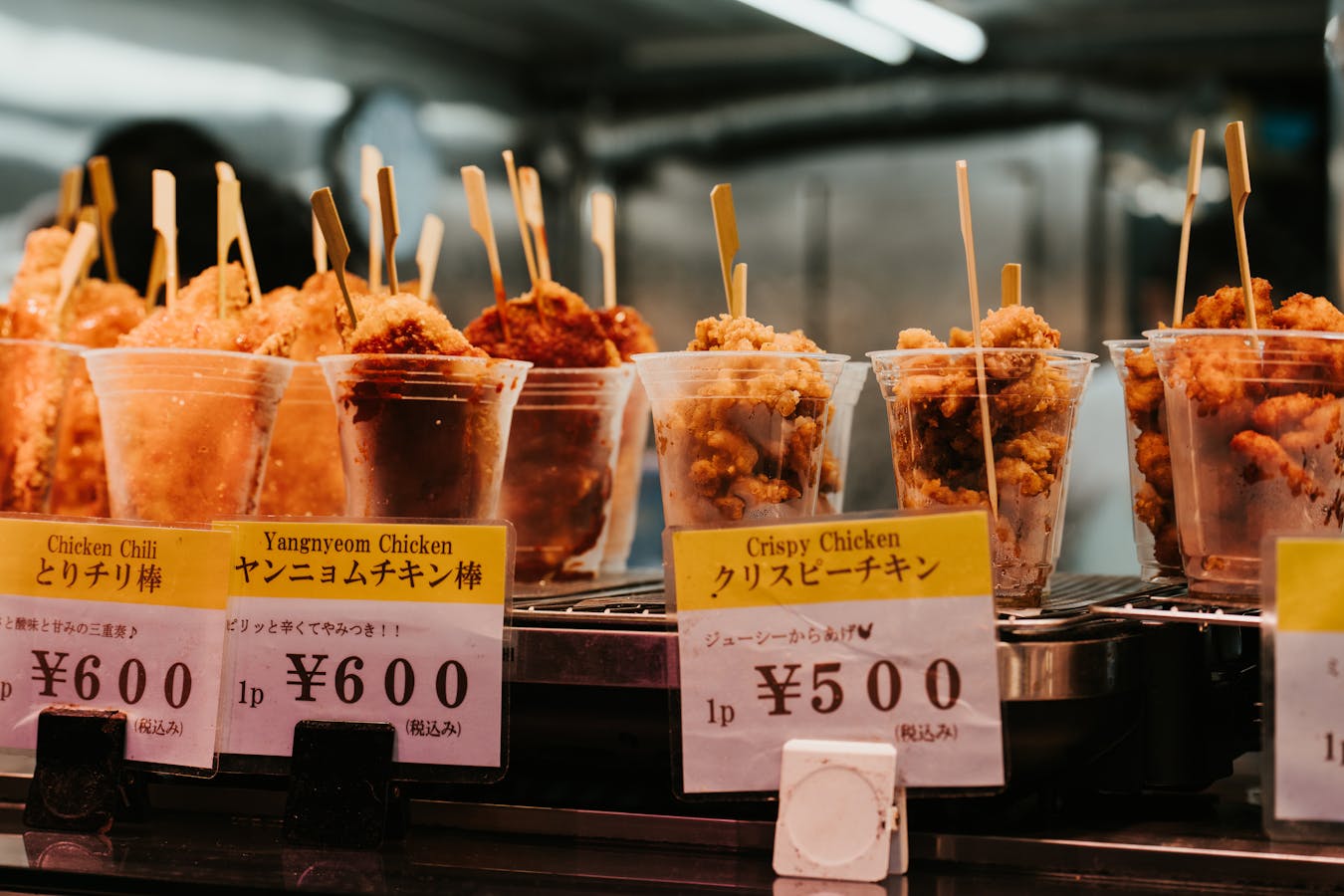
Kushikatsu Osaka is the third leg of the city’s “konamon” food trinity – alongside takoyaki and okonomiyaki, this deep-fried-on-a-stick comfort food is a defining Osaka experience. Skewered bites of pork, chicken, beef, shrimp, scallops, asparagus, lotus root, mushrooms, mochi, even strawberries get coated in panko breadcrumbs, deep-fried in beef tallow, and dipped into a communal vat of tangy Worcestershire-based sauce. The catch: do not double-dip. Ever. The cardinal rule of kushikatsu eating is enforced with humor and signage at every shop.
This guide covers the best kushikatsu in Osaka in 2026 – the Shinsekai legends like Daruma (founded 1929) and Yaekatsu (1949), the Dotonbori branches that bring the experience to first-time visitors, the etiquette and ordering tips, and the off-the-beaten-track local favorites that Osaka residents swear by.
Quick-Pick: Best Kushikatsu Osaka Shops
- The legendary original: Kushikatsu Daruma (Shinsekai, 1929). Iconic angry-mascot signage.
- Locals’ favorite: Yaekatsu (Shinsekai, 1949). Less touristy, equally great.
- Best Dotonbori location: Kushikatsu Daruma Dotonbori (the chain branch, walking-distance from Glico).
- Higher-end: Tengu (Shinsekai). Slightly more refined, similar prices.
- Most authentic experience: Standing-counter shops near Tsutenkaku Tower, no English menus.
- Late-night (open 24-hour): Several Daruma branches.
- Premium / Michelin-star tier: Kushikatsu Honke Daruma exclusive private rooms.
What Is Kushikatsu?
“Kushi” means skewer, “katsu” means breaded-and-deep-fried (the same root as tonkatsu, the breaded pork cutlet). Kushikatsu is a working-class Osaka invention from the 1920s, when Shinsekai was a struggling industrial neighborhood and shop owner Tomekichi Endo started serving cheap, hot, hand-held protein-on-a-stick to laborers heading home from the foundry shifts.
The defining technical features:
- Panko breadcrumb coating – Coarser and lighter than Western breadcrumbs, producing extra crispness.
- Beef tallow frying oil – Higher smoke point and deeper flavor than vegetable oil.
- Communal sauce vat – A central tub of sweet-savory Worcestershire-style sauce shared by all diners. Hence the no-double-dip rule.
- Counter-service eating – Most shops are stand-up or counter-bar style.
- Skewer-by-skewer ordering – Order one or two at a time, eat fresh, repeat.
1. Kushikatsu Daruma (The Legend)

Founded in 1929 in Shinsekai, Daruma is widely considered the birthplace of modern kushikatsu. The chain has expanded to dozens of branches across Osaka and Japan, but the original Shinsekai Honten remains the pilgrimage spot. The angry-faced mascot holding crossed skewers (signaling “no double dipping”) is the unofficial logo of the entire genre.
- Original location: Shinsekai Honten (3-4-7 Ebisu-Higashi, Naniwa-ku).
- Hours: 11:00–22:30 (some 24-hour branches).
- Price: ¥110–¥300 per skewer; meal of 10–15 skewers + beer ¥1,500–¥3,000.
- Try: The “Daruma Set” – 9 chef-picked skewers for around ¥1,400.
- Wait: 20–60 minutes peak hours.
2. Yaekatsu (The Locals’ Pick)
Just down the street from Daruma in Shinsekai, Yaekatsu has been frying skewers since 1949. Less famous globally, but many Osaka locals will quietly tell you Yaekatsu is the better experience. Slightly older recipe, smaller and more atmospheric shop, less queue.
- Location: Shinsekai (3-4-13 Ebisu-Higashi).
- Hours: 10:30–20:30; closed Thursdays.
- Price: ¥120–¥350 per skewer.
- Try: The seasonal vegetable selections + premium beef.
3. Tengu (Slightly More Refined)
Another Shinsekai institution, slightly higher-end than Daruma. Cleaner setting, more table seating, similar prices. Reliably excellent for a sit-down-with-friends kushikatsu meal.
4. Kushikatsu Daruma Dotonbori (For Tourists)
If you can’t make the trip to Shinsekai, the Dotonbori Daruma branch delivers the same experience in a more central location. Slightly more expensive but the formula and quality are identical. Look for the giant angry-mascot sign on Dotonbori-Naka-Dori.
5. Standing-Counter Local Shops
The Shinsekai backstreets hide a dozen small standing-counter kushikatsu shops with no English menus and a regular-customer feel. The pricing is even lower (¥100–¥150 per skewer) and the atmosphere is the most authentic. Adventurous travelers should walk a block or two off the main Tsutenkaku-base streets and pick the one with the loudest local laughter coming out the door.
The Cardinal Rule: No Double-Dipping
Every shop has a communal stainless-steel vat of dark, tangy sauce. Each skewer gets one dip before eating. Once you’ve taken a bite, do not return to the vat – everyone else has to share that sauce too.
If you want more sauce, every shop provides a small dish of complimentary shredded cabbage. Use the cabbage as a “sauce ladle” – take a leaf, scoop sauce with it, drizzle onto your skewer. The cabbage doubles as a palate cleanser between bites.
What to Order: Top 10 Kushikatsu Skewers
- Beef (gyu): The classic. Marbled and rich.
- Pork (buta): The most popular. Juicy and tender.
- Chicken (tori): Light, crispy, often a fan favorite.
- Shrimp (ebi): A premium skewer. Try at least one.
- Scallop (hotate): Sweet, butter-soft.
- Asparagus (asuparagasu): Surprisingly excellent fried.
- Lotus root (renkon): Crunchy, traditional.
- Quail egg (uzura): Creamy yolk inside crispy panko.
- Mochi (rice cake): Chewy, comforting.
- Strawberry / banana: Yes, fruit. Yes, fried. Yes, a real menu item. Trust the chef.
How to Order: Step-by-Step
- Sit at the counter or table. Most kushikatsu shops are standing or counter-style.
- Order a beer or oolong tea first – ¥400–¥600 from the chef.
- Order 5–6 skewers to start. Either tell the chef “set kudasai” (set please) or pick from a paper or tablet menu.
- The skewers arrive piping hot. Dip ONE TIME into the sauce vat.
- Eat the skewer fully. Use the cabbage to wipe additional sauce or refresh palate.
- Order more. Locals usually do 10–15 skewers per visit, ordered in waves.
- Pay at the end – the empty skewers stay on your plate, used for the count.
Pricing in 2026
- Standard skewer: ¥110–¥200.
- Premium (shrimp, scallop, beef): ¥250–¥400.
- Beer: ¥400–¥600.
- Daruma 9-skewer set: ~¥1,400.
- Average meal per person: ¥1,500–¥3,000 with one drink.
- Premium “all you can eat” plans: ¥3,500–¥5,000 at some Daruma branches.
Sample Kushikatsu Crawl
- 17:30: Arrive Shinsekai via Dobutsuen-mae or Ebisucho stations.
- 17:45: Daruma Honten queue (15–30 min wait pre-dinner rush). Order 10 skewers + beer (¥2,000).
- 19:00: Walk Shinsekai’s neon streets. Photograph Tsutenkaku.
- 19:30: Second stop – Yaekatsu or Tengu. Order 6 more skewers + 1 highball.
- 20:30: Stretch legs by climbing Tsutenkaku Tower (¥1,000) for retro panorama.
- Total spend: ¥3,500–¥4,500 for one of Osaka’s most quintessential evenings.
Where Else to Eat Kushikatsu in Osaka
- Dotonbori: Multiple Daruma branches and Tengu. Touristy but high quality.
- Umeda underground: Daruma Sanbangai for quick post-shopping kushikatsu.
- Kuromon Market: Several stalls do quick takeaway kushikatsu among the seafood.
- Tennoji: Casual neighborhood spots with looser etiquette.
Kushikatsu vs. Yakitori vs. Tempura
- Kushikatsu: Skewered, breaded with panko, deep-fried. Communal sauce vat.
- Yakitori: Skewered, grilled (not fried), seasoned with salt or tare sauce. No sauce vat.
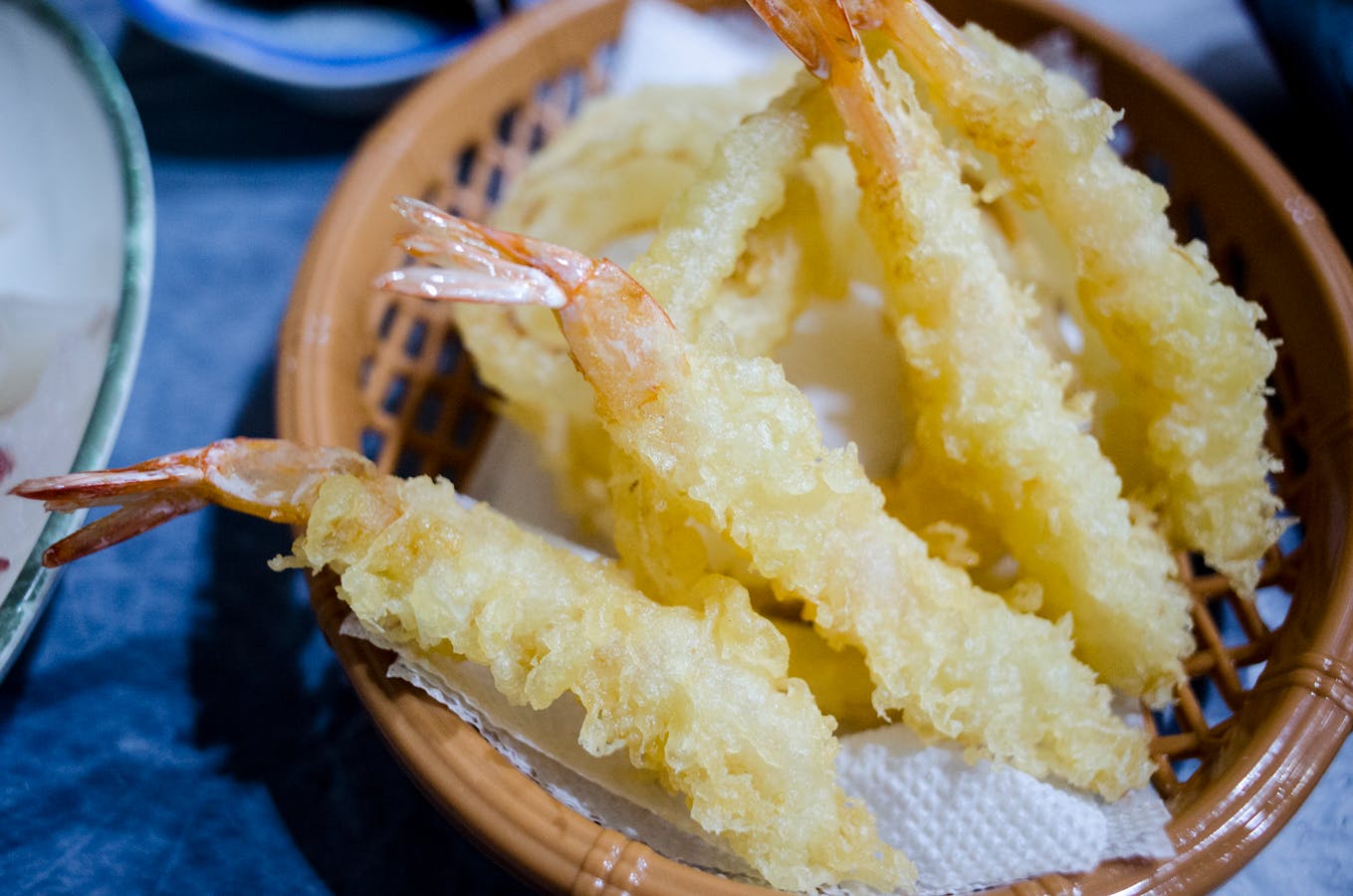
- Tempura: Battered (not breaded) and deep-fried. Often vegetables and seafood. Dipped in tentsuyu.
All three are excellent. Kushikatsu is the most casual and most budget-friendly; yakitori is the standard izakaya pairing; tempura is more refined and often part of a kaiseki meal.
Practical Tips
- Wear unscented clothes. Deep-fry oil smell stays.
- Cash: Many small kushikatsu shops are cash-only.
- English menus: Daruma flagship and Dotonbori branches yes; small shops no.
- Vegetarian options: Most shops have asparagus, lotus root, mushroom, eggplant, mochi, fruit. Easy to do a vegetarian meal.
- Allergies: Wheat (panko) and eggs (in batter) are unavoidable. Beef tallow eliminates kosher/halal options at most shops.
- Reservations: Generally not accepted at the standing-counter shops. Daruma flagship sometimes accepts via TableCheck.
Kushikatsu Osaka FAQ
What is the most famous kushikatsu shop in Osaka?
Kushikatsu Daruma in Shinsekai (founded 1929) is the most famous, with the iconic angry-mascot logo. Yaekatsu (1949) is the strong second choice, often preferred by locals.
Why is double-dipping forbidden in kushikatsu?
The sauce is communal – a single vat shared by all diners at the counter. Once your skewer has been bitten, returning it to the vat contaminates everyone’s dipping sauce. Use the cabbage provided as a sauce ladle instead.
How much does kushikatsu cost in Osaka?
¥110–¥300 per skewer. A satisfying meal of 10–15 skewers plus a drink costs ¥1,500–¥3,000 per person.
Is kushikatsu always made with beef?
No – any ingredient can be skewered and fried: pork, chicken, fish, shrimp, scallops, vegetables, mushrooms, mochi, even fruit. The frying oil is typically beef tallow but the fillings are diverse.
Where was kushikatsu invented?
In Shinsekai, Osaka, in the 1920s. Kushikatsu Daruma claims credit for popularizing it from 1929. The dish spread nationally but Osaka remains the unofficial capital.
Is kushikatsu the same as kushiage?
Functionally yes – both refer to skewered, breaded, deep-fried bites. “Kushikatsu” is the Osaka term and the dish’s working-class roots; “kushiage” is the more refined Tokyo version often served as part of a tasting menu.
Plan Your Osaka Food Trip
Kushikatsu is one of three Osaka konamon dishes nobody should miss. Pair this guide with our best takoyaki Osaka guide, the okonomiyaki Osaka guide, and the complete Osaka food guide. The Shinsekai walking visit pairs naturally with the things to do in Osaka agenda.