This article contains advertising. Our booking links are routed through a partner that adds commission tracking automatically, so if you book through one we earn a commission from the provider, at no extra cost to you. It never affects what we recommend. Affiliate disclosure
Ask ten people when to visit Osaka and you’ll get ten answers, mostly because they’re answering different questions. The pretty answer is cherry blossom season. The comfortable answer is October. The cheap answer is February. The most fun answer might be a sweaty night in late July with a beer in one hand. None of them is wrong, so the real question is which trade-off you’re willing to make.
Here’s the short version: late March into the first week of April for the blossoms, mid-October through late November for clear skies and red maples, and either May or early December if you want most of the upside with a fraction of the crowds. Below is what each season actually feels like on the ground, what it costs you, and where the catches are.
The quick answer, season by season
If you only read one thing, read the table. Then come back for the why.
| Season | Months | Daytime temps | Why go | Crowds |
|---|---|---|---|---|
| Spring | Mar–May | 10–25°C | Cherry blossoms, kind weather | High, peaking in April |
| Summer | Jun–Aug | 25–35°C | Festivals, fireworks, cheap beds | Moderate to high |
| Autumn | Sep–Nov | 15–27°C | Foliage, the most stable weather of the year | High, peaking in November |
| Winter | Dec–Feb | 3–12°C | Illuminations, lowest prices, short queues | Low |
One thing the table can’t show: April and November are the two months when hotels in central Osaka can double their rates and still sell out. Both are worth it. Both demand you book early. If April is your window, read the hanami guide before you go. Everything else on this page is a way of deciding whether that premium is yours to pay.
Spring (March to May): the blossoms, and the better-kept secret after them
Spring is the default recommendation for a first trip, and it earns it. March opens cool, often 10 to 15 degrees and needing a jacket. By May you’re in shirtsleeves at 20 to 25, with the humidity that ruins summer still a month or two away. In between sits the week everyone is chasing.
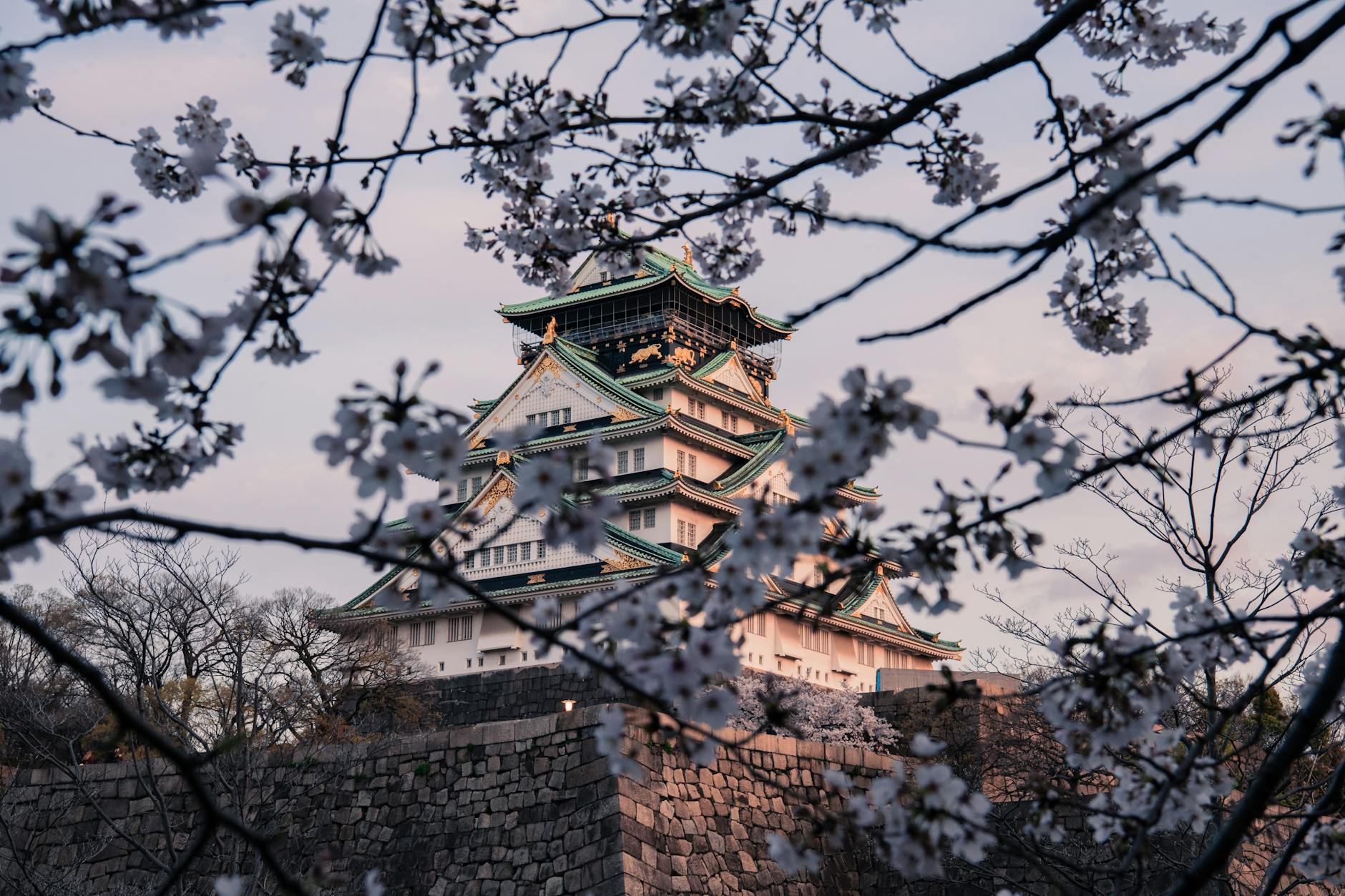
Cherry blossom season (roughly late March to early April)
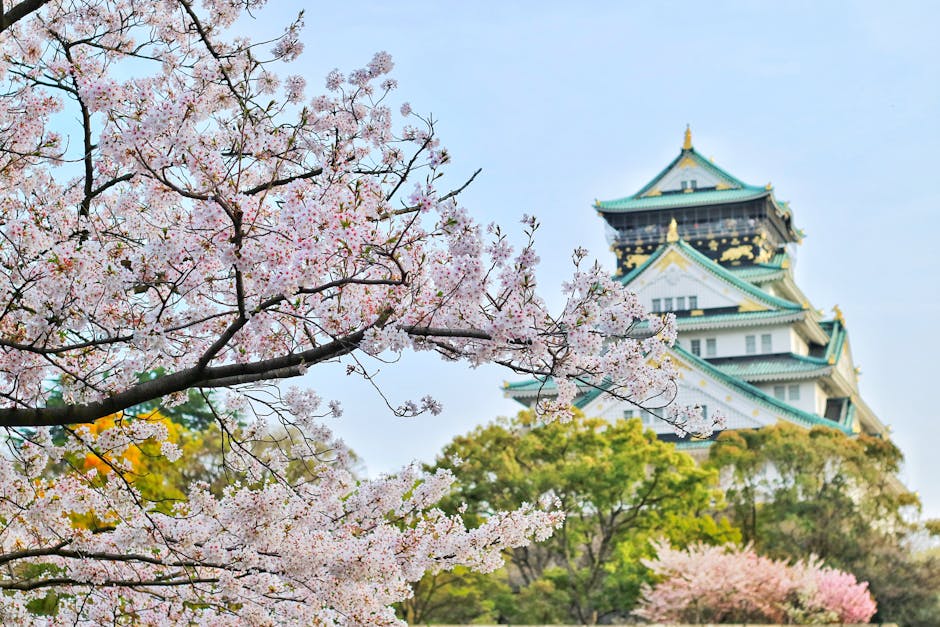
Osaka’s sakura usually open in the last days of March and hit full bloom around the turn of the month, give or take a few days each year. Full bloom lasts about a week before the petals start dropping, so the viewing window is genuinely short. Plan loosely, then tighten your dates once the forecasts firm up in late winter.
Osaka Castle Park is the headline spot, with several thousand trees and the keep behind them for the photo everyone wants. For something with more room to breathe, walk the Okawa river path at Kema Sakuranomiya, where the trees run for kilometres along the water. The Mint Bureau’s short cherry-tree corridor opens to the public for only about a week each spring and is worth timing if your dates line up.
The catch is everyone else. Expect hotel rates to roughly double versus winter, the popular parks packed by late morning, and the best riverside picnic spots claimed before lunch. Book accommodation two to three months out, and if you can only see the blossoms early or late in the day, choose early.
May: the month locals quietly recommend
Once Golden Week clears at the start of May, Osaka relaxes into one of its best stretches and almost nobody outside Japan plans around it. Days settle at a comfortable 20 to 26 degrees, the parks empty out, and room rates fall well below the April peak. If you want spring weather without the spring scrum, this is the answer. It pairs especially well with a slower, walk-everywhere trip through the city’s neighbourhoods.
Summer (June to August): hot, sticky, and home to the year’s best festivals
Summer in Osaka is a commitment. July and August routinely sit in the low to mid 30s, the humidity makes it feel hotter still, and June drags in the rainy season. So why come? Because the festivals are the real thing, the beds are cheap, and the light lasts until almost 7pm.
June: the rainy season, and the bargains that come with it
The rainy season, tsuyu, generally runs from early June to the middle of July. It does not rain all day every day, whatever you may have read. You get bursts, often in the afternoon, with dry stretches around them, and temperatures around 25 to 28. Carry a folding umbrella and don’t over-plan outdoor days. The payoff is real: June is among the cheapest months to be here, and the big attractions are noticeably calmer.
July: Tenjin Matsuri
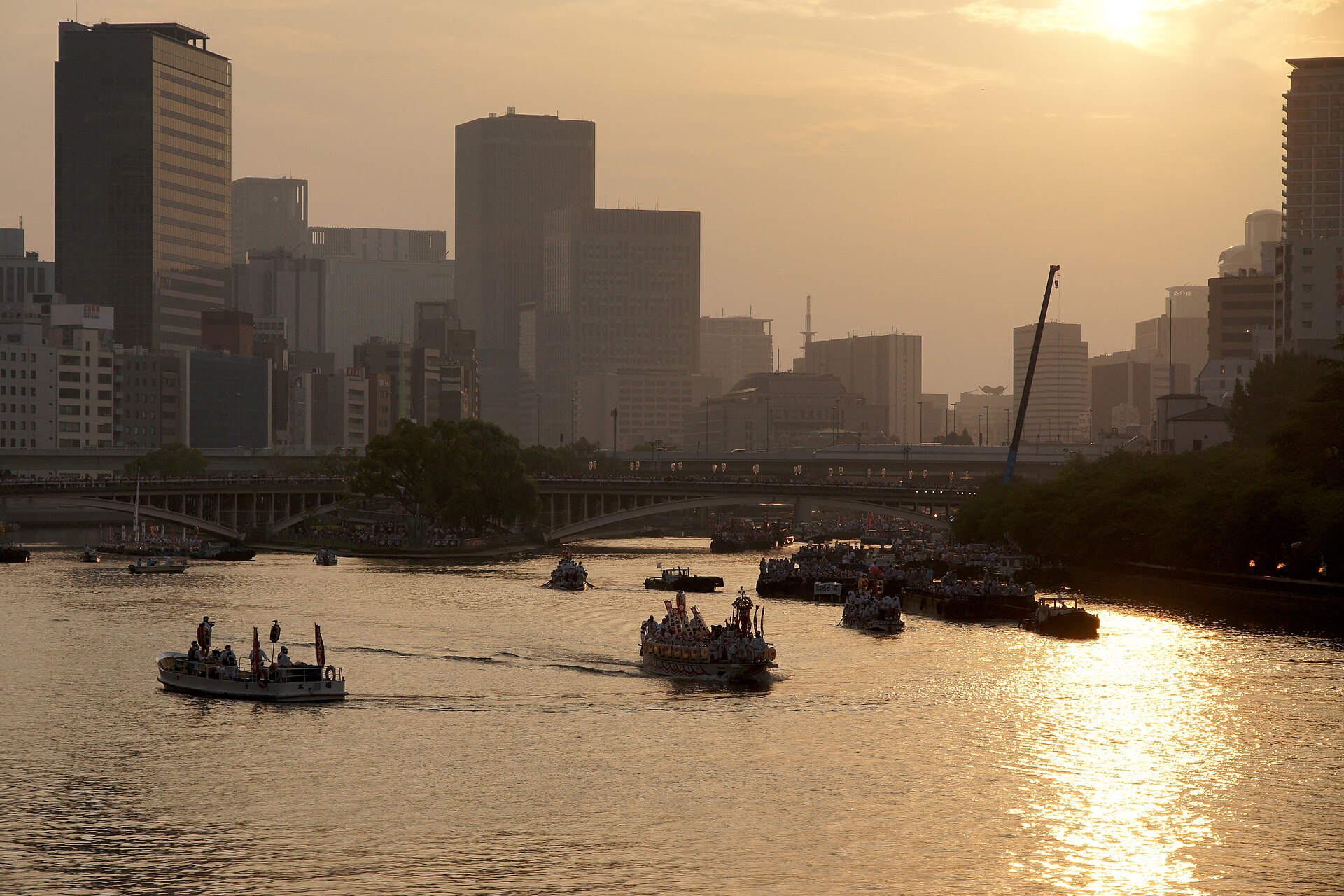
Tenjin Matsuri, on 24 and 25 July, is one of the three great festivals of Japan and the highlight of Osaka’s calendar. Thousands of participants process through the streets in old-style dress, boats light up the Okawa after dark, and the night closes with fireworks over the river. If you can take the heat, this alone justifies a summer trip. Stake out a river spot early; the good views go fast.
August: Obon, fireworks, and the art of staying indoors
August is when Japan itself travels, thanks to the Obon holiday in the middle of the month, so expect busy sights and pricier domestic flights. The compensation is more festival energy, the Sumiyoshi Matsuri, and big fireworks along the Yodogawa. The survival strategy is simple. Treat the underground arcades, the air-conditioned food halls and the indoor sights as your daytime base, and save the streets for after sundown. A useful rule for any summer visit: hydrate constantly and plan your walking for early morning or evening.
Autumn (September to November): the connoisseur’s pick
If spring is the popular vote, autumn is the one seasoned visitors keep coming back for. The summer mugginess lifts, the skies clear, and from mid-November the maples turn. For sheer reliability of good weather, nothing else on the calendar beats October.
September: still summer, with an asterisk
Early September can feel like August’s encore, 28 to 30 degrees and humid, and it’s the tail of typhoon season too, so keep half an eye on forecasts. By the last week temperatures ease to a friendlier 22 to 25. Prices are still soft, which makes late September a quiet-value window if you’re willing to gamble a little on the weather.
October and November: peak season, for good reason
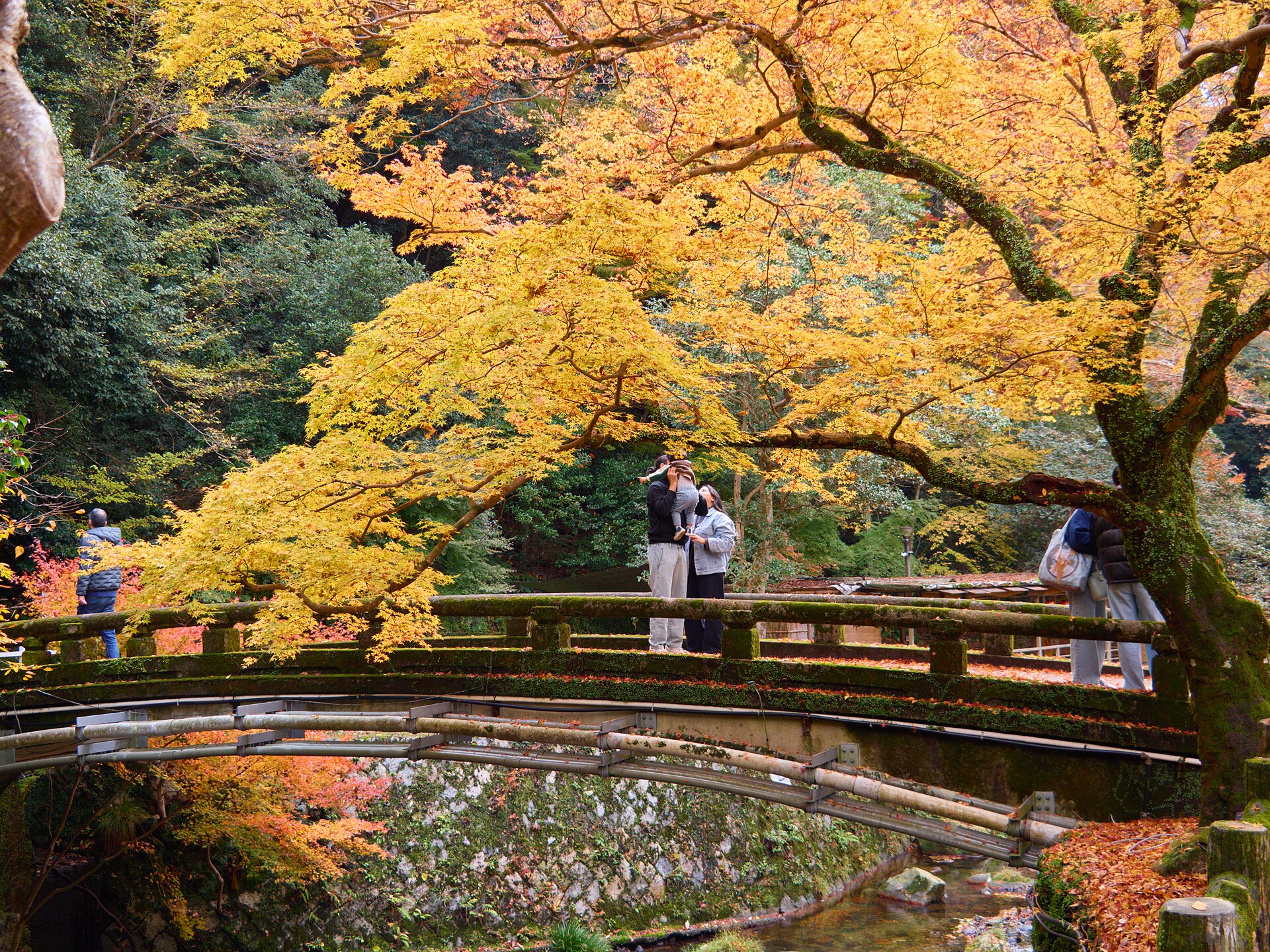
October is, day for day, probably the most pleasant month here: sunny, 18 to 22, low humidity, very little rain. November brings the koyo, the autumn colour, which peaks across Osaka in roughly the second half of the month. Minoh’s waterfall trail, lined with maples, is the classic outing; Osaka Castle Park and the Katsuo-ji temple grounds up in Minoo also reward the trip. Like the blossoms in spring, November pulls crowds and pushes room rates, so book ahead. The reward is some of the most photogenic evenings of the year, foliage lit against the dark.
Winter (December to February): the value play
Winter is the smart-money season. Hotel rates drop to their lowest, often well under half the spring and autumn peak, the crowds thin out, and the city feels more like itself and less like a queue. Temperatures run 3 to 12 degrees: properly cold but rarely harsh, with the odd flurry of snow that almost never settles.
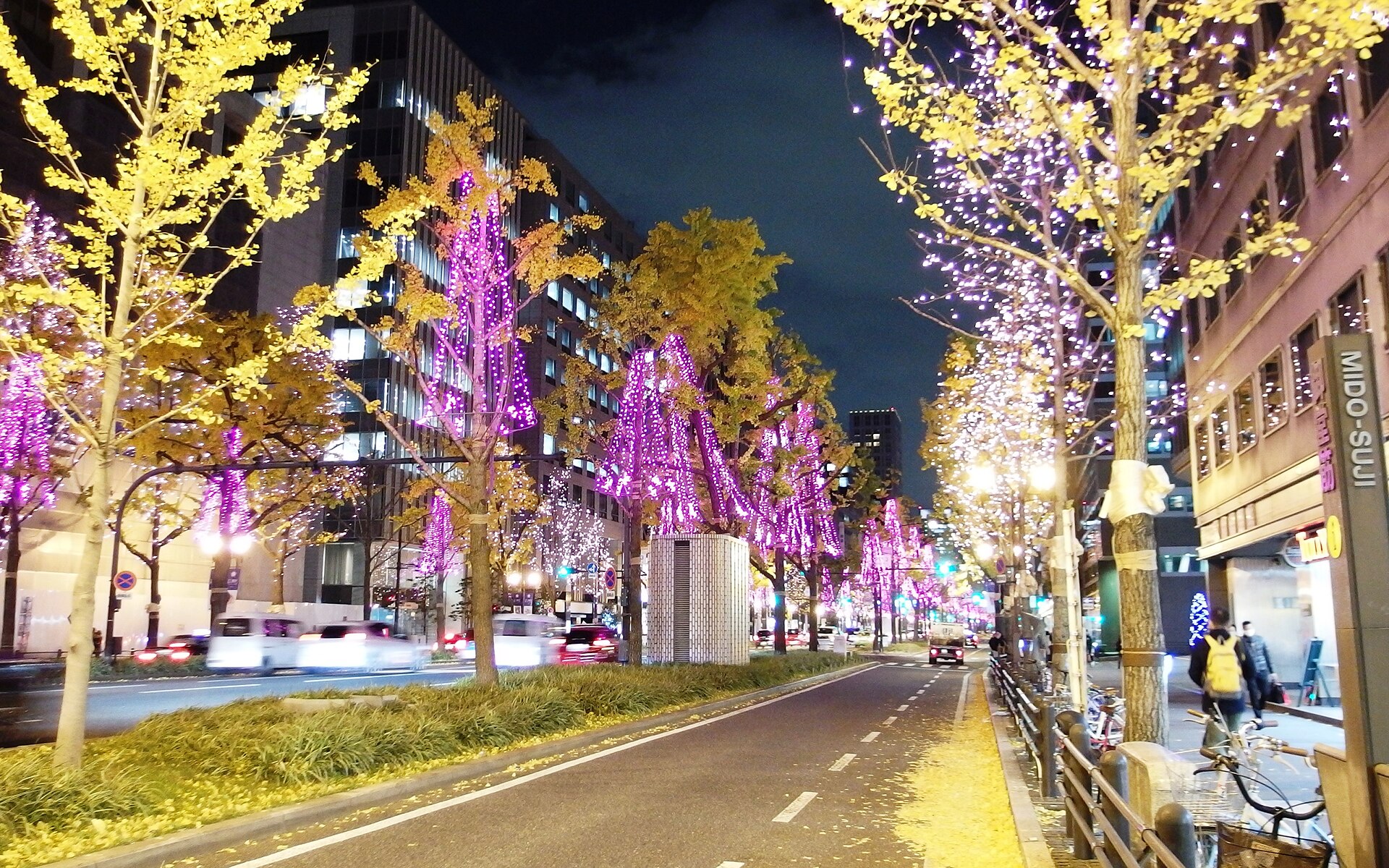
December: lights, and a last gasp of autumn
Early December is a sweet spot. Some leaves still hang on while the winter illuminations switch on across the city. The Midosuji lights run down one of the longest illuminated avenues in the country, and Osaka Hikari-no-Renaissance turns Nakanoshima into something out of a postcard. The shopping districts around Shinsaibashi and Grand Front Osaka hum with end-of-year energy.
January and February: the cheapest, quietest window
These are the coldest, stillest months, with highs around 8 to 10. They are also when your money goes furthest and the lines are shortest. The Toka Ebisu festival, 9 to 11 January at Imamiya Ebisu Shrine, fills the streets with locals praying for a prosperous year in business. This is the budget traveller’s season, and it’s the one when a bowl of ramen, a fresh-griddled takoyaki or a pot of oden tastes best, because you’ve earned it walking around in the cold.
Month by month, at a glance
Same idea as the seasonal table, finer grain. The score is my own rough rating for a general visitor weighing weather, events and value together: five means go now, two means know what you’re signing up for.
| Month | High / low | Rain | What’s on | Score |
|---|---|---|---|---|
| January | 9°C / 3°C | Low | Toka Ebisu, lowest prices of the year | 3 / 5 |
| February | 10°C / 3°C | Low | Plum blossoms begin, very quiet | 3 / 5 |
| March | 14°C / 6°C | Moderate | Cherry blossoms open late in the month | 4 / 5 |
| April | 20°C / 11°C | Moderate | Peak blossoms, hanami, big crowds | 5 / 5 |
| May | 25°C / 16°C | Moderate | Post-Golden-Week calm, warm and dry-ish | 5 / 5 |
| June | 28°C / 20°C | High | Rainy season, Aizen Matsuri, cheap beds | 2 / 5 |
| July | 32°C / 24°C | Moderate | Tenjin Matsuri on the 24th–25th | 3 / 5 |
| August | 33°C / 25°C | Moderate | Obon, Sumiyoshi Matsuri, fireworks | 3 / 5 |
| September | 29°C / 21°C | Moderate | Kishiwada Danjiri, late-month cooldown | 3 / 5 |
| October | 23°C / 15°C | Low | Best all-round weather, early colour | 5 / 5 |
| November | 17°C / 9°C | Low | Peak autumn foliage, busy again | 5 / 5 |
| December | 12°C / 5°C | Low | Illuminations, festive shopping | 4 / 5 |
Read the scores as a starting point, not gospel. A foliage hunter should bump November to a clear winner; a parent travelling in school holidays might happily trade April’s crowds for the blossoms; a couple counting yen will see February differently from how I’ve scored it. The numbers above are real averages, but your priorities decide which month wins.
Crowds and cost: the part people forget to plan for
Weather gets all the attention, but crowds and price swing harder across the year than the thermometer does. Two periods dominate the calendar and you should know them before you book anything. Golden Week, the run of national holidays from late April into the first days of May, is when domestic travel peaks: trains fill, popular sights clog, and prices jump. Obon in mid-August does the same thing on a slightly smaller scale. Neither makes Osaka impossible, but both turn a relaxed trip into a logistical one, so either build around them or accept the queues.
Outside those two spikes, the pattern is straightforward. Spring blossom week and the November foliage peak are the expensive, busy highs. Deep winter and the rainy season are the cheap, quiet lows. The shoulder months, especially May, late September and early December, sit in between and are where a lot of repeat visitors end up: most of the good weather, much smaller bills, far shorter lines. If the numbers are what you’re weighing, our Osaka trip cost breakdown shows how much the season actually swings a daily budget.
Pick your season by what you actually want
Chasing cherry blossoms: late March to mid-April. Anchor on Osaka Castle Park and the Kema Sakuranomiya river path, and go early in the day.
After the autumn colour: mid-November to early December. Minoh’s maple trail is the one to build a day around.
Here to eat: any month works, but winter means the shortest queues at the places worth queuing for. Plan the meals first and the sights around them with our Osaka food guide.
Festival-driven: July for Tenjin Matsuri, January for Toka Ebisu, or September for the genuinely thrilling Kishiwada Danjiri, where teams haul wooden floats at a run. The full year is mapped in our Osaka seasonal guide.
Travelling on a budget: January and February, hands down. More tactics in the Osaka budget travel guide.
Bringing kids: May or October hit the sweet spot of kind weather and manageable crowds, as long as you dodge Golden Week. First trip to the city full stop? Our first-time Osaka tips cover the basics no season changes.
A quick word on what to bring
Whatever month you land in, layers do most of the work here. Spring and autumn swing from cool mornings near 10 degrees to warm afternoons above 20, so a packable jacket lives in your day bag. Summer is shorts, breathable shirts, sunscreen and a small towel for the sweat, plus a folding umbrella for both rain and shade. Winter wants a real coat, a scarf and gloves for the evenings, since the wind off Osaka Bay cuts harder than the temperature reads. The full season-by-season list, down to the often-forgotten bits, is in our Osaka packing guide, and the month-by-month numbers live in the Osaka weather guide.
Frequently asked questions
What is the cheapest time to visit Osaka?
January and February, comfortably. Room rates and flights both bottom out, and you can often find hotels at roughly half their spring or autumn price. June, in the rainy season, is the next cheapest window. The Osaka budget travel guide goes deeper on stretching the yen.
When is cherry blossom season in Osaka?
Blossoms usually open in the final days of March and reach full bloom in the first few days of April, with peak viewing lasting about a week. The exact dates shift a little every year with the weather, so watch the bloom forecasts as your trip approaches rather than locking plans to a fixed date.
Is Osaka worth visiting in summer?
Yes, if heat doesn’t put you off. You get the biggest festivals of the year, the cheapest beds, and long daylight. The price of admission is genuine heat and humidity, so lean on air-conditioned sights by day, get outside in the morning and evening, and drink more water than you think you need.
How far ahead should I book for peak season?
For the cherry blossoms in late March and early April, and for peak foliage in November, book two to three months out. Those are the two windows where the best-located hotels sell out first. Our guide to where to stay in Osaka breaks down which areas keep you closest to the action.
Which month has the best weather, full stop?
October. Mild days in the high teens to low twenties, low humidity, little rain, and reliable sun. May is the runner-up and comes with thinner crowds.
So book around your priority, not around a calendar somebody handed you. Want the postcard? Spring or November, and reserve early. Want value and elbow room? Winter. Want a story to tell? Stand by the Okawa for the Tenjin fireworks in July and decide for yourself. When your dates are set, the rest of the planning starts with our complete Osaka travel guide.
Photo Credits
Summer evening at Tenjin Matsuri: 120725 Osaka Tenjinmatsuri Japan10s3 by 663highland, CC BY 2.5, via Wikimedia Commons.
Maples over a Minoo Park footbridge: Minoh – Minoh6690 by lumoplank, CC0, via Wikimedia Commons.
Midosuji winter illumination: Mido-suji Illuminathion Area A in 201412 002 by Mc681, CC BY-SA 4.0, via Wikimedia Commons.