This article contains advertising. Our booking links are routed through a partner that adds commission tracking automatically, so if you book through one we earn a commission from the provider, at no extra cost to you. It never affects what we recommend. Affiliate disclosure
Osaka reads completely differently depending on when you land. Spring buries the castle moat in pink. July turns the Okawa River into a corridor of festival boats and fireworks. December strings four kilometres of lights down the main boulevard, and January sends two million people through a single shrine in three days. Pick the wrong week and you’ll pay double for a hotel and queue for everything. Pick the right one and the city does half the work for you.
This is the practical version of an osaka seasonal guide: what the weather actually feels like, which month suits which kind of traveller, where the crowds and the bargains hide, and the events worth building a trip around. Skim to your month, or read the verdict at the bottom if you just want the short answer.
The weather, month by month
Osaka has a humid subtropical climate and four seasons that don’t pull their punches. Winters are cold but rarely brutal, around 5–9°C (41–48°F) in January. Summers are the opposite problem: 28–33°C (82–91°F) in August with humidity that sits on you like a wet towel. The city gets roughly 1,500 mm of rain a year, most of it during the rainy season (tsuyu) in June and early July, and again when typhoons roll through in August and September. Humidity peaks near 70% in July and bottoms out around 59% in March. Keep those two numbers in mind. They explain why March and late October feel so good and August feels like a sauna.
Spring (March–May): blossoms, and the best month nobody books
Most people will tell you spring is the answer, and for the headline reasons they’re right: mild air, low humidity, and cherry blossoms. The catch is that the famous window is narrow and expensive. The smarter play is knowing which weeks inside spring actually deliver.
March: plums first, then the first buds
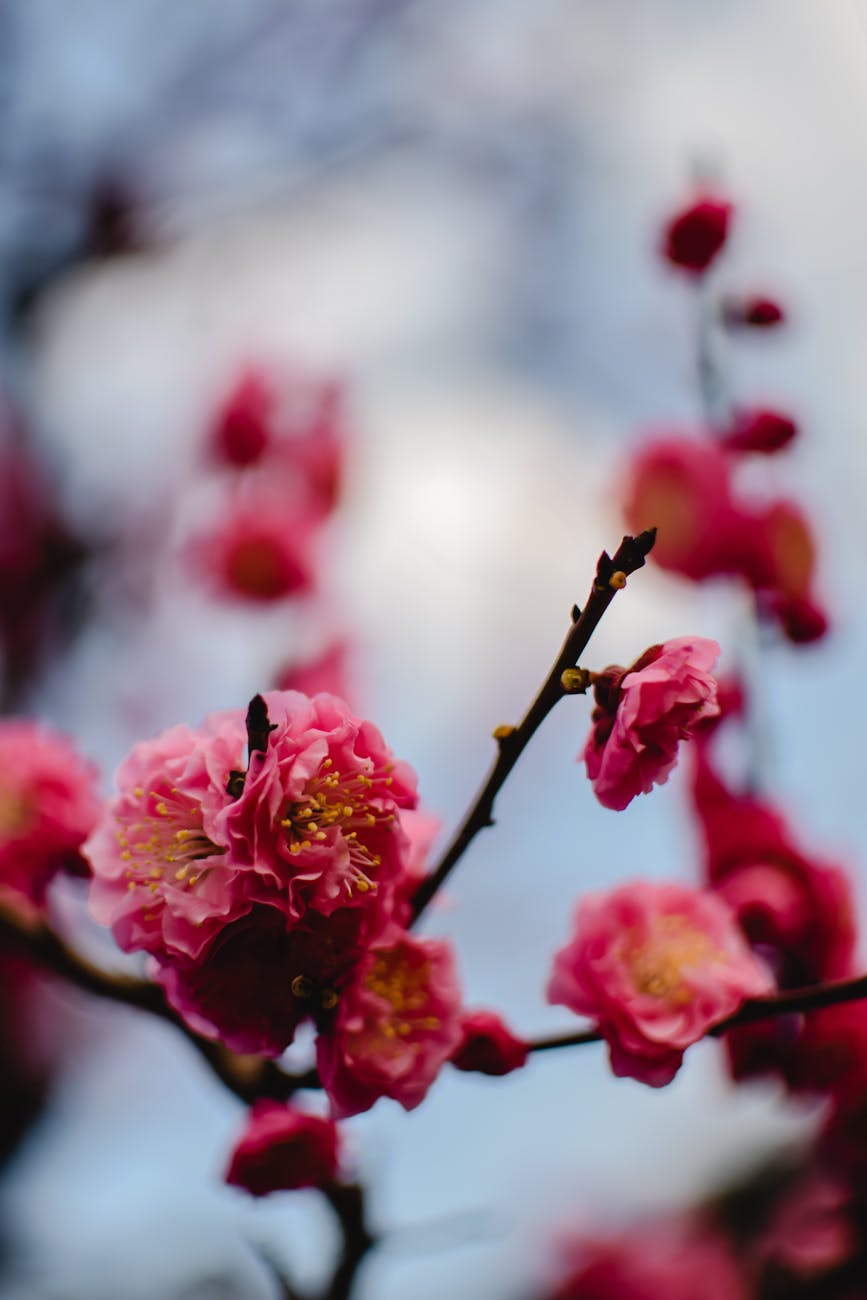
March climbs from about 8°C to 15°C (46–59°F) over the month. Early on it still carries a chill; by mid-March it turns genuinely pleasant. The plum blossoms (ume) are the early-season secret here, flowering through the month at the Osaka Castle plum grove and Osaka Tenmangu shrine with a fraction of the cherry-blossom mob. Cherries usually wake up in the final week, first buds around March 23–26 in an average year. Early to mid-March is quiet and good value; once that last week hits, hotel prices jump, so book two to three months out if you’re aiming for it.
April: peak sakura, peak everything
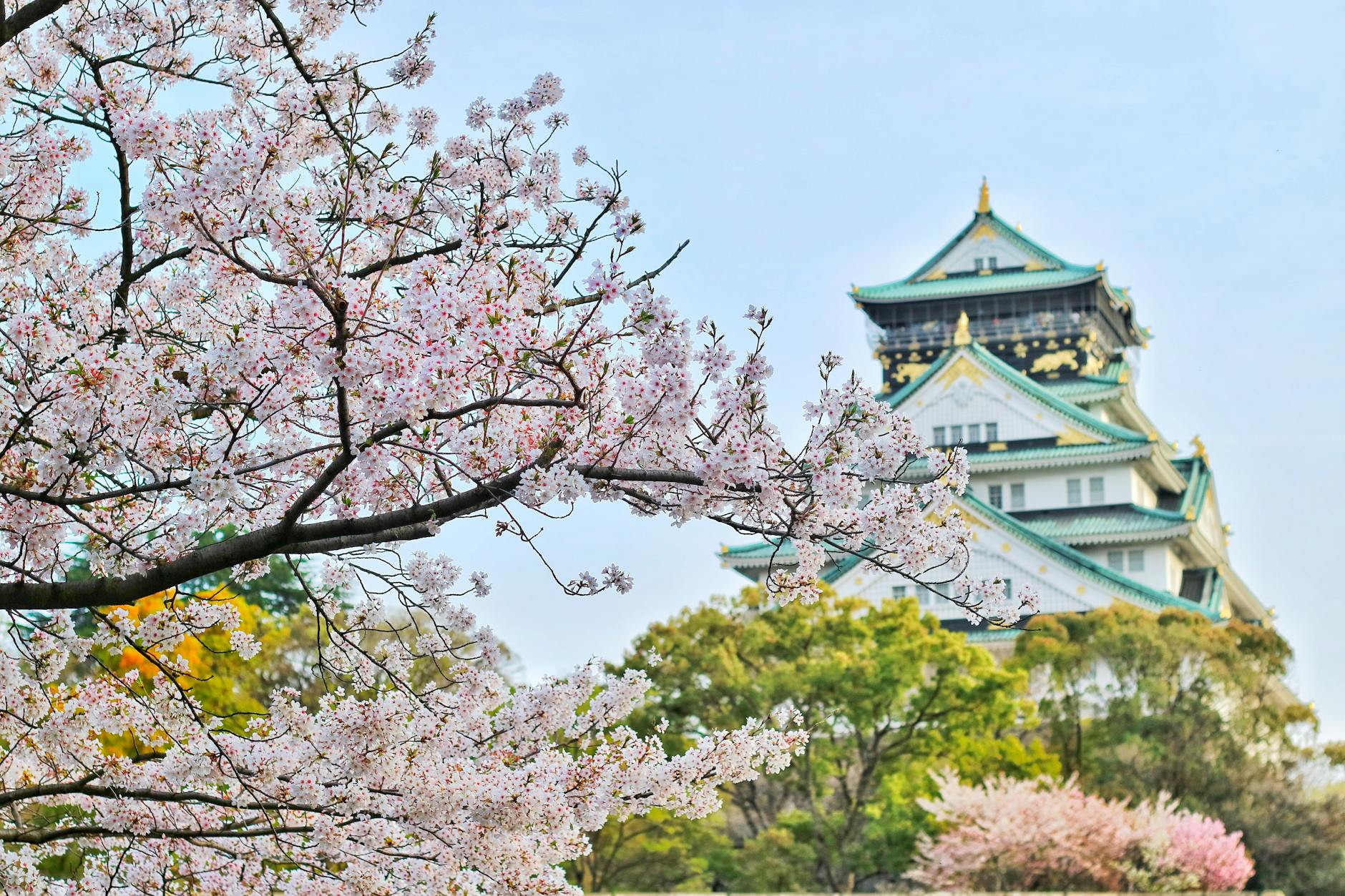
April is the postcard, and the crowd. Full bloom (mankai) lands in early April, typically April 1–5, with the trees holding well from about 50% bloom through petal fall, so don’t fixate on a single perfect day. Temperatures sit at an easy 15–20°C (59–68°F). The standout spots: Osaka Castle Park (over 3,000 trees), Kema Sakuranomiya Park (4,700 trees strung along the Okawa River), and the Japan Mint Bureau’s blossom alley, a one-week-only public opening with 130-plus rare varieties you won’t see elsewhere. Several parks run yozakura, lit trees and food stalls after dark, which I’d argue beats the daytime scramble. The cherry blossom window is worth its own deep dive, and we’ve written one in the Osaka cherry blossom guide.
On cost: this is the busiest stretch of the year. Hotels run 50–100% above off-peak and the good ones sell out months ahead. Beat it by hitting the popular parks before 9am. If sakura is the whole reason you’re coming, lock accommodation as early as you possibly can.
May: the quiet winner
Here’s the month I’d actually pick. May brings arguably the best weather of the year, 20–25°C (68–77°F), dry, clear, without the April crush. Gardens are deep green, wisteria and azaleas take over, and everything outdoors feels effortless. It’s the peak window for the city’s parks and gardens, from the free rose beds at Utsubo Park to the pond gardens tucked inside the bigger parks. The one asterisk is Golden Week (late April into early May), a domestic holiday block that spikes prices and crowds for its first week. Sit it out and the back half of May is a sweet spot, great weather, sane numbers. Perfect for neighbourhood wandering, riverside dinners, and day trips to Nara or Kyoto.
Summer (June–August): heat, festivals, and the year’s best deals
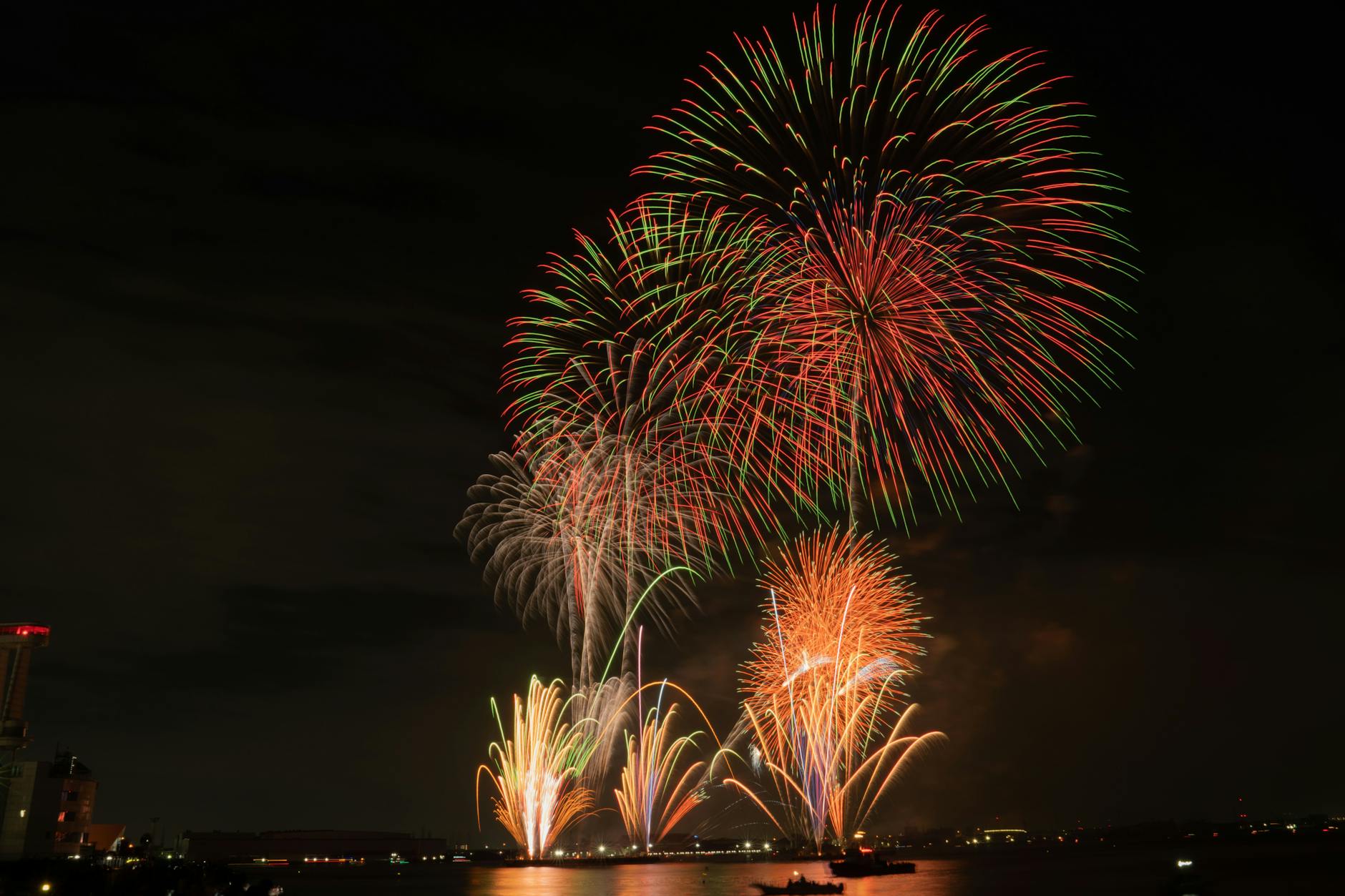
No guide pretends Osaka summer is comfortable. It isn’t. But the heat is exactly why hotels get cheap outside festival weekends, and why the city’s loudest, oldest festivals all happen now. If you can handle humidity, summer is an underrated bargain.
June: rain, and rock-bottom prices
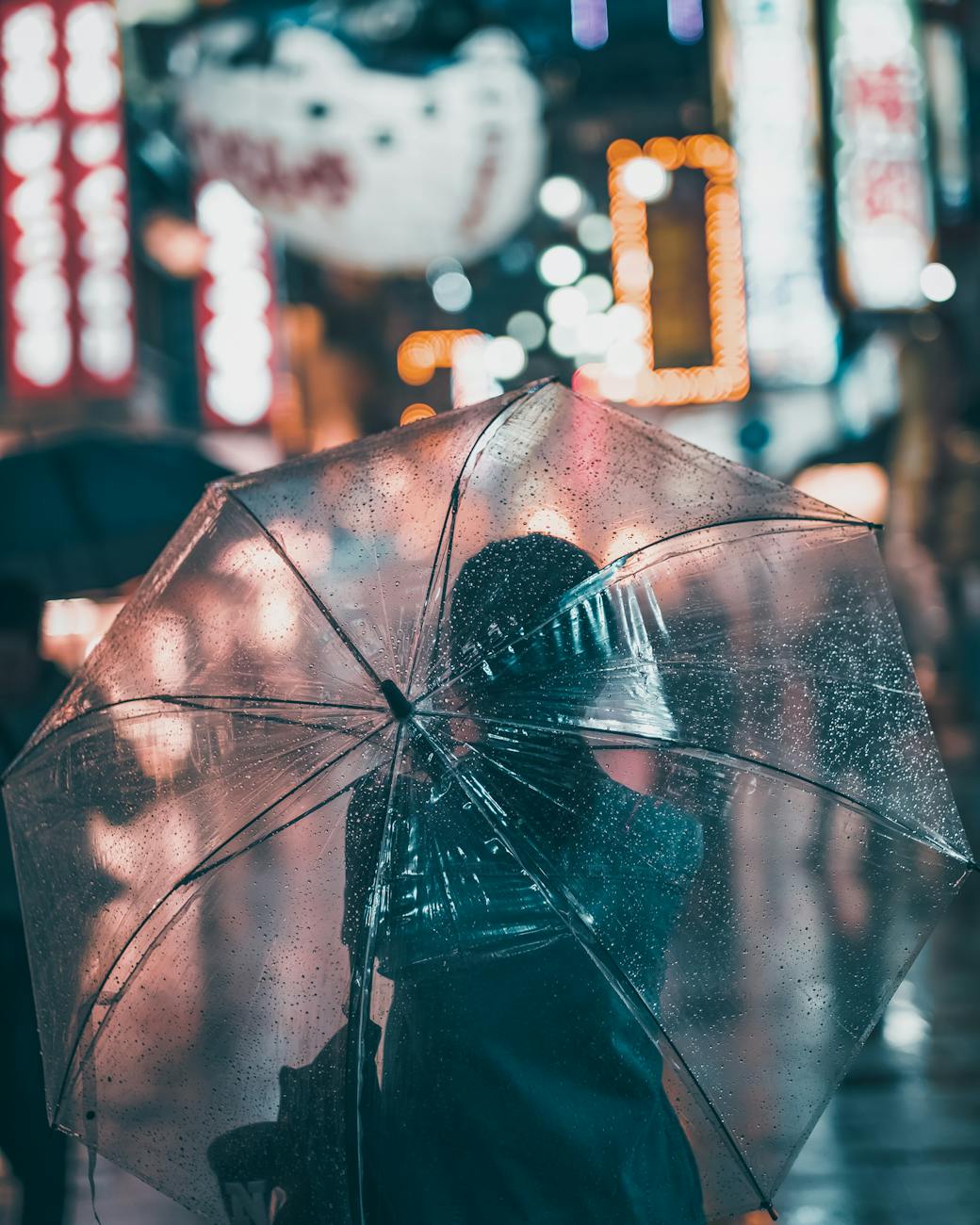
The rainy season (tsuyu) usually arrives in early June and lingers to mid-July: frequent showers (around 207 mm for the month), grey skies, rising humidity, temperatures of 22–27°C (72–81°F). Sounds grim, plays better than you’d think. Osaka has some of Japan’s longest covered arcades, Tenjinbashi-suji runs 2.6 km, Shinsaibashi-suji close behind, so a wet afternoon turns into a shopping-and-eating afternoon without a drop hitting you. Add the aquarium, the museums, and Dotonbori’s endless indoor seating. The upside in the wallet is real: June is one of the cheapest, emptiest months of the year. Pack an umbrella and pocket the savings, which stretch even further with our Osaka budget travel guide.
July: Tenjin Matsuri
The rain breaks around mid-month and the heat arrives in earnest, 30–33°C (86–91°F), humidity near 70%. It also brings Osaka’s single greatest event: the Tenjin Matsuri on July 24–25, one of Japan’s three great festivals and more than a thousand years old. A land procession of 3,000 people in Heian-era costume gives way to a river procession of over 100 lit boats on the Okawa, capped by some 3,000 fireworks reflecting off the water. Over a million people turn up. It is worth sweating for; the full playbook is in our Tenjin Matsuri guide.
August: hottest, with fireworks to match
August is the peak of the heat, daily highs of 33–35°C (91–95°F), and typhoon season is live, so storms can pass through Kansai. The events keep coming, though: the Sumiyoshi Matsuri at Sumiyoshi Taisha (late July into early August), the Naniwa Yodogawa Fireworks in early August, and the Obon period in mid-August, when many locals head to their hometowns and the city eases into a quieter rhythm. Survival kit: hydrate constantly, carry a hand fan and a cooling towel, push outdoor plans to early morning or evening, and duck into air conditioning at midday. Rooftop beer gardens are the move once the sun drops.
Autumn (September–November): the connoisseur’s pick
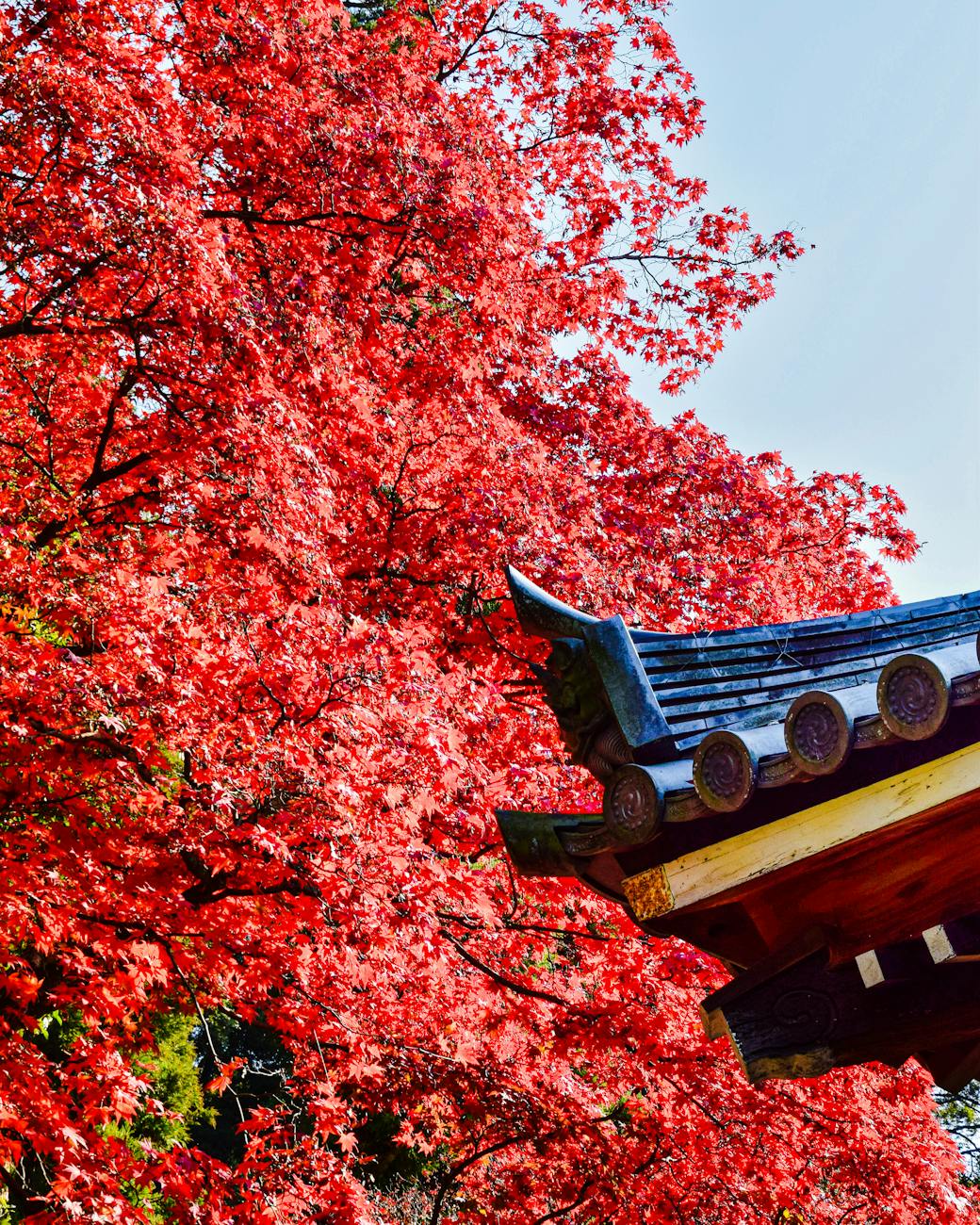
Plenty of seasoned Japan travellers quietly prefer autumn to spring, and I’m half-converted. Fewer international visitors, steadier weather, and a red-gold palette that suits the city’s temples. The trade-off is that domestic tourism stays strong, so it’s calm, not empty.
September: cooling off, Danjiri running
September starts hot, 28–30°C (82–86°F), and ends noticeably kinder at 22–25°C (72–77°F). Typhoon risk hangs around, so watch the forecast. The headline is the Kishiwada Danjiri Matsuri (September 19–20), the most heart-in-mouth festival in the country: four-ton wooden floats hauled through tight streets at a flat sprint, teams whipping them around corners in a way that looks borderline reckless. It’s raw and it’s thrilling, and it tells you everything about Osaka’s nerve.
October: the all-round best value
October is the one I push people toward when they want the best of everything without the premium. Days of 18–23°C (64–73°F), low humidity, clear blue skies, manageable crowds, and no single event drawing the masses. It’s made for long neighbourhood walks, street-food grazing, and day trips. Foliage hasn’t peaked yet, but the early-turning trees start showing colour by late month, especially up in Minoo Park. If you’re flexible on dates and want weather, value, and elbow room all at once, this is my honest top pick.
November: peak foliage (koyo)
November is when the colour goes off, usually mid-November through early December, and the Japanese chase koyo with the same devotion they give the cherries. At 12–18°C (54–64°F) it’s ideal walking weather. The spots to plan around: Minoo Park (a gentle trail to Minoo Waterfall under blazing maples, and yes, try the deep-fried maple-leaf tempura), Osaka Castle Park (the moat reflections), Expo ’70 Commemorative Park (the Japanese Garden mirrors scarlet maples in its ponds), and Hoshi-no-Buranko, a 280-metre suspension bridge hung 50 metres over a valley of colour. Late November is the second-busiest stretch after sakura, so prices climb on weekends; book two to three months ahead.
Winter (December–February): lights, and the cheapest hotels of the year
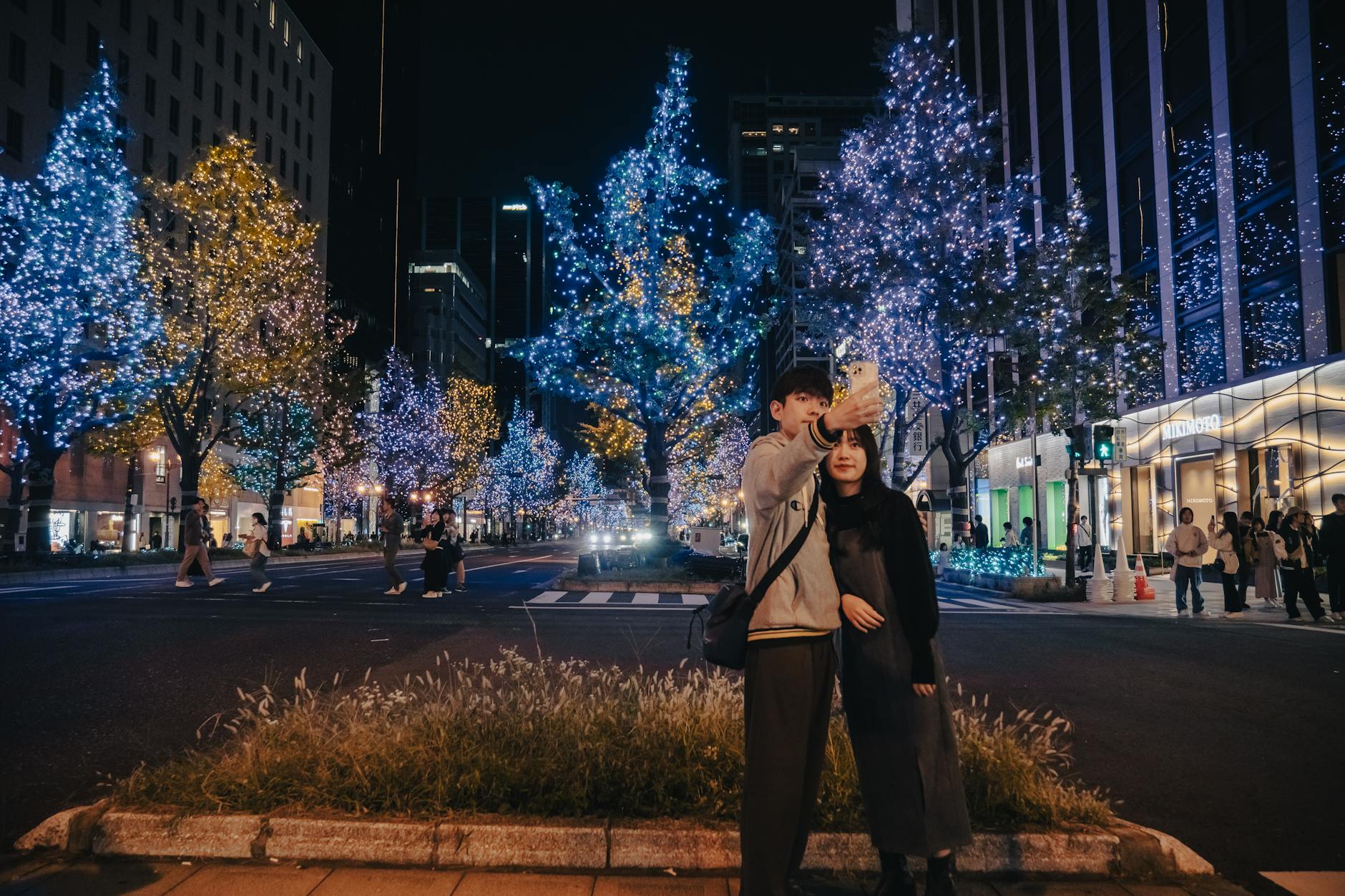
Winter is Osaka’s quietest stretch for foreign visitors, which is precisely the appeal. The illuminations are genuinely good, the hotel deals are the best you’ll find all year, the major sights are calm, and the cold is crisp rather than savage. For anyone watching their budget, this might be the answer, and our Osaka in winter guide goes deeper on what’s on.
December: a city wired with lights
December is peak illumination season. The Midosuji Illumination runs a record four kilometres down the main boulevard, linking Umeda, Shinsaibashi and Namba in one river of light. OSAKA Hikari Renaissance takes over the Nakanoshima waterfront with projection mapping, and the Osaka Castle Illuminage lights the castle grounds with historical themes. Temperatures average 6–10°C (43–50°F), cold enough for a real jacket but rarely worse. Snow in the city itself is very rare. This is also oden and nabe season, the hot-pot side of Osaka’s food culture that summer never shows you.
January: New Year, done the Japanese way
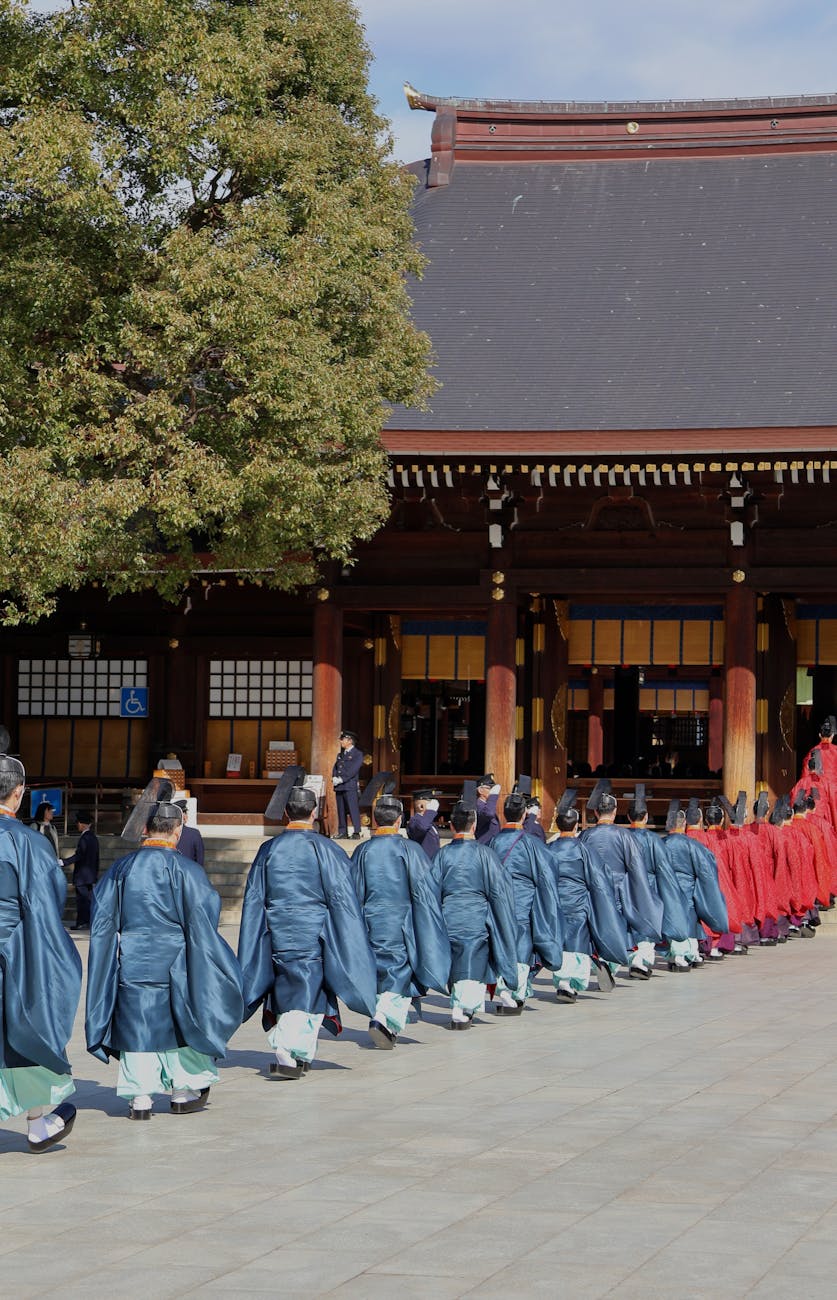
January is the coldest month, 3–9°C (37–48°F), and one of the most absorbing times to be here. The first days bring hatsumode, the year’s first shrine visit; Sumiyoshi Taisha alone draws over two million people across the first three days, a tide of devotion, food stalls and lucky charms that’s worth seeing once in your life. January also means fukubukuro, the sealed New Year “lucky bags” of discounted goods that department stores in Umeda and Shinsaibashi sell to enormous queues; the bargains can be ridiculous. One thing to plan around: the first week of January is a domestic holiday, but outside it, winter is the cheapest time to visit by a wide margin, with rates 40–60% under spring peak.
February: plums return, and the beans fly
February eases winter toward spring. Temperatures run 4–10°C (39–50°F) and the days stretch out. Plum blossoms reopen at the Osaka Castle plum grove (around 100 trees) and Osaka Tenmangu, a preview of spring without the sakura mob. The Setsubun Festival on February 3 livens up temples across the city, with roasted soybeans hurled to chase off bad luck, especially lively at Sumiyoshi Taisha and Shitennoji. Most illuminations wind down by late month, and hotel prices stay at their floor, which makes February a fine choice for calm, uncrowded sightseeing.
Quick verdict by month
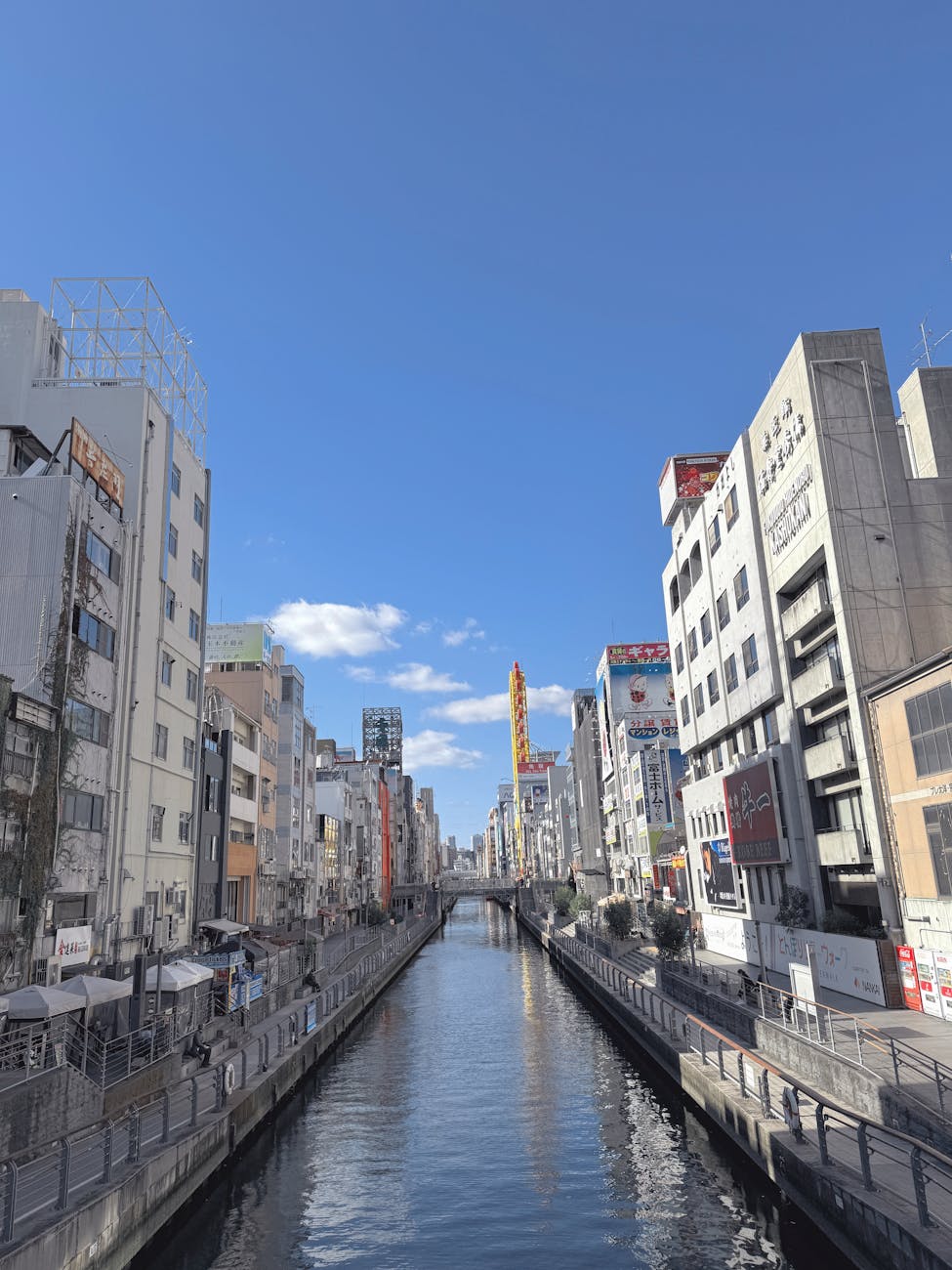
January — 3–9°C. Hatsumode, fukubukuro. Lowest crowds and prices. For budget travellers and culture hunters.
February — 4–10°C. Plum blossoms, Setsubun. Quiet and cheap. For low-key sightseeing.
March — 8–15°C. Plums early, first cherries late, and the Haru Basho sumo tournament in Namba. Costs spike at month’s end. For spring without the crush (early-to-mid).
April — 15–20°C. Peak sakura and hanami. Highest crowds and prices. For the postcard.
May — 20–25°C. Wisteria, azaleas, near-perfect weather. Moderate (busy during Golden Week). For the outdoors and day trips.
June — 22–27°C. Rainy season. Lowest crowds, cheapest rates. For value and covered-arcade days.
July — 27–32°C. Tenjin Matsuri (24–25). Hot and humid. For festival people.
August — 28–33°C. Fireworks, Obon. Hottest, typhoon risk. For summer festivals and nightlife.
September — 23–28°C. Kishiwada Danjiri, cooling off. Typhoon risk lingers. For festival thrill-seekers.
October — 18–23°C. Clear skies, early colour. Low-to-moderate crowds. For the best all-round balance.
November — 12–18°C. Peak foliage. Rising crowds. For autumn colour and temples.
December — 6–10°C. Illuminations, hot pot. Low-to-moderate crowds. For lights and value.
Pick your season by what you care about
Cherry blossoms
Late March to early April. Full bloom usually falls around April 1–5, but the annual sakura forecast shifts a week or two with winter temperatures, so check it. Aim to arrive a few days before predicted peak; the trees look superb from half-bloom through petal fall.
Budget
June (rainy season) and January–February (winter) carry the lowest prices on hotels, flights and attractions. June throws in warmer weather; winter throws in illuminations. Steer clear of Golden Week (late April to early May), Obon (mid-August), and New Year (December 28–January 3), when domestic travel peaks.
Festivals
July owns it with Tenjin Matsuri, with September’s Kishiwada Danjiri and the late-July Sumiyoshi Matsuri close behind. For something smaller and calmer, line your trip up with the neighbourhood matsuri that dot the autumn calendar. Confirmed dates, viewing spots and costs for all of them sit in our month-by-month matsuri calendar.
Autumn colour
Mid-to-late November. Minoo Park and Osaka Castle usually peak around November 20–30, with the mountains turning a touch earlier. As with the cherries, timing rides on the weather, so check the koyo forecast before you commit.
Families
May (after Golden Week) and October give you the friendliest conditions: comfortable temperatures, sane crowds, and good weather for theme parks and outdoor days. Both dodge the extremes of heat and heavy rain.
Avoiding crowds
June, January and February are the calmest months, and weekdays always beat weekends. If you’re stuck travelling in peak season, get to the big sights before 9am or after 4pm and the city feels half as full.
What to pack, by season
Spring (March–May): light layers, because mornings and evenings stay cool while afternoons warm up. A light jacket, real walking shoes, a small umbrella for the odd shower, and a battery pack for all the photos you’re about to take.
Summer (June–August): light, breathable, moisture-wicking everything. A compact umbrella or rain shell for tsuyu, plus sunscreen, a hand fan and a cooling towel. Stay topped up on fluids; convenience stores sell cold tea and sports drinks on every corner.
Autumn (September–November): layers again. A mid-weight jacket covers November, while early autumn can still run warm, so bring both ends. Sturdy shoes if you’re walking the foliage trails at Minoo.
Winter (December–February): a warm coat, scarf and gloves; Osaka’s damp cold bites even though it rarely freezes. Thermal base layers beat a single heavy coat, since trains, shops and restaurants are all well heated. Warm, water-resistant shoes for evening light walks.
Booking and timing, the short version
Book flights early for the peaks. For sakura (late March to mid-April) and foliage (mid-to-late November), get flights three to four months out. Last-minute fares in those windows can double or triple.
Lean on the shoulder weeks. The days just before and after peak sakura and peak foliage give you nearly the same experience with far fewer people and lower prices. Early March and early December are especially good for this.
Dodge the domestic holidays. Golden Week (April 29–May 5), Obon (August 13–16) and New Year (December 28–January 3) mean packed trains, full hotels and premium pricing. If you can’t avoid them, book everything as far ahead as possible.
Confirm festival dates each year. Many are fixed (Tenjin Matsuri is always July 24–25), but some drift, so check before you finalise. For the wider logistics of putting a trip together, our complete Osaka travel guide covers the rest.
So when should you actually go?
The honest answer is that there’s no single best week, only the best week for you. Our season-by-season breakdown puts the trade-offs side by side, temperatures, crowd levels and what a hotel actually costs. If you forced me to name two, I’d say late March to mid-April for the cherry blossoms, and late October to late November for foliage with weather that behaves. But the so-called off months earn their keep: June’s rain-slicked temple courtyards, the million-light winter streets, the empty-park calm of February. Each of Osaka’s four seasons gives you something the others can’t.
Whichever you choose, the food, the warmth and the city’s general refusal to sit still carry the rest. Match the season to whatever excites you most, and you’ve already made the right call.
Explore the full Osaka Seasonal Guide series
Planning around a season or festival? Here’s the full calendar, covered in depth:
- Osaka Cherry Blossom 2026: Best Viewing Spots, Forecast & Tips
- Osaka Festival Calendar 2026: Month-by-Month Matsuri Guide
- Osaka Golden Week 2026: What to Do, What to Avoid (Apr 29 – May 6)
- Osaka Hanami Guide 2026: Cherry Blossom Picnic Culture & Etiquette
- Osaka in Autumn 2026: Foliage Spots, Festivals & What to Wear
- Osaka in Summer 2026: Festivals, Fireworks & Beating the Heat
- Osaka in Winter 2026: Illuminations, Hatsumode & Cold-Weather Fun
- Tenjin Matsuri 2026: Complete Guide to Osaka’s Top 3 Festival
Winter’s headline event is not one event but a city-wide programme running from early November to mid-February — see the Osaka illuminations guide for what is on, where, and what it costs.
For the turn of the year specifically, our Osaka Christmas and New Year guide explains what is open, what is closed and what to do.