This article contains advertising. Our booking links are routed through a partner that adds commission tracking automatically, so if you book through one we earn a commission from the provider, at no extra cost to you. It never affects what we recommend. Affiliate disclosure
Osaka splits into a handful of districts that each behave like their own small city, and once you understand how they connect, the place stops feeling sprawling and starts feeling walkable. The good news for planning: almost everything you want sits on or near the Midosuji subway line, the north-south spine, and you can cross from the polished north to the food-obsessed south in about nine minutes. This guide walks you through the districts that matter, what each one is actually for, and how to string them together without backtracking.
Two names do most of the work. Locals call the northern downtown Kita (“north”) and the southern one Minami (“south”), and the rivalry between them goes back centuries. Kita is suits, department stores, and skyline; Minami is takoyaki, neon, and people out to have a good time. Everywhere else, from retro Shinsekai to the rose gardens of Nakanoshima, hangs off those two poles. Pick a base near one, day-trip into the other, and you have the city mostly solved. Our where to stay in Osaka guide breaks down which side suits which kind of trip.
Kita vs Minami: the two halves to learn first
Kita, the Umeda area, is the city’s grown-up face. It wraps around the enormous JR Osaka Station complex and the Umeda subway stations, and it’s where the head offices, the high-end depachika, and the rooftop bars live. By day it can feel a little buttoned-up. After about 6pm it loosens considerably, the basement restaurant warrens fill, and you remember this is still Osaka.
Minami, anchored on Namba, is the part most people picture. This is where kuidaore — eating yourself broke — was basically invented by Edo-period merchants who blew their money on food and drink. Dotonbori, Namba, Shinsaibashi, and Amerikamura all sit inside Minami and bleed into one another, so you can wander between them on foot without ever checking a map. The two halves are stitched together by the Midosuji line and, above ground, by the wide ginkgo-lined Midosuji boulevard. Most visitors end up living in both.
Dotonbori: the neon strip everyone comes for
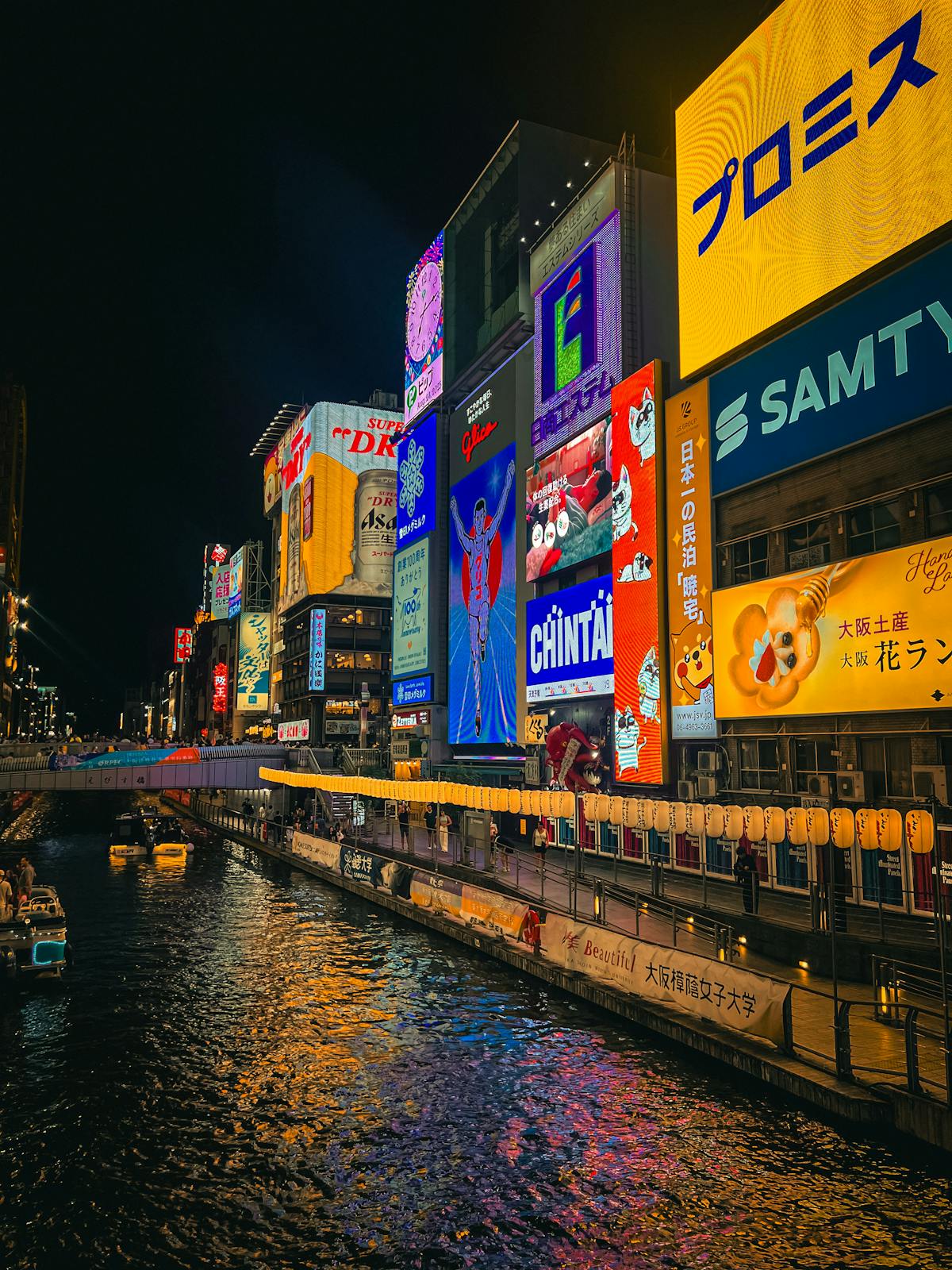
Dotonbori is the single most photographed street in Kansai, and yes, it’s a tourist circus after 7pm. Go anyway. The trick is timing: turn up around 5pm, watch the signs flicker on along the canal, eat your way down the strip, and clear out before the weekend crush peaks. The Glico running man has been lighting up Ebisu Bridge since 1935, and the giant mechanical Kani Doraku crab nearby is the other photo everyone takes. Beneath the spectacle there’s real history here — merchant Yasui Doton dug the canal in 1612, and by the Edo period kabuki and bunraku theaters lined the water.
Eat standing up. Takoyaki, okonomiyaki griddled in front of you, gyoza from counters with no chairs. When you want a sit-down meal, duck into Hozenji Yokocho, a stone-paved lane off the main drag with a moss-covered shrine and a cluster of tiny old-school restaurants — it’s a different century back there. For a route through the whole eating scene, our Osaka food guide does the heavy lifting; for the district in full, see the Dotonbori guide. Want the canal from water level? The Tombori River Cruise runs about ¥1,000 for 20 minutes from the dock by Don Quijote.
Namba: the practical heart of the south
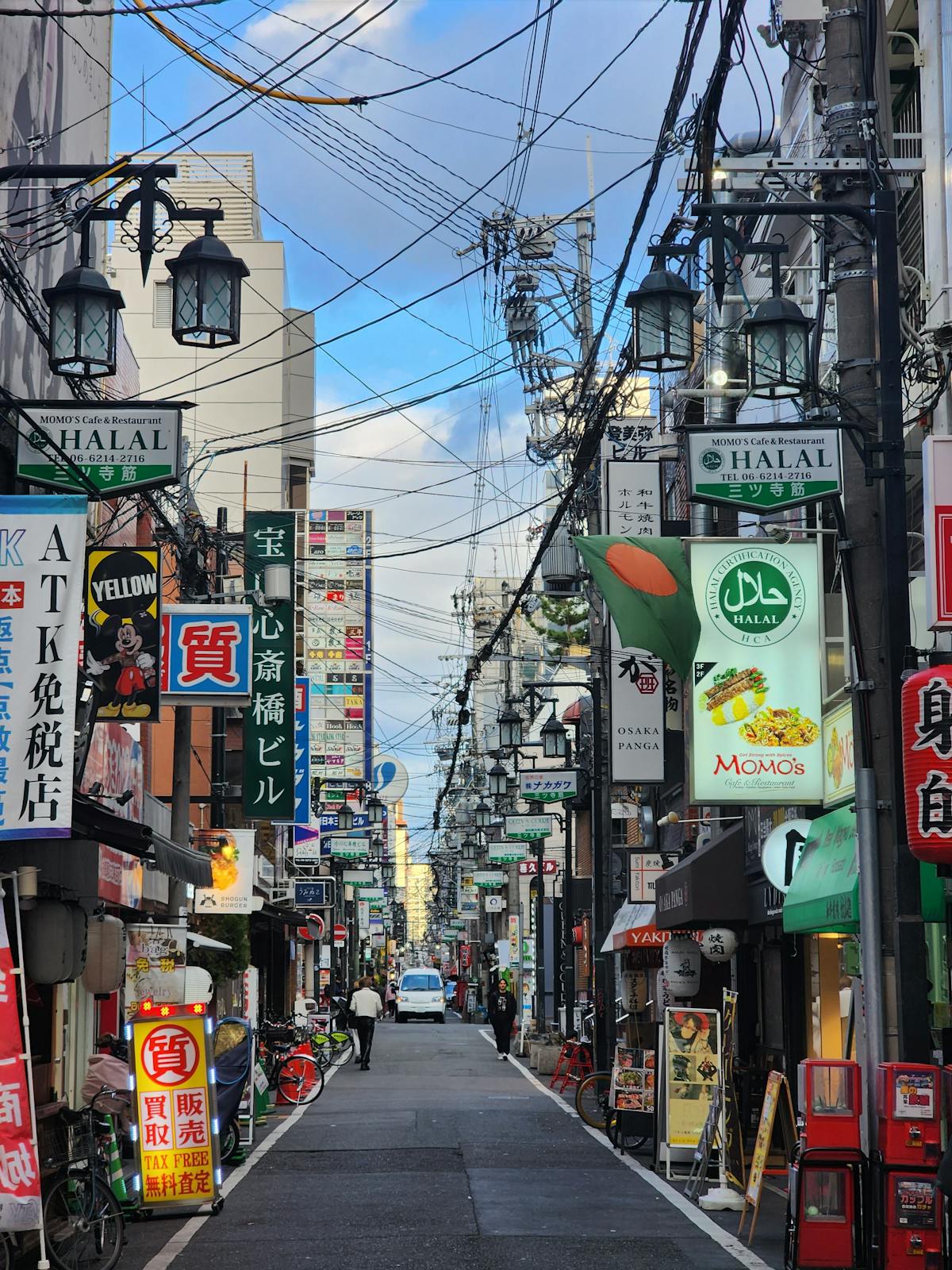
Namba is where southern Osaka plugs in. The station complex feeds the Nankai line (your direct ride to Kansai Airport), the Midosuji and Yotsubashi subways, Kintetsu, and JR Namba — which is why it’s such an easy base. Step outside and you’re in retail country. Namba Parks stacks a terraced rooftop garden eight floors above a sleek mall, and the Namba Walk underground arcade tunnels for nearly a kilometer with the air conditioning cranked, linking station to station.
This is also home to Namba Grand Kagetsu, the theater where Osaka’s beloved manzai double-act comedy plays daily — the city takes being funny seriously. From the station, head north and you spill straight onto Dotonbori; head east and you hit Den Den Town. That central position makes Namba the natural launch pad for a day on foot. The full breakdown lives in the Namba guide.
Shinsaibashi: where Osaka comes to shop
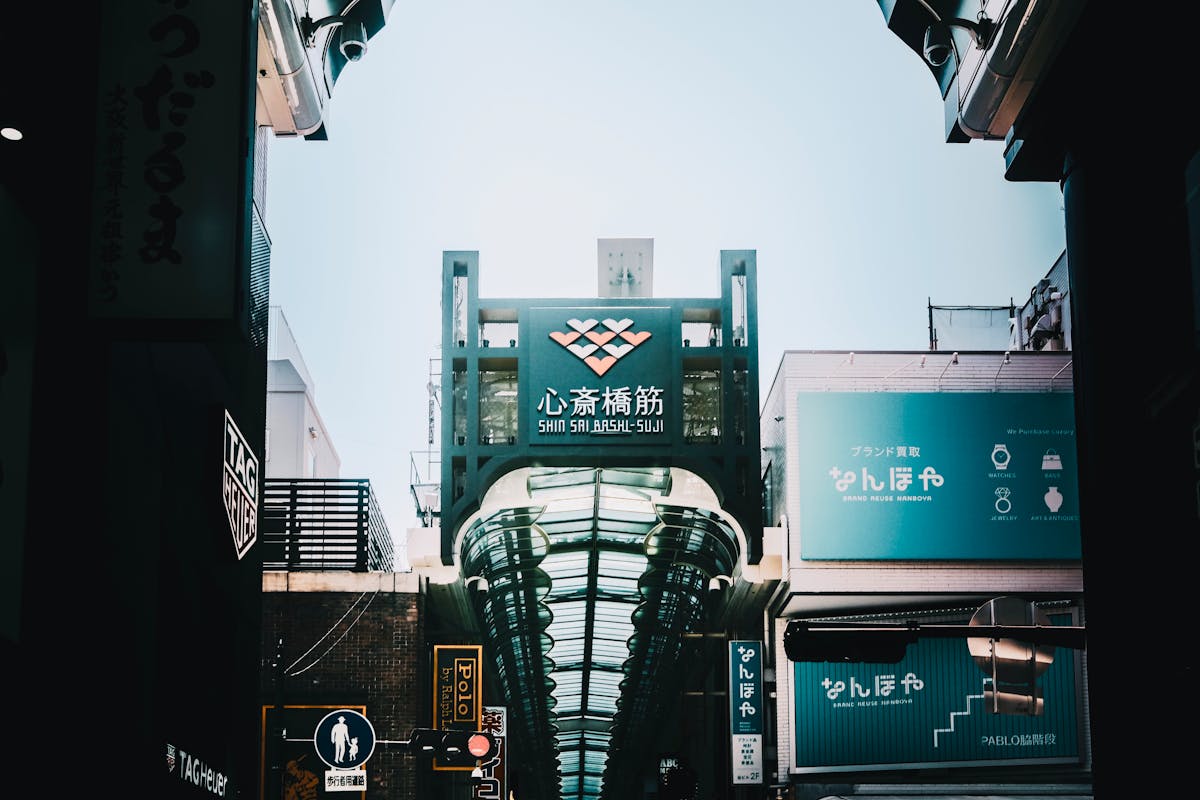
Shinsaibashi-suji connects Namba up toward Dotonbori as a covered arcade running roughly 600 meters. It’s been a shopping street since the Edo period and it still pulls the biggest crowds. Under the arched glass roof you get the full spread: international luxury houses, Japanese high-street chains, indie boutiques, 100-yen shops, and the tax-free drugstores that tourists empty out by the basketful. Daimaru Shinsaibashi anchors it, and its basement food hall is worth a lap for the bento, wagashi, and gift boxes alone.
The arcade itself is fine. The good stuff hides one street over — vintage racks, knife and kitchenware specialists, cafes that never make it into guidebooks. Tax-free kicks in over ¥5,000, so carry your passport. Being fully roofed, it’s also your rainy-day move, and it threads right into Namba’s underground network. For the deep dive on shops and where to actually spend, lean on our Osaka shopping guide or the Shinsaibashi guide.
Amerikamura: secondhand racks and skater energy
Just west of the Shinsaibashi arcade, Amerikamura — “American Village,” Amemura to everyone local — has been Osaka’s youth-culture corner since the 1970s. The name comes from the imported gear that first drew kids here: vintage Levi’s, band tees, crates of vinyl. The hub is Triangle Park (officially Mitsu Park), a scrap of plaza where skaters, buskers, and the sharply dressed gather, watched over by a small Statue of Liberty replica bolted to a rooftop.
Come to dig. The blocks around the park are thick with secondhand shops, streetwear, record stores, tattoo studios, and small roasters. Plenty of people swear the takoyaki at Kougaryu near Triangle Park is among the best in the city, so join that queue. Weekend afternoons are when it really hums; on a quiet weekday morning it’s half-asleep.
Shinsekai: Osaka stuck happily in 1965
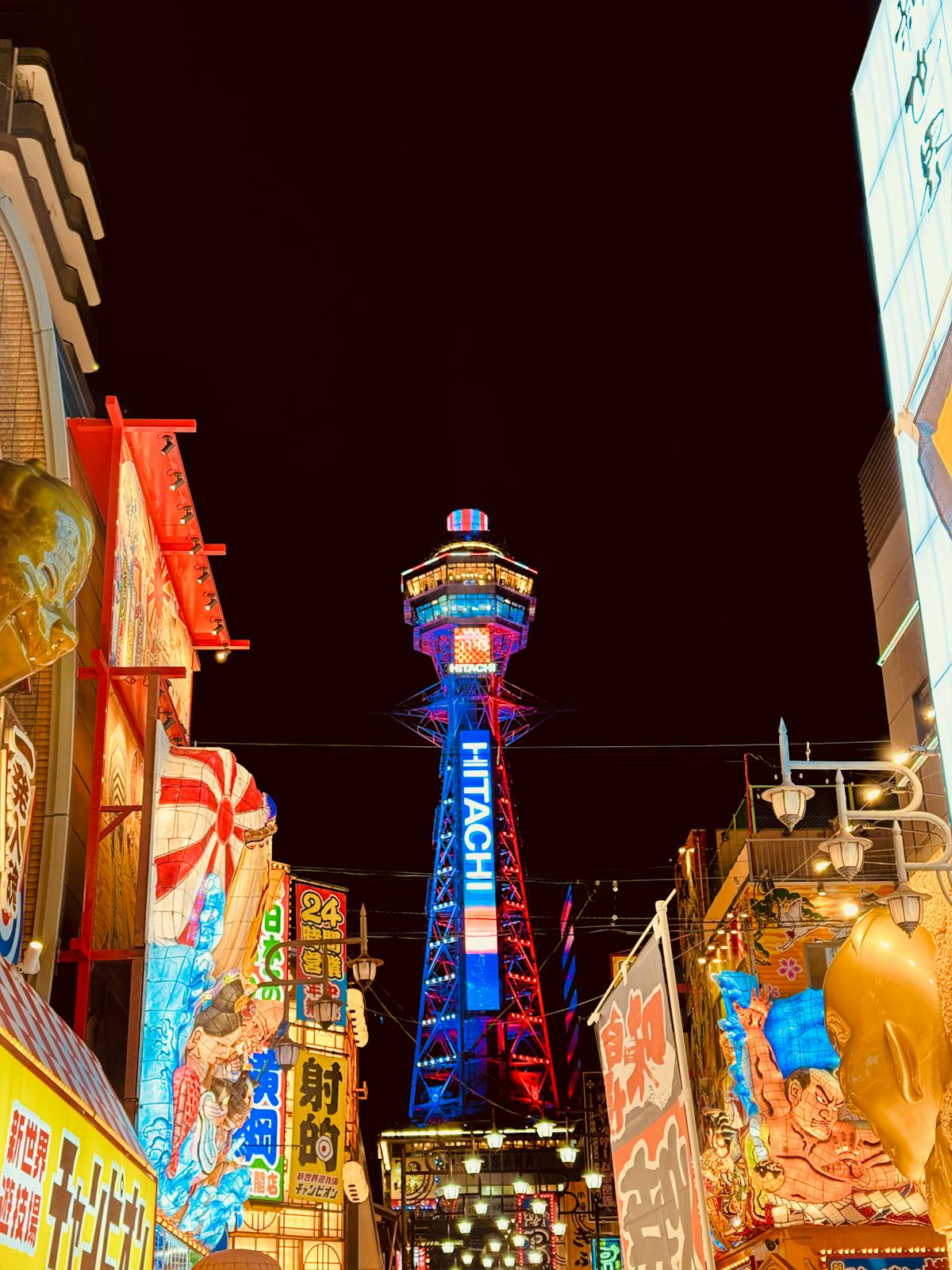
Shinsekai (“New World”) is the most characterful patch in the city — a retro entertainment quarter that feels like walking onto a film set from sixty years ago. It was laid out in 1912 on the grounds of a 1903 expo, the north half modeled on Paris and the south on Coney Island. It fell on hard times mid-century, came back, and somehow kept its wonderfully dated atmosphere intact. The centerpiece is Tsutenkaku Tower, 108 meters, built in 1912, lost in 1943, rebuilt in 1956. Up top you rub the feet of Billiken, the tower’s good-luck mascot, and a newer glass-floored deck called TIP THE TSUTENKAKU is there for anyone with the nerve.
This is kushikatsu country — deep-fried skewers dunked in a shared pot of tangy Worcestershire sauce, and the one rule that matters is painted everywhere: no double-dipping. Reckon on ¥800 to ¥1,500 for a proper feed with a beer. Wander the Jan Jan Yokocho alley for old eateries, shogi parlors, and retro arcades. Best window is late afternoon into evening, say 4 to 9pm — arrive in daylight, climb the tower, then watch the neon catch fire at dusk. More in the Shinsekai guide.
Umeda and Kita: the polished north
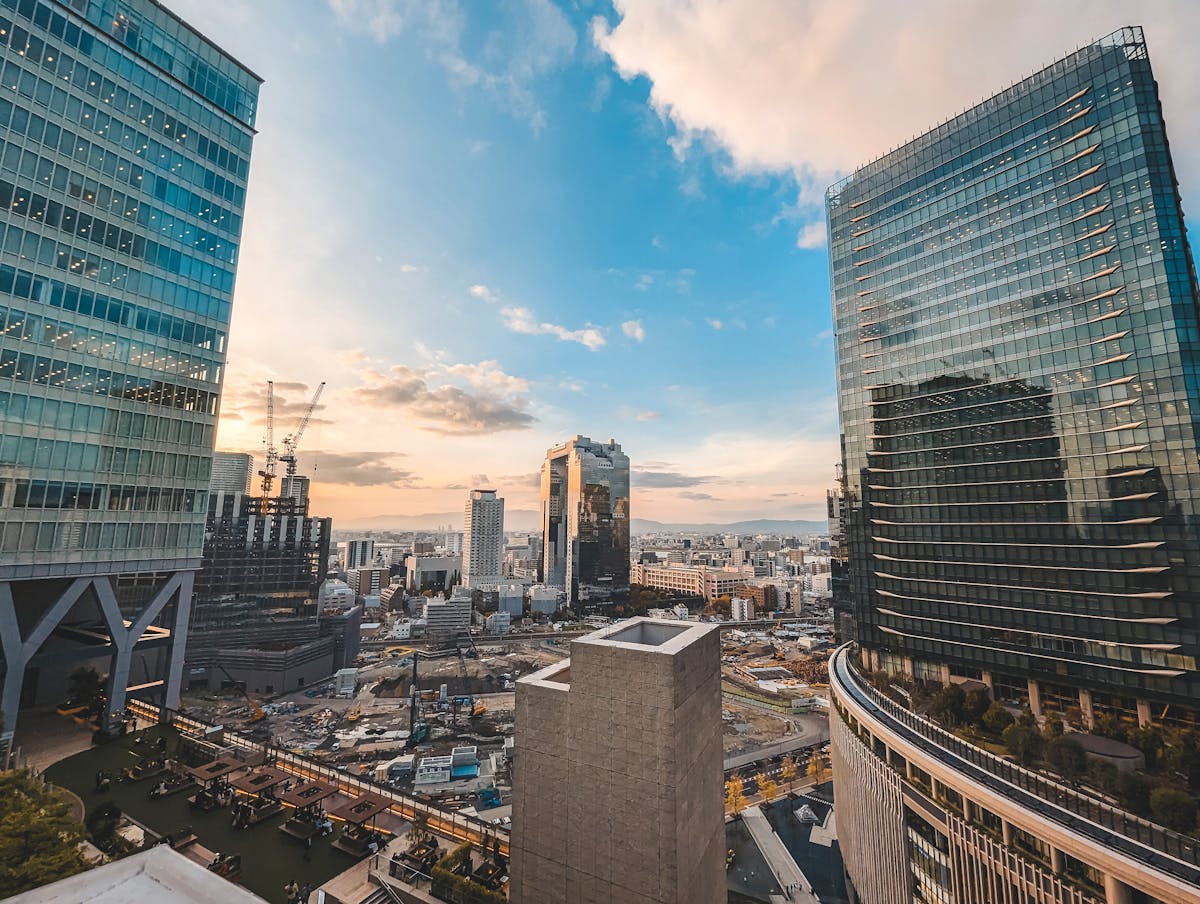
Umeda is the northern anchor, a tight cluster of towers, department stores, and connected underground malls built around JR Osaka Station and the neighboring Umeda subway stops. On the surface it reads like any big global city. Underneath sprawls a maze of restaurants, bars, and shops that goes toe to toe with anything in Minami. The landmark to aim for is the Umeda Sky Building, twin towers bridged by a “Floating Garden Observatory” at 173 meters; the open-air rooftop, with floor panels that glow at sundown, is the best free-standing view in the city. Its basement hides Takimi Koji, a restaurant alley dressed up as 1920s Osaka.
For shopping, Grand Front Osaka at the north exit packs in 260-plus shops and restaurants, while the HEP FIVE building wears a bright red Ferris wheel on its roof (a 15-minute spin, decent views). Below ground, Whity Umeda and Diamor Osaka connect the stations through hundreds more outlets. Umeda is also where nearly every rail line in the region converges — JR to Kyoto and Kobe, Hankyu, Hanshin, the subways — so if you’re lining up day trips from Osaka, this is usually your departure gate. Sorting the lines out is what our Osaka transportation guide is for, and the area itself gets the full treatment in the Umeda guide.
Tennoji and Abeno: ancient temple, tallest tower
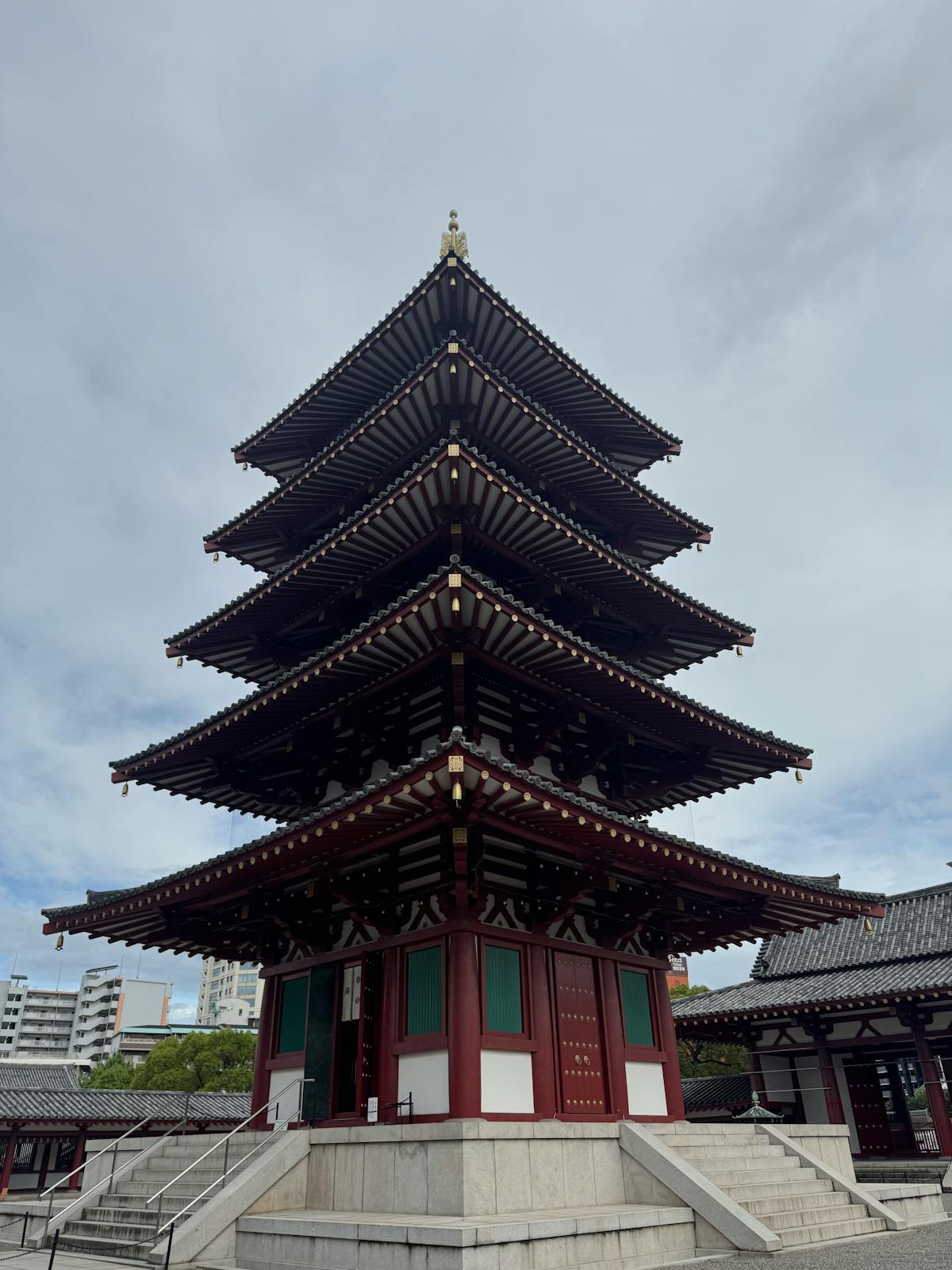
Tennoji is the district most visitors skip, which is exactly why it’s worth your time. Here Japan’s oldest Buddhist temple sits in the literal shadow of the country’s tallest skyscraper, and the gap between the two is the whole appeal. Shitennoji Temple, founded by Prince Shotoku in 593, was the first temple the state ever commissioned. The grounds hold a five-story pagoda and a quiet inner garden with a pond and arched bridge (¥300 to enter), plus a busy flea market on the 21st and 22nd of every month.
Walk out of the temple and look up at Abeno Harukas, 300 meters, Japan’s tallest building from 2014 until 2023. The Harukas 300 deck on floors 58 to 60 hands you a view that runs from Osaka Bay clear to the Nara hills. Nearby, Tennoji Park folds in the Osaka Municipal Museum of Fine Art, Tennoji Zoo (open since 1915), and the lovely Keitakuen garden, with the big Abeno Q’s Mall next door. Prices here run lower, the crowds thin out, and Shinsekai is a 10-minute walk away — pair the two for an easy half-day. Details in the Tennoji and Abeno guide.
Nakanoshima: the quiet cultural island
Nakanoshima is a slim island, about 3 kilometers long, wedged between the Dojima and Tosabori rivers right through the middle of the city. Tourists mostly miss it. It started as an Edo-era rice-trading hub and grew into Osaka’s cultural and civic center, which earned it the nickname “Osaka’s Manhattan” for the mix of stately old halls and glass towers. The east end holds the Nakanoshima Museum of Art, a dramatic mostly-underground gallery that opened in 2022, and the neoclassical Osaka Central Public Hall from 1918 is one of the prettiest Western-style buildings around.
Nakanoshima Park wraps around a rose garden of roughly 4,000 plants — at its peak in May and October it’s genuinely lovely, and a welcome breather from Minami. Come evening, the riverside promenades on both banks light up, the bridges reflect in the water, and a handful of waterfront cafes and restaurants along the south embankment make a calm dinner spot. In winter the island hosts the Festival of the Lights, a run of large illuminations. The Nakanoshima guide has the full walk.
Den Den Town: anime, electronics, and retro games
South of Namba, Den Den Town in the Nipponbashi area is Osaka’s answer to Akihabara — a few blocks given over to electronics, anime, manga, games, and the deeper end of otaku culture. It’s smaller than the Tokyo version and easier on the senses for it, with sharper prices and a looser Osaka feel. The main run along Nipponbashi-suji (Sakai-suji street) is lined with multi-floor electronics shops, figure stores, and retro-game dens selling everything from Super Famicom carts to genuine arcade boards. Mandarake runs a big branch here, sorted floor by floor.
A few maid cafes round out the scene, and on weekends you’ll spot cosplayers posing on the main street. Time your visit for the Nipponbashi Street Festa (usually March) if you can — the road shuts to traffic and thousands of cosplayers parade through. The full picture is in the Den Den Town guide.
Osaka Bay: theme parks and sea air
The Osaka Bay Area is the waterfront end of the city and the part that feels least like the rest of it — open space, ocean breeze, big purpose-built attractions. It pulls millions of visitors, mostly families, and it earns a slot on a longer itinerary. The headliner is Universal Studios Japan, home to Super Nintendo World and the Wizarding World of Harry Potter. Next door, the Osaka Aquarium Kaiyukan is one of Japan’s best, built around a colossal central tank with whale sharks, and the Tempozan Giant Ferris Wheel beside it hands out harbor views. For planning either one, our things to do in Osaka guide goes deeper.
Getting out here: the JR Yumesaki line to Universal City Station for USJ, or the Chuo subway to Osakako Station for Kaiyukan and Tempozan. Budget half a day for the aquarium cluster, a full day for the theme park. The Osaka Bay Area guide covers it end to end.
The lower-key districts worth a detour
Once you’ve done the headline areas, a few quieter neighborhoods reward going off-script — fewer tourists, more of the city as people actually live it.
Nakazakicho
Just east of Umeda, Nakazakicho is the bohemian pocket — narrow lanes, pre-war wooden houses, and a dense run of indie cafes and vintage shops. Because the area largely dodged WWII bombing, original machiya townhouses survive, now reborn as coffee shops, galleries, and craft boutiques. Go on a midweek morning when the maze is at its quietest. It’s a 10-minute walk from Umeda.
Horie
South of Shinsaibashi, Horie pulls the design crowd with its independent boutiques, studios, and easygoing pace. Orange Street (Tachibana-dori) is the spine, lined with furniture shops, lifestyle stores, and carefully chosen cafes. This is where Osaka’s creatives and a chunk of the expat community overlap, which gives it an international edge that still reads local.
Tsuruhashi
Tsuruhashi is home to one of Japan’s biggest Koreatowns and the undisputed capital of yakiniku in Osaka. The smell of grilling meat hits you the second you leave the station. Its covered market is a tangle of alleys selling Korean ingredients, kimchi, cosmetics, and K-pop merch, and the yakiniku joints serve premium cuts well under what you’d pay in the tourist core. For food lovers it’s one of the most atmospheric corners in the city.
Tenma and Tenjinbashi
The Tenjinbashisuji shopping street is the longest covered arcade in Japan at about 2.6 kilometers, and it’s refreshingly unbothered by tourism — old sembei shops, neighborhood fishmongers, small clothing stores, restaurants pitched at locals. The nearby Osaka Tenmangu shrine and the excellent Osaka Museum of Housing and Living (you walk through a rebuilt Edo-era streetscape) make Tenma one of the better areas for an unhurried, low-key day.
What each district feeds you
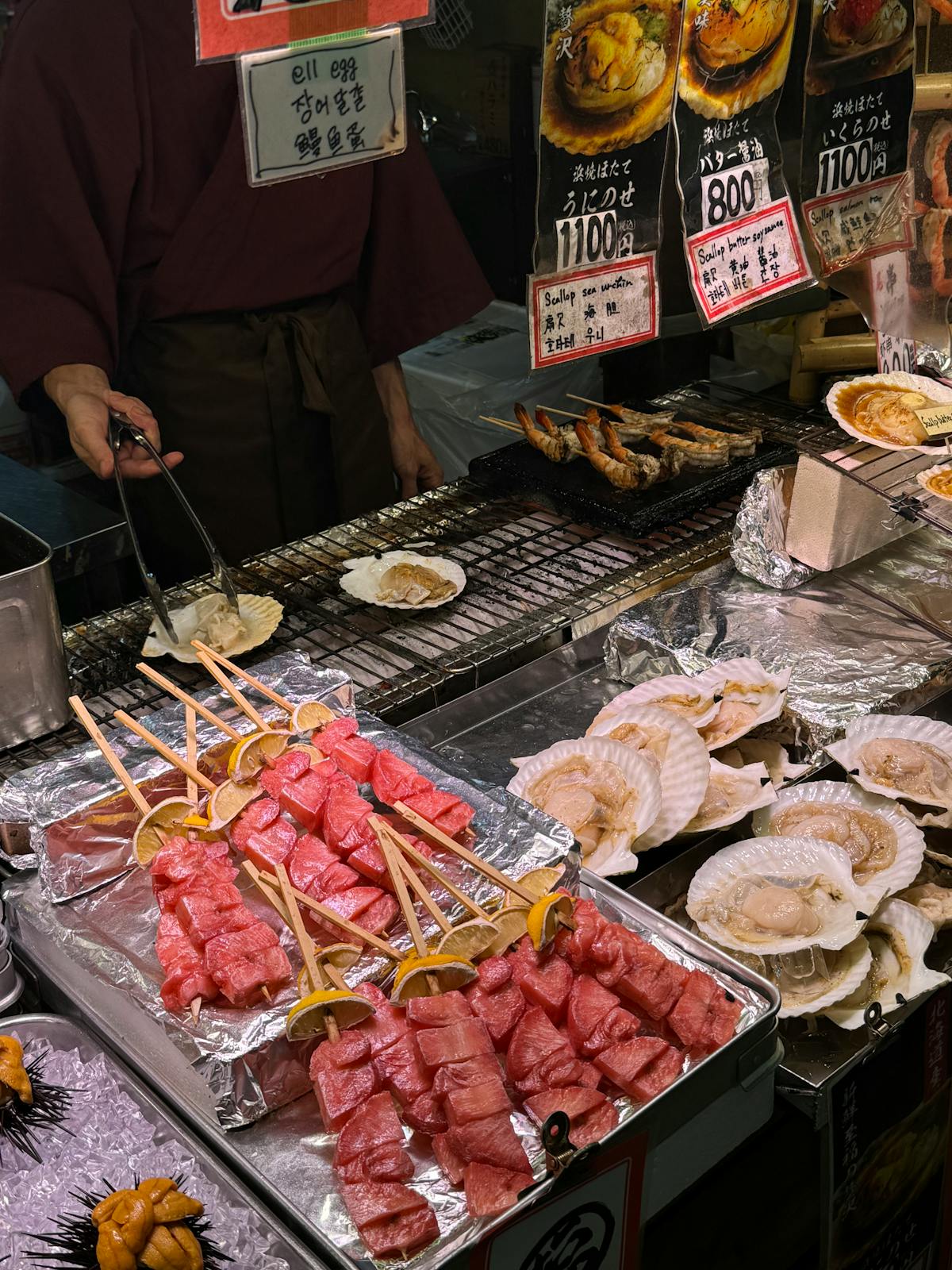
Each area has a flavor it owns. Dotonbori and Namba are takoyaki and okonomiyaki ground zero. Shinsekai is kushikatsu, full stop — the densest run of deep-fried-skewer joints in the country. Tsuruhashi rules yakiniku; Tenma’s backstreets hide the best-value izakaya in town. Umeda’s department-store depachika do the premium bento and beautifully boxed sweets, and for raw fish the stalls around Kuromon Market near Nipponbashi are still the move. It’s all mapped in the Osaka food guide.
Getting between neighborhoods
Osaka is compact, so moving around is mostly painless. The Midosuji line does the bulk of it, running Umeda to Shinsaibashi to Namba to Tennoji in a straight shot, most hops under 15 minutes. An ICOCA card taps you onto every train, subway, and bus, so you never stand at a ticket machine. If you’re moving fast and hitting a lot, the Osaka Amazing Pass (1-day ¥2,800, 2-day ¥3,600) bundles unlimited subway and bus rides with free entry to 50-plus spots, Tsutenkaku and the Tempozan wheel and Osaka Castle among them. And four of the big ones — Dotonbori, Namba, Shinsaibashi, Amerikamura — sit close enough to walk, since they flow into each other anyway. Full details in the getting around Osaka guide.
At a glance: which district for what
A fast cheat sheet for deciding where to point yourself:
| Neighborhood | Best for | Nearest station | Highlights |
|---|---|---|---|
| Dotonbori | Street food, nightlife, photos | Namba (Midosuji) | Glico sign, canal cruise, takoyaki |
| Namba | Shopping, transit, comedy | Namba (multiple lines) | Namba Parks, Grand Kagetsu, malls |
| Shinsaibashi | Shopping, fashion | Shinsaibashi (Midosuji) | 600m arcade, Daimaru, tax-free shops |
| Amerikamura | Youth culture, vintage | Shinsaibashi (Midosuji) | Triangle Park, secondhand racks, cafes |
| Shinsekai | Retro atmosphere, kushikatsu | Dobutsuen-mae (Midosuji) | Tsutenkaku Tower, Jan Jan Yokocho |
| Umeda | Views, upscale shopping | Umeda/Osaka (multiple) | Sky Building, Grand Front, HEP FIVE |
| Tennoji | Temples, panoramic views | Tennoji (Midosuji) | Shitennoji, Abeno Harukas, park |
| Nakanoshima | Art, riverside walks | Naniwabashi (Keihan) | Art museum, rose garden, lights |
| Den Den Town | Anime, electronics, gaming | Nipponbashi (Sakaisuji) | Mandarake, retro games, cosplay |
| Osaka Bay | Families, theme parks | Universal City / Osakako | USJ, Kaiyukan, Ferris wheel |
Building a route that makes sense
With this many districts, the move is to cluster the ones that touch. On a three-day trip, give day one to the Minami cluster — Dotonbori, Namba, Shinsaibashi, Amerikamura, all walkable from one another. Spend day two on Shinsekai and Tennoji in the morning, then ride north to Umeda for afternoon shopping and a sunset off the Sky Building. Use day three for the Bay Area (USJ or Kaiyukan) or go quiet with Nakazakicho, Tsuruhashi, and Tenma.
Stretch to five to seven days and you can take each district at a stroll and fold in day trips to Kyoto, Nara, or Kobe, all roughly an hour out. However long you have, the contrast is the point: neon Dotonbori, the gardens of Tennoji, glassy Umeda, time-warp Shinsekai. The city pays off the curious. Wander into a lantern-lit alley, follow the smell of something frying, and let each district show you what it does best — in a place whose motto is literally “eat till you drop,” the best find is usually just around the next corner.
Explore the full Osaka Neighborhoods Guide series
Each district has its own personality. Here’s the full neighbourhood-by-neighbourhood breakdown:
- Amerikamura Osaka: Youth Culture & Vintage Hub Guide
- Den Den Town Osaka: Otaku & Electronics Paradise Guide
- Dotonbori Osaka Guide: The Neon-Lit Entertainment District
- Nakanoshima Osaka Guide: Cultural Island District
- Namba Osaka Guide: Southern Hub for Food, Shopping & Fun
- Osaka Bay Area Guide: USJ, Aquarium & Waterfront
- Shinsaibashi Osaka: Premier Shopping District Guide
- Shinsekai Osaka: Nostalgic Retro District Guide
- Tennoji Osaka Guide: Old Osaka & Japan’s Tallest Building
- Umeda Osaka Guide: Northern Hub & Sky Building
- Osaka Itinerary: Day-by-Day Plans for 1 to 7 Days