This article contains advertising. Our booking links are routed through a partner that adds commission tracking automatically, so if you book through one we earn a commission from the provider, at no extra cost to you. It never affects what we recommend. Affiliate disclosure
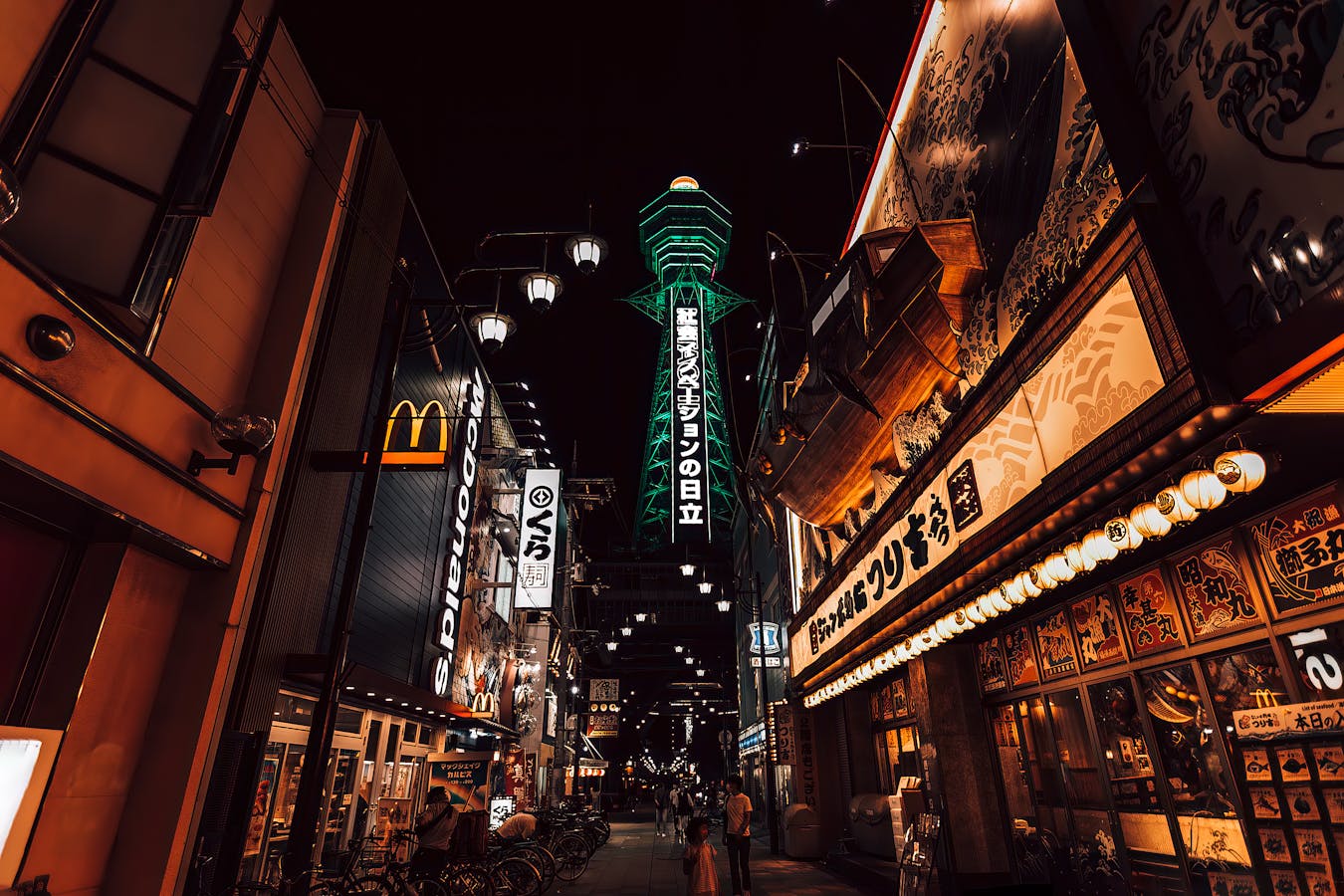
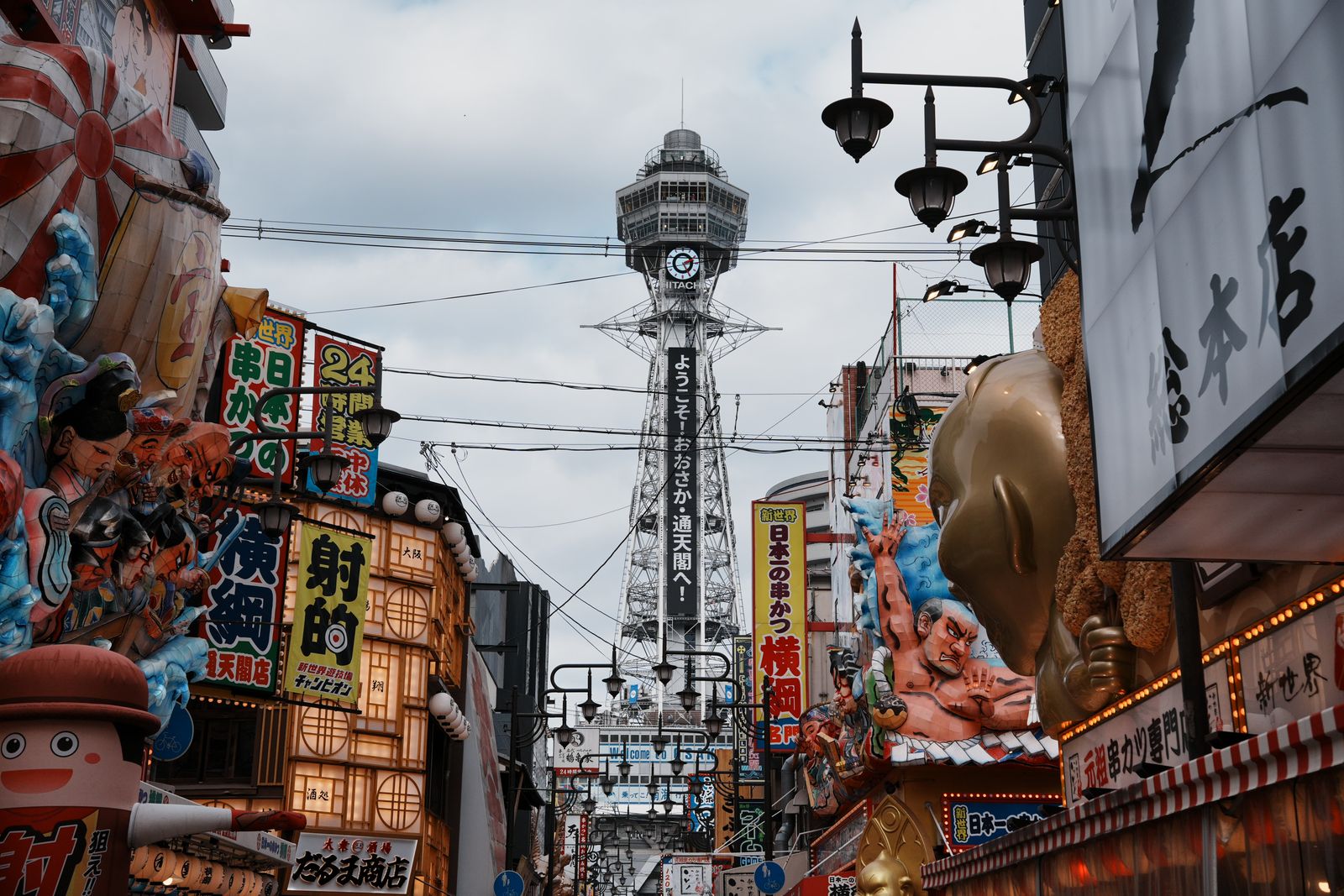
Shinsekai, “New World,” is the part of Osaka that looks the least like the brochures and the most like the city’s own memory of itself. It’s a working-class quarter that stopped its clock somewhere in the mid-20th century, all faded signage, deep-fryers, retro game halls, and the squat Tsutenkaku Tower keeping watch over the lot. If Dotonbori is Osaka’s polished face, Shinsekai is the gruff uncle, cheaper, grittier, and a lot more fun once you stop expecting it to be pretty.
This 2026 Shinsekai Osaka guide walks you through the tower and its slide, the kushikatsu shops where the dish was invented, the dishevelled charm of Jan Jan Yokocho, the lucky Billiken statue, and how to pair it all with the neighbouring Tennoji and Spa World for a half-day of unmistakably Osaka atmosphere. No gloss, because the place has none, and that’s the point. If you want temples in the mix, our round-up of Osaka’s temples and historical sites covers the older sights a short walk east.
Shinsekai at a glance
- Where: Naniwa-ku, southern Osaka, just south-west of Tennoji.
- Closest stations: Dobutsuen-mae (Midosuji, Sakaisuji), Ebisucho (Sakaisuji), Shin-Imamiya (JR, Nankai).
- Time to set aside: Two to four hours, longer if you fold in Spa World or the zoo.
- When to go: Late afternoon into evening, when the neon comes up and the fryers are busiest.
- Tsutenkaku entry: Around ¥1,000 for adults.
- The feel: Showa-era, downmarket, distinctive, and completely safe despite its reputation.
A short history, because it explains everything
Shinsekai was built in 1912 as a pleasure district, half of it modelled on Paris, the other half on New York’s Coney Island, hence the optimistic name. Tsutenkaku, the tower at its centre, borrowed from the Eiffel Tower and the Arc de Triomphe and was, for a time, the tallest thing in Japan. For a few decades the place was the height of modern fun.
Then the war came. The original tower was dismantled for scrap, and the surrounding area slid into a long postwar decline that left it isolated and rough around the edges. The current tower, a second-generation rebuild, went up in 1956 and stands 103 metres. What you’re walking through, then, isn’t a theme park dressed up to look old, it’s a real neighbourhood that simply never got redeveloped, and froze in time as a result. That’s why the kushikatsu joints, the candy stalls, and the pachinko parlours feel lived-in rather than staged.
Tsutenkaku Tower, the heart of it
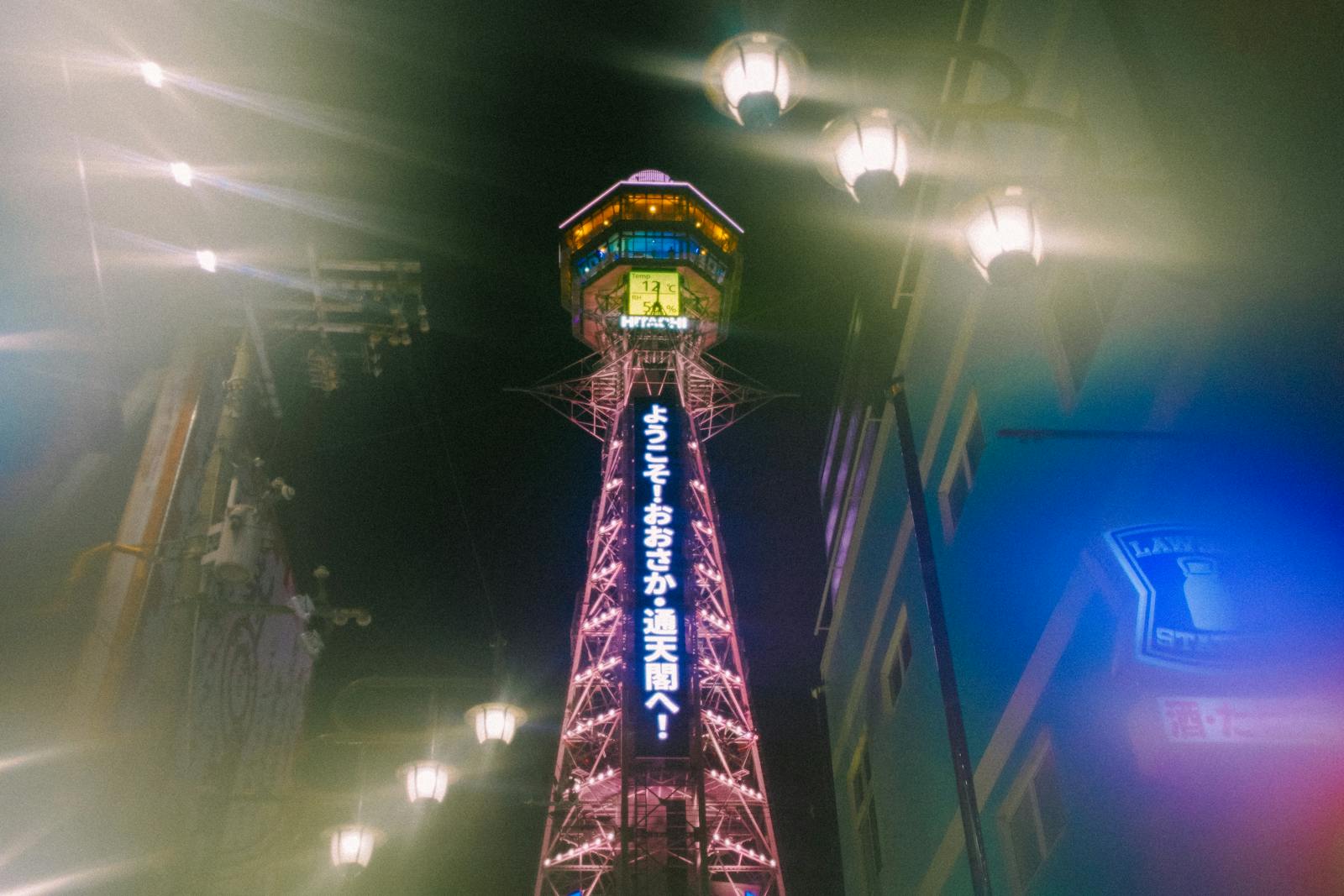
The 103-metre tower is the reason your eye keeps drifting upward. Compared with Osaka’s modern observation decks it’s small and a touch creaky, but that’s the charm, the lift attendants, the retro fittings, the slightly faded views. It rewards a visit precisely because it hasn’t been gutted and gentrified.
- Hours: Roughly 10:00 to 20:00, last entry around 19:30.
- Price: About ¥1,000 adult, ¥500 child.
- Observation deck: At 91 metres, with 360-degree views over the low southern sprawl.
- Billiken on the 5th floor: Rub his feet for luck, more on him below.
- The tower slide: A separate ticket, around ¥1,000, sends you spiralling down from the 4th floor to the 3rd at speed. Daft, brief, and great.
- Best timing: Just before sunset, so you catch the city in daylight and watch the neon flick on below.
For how it stacks up against the taller, glassier options like the Umeda Sky Building and Abeno Harukas, our Osaka observation decks guide lays them side by side. Tsutenkaku wins on character, not altitude.
Kushikatsu, the local religion
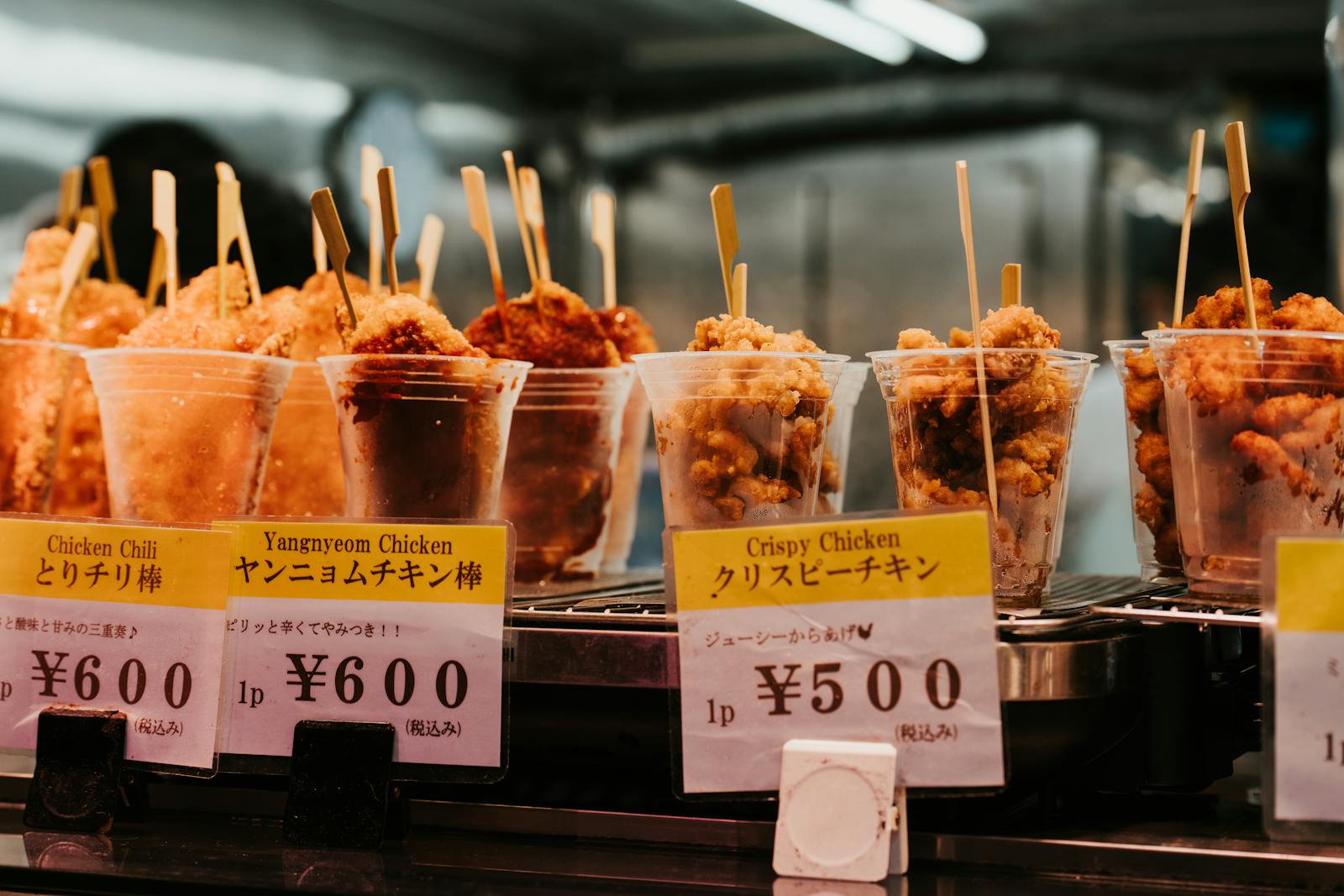
This is the dish’s birthplace. Kushikatsu, skewered meat, vegetables, and seafood, breaded and deep-fried, was created here in 1929 by Tomekichi Endo at a shop called Kushikatsu Daruma. The story goes that he was feeding day labourers cheap, hot, fast food, and the formula stuck. Today the streets are thick with kushikatsu shops elbowing for your custom, and eating your way along them is the whole reason a lot of people come.
- Kushikatsu Daruma (the 1929 original): The pilgrimage. Expect a 30 to 60 minute wait at peak, the gruff-mascot branding is everywhere.
- Yaekatsu (since 1949): The locals’ pick, less famous, often less of a queue, arguably the better skewer.
- Tengu: A slightly more refined take at similar prices.
- Backstreet standing counters: The cheapest, scruffiest, most authentic option, no English, just point and eat.
- Pricing: Skewers run about ¥110 to ¥300 each; a proper meal of 10 to 15 plus a beer lands around ¥1,500 to ¥3,000.
The one rule you cannot break: no double-dipping. Each table or counter shares a communal vat of thin Worcestershire-style sauce, and once a skewer has touched your mouth it does not go back in. Dip once, before you bite. Locals will forgive a tourist almost anything except this. If you want the full breakdown of how kushikatsu ordering works and which fillings to chase, our Osaka kushikatsu guide covers it.
Kushikatsu isn’t the only game here, either. Keep an eye out for doteyaki, beef tendon slow-stewed in sweet miso, and oden simmering in big steel trays. They’re the cold-weather companions to the fryer, and you’ll find them in the same scruffy counter shops.
Billiken, the lucky little god
You’ll see his grinning, pointy-headed face everywhere, on the tower, on shopfronts, on keychains. Billiken is a good-luck charm that started life as an American folk-art figure in 1908 and was adopted by Osaka with open arms. The version enshrined on the 5th floor of Tsutenkaku has worn-smooth feet from a century of visitors rubbing them for luck. Give them a rub, it costs nothing and it’s the kind of small, slightly absurd ritual Shinsekai does best.
What else to do in Shinsekai
- Jan Jan Yokocho: A narrow covered arcade running off the main square, lined with kushikatsu counters, old candy shops, secondhand stores, and shogi parlours where retirees play for hours. The name mimics the twang of the shamisen that once drew in customers.
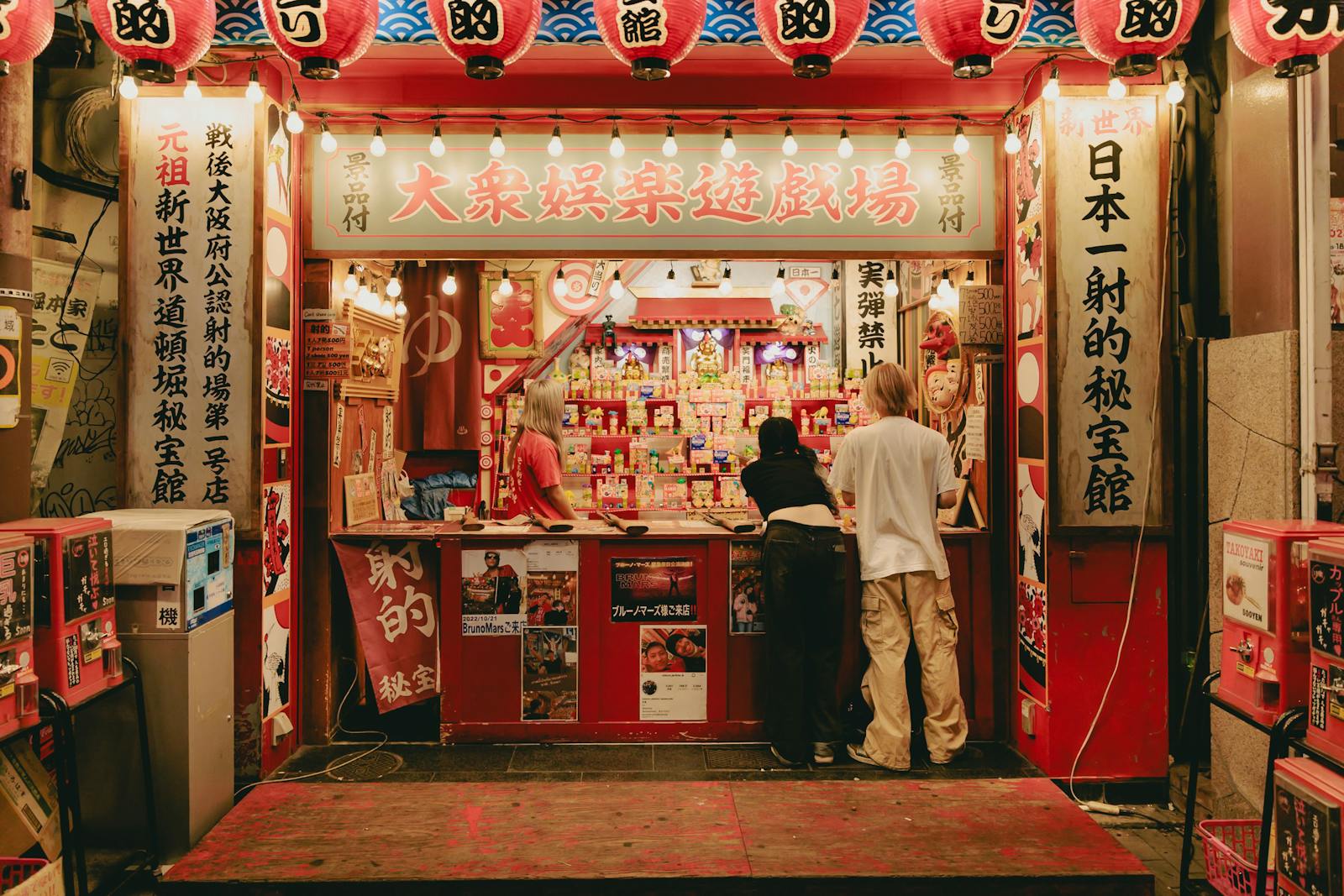
- Retro arcades and pachinko parlours: Step into one just for the sensory overload, the noise, the lights, the smoke-stained nostalgia. You don’t have to play.
- Spa World (about 10 minutes’ walk): A sprawling eight-floor bathing complex with European- and Asian-themed onsen zones, roughly ¥1,500 to ¥2,500. A proper soak after a day on your feet.
- Tennoji Zoo (right next door): Around ¥500 to get in, easy to combine, good with kids.
- Backstreet izakayas at night: The standing-bar culture here is the real draw after dinner, one drink, one small plate, shoulder to shoulder with locals.
Shinsekai versus Dotonbori
People ask which to choose, and the honest answer is both, because they’re opposites and only twenty minutes apart by subway. Dotonbori is polished, tourist-heavy, expensive, and dazzling, the spectacle. Shinsekai is gritty, cheap, lived-in, and a little rough, the reality underneath. Do Shinsekai for an afternoon and early dinner, then ride north to Dotonbori for the full neon-and-crowds experience after dark. The contrast is the lesson; you’ll understand Osaka far better for having seen both faces.
Pairing Shinsekai with Tennoji
Shinsekai is small, so it’s best treated as half of a day rather than the whole thing, and the obvious other half is right next door. Tennoji gives you the soaring Abeno Harukas, Japan’s tallest building, plus Tennoji Park, a botanical garden, and the ancient Shitennoji temple a short walk on. The two districts sit cheek by jowl, so a classic plan is the temple and tower in Tennoji during the day, then drop down into Shinsekai’s streets as the light goes and the fryers get busy. Between the two, at the park’s north-west corner, Isshinji keeps Buddha statues moulded from cremated remains, a quiet five-minute stop most visitors walk straight past.
Spa World, the soak afterward
Ten minutes’ walk from the tower sits Spa World, an enormous bathing complex spread over multiple floors, and it’s the natural way to end a day spent grazing and walking. The conceit is a little kitsch, one zone themes its baths around Europe, another around Asia, and the men’s and women’s sides swap between them on a schedule, so what you get depends on the day. Entry runs roughly ¥1,500 to ¥2,500, and you can stay for hours.
A word on tattoos, since it catches people out: like many Japanese baths, Spa World has historically been strict about ink. Policies soften over time and large cover patches can help, but if you’ve got visible tattoos, check the current rule before you pay rather than after you’ve stripped off. For the wider picture on baths, tattoo policy, and etiquette across the city, our Osaka onsen and sento guide is the place to start.
Retro gaming and the Jan Jan arcade culture
Part of what fixes Shinsekai in the past is its game halls. Alongside the modern crane-machine arcades you’ll find old smart ball parlours, a vintage cousin of pinball, and rooms full of retro cabinets that have been running since the Showa era. In Jan Jan Yokocho, look for the shogi and go salons where pensioners hunch over boards for whole afternoons, a coffee going cold beside them. It’s not a tourist attraction so much as a window into how the neighbourhood actually spends its time.
You don’t need to play to enjoy any of it. A slow walk through one pachinko parlour, all clattering steel balls and wall-to-wall noise, tells you more about the texture of old Osaka than any museum. Then step back out and the fryers are right there waiting.
What Shinsekai costs
This is one of the cheaper afternoons you’ll have in Osaka, which is half its appeal. A rough per-person budget: the tower is about ¥1,000, a filling kushikatsu dinner with a beer lands around ¥1,500 to ¥3,000, and a drink at a standing bar afterward is a few hundred yen more. That is a fraction of what the cocktail bars and whisky counters in Kitashinchi charge for a single glass. Add Spa World and you’re looking at another ¥1,500 to ¥2,500. Even doing everything, you’d struggle to spend what a single sit-down crab dinner costs over in Dotonbori. Carry cash and you’re set, the card-friendly places are the exception here, not the rule. For more ways to keep a trip lean, our cheap eats in Osaka guide has plenty.
A half-day Shinsekai plan
- 4:00pm: Arrive at Dobutsuen-mae station.
- 4:15pm: Wander Jan Jan Yokocho, soak up the clutter.
- 4:45pm: Up Tsutenkaku, rub Billiken’s feet, brave the slide.
- 5:30pm: Sunset photos as the neon comes alive.
- 6:00pm: Kushikatsu dinner at Daruma or, smarter, Yaekatsu.
- 7:30pm: Drift the neon streets, poke around the retro shops.
- 8:30pm: A standing bar for one drink and a small plate.
- 9:30pm: Train back to central Osaka, or north to Dotonbori for round two.
Practical tips
- Bring cash. Most of the small shops and counters don’t take cards.
- Expect less English than in Dotonbori. A photo-translation app earns its keep on the menus.
- It looks rougher than it is. The area around Shin-Imamiya has a frayed reputation, but the streets are busy, well-lit, and genuinely safe, normal awareness is plenty.
- Comfortable shoes. This is a wander-and-graze afternoon, not a sit-down one.
- No reservations needed at most kushikatsu spots, you just queue.
- Photos peak just after sunset, when the neon glows hardest against the last of the daylight.
Shinsekai FAQ
Is Shinsekai worth visiting?
Yes, especially if you want a real, lived-in slice of Showa-era Osaka, the original kushikatsu, and a complete contrast to polished Dotonbori. Give it two to four hours, more if you add Spa World or the zoo.
How do I get to Shinsekai?
Take the Midosuji or Sakaisuji subway line to Dobutsuen-mae or Ebisucho. From Tennoji it’s about a five-minute walk south.
Is Shinsekai safe?
Yes. It carries an old downmarket reputation, but the streets stay busy and bright well into the night. Standard urban awareness is all you need, even late.
What’s the best time to visit?
Late afternoon, from around 4pm, through the evening. That’s when the neon is on, the kushikatsu shops are humming, and the standing bars start to fill.
What is Tsutenkaku Tower?
A 103-metre observation tower at the centre of Shinsekai. First built in 1912 and rebuilt in 1956 after the original was scrapped during the war. It offers 360-degree views, a high-speed slide, and the Billiken good-luck statue.
Was kushikatsu really invented here?
Yes, at Kushikatsu Daruma in 1929, created by Tomekichi Endo to feed local labourers. The original shop still operates in Shinsekai today.
Where Shinsekai fits in your trip
Shinsekai is best as a half-day of contrast, the rough, nostalgic counterpoint to the rest of the city. Pair it with neighbouring Tennoji for a full day in the south, then ride north for an evening in Dotonbori to see how differently Osaka can wear its neon. To plan a route that strings the districts together sensibly, start with our Osaka neighborhoods guide, and for more to fill the day, the broader things to do in Osaka guide has the rest.