This article contains advertising. Our booking links are routed through a partner that adds commission tracking automatically, so if you book through one we earn a commission from the provider, at no extra cost to you. It never affects what we recommend. Affiliate disclosure
Osaka onsen and sento (public bath) culture is one of the city’s most underrated experiences for international visitors. Osaka has multiple in-city natural hot springs, hundreds of neighborhood sento bathhouses, and easy 30-90 minute day trips to two of Japan’s most famous onsen towns (Arima and Kinosaki). The cultural experience is profound: nude communal bathing, ritualized cleansing, and the deep relaxation of soaking in mineral-rich water – but the etiquette and tattoo policies require advance knowledge. This 2026 guide covers in-city onsen and sento options, day-trip onsen towns, tattoo-friendly venues, complete etiquette breakdown, and the differences between onsen, sento, and super sento.
Quick Picks: Best Osaka Onsen & Sento
- Best in-city natural onsen: Naniwa no Yu (Tenjimbashisuji 6-chome)
- Best big-format onsen complex: Spa World (Shin-Imamiya, 24-hour)
- Best traditional neighborhood sento: Tateba Healthy Onsen (Tennoji)
- Best classic Osaka sento: Kamigata Onsen Ikkyu
- Best day trip: Arima Onsen (50 min from Osaka)
- Best premium day trip: Kinosaki Onsen (2.5 hours by limited express)
- Best tattoo-friendly: Spa World; some private rooms at Arima
Onsen vs. Sento vs. Super Sento (The Difference)
Onsen (Natural Hot Spring)
- Water from natural geothermal sources
- Mineral content varies by location
- Typically more upscale and tourist-oriented
- Price: JPY 800-3,000 day pass
- Best in onsen towns (Arima, Kinosaki, Beppu)
Sento (Public Bathhouse)
- Heated tap water, sometimes with additives
- Neighborhood facility, used daily by locals
- Traditional architecture with high chimneys
- Price: JPY 490-900 (regulated by prefecture)
- Best for local cultural experience
Super Sento (Modern Bath Complex)
- Large facility with multiple themed baths
- Sometimes mixes natural hot spring with heated water
- May include sauna, restaurant, relaxation lounge, manga library
- Price: JPY 1,500-3,500 day pass
- Best for full-day relaxation
In-City Osaka Onsen
Naniwa no Yu
- Location: 8-min walk Tenjimbashisuji 6-chome Station (Tanimachi/Sakaisuji)
- Type: 100% natural hot spring (rare in central Osaka)
- Hours: 10:00-23:00 daily
- Admission: Weekday JPY 850; weekend/holiday JPY 950
- Features: Indoor and outdoor baths; sauna; relaxation lounge
- Tattoos: Cover-required policy
- Best for: First in-city onsen experience
Tateba Healthy Onsen
- Location: 5-min walk Tennoji Station
- Type: Water trucked daily from Terume Ryugu source in Minato Ward
- Hours: 10:00-22:00
- Admission: JPY 850
- Features: Multiple bath types; sauna; convenient central location
- Tattoos: Cover-required
Irifune Onsen
- Location: 3-min walk Shin-Imamiya / Dobutsuen-mae stations
- Type: Local-style neighborhood sento-onsen hybrid
- Hours: 15:00-23:00 (afternoon-only)
- Admission: JPY 490-700
- Features: Authentic Osaka working-class bathhouse
- Tattoos: More lenient than tourist-facing onsen
Kamigata Onsen Ikkyu
- Location: 8-min walk Imafuku-Tsurumi Station
- Type: 100% source-fed natural onsen; no circulation or additives
- Hours: 10:00-22:30
- Admission: JPY 850-1,200
- Features: Highest quality water in central Osaka; multiple bath types
- Tattoos: Cover-required policy
Spa World (The Super Sento)
- Location: Shin-Imamiya Station (walking distance Shinsekai)
- Type: 24-hour super sento with multiple themed bath zones
- Concept: European-themed bath floor (Greek, Roman, Spanish, Finnish, Atlantic, etc.) and Asian-themed bath floor (Japanese, Persian, Bali, Indonesian, Islamic) – rotated between male and female monthly
- Hours: Open 24 hours
- Admission: Weekday JPY 1,500; weekend/holiday JPY 1,800; midnight surcharge JPY 1,300 add-on for overnight
- Features: Restaurants, swimming pool, sauna, beauty salon, sleeping rooms
- Tattoos: Allowed (one of the few onsen in Japan that permits tattoos)
- Best for: Multi-hour relaxation; overnight option for late-night Dotonbori visitors
Best Day Trip Onsen Towns
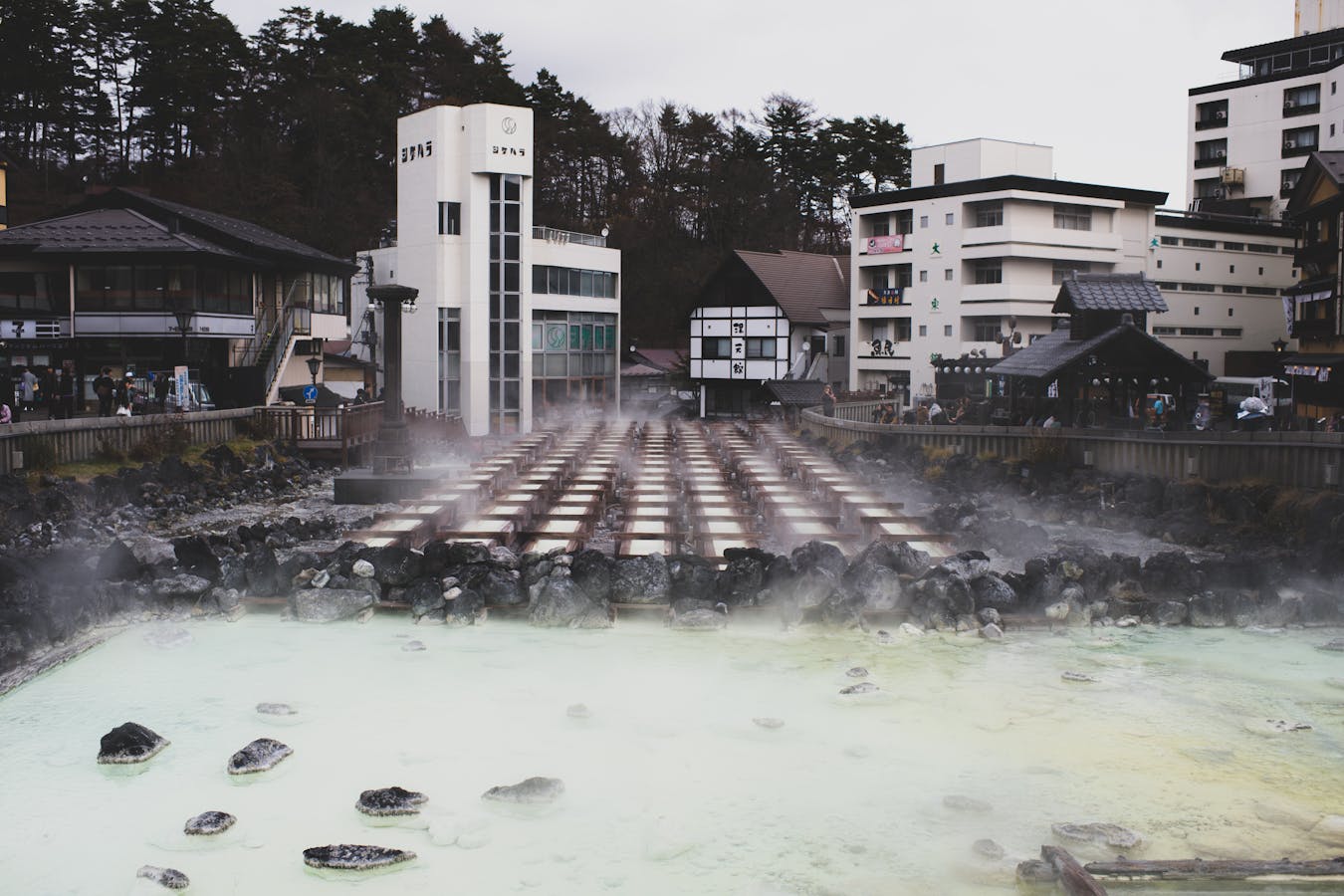
Arima Onsen (Best Day Trip)
- Location: 50 min from Osaka via Hankyu + bus
- Famous for: Two distinct water types – kin-yu (gold spring, iron-rich brown water) and gin-yu (silver spring, clear carbonated)
- Day pass for both baths: JPY 2,800
- Town atmosphere: Traditional Edo-period architecture, walkable
- History: 1,400-year-old hot spring; visited by Emperor Hideyoshi
- Best for: Full-day cultural day trip
Kinosaki Onsen (Premium Day Trip)
- Location: 2.5 hours via JR Limited Express (~JPY 6,000 each way)
- Famous for: 7 public bathhouses connected by canals; yukata-clad walking between them
- Day pass: JPY 1,500-2,500 for all 7 baths
- Town atmosphere: Picture-perfect Edo-era onsen town
- Best for: Half-day to overnight; couples and premium experience seekers
Wakayama / Kawayu Onsen (Off-the-Beaten-Path)
2-3 hours south of Osaka in Wakayama Prefecture. Kawayu Onsen features hot springs in the river bed – you dig your own bath. Free; ultra-natural experience. Best in winter when riverbed bath contrasts with cold air.
Yunomine Onsen (UNESCO World Heritage)
3-4 hours south. UNESCO World Heritage Tsuboyu – tiny one-person bath that has been used continuously for 1,800 years. Pilgrimage-style experience.
Onsen Etiquette (Step by Step)
Step 1: Entering the Facility
Remove shoes at the genkan (entry area) and place in lockers (typically free). Pay admission at the front desk. You’ll receive a key and sometimes a small towel.
Step 2: Changing Room
Separate male and female changing rooms (look for kanji 男 or 女). Use a locker for your clothes. Bring a small modesty towel into the bathing area.
Step 3: Pre-Bath Cleaning
This is the critical etiquette step. Before entering any bath, you MUST shower thoroughly at the seated washing stations. Sit on the small stool, use the provided soap and shampoo, rinse completely, and only THEN enter the bath. No exceptions.
Step 4: Soaking
Enter the bath slowly. Water temperature is typically 40-43°C. Soak for 5-10 minutes; exit before you feel overheated. Do not put the small towel into the bath water (place it on the side or on your head).
Step 5: Rotation
Most onsen have multiple baths (outdoor, indoor, hot, cold, sauna). Move between them with a rinse between if needed. Cold plunges between hot baths are a wellness practice.
Step 6: Final Rinse
Before leaving, rinse off the bath water if you want (the minerals can leave skin feeling tacky if not rinsed). Dry yourself thoroughly with the small towel before returning to the changing room – dripping water is rude.
Step 7: Post-Bath
Dress, drink water (provided at most facilities), and relax in the lounge or restaurant area before leaving. Avoid alcohol immediately after onsen (the hot water + alcohol increases dehydration).
What to Bring
- Small modesty towel: Usually rented or sold at the desk (JPY 100-300)
- Large bath towel: Most facilities rent for JPY 100-300; bring your own to save
- Shampoo/conditioner/soap: Provided at most facilities
- Razor: Bring your own; not always provided
- Water bottle: Stay hydrated
- Hair tie: Required for women with long hair (must not touch bath water)
- Optional: Comb, lotion, moisturizer (provided at premium facilities)
Tattoo Policy in Osaka Onsen
Why Tattoos Are Banned at Most Onsen
Japan historically associates tattoos with the yakuza (organized crime). Many onsen ban tattoos to maintain a comfortable atmosphere for traditional Japanese customers. This is changing slowly but most onsen and sento still enforce the ban.
Tattoo-Friendly Osaka Onsen
- Spa World: Allows visible tattoos
- Irifune Onsen: More lenient enforcement
- Some sento in Tenma: Older neighborhood baths often don’t enforce strict policies
- Private onsen rooms at Arima: Many ryokan offer private baths that bypass tattoo policy
- Kashikiri (private bath): Many onsen rent private rooms for JPY 2,000-5,000 per group
Tattoo Cover Strategies
- Bandage cover: Some onsen accept small tattoos covered with bandages
- Adhesive tattoo cover: Available at Don Quijote (JPY 500-1,500)
- Discreet placement: Tattoos on the back of legs or buttocks less visible
- Call ahead: Ask before arriving; some facilities accept covered tattoos
What’s NOT Allowed
- Bathing without pre-cleaning: Severely impolite
- Towels in the bath: Place on side or head
- Talking loudly: Quiet atmosphere expected
- Phones: Prohibited in all bathing areas; photos absolutely forbidden
- Diving or swimming: Onsen are for relaxation, not swimming
- Children alone: Most onsen welcome children but require adult supervision
- Drunk visitors: Often refused entry
- Mixed gender for adults: Almost all baths are single-gender (kashikiri private baths are exception)
Onsen for Special Groups
For First-Time Visitors
Spa World – large, modern, English-friendly, tattoo-tolerant. Pay JPY 1,500-1,800; spend 2-3 hours exploring multiple bath types. Lower stakes than traditional sento.
For Couples
Arima Onsen with day trip + private bath rental (kashikiri). Pay JPY 2,800 standard day pass plus optional JPY 3,000-5,000 for private bath room together.
For Families with Kids
Spa World (water park section); Hattori Ryokuchi Park nearby Onsen Tateba. Kids 4+ generally welcomed.
For Solo Travelers
Naniwa no Yu or Kamigata Onsen Ikkyu – traditional atmosphere, less crowded than Spa World, central location.
For Premium Experience Seekers
Kinosaki Onsen (2.5 hours by limited express). 7-bath yukata walking experience; ryokan overnight stay; full traditional onsen town immersion. Plan for JPY 25,000-50,000 per person for the full overnight package.
Best Time to Visit
Time of Day
- Morning (10:00-12:00): Calmest at most facilities
- Afternoon (14:00-17:00): Moderate; popular with seniors
- Evening (18:00-22:00): Busiest; peak for working-class locals
- Late night (after 22:00): Calmer; Spa World 24-hour option
Time of Year
- Winter (December-February): Best season; cold air + hot water contrast is profoundly relaxing
- Spring (March-May): Comfortable temperatures; outdoor baths peak
- Summer (June-August): Less popular; cool baths more important
- Autumn (September-November): Cool weather; lower crowds
Onsen + Other Activity Pairings
- After USJ: Spa World near Shin-Imamiya for tired-legs recovery
- After Dotonbori: Spa World 24-hour overnight for partygoers
- After Shitennoji visit: Tateba Healthy Onsen at Tennoji
- After Tenmangu Shrine: Naniwa no Yu nearby
- Sunday morning rest day: Any in-city onsen
- Multi-day onsen trip: Arima or Kinosaki for full immersion
Onsen Town Day Trip Comparison
- Arima Onsen: 50 min; JPY 2,800 day pass; ideal day trip
- Kinosaki Onsen: 2.5 hours each way; JPY 1,500-2,500 day pass; better as overnight
- Spa World: 15 min within Osaka; JPY 1,500-1,800; 24-hour option
- Yunomine Onsen: 3+ hours each way; UNESCO Heritage; experience-driven trip
Common Mistakes
- Skipping the pre-bath shower: The #1 etiquette violation
- Bringing phone into bath area: Strictly prohibited everywhere
- Towel in the bath: Place on side or fold on head
- Loud conversation: Quiet voices expected even with friends
- Drinking before bath: Dangerous (heat + alcohol)
- Wearing swimsuit: Most onsen are nude-only
- Bringing tattoos to traditional facility: Verify policy in advance
- Skipping the lounge: Post-bath relaxation is part of the experience
Cost Summary
- Neighborhood sento: JPY 490-700
- In-city onsen: JPY 850-1,200
- Spa World: JPY 1,500-1,800
- Arima Onsen day trip: JPY 2,800 + JPY 2,000-3,000 train
- Kinosaki Onsen day trip: JPY 1,500-2,500 + JPY 12,000 train round-trip
- Private bath rental (kashikiri): JPY 2,000-5,000 per session
- Towel rental: JPY 100-300
- Locker: Typically free
Practical Tips
- Cash for sento: Many neighborhood spots cash-only
- Allergies: Inform staff about skin conditions; some hot springs have strong minerals
- Pregnancy: Most onsen welcome pregnant visitors with caution; avoid in late trimester
- Children: Allowed at most facilities; some sento have specific kid-friendly hours
- Photography: Strictly prohibited in all bathing areas
- Alcohol: Don’t drink before bath; drink after only if hydrated
- Heart conditions: Consult doctor before sustained hot bathing
- Hair management: Long hair must be tied up; never touch bath water
- Belongings: Lockers always free; bring locker key on wrist
Why Osaka Onsen Matters
Bathing culture is one of the most profound cultural experiences available to foreign visitors in Japan. The combination of ritualized cleansing, communal nude bathing, and mineral-rich hot water creates a uniquely Japanese version of “self-care” that has been practiced for over 1,000 years. Osaka’s bathing options – from neighborhood sento serving locals at JPY 490 to luxury onsen towns 50 minutes away – give visitors a complete spectrum of experiences. Build at least one bath session into any Osaka trip.
Final Word: Osaka Onsen & Sento
Osaka onsen and sento culture rewards visitors who approach it with curiosity rather than reluctance. Start with Spa World (easiest, English-friendly, tattoo-tolerant) for first-time visitors; graduate to traditional sento or Naniwa no Yu for cultural depth; plan an Arima Onsen day trip for the headline experience. Follow the etiquette strictly – the pre-bath shower especially – and you’ll leave with one of the most distinctive cultural memories available in Japan.