This article contains advertising. Our booking links are routed through a partner that adds commission tracking automatically, so if you book through one we earn a commission from the provider, at no extra cost to you. It never affects what we recommend. Affiliate disclosure
Isshinji Temple is one of Osaka’s most unusual religious sites – a Pure Land Buddhist temple in the Tennoji district where the principal Buddha statues are built from the cremated remains of tens of thousands of Osaka families. Known as the “Okotsubutsu” or “Bone Buddhas,” six of these statues have been built since 1887, each composed of approximately 50,000-200,000 sets of remains compressed and shaped into traditional Buddhist forms. The current main hall, completed in 1997 by architect Yu Tanio, is one of the most striking modernist religious buildings in Japan – a brutal concrete structure topped with sculptural relief panels that breaks dramatically with traditional temple architecture. Located 5 minutes’ walk from Shitennoji, Isshinji is the natural second stop on any Tennoji temple day. Admission is free, and it is the strangest site in our overview of Osaka’s temples and shrines. This 2026 guide covers the history, architecture, etiquette, and how to plan your visit.

Quick Facts: Isshinji Temple
- Address: 2-8-69 Osaka, Tennoji-ku, Osaka 543-0062
- Access: 5-min walk from Shitennoji-mae Yuhigaoka Station (Osaka Metro Tanimachi Line); 7-min walk from Tennoji Station (JR Loop, Midosuji)
- Hours: 09:00-16:00 daily (main hall and Bone Buddha viewing)
- Admission: FREE
- Founded: 1185 (current main hall 1997)
- Sect: Jodo-shu (Pure Land Buddhism)
- Famous for: Okotsubutsu (Bone Buddha) statues built from cremated remains; modernist concrete architecture
- Visit duration: 30-45 minutes
The Bone Buddha Tradition (Okotsubutsu)
The defining feature of Isshinji Temple is the Okotsubutsu, literally “Bone Buddha.” Beginning in 1887, the temple began accepting cremated remains from Osaka families who could not afford full grave plots and building Buddha statues from those remains. The cremated bones are ground, mixed with a binding material, and shaped into Amida Buddha images. Each completed Buddha takes about 10 years to build and incorporates the remains of 50,000-200,000 individuals.
Six Bone Buddhas have been completed since 1887. The first five were destroyed by the 1945 firebombing of Osaka. The current statues date from 1947 onwards, with the sixth and most recent unveiled in 2007. A seventh is currently in progress. The statues are displayed in the temple’s Nokotsu-do (Charnel Hall) and can be viewed during normal opening hours.
The 1997 Modernist Main Hall
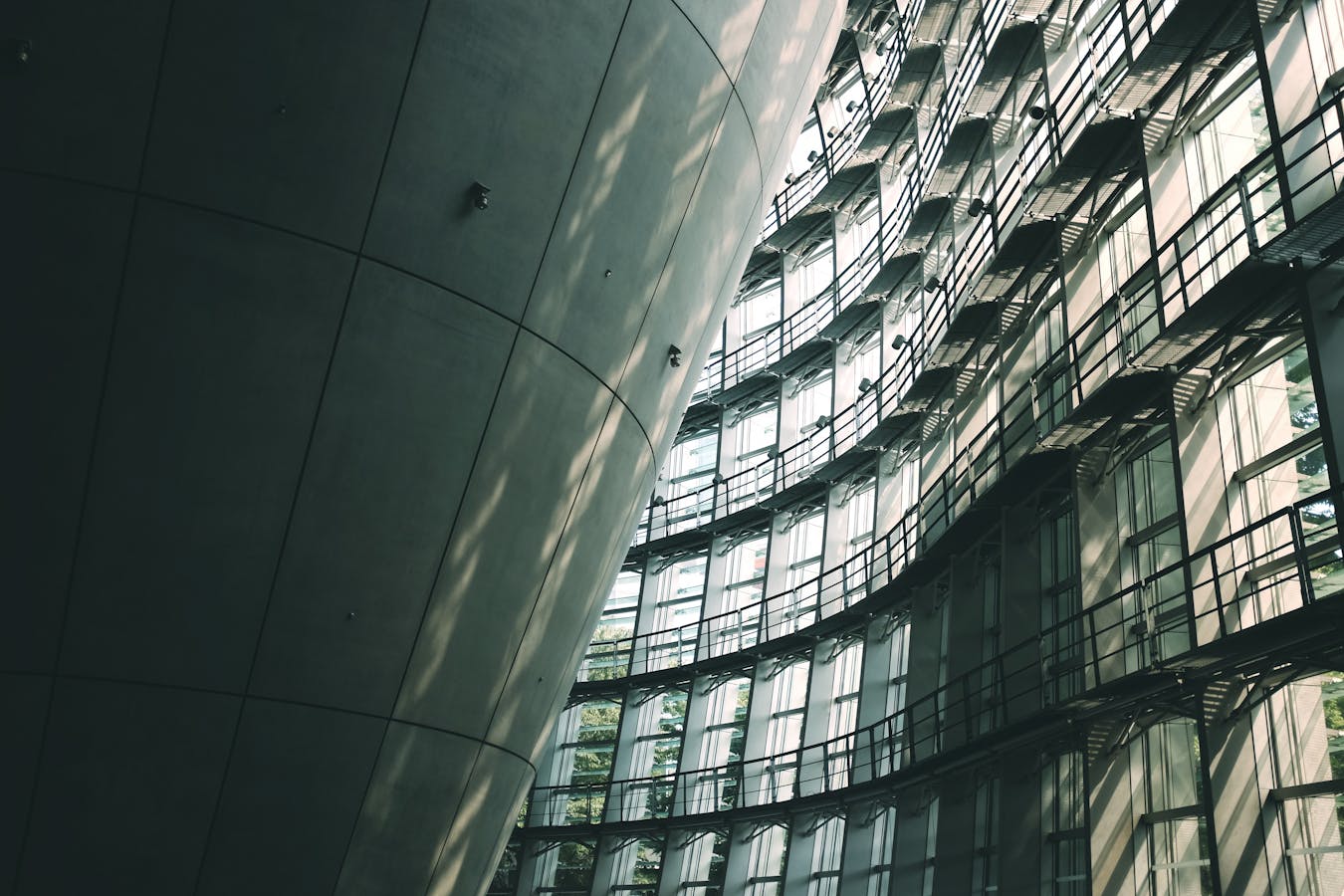
The temple’s main hall (Hondo) was rebuilt in 1997 by architect Yu Tanio in a strikingly modernist style. The structure is exposed concrete and steel, topped with two enormous angel-like wing sculptures and abstract relief panels designed by Tanio himself. The Sanmon gate is similarly avant-garde – a curving concrete arch flanked by abstract devic figures. The contrast with traditional Japanese temple architecture is the strongest in Osaka; it looks more like a contemporary art museum than a 12th-century temple.
For architecture enthusiasts, Isshinji is worth visiting for the buildings alone. The temple was a controversial commission when built – traditionalists felt the modernist style was inappropriate for a Buddhist temple – but is now widely admired as one of the most successful contemporary religious buildings in Japan. Pair it with Abeno Harukas, 10 minutes south, and our guide to Tennoji and Abeno covers the rest of the district’s modern architecture.
History of Isshinji Temple
Isshinji was founded in 1185 by the monk Honen, the founder of Pure Land Buddhism in Japan. According to temple legend, Honen visited the site while traveling to Shitennoji and was so moved by the sunset view from the hilltop that he established a small hermitage. The temple gradually grew over the next 700 years.
The Okotsubutsu tradition began in 1887 when temple priests, seeking a way to honor and incorporate the remains of impoverished families who could not afford traditional burial, conceived the idea of building Buddha statues from cremated bones. The tradition is unique in Japan – while ash sutras and similar reliquary practices exist elsewhere, the systematic building of large-scale Buddha statues from cremated remains is found only at Isshinji.
The temple’s complete destruction in the 1945 firebombing (along with most of central Osaka including Shitennoji) destroyed the first five Bone Buddhas and the entire temple complex. The post-war rebuilding began with traditional wooden structures, but by 1997 the decision was made to rebuild the main hall in the modernist style.
What to See at Isshinji Temple
The Sanmon (Main Gate)
The 1997 Sanmon is a curving concrete arch flanked by abstract figures of the traditional Buddhist guardian devic. Bow before passing through.
The Main Hall (Hondo)
The modernist main hall. Visit the interior to see the principal Amida Buddha statue and small relief panels. Shoes off; quiet voices.
The Nokotsu-do (Charnel Hall)
The dedicated hall housing the six Bone Buddhas. The statues sit in a quiet, dim space with traditional Buddhist altars. Photography is prohibited inside (please respect this rigorously – these statues contain the remains of approximately 1 million individuals). Visitors typically spend 5-10 minutes in silent reflection.
The Cemetery
Surrounding the temple is a large hillside cemetery with thousands of family graves dating from the 17th century onwards. The cemetery is visitor-accessible but please walk respectfully and avoid the graveyard during memorial service times.
Memorial Services
Daily memorial services for the deceased are conducted at the main hall. Visitors are welcome to observe quietly from the rear of the hall. Services typically run 30-45 minutes.
Etiquette at Isshinji Temple
- Bow at the Sanmon gate before entering
- Speak quietly throughout the grounds – this is an active cemetery and memorial site
- Shoes off in the main hall and Charnel Hall
- No photography inside the Charnel Hall (Okotsubutsu viewing) – this is strictly enforced and the most important etiquette rule
- Exterior photography of the modernist main hall and Sanmon is permitted
- Light incense if a burner is provided; waft smoke over your body
- Place hands together (gassho), bow, pray silently – do not clap at Buddhist temples
- Donations to the Bone Buddha fund welcomed at the temple office
- Modest dress; cover shoulders
Best Time to Visit Isshinji
- Morning (09:00-11:00): Calmest, best for quiet contemplation
- Bon season (mid-August): Intense memorial service activity; meaningful but very busy
- Equinox weeks (March 18-24, September 20-26): Higan memorial services
- Avoid: Funeral service times (mostly 10:00-11:00 weekdays) if you want to walk freely
Combine With Other Stops
Shitennoji Temple (5 min walk)
Japan’s oldest state-built Buddhist temple. The two temples pair naturally – Shitennoji for traditional architecture and Buddhist history, Isshinji for the modernist counter-point and the unique Bone Buddha tradition.
Tennoji Park (5 min walk)
Free open green space, Tennoji Zoo, Chausuyama hill. Combine with Shinsekai/Tsutenkaku for lunch.
Abeno Harukas (10 min walk)
Japan’s tallest building (300m). Observation deck JPY 1,500. Strong architectural pairing with Isshinji – both are landmark contemporary buildings in the Tennoji district.
Suggested Half-Day Itinerary
- 09:00: Arrive at Tennoji Station, walk to Shitennoji
- 09:15: Tour Shitennoji – outer grounds, inner precinct, pagoda
- 11:00: Walk to Isshinji
- 11:15: Tour Isshinji – main hall, Charnel Hall (Bone Buddhas)
- 12:00: Walk to Shinsekai for lunch (kushikatsu at Daruma)
- 13:30: Tsutenkaku Tower observation deck and Shinsekai street wandering
- 15:00: Abeno Harukas observation deck
What to Know About the Bone Buddhas
- The tradition is religiously meaningful, not macabre – families who contribute remains receive permanent memorial inclusion in a Buddha statue
- Approximately 1 million sets of remains are now incorporated across the six statues
- The process is permitted under Japanese cremation and religious law
- Other Japanese temples have rejected the practice as inappropriate; Isshinji is the only major temple continuing it
- The seventh Bone Buddha is under construction, expected completion approximately 2030
- The temple accepts new donations of cremated remains from Osaka-area families; the cost is significantly lower than traditional burial
- Foreign visitors are welcome to view but should not photograph the statues
Practical Tips
- Cash for goshuin shrine stamps (JPY 300-500)
- Restrooms on the grounds; clean and free
- Wheelchair accessible at the main entrance
- English signage is limited; the temple office can provide an English pamphlet
- Shoes off in the main hall – bring slip-on shoes or be prepared to untie laces
- Bring a layer in winter – the Charnel Hall is unheated
- Photography permitted on exterior; absolutely prohibited inside the Charnel Hall
- The cemetery is not a tourist destination – walk through respectfully but do not linger
Why Visit Isshinji Temple
Isshinji Temple rewards visitors interested in three intersecting subjects: Buddhist religious practice, contemporary Japanese architecture, and the social history of how Japanese cities have memorialized their dead. The Bone Buddhas are one of the most singular religious practices in Japan and possibly the world; the 1997 main hall is one of the country’s most successful modernist religious buildings. Combined with the adjacent Shitennoji – which represents the opposite end of the Japanese Buddhist spectrum, with 1,400 years of traditional architecture – the two-temple visit is an intellectually and emotionally rich half-day.
Final Word: Isshinji Temple
Isshinji Temple is unlike any other Buddhist temple in Osaka. The Bone Buddha tradition, the striking 1997 modernist architecture, and the location within easy walking distance of Shitennoji make it a high-reward, low-time-investment stop on any Tennoji-district itinerary. Visit respectfully – this is an active memorial site as well as a tourist attraction – and you’ll leave with one of the most unusual memories available in Osaka tourism. Walk 15 minutes west afterwards and Shinsekai’s kushikatsu blocks handle dinner for under JPY 2,000.