This article contains advertising. Our booking links are routed through a partner that adds commission tracking automatically, so if you book through one we earn a commission from the provider, at no extra cost to you. It never affects what we recommend. Affiliate disclosure
Osaka samurai history is one of the great dramas of Japanese history – the 1583-1597 rise of peasant-born Toyotomi Hideyoshi to taiko (chief advisor to the emperor), his 1598 death, the 1614-1615 Winter and Summer Sieges of Osaka Castle in which Tokugawa Ieyasu’s forces destroyed the Toyotomi clan in two campaigns, and the cultural memory in which Osakans still root for the underdog Toyotomi against the Tokugawa shoguns. Most of the key historical sites remain visitable today: Osaka Castle Park (Hokoku Shrine dedicated to Hideyoshi), Sanada Yukimura battle sites (Sanko Shrine in Tennoji), historical museum complexes, and the actual stones of the 1620s reconstruction. This 2026 guide traces the samurai history of Osaka and maps the sites you can still walk.
The Three Acts of Osaka Samurai History
- Act 1 (1583-1598): Toyotomi Hideyoshi’s rise – unification of Japan, construction of Osaka Castle, golden-leaf splendor
- Act 2 (1598-1614): The succession crisis after Hideyoshi’s death – young Hideyori, the Council of Five Elders, growing Tokugawa power
- Act 3 (1614-1615): The Winter and Summer Sieges of Osaka Castle – the destruction of the Toyotomi line and Tokugawa consolidation of power
Toyotomi Hideyoshi (1537-1598): The Peasant Who Unified Japan
Toyotomi Hideyoshi – born to a peasant family in Nakamura (present-day Nagoya) in 1537 – rose through the ranks of Oda Nobunaga’s army to become Nobunaga’s most successful general. After Nobunaga’s 1582 betrayal and death at Honno-ji, Hideyoshi avenged him and consolidated power over Western and Central Japan. By 1590 he had completed the unification of Japan, becoming the first commoner-born ruler of Japan in 400+ years.
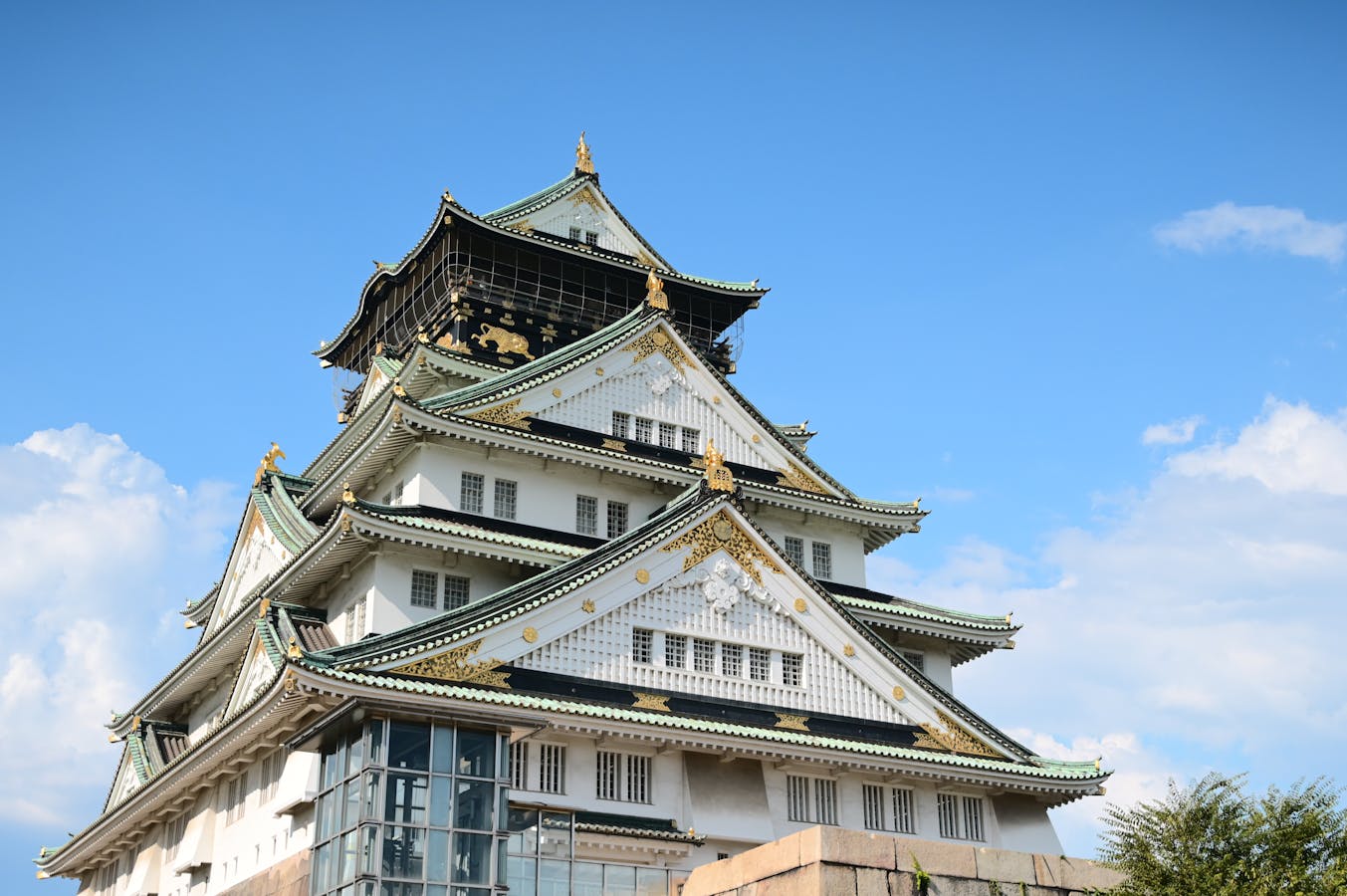
Hideyoshi made Osaka his capital. Construction of Osaka Castle began in 1583 on the site of the Ishiyama Honganji – a Buddhist fortress-temple Hideyoshi had destroyed in earlier campaigns. The castle was completed in 1597. The original 5-story keep was covered in gold leaf and contained Hideyoshi’s famous Tea Room of Gold (a mobile tea room with gold-leaf walls and ceiling).
Hideyoshi died in September 1598 at age 61. He left a 5-year-old son (Hideyori) and a Council of Five Elders (Go-Tairo) charged with protecting Hideyori until adulthood. Among the Five Elders was Tokugawa Ieyasu – who would shortly seize power and destroy the Toyotomi line.
The Sengoku to Edo Transition (1598-1614)
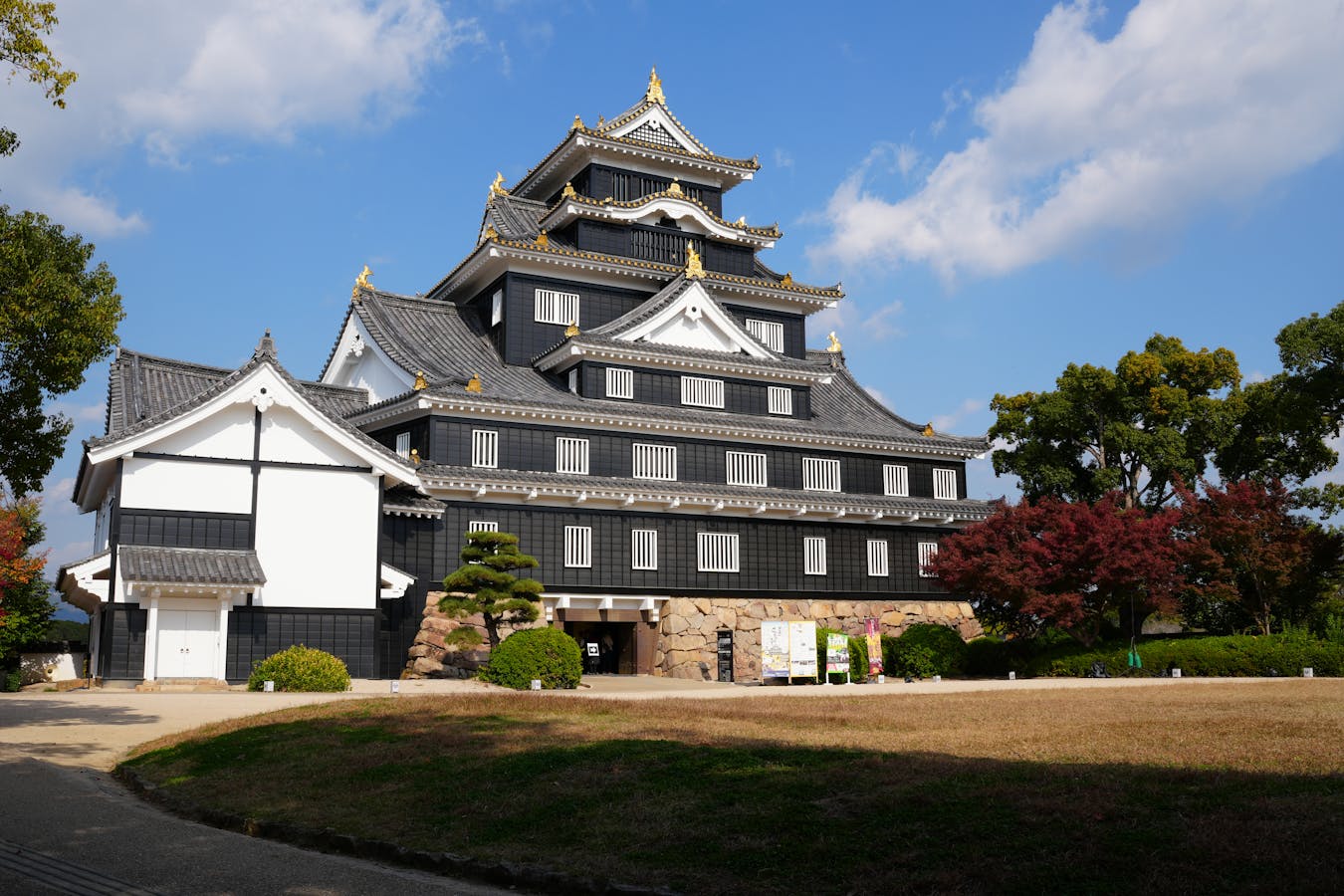
After Hideyoshi’s death, Tokugawa Ieyasu – the most powerful of the Five Elders – moved to consolidate authority. The 1600 Battle of Sekigahara established Tokugawa dominance over the entire archipelago. Ieyasu became shogun in 1603 and moved Japan’s de facto capital from Osaka to Edo (Tokyo).
But Hideyori – now growing toward adulthood – remained at Osaka Castle, surrounded by Toyotomi loyalists, samurai whose families had served Hideyoshi, and ronin (masterless samurai) who flocked to Osaka after losing their lords at Sekigahara. By 1614, an estimated 100,000 Toyotomi loyalists were positioned at Osaka Castle. Tokugawa Ieyasu, now 71 years old, decided to act before Hideyori could fully establish himself as an alternative locus of power.
The Winter Siege of Osaka (November 1614)
Tokugawa Ieyasu, supported by his son Shogun Hidetada, marched 164,000 troops to Osaka in November 1614. The Toyotomi forces numbered approximately 100,000 (mostly ronin) defending Osaka Castle – which was the most heavily fortified castle in Japan.
The Tokugawa attacked the castle from multiple directions. The Toyotomi defense was anchored by Sanada Yukimura – a legendary samurai general from the Sanada clan – who built the Sanada-maru, a defensive barbican projecting from the castle’s southern wall. From this position, Sanada’s forces repelled multiple Tokugawa attacks.
The Winter Siege lasted approximately 6 weeks. Tokugawa forces sustained heavy casualties without making progress. Ieyasu negotiated a peace: the Toyotomi would fill in the outer moat (giving up their defensive advantage) in exchange for peace. Both sides accepted. Tokugawa forces filled in the outer moat. The siege ended December 1614.
The Summer Siege of Osaka (May-June 1615)
Within months of the peace, Tokugawa Ieyasu broke the agreement. With the outer moat filled, Osaka Castle was vulnerable. In May 1615, Tokugawa forces marched on Osaka again. The Toyotomi, now without their primary defensive feature, were forced to fight in open battle.
On May 7, 1615, the Battle of Tennoji took place south of the castle. Sanada Yukimura led a daring charge directly at Tokugawa Ieyasu’s command post – getting within 50 meters of killing the shogun’s father before being killed himself. The Toyotomi force was destroyed.
On June 4, 1615 (Genna 1 in the imperial calendar), Osaka Castle fell. Toyotomi Hideyori (now 22) and his mother Yodogimi committed suicide by fire as the castle burned. The Toyotomi line ended.
The Cultural Memory of the Toyotomi
Osakans still maintain a unique cultural memory of the Toyotomi. Despite Tokugawa Ieyasu winning and consolidating 250+ years of shogunate power, the Osaka population – especially merchants and lower-class samurai – continued to identify with the underdog Toyotomi. This is part of Osaka’s broader anti-authoritarian, mercantile culture (vs. Kyoto’s aristocratic and Edo/Tokyo’s shogunal traditions).
Hokoku Shrine, located within Osaka Castle Park, is dedicated to Hideyoshi. Sanada Yukimura is celebrated at Sanko Shrine in Tennoji. Modern Osaka cultural references – the takoyaki and okonomiyaki “kuidaore” food culture, the “tachiagari” pride in working-class roots – all trace back to the Toyotomi-era populist legacy.
Samurai Sites You Can Still Visit
Osaka Castle
The current castle is a 1931 ferroconcrete reconstruction, but the stones, moats, gates and ground plan date from the 1620s Tokugawa rebuild. Walking the castle grounds, look for:
- Sakuramon gate: The largest stone (Tako-ishi, ~130 tons) is here – one of the most impressive single-stone constructions in Japan
- Otemon gate: Main entrance from the west
- Inner moat: Original 1620s position
- Stones with mark stamps: Look for the kamon (family crests) of donor daimyo families on individual stones
- Donjon interior: Museum of Osaka Castle history (JPY 600 admission)
- Hokoku Shrine: Within the castle park; free; dedicated to Hideyoshi
- Time needed: 2-3 hours for the full castle experience
Sanko Shrine (Tennoji)
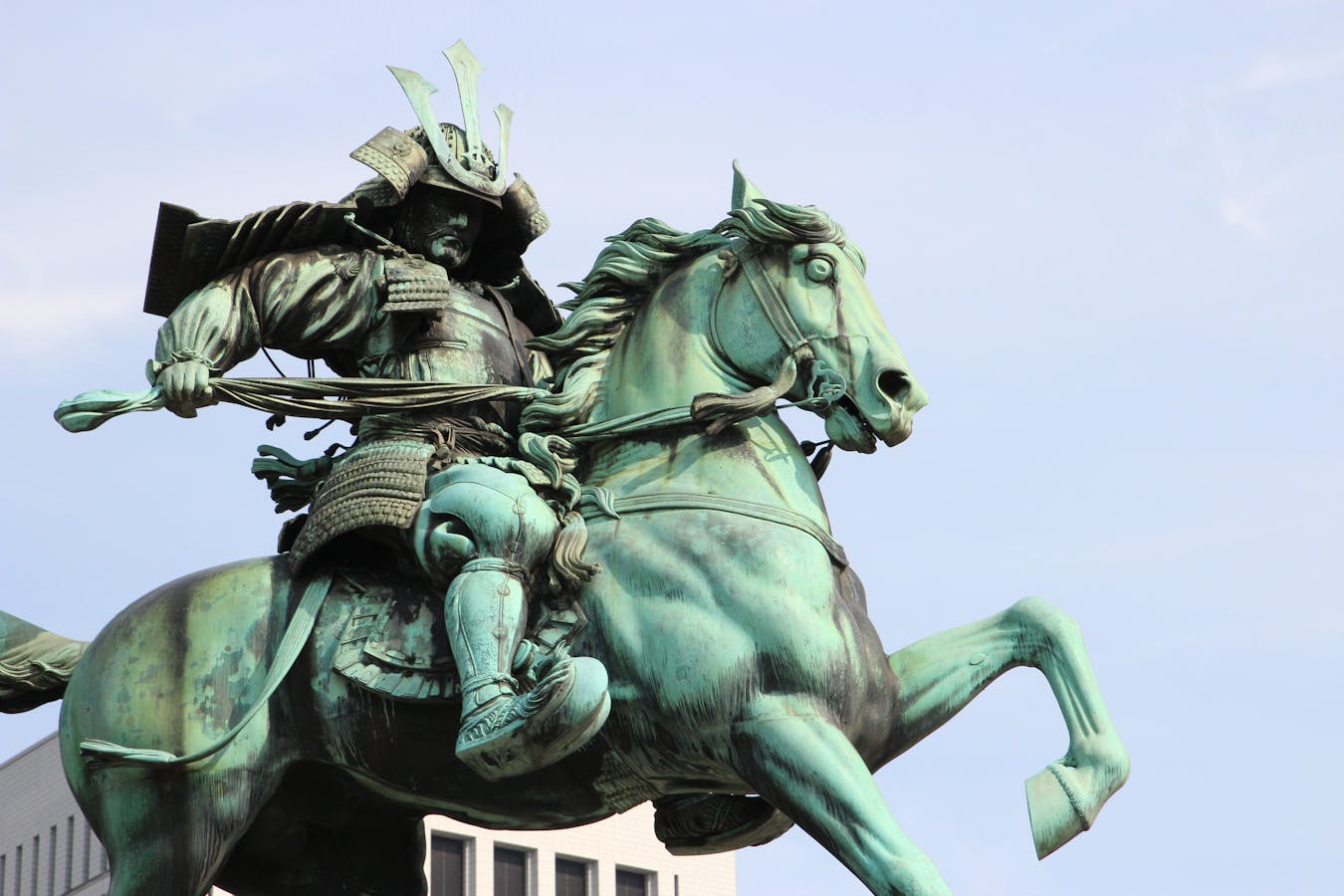
Statue of Sanada Yukimura; located near Tamatsukuri Station; free. Commemorates Sanada’s defense of the Sanada-maru during the Winter Siege.
Yasui Shrine (Tennoji)
The area where Sanada Yukimura was killed during the Summer Siege of 1615. The shrine has memorial markers and is one of the few places where you can stand on actual battle ground from the Summer Siege.
Osaka Museum of History
- Access: Tanimachi 4-chome Station, 2-min walk
- Admission: Adult JPY 600; HS/Uni JPY 400; JHS and under free
- Hours: 9:30-17:00; closed Tuesdays
- Highlight: Full-floor Edo-period Osaka recreation; samurai armor displays; Naniwa Palace excavation
- Time needed: 90 min – 2 hours
Osaka City Cultural Museum
Additional samurai-era artifacts and Edo-period documents, and one of the city’s better museums. Free admission.
Tamatsukuri (Sanada Maru Battle Site)
The Sanada-maru barbican was built in this area. While the original earthworks are gone, the neighborhood includes several memorial markers and a small park commemorating the site.
Tennoji Park / Chausuyama
Tokugawa Ieyasu set up his command post on Chausuyama Hill during both sieges. Today the hill is part of Tennoji Park – free; combine with a Shinsekai food crawl.
Samurai Walking Route (Half-Day)
- 09:00: Arrive at Osaka Castle via Tanimachi-yonchome Station
- 09:15-11:30: Walk the castle – Otemon, Sakuramon, Tako-ishi stone, Hokoku Shrine, Donjon museum
- 11:30: Walk to Osaka Museum of History (2 min walk)
- 11:30-13:00: Tour the museum – especially the Edo-period reconstruction
- 13:00: Lunch at castle area or walk south to Tamatsukuri area
- 14:00: Sanada-maru memorial markers (Tamatsukuri Station area)
- 14:30: Walk to Sanko Shrine for Yukimura statue (10 min)
- 15:00: Tennoji Park / Chausuyama Hill (Tokugawa Ieyasu’s command post)
- 15:30: Optional Shinsekai food break
Key Historical Figures
Toyotomi Hideyoshi (1537-1598)
Peasant-born unifier of Japan; first commoner to rule Japan in 400+ years. Built Osaka Castle 1583-1597 with golden-leaf walls. Established Osaka as Japan’s commercial capital. Died age 61. Worshipped today at Hokoku Shrine.
Toyotomi Hideyori (1593-1615)
Hideyoshi’s son; 5 at father’s death; 22 when killed. Surrounded by ronin and Toyotomi loyalists at Osaka Castle until June 4, 1615.
Yodogimi / Yodo-dono
Hideyori’s mother and the political power behind the Toyotomi resistance. Niece of Oda Nobunaga. Died with her son June 4, 1615.
Sanada Yukimura (1567-1615)
Legendary samurai general; led the defense of the Sanada-maru during the Winter Siege; killed during the Summer Siege at age 48. Sometimes called “the greatest soldier of the Sengoku Era.”
Tokugawa Ieyasu (1543-1616)
Founder of the Tokugawa Shogunate; led the destruction of the Toyotomi. Died age 73 – one year after the Summer Siege. His son and grandson maintained the shogunate for 250+ years.
The Osaka Castle Stones (A Photographer’s Story)
The 1620s Tokugawa reconstruction used stones quarried from quarries across western Japan. Walking the castle grounds, look for:
- Tako-ishi (Octopus Stone): Sakuramon Gate; ~130 tons; largest single stone
- Stone with hammered marks (kamon): Each donor daimyo family marked their stones
- Stones of multiple colors: Different quarries had different stone colors
- Stones with “tako-ishi” pattern: A specific stone-cutting style
- Repair stones: Some stones from later repairs are visibly different
The 1660 Powder Explosion + 1665 Lightning
Two major disasters shaped the castle post-1620:
- 1660: Gunpowder warehouse explosion + fire damaged the castle structure
- 1665: Lightning strike destroyed the original tenshu (main keep)
- For 200 years (1665-1868): The castle existed without its tenshu
- 1868 Boshin War: Castle burned again during the Meiji Restoration
- 1931: Ferroconcrete reconstruction funded by public donation (mayor Seki Hajime collected JPY 1.5 million)
- 1995-1997: Heisei restoration – shachihoko replated with gold leaf; elevator added (8th floor accessible)
Samurai Cultural Influence on Modern Osaka
- Mercantile pride: The Toyotomi promoted merchant-class culture vs. the Tokugawa’s strict class hierarchy
- Anti-authoritarian streak: Osakans maintain pride in their “underdog” Toyotomi heritage
- Cuisine influences: Many Osaka dishes (kushikatsu, doteyaki, okonomiyaki) trace back to samurai-era working-class food traditions
- Comedy and rakugo: Edo-period samurai tax burdens drove Osaka toward humor as social pressure release – culminating in modern Yoshimoto Entertainment
- Festival calendar: Tenjin Matsuri July 24-25 includes Heian and Edo-era costume processions; Sumiyoshi Matsuri features samurai-era ceremonial elements
Books and Films About Osaka Samurai History
- “Taiko” by Eiji Yoshikawa: Classic Japanese historical novel about Hideyoshi (translated into English)
- “Shogun” by James Clavell: Set in the early Tokugawa period; covers the post-Sekigahara political situation
- “The Last Samurai” (2003 film): Set in late-Tokugawa Meiji period; not directly Osaka but explains samurai ethos
- “Sanada Yukimura” (NHK series): Japanese TV drama about the Sanada family
- “Hideyoshi” (NHK Taiga drama): Long-running biographical TV series
Sample Multi-Day Samurai Itinerary
Day 1: Hideyoshi’s Osaka
- Morning: Osaka Castle – outer grounds, Otemon, Sakuramon, Tako-ishi stone
- Lunch: Castle Park or nearby
- Afternoon: Osaka Castle Donjon interior museum (Hideyoshi history)
- Late afternoon: Hokoku Shrine (within castle park)
- Evening: Dinner with views of the lit castle
Day 2: Sanada Yukimura’s Battle Sites
- Morning: Tamatsukuri Sanada-maru memorial markers
- Late morning: Sanko Shrine (Yukimura statue)
- Lunch: Tennoji area
- Afternoon: Yasui Shrine (Yukimura’s death site)
- Late afternoon: Tennoji Park / Chausuyama Hill (Tokugawa command post)
Day 3: Edo-Period Osaka
- Morning: Osaka Museum of History
- Lunch: Department store food hall
- Afternoon: Osaka Museum of Housing and Living (Edo-era Osaka recreation; closed for renovation until 5 January 2027)
- Evening: Hozenji Yokocho (Edo-period atmospheric alley)
Practical Tips
- Wear comfortable shoes – castle grounds involve significant walking
- Allow 3-4 hours for the castle alone
- Audio guides available at the Donjon – rent for context
- Photography permitted at all sites; flash prohibited inside museum exhibits
- Spring (cherry blossoms) and autumn (foliage) enhance the castle visit dramatically
- Avoid Mondays for the Museum of History (closed Tuesdays but check current schedule)
- Sanada Yukimura statue at Sanko Shrine is small; bring zoom for photos
- Combine castle + history museum on one day for thematic depth
For History Enthusiasts: Further Sites
- Daitokuji (Kyoto, 1.5 hr train): Sub-temples include Hideyoshi’s actual tea master Sen-no-Rikyu’s design
- Wakayama Castle: Anchor of Toyotomi forces in southern Wakayama region
- Sekigahara battlefield: 1600 decisive battle site; 1.5 hr from Osaka
- Tokugawa’s Nikko shrines: Where Ieyasu is buried; long day trip from Osaka
Final Word: Osaka Samurai History
Osaka samurai history rewards visitors who want to walk historical sites with the historical context in mind. The Toyotomi-Tokugawa drama of 1614-1615 destroyed Hideyoshi’s legacy in less than 18 months, but the Osakan cultural memory still bends toward the underdog Toyotomi. Walking Osaka Castle, the Tamatsukuri area, and the Tennoji battle sites with Sanada Yukimura’s daring 1615 cavalry charge in mind transforms ordinary tourist locations into one of the great historical experiences available in Japan.