This article contains advertising. Our booking links are routed through a partner that adds commission tracking automatically, so if you book through one we earn a commission from the provider, at no extra cost to you. It never affects what we recommend. Affiliate disclosure
Umeda is Osaka’s north, officially Kita, and it’s the polished, business-suited counterweight to Namba’s neon and noise. This is where the Shinkansen day trips begin, where the flagship department stores stack their food halls floor on floor, and where an open-air observation ring 173 metres up gives you the best view in the city. It’s less about wandering and gawping, more about glass towers, slick shopping, and a kilometre of underground passages that let you cross the whole district without ever seeing the sky.
This 2026 Umeda Osaka guide covers the Sky Building observatory, the HEP Five Ferris wheel, Grand Front Osaka, the legendary depachika food basements, and, crucially, how to navigate the tangle of half a dozen interconnected stations without losing twenty minutes and your temper. If you’re staying up north or just passing through between trains, this is how to make the most of it.
Umeda at a glance
- Where: Kita-ku, northern Osaka.
- The stations: Osaka (JR), Umeda (Midosuji subway), Hankyu Umeda, Hanshin Umeda, plus Higashi-Umeda and Nishi-Umeda, all linked underground.
- Time to set aside: Four to six hours for a proper look, a full day if you fold in the nearby arcades and izakaya streets.
- Best for: Shopping, transit, business stays, and Shinkansen connections.
- To Namba/Dotonbori: About 8 minutes on the Midosuji subway, or 12 on the JR Loop line.
Umeda or Osaka Station? They’re the same place
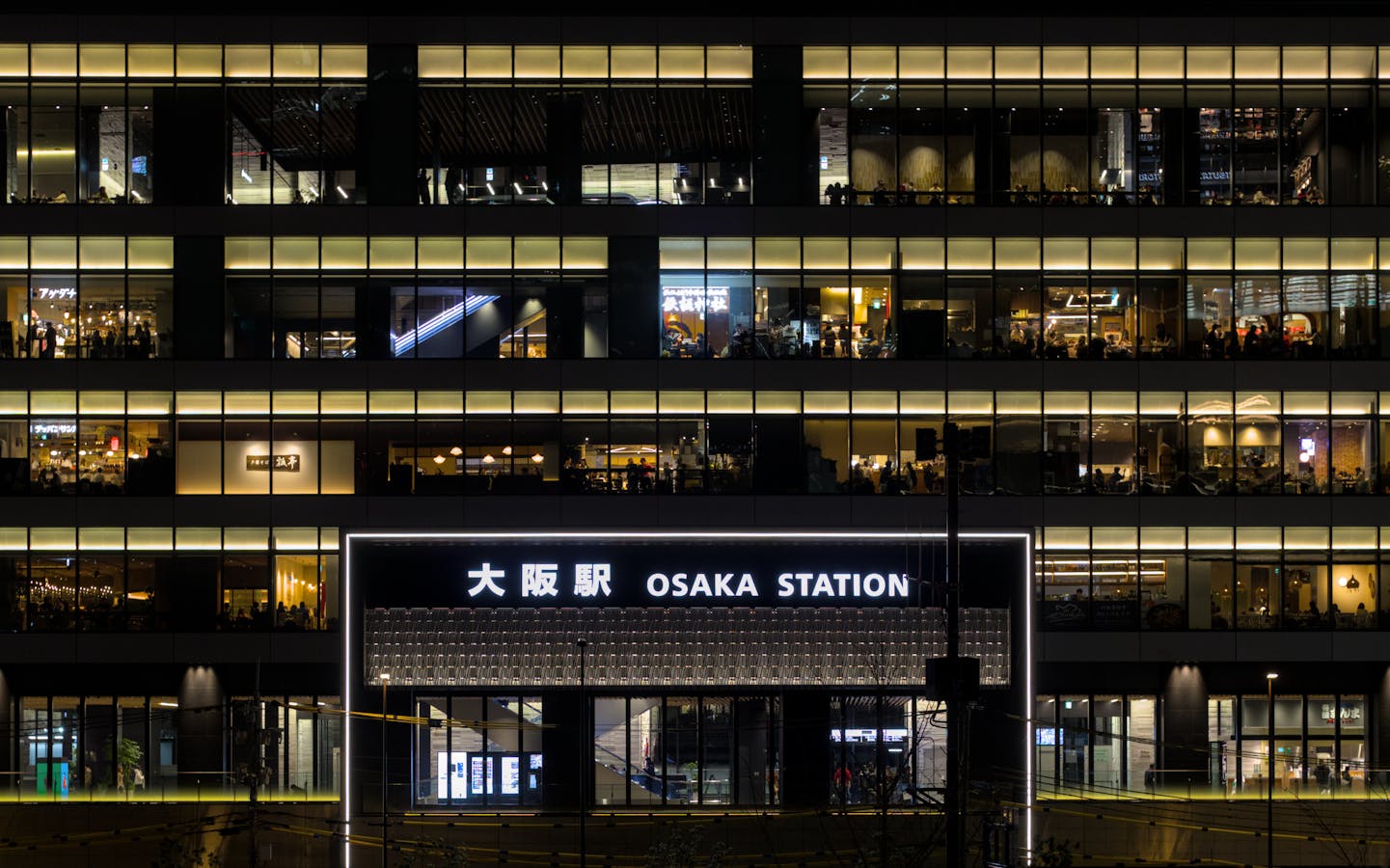
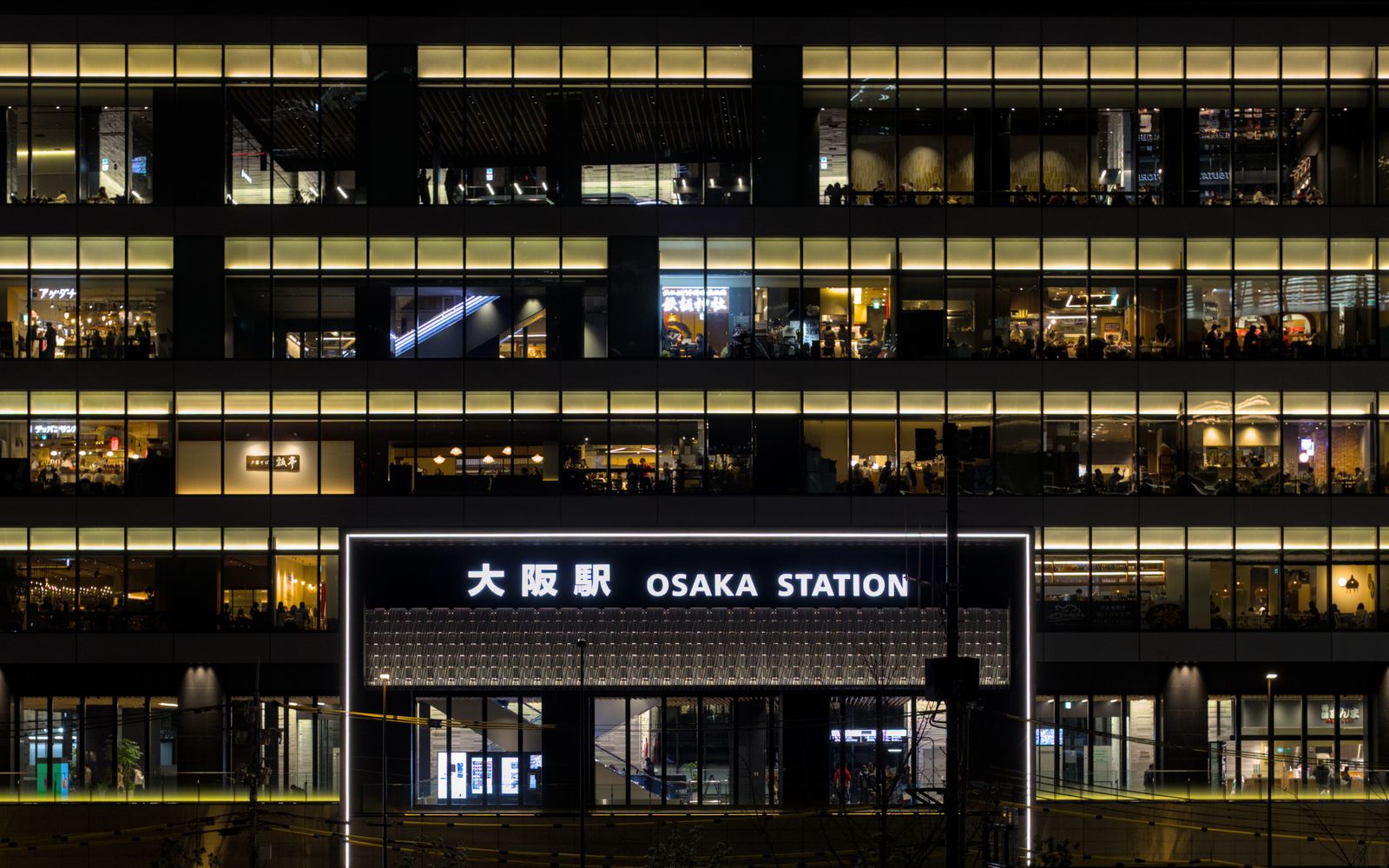
Worth clearing up before you go anywhere, because it confuses almost everyone. JR calls the hub “Osaka Station.” The Osaka Metro and the private railways call it “Umeda.” They sit on top of one another and refer to the same district. So when your train terminates at Osaka Station and your hotel is in Umeda, relax, you’re already there. The name just depends on which company carried you in.
The big sights
Umeda Sky Building and the Floating Garden
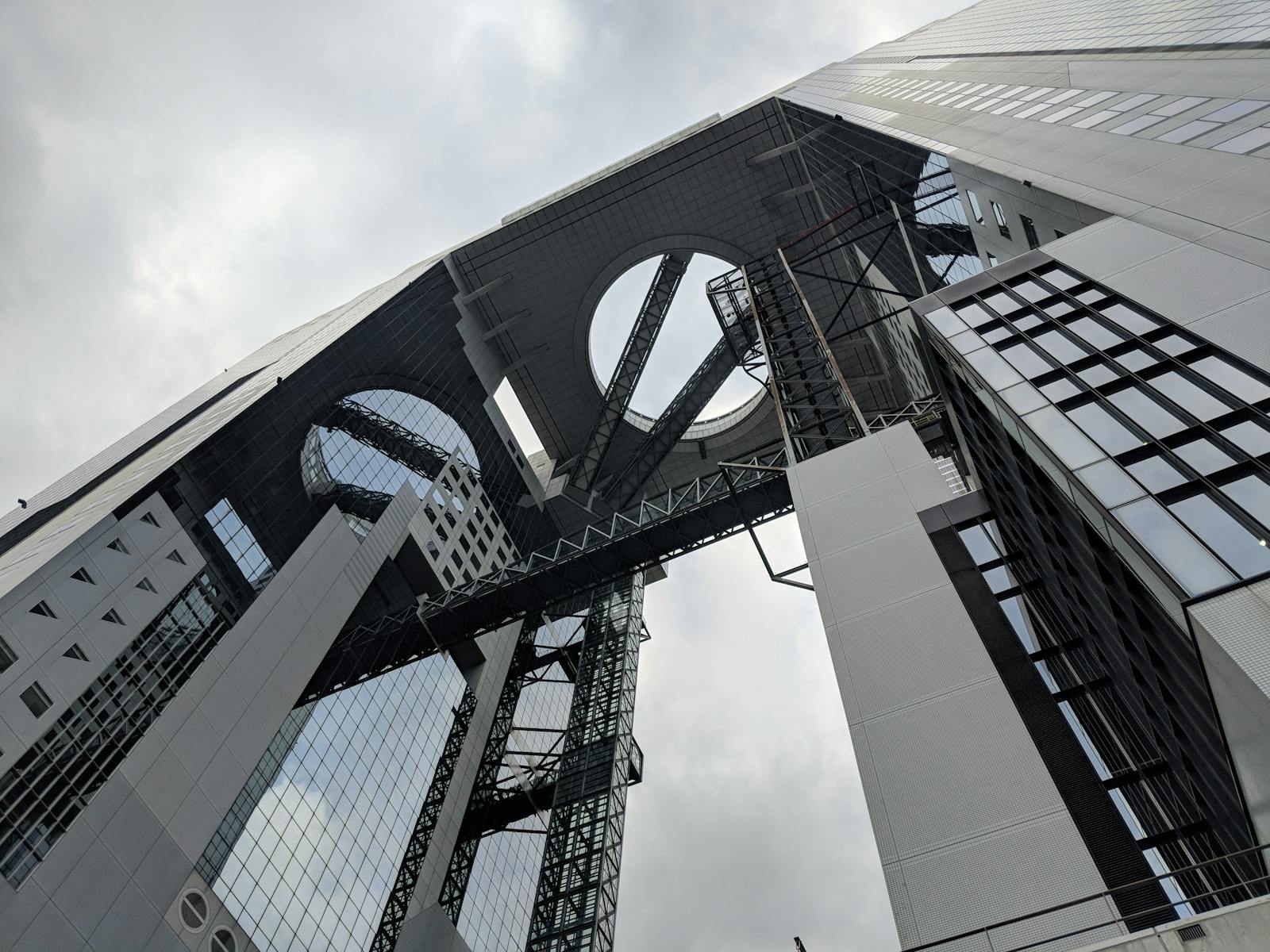
The architectural signature of north Osaka, and genuinely worth the ticket. Two 173-metre towers are joined at the very top by a circular, open-air rooftop, the Floating Garden Observatory. You ride a glass lift, then a stomach-flipping escalator suspended in mid-air between the towers, to reach a ring you can walk all the way around, wind in your hair, the whole city below. It was designed by Hiroshi Hara, who later did Kyoto Station.
- Hours: Roughly 9:30 to 22:30.
- Price: Around ¥2,000 for adults.
- Walk: About 10 minutes from Osaka Station, through an underpass, the route is signed but not obvious, so follow the signs rather than your phone.
- Timing: Arrive 30 minutes before sunset, that golden-hour walk-around, into the city lights coming on, is the whole experience.
- Free alternatives: The lower plaza and the basement Takimi Koji, a recreated early-Showa Osaka street, cost nothing to wander.
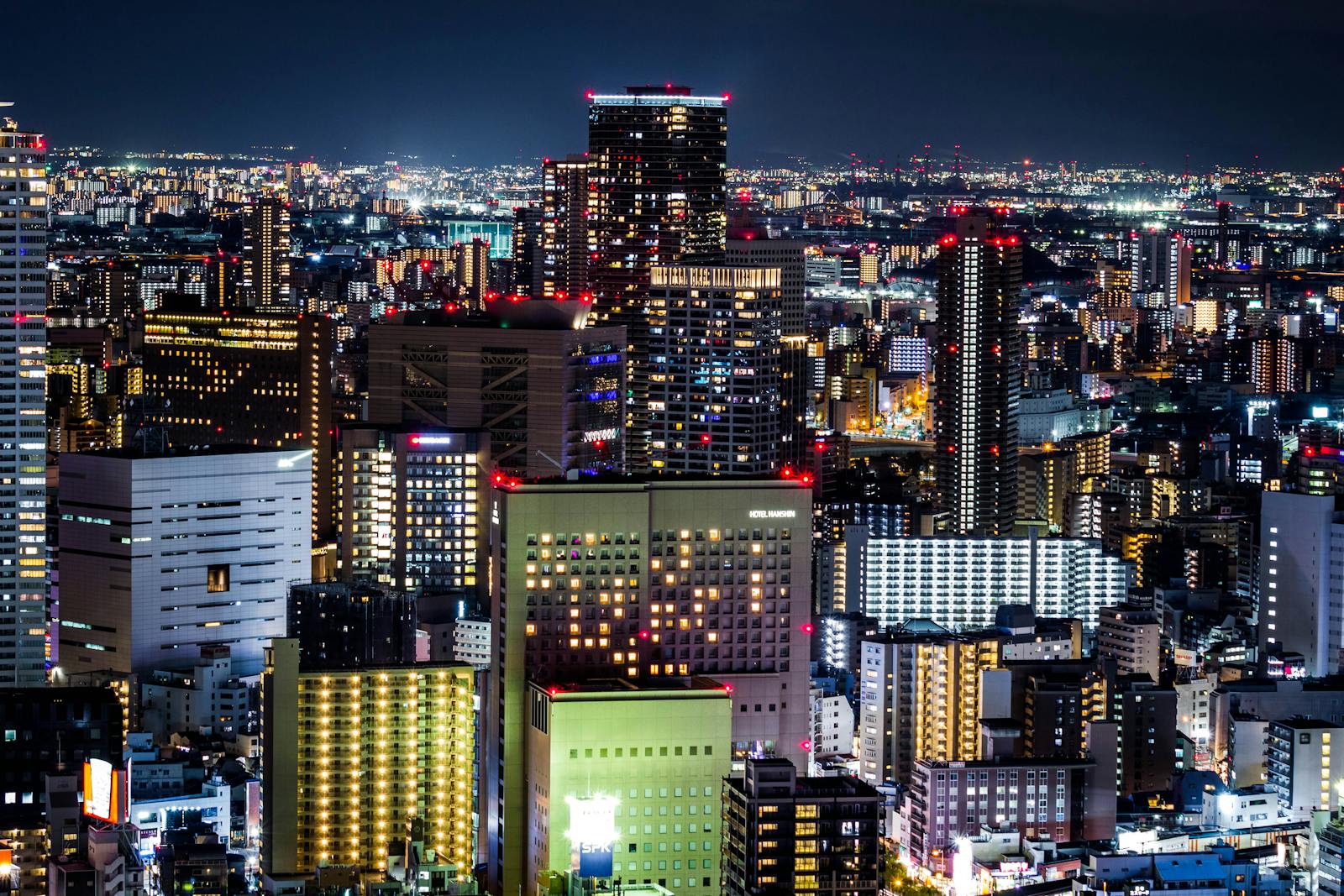
It’s regularly rated one of the better observation decks anywhere, and the open-air design genuinely sets it apart from the glassed-in alternatives. For how it compares with Abeno Harukas and Tsutenkaku, see our Osaka observation decks guide.
HEP Five Ferris wheel
The bright red wheel bolted to the roof of the HEP Five mall, visible from half the district. Around ¥600 for a 15-minute turn, and you board from inside the mall, so weather is never a problem. Its peak is about 103 metres. Not the view the Sky Building gives you, but quick, central, and fun, and the kind of thing that keeps teenagers happy.
Grand Front Osaka
A modern shopping and lifestyle complex directly north of Osaka Station, all open atriums, fashion, restaurants, and showrooms. It’s free to walk through, pleasant in any weather, and a soft landing if you’ve just stepped off a train and need to orient yourself before diving in deeper.
The department stores, and why the basements matter
Umeda is department-store country, and the real action is below ground level. The depachika, the food basements, are among the best in Japan: glossy halls of sushi, kaiseki boxes, French pastries, pickles, sake, and sweets, much of it sampled out at peak hours. Even if you buy nothing, walking one is a sensory event and a free one.
- Hankyu Umeda: The flagship of the Hankyu empire, 13-plus floors, and the depachika most locals will tell you is the best in the city.
- Hanshin Umeda: The rival next door, famous for its quick, snack-focused basement, the ikayaki, a flattened squid pancake, has a queue all day.
- Daimaru Umeda: Above Osaka Station, and home to the flagship Osaka Pokémon Center, a Nintendo store, and a clutch of character shops, a guaranteed hit if you’ve got kids in tow.
For how these stack up against each other and the southern stores, our Osaka department stores guide goes floor by floor.
The underground city
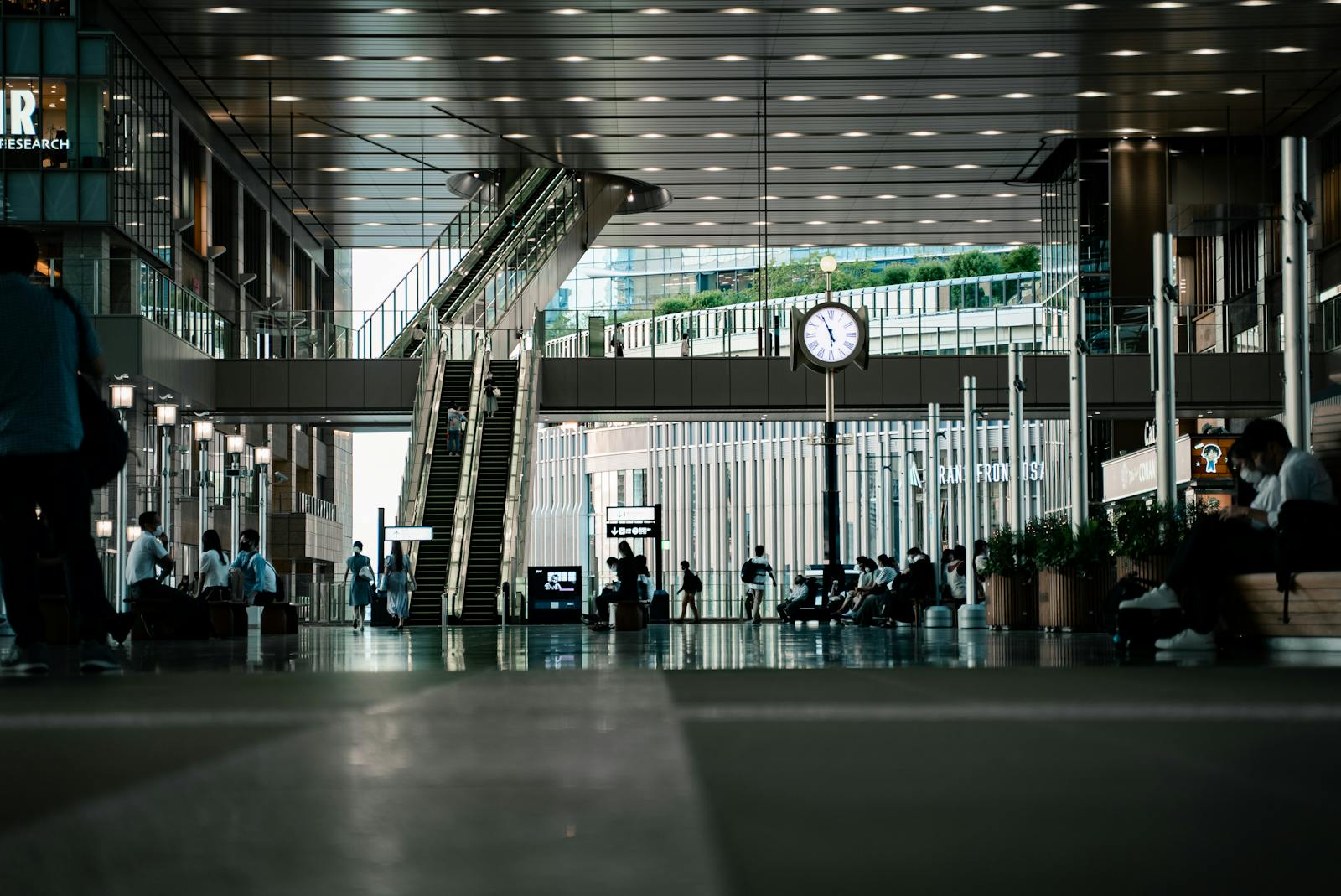
Beneath Umeda runs more than a kilometre of connected underground arcades, Whity, Diamor, Hankyu Sanbangai, lined with shops, cafés, and food courts. Locals use them to cross the district without surfacing, and in a downpour or a heatwave you’ll be grateful they exist. They also double as the link between all those scattered stations.
A friendly warning: the Umeda underground has a reputation as a maze, and it has earned it. Signage is decent but the layout sprawls, and “just below the station” can mean a ten-minute walk. Don’t panic if you lose your bearings, follow the colour-coded signs toward the line you want, and surface to recalibrate if you have to. It defeats first-timers and amuses locals in roughly equal measure.
Where to eat in Umeda
The food here skews more polished than Namba’s street stalls, but the local specialities are alive and well if you know where to look:
- Kiji okonomiyaki in the Sky Building basement, a local favourite worth the queue.
- Hanadako takoyaki in the Hankyu Sanbangai underground, a salaryman lunch institution.
- The depachika at Hankyu, Hanshin, and Daimaru, build a picnic from samples.
- Tenma izakaya streets, a few minutes away, where highballs go for small change and the after-work crowd packs in.
- Grand Front restaurants for sit-down modern dining across several floors.
- The Conrad lobby bar on the 40th floor, for a skyline drink if you’re feeling flush.
For okonomiyaki specifically, plenty more options are in our Osaka okonomiyaki guide.
Just beyond Umeda
Some of the best of the north sits a few minutes outside the core, and it’s a mistake to ignore it. Tenjinbashisuji, ten minutes south by subway, is the longest covered shopping arcade in Japan at about 2.6 km, an old-school, local strip with none of the polish of the department stores. Its southern end opens onto Osaka Tenmangu and its Tenjin Matsuri, the festival that fills the Okawa river with boats every 24 and 25 July. Tenma, just north, is a dense knot of cheap izakayas where the after-work drinking runs late and loud. And Tsuruhashi, eight minutes east on the JR Loop, is Osaka’s Koreatown, the place for premium yakiniku grilled meat. Any one of these turns a Umeda afternoon into a full day.
Umeda on a budget, and what’s free
Umeda has a reputation for being the pricey end of town, and the hotels and the Sky Building ticket do nothing to dispel it. But a surprising amount of the district costs nothing. The depachika samples are free to graze. The lower plaza and the recreated Showa-era Takimi Koji street under the Sky Building are free to wander, and on a rainy afternoon they’re a genuine outing in their own right. The Grand Front atriums, the underground arcades, the lobby of the Conrad if you’re brave, all free to walk through and watch the city go by.
If you’re counting yen, the move is to skip the ¥2,000 observatory ticket and instead nurse a coffee in one of the high-floor café spaces, or simply ride the HEP Five wheel for ¥600 and get most of the view for a fraction of the cost. A pour-over at one of Osaka’s specialty coffee shops runs ¥500 to ¥700 and buys you a table for an hour. Plenty more north-side savings sit in our Osaka money-saving tips.
Umeda by day, Umeda by night
The district changes character with the clock, and it pays to know which version you’re walking into. By day it’s all commerce and commuters, department stores opening, business crowds moving through the underground in suits, the Sky Building doing brisk daytime trade. This is the time for shopping, the food halls, and the observatory if you want a clear-air view rather than a sunset one.
After dark it softens. The towers light up, the wheel glows red, and the eating-and-drinking pockets, Tenma especially, come alive with the after-work crowd. Umeda doesn’t have Namba’s tourist-facing nightlife, the upmarket bars of nearby Kitashinchi are where the serious money drinks, but for a relaxed izakaya evening among locals it more than holds its own. Time your Sky Building visit for sunset and you catch the hinge between the two moods in one go.
A half-day Umeda plan
- 2:00pm: Arrive Osaka Station, wander Grand Front to get your bearings.
- 3:00pm: Hankyu depachika, browse and snack.
- 4:00pm: HEP Five Ferris wheel.
- 4:30pm: Pokémon Center at Daimaru.
- 5:30pm: Walk to the Umeda Sky Building.
- 5:45pm: Floating Garden at golden hour, into sunset.
- 7:00pm: Kiji okonomiyaki in the Sky Building basement.
- 8:30pm: Drop into Tenma for a nightcap among the izakayas.
The station puzzle
Like Namba, Umeda isn’t one station but a cluster, run by different operators and tied together underground. Knowing which does what saves real time:
- JR Osaka Station: JR West regional lines, the Loop line, and the Yumesaki line for Universal Studios. This is also your connection to Shin-Osaka for the Shinkansen.
- Umeda (Midosuji subway): Straight down to Namba in about 8 minutes.
- Hankyu Umeda: Trains to central Kyoto (Kawaramachi) in around 44 minutes.
- Hanshin Umeda: Trains to Kobe in about 30 minutes.
- Higashi-Umeda, Nishi-Umeda, Kitashinchi: Smaller stations folded into the same complex.
One thing to flag: the Shinkansen itself doesn’t stop at Umeda, it stops at Shin-Osaka, one quick stop north on the Midosuji line or a few minutes by JR. So “Umeda for the Shinkansen” really means Umeda as the place you sleep and shop, with a five-minute hop to the bullet-train platforms. If the rail map is melting your brain, our Osaka subway guide untangles it.
Should you stay in Umeda?
For some trips, absolutely. Umeda is the smart base if you’re doing a lot of day trips, travelling on for the Shinkansen, or simply prefer cleaner, calmer streets and reliable hotel quality over the sensory assault of the south. Business travellers love it for exactly these reasons, and the rooms tend to be newer and better connected. The trade-off is that the food-and-nightlife buzz of Namba is a short ride away rather than on your doorstep. To weigh the hotels properly, transit access, what’s walkable, who each one suits, our Umeda hotels guide lays it out, and the broader Namba guide makes the case for the other side of the city if you’re torn.
Umeda FAQ
What is Umeda known for?
The Umeda Sky Building’s open-air Floating Garden, the HEP Five Ferris wheel, Grand Front Osaka, and the flagship Hankyu and Hanshin department stores with their famous food basements. It’s also the city’s main hub for shopping and onward transit.
Is Umeda the same as Osaka Station?
Effectively yes. JR labels it “Osaka Station”; the metro and private railways call it “Umeda.” They sit on top of each other and describe the same district.
How long do I need in Umeda?
Half a day covers the Sky Building, HEP Five, and a department store. A full day if you also want Tenjinbashisuji, Tenma, and a proper depachika graze.
Should I stay in Umeda or Namba?
Umeda for transit-heavy trips, business stays, and Shinkansen connections. Namba for food, bars and late-night spots, and walkable sightseeing. It comes down to one question: do you value convenience or atmosphere more?
Is the Umeda Sky Building worth it?
Yes. The open-air ring observatory is unusual in Japan and consistently rated among the world’s better observation decks. Go for sunset and the walk-around at golden hour.
Which Umeda department store is best?
Hankyu Umeda for the depachika and overall range. Hanshin Umeda for its quick snack basement and the famous ikayaki squid stand.
Where Umeda fits in your trip
Umeda is the practical, polished anchor of the north, the place to shop hard, eat well, and launch the day trips that make Osaka such a good base. When you’re ready for the louder, grittier side of the city, the neon of Dotonbori and the retro streets of Shinsekai are a short ride south. To plan a route that takes in both ends, start with our Osaka neighborhoods guide.
The district’s landmark is a nine-minute walk from Osaka Station and best at sunset — our Umeda Sky Building guide covers tickets, timing and the underpass that convinces people they are lost.
Before any of that, though, you have to get out of the station. Six of them share this district under two different names, and our Osaka Station guide walks you from the JR gates to every other platform with honest timings.
For somewhere to sleep within a few minutes of the platforms, see our guide to hotels near Osaka Station.