This article contains advertising. Our booking links are routed through a partner that adds commission tracking automatically, so if you book through one we earn a commission from the provider, at no extra cost to you. It never affects what we recommend. Affiliate disclosure
Osaka does not have one observation deck worth your money. It has six, and they are genuinely different from one another, which is rare. One is the tallest building in Japan. One has an open-air rooftop ring you can walk around in the wind. One is a 1950s tower stuck in the middle of the city’s most unrepentantly old-school neighbourhood. Pick the wrong one and you’ve spent ¥2,000 looking at the back of someone’s selfie stick. Pick right and you get the single best 25 minutes of your trip, usually somewhere in the half hour between sunset and full dark.
Here’s the honest breakdown of all six, plus a handful of free spots that beat the paid ones on a budget. I’ll tell you which to skip, which to pair, and exactly when to show up.
The 30-second answer
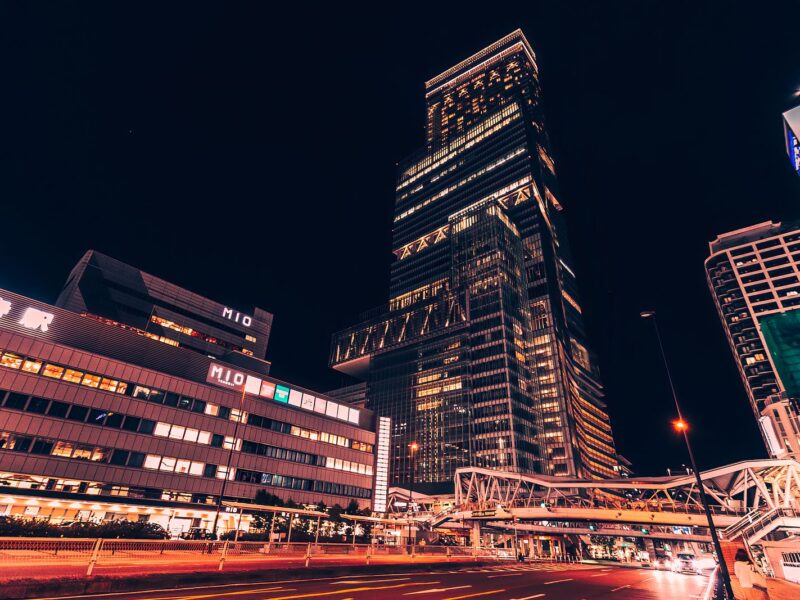
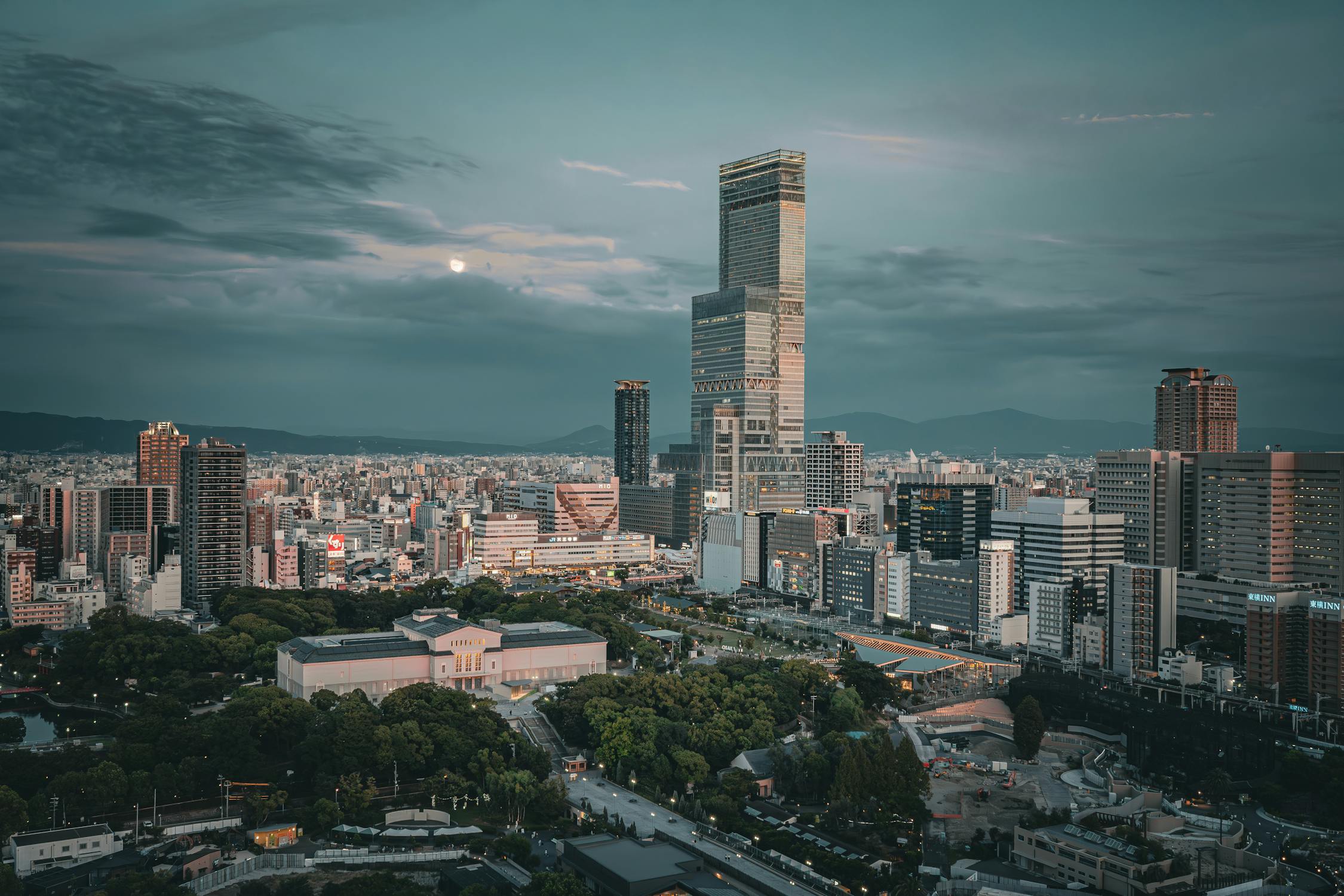
If you only do one, go to Abeno Harukas (Harukas 300) at Tennoji. It’s the highest, the windows wrap all four sides, and on a clear evening you can pick out Osaka Castle, the Akashi Kaikyo Bridge, and the Wakayama mountains. ¥1,500.
If you do two, add the Umeda Sky Building. It’s lower at 173 metres, but the rooftop is open to the air and you walk a full circle around it, no glass between you and the city. That’s the one photographers keep coming back to. Everything below is the long version.
Abeno Harukas: Harukas 300
Three hundred metres, the tallest building in the country, and the deck spreads across floors 58, 59 and 60. The 60th is the one you want: floor-to-ceiling glass, corner to corner, nothing in the way. Sit in the cafe on 58 if your legs are done, though the views off 60 are why you came.
On a clear day the sightlines are absurd. Akashi Kaikyo Bridge to the west, Mt. Ikoma to the east, Osaka Castle about five kilometres to the north (look north-northwest, it reads as a small dark silhouette), and the Wakayama mountains down south. Haze kills all of this, so if you’ve got one genuinely clear evening on your trip, spend it here.
- Height: 300 m building; the deck sits around 288 m.
- Hours: 9:00–22:00 daily.
- Price: ¥1,500 adult / ¥1,200 student / ¥700 child / free under 4.
- Station: Tennoji (the building sits right on top of it).
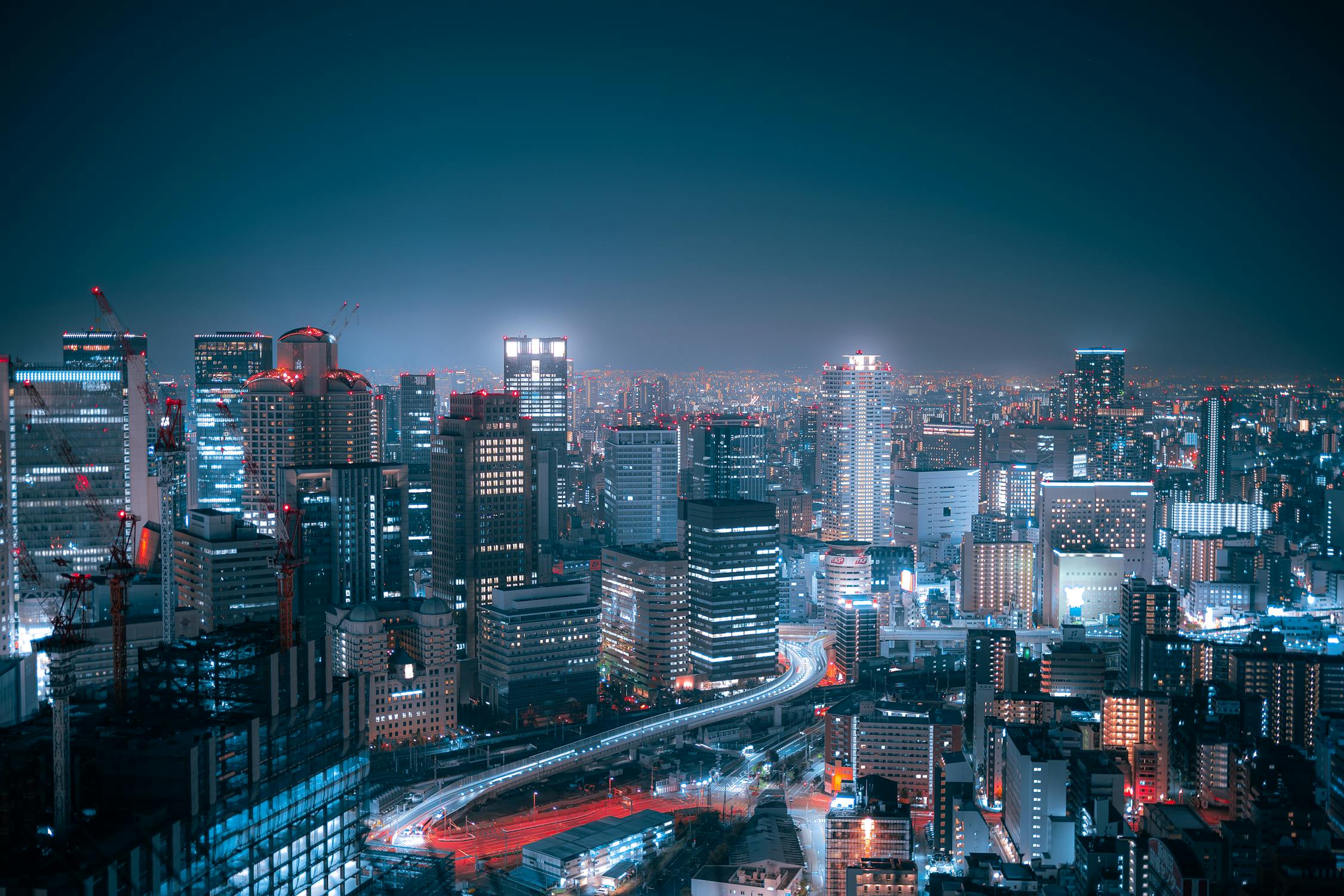
- When to go: Blue hour, the 15 to 25 minutes after sunset. The glass turns into a mirror and the city catches fire below you.
- The heliport: ¥500 extra gets you onto the open-air rooftop helipad, the highest open-air spot in any building in Japan. Worth it if it’s not blowing a gale.
One trick worth knowing: the Sky Garden on 16F is free, open-air, and open 7:00–22:30. It’s a fraction of the height, but if you’re undecided, go up there first, gauge how clear the air is, then decide whether to pay for 300. No point spending ¥1,500 on a grey soup day.
Umeda Sky Building: the open-air one
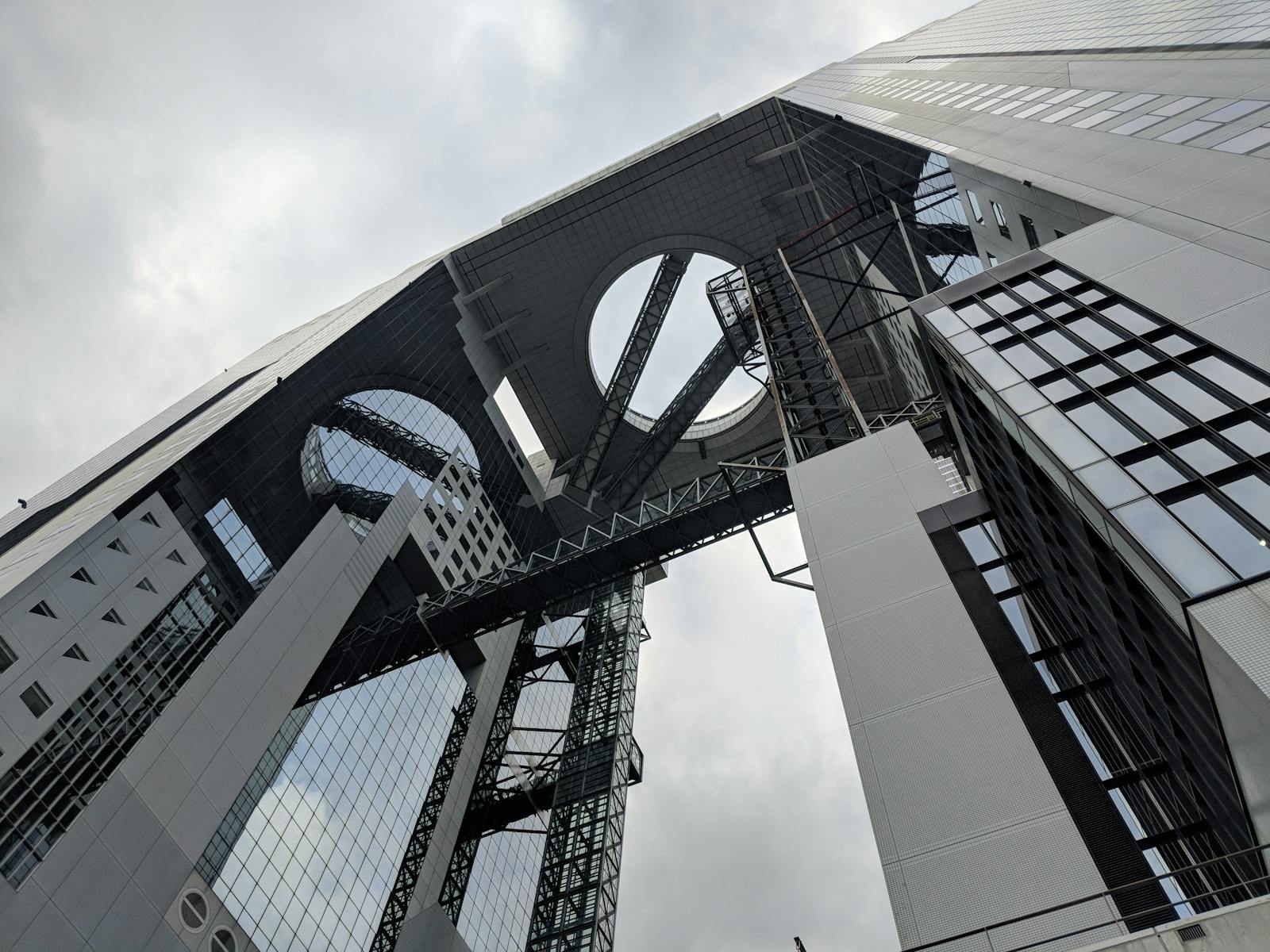
This is the architectural landmark of north Osaka: two 173-metre towers joined at the top by a circular rooftop the building calls the Floating Garden Observatory. Hiroshi Hara designed it, the same architect who later did Kyoto Station, and it shows. You ride a glass elevator up, then a glass escalator across the gap between the towers, which is its own small thrill if you don’t love heights.
The point of this place is the open-air ring up top. You walk the full 360 with wind on your face and no glass flattening the view. Nothing else in Osaka does that. It’s lower than Harukas, so the city feels closer and more legible rather than map-like. You can actually follow the streets.
- Height: 173 m.
- Hours: 9:30–22:30 daily.
- Price: ¥2,000 adult / ¥1,200 children 4–12 / free under 4.
- Station: Osaka / Umeda, about a 7-minute walk via the underground passage (follow signs, it’s well marked).
- When to go: Get up there 30 minutes before sunset and do the walk-around as the light goes. The ring faces every direction, so you chase the colour around the loop.
Down in the basement there’s Takimi Koji, a recreated 1920s street of izakayas and food stalls, free to walk through and genuinely atmospheric. Eat there after the deck rather than before. You don’t want to be queueing for the elevator after the good light has gone.
Tsutenkaku: the retro tower
A 103-metre tower in the middle of Shinsekai, Osaka’s gloriously unfashionable old entertainment quarter. The original went up in 1912 as a nod to the Eiffel Tower, came down in the war, and was rebuilt in 1956. The view from the deck (which sits around 91 m) is shorter than the big two, and honestly the view isn’t the reason to come at all.
The reason is everything around it. Shinsekai is wall-to-wall kushikatsu shops, hand-painted signs, and a stubborn refusal to modernise. The tower is the centrepiece of that. Go up for the angle back over the neon, then come down and eat deep-fried skewers in the streets below. That’s the proper order of operations here.
- Height: 103 m tower, deck at 91 m.
- Hours: 10:00–20:00 daily.
- Price: ¥1,000 adult / ¥500 child.
- Station: Ebisucho or Dobutsuen-mae.
- The slide: There’s a slide ride that drops you from 4F to 3F for an extra ¥1,000. Silly, fun, skippable.

Tempozan Ferris Wheel: the bay view
Not a deck, a wheel, but it earns its spot because it’s the only one of these that gets you out over the water. At 112.5 metres at the top it was briefly the tallest Ferris wheel in the world, and it sits right next to the Aquarium Kaiyukan, so you can roll the two into one bay-area afternoon without a second thought.
- Height: 112.5 m at the peak.
- Hours: 10:00–22:00.
- Price: ¥800 per gondola, up to four people, so it works out cheap if you’re a group.
- Station: Osakako.
- Ask for: one of the see-through gondolas with the glass floor, if you’ve got the stomach for it.
Doing the bay with kids? This plus the aquarium is the easy win. Our Aquarium Kaiyukan guide covers timing the whale shark feedings so you’re not standing in the wrong spot at the wrong hour.
The best castle view costs nothing
Strange but true: the cleanest view of Osaka Castle isn’t from any paid deck. It’s from the 10th floor of the Osaka Museum of History, directly across the road. The windows frame the whole keep against the park, and you catch the full silhouette in a way you simply can’t from inside the castle itself.
- Hours: 9:30–17:00, closed Tuesdays.
- Price: The lobby and cafe area are free; ¥600 gets you the full museum.
- Station: Tanimachi 4-chome.
If you’re building a castle day around this, our Osaka Castle visitor guide has the keep’s hours, the cheapest way in, and which gate to use to dodge the tour-bus crush.
Free skyline spots that beat the paid decks on a budget
You do not have to pay to see Osaka from up high. A few of these are good enough that I’d send a budget traveller straight to them instead of the ticketed decks.
- Abeno Harukas Sky Garden, 16F. Open-air, free, open 7:00–22:30. Not the full 300 height, but a real view, and an early-morning option the paid deck doesn’t give you.
- Hankyu Department Store Umeda, 13F lounge. A free observation lounge looking out over the Umeda lights. Pair it with the depachika downstairs and you’ve got dinner and a view for the cost of dinner.
- Osaka Station City rooftops. The Tenku Farm and Time & Space Plaza gardens sit above the station on 11F and 14F, free to wander, and they earn a spot in our Osaka parks and gardens guide for good reason.
- Daimaru Shinsaibashi, 14F roof garden. Small, quiet, free, right in the middle of the shopping district.
- Conrad Osaka, 40F lobby bar (Atmos). The lobby is free to enter and the Nakanoshima-and-castle view from up there is the best free seat in the city. A drink runs ¥1,500 and up, so it’s the splurge of the free-ish list. Worth it once.
For the full no-cost itinerary, our free things to do in Osaka guide goes deeper on every one of these.
Side by side
| Deck | Height | Price | Indoor / outdoor | Go for |
|---|---|---|---|---|
| Harukas 300 | 300 m | ¥1,500 | Indoor + outdoor heliport | Highest, longest sightlines |
| Umeda Sky | 173 m | ¥2,000 | Open-air ring | The walk-around, the photos |
| Tsutenkaku | 91 m deck | ¥1,000 | Indoor | Shinsekai and retro Osaka |
| Tempozan Ferris | 112.5 m | ¥800 / gondola | Enclosed glass | The bay, families |
| Sky Garden 16F | ~96 m | Free | Open-air | The budget pick |
| Conrad lobby bar | ~180 m | ~¥1,500 drink | Indoor lounge | A quiet adult night view |
When to go up
Timing matters more than which deck you pick. The light does most of the work.
- Sunrise: forget it. Almost everything opens at 9:00 or 9:30. The Conrad lobby is your only realistic early option.
- Mid-morning, winter: the clearest air of the day. Best shot at catching the Akashi Bridge from Harukas.
- One hour before sunset: the move for the open-air decks. Be in line by 16:00 in winter, 18:00 in summer, because everyone else has the same idea.
- Blue hour, 15–25 minutes after the sun drops: the best photo window there is, especially off Harukas 60F. The sky goes deep blue and the lights come up to meet it.
- Full dark: Tsutenkaku for the neon contrast over Shinsekai; Umeda Sky for straight cityscape glitter.
Shooting through the glass
The number one thing that ruins a deck photo is your own reflection. Beat it by getting the lens almost touching the glass and standing close, not hanging back. A small collapsible lens hood or even a cupped hand around the phone kills the rest.
- A polariser helps for daytime shots off Harukas 300, cutting glare on the windows.
- Full-size tripods get you stopped at most decks, but a small handheld one usually slides through fine.
- Harukas’s best castle angle is on the north side. Umeda Sky faces everywhere. Tsutenkaku’s most photogenic side looks back over Shinsekai.
How to pair them
- Castle by day, Harukas by dusk: do the castle in the morning, ride the JR Loop south to Tennoji, scout the free 16F Sky Garden, then go up to 300 for sunset.
- Hankyu rooftop, then Umeda Sky: free Hankyu 13F view first, walk seven minutes, then pay for the Umeda Sky ring. Same district, two completely different feels.
- Tsutenkaku, then kushikatsu: tower up top, skewers below. The most Osaka thing you can do in one evening.
- Aquarium, then Tempozan wheel: the no-brainer bay afternoon for anyone travelling with kids.
Getting there, queues, and what it really costs
None of these decks is hard to reach, which is part of the appeal. Harukas sits directly on top of Tennoji station, so you ride the Midosuji subway or the JR Loop in and you’re at the base of the tower before you’ve checked a map. Umeda Sky is the one that catches people out: it’s a seven-minute walk from Osaka and Umeda stations through an underground passage, and the signage, while present, is easy to lose in the Umeda labyrinth. Follow the signs for the New Umeda City complex and you’ll be fine.
Queues are real at sunset and only at sunset. Roll up at 11am on a Tuesday and you walk straight onto the elevator at any of them. Show up 40 minutes before the sun drops on a clear Saturday and you’ll wait, sometimes 20 to 30 minutes for the Harukas lifts. The fix is simple: buy or reserve online where you can, and arrive earlier than feels necessary. The light is worth more than the extra half hour in your day.
On money, the maths is straightforward. Harukas is ¥1,500, Umeda Sky ¥2,000, Tsutenkaku ¥1,000, the Tempozan wheel ¥800 a gondola. If you’re planning to ride the subway hard and tick off a few attractions in a day, the Osaka Amazing Pass covers Umeda Sky and the Tempozan wheel outright, which can pay for itself fast. It does not cover Harukas, so budget that ¥1,500 separately. Whether the pass pays off really comes down to how many paid sights you cram into the day; if the answer is “not many,” the free rooftops below do the job for nothing.
How the seasons change the view
Winter gives you the cleanest air of the year. Cold, dry afternoons are when the distant stuff shows up: the Akashi Kaikyo Bridge, the far mountains, the crisp edge on every rooftop. If long-distance clarity is what you’re after, come December through February and go up mid-afternoon. Summer is hazier and the humidity smears the horizon, but sunset lands late, around 19:00, so an evening visit is comfortable and you don’t have to rush dinner.
Cherry-blossom season adds something the rest of the year can’t: from Harukas and from the Museum of History windows, the pink wash across Osaka Castle Park and the riverside reads beautifully from above. It’s brief, usually late March into early April, and it’s the one time the castle view from a height genuinely outdoes the view at ground level.
FAQ
Which Osaka observation deck has the best view?
Depends what you mean by best. Harukas 300 is the highest and sees the furthest. Umeda Sky is the better experience because the rooftop is open to the air. If you do one, do Harukas. If you do two, add Umeda Sky and you’ve covered both ends of it.
How tall is Abeno Harukas?
Three hundred metres, currently the tallest building in Japan. The Harukas 300 deck sits at the 60th floor, roughly 288 m off the ground.
Is the Umeda Sky Building free?
Partly. The lower plaza, the atrium, and the basement Takimi Koji street cost nothing. The rooftop Floating Garden Observatory at 173 m is ¥2,000.
Can you see Osaka Castle from Abeno Harukas?
Yes, on a clear day. Look north-northwest. The castle is about 5 km out and reads as a small dark shape against the green of the park.
Does the Osaka Amazing Pass cover the observation decks?
Some of them. The 1-day and 2-day Pass gets you free entry to the Umeda Sky Building observatory and the Tempozan Ferris Wheel. Harukas 300 is not included; that’s a separate ticket.
Can you see Mt. Fuji from Osaka?
No. Fuji is around 350 km east, far past the horizon. From Harukas you get Mt. Ikoma, the Wakayama range, and the Akashi Kaikyo Bridge instead — not a bad trade.
Build the rest of your day
A deck is a 30-minute event, not a day. Slot it into the bigger plan with our things to do in Osaka guide, which lines up the castle, the bay, and the food districts so your sunset view lands at the right end of the afternoon instead of stranding you across town. Go up clear, go up at dusk, and tilt that lens against the glass.
The one with the open-air rooftop and the escalator through mid-air has its own page — see our Umeda Sky Building guide for prices, hours and the right time to arrive.
If you would rather have the view with a drink in hand, the rooftop bar guide compares the sky lounges against these decks — and is honest about which gives you more for the money.
The tallest of the city’s viewpoints now has its own page — our Abeno Harukas guide covers Harukas 300 tickets, the Edge walk, and the one check to make from the street before you pay.