This article contains advertising. Our booking links are routed through a partner that adds commission tracking automatically, so if you book through one we earn a commission from the provider, at no extra cost to you. It never affects what we recommend. Affiliate disclosure
Here is the thing nobody tells you before a first trip to Osaka: a huge share of what makes the city worth visiting is free. The neon canyon of Dotonbori, the food markets, most of the major shrines, several of the best skyline views, and a fistful of parks and gardens all cost exactly nothing. You can build three or four genuinely good days here and pay only for trains, food, and the occasional headline ticket. Add a tip-based or self-guided walking tour and you have the structure of a day for nothing.
What follows is not the usual list of twenty mall observation decks padded out to hit a word count. These are the free things in Osaka actually worth your hours, with the honest verdict on each, plus the nearest station and what to pair it with so a no-spend day doesn’t feel like a punishment. A few entries are skippable and I’ll say so. The rest you’d happily pay for if anyone asked. Stack enough of them together and a day here lands at ¥8,000 to ¥12,000 with a dorm bed and meals included, which is the arithmetic behind doing Osaka cheaply.
The free things actually worth your time
If you only do a handful, do these. They are the ones that justify the trip on their own, and not one of them charges admission.
- Walk Dotonbori after dark for the neon. Twenty minutes, free, unforgettable.
- Hozenji Yokocho the lantern alley one street back, for the exact opposite mood.
- Osaka Castle Park at sunrise, before the keep ticket line even forms.
- Sumiyoshi Taisha for the oldest, strangest shrine architecture in the city.
- Kuromon Market to wander even if you only buy one wagyu skewer.
1. Walk Dotonbori, day and night
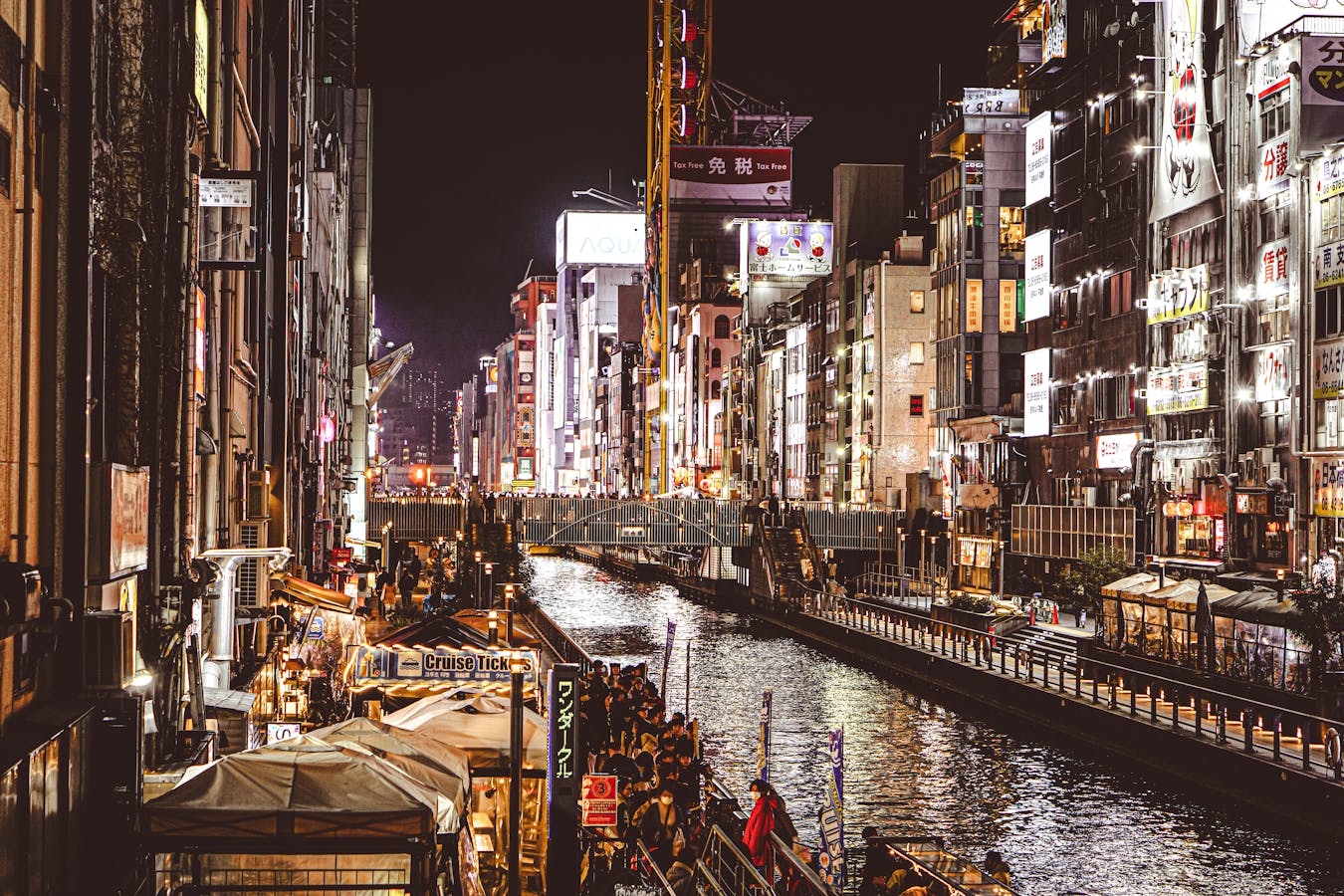
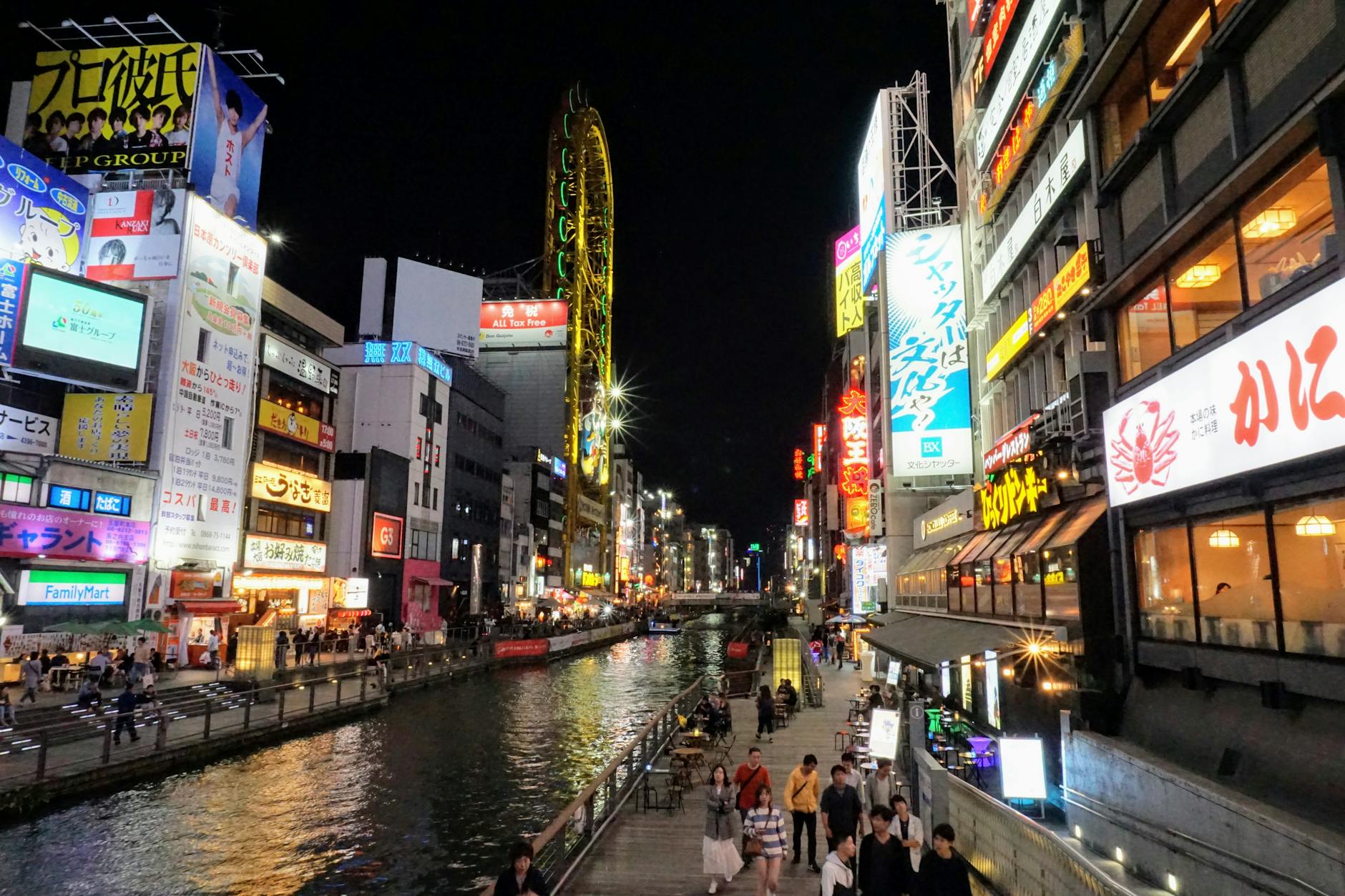
Yes, it’s touristy. Go anyway. The canal-side promenade between Ebisubashi and Tazaemonbashi bridges is the single most photographed strip in Osaka, and after 7pm the wall of signage reflecting off the water does something a photo never quite captures. Get your shot under the Glico Running Man, then duck into the food-stall alley behind the giant moving crab at Kani Doraku. The whole loop runs one to two kilometres depending on how often you stop to eat.
One trick the lists miss: come back the next morning. Sunrise on a Sunday gives you the same canal with nobody in it, the cleaner light photographers actually want, and a completely different read on the place. Same street, two trips, zero yen.
- Best time: 19:00 to 21:00 for full neon, or early Sunday morning for empty streets.
- Nearest station: Namba (Midosuji, Yotsubashi, Sennichimae lines).
- Pair with: Hozenji Yokocho, two blocks south.
2. Hozenji Yokocho lantern alley
Eighty metres of wet cobblestone, paper lanterns, and tiny izakayas tucked one street back from the Dotonbori chaos. The contrast is the point. You step off a neon highway and suddenly it’s quiet and old. At the centre sits Hozenji Temple, where the moss-covered Mizukake Fudo statue gets splashed with water by visitors making a wish, which is why the whole thing is furred green. Looking costs nothing. Only dinner has a price tag.
3. Osaka Castle Park, no ticket required
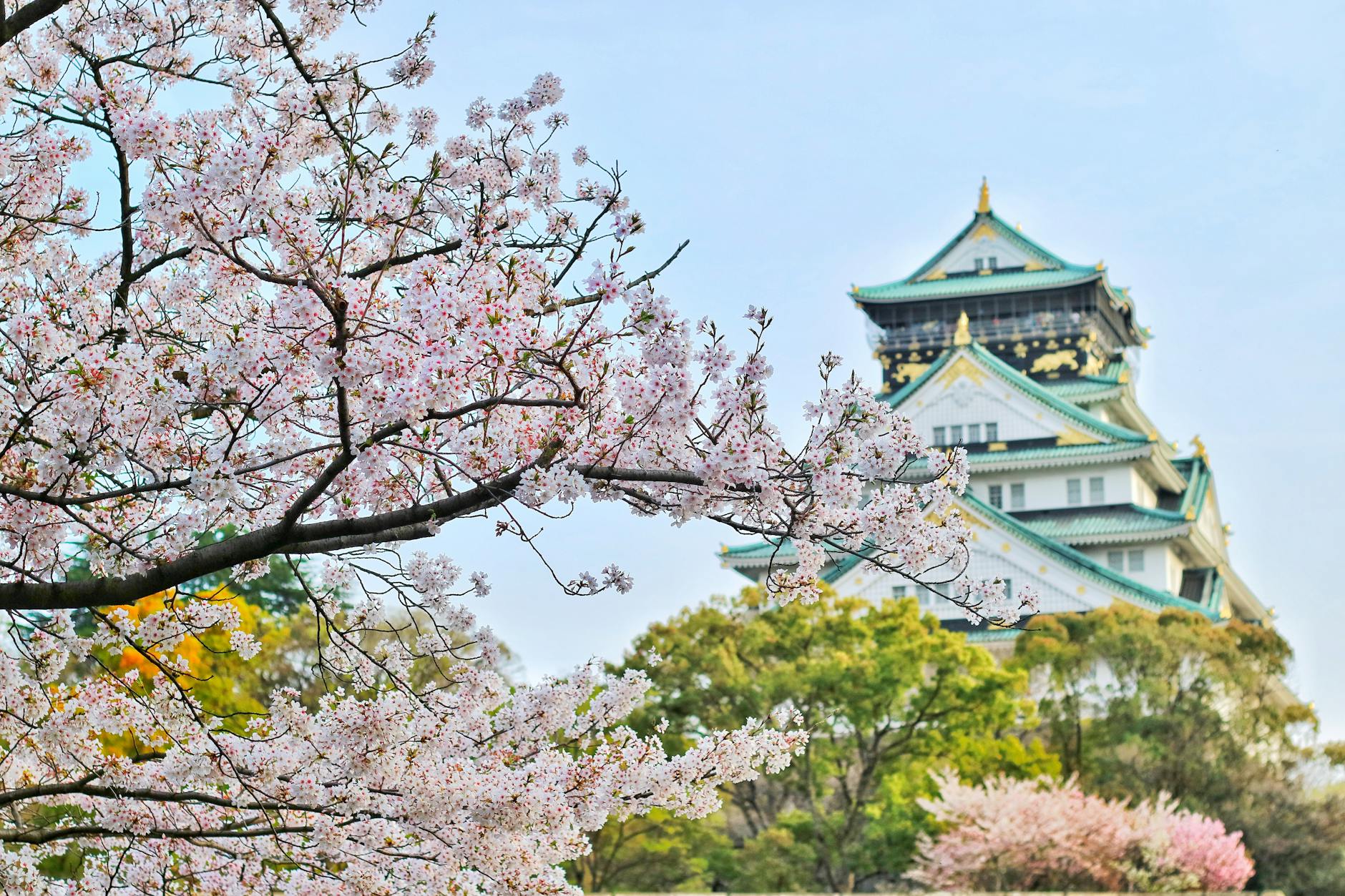
The keep charges ¥1,200 to climb. The 106-hectare park wrapped around it is open 24 hours and costs nothing, and honestly the park is where the atmosphere lives. The Sakuramon viewing platform hands you the postcard angle of the keep across the inner moat. The moats themselves are huge and genuinely impressive up close. Hokoku Shrine inside the grounds is free to enter. During cherry blossom season the lawns turn into one of Kansai’s biggest picnic scenes, though the specific Nishinomaru Garden charges around ¥350 at peak bloom while everything else stays free.
Get there at sunrise if you want the photo without a hundred people in it. By mid-morning the courtyard fills up fast.
- Hours: Park open 24/7. Individual gardens keep set hours.
- Nearest station: Osakajokoen (JR Loop) or Tanimachi 4-chome (subway).
- Pair with: The Osaka Museum of History across the road, whose ground floor and lobby give you a free castle view through the glass.
4. Sumiyoshi Taisha
This one is older than almost anything else you’ll see in Japan. Founded around the third century, Sumiyoshi Taisha is the head shrine of more than 2,300 Sumiyoshi shrines nationwide, and the architecture predates the Chinese influence that shaped most later temples, so it looks unlike anywhere else. The steep drum bridge at the entrance, arched at a near-vertical 48 degrees, is the shot everyone takes. The grounds are wide, calm, and almost meditative on a weekday morning. Free to enter; only specific blessings cost anything.

- Hours: 6:00 to 17:00.
- Nearest station: Sumiyoshitaisha on the Nankai Main Line, roughly 25 minutes from Namba.
- Pair with: Sumiyoshi Park, ten minutes north, with one of central Osaka’s only sandy stretches.
5. Shitennoji outer grounds
Founded in 593, Shitennoji is one of the oldest officially run Buddhist temples in the country. The inner pagoda complex asks ¥300, but the outer grounds, the great gate, and the monasteries around the edge are all free to walk. Time it right and you get a bonus: on the 21st of every month a flea market with hundreds of stalls takes over the precinct, selling everything from antique kimono to secondhand tools. That’s the day to come.
6. The free observation decks (and which ones are worth it)
Osaka quietly has a handful of free skyline views, and they are better than the paid decks let on. Here’s the honest ranking.
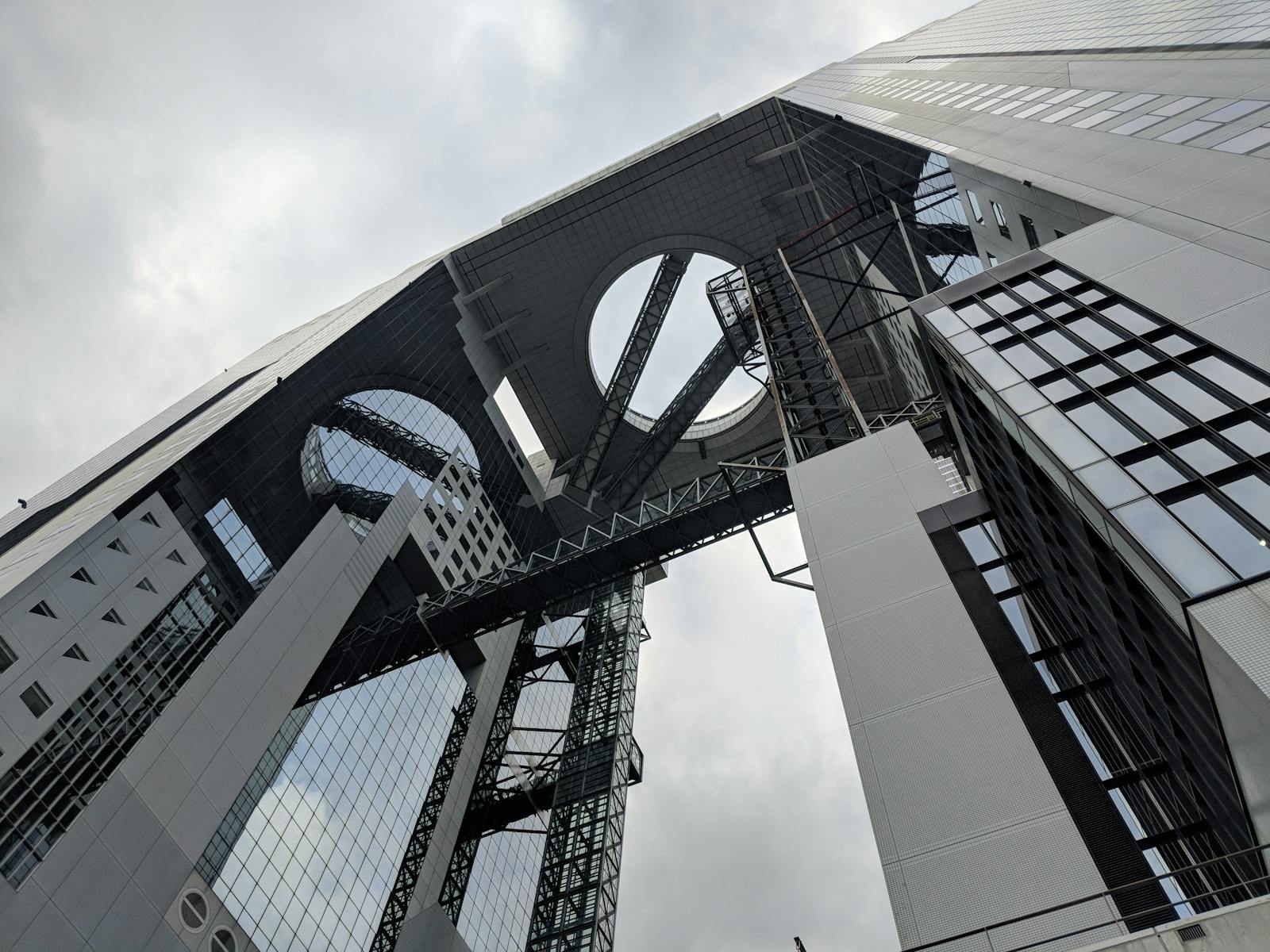
Umeda Sky Building lower garden. The famous Floating Garden at the top costs ¥2,000. But the outdoor courtyard, the soaring atrium, and the retro basement food lane (Takimi Koji) are all free, and the building itself, designed by Hiroshi Hara who later did Kyoto Station, is one of the city’s great modernist sights from the ground.
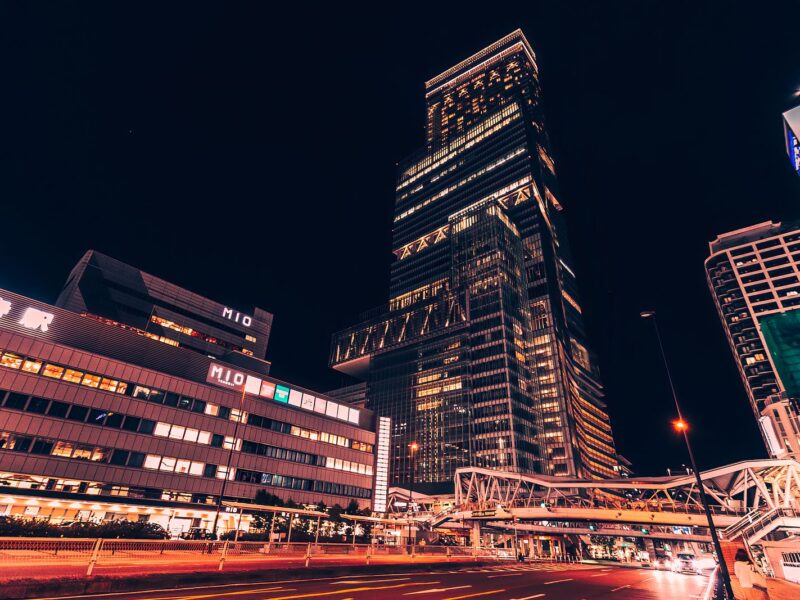
Abeno Harukas Sky Garden, 16th floor. The paid deck sits up on the 60th and runs ¥1,500. The open-air 16th-floor garden is free. You won’t get the full sweep, but you’ll see the city run out toward Mt. Ikoma, and you skip both the queue and the price. For most people that trade is fine.
Osaka Station City rooftop gardens. The station’s roof hides a string of small open-air gardens (Tenku Farm, Kaze no Hiroba) that double as quiet lookout points. The 11th-floor Time and Space Plaza over the tracks is a genuinely lovely place to sit at sunset, and almost nobody knows it’s there.
- Abeno Harukas Sky Garden hours: 7:00 to 22:30. Station: Tennoji.
- Pair Abeno Harukas with: Tennoji Zoo (¥500) and the free section of Tennoji Park next door.
7. Kuromon Market
People have shopped this 600-metre covered market since the 1820s, and locals still call it Osaka’s Kitchen. Walking it is free; what you spend after that is between you and your stomach. Even on a no-buy day it’s a half-hour sensory hit, fresh tuna being broken down, wagyu skewers hitting the grill, oysters cracked open in front of you, tubs of bright pickled vegetables. Prices have crept up with the tourist crowds, so it’s less of a bargain than it once was, but as a free wander it still delivers.
- Hours: Most stalls 9:00 to 18:00.
- Nearest station: Nipponbashi (Sakaisuji line).
8. Tenjinbashisuji, the longest arcade in Japan
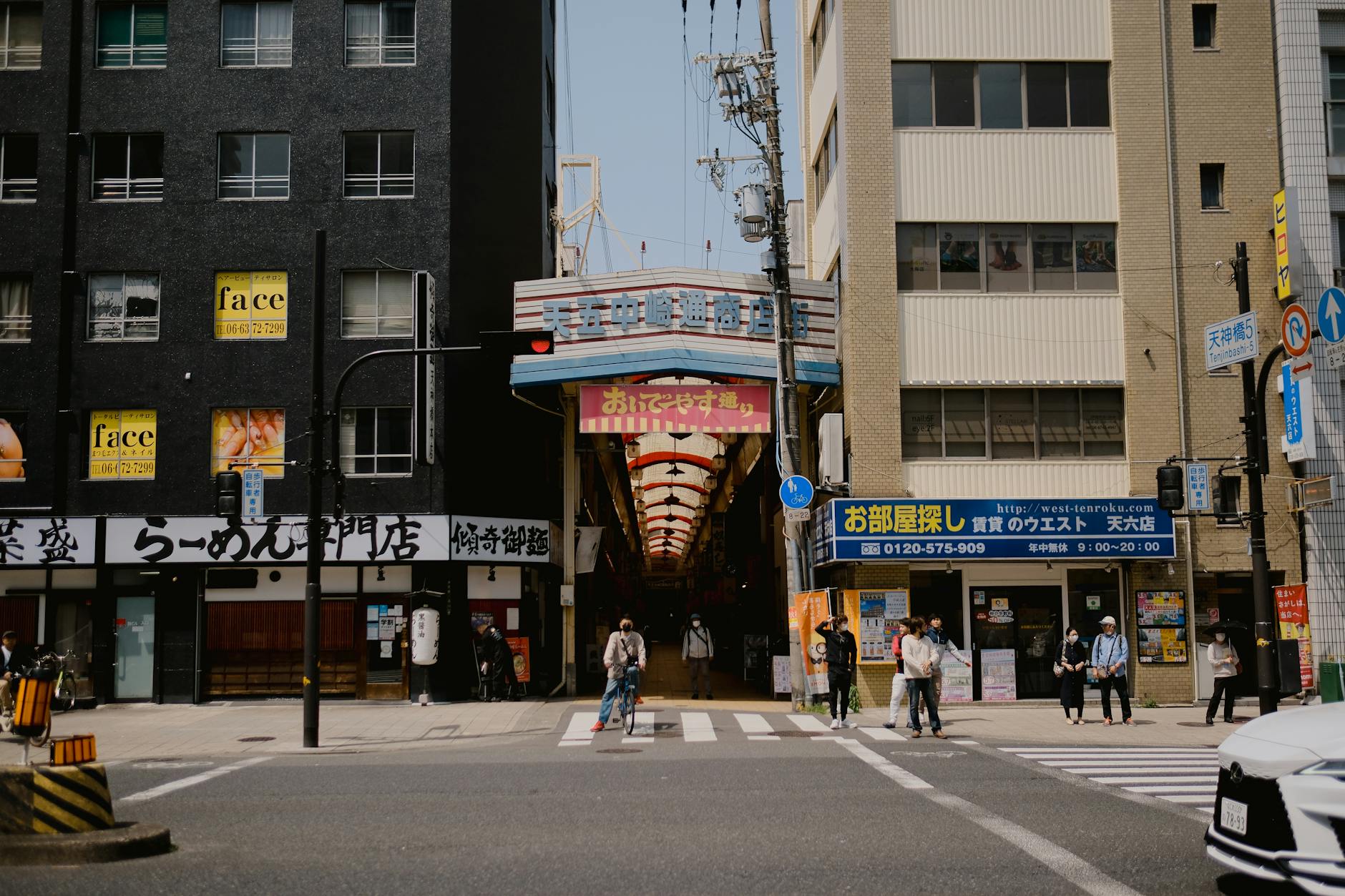
At 2.6 kilometres, Tenjinbashisuji is officially the longest covered shopping street in the country, and it feels nothing like the tourist crush of Shinsaibashi. This is where Osaka actually shops: independent stores, old-school kissaten coffee houses, hundred-yen shops, the occasional baffling specialty store. Walking the full length takes about an hour. It’s free, it’s covered, and it’s the plan I reach for the second it starts raining.
9. Nakanoshima riverside
The slim island wedged between the Dojima and Tosabori rivers is the calmest kilometre in central Osaka, and almost everyone walks straight past it. Stroll the bank past the red-brick Renaissance-era Central Public Hall, the underground National Museum of Art (paid inside, free to admire from outside), and the Nakanoshima rose garden, which costs nothing. If Dotonbori frays your nerves, this is the antidote, ten minutes away. Quiet corners like this one are the whole subject of our guide to Osaka off the beaten path, which runs from the Nakazakicho lanes to the wooded valley at Minoo.
10. Cup Noodles Museum, the free factory floor
Out in Ikeda, on the northern edge of greater Osaka, sits the original factory where Momofuku Ando invented instant ramen in 1958. The historical exhibits, the wall displaying every cup-noodle flavour ever made, and the recreation of Ando’s research shed are all free to walk. The famous make-your-own-cup-noodles workshop runs ¥500 if you want it, but you don’t have to. The trip from Umeda takes about half an hour.
- Nearest station: Ikeda (Hankyu Takarazuka Line).
- Hours: 9:30 to 16:30, closed Tuesdays.
11. Minoo Park (a free day trip)
Thirty minutes north of central Osaka on the Hankyu line, Minoo Park is a wooded valley where a 3-kilometre, mostly paved trail follows the river up to the 33-metre Minoo Falls. Stone-floored cafes, a small shrine, and stalls selling the local oddity, deep-fried maple leaves, line the route. Entry is free year-round, but the trail peaks hard in mid-November when the maples go fluorescent red. If you can only do one Osaka day trip on a budget, this is it.
12. Namba Yasaka Shrine, the giant lion head
A few blocks from Namba Station sits an otherwise ordinary shrine with one wildly unusual feature: a 12-metre lion-head stage, jaws wide open, said to swallow bad luck. It takes five minutes to see and it’s free, which makes it the highest photo-payoff-per-minute spot in the city. Worth the small detour.
13. Tennoji Park, free section
The Tennoji Park complex bundles a paid zoo and a paid garden, but the central Chausuyama hill, the lawn around the open-air stage, and the walking paths are all free. It’s a big sprawling green that locals actually use for picnics, with the glass tower of Abeno Harukas looming over the south edge. Good for an hour of doing nothing in particular.
14. Naniwa Kuishinbo Yokocho
Inside Tempozan Marketplace next to the aquarium, this recreated 1950s Osaka food court is free to walk through; you only pay if you sit down to eat. The fake Showa-era streetscape, all faded signage and old shopfronts, is good for a few photogenic minutes if you’re already out at the bay. On its own it’s not a destination, so treat it as a bonus rather than a plan.
15. Ame-mura Triangle Park
America Village is Osaka’s scruffy answer to Tokyo’s Harajuku, built around a small triangular park ringed by vintage-clothing stores, record shops, and the occasional street performer. There’s nothing to do here in the conventional sense. The whole point is to sit on the edge of the park and watch the city’s teenagers be themselves. Free, and more entertaining than it sounds.
Free by season: what to time your trip around
A surprising amount of Osaka’s free calendar is seasonal, and knowing the dates can hand you a much better trip for the same zero yen.
- Cherry blossom (late March to early April): the Okawa River corridor between Osaka Castle and Tenmabashi turns into a 4-kilometre tunnel of blossom, free to walk, lit up at night during peak bloom. The Castle Park lawns fill with picnics. This is the single best free week to be in the city.
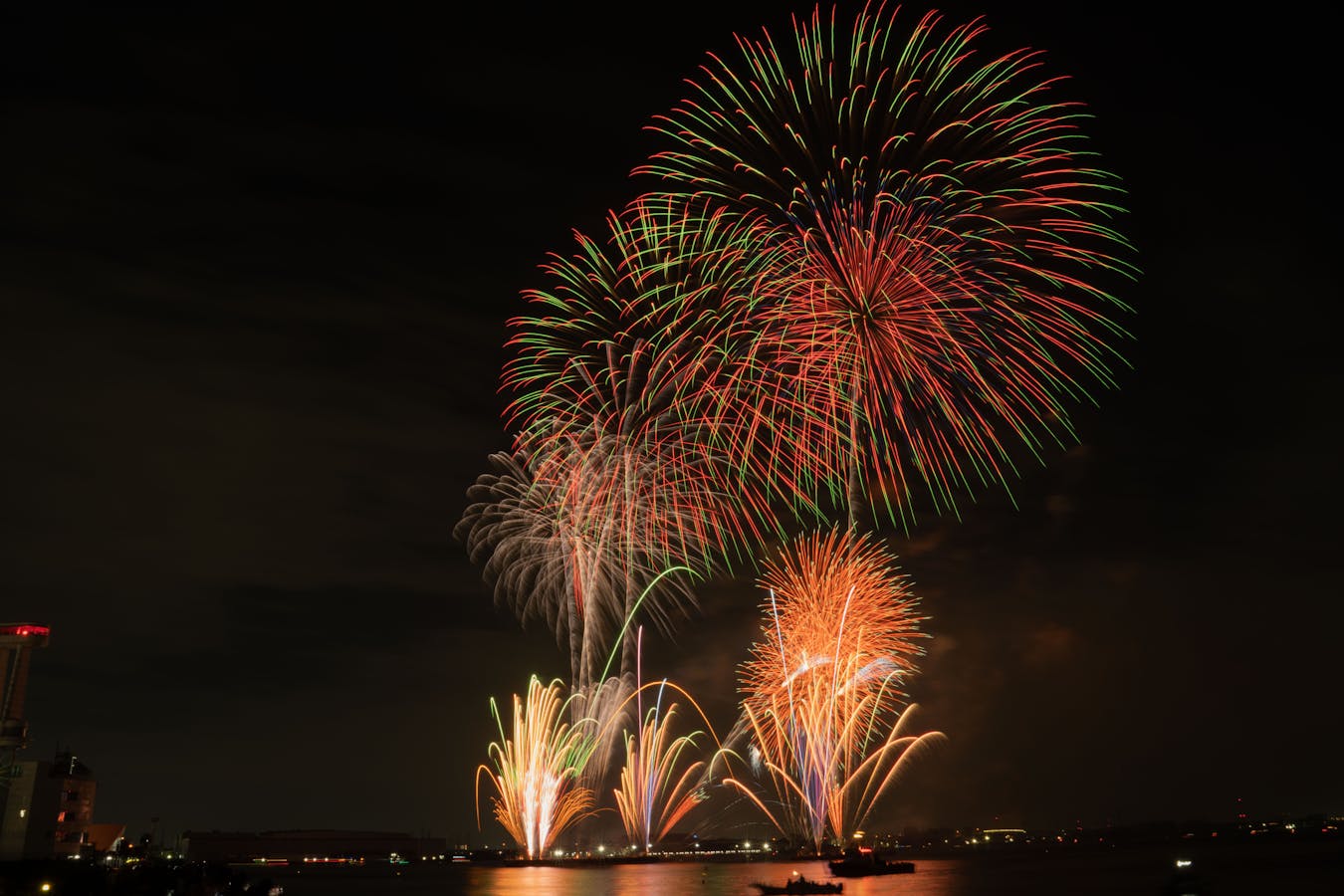
- Tenjin Matsuri (late July): one of Japan’s three great festivals, centred on Osaka Tenmangu Shrine, with a land procession and a river boat parade that ends in fireworks over the Okawa. Watching from the riverbank costs nothing.
- Plum blossom (February): the Osaka Castle Plum Grove, around 1,270 trees, blooms while the rest of the city is still grey. Quiet, free, and almost entirely locals.
- Autumn colour (mid-November): Minoo Park’s maples and the Osaka Castle ginkgo both peak. Free, and far less mobbed than the spring crowds.
- Winter illuminations (December): Midosuji Avenue lights its trees for several kilometres, and the Osaka Station and Nakanoshima areas run free light displays. A free evening walk that feels like a paid event.
What to skip (and what to do instead)
Not every free thing on the standard lists earns your time. A few honest calls so you don’t waste a morning.
- Skip queuing for the paid observation decks if budget matters. The free Abeno Harukas 16th-floor garden and the Umeda Sky Building courtyard give you 80 percent of the view for none of the ¥1,500 to ¥2,000.
- Skip Kuromon Market at lunchtime in peak season unless you enjoy shuffling. Go at opening, around 9:00, when the stalls are fresh and the aisles are walkable.
- Don’t make a special trip for Naniwa Kuishinbo Yokocho on its own; it’s a five-minute photo stop, not a destination. Fold it into a bay day around the aquarium instead.
- Skip the daytime canal at Dotonbori if you only have one window. The neon after dark is the entire point; midday it’s just a busy street.
A few smaller free things worth knowing
- Asahi Beer Suita brewery tour runs free with a reservation and ends with a fresh pour. About 25 minutes from Umeda; book a few days out.
- Osaka City Central Public Hall on Nakanoshima offers free guided tours of its restored 1918 interior on select days.
- Department-store basements at Daimaru, Hankyu, and Takashimaya hand out free food samples on the food floors at peak hours. Not an attraction exactly, but a decent free snack.
- Osaka Free Wi-Fi covers most major districts. Not a sight, but a genuinely useful freebie for navigating the rest of this list.
A free day in Osaka, mapped out
If you want it sequenced rather than scattered, this loop strings the best of the above into one day. The only thing you’ll pay for is lunch and about ¥600 of transit.
- 9:00 to 10:30: Osaka Castle Park, before the crowds. No keep ticket needed.
- 11:00 to 12:30: JR Loop to Tenma, then Tenjinbashisuji arcade and Osaka Tenmangu Shrine.
- 12:30 to 13:30: Cheap lunch, conveyor sushi or a convenience-store onigiri set. The one paid bit.
- 13:30 to 15:00: Nakanoshima riverside walk.
- 15:00 to 16:30: Umeda Sky Building lower garden and the rooftop Tenku Farm.
- 16:30 to 18:00: South to Namba; walk Shinsaibashi-suji.
- 18:00 to 20:00: Hozenji Yokocho lanterns, then Dotonbori at full neon.
Free things to do in Osaka: FAQ
Are these really free, or is it tourist-board spin?
Genuinely free. Shrines, public parks, the observation gardens, and the markets all have no entry fee in Japan as a rule. You can walk every one of them without buying a thing.
What’s the best free thing to do in Osaka at night?
Dotonbori between Ebisubashi and Tazaemonbashi bridges, then a loop through Hozenji Yokocho for the quiet contrast. The combined walk is about two kilometres and costs nothing.
Are the free observation decks actually any good?
Better than you’d expect. The Abeno Harukas 16th-floor garden, the Umeda Sky Building courtyard, and the Osaka Station rooftop all give you a skyline without a ticket. You sit lower than the paid decks, but for most travellers the view-to-cost ratio wins easily.
Is Osaka Castle free?
The keep interior is ¥1,200. The surrounding park is free around the clock, and that’s where the best photo angle is. You can get the famous castle shot without paying anything.
How cheaply can you actually eat in Osaka?
A basket of takoyaki off a Dotonbori stall runs ¥500 to ¥600. A convenience-store onigiri and tea comes to about ¥300. You can eat genuinely well here for under ¥1,000 a meal if you skip the sit-down restaurants.
Plan the rest on a budget
Free attractions are the backbone of any cheap trip here, but they slot in best alongside a couple of paid headliners. Start with the full things to do in Osaka rundown for the big-ticket sights, then read the Osaka Castle visitor guide if you decide the keep is worth the ¥1,200. Out at the bay, the Aquarium Kaiyukan guide covers the one paid attraction that pairs cleanly with the free Tempozan walk-throughs above.
From November to February add an entire season’s worth: almost every one of the Osaka winter illuminations is free, including the four-kilometre lit avenue running straight through the middle of the city.