This article contains advertising. Our booking links are routed through a partner that adds commission tracking automatically, so if you book through one we earn a commission from the provider, at no extra cost to you. It never affects what we recommend. Affiliate disclosure
Japan’s winter illuminations are not really about Christmas. They start in early November, they run well past New Year, and in several cases they keep going into the middle of February — long after the last Christmas tree in Europe has been dragged to the kerb. What they are actually about is the fact that it gets dark at half past four, that Japanese cities are built for walking, and that a lit avenue is a very cheap way to make a cold evening worth going outside for.
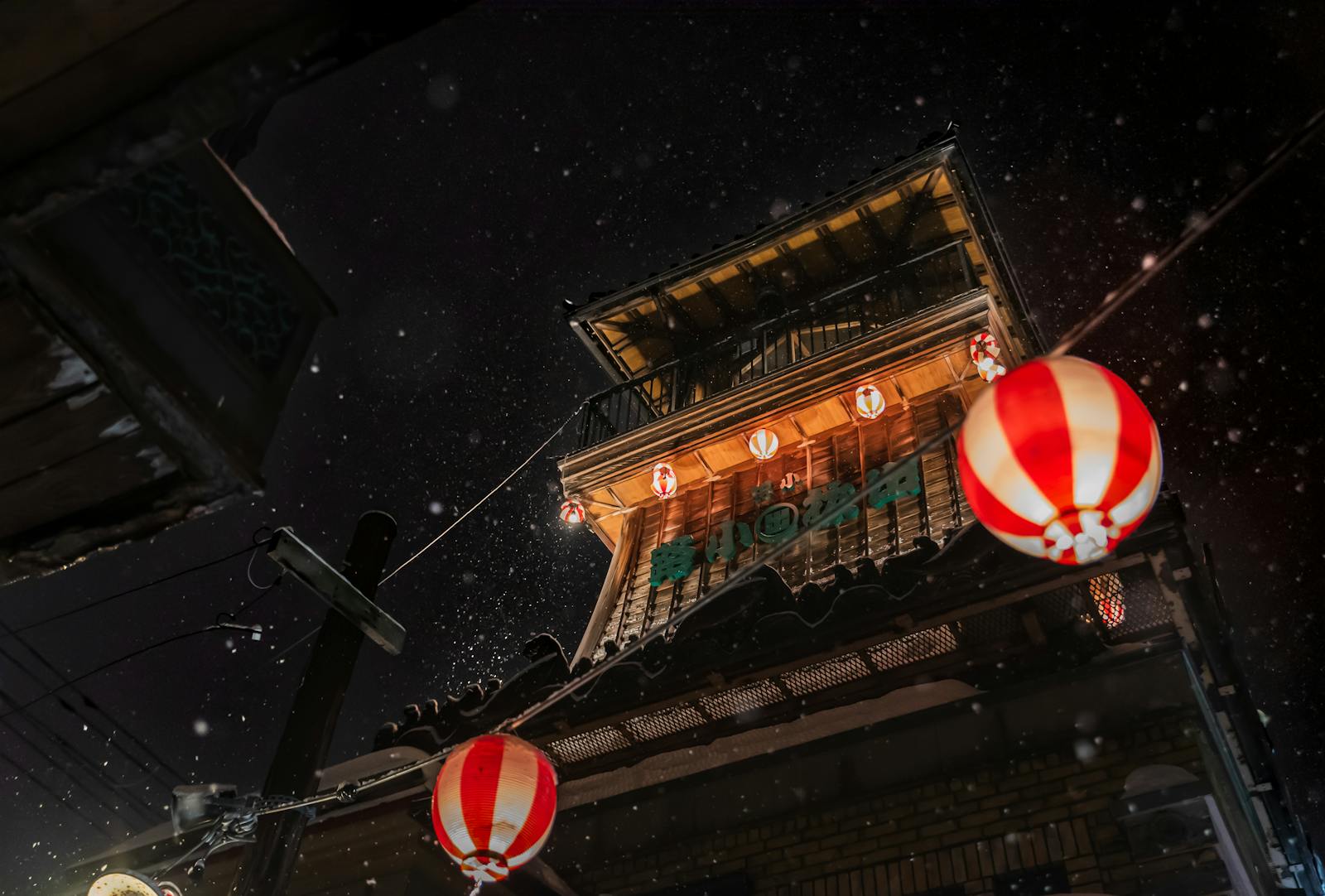
Osaka does this better than almost anywhere in Japan and gets far less credit for it than Tokyo or Kobe. The centrepiece is a four-kilometre avenue of ginkgo trees lit end to end, straight through the middle of the city, entirely free, and most visitors walk under it without realising it is a named event. This guide covers what is on, what is genuinely worth paying for, and a route that strings the best of it into one evening.
Read this before you plan anything
Illumination dates are announced fresh each autumn, usually in September or October, and they shift by a week or two from year to year. The events themselves are extremely stable — the same displays, in the same places, on roughly the same schedule, year after year — but the exact opening and closing nights are not.
So everything below is given as the reliable pattern rather than as a fixed date. Before you book anything around a specific display, check the official page for that winter. The umbrella site for the city’s programme is Osaka Hikari no Kyoen, the Festival of the Lights in Osaka, which lists every participating venue with its confirmed dates in one place. Treat that as the authority and this page as the map.
The free ones, in order of importance
Midosuji Illumination
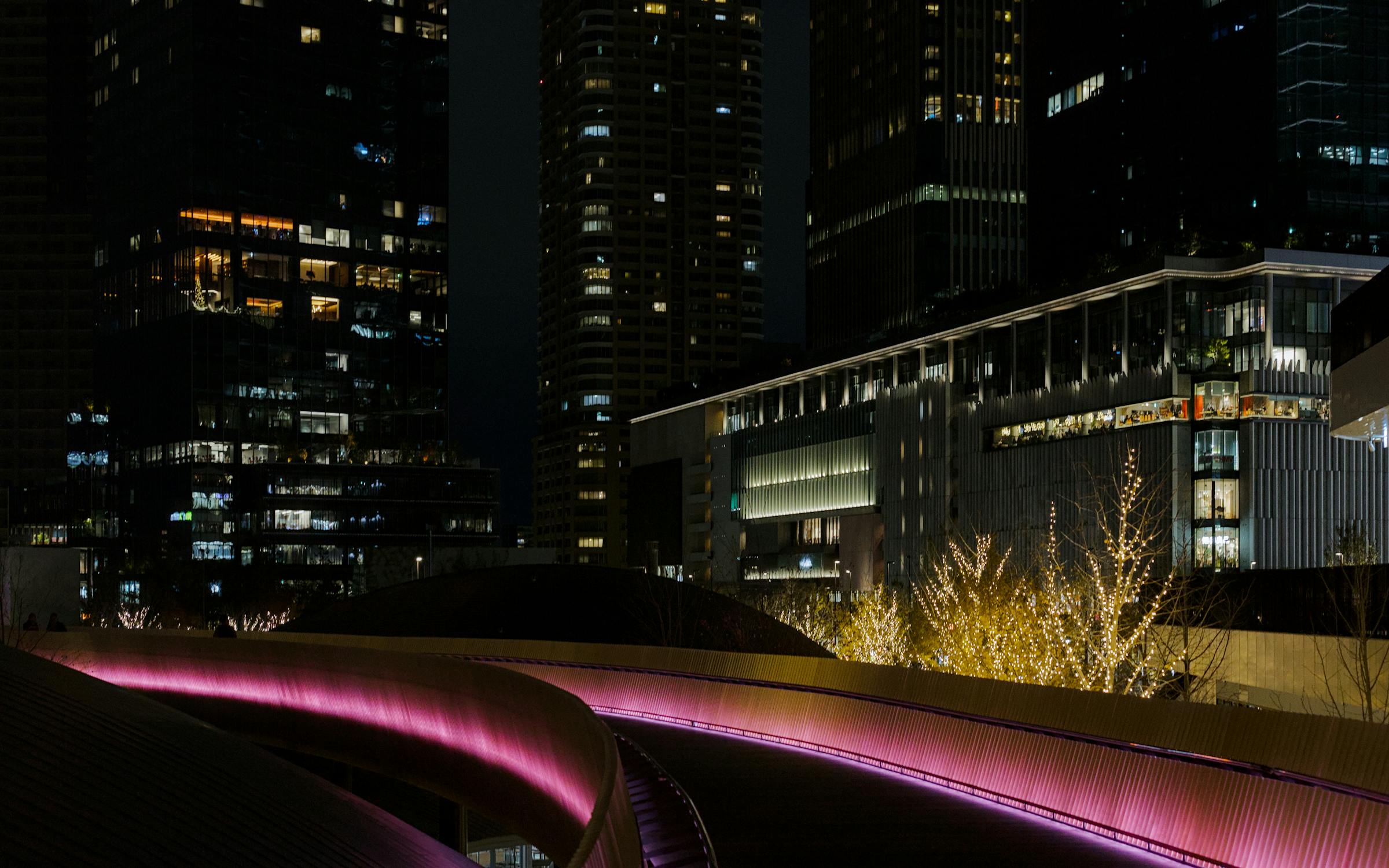
The big one, and the reason Osaka deserves more attention for this than it gets. Midosuji is the city’s main north–south boulevard, lined the whole way with mature ginkgo trees, and for the illumination season every one of them is wrapped in light from Umeda down to Namba — somewhere between three and four kilometres depending on how the year’s programme is drawn. It is regularly described as one of the longest illuminated streets in the world, and unlike most such claims it is easy to verify by walking it.
Pattern: from early November through to the end of December, often extended into January. Lights typically come on around 17:00 and stay on until 23:00 or later. Free, no ticket, no entrance.
How to do it: do not attempt the whole thing. Walk the section between Shinsaibashi and Namba, which is about twenty minutes, has the densest tree cover and drops you straight into Dotonbori for dinner. The stretch through Shinsaibashi is also where the luxury shopfronts do their own displays, which raises the whole effect. If you want more, the Honmachi to Shinsaibashi section is quieter and better for photographs.
A neat trick: the Midosuji subway line runs directly underneath, so you can walk a section, get bored or cold, and drop into a station at any point. The subway guide has the stops.
Nakanoshima and Osaka Hikari-Renaissance
Nakanoshima is the long thin island between two branches of the Dojima and Tosabori rivers, and it holds Osaka’s grandest civic architecture — the red-brick Central Public Hall, City Hall, the Bank of Japan branch. In December it becomes the city’s best illumination district by some margin, under the name Osaka Hikari-Renaissance.
The programme typically runs for around twelve days in the run-up to Christmas, roughly 14 to 25 December, and the highlight is a projection-mapping show thrown across the facade of the Osaka City Central Public Hall. It is not a static light display; it is a proper sequenced piece with sound, repeated through the evening, and it is free. Around it there is a lit riverside promenade, a food market with stalls and mulled drinks, and the City Hall facade lit separately.
Pattern: the projection mapping and market run those twelve December days, roughly 17:00–21:00 for the mapping and later for the market. The wider riverside illumination on Nakanoshima runs much longer, often to the end of January, and the street and City Hall lighting from November through December, typically 17:00 until around 01:00.
Stations: Yodoyabashi, Kitahama or Naniwabashi, all within a few minutes. Our Nakanoshima guide covers the district in daylight, which is a completely different and also excellent proposition.
Namba Parks: the Waterfall of Light
Namba Parks is the terraced garden shopping complex directly south of Namba station, and its winter display — often branded Namba Hikari Tabi — is built around an eighteen-metre cascade of blue light running down from the ninth floor to the second. It is genuinely striking and, being indoors and vertical, it is entirely weatherproof.
Pattern: early November to mid-February, which makes it the longest-running of the major displays and the one to fall back on if you are visiting late in the season. Free. Combine with an evening in Namba.
Umeda
The northern half of the city runs several displays at once, all free and all within a ten-minute walk of one another:
- Grand Front Osaka puts on the largest, usually with a big tree and a themed installation in the atrium, running November through Christmas, with a longer champagne-gold lighting scheme along the Umekita walkways that often continues to the end of February.
- Osaka Station City lights the station complex itself, including the atrium and the upper terraces, November to Christmas.
- Umeda Sky Building does a Christmas market at its base — German-style, with a tree, glühwein and wooden huts — and the Floating Garden Observatory above it is genuinely at its best on a clear winter night. The market is free; the observatory is around ¥1,500 and is one of the few paid views in this guide that is worth it in any season.
If you are staying in this part of town, all of it is walkable from the station complex — and the complex itself takes some navigating, which is what the Osaka Station guide is for. The rest of the district is in the Umeda guide.
Tenshiba, Tennoji
The lawn at the entrance to Tennoji Park hosts a Christmas market from late November to Christmas, typically 11:00 to 21:00, free to enter. It is small, it is aimed squarely at families, and it sits directly beneath Abeno Harukas, so it combines neatly with the observation deck up there. See the Tennoji and Abeno guide.
Tempozan and the bay
The plaza around Kaiyukan aquarium is lit from mid-November to late February, typically 17:00 to 21:00, free. On its own it does not justify the trip out to Osakako. Combined with the aquarium in the late afternoon and the giant ferris wheel afterwards, it makes a good winter evening — and the bay area guide covers the rest of it.
The ticketed ones
Osaka Castle Illuminage
A large-scale ticketed light installation in the Nishinomaru Garden at Osaka Castle, running from early November to early February, typically 17:00 to 22:00 with last entry around 21:30 and the lights themselves finishing a little earlier. Each year takes a theme — recent seasons have run on shogun and samurai lines — and it is built around illuminated tunnels, tableaux and set pieces at a genuinely large scale.
Tickets are usually in the region of ¥1,500–2,500 for an adult, cheaper booked online in advance, and prices change annually. Honest verdict: it is well done and children love it. Adults who have already seen a large illumination elsewhere will find it pleasant rather than memorable, and the castle keep itself is not part of the display in the way you might hope. If you have one paid night, this is the family choice.
Sakuya Lumina
A different and more interesting thing: a night walk through Osaka Castle Park along a route of interactive light and sound installations, with a narrative running through it. It is closer to immersive theatre than to a light display, made by the studio behind similar night walks elsewhere in the world, and it takes around an hour to walk.
Honest verdict: this is the one to pay for if you are an adult without children in tow. It does something the free displays cannot, the park at night is atmospheric on its own terms, and it is the more distinctive memory. Check the current season and prices before you plan around it, as it has not run every winter.
Why Japan does this at all
It is worth understanding what you are looking at, because it is not simply Christmas decoration imported wholesale.
Japan’s illumination culture as it exists now dates to the mid-1990s, and its founding event was Kobe Luminarie — erected in December 1995 as a memorial to the six thousand people killed in the Great Hanshin earthquake earlier that year, and as a signal that the city was still standing. It was meant to run once. It drew several million people and has run almost every year since. Every large illumination in Kansai is, in some sense, descended from that.
The second thread is commercial and civic rather than religious. Christmas is not a public holiday in Japan and only a small minority of the population is Christian, so the season carries none of the family obligation it does in Europe. What it carries instead is a romantic association — Christmas Eve is a date night, comfortably the most heavily booked restaurant evening of the year — and a straightforward retail one. Ward offices, department stores and station operators fund these displays because a lit street brings people into it, and they run into February precisely because the commercial logic outlasts the holiday.
The practical consequence for a visitor is a good one: the displays are treated as public infrastructure rather than as seasonal decoration. They are maintained properly, they are free, they are safe to walk at any hour, and nobody is trying to sell you a ticket at the end of the street.
The department stores
Running alongside the official programme is a second, unbranded layer of light that nobody schedules and nobody publicises: the shopfronts. Hankyu and Daimaru in Umeda both do serious window displays and atrium installations from November, the Hankyu Umeda main concourse in particular being an event in its own right. The luxury flagships along Midosuji through Shinsaibashi light their facades to compete with one another, which is a large part of why that stretch of the avenue is the best. And Hep Five’s red ferris wheel is lit every night of the year but reads differently in December.
None of this appears on any illumination map. It is free, it is on your route anyway, and it is covered as a daytime proposition in the department store guide.
An evening that actually works
The mistake people make is trying to see four displays in one night and spending the evening on trains. Here is a single route that requires almost no transport:
- 16:30 — Nakanoshima. Arrive at Yodoyabashi while there is still light on the buildings. Walk the riverside promenade east as it gets dark.
- 17:15 — the Central Public Hall. Catch a projection-mapping cycle, then eat something from the market stalls. In December this is the highlight of the evening.
- 18:30 — walk south down Midosuji. Yodoyabashi to Shinsaibashi is about fifteen minutes, all of it under lit ginkgo, past the flagship stores doing their own displays.
- 19:15 — continue to Namba, another twenty minutes, or cut east into Dotonbori for the neon, which is a different and louder kind of light.
- 20:00 — Namba Parks for the Waterfall of Light, indoors and warm, then dinner.
That is roughly three and a half kilometres of walking, four displays, zero train fares and one subway ride home. Outside December, drop step two and start on Midosuji instead.
A second evening, if you have one
Give the northern half of the city its own night rather than trying to bolt it onto the first. Start at Grand Front Osaka around 17:00 for the atrium display, walk through the Umekita walkways, then take the underpass beneath the tracks to the Umeda Sky Building — about nine minutes on foot — for the Christmas market at its base. Go up to the Floating Garden Observatory at around 19:00, when the city below is fully lit and the queue has thinned from its early-evening peak, and you get the entire Midosuji light line laid out beneath you as a single glowing thread. That view is the single best photograph of the season and almost nobody thinks to take it.
Come back down, eat in the Hankyu Sanbangai basement or on one of the Grand Front restaurant floors, and you have spent an evening covering four displays inside a fifteen-minute radius. It is the better option in bad weather, since almost all of it is indoors or covered.
If you would rather see it from the water, the river cruises run through the winter and the Nakanoshima stretch from a boat is a genuinely different view — cold, though, so dress for it.
Practical notes
- It is colder than you think. Osaka in December and January sits around 3–10°C, rarely snows, and is damp. Standing still watching a projection show for twenty minutes is when you feel it. Gloves, a hat and a proper coat — see what to pack.
- Weekends are much busier, and the two weekends before Christmas at Nakanoshima are genuinely crowded. Weeknights are far more pleasant and the displays are identical.
- Christmas Eve is a couples’ night in Japan, not a family one. Restaurants book out, the illuminations are packed with couples, and a table anywhere decent needs reserving well ahead. This surprises visitors every year.
- Photography: everything here is shot at night, handheld, in the cold. A phone on night mode does better than you expect if you brace against a railing. The Midosuji tree tunnels reward shooting straight down the avenue rather than at individual trees.
- Food. The market stalls at Nakanoshima and Tenshiba are pleasant but expensive for what they are. Eat properly afterwards — late night food covers what is open, and the cafe guide covers warming up.
- With children, the Castle Illuminage and Namba Parks are the two that land best; Midosuji is a long walk in the cold for small legs. Osaka with kids has the wider winter list.
Worth leaving Osaka for?
Two regional displays come up constantly and deserve a straight answer.
Kobe Luminarie is the most famous illumination in Kansai — a memorial to the 1995 earthquake, built as illuminated architectural arcades. Note carefully that it moved out of its traditional December slot in recent years and has been held in late January, in a different configuration from the one in older photographs. Check the current dates before you build a trip around it. When it is on, it is worth the half-hour journey; Osaka to Kobe covers the trains and the Kobe day trip guide the rest of the city.
Nabana no Sato, in Mie Prefecture, is the largest illumination in Japan by a wide margin and genuinely spectacular — light tunnels hundreds of metres long, an illuminated field display that changes theme annually. It is also around two hours each way from Osaka and needs a full evening committed to it. Worth it if illuminations are the reason you came in winter. Not worth it on a four-day trip with a long list.
Frequently asked questions
When do the Osaka illuminations start and finish?
The season generally opens in early November and the last displays close in mid-February. The December programme is the densest, and most Christmas-specific events end on 25 December. Exact dates are announced each autumn.
Are the illuminations free?
Almost all of them, including the biggest — Midosuji, Nakanoshima, Umeda, Namba Parks and the bay. Only Osaka Castle Illuminage and Sakuya Lumina charge admission. This makes it one of the best free things to do in Osaka in any season.
What time do the lights come on?
Typically 17:00, which in a Japanese December is comfortably after dark. Some run to 23:00 and the Midosuji and Nakanoshima street lighting often continues past midnight.
Which single illumination should I see if I only have one night?
In December, Nakanoshima for the projection mapping. Outside December, walk the Midosuji stretch from Shinsaibashi to Namba. Both are free and both take about an hour.
Do I need to book anything?
Only the ticketed displays, and only Sakuya Lumina genuinely requires it. Osaka Castle Illuminage sells online in advance at a small discount but takes walk-ups.
Is the Midosuji Illumination worth walking the whole way?
No. It is four kilometres, and the northern half through the business district is much less interesting than the southern half. Walk Shinsaibashi to Namba and stop.
Are illuminations busy at New Year?
The displays themselves quieten down between Christmas and the 30th, then the city fills for hatsumode, the first shrine visit of the year. Shrines are packed; illuminations are not. Our festival calendar has the timing.
Is winter a good time to visit Osaka overall?
Yes, and it is underrated — cold but dry, far fewer visitors than spring or autumn, cheaper hotels, and the food is at its best. Osaka in winter makes the full case.
Where to go from here
Illuminations are the best argument for visiting Osaka in the months everyone else avoids. They are free, they last three months, and the biggest of them is simply a street you can walk down on your way to dinner.
Read Osaka in winter next for the rest of the season, the seasonal guide for how winter compares to the alternatives, and the best time to visit if you are still choosing dates. For the evenings themselves, the observation decks are at their clearest in winter air, and things to do in Osaka covers the daylight hours in between.
For the rest of the holiday season — Christmas Eve, the year-end closures and the first shrine visit of the year — read our guide to Christmas and New Year in Osaka.