This article contains advertising. Our booking links are routed through a partner that adds commission tracking automatically, so if you book through one we earn a commission from the provider, at no extra cost to you. It never affects what we recommend. Affiliate disclosure
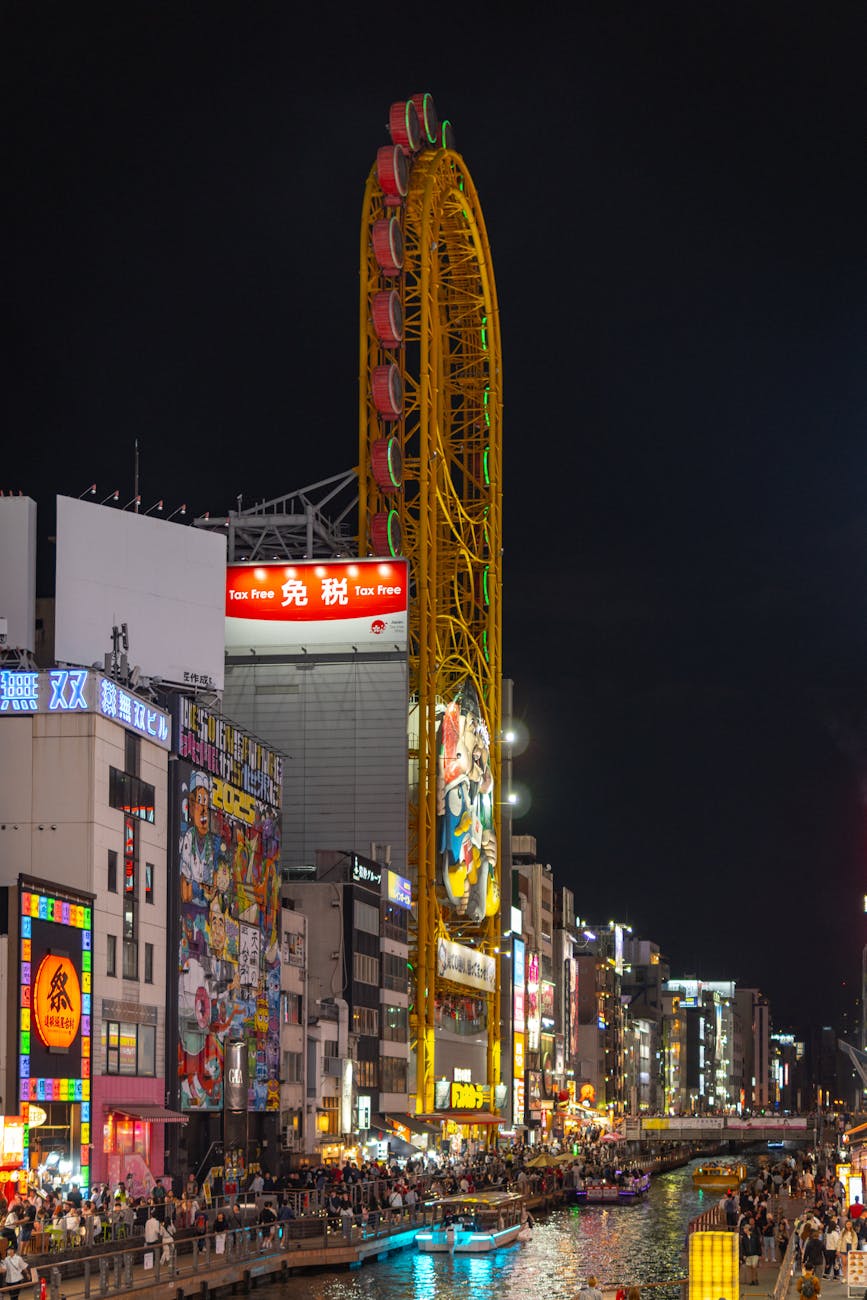
Osaka is the cheapest of Japan’s big cities to enjoy, and the gap isn’t small, you’ll spend roughly 15–30% less here than in Tokyo on rooms, food and fun. Better still, the things Osaka does best are the things that cost least: street food, temple grounds, neon-soaked neighbourhoods after dark. Osaka budget travel isn’t about going without. It’s about not overpaying for what’s already cheap.
This guide lays out what you’ll actually spend, where the genuinely free experiences are, how to eat like a local for a few hundred yen, which transport passes earn their keep, and where to sleep without wrecking the budget. If you only take one thing from it: the best food in this city is rarely the most expensive.
What a day in Osaka really costs
Before you plan anything, it helps to see what each spending tier buys. These are real daily figures, accommodation included, based on how people travel here.
Backpacker: ¥8,000–12,000 a day ($55–80)
A dorm bed (¥3,000–5,000), street food and konbini meals (¥2,000–3,000), a day pass or a handful of metro rides (¥800–1,500), and one or two paid sights (¥500–1,500). At this level you eat very well on stalls and convenience-store food, stick mostly to free attractions, and sleep in budget digs. Plenty of travellers find this tier perfectly comfortable in Osaka, not a hardship.
Mid-range: ¥15,000–25,000 a day ($100–170)
A budget hotel or private hostel room (¥6,000–12,000), a mix of stalls and sit-down meals (¥3,000–5,000), an Osaka Amazing Pass for transport and attractions (¥2,800), and room to spend without thinking too hard. Most visitors land here and find it the sweet spot between comfort and value.
Comfort: ¥25,000–40,000 a day ($170–270)
A mid-range hotel (¥12,000–20,000), restaurant meals with the odd high-end splurge (¥5,000–10,000), taxis when you feel like it, no budget-watching. Even up here, Osaka is a bargain against the equivalent night out in most Western cities. For rooms at every price, see our where to stay in Osaka guide.
The best free things in the city
The backbone of cheap travel here is knowing how much costs nothing. Osaka has far more free attractions worth your time than most visitors clock.
Parks and open space
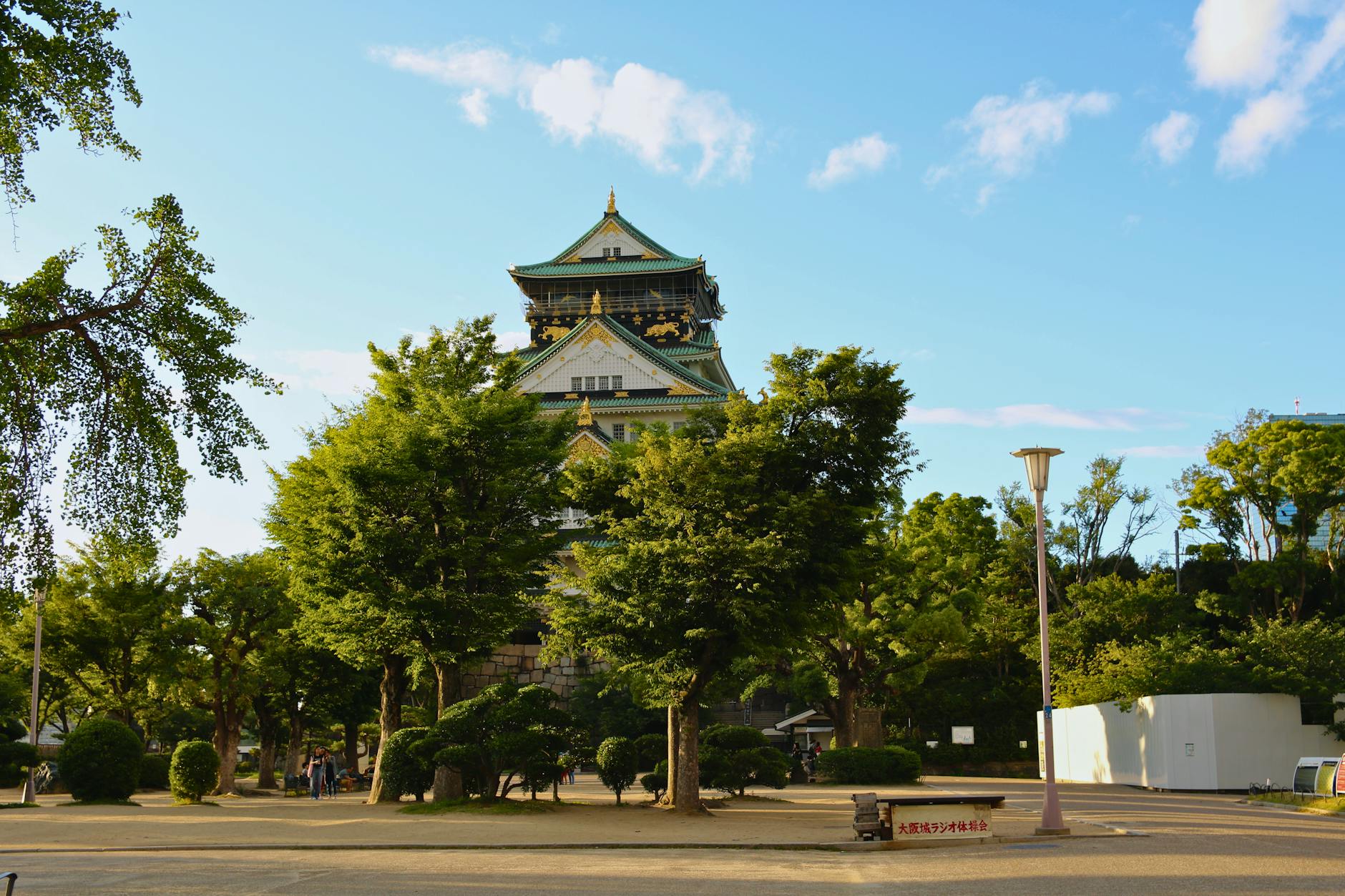
Osaka Castle Park is the obvious crown jewel. The 106-hectare grounds cost nothing to enter, and that gets you the castle exterior, the great stone walls and moats, 3,000-plus cherry trees, a plum grove and acres of picnic lawn. The interior museum is ¥600 and skippable; Nishinomaru Garden (¥200) has the best photo angle, but the free main grounds give you plenty. Beyond it, Nakanoshima Park sits on a river island ringed by handsome early-1900s architecture, Utsubo Park hides a free rose garden that locals jog through, and Nagai Park spreads out in the south with wide green lawns (its botanical garden carries a small fee).
Temples and shrines
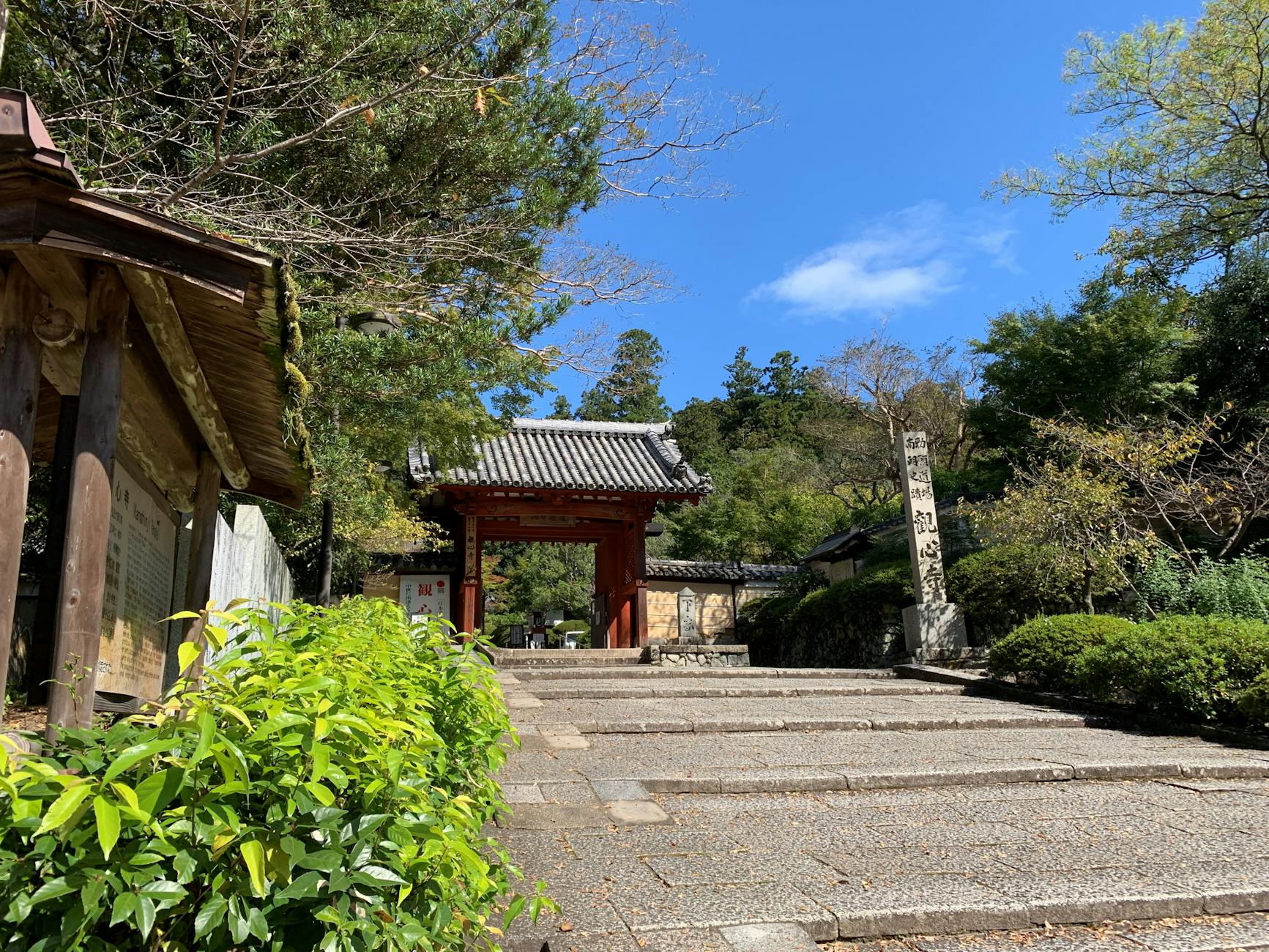
Nearly every one of Osaka’s temples and shrines is free to enter, which makes them the ultimate cheap day out. Sumiyoshi Taisha, the head shrine of 2,300 nationwide, is free. Shitennoji’s outer grounds are free (the inner precinct runs ¥300, worth it but optional). Hozenji and its moss-covered Buddha is free and open around the clock. Namba Yasaka, with its 12-metre lion-head stage, is free. Osaka Tenmangu is free. You could fill a whole day with serious sacred sites and not spend a yen on admission.
Neighbourhoods on foot
Some of the best hours you’ll spend here cost nothing but shoe leather. Dotonbori is a wall of neon, mechanical crabs and canal reflections that’s free to soak up. Shinsekai serves retro-Osaka grit under the Tsutenkaku Tower. Amerikamura is the youth-culture quarter, all street art and vintage racks and prime people-watching. Hozenji Yokocho is a lantern-lit cobbled lane that feels a century old. And Tenjinbashi-suji, Japan’s longest covered shopping street at 2.6 km, is a walk worth taking for its own sake. For more in this vein, our off-the-beaten-path Osaka guide points you past the obvious.
Free views
Skip the paid observation decks if you’re counting yen. The Abeno Harukas building has a free 16th-floor viewing area with a genuinely good outlook, and several department stores and hotels open rooftop gardens or observation floors for nothing. The one paid view I’d defend is the top of the Osaka Castle museum (¥600), which hands you a 360-degree panorama.
Eating well for next to nothing
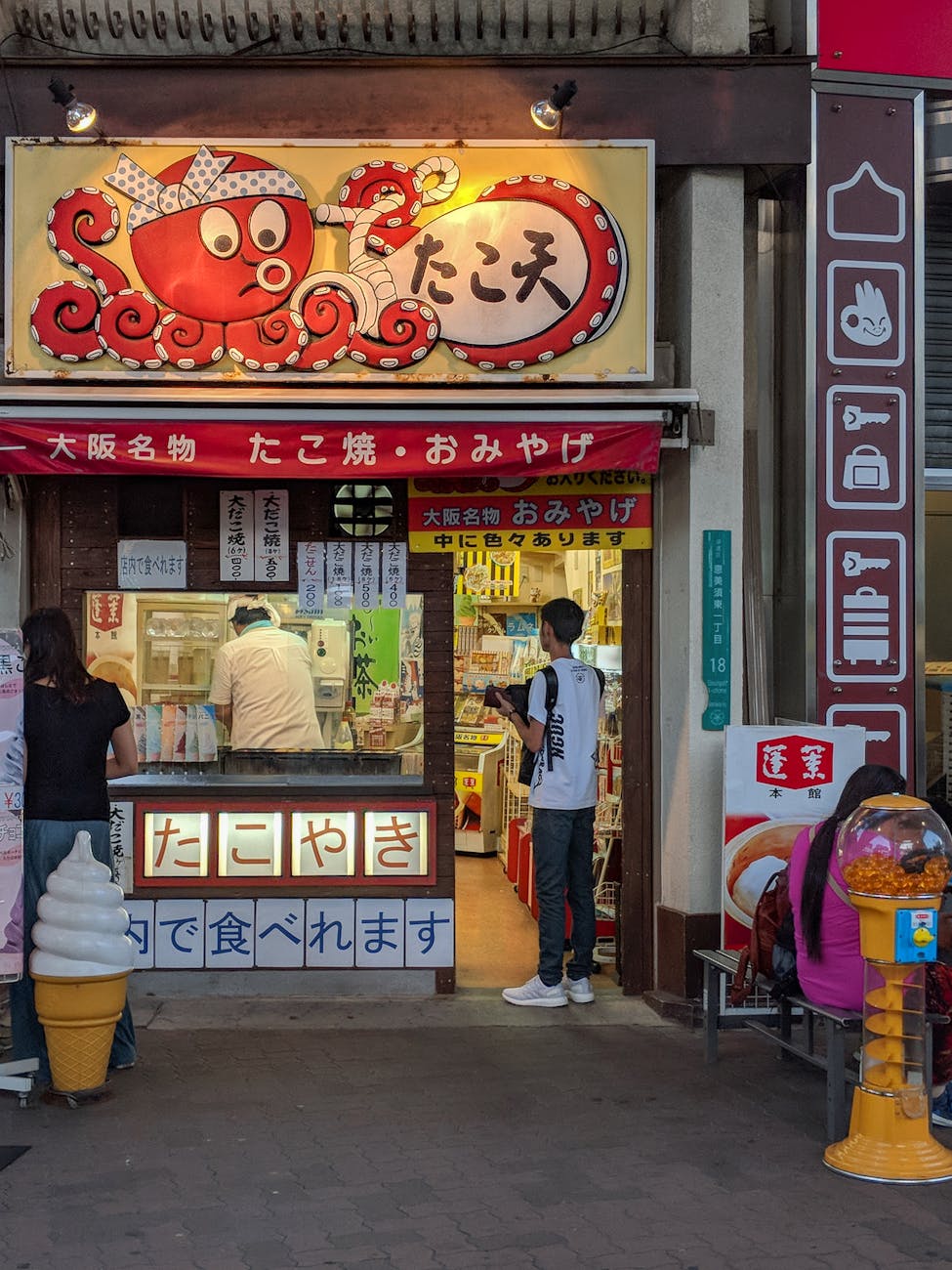
They call Osaka “Japan’s Kitchen” (tenka no daidokoro), and the city’s food scene is the single biggest reason it’s such a steal. The great stuff isn’t in pricey restaurants. It’s at Osaka’s street stalls, tiny family shops and counter joints where a few hundred yen eats like a feast.
Street food, the budget traveller’s backbone
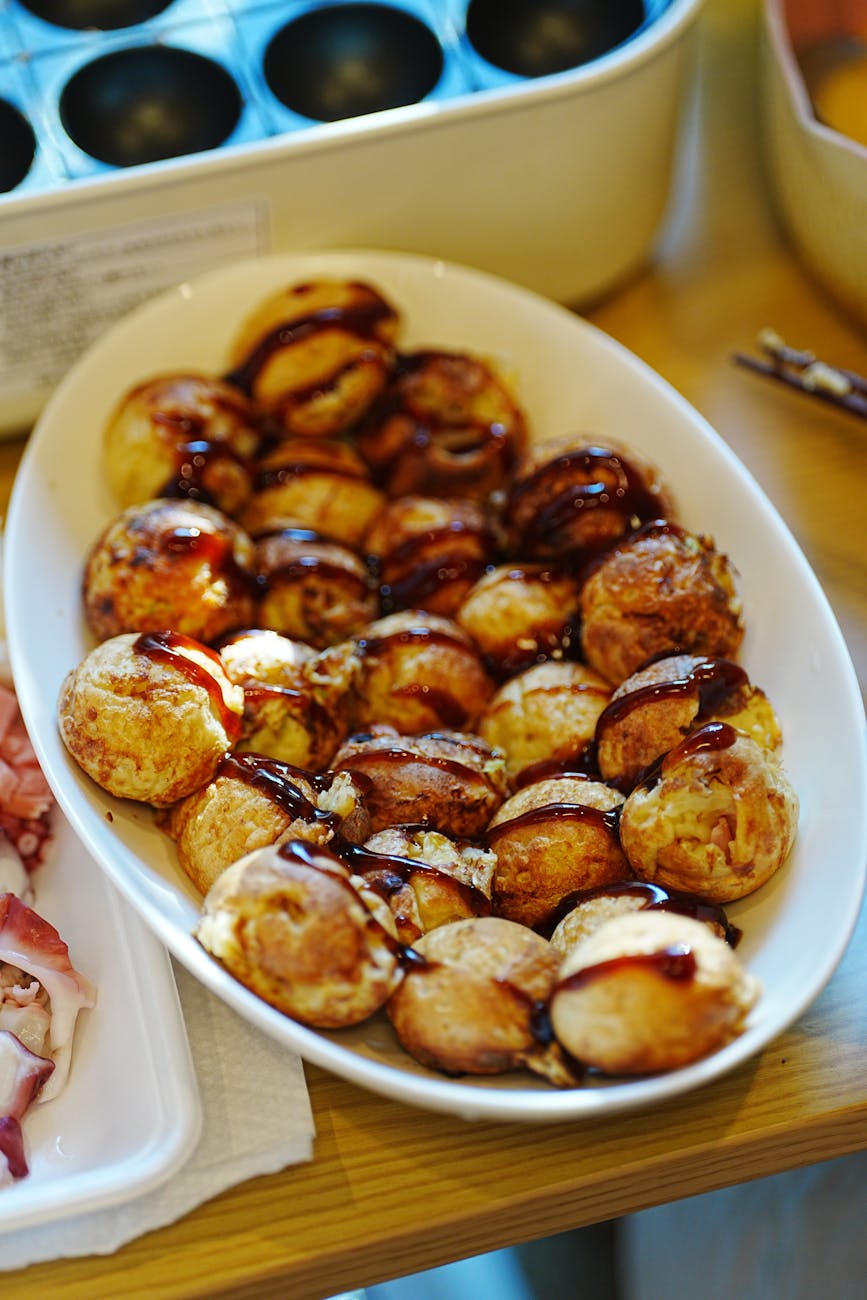
Takoyaki (octopus balls): ¥400–600 for six to eight, on nearly every corner in Dotonbori and Shinsekai, crisp outside and molten in. Okonomiyaki (savoury pancakes): ¥600–900 at casual spots, many of which let you cook your own on a tabletop griddle, which is half the fun. Kushikatsu (deep-fried skewers): ¥100–200 each; Shinsekai is the home turf, where five to eight skewers fills you up for under ¥1,000. Gyoza: ¥300–500 for six, at countless hole-in-the-wall counters. The cheap-eats rabbit hole runs deep, and we’ve mapped it in our cheap eats in Osaka guide.
Konbini: Japan’s quiet budget weapon
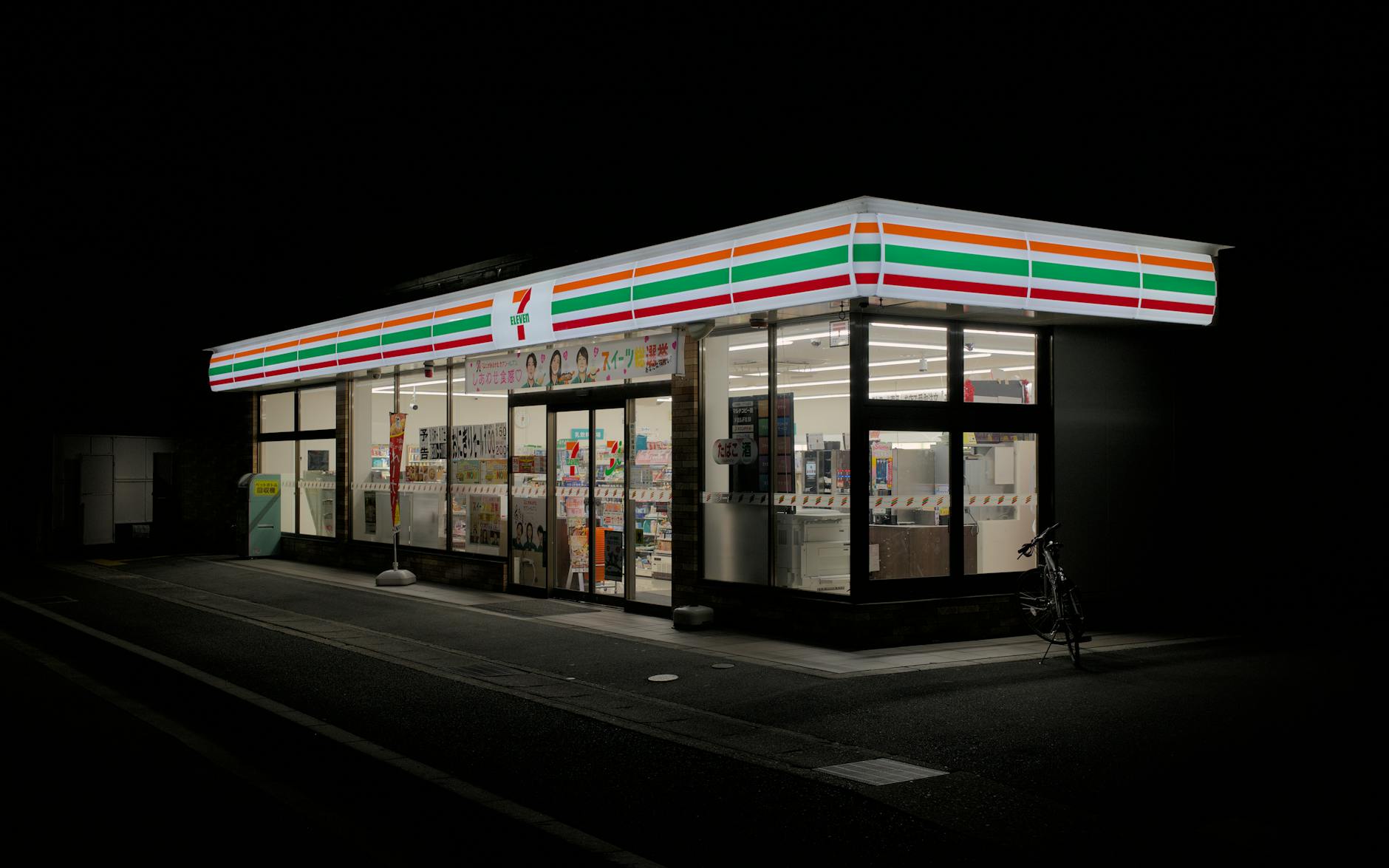
If one tip saves you the most, it’s this: embrace the konbini. Japanese convenience stores (7-Eleven, Lawson, FamilyMart) bear no resemblance to the Western kind. They sell fresh onigiri (¥120–180), bento boxes (¥400–600), sandwiches (¥200–350), salads, hot oden in winter, and coffee that’s better than it has any right to be (¥100–150). A konbini breakfast runs ¥300–500, lunch ¥500–800. A lot of travellers do one konbini meal a day and put the savings toward a proper dinner.
Budget chains that punch above their price
Japan’s cheap chains feed you well for very little. Yoshinoya, Matsuya and Sukiya do beef bowls (gyudon) from ¥400–600. Marugame Seimen pulls fresh udon from ¥300. CoCo Ichibanya plates curry rice from ¥500. Sushiro and Kura Sushi are conveyor-belt chains where plates start at ¥120 for two pieces, and a satisfying sushi meal lands at ¥800–1,200, far better quality than the price suggests.
The supermarket timing trick
Hit a supermarket after 7pm, ideally between 8 and 9, for steep discounts on prepared food, sushi and bento. Stores slap 20%, then 30%, then 50% stickers on perishables to clear them before close. A sushi platter that ran ¥1,500 at lunch can be ¥750 or less by evening. Locals swear by it, and so should you.
Where the local food actually is
Tenjinbashi-suji Shopping Street is where Osakans eat, 2.6 km of covered arcade packed with cheap, excellent food well away from Dotonbori’s tourist markup. Shinsekai is budget kushikatsu central. Tsuruhashi Korean Town piles on the barbecue and kimchi at local prices. And while Dotonbori is touristy, the side streets one block off the canal hide better food at lower prices than the flashy waterfront places.
Getting around for less
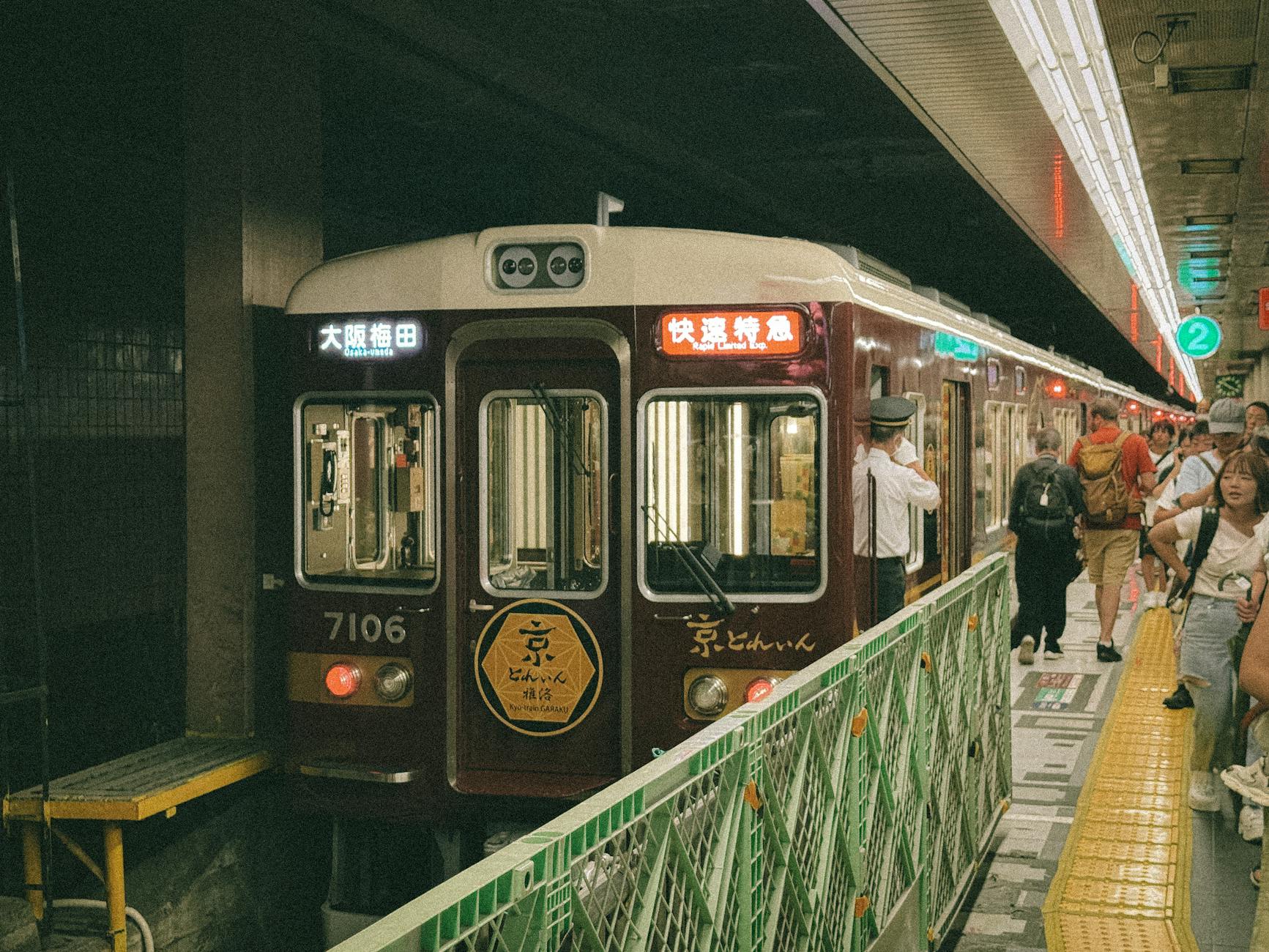
Transport adds up fast if you’re careless, but it’s one of the easiest places to save once you know the tricks. Our full transportation guide has the detail; here’s the money part.
The passes worth buying
The Osaka Amazing Pass (1-day ¥2,800, 2-day ¥3,600) is the best-value ticket in town: unlimited Metro and city buses plus free entry to 40-plus attractions, including Osaka Castle, the Umeda Sky Building and the Tombori River Cruise. Hit three paid sights in a day and it’s already paid for itself. The Enjoy Eco Card (¥820 weekdays, ¥620 weekends and holidays) gives a day of unlimited Metro and bus, and that weekend rate is a steal if you’re hopping around. For a full pass comparison, see our Osaka day pass guide.
Coming in from Kansai International Airport, the Nankai Limited Express + Metro 1-day bundle beats buying the legs separately. And if you’re eyeing day trips to Kyoto or Nara, the Kansai Thru Pass (2-day ¥4,480, 3-day ¥5,600) covers private railways across the whole region.
Walking, the best free transport
Osaka’s core is more walkable than people expect. Namba to Dotonbori is five minutes on foot. Dotonbori to Shinsaibashi, ten. Shinsaibashi to Amerikamura, five. Namba to Shinsekai, about twenty. Cluster your stops by area and walk between them and you’ll save ¥500–1,000 a day in fares without trying.
IC card or day pass?
Load an ICOCA or Suica for pay-as-you-go. An ICOCA card costs ¥2,000 at any station machine, ¥1,500 of that usable credit and ¥500 a refundable deposit. A single Metro ride is ¥180–370 depending on distance. Under four or five rides in a day, the IC card beats a pass; over that, the pass wins. Most budget travellers alternate, walking days on the IC card, big-loop days on a pass.
Sleeping cheap without slumming it
Accommodation is usually the biggest line in any budget, but Osaka does cheap-but-clean better than almost anywhere, the comfort holds even at the low end.
Hostels and dorms (¥2,500–5,000 a night)
Osaka’s hostel scene is excellent, modern and spotless for half what a European bed would cost. Most throw in private lockers, free Wi-Fi, a shared kitchen (more savings), laundry and sociable common rooms. Well-rated names like Hostel Mitsuwaya, The Dorm Hostel Osaka and Fuku Hostel reliably deliver a dorm bed at ¥3,000–4,000.
Capsule hotels (¥3,000–5,000 a night)
A uniquely Japanese experience that doubles as budget lodging. Modern capsules have come a long way, many now have roomy pods with built-in TVs, outlets, privacy curtains and proper ventilation, plus communal baths (sometimes full onsen-style). Look in Shinsaibashi and Namba for the best locations.
Business hotels (¥5,000–10,000 a night)
Chains like Toyoko Inn, Super Hotel and APA offer compact private rooms with en-suite bathrooms, often with breakfast. Small by Western standards, yes, but functional and reliably well kept. Booking direct on the hotel’s own site usually beats the third-party rates.
Which areas to base in
Location swings the price hard. Shin-Imamiya and Tennoji run 20–30% cheaper than Namba while staying superbly connected by rail. Nishinari Ward, next to Shin-Imamiya, has some of the lowest rates in the city. Namba costs more but saves on transport by sitting in the middle of everything. For the full pros-and-cons by area, see our where to stay guide. The cheapest months are January–February and June, when rates drop 30–50% off spring and autumn; our seasonal guide helps you time it.
Shopping without overpaying
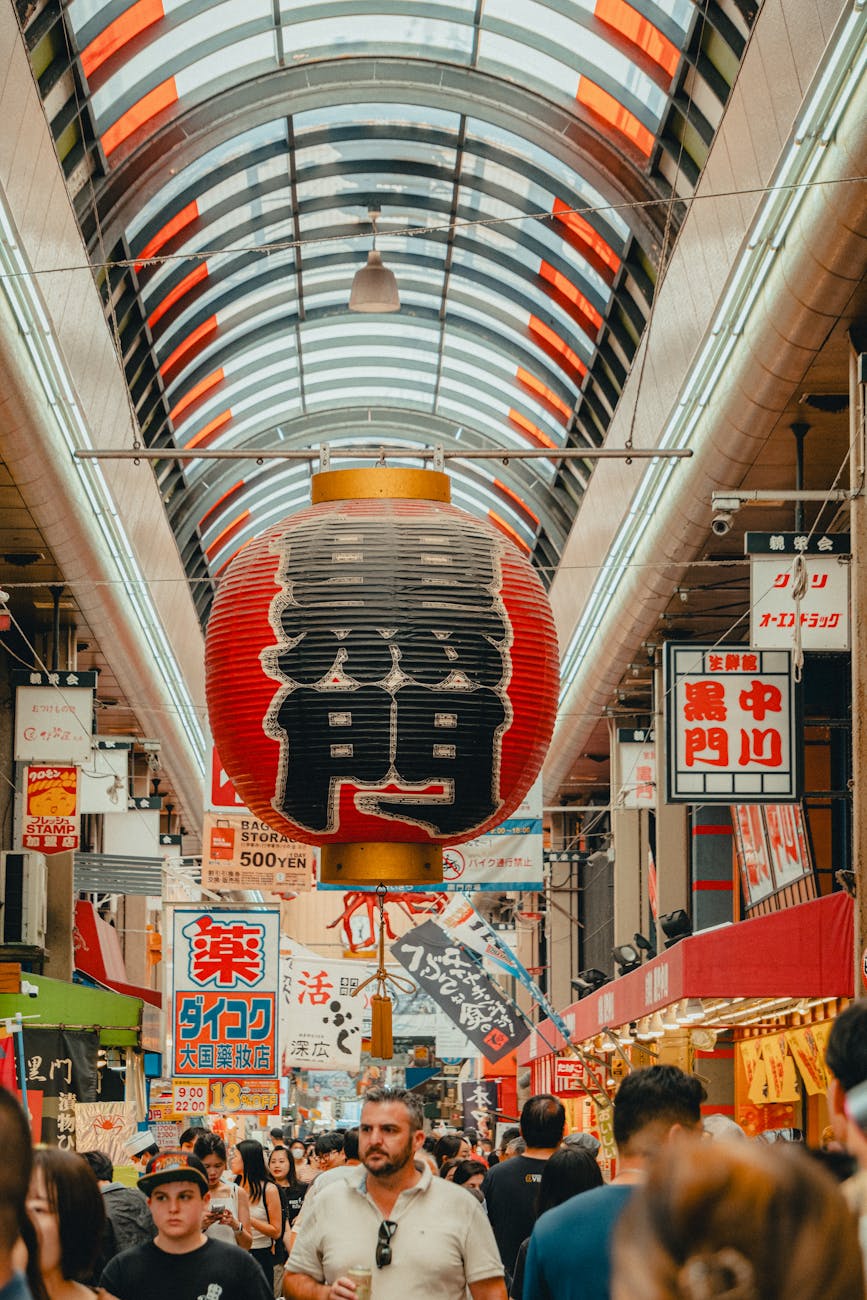
Serious Osaka shopping can drain any wallet, but there are clean ways to find deals and dodge the markup.
Tax-free shopping
Foreign visitors can claim a 10% tax refund on purchases over ¥5,000 at participating shops, look for the “Tax-Free” signs. Department stores, electronics shops and drugstores nearly all take part, so it’s effectively 10% off everything from cosmetics to clothing to gadgets. Keep your passport on you for the tax-free counter.
100-yen shops
Daiso, Seria and Can Do price almost everything at ¥100 (about $0.70), and they’re not junk, they stock genuinely useful travel kit, stationery, kitchen tools, beauty bits, snacks and surprisingly decent souvenirs. Stock up here instead of paying tourist prices elsewhere; the big Daiso stores in Shinsaibashi, Namba and Umeda are easy to find.
Don Quijote (Donki)
The Dotonbori Don Quijote with its Ferris wheel, and the other branches, are discount variety stores selling snacks, cosmetics, electronics and souvenirs for consistently less than specialist shops. They stay open late and do tax-free for tourists. The smart move: buy your snack souvenirs here, not at the airport or tourist shops, where the same boxes cost 30–50% more.
Cheap and free nights out
Beyond sightseeing, Osaka throws off plenty of low-cost fun that plays to its famously good-humoured streak.
Festival-hopping is some of the best free entertainment going, monthly shrine festivals, seasonal matsuri and neighbourhood events run all year. Our seasonal guide helps you line a visit up with one. People-watching in Dotonbori can fill a whole evening: grab cheap takoyaki, sit by the canal, watch the neon churn. And Osaka’s comedy streak is the stuff of legend, the big shows need tickets, but street performers in Namba and Dotonbori are free.
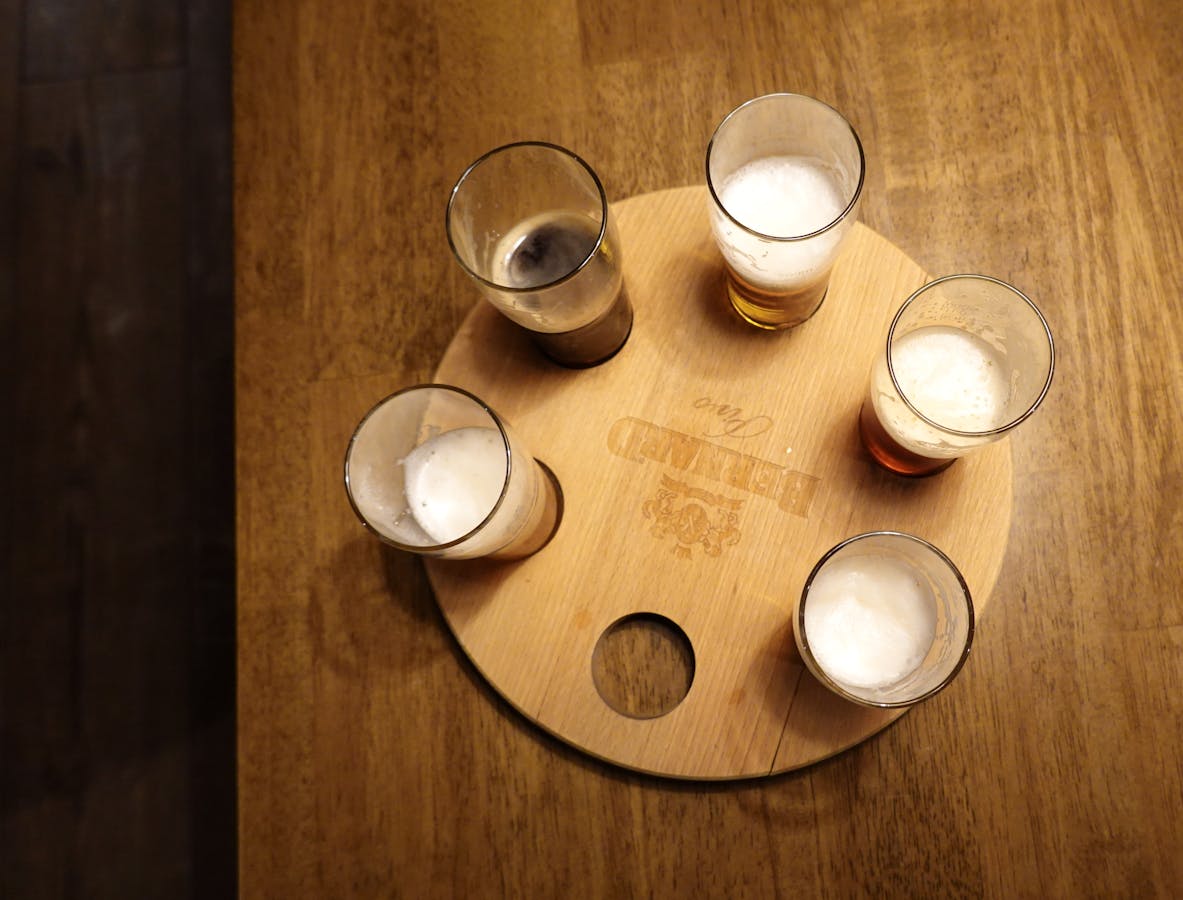
For a night out on a budget, plenty of izakaya run all-you-can-drink (nomihoudai) deals at ¥1,500–2,000 for 90–120 minutes, far cheaper than buying rounds. Standing bars (tachinomi) around Tenma and Kyobashi pour drinks from ¥200 and small plates from ¥100, so a full evening of eating and drinking can come in under ¥2,000.
Three sample days, three budgets
Ultra-budget day: under ¥5,000
Breakfast: konbini onigiri and coffee (¥350). Morning: walk Sumiyoshi Taisha (free). Lunch: kushikatsu in Shinsekai, eight skewers and rice (¥900). Afternoon: on to Tennoji, Shitennoji outer grounds (free), a stroll through Tennoji Park. Dinner: discounted supermarket bento (¥500). Evening: Dotonbori and Namba on foot (free). Transport: mostly walking, one Metro ride (¥230). Total: about ¥2,000 plus your bed.
Best-value day: under ¥8,000
Breakfast: konbini (¥500). Morning: Osaka Castle Park (free grounds) plus the museum (¥600). Lunch: okonomiyaki near the castle (¥800). Afternoon: Osaka Tenmangu (free), then walk Tenjinbashi-suji. Snack: takoyaki (¥500). Dinner: conveyor-belt sushi at Sushiro (¥1,000). Evening: Dotonbori and Hozenji (free). Transport: Enjoy Eco Card weekend rate (¥620). Total: about ¥4,000 plus your bed.
Full day with the Amazing Pass: under ¥10,000
Breakfast: hotel or konbini (¥400). Transport + sights: Osaka Amazing Pass 1-day (¥2,800), Metro rides plus free entry to Osaka Castle (normally ¥600), Umeda Sky Building’s Kuchu Teien (normally ¥1,500), the Tombori River Cruise (normally ¥1,000) and more. Lunch: ramen near Umeda (¥900). Dinner: budget izakaya in Tenma (¥1,500, food and drinks). Total: about ¥5,600 plus your bed, having saved over ¥3,000 on admissions alone.
The tips that stretch a budget furthest
Travel off-peak. January–February and June carry the lowest flight and hotel prices, 30–50% under cherry-blossom season. Our seasonal guide flags the best value windows.
Carry cash. Many stalls and small shops are cash-only. Withdraw from 7-Eleven or Japan Post ATMs, which take foreign cards with no fee on the Japanese side, and pull larger amounts to limit your own bank’s per-transaction charge.
Drink the tap water. It’s safe and good. Carry a refillable bottle and top up at parks and stations. A ¥150 vending-machine drink three times a day is over ¥3,000 a week you didn’t need to spend.
Use free Wi-Fi. Stations, konbini and cafes are well covered. If you need constant data, a prepaid SIM or eSIM (¥2,000–3,000 for a week) beats renting a pocket Wi-Fi.
Skip the taxi. Fares start at ¥680 and climb fast. The Metro runs until around midnight and reaches nearly everywhere. Miss the last train and a manga or internet cafe (¥1,500–2,500) beats a long cab home.
Buy souvenirs at supermarkets and Donki. Airport and tourist-shop prices are wildly inflated; the same Kit Kat flavours, matcha treats and snacks cost 30–50% less elsewhere. We’ve gathered more of these in our Osaka money-saving tips.
Cook at the hostel. If there’s a kitchen, grab fresh ingredients at a supermarket and make one meal a day. Japanese supermarkets have superb produce at fair prices, and one home-cooked meal daily saves ¥500–1,000.
Is Osaka worth doing on a budget?
Completely, and in a lot of ways the cheap version is the truer one. This city’s soul lives in its stalls, its tiny izakaya, its ancient shrine grounds and the warm, unfussy way its people treat strangers. None of that costs anything. The local motto is “kuidaore”, eat until you drop, and with takoyaki at ¥500 and conveyor sushi at ¥120 a plate, you can do exactly that without going broke.
A comfortable week on a firm budget of ¥8,000–12,000 a day (plus your bed) is entirely doable while still getting the whole city, the food, the old sacred sites, the late nights and the general good-natured chaos that makes Osaka so easy to love. Start mapping it out with our complete Osaka travel guide, and you’ll find the best of this place really is free, or close enough.
Explore the full Osaka on a Budget series
Stretching your yen further? A free walking tour is the cheapest orientation in the city; beyond that, these guides get specific about saving money:
- Cheap Eats in Osaka 2026: 25 Best Meals Under JPY 1,000
- Free Walking Tours Osaka 2026: Tip-Based & Self-Guided Routes
- Osaka Day Pass 2026: Amazing Pass vs e-Pass vs Kansai Thru Compared
- Osaka Happy Hour 2026: Cheap Drinks, Specials & Standing Bars
- 20 Osaka Money Saving Tips for 2026: Insider Budget Hacks
Accommodation is where the biggest single saving lives. Swapping a business hotel single for a capsule hotel saves roughly ¥7,000 a night in central Osaka, which over a week is a Shinkansen return to Tokyo.