This article contains advertising. Our booking links are routed through a partner that adds commission tracking automatically, so if you book through one we earn a commission from the provider, at no extra cost to you. It never affects what we recommend. Affiliate disclosure
Osaka is Japan’s second city by size, a 1,400-year-old place that somehow reads as both ancient and relentlessly modern. It topped the 2025 Global Tourism City Attractiveness Index, which tells you something, but the numbers matter less than the feeling: people here talk to you, feed you, and assume you’re going to have a good time. Tokyo is the polished older sibling. Osaka is the one who orders another round.
This guide is the planning brain for the whole site. It walks you through how to arrive, when to come, where to base yourself, how to move around, what to eat, and what to actually do once you’re on the ground. Use it to get oriented, then follow the links down into the detailed guides where you need them. The goal is one solid plan, not a brochure.
Why Osaka Earns the Trip
The city’s unofficial creed is kuidaore — roughly, “eat yourself broke.” That spirit leaks into everything, not just the food stalls. Here’s why it’s worth your days.
It is the country’s kitchen, full stop. Osaka invented or perfected most of the dishes you came to Japan to eat: takoyaki, okonomiyaki, kushikatsu. Locals call it tenka no daidokoro, the nation’s kitchen, a holdover from its days as the rice-trading hub of the Edo period. You can eat brilliantly for ¥500 at a street stall or drop serious money on kaiseki, and both will land. Our Osaka food guide breaks the whole scene down dish by dish.
People are warmer here. Osakans have a reputation across Japan for being direct, funny, and quick to chat. Shopkeepers crack jokes. Strangers give directions and then walk you halfway there. If this is your first trip to Japan and you’re nervous about the social side, Osaka is the gentlest possible landing.
It costs less than Tokyo. Reckon on 15 to 25 percent less for hotels, meals, and going out. A careful traveller gets through a full day on roughly ¥8,000 to ¥12,000 (about $55 to $80), and that includes eating, transit, and a paid attraction or two.
It is the best base in western Japan. Kyoto is 15 minutes away by bullet train. Nara, 35. Kobe, about 20. You can see the headline acts of Kansai and sleep in the same bed every night, which beats dragging luggage between cities.
Getting to Osaka
Most international flights land at Kansai International Airport (KIX), built on a man-made island about 50 km out in Osaka Bay. A handful of domestic routes use Itami (ITM), which sits closer to town. Which airport you get is mostly decided for you by where you’re flying from.
From Kansai Airport into the city
Pick your train by where you’re sleeping. That’s the whole decision.
JR Haruka Express. Fastest way north. It runs straight from KIX to Tennoji in 35 minutes (around ¥1,710), Osaka Station in 47 (¥2,710), and Shin-Osaka in 52 (¥2,870) before carrying on to Kyoto. Hold a Japan Rail Pass and the Haruka is covered.
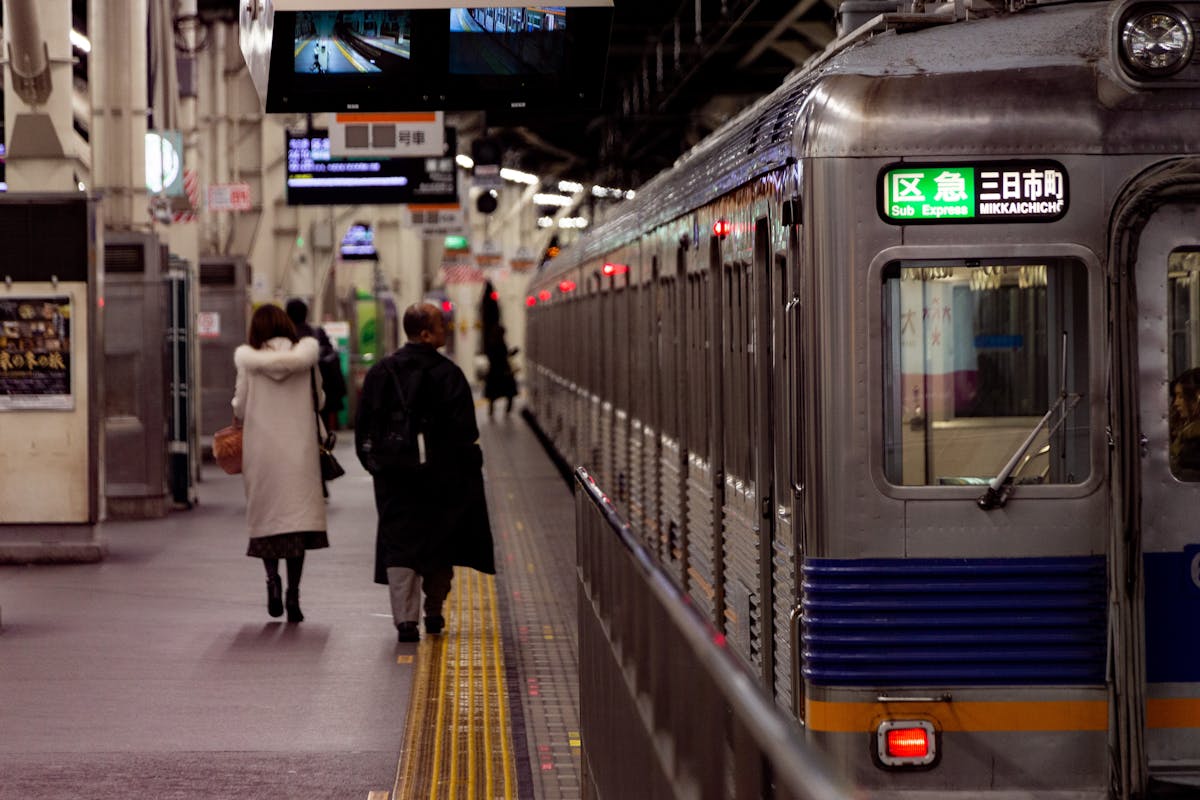
Nankai Rapi:t. The move if you’re staying near Namba or Dotonbori. This sleek limited express hits Namba Station in 34 to 37 minutes, around ¥1,450 for a reserved seat. Want to save? The Nankai Airport Express does the same run in about 44 minutes for just ¥970 on a regular commuter train. Same destination, less style, two-thirds off.
Airport limousine bus. KATE runs buses to the major hotels and stations, 50 to 70 minutes depending on traffic, around ¥1,600. Worth it when you’re hauling big bags, because the luggage hold beats wrestling suitcases onto a train.
Shuttle or taxi. A shared shuttle runs roughly ¥2,000 to ¥3,500 a head. A private taxi is brutal at around ¥20,000, but split four ways at 1 a.m. after the trains have stopped, it can make sense. For every option side by side, see the full Kansai Airport to Osaka guide.
From Itami
Itami is close in. Limousine buses reach Osaka Station in about 25 minutes (around ¥660) and Namba in roughly 30. The Osaka Monorail ties into the subway at Senri-Chuo if you’d rather go by rail.
By Shinkansen from Tokyo
The Tokaido Shinkansen links Tokyo to Shin-Osaka in about 2 hours 30 minutes. A one-way reserved seat on the Nozomi, the fast one, costs around ¥14,720. One catch for pass holders: the Japan Rail Pass covers the slightly slower Hikari (about 2 hours 50) but not the Nozomi. From Shin-Osaka, the city centre is a few stops down the Midosuji subway line.
When to Come
Osaka works year-round. Two windows stand out, and one comes with a crowd warning.
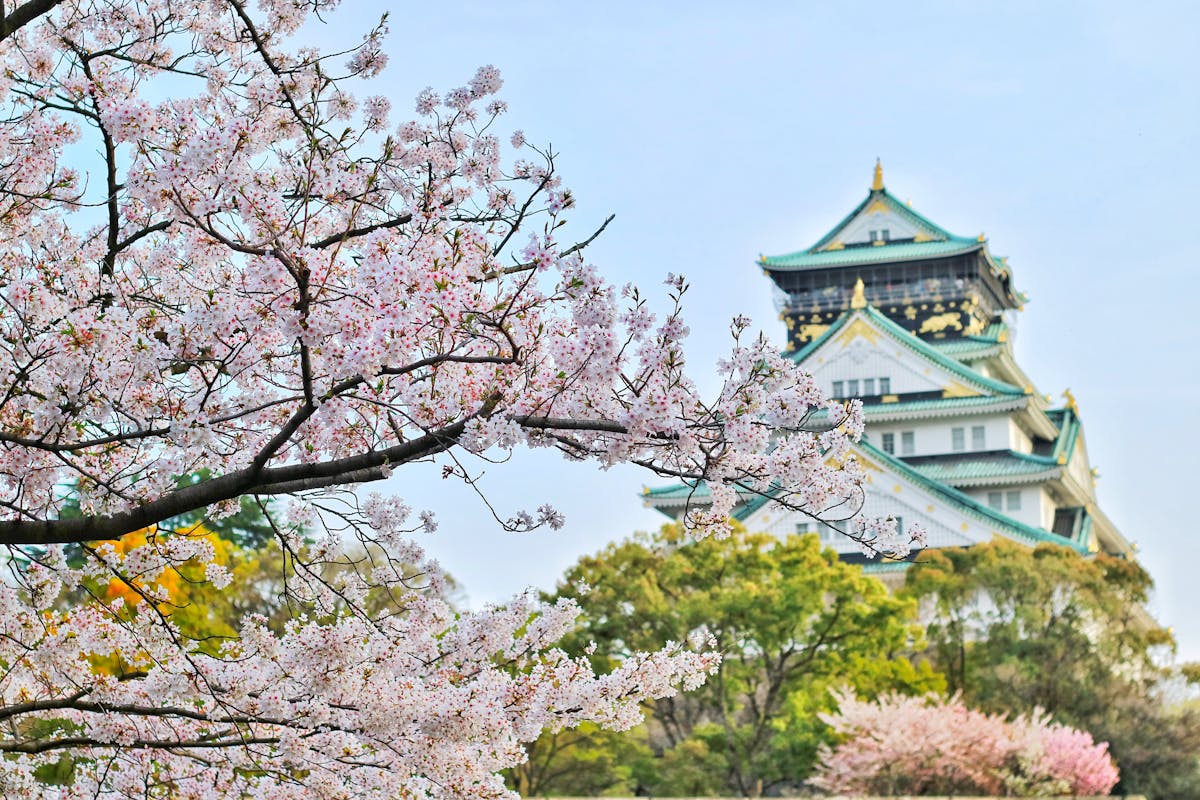
Spring (March to May) is the headline season. Cherry blossoms usually peak from late March into early April, and they turn Osaka Castle Park, the Mint Bureau, and the river promenades into pink tunnels. Days sit between 14 and 25°C, ideal for walking dawn to dusk. The catch: this is peak everything. Hotels cost more, the crowds are real, and Golden Week (late April into early May) jams the trains. Plan around it rather than into it.
Autumn (October to November) is the quieter equal. Maples and ginkgos go red and gold, the weather is just as mild as spring but drier, and the foliage at Osaka Castle and Minoo Park is genuinely worth a trip. Fewer people, softer prices. If you can come in either season, I’d lean autumn.
Summer (June to August) is hot and sticky, with temperatures past 34°C and June bringing the tsuyu rains. But it’s festival season, and that counts for a lot. Tenjin Matsuri in late July is one of Japan’s three great festivals. Hotels go cheaper, especially in June.
Winter (December to February) is cold but rarely freezing, and it’s the bargain window, with rates often 20 to 25 percent under peak. Illuminations light up Osaka Station and Nakanoshima, and New Year brings shrine visits and a calmer, more local mood. For a month-by-month read, the best time to visit Osaka breakdown goes deeper.
Where to Base Yourself
The neighbourhood you pick shapes the whole trip. Here’s the honest rundown.
Namba and Dotonbori. The default for first-timers, and a fair one. You’re walking distance from Dotonbori’s food, the Shinsaibashi arcades, and Namba’s late-night energy, with a direct Nankai line back to the airport. Beds run from capsule pods to glass towers; mid-range lands around ¥8,000 to ¥15,000 a night. The trade-off is noise, so ask for a room off the canal side.
Umeda and Osaka Station (Kita). The transport brain of the north. Best if you’re doing day trips, since Osaka Station feeds Kyoto, Kobe, Nara, and beyond. Better department stores, the Umeda Sky Building deck, a calmer feel. You’ll pay a bit more, roughly ¥10,000 to ¥20,000.
Shinsaibashi. Wedged between Namba and Umeda with the city’s main shopping arcade at your feet. Central, well-connected, and quieter at night than Dotonbori without losing the convenience. Good for shoppers who want to sleep.
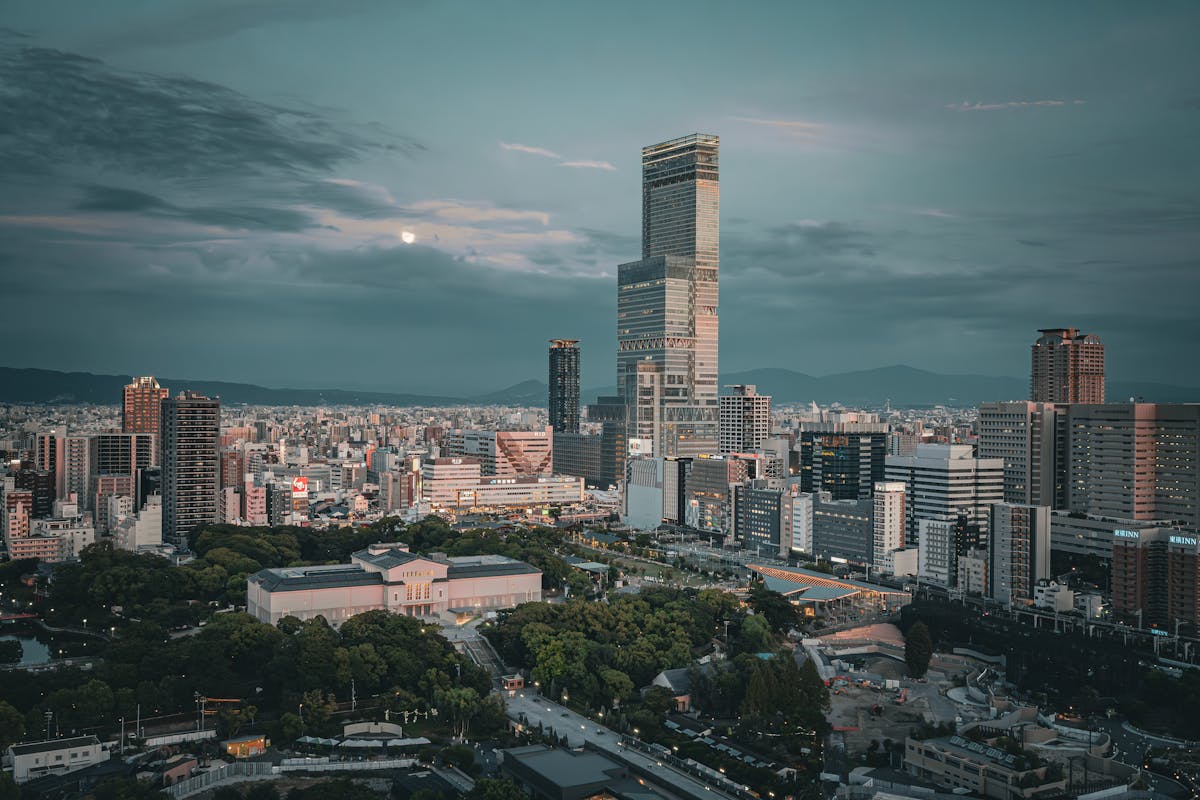
Tennoji and Shinsekai. The old soul of the city, and the value play. Abeno Harukas, Japan’s tallest building until 2023, anchors the area, with retro Shinsekai next door. Rooms run 20 to 30 percent cheaper than Namba or Umeda and the subway still gets you everywhere.
Osaka Bay. Only if Universal Studios is your main event. Several hotels exist purely to serve USJ, and the Kaiyukan aquarium and Tempozan Ferris wheel sit right there too. That clustering makes the bay the simplest base for a trip with children, and our guide to Osaka with children builds the days around those three.
Want tatami floors, futons, and communal baths instead of a standard hotel room? A ryokan delivers the traditional version, often with a multi-course Japanese dinner folded into the rate.
Getting Around
The transit here is clean, punctual, and easy to read even with zero Japanese. Signs carry English, and announcements run in several languages. You will not get hopelessly lost.
The subway and trains
Osaka Metro runs nine subway lines. Two do most of the tourist work. The Midosuji line (red on the map) runs north to south through Shin-Osaka, Umeda, Shinsaibashi, Namba, and Tennoji, which is to say nearly everywhere you want to go, on one line. You’ll ride it constantly. The Chuo line (green) runs east to west and carries you out to the bay for USJ and the aquarium. Those two cross in the middle and cover most of what you need. On top of the Metro, JR West runs the Osaka Loop Line, a circle route a lot like Tokyo’s Yamanote, plus the regional connections.
The ICOCA card
Get an ICOCA card and stop thinking about fares. Buy one at any JR station or at the airport, load it with cash, and tap in and out of every train, subway, and bus across Kansai. It also pays at convenience stores, vending machines, and plenty of restaurants. No more squinting at fare charts before each ride.
The Osaka Amazing Pass
Cramming a lot of sights into a short stay? The Osaka Amazing Pass earns its keep. The one-day version, around ¥2,800, throws in unlimited Metro rides plus free entry to 20-odd attractions, including the Osaka Castle tower museum, the Tempozan Ferris wheel, river cruises, and several observation decks. Two days runs about ¥3,600. Do the math on what you’d actually visit; if it’s three paid sights plus transit, the pass usually wins.
Out to Kyoto, Nara, and Kobe
Kyoto is 15 minutes from Shin-Osaka by Shinkansen, or about 30 on the cheaper JR Special Rapid from Osaka Station for ¥570. The Hankyu and Keihan lines give you other routes in.
Nara sits 35 minutes from Namba on the Kintetsu Limited Express (around ¥680), or about 50 minutes from Osaka Station on the JR Yamatoji Rapid.
Kobe is roughly 20 minutes from Osaka Station on the JR Special Rapid, ¥420.
What to See and Do
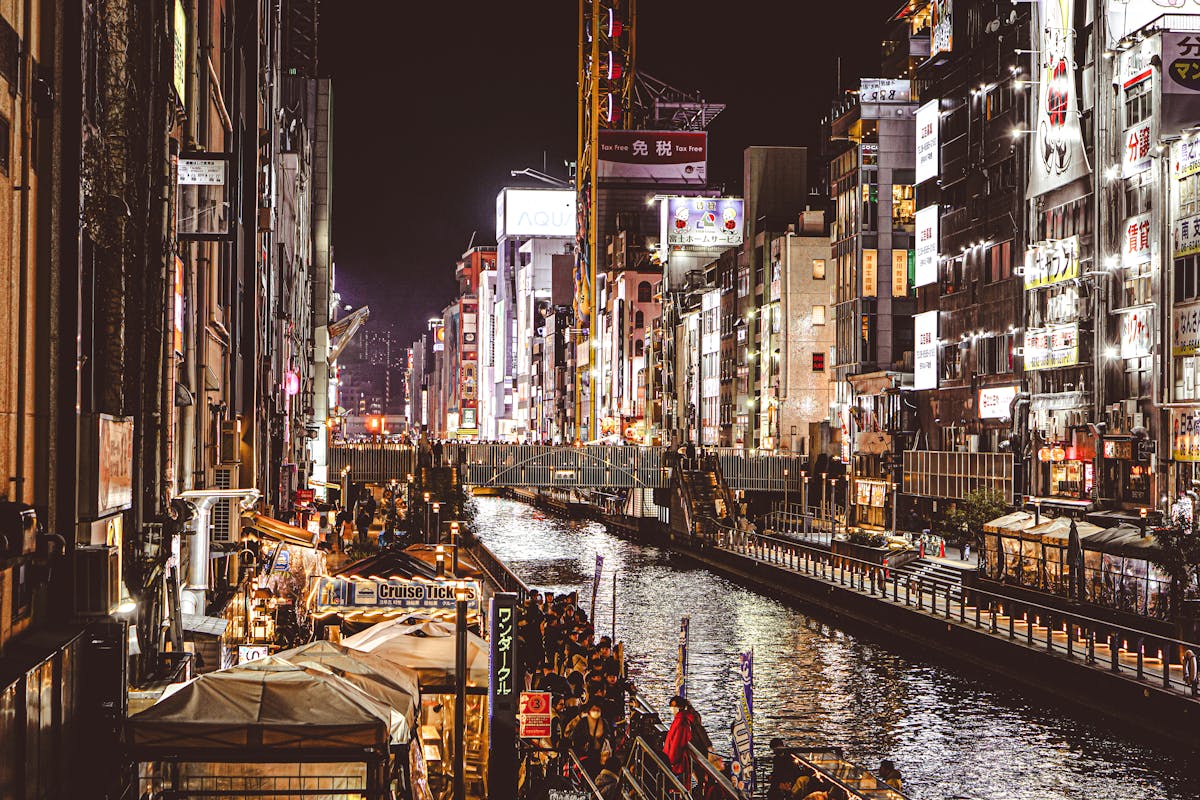
Osaka stacks a lot of sights into a compact, walkable core. The headline picks below will fill a few days; for the full menu of 50-plus attractions, see our things to do in Osaka guide.
The big landmarks
Osaka Castle. The city’s signature silhouette, first raised in 1583 by the warlord Toyotomi Hideyoshi. The current rebuild holds a museum running from feudal times to now, and the eighth-floor deck gives you the panorama. The surrounding park is one of the best blossom spots in town. Give it two to three hours. The dedicated Osaka Castle visitor guide covers hours, tickets, and the smart way in.
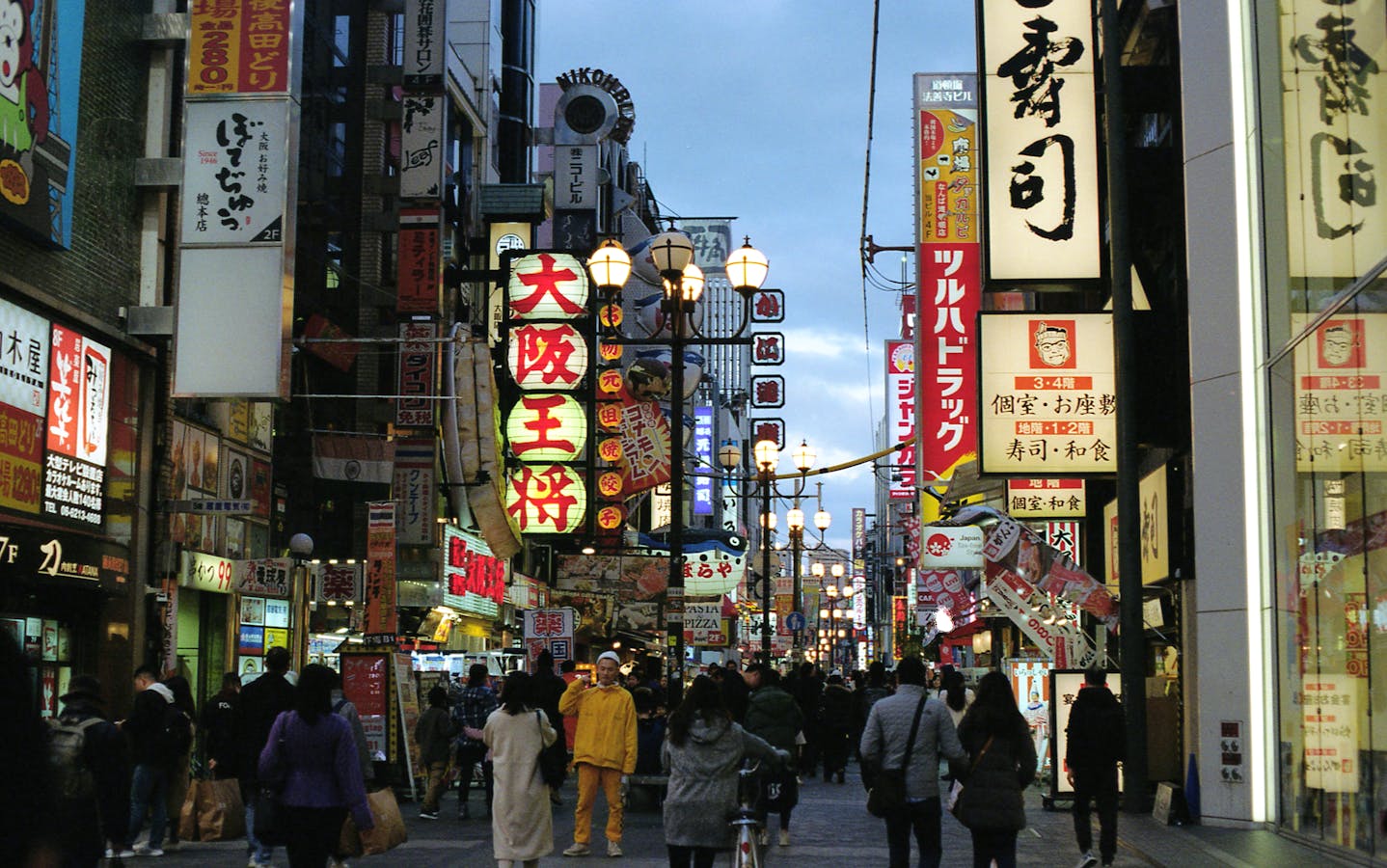
Dotonbori. Neon, noise, and a 400-year-old canal. This is the city’s loud heart, and it peaks after dark when the giant signs — the running Glico man, the mechanical crab — flare to life. Walk the canal-side path, eat your way down the street stalls, and accept that it’s touristy. Go hungry and go early-ish, before the 8 p.m. crush.
Universal Studios Japan. One of the busiest theme parks on earth, home to Super Nintendo World where you actually step into Mario’s kingdom, plus the Wizarding World of Harry Potter and a wall of big-budget rides. Block out a whole day, and buy an Express Pass if you’re going on a weekend unless you enjoy queueing.
Osaka Aquarium Kaiyukan. Built around a huge central tank standing in for the Pacific, with whale sharks, manta rays, and a spiral walkway dropping you through 15 habitats from the Aleutians to Antarctica. Two to three hours does it. Evening visits after 5 p.m. are calmer and moodier.
Temples, shrines, and the older city
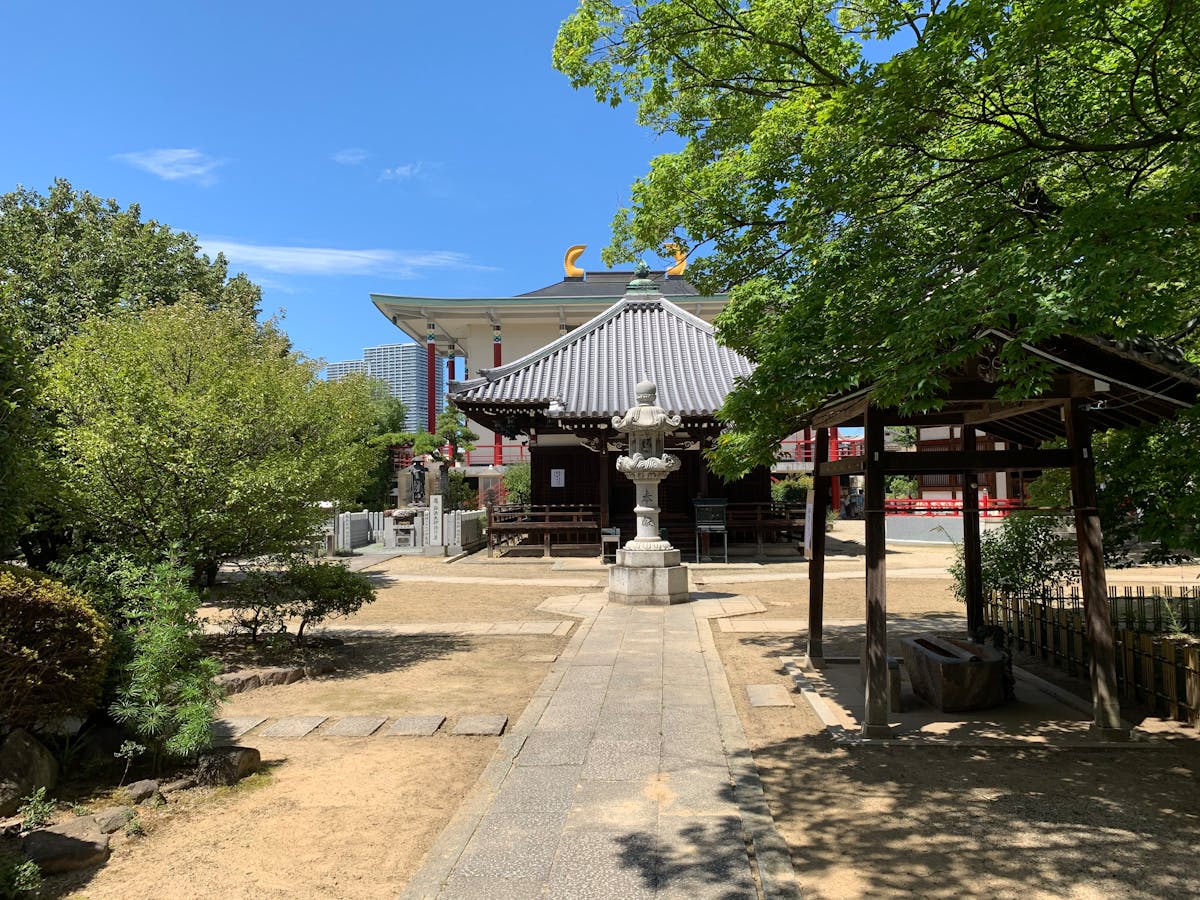
Sumiyoshi Taisha. The city’s oldest and most important shrine, founded back in the third century. Its Sumiyoshi-zukuri buildings predate Chinese Buddhist influence, which makes them one of the purest examples of native Japanese shrine design anywhere. The steep arched Sorihashi bridge out front is the photo everyone takes, and rightly so.
Shitennoji Temple. Founded in 593 by Prince Shotoku, this is Japan’s oldest state Buddhist temple. The 11-hectare grounds hold a five-story pagoda, a stone torii gate, and a quiet Japanese garden. Time your visit for the 21st or 22nd of the month and a big flea market floods the grounds.
Osaka Tenmangu Shrine. Dedicated to the deity of learning, and the launch point for July’s Tenjin Matsuri. Students pile in before exams to pray for a pass.
Hozenji Temple. A tiny shrine down a lantern-lit alley just off Dotonbori. You pour water over the moss-furred statue of Fudo Myoo and make a wish. Step in from the neon chaos and it goes quiet fast; it’s one of the most unexpected calm spots in the centre. Our round-up of Osaka’s older temples and shrines covers the sites that miss this list, Isshinji and its Buddha statues moulded from cremated ash among them.
Neighbourhoods worth a wander
Shinsekai. Osaka’s retro pocket, stuck somewhere in the 1950s and ’60s in the best way. Tsutenkaku Tower presides over streets of kushikatsu joints, pachinko parlours, and old arcades. Gritty, loud, lovable.
Nakazakicho. A few minutes north of Umeda, where old wooden machiya houses have become indie cafes, vintage shops, and studios. The lanes dodged the wartime bombing, so the area still feels like an older Osaka that’s mostly vanished elsewhere.
Den Den Town. The Nippombashi answer to Akihabara — anime, retro games, maid cafes, electronics. Less polished and more lived-in than its Tokyo cousin.
Amerikamura. The heart of Osaka’s youth scene since the 1970s, roughly 2,500 shops of secondhand clothes, vinyl, and streetwear packed around little Triangle Park.
What to Eat
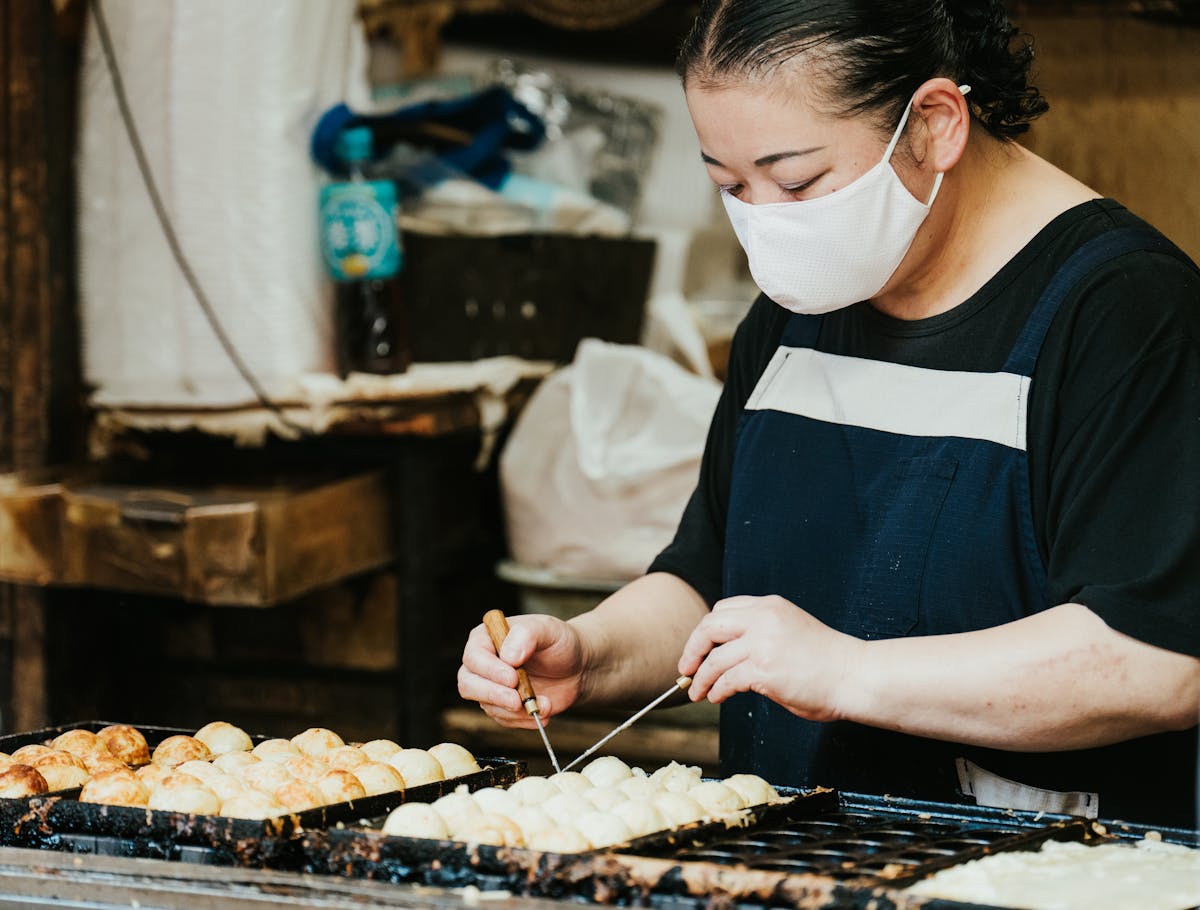
You will eat well here without even trying. A quick orientation follows; the full best takoyaki in Osaka rundown and the wider food guide go restaurant by restaurant.
The dishes Osaka owns
Takoyaki. Crisp shell, molten centre, a chunk of octopus inside, plus pickled ginger and green onion, finished with sweet sauce, mayo, bonito flakes, and seaweed. Vendors are on nearly every main street. Order them, burn your mouth slightly, regret nothing.
Okonomiyaki. A thick griddled pancake of batter, grated yam, egg, and cabbage, loaded with pork, shrimp, squid, cheese, whatever you fancy. The Osaka style folds everything together before cooking, unlike Hiroshima’s layered version. Plenty of places hand you the griddle and let you do it yourself.
Kushikatsu. Skewered meat, seafood, and veg in a light panko coat, deep-fried. Shinsekai is the home turf, and the one unbreakable rule is no double-dipping in the shared sauce. Break it and you’ll get a look.
Kitsune udon. The local udon comes in a lighter, more delicate broth than elsewhere, crowned with a big slab of sweet fried tofu. Silky noodles, sweet tofu, savoury dashi. Quietly addictive.
Hakozushi. Pressed box sushi, with rice and toppings layered into a wooden mould and cut into neat rectangles. More refined and decorative than the hand-formed nigiri you get in Tokyo.
Where to eat it
Dotonbori and Namba. Ground zero. Stalls, counters, and sit-down rooms run for blocks. Takoyaki at Kukuru or Wanaka, okonomiyaki at the long-running Mizuno, ramen at every turn.
Kuromon Market. “Osaka’s kitchen,” a 600-metre covered market near Nippombashi going since 1902. Grilled scallops, sea urchin, wagyu skewers, fruit, sweets. Show up hungry and graze.
Depachika. The basement food halls under Daimaru, Takashimaya, and Hankyu are a genuinely Japanese pleasure: gorgeous takeaway sushi, tempura, pastries, sweets. Quality is high, and a lot of it gets marked down 20 to 50 percent in the last hour before closing.
Shopping
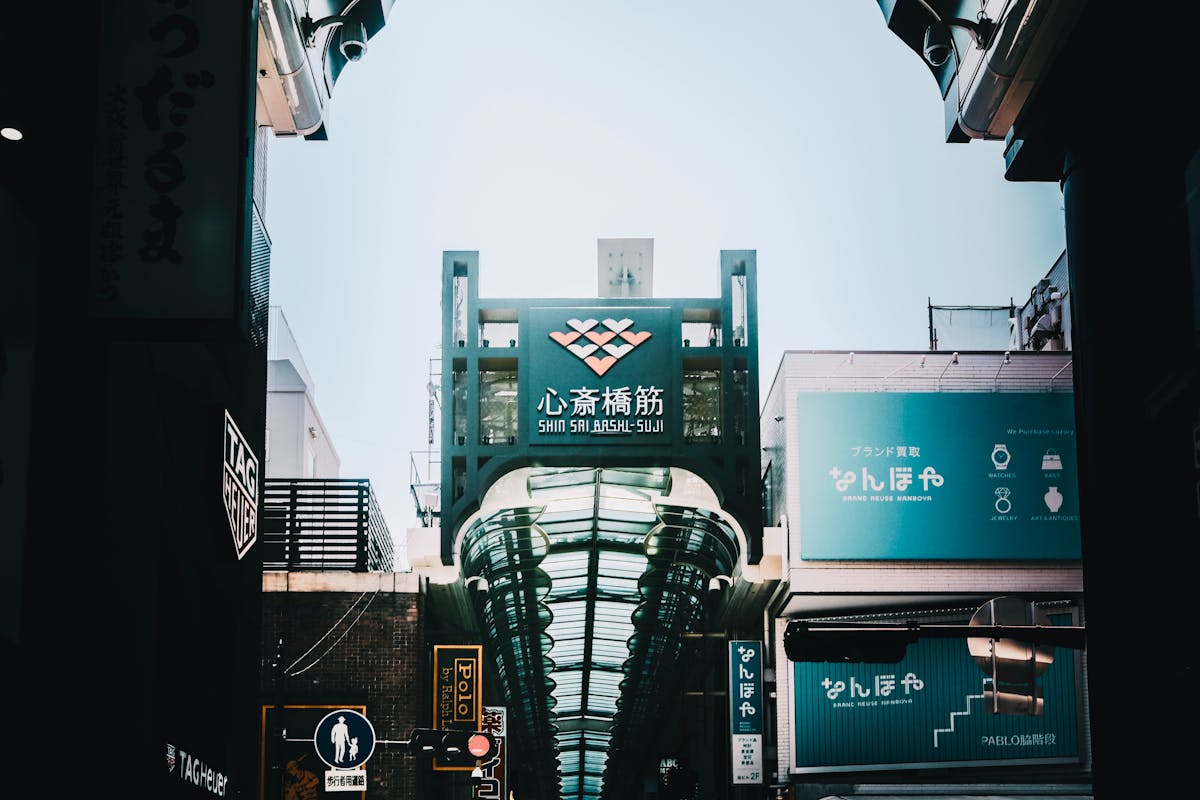
Different districts, different obsessions. Match the area to what you’re after.
Shinsaibashi-suji. The main event — a 600-metre covered arcade with 180-plus shops, from luxury labels to Japanese chains. It’s been pulling crowds since the 1800s, and over 100,000 people move through on a weekend.
Amerikamura. Vintage and streetwear central. JAM Shinsaibashi is Japan’s largest secondhand clothing store, roughly 500 square metres and 13,000 items. Grizzly, Kinji, and Pigsty round it out.
Den Den Town. Electronics, anime, manga, and gaming across floors of shops, with prices that often undercut Akihabara.
Rinku Premium Outlets. Out by the airport, 210 brand shops at 30 to 70 percent off. A smart final stop before you fly.
Tax-free shopping. Spend over ¥5,000 before tax at a participating store and you can claim back the 10 percent consumption tax. Look for the “Tax Free” sign and carry your passport.
After Dark
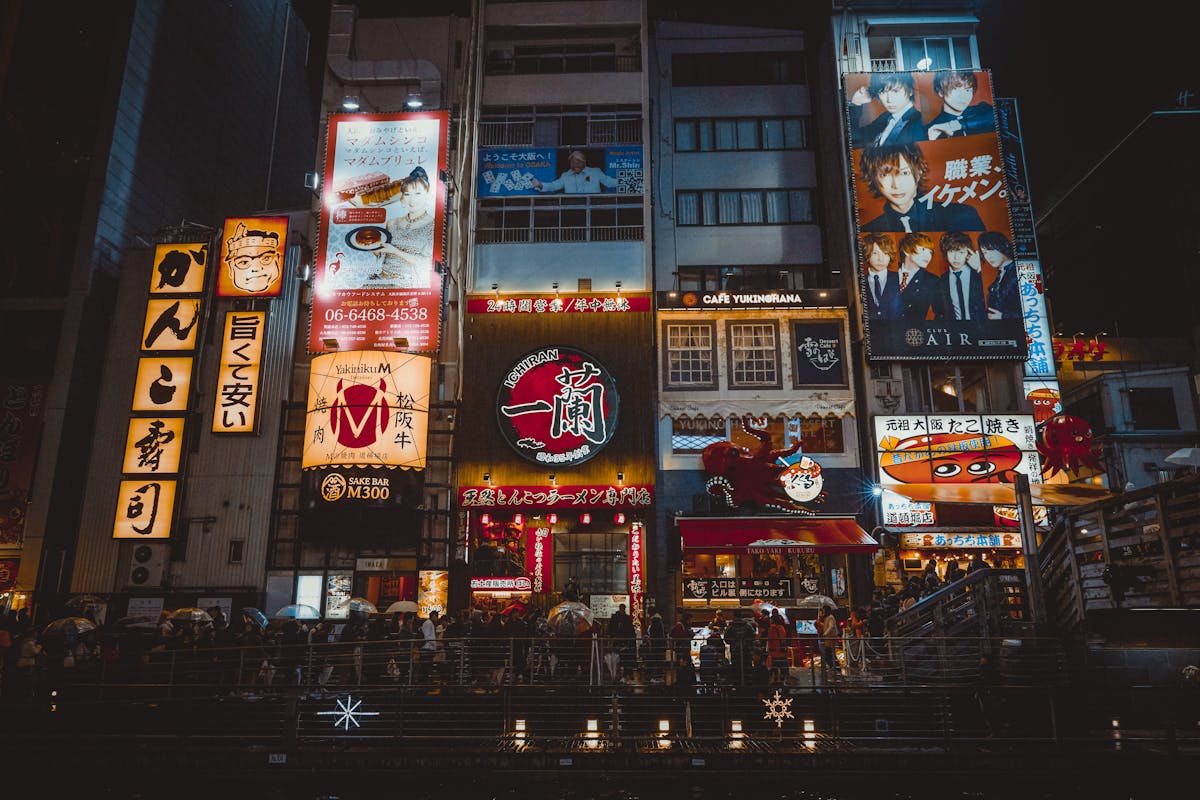
Osaka’s nightlife is friendlier and less velvet-rope than Tokyo’s. It’s easy to fall into conversation with locals and other travellers, which is half the point.
Dotonbori is the obvious start. The canal flips from food hub to bar crawl after 9 p.m., and the energy holds until the first trains around 5 a.m.
Ura-Namba, the warren of streets behind Namba Station, has been Osaka’s coolest drinking quarter since around 2010. Tight alleys, small izakayas, standing bars, careful cocktail spots, fair prices, and a genuinely warm crowd.
Kitashinchi is the upscale end, a dense grid on the southern edge of Umeda with thousands of bars and restaurants. The cocktail bars are exacting, hushed, wood-panelled rooms where the bartender treats your drink like a craft project. Cocktails run ¥1,500 to ¥3,000.
Karaoke is non-negotiable, really. Round1, Joysound, and Big Echo rent private rooms by the hour, with all-you-can-drink packages around ¥1,500 to ¥2,500 for 90 to 120 minutes. Most have an English songbook.
Day Trips
One of Osaka’s quiet superpowers is its position as the door to Kansai. Several of Japan’s marquee destinations sit under an hour away.
Kyoto (15 to 45 minutes). Over 2,000 temples and shrines, Fushimi Inari’s tunnel of red gates, the Golden Pavilion, the Arashiyama bamboo. It deserves more than a day, but a tight plan grabs the highlights.
Nara (35 minutes). Japan’s first permanent capital, the free-roaming deer of Nara Park, and the Great Buddha at Todai-ji. Compact and walkable, which makes it a clean day trip.
Kobe (20 minutes). The stylish port city: Kobe beef, the Nunobiki Herb Gardens by ropeway, Chinatown, the harbour. The Mount Rokko night view is one of Japan’s most famous.
Himeji (60 minutes). Himeji Castle, widely held up as the finest surviving Japanese castle and a UNESCO site. Spectacular in blossom season.
Mount Koya (90 minutes). A sacred Buddhist mountain with over 100 temples, many offering overnight shukubo stays where you sleep in a temple, eat Buddhist vegetarian food, and sit in on morning prayers.
Practical Details That Matter
Money
The currency is the yen. Japan is going cashless fast, but cash still rules at street stalls, small restaurants, and market counters. Pull yen from the ATMs at 7-Eleven or Japan Post Bank, both of which reliably take foreign cards and offer English screens. Carry ¥10,000 to ¥15,000 as a daily float and you’ll rarely get caught out. Cards work fine at hotels, department stores, and bigger restaurants; the little izakayas often don’t take them.
Language
English signage is widespread on transit, in tourist zones, and at hotels. Spoken English is hit or miss. A few phrases carry you a long way: konnichiwa (hello), arigatou gozaimasu (thank you), sumimasen (excuse me / sorry), eigo wa hanasemasu ka? (do you speak English?), and ikura desu ka? (how much?). Google Translate’s camera mode is your best friend for menus and signs.
Tipping
Don’t. Tipping isn’t a thing in Japan and can genuinely confuse or embarrass people. Good service is just the baseline. If you truly want to thank a private guide, slip cash into a small envelope and hand it over with both hands.
Staying connected
Easy enough. A prepaid eSIM or SIM card suits solo travellers best — buy online before you fly or grab one at the airport. Pocket WiFi works for groups sharing one device, with airport pickup and drop-off. Free WiFi at hotels, konbini, and stations covers light use but isn’t dependable enough to navigate by.
Etiquette
A handful of norms smooth things over. Shoes come off at temples, traditional restaurants, ryokan, and some shops, so watch for a shoe rack or a raised step at the door. Trains are quiet zones; silence your phone (“manner mode”) and skip the calls. Escalators here run opposite to Tokyo — stand on the right, walk on the left. And queue. Japan runs on orderly lines, at restaurants, platforms, even vending machines.
Safety
Japan is one of the safest countries going, and Osaka follows suit. Violent crime is rare, and you’ll regularly see bags and laptops left unattended on cafe tables. Stay sensible anyway. In an emergency, dial 110 for police and 119 for fire or ambulance. Ambulances are free, but hospital treatment must be paid upfront, which is exactly why travel insurance matters. The Japan Visitor Hotline (050-3816-2787) gives 24/7 multilingual help.
Sample Itineraries
Three days, the essentials
Day 1, north and the landmarks. Start at Osaka Castle early, before the crowds, and work through the grounds and museum. Walk over to Osaka Tenmangu Shrine. Spend the afternoon in Umeda and ride up the Sky Building’s Floating Garden Observatory. End in Dotonbori for street food and neon.
Day 2, south and culture. Morning at Sumiyoshi Taisha. Lunch in Shinsekai, where kushikatsu is the local move. Afternoon shopping through Shinsaibashi and Amerikamura. Evening bouncing between izakayas in Ura-Namba.
Day 3, the bay or a day trip. Either give Universal Studios the full day, or do a morning at the Kaiyukan aquarium and an afternoon in Nara for the deer and temples, then back for a farewell dinner.
Five days, Osaka plus Kansai
Run the three days above, then add two.
Day 4, Kyoto. JR Special Rapid over in 30 minutes. Fushimi Inari, Kiyomizu-dera, and the Gion streets. Back to Osaka for dinner.
Day 5, Kobe or Nara. Twenty minutes to Kobe for beef, the port, and Chinatown — or Kintetsu to Nara for Todai-ji and the deer. Round it off with last-minute grazing at Kuromon Market.
What It Costs
A realistic sense of daily spend per person, as of 2026.
Budget, about ¥8,000 to ¥12,000 ($55 to $80): hostel or capsule (¥2,500 to ¥5,000), street food and cheap restaurants (¥2,000 to ¥3,000), transit (¥800 to ¥1,500), and one or two low-cost sights.
Mid-range, about ¥15,000 to ¥25,000 ($100 to $170): business or mid-range hotel (¥8,000 to ¥15,000), a mix of casual meals plus one nicer dinner (¥4,000 to ¥6,000), transit with the odd taxi (¥1,500 to ¥2,500), and two or three paid attractions.
Splurge, ¥30,000 and up ($200+): four- or five-star hotel or premium ryokan (¥20,000 to ¥50,000-plus), fine dining (¥8,000 to ¥15,000), private transport, and VIP experiences. Our full Osaka trip cost breakdown runs the numbers in detail.
Where to Go Next
That’s the skeleton of a good Osaka trip: arrival, timing, base, transit, food, sights, and the practical stuff that trips people up. Pick the pieces you need and follow the links into the deeper guides where you want the full story. For official visitor info, the Osaka Convention & Tourism Bureau is the authoritative source. Then go eat something.
Explore the full Osaka Travel Guide series
Once you’ve got the big picture, these deep-dives cover every part of planning a trip in detail:
- Best Time to Visit Osaka: Season-by-Season Guide
- First Time in Osaka: 15 Essential Tips for First-Time Visitors
- How to Get to Osaka: Flights, Trains & All Transport Options
- Kansai Airport to Osaka: All Transport Options Compared
- Osaka SIM Cards & WiFi: How to Stay Connected in Japan
- Osaka Travel Insurance: What You Need & Best Options for Japan
- Osaka Trip Cost: Complete Budget Breakdown for 2026
- Japan Visa Requirements: Complete Guide for Osaka Travelers
- Osaka Weather Guide: What to Expect Each Season
- What to Pack for Osaka: Complete Packing List
- Osaka Itinerary: Day-by-Day Plans for 1 to 7 Days
For the practical layer underneath all of this — cash, connectivity, etiquette and what changes in 2026 — see our Osaka travel tips guide.