This article contains advertising. Our booking links are routed through a partner that adds commission tracking automatically, so if you book through one we earn a commission from the provider, at no extra cost to you. It never affects what we recommend. Affiliate disclosure
People come to Tokyo to look. They come to Osaka to eat. The city’s old nickname, tenka no daidokoro, the nation’s kitchen, goes back to its days as Japan’s rice-trading hub in the Edo period, when it quite literally fed the country. The local motto, kuidaore, means “eat until you go broke,” and it’s less a joke than a set of instructions.
This is the Osaka food guide that orients you before you start eating: the dishes the city invented, the neighbourhoods that do them best, where locals actually go, what things cost, and the dining rules worth knowing so you don’t embarrass yourself over a shared sauce pot. Where a dish deserves its own deep dive, I’ve pointed you to it. To fit all this eating into a wider plan, pair it with our Osaka travel guide.
The Big Five
Start with the dishes that define the place, born here, perfected here, still best eaten here.
Takoyaki
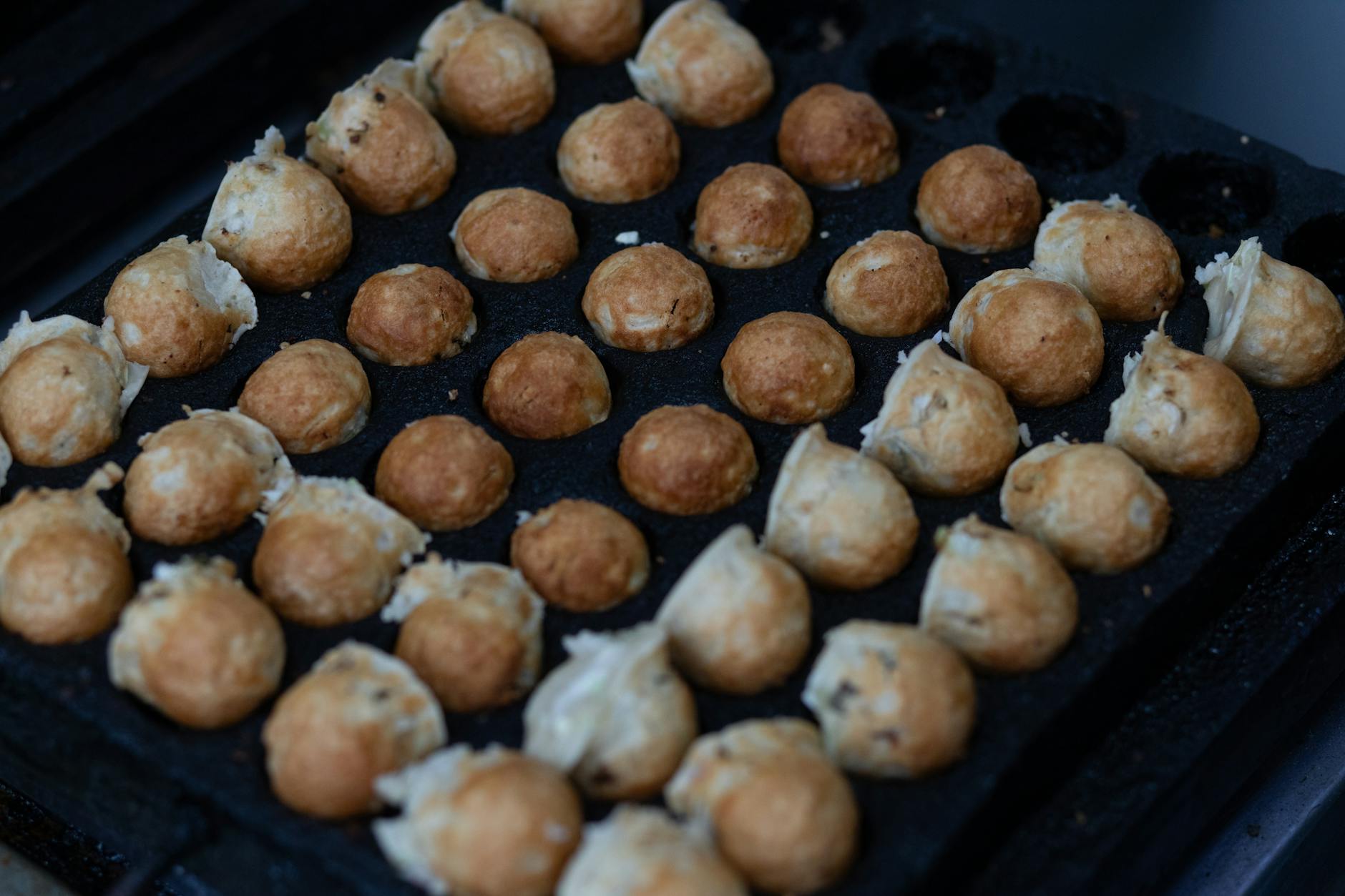
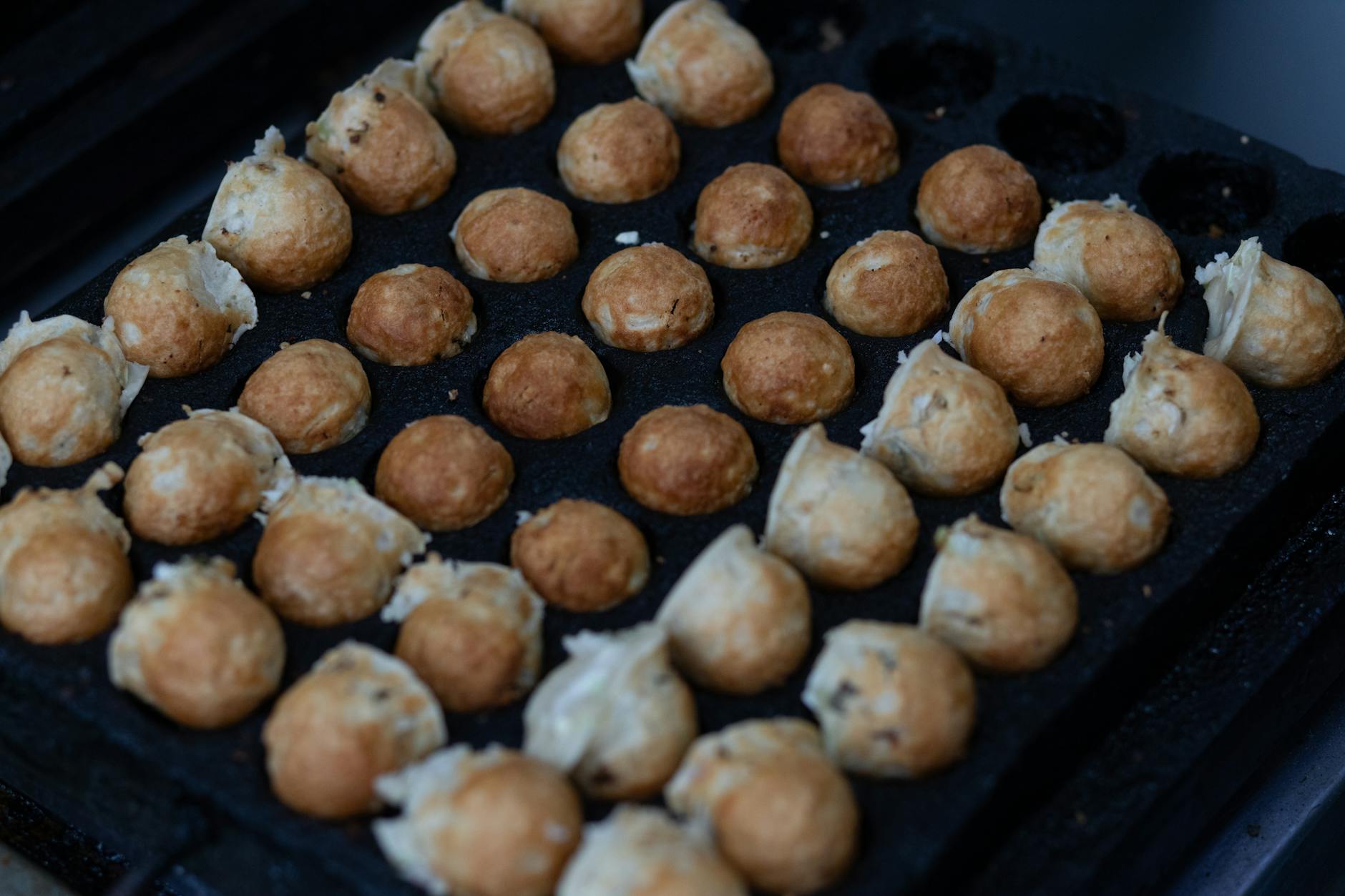
Takoyaki is the one nearly every visitor eats, and the one the city is most identified with. A wheat-flour batter goes into a moulded cast-iron pan, each ball stuffed with a chunk of boiled octopus (tako), pickled red ginger (beni shoga), green onion, and tempura scraps (tenkasu). The cook keeps turning each ball with a pick until the shell crisps up and the inside stays molten. Nailing that contrast is the whole game.
Standard toppings: a sweet-savoury takoyaki sauce close to Worcestershire, Japanese mayo, bonito flakes that flutter in the heat, and powdered green seaweed (aonori). Six to eight balls run ¥500 to ¥700 from a street stall.
Where to eat it: Wanaka (Namba) has a devoted local following. Kukuru (Dotonbori) does a richer, more generously filled version. Aizuya (Tamade, on the Nankai line) is often called the original takoyaki shop, going since 1933. Our best takoyaki in Osaka guide ranks the rest.
Okonomiyaki
Okonomiyaki roughly translates as “grill whatever you like,” and that freedom is the point. The Osaka (Kansai) style mixes everything, the shredded cabbage, batter, egg, and your chosen proteins, together before it hits the flat teppan. Hiroshima-style layers the ingredients instead; Osaka folds them.
Common add-ins are pork belly (buta), shrimp (ebi), squid (ika), mixed seafood, cheese, and mochi. The finished pancake gets painted with thick sweet sauce, crisscrossed with mayo, and topped with bonito and aonori. Plenty of places hand you the griddle and let you cook your own, which is half the fun. A basic one runs ¥700 to ¥1,200; the mixed-seafood deluxe lands around ¥1,200 to ¥1,500.
Where to eat it: Mizuno (Dotonbori) has been at it since 1945 and draws long lines. Kiji (Umeda Sky Building basement) is a no-frills counter the locals swear by. Chibo (multiple locations) is a reliable chain with English menus. For more, see our okonomiyaki in Osaka guide.
Kushikatsu
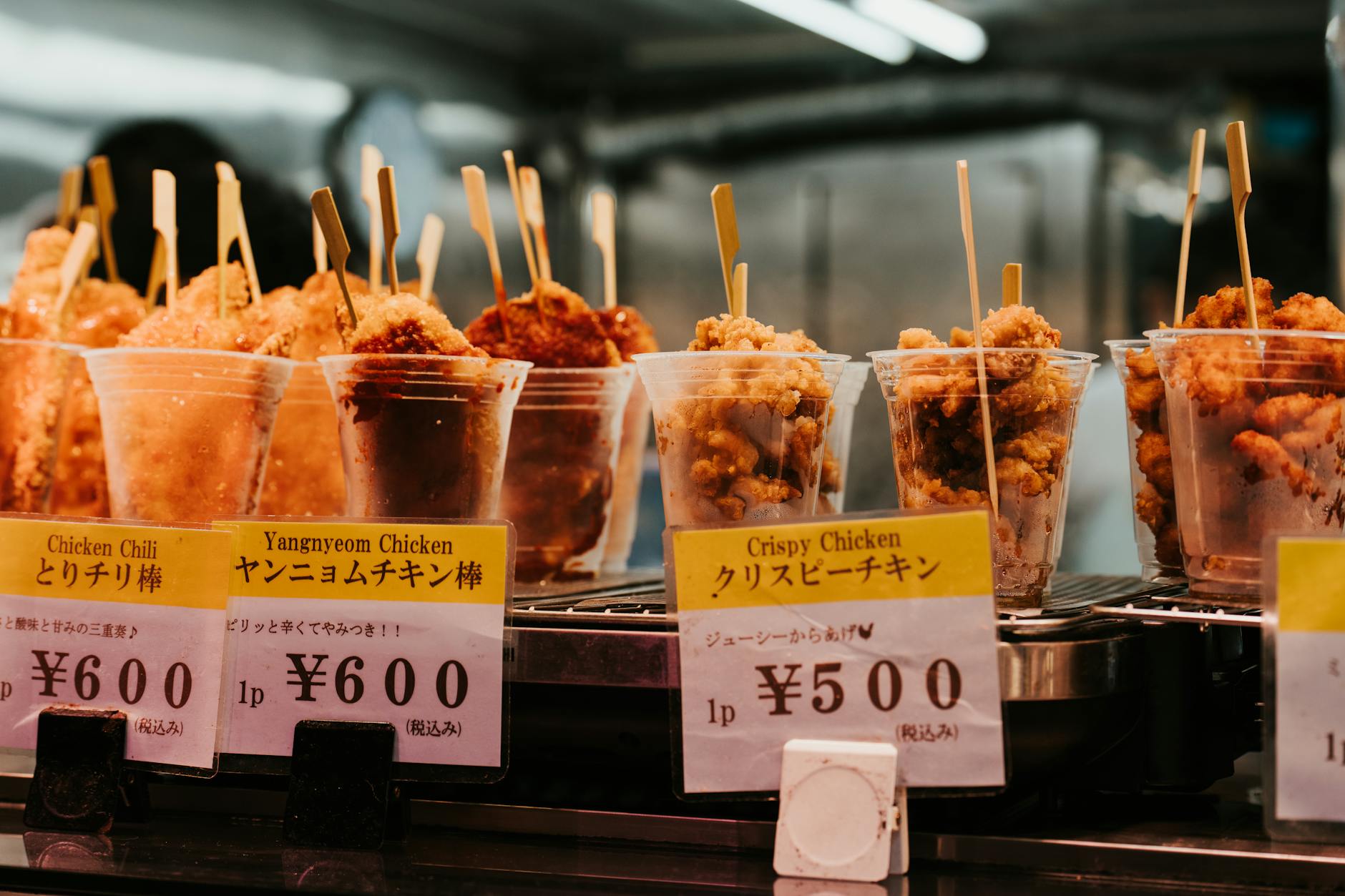
Kushikatsu (also kushiage) is Osaka’s take on deep-frying done right. Pieces of meat, seafood, and vegetables go on bamboo skewers, get a light panko coat, and fry until golden. The result is shockingly light, nothing like heavy Western frying, with a delicate crunch over the natural flavour of each piece.
Shinsekai is the home turf, where the dish took off in the 1920s and ’30s. The one rule, posted in every shop, is nido-zuke kinshi: no double-dipping in the shared sauce. Need more sauce? Use the cabbage leaves to scoop it. Skewers run ¥100 to ¥300 each, and most people put away 10 to 15 for a meal of ¥1,500 to ¥3,000.
Where to eat it: Daruma (Shinsekai, several branches) is the famous one, marked by its angry-faced mascot. Yaekatsu (Shinsekai) is smaller and more traditional, a local pick. Our kushikatsu guide covers the etiquette and the best counters.
Kitsune Udon
Osaka’s udon is a lesson in restraint. Kitsune udon means thick, chewy wheat noodles in a light, clear dashi broth, crowned with a big slab of sweet fried tofu (aburaage). The name kitsune means “fox” — folklore says foxes love fried tofu.
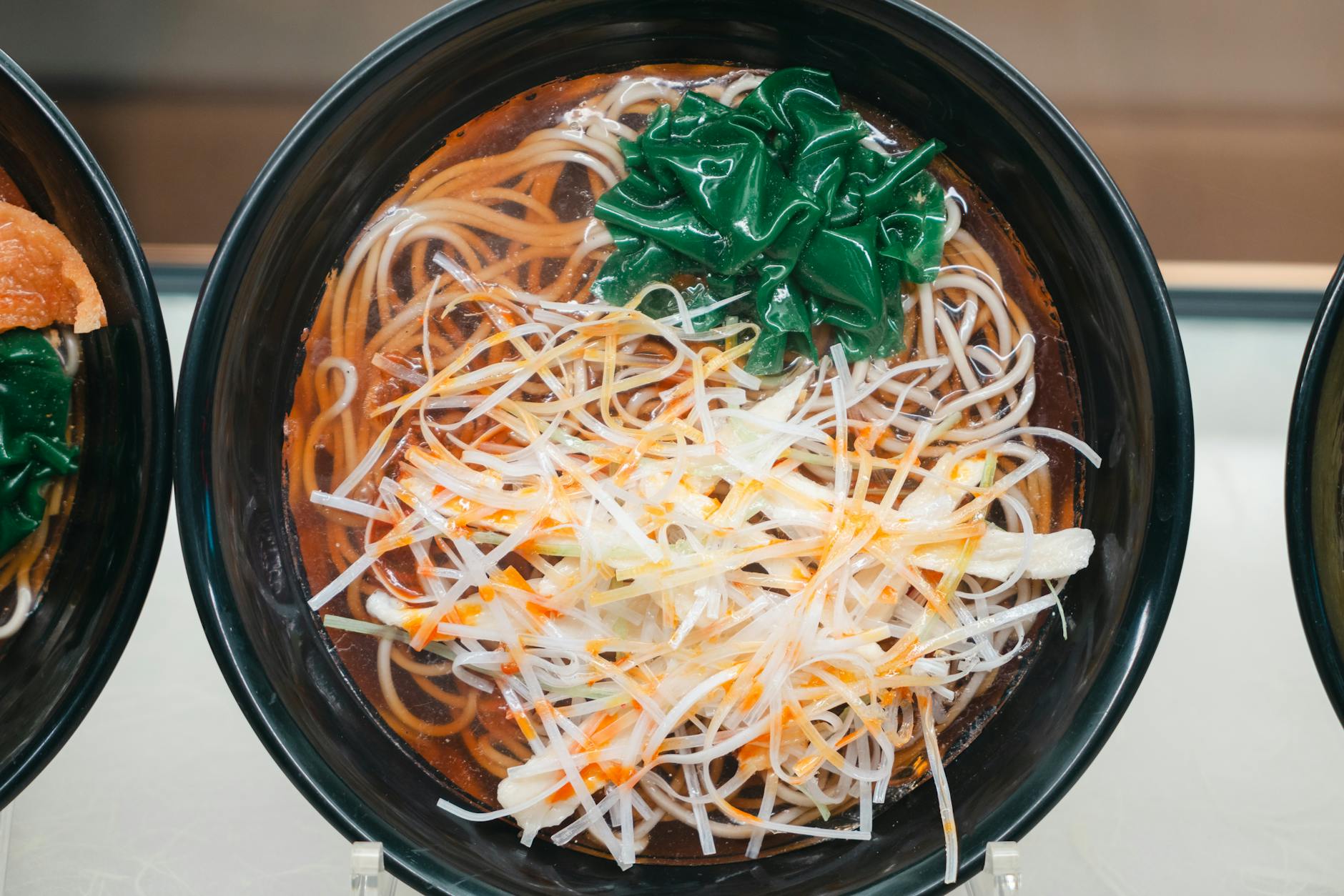
What sets the Osaka version apart is that broth: lighter and more delicate than the dark, soy-heavy soups of eastern Japan. The dashi leans on kelp (kombu) and dried bonito, which gives a subtly sweet, umami-rich base that lets the tofu and noodles do the talking. A bowl usually runs ¥500 to ¥800.
Where to eat it: Usami-tei Matsubaya (Minami-semba) has served kitsune udon since 1893 and claims to have invented it. Imai (Dotonbori) is another old institution, famous for handmade noodles and a refined broth.
Hakozushi (Box Sushi)
Tokyo’s nigiri gets the global spotlight, but Osaka has its own centuries-old sushi. Hakozushi (oshizushi) is pressed sushi: vinegared rice and toppings layered in a rectangular wooden mould (oshibako), then compressed into clean, geometric blocks. The technique dates to the Edo period, when pressing and marinating preserved fish before refrigeration existed.
Toppings tend toward mackerel (saba), conger eel (anago), shrimp, and pickled bits. The look is the draw: neat patterns of colour arranged with near-mathematical precision. An assorted set runs roughly ¥1,500 to ¥3,000. For the full range from conveyor belt to omakase, see our best sushi in Osaka guide.
Past the Big Five
Osaka’s range runs well beyond its five famous dishes. Here’s what else to chase down.
Ramen. Every regional style is represented here. The local lean is a rich pork tonkotsu with firm noodles, but you’ll find excellent shoyu, shio, and miso bowls too. Reckon on ¥800 to ¥1,200. Kamukura (Dotonbori) does a light-yet-rich broth; Ippudo (multiple spots) handles reliable Hakata-style tonkotsu. Our best ramen in Osaka guide ranks 15 shops by style.
Yakiniku. Osaka is one of Japan’s top cities for Japanese BBQ, with a heavy concentration around Tsuruhashi, the city’s Koreatown. Premium wagyu gets grilled tableside over charcoal, and the value beats Tokyo handily. All-you-can-eat sets start around ¥2,500 to ¥4,000 a head.
Tecchiri and fugu. Osaka eats roughly 60 percent of Japan’s fugu (pufferfish). Tecchiri is a hot pot of fugu in a light kombu broth; tessa is fugu sashimi sliced paper-thin and fanned out like flower petals. A full course at a reputable place runs ¥8,000 to ¥20,000 per person. Shinsekai and Dotonbori have plenty of fugu restaurants, and January through March is peak season.
Negiyaki. A thinner, chewier cousin of okonomiyaki loaded with green onions (negi). Less known to tourists, deeply loved by locals. Try it at Negiyaki Yamamoto (Juso), the shop that popularised it.
Butaman. Fluffy steamed buns filled with seasoned pork, a great grab-and-go. The famous name is 551 Horai, an Osaka fixture since 1945 whose butaman doubles as an unofficial city souvenir. Main shop’s in Namba, with branches around town and at the airport.
Where to Eat: The Districts
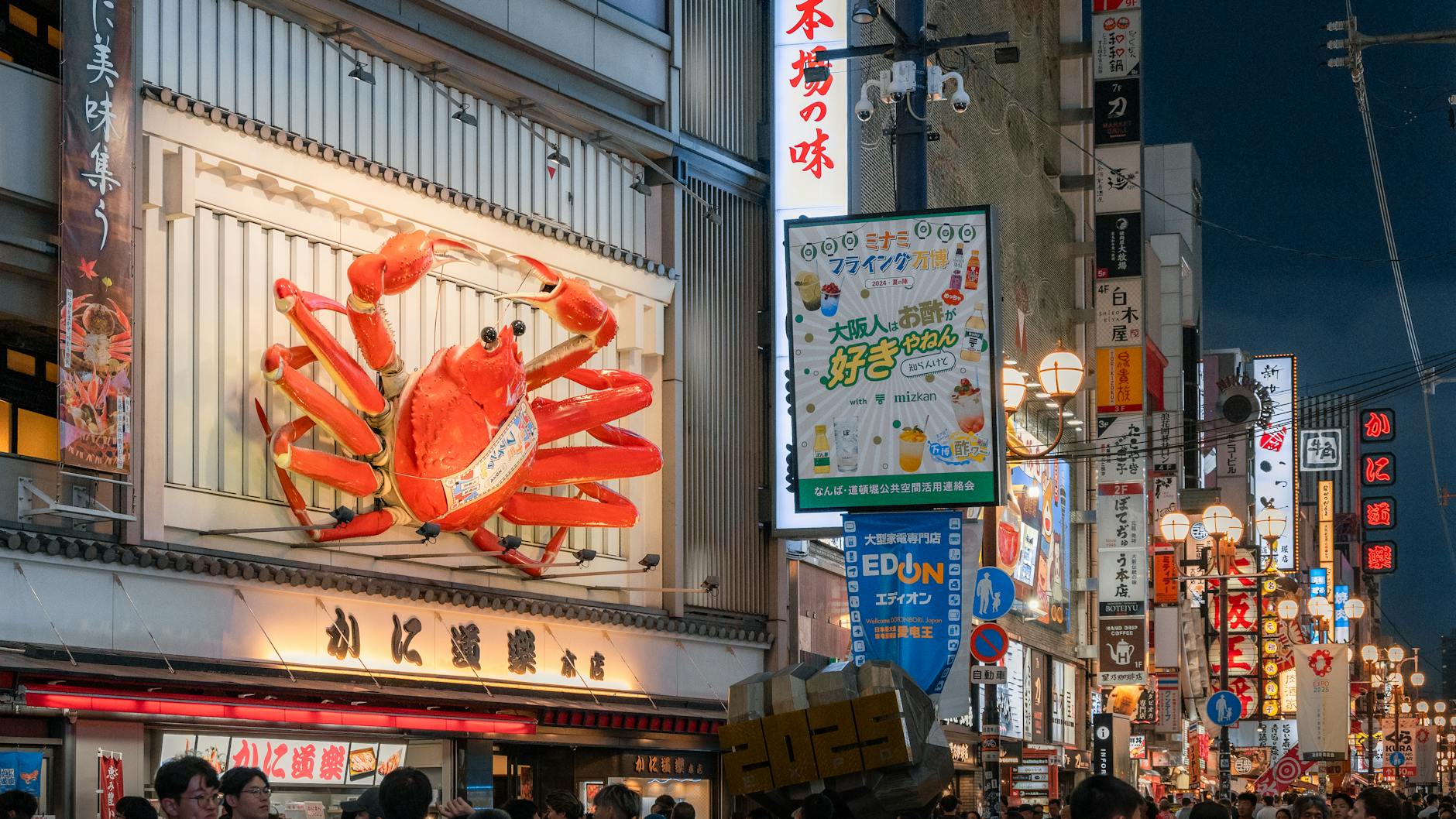
Knowing where to eat matters as much as knowing what. Each neighbourhood has its own appetite.
Dotonbori and Namba
The epicentre of Osaka street food. The 600-metre canal strip is wall-to-wall takoyaki stands, okonomiyaki rooms, ramen shops, and every other kind of Japanese dining. Yes, it’s touristy — but the food at the established names (Kukuru, Mizuno, Kani Doraku) stays genuinely good, because local reputation carries real weight here. For fewer elbows and food that’s just as good, slip into the side streets behind the main strip.
Shinsekai
Kushikatsu country. The retro district around Tsutenkaku Tower is packed with deep-frying joints, plenty open since the 1920s. The mood is rowdy, welcoming, and unpretentious, which is exactly how Osaka food culture is meant to feel. Beyond the skewers, Shinsekai is great for cheap izakaya and standing bars.
Kuromon Market
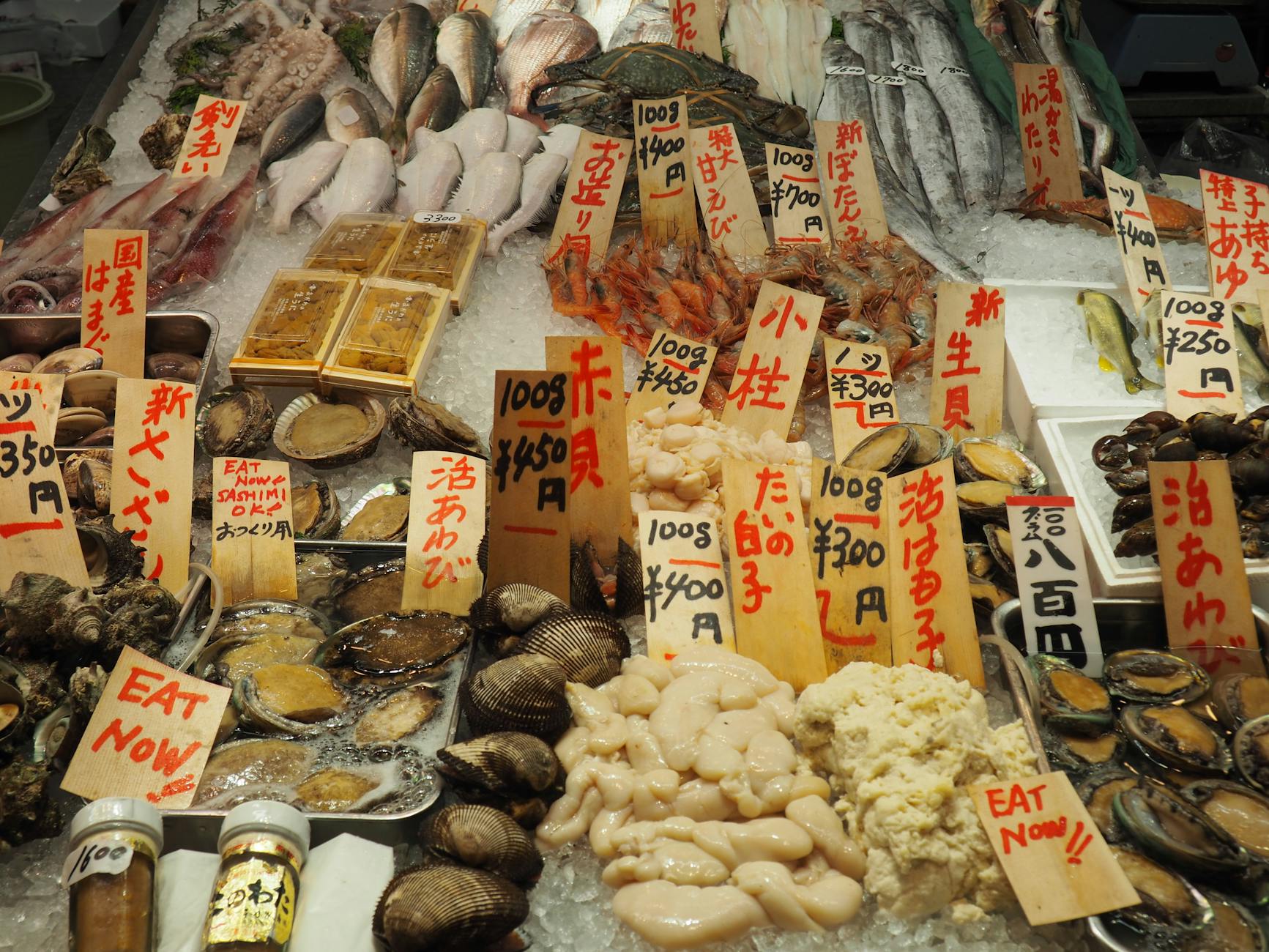
“Osaka’s kitchen,” a 600-metre covered market near Nippombashi running since 1902. More than 170 vendors sell fresh seafood (giant grilled scallops, sea urchin on the shell, sashimi platters) alongside seasonal fruit, wagyu skewers, sweets, and prepared food. It’s grown more tourist-oriented lately, but the quality holds, and it’s one of the best places to eat premium seafood for a fraction of restaurant prices. Get there before 10 a.m. for the freshest pick and thinner crowds. Most stalls run roughly 9 a.m. to 5 p.m. and close some Wednesdays and over New Year. Our Kuromon Market guide breaks down what to eat and buy.
Ura-Namba
The back streets behind Namba Station have become one of the city’s most exciting places to eat. Narrow alleys hold small izakayas, standing bars, natural wine shops, and inventive small-plate spots. The crowd is mostly local, prices are fair, and the mood is warm. This is where Osaka’s food-obsessed go on a weekday night.
Tsuruhashi (Koreatown)
Japan’s largest Koreatown hits you with grilling meat, bubbling stews, and spice. Tsuruhashi is the yakiniku move in Osaka, with dozens of restaurants offering premium cuts at prices that are hard to beat anywhere in the country. The covered market also sells Korean groceries, kimchi, and street snacks.
Kitashinchi
The upscale district, a tight grid of streets between Umeda and the Dojima River. Here you’ll find the city’s Michelin-starred kaiseki rooms, high-end sushi counters, and serious cocktail bars. It’s a different Osaka: hushed, elegant, focused on getting every detail right. Dinner at the top places starts around ¥15,000 to ¥30,000 a head.
Tenjinbashi-suji
Japan’s longest shopping street, 2.6 km, lined with small family-run restaurants, traditional sweet shops, and old-school izakayas. More local and less touristy than Dotonbori, with lower prices. A great stretch for a casual evening of eating and drinking.
Markets and Food Halls
Department Store Depachika
The basement food floors of Japanese department stores (depachika) are a genuine pleasure. Immaculate displays of sushi, tempura, bento, wagashi sweets, cheese, wine, and imported delicacies fill vast halls that feel part museum, part market. The presentation is extraordinary, and many counters hand out free samples.
The major Osaka depachika sit under Hanshin (Umeda, famous for its takoyaki food court), Daimaru (Shinsaibashi and Umeda), Takashimaya (Namba), and Hankyu (Umeda). A budget tip: roll in around 7 to 7:30 p.m. when the discount stickers (waribiki) go on, and walk out with premium sushi, sashimi, and bento at 20 to 50 percent off.
Kuromon Market, again
See the section above for the full picture. One thing to add: watch for seasonal specialties, like strawberries and citrus in winter, stone fruit in summer, persimmons in autumn. The market is at its best early, when chefs from local restaurants come to buy the day’s supplies. Kuromon is not the only one worth a morning: the monthly Shitennoji temple flea market and the kitchenware stalls of Doguya-suji are covered in our roundup of Osaka’s markets.
The Michelin Scene
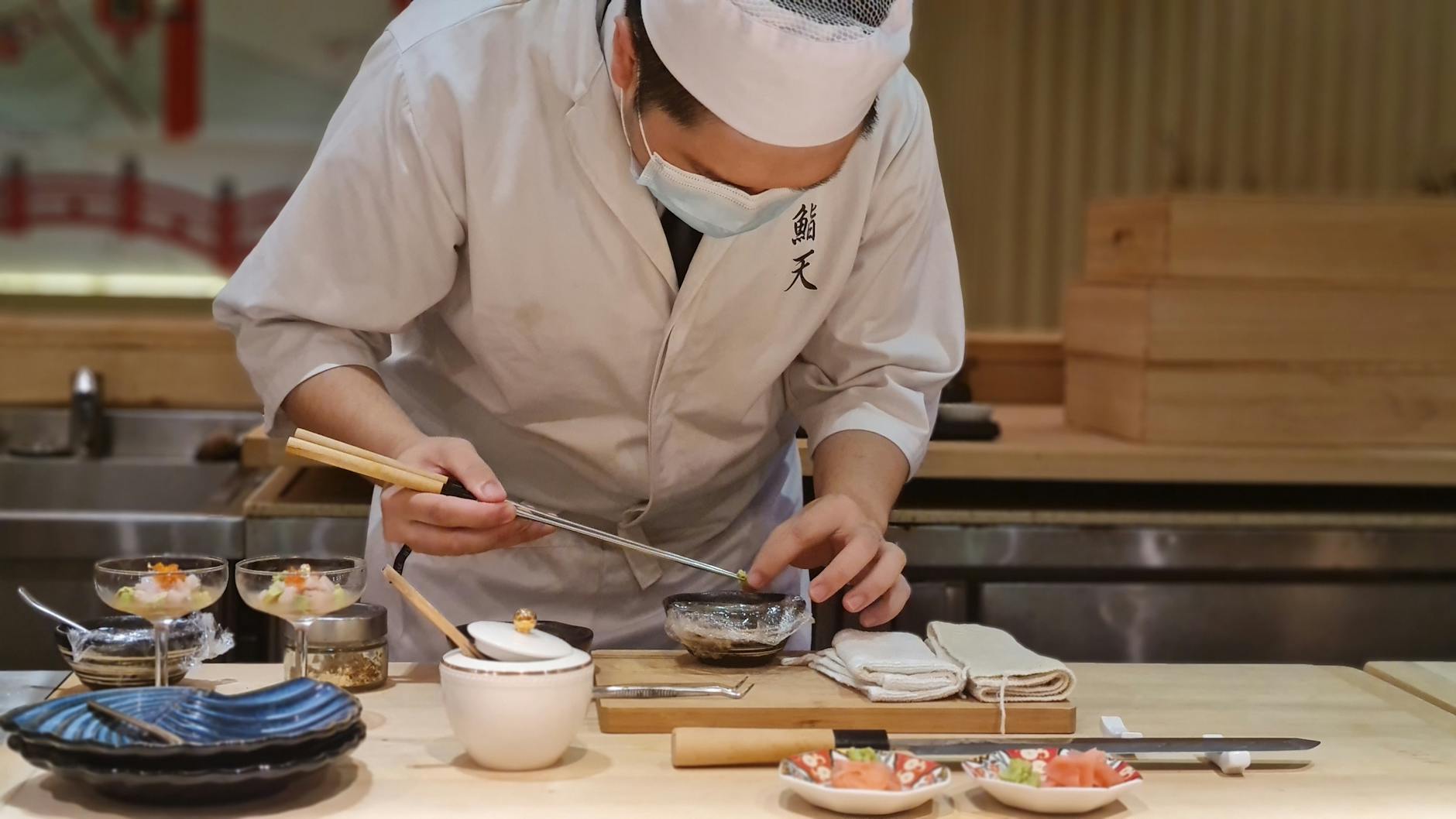
Osaka holds over 100 Michelin stars across the 2025 MICHELIN Guide Kyoto Osaka selection, which puts it among Asia’s most important fine-dining cities. Its kaiseki tradition — multi-course seasonal haute cuisine — ranks with the finest anywhere.
Three-star standouts: Koryu (Umeda) does intimate, counter-only kaiseki with just 15 seats. Kashiwaya (Senri) serves traditional kaiseki in a serene house with garden views.
Two-star picks: Yugen is reservation-only kaiseki. Sakurae builds gorgeous seasonal compositions.
The accessible way in: several one-star restaurants offer lunch courses in the ¥5,000 to ¥10,000 range, far gentler than their dinner prices. It’s one of the best ways to taste Michelin-level cooking in Osaka without committing to a full evening kaiseki. The starred map also covers sushi counters and tempura specialists, proof of the city’s belief that extraordinary food can land at any price.
Etiquette and Dining Tips
A few customs will sharpen your meals and show respect for the food and the people making it.
No tipping. It isn’t done in Japan and can cause real confusion. The menu price is the price you pay. Great service is the baseline, not an upsell.
Say the phrases. Before eating, it’s customary to say itadakimasu (“I humbly receive”) with a small bow. After, say gochisousama deshita (“that was a feast”). Both show appreciation for the meal and the work behind it.
Chopsticks. Never stand them upright in a bowl of rice (it mirrors a funeral offering). Don’t pass food chopstick to chopstick. Taking from a shared plate? Flip your chopsticks and use the clean ends.
Slurp. Slurping ramen, udon, and soba isn’t rude. It’s expected. It aerates the noodles and lifts the flavour. Eating in silence is the odd move in a noodle shop.
Carry cash. Many small restaurants, street stalls, and izakayas take cash only. Keep ¥5,000 to ¥10,000 on you when eating out, especially around Dotonbori, Shinsekai, and the markets.
Allergies and diets. Japan labels seven major allergens (including wheat, egg, shrimp, and crab), but communication at smaller places can be tricky. Print or save allergy cards in Japanese before you go. Vegetarian and vegan options have improved a lot, especially around Shinsaibashi and Amerikamura, but many dishes use dashi (fish stock) as a base, so always ask.
Drinking: Coffee, Cafes, and Izakaya
Osaka eats hard, but it drinks well too, and that runs from morning coffee to last call.
Coffee and kissaten. The city has a serious specialty-coffee scene alongside its old kissaten, the retro coffee houses that have poured hand-drip since the Showa era. The kissaten do thick siphon-brewed coffee, fluffy “thick-cut” toast, and a slow, smoky atmosphere; the new-wave roasters do single-origin pour-overs and flat whites. Nakazakicho and the streets around Shinsaibashi are thick with both. Our Osaka cafes and coffee guide sorts the standouts.
Izakaya. The izakaya, Japan’s answer to the gastropub, is where Osaka actually socialises. You order in rounds: edamame, grilled skewers (yakitori), sashimi, fried bits, and whatever’s chalked on the wall, washed down with beer, sake, or highballs. Prices stay reasonable, the food keeps coming, and the mood loosens fast. Ura-Namba and Tenjinbashi-suji are the best hunting grounds. For specific recommendations, see our best izakaya in Osaka guide.
Sake and beyond. The wider Kansai region around Osaka and Kobe is one of Japan’s great sake-brewing belts, and plenty of izakaya keep a deep local list. Ask the staff for something regional and dry, or order a tasting flight if it’s on offer. Highballs (whisky and soda) are the everyday pour, cheap and refreshing, and they cut through fried food better than anything.
Eating Well on Any Budget
One of the city’s best traits is that brilliant food turns up at every price point.
Under ¥500: takoyaki from street vendors (¥400 to ¥600 for 6 to 8), onigiri from convenience stores (¥120 to ¥200 each), and conveyor-belt sushi plates from ¥110 to ¥200.
¥500 to ¥1,000: a solid bowl of ramen (¥800 to ¥1,000), kitsune udon at a local shop (¥500 to ¥800), a basic okonomiyaki (¥700 to ¥1,000), and bento from a konbini or depachika (¥500 to ¥800).
¥1,000 to ¥3,000: a full kushikatsu meal in Shinsekai (¥1,500 to ¥3,000), yakiniku lunch sets (¥1,200 to ¥2,500), and quality sushi lunch sets (¥1,500 to ¥3,000).
¥3,000 to ¥10,000: Michelin lunch courses (¥5,000 to ¥10,000), a premium fugu dinner (¥8,000-plus), and high-end omakase (¥8,000 to ¥15,000).
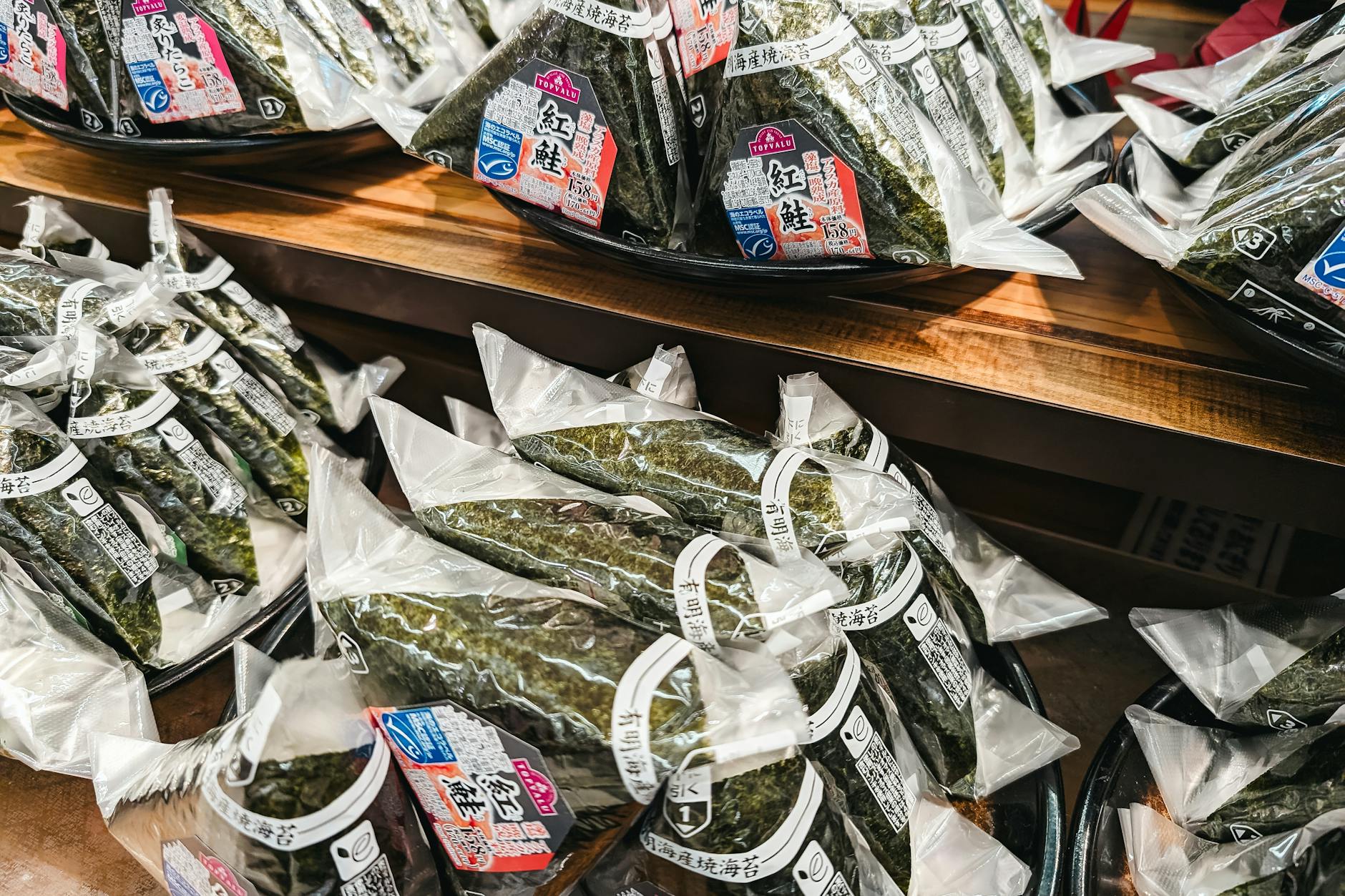
The real budget hack: konbini in Japan are nothing like the Western version. 7-Eleven, Lawson, and FamilyMart sell onigiri, sandwiches, pasta, fried chicken (karaage), and seasonal items good enough to count as actual meals, for a fraction of restaurant prices.
Planning Your Eating
With this much on the table, a little structure helps you make the most of every meal.
A 3-day food plan: Day 1, work Dotonbori and Namba for takoyaki, okonomiyaki, and ramen, then an evening izakaya. Day 2, Shinsekai for a kushikatsu lunch, Kuromon Market for afternoon seafood, Ura-Namba after dark. Day 3, a depachika breakfast of pastries and coffee, then a food tour or cooking class, capped with a splurge dinner.
Food tours. A guided tour is a smart investment, especially on a first trip. They typically run three to four hours, cover five to eight stops, and cost ¥8,000 to ¥15,000 a head. The food aside, a good guide gives cultural context, handles the language, and walks you into places you’d never find alone. Our Osaka food tours guide covers the best operators.
Cooking classes. Learning to make the city’s signature dishes yourself is one of the most rewarding things you can do here. Hands-on classes for takoyaki, okonomiyaki, ramen, and sushi usually run two to three hours at ¥5,000 to ¥10,000, and many start with a market visit to source ingredients.
For the official line on restaurants and food, check the Osaka Convention and Tourism Bureau, and pair this with our things to do in Osaka guide so your eating and your sightseeing line up. Now go get hungry — the city’s kitchen has a lot more where this came from.
Explore the full Osaka Food Guide series
Hungry for specifics? These guides break down Osaka’s food scene dish by dish and street by street:
- Best Izakaya Osaka: Japanese Pub Guide for Food Lovers
- Best Ramen Osaka: Top 15 Ramen Shops by Style
- Best Sushi Osaka: Conveyor Belt to High-End Omakase
- Best Takoyaki in Osaka: Where to Find the Best Octopus Balls
- Kuromon Market Osaka Guide: What to Eat & Buy
- Kushikatsu Osaka: Ultimate Guide to Deep-Fried Skewers
- Okonomiyaki in Osaka: Best Restaurants & How to Order
- Osaka Cafes & Coffee Guide: Best Specialty Shops & Kissaten
- Osaka Food Tours: Best Guided Culinary Experiences
- Osaka Street Food: Best Markets, Stalls & What to Eat
Most of the Japanese you will actually use happens over a counter. Our Japanese phrases for Osaka guide runs through ordering, dietary needs and paying, in order.
At the other end of the price range, our Michelin Osaka guide covers the starred counters, what they cost, and why the city’s 59 Bib Gourmands are the more useful list.


