Tokyo gets the magazine covers, but Osaka has a fair claim of its own: conveyor-belt sushi was invented here, at Genroku in 1958. That tells you something about how the city eats. The best sushi in Osaka isn’t precious. It runs the whole range, from ¥110-a-plate chains where families pile up colored dishes, to seven-seat omakase counters where the chef hands you each piece and you’d better not be late for the reservation you booked two months ago.
This guide sorts the city’s sushi by budget, because that’s how you’ll actually choose. Cheap conveyor belt, mid-range neighbourhood shops, and the premium counters that hurt your wallet in a good way. Prices, locations, what to order, and when you need to book ahead. I’ve flagged the trade-offs too, because the most expensive option isn’t always the smart one for a first omakase.
Pick your tier fast
- Under ¥1,500 (conveyor belt): Kura Sushi at Namba Parks for the full modern circus; Genroku near Fuse Station if you want the place where the format was born.
- ¥3,000–¥8,000 (mid-range): Endo Sushi inside the Chuo wholesale market is the value play. Sushi Daimi and Tsurube for a proper sit-down counter.
- ¥15,000–¥35,000 (premium omakase): Hozenji Sushidokoro Nakatani (one Michelin star), Sushi Harasho in Kitashinchi, Sushi Atsushi.
- Your first omakase: skip the ¥25,000 counter and go to Endo’s market stall first. You’ll learn the rhythm at a fraction of the cost.
- Solo and short on time: the standing-counter shops in Namba and around Kuromon.
Tier 1: conveyor-belt sushi under ¥1,500
Kaiten-zushi (conveyor-belt sushi) started in Higashi-Osaka in 1958, when Genroku’s owner Yoshiaki Shiraishi borrowed the idea of a beer-bottling conveyor and pointed it at sushi. The logic still holds: speed, low prices, and a bit of theatre. Plates drift past on a slow belt, you grab what looks good, and the colour of the dish sets the price. Modern chains layered touch-screens and prize lotteries on top, but the bones are the same.

Genroku Sushi — the original
This is the shop where the whole format began, near Fuse Station in Higashi-Osaka, well outside the tourist core. Plates run ¥110 to ¥440. The fish is fine, not transcendent. You’re really going for the pilgrimage, and on that level it delivers. If your day is tight, you can skip it without guilt and hit a city-centre chain instead.
Kura Sushi, Namba Parks — the modern flagship
Kura’s global flagship sits in Namba Parks, and it leans hard into the gimmicks: a double-belt system with a made-to-order express lane, touch-screen ordering, and the “bikkura-pon” lottery that drops a capsule toy every five plates you finish. Plates are ¥110 to ¥330. It’s a hit with kids and anyone who wants the experience as much as the meal. Go at an odd hour; the queue at peak is long.
Sushiro and Hama-Sushi — the reliable chains
Sushiro is the workhorse: ¥110 plates, English touch-screens, branches in Umeda and Namba, and zero friction for a first-timer. Hama-Sushi sits a notch up at ¥130 to ¥390, with a stronger neta (the fish topping) for the money. Neither will blow your mind. Both will feed two people well for under ¥2,500.
Nigiri Chojiro — high-end belt
Chojiro is the in-between move: conveyor-belt convenience, better fish, premium prices. Plates run ¥300 to ¥700, and a satisfying meal lands around ¥4,000 to ¥5,000. If you want the kaiten format without the chain-restaurant fish, this is where to spend.
Tier 2: neighbourhood sushi, ¥3,000–¥8,000
Endo Sushi — a century inside the market
Endo has been going since 1923, and its original spot is a working stall inside Osaka’s Chuo Wholesale Market. Six seats. You sit, you order an omakase set, and the chef builds it from fish auctioned that same morning a few metres away. The market location is lunch only, roughly 5:00 to 13:00, so it’s an early start. There’s a more forgiving second branch at Keihan Mall in Kyobashi that runs 11:00 to 22:00.
- Sets: around ¥1,500 small, ¥2,500 medium, ¥3,500 large.
- Order: the seasonal omakase set. Don’t overthink it.
- Why it matters: market-fresh fish at neighbourhood prices is rare. This is the best-value serious sushi in the city.

Sushi Daimi and Tsurube
Sushi Daimi is a mid-range specialist with both counter and table seating; lunch sets run ¥3,000 to ¥5,000 and a mid-range omakase climbs to ¥6,000–¥8,000. Tsurube sits near Hozenji Yokocho and feels more local, with a traditional counter and a chef who’ll work an English menu if you ask. Dinner courses there land around ¥4,000 to ¥7,000. Either one gives you the real sushi-ya feel without the omakase price shock.
Standing-counter sushi (tachi-zushi)
Stand-and-eat shops cluster in Namba Sennichimae and up in Tenma. You order four to eight pieces, eat them in fifteen minutes standing at the counter, and walk out for ¥1,500 to ¥3,000. It’s the most efficient way to eat good sushi solo, and the turnover means the fish moves fast. Perfect for a quick lunch between sights.
Tier 3: premium omakase, ¥15,000–¥35,000
At this level you’re paying for a chef’s full attention across twelve to twenty pieces, built over about ninety minutes and sequenced deliberately. Book early and treat the reservation as a real commitment.

Hozenji Sushidokoro Nakatani — one Michelin star
Seven seats near Hozenji, one star, and a fully personalised omakase the chef tunes to what you like as the meal goes. Reservations run one to two months ahead through TableCheck. Plan on ¥18,000 to ¥25,000 a head. This is the splurge most people remember.
Sushi Harasho and Sushi Atsushi
Harasho is top-tier omakase in Kitashinchi, reservation only, around ¥25,000 per person. Atsushi is a newer name on the premium scene at roughly ¥20,000, and it’s worth knowing for one detail: the chef sources from both Tokyo’s market and Osaka’s Chuo Wholesale Market, so you taste a wider range of fish than a single-market shop can offer.
What to order
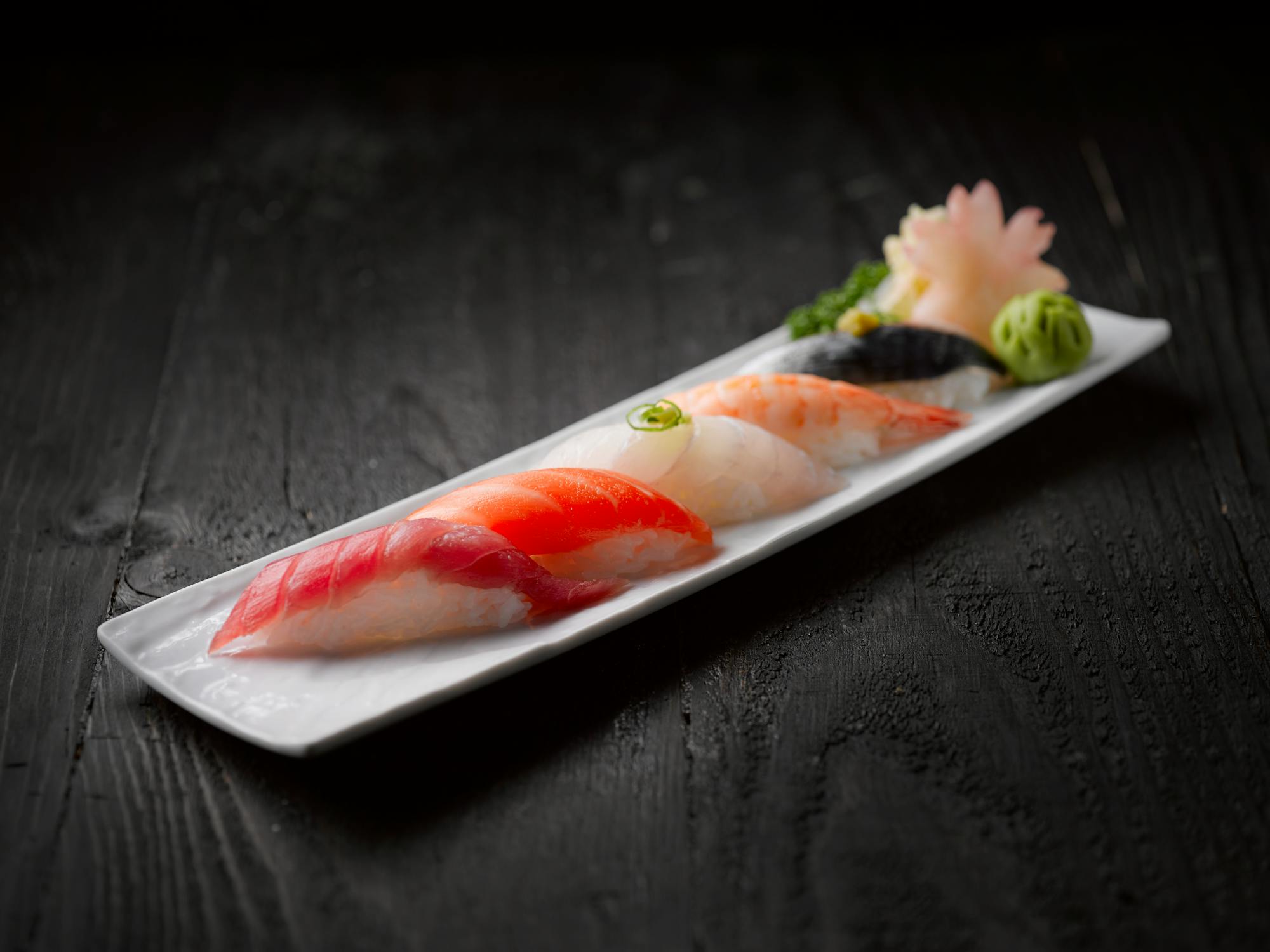
If you freeze at the touch-screen or in front of the chef, this is a safe run. Tuna is the headliner: akami is the lean cut, chutoro the medium-fatty, otoro the rich belly. Salmon (sake) is the easy Western entry point. From there:
- Hamachi (yellowtail) — buttery, rich, hard to dislike.
- Uni (sea urchin) — creamy and briny, the premium splurge.
- Ikura (salmon roe) — little orange beads that pop.
- Hotate (scallop) — sweet and soft.
- Ebi (shrimp) — cooked, or raw as ama-ebi.
- Anago (sea eel) — soft, glazed with a sweet sauce.
- Tamago (sweet egg) — order it as a test; the egg tells you how much care the shop takes.
- Toro-taku roll — fatty tuna and pickled radish, a Tokyo classic the premium Osaka shops do well.
Etiquette that actually matters
None of this is a test you can fail, but a few habits mark you as someone who’s done this before. Eat nigiri in one bite, the way the chef built it. Dip the fish side into the soy, not the rice, and go light. At a premium counter, don’t stir wasabi into your soy dish; the chef has likely already tucked wasabi between rice and fish, and mixing it in reads as amateur hour.
- Hands or chopsticks both work for nigiri. Use chopsticks for sashimi.
- Work from light to rich: whitefish first, fatty toro later. A good omakase already runs this order, so just follow the chef’s lead.
- Gari (pickled ginger) cleans your palate between pieces. It is not a topping.
- A simple “oishii desu” or “umai” to the chef goes a long way.
- Don’t tip. It isn’t done, and it can cause confusion.
How a conveyor-belt shop works
First time at a kaiten place, the system can look opaque. It’s simple once you’re in.
- Take a numbered ticket from the machine at the door and wait to be called. Solo diners get seated faster.
- Find your seat at the belt. Hot-water tap, soy sauce, ginger, and napkins are already on the counter.
- Grab plates off the belt as they pass, or punch in made-to-order pieces on the touch-screen and they’ll come straight to you.
- Stack your empties. The plate colours add up to the bill.
- Hit the “check” button. Staff count your stack and bring the total.
- Pay at the front register on the way out.
What it costs in 2026
- Conveyor belt: ¥110–¥440 a plate; ¥1,000–¥2,500 for a full meal.
- Mid-range neighbourhood: ¥3,000–¥8,000 for a lunch course.
- Premium omakase: ¥15,000–¥35,000 for dinner.
- Endo Sushi: ¥1,500–¥3,500 for the set, which is why it keeps coming up.
How to spot a good sushi shop on your own
You won’t always have a guide, and the difference between a forgettable lunch and a great one often comes down to reading the room. A few signals do most of the work. Look at who’s eating there at noon on a weekday — if it’s local office workers rather than only tourists with cameras, that’s a good sign. Watch whether the rice is shaped to order or pre-pressed and sitting out; a shop that forms each piece when you order it cares about the temperature contrast between warm rice and cool fish.
- Check the tamago. The sweet egg is the cheapest thing on the menu and the hardest to fake. A shop that makes its own properly is telling you something.
- Short menus beat long ones. A counter listing twelve seasonal fish usually buys fresher than one offering eighty items year-round.
- Smell the air. A good fish counter smells of clean sea, not of fish. If it smells off, walk.
- Look for a posted day’s catch. Handwritten seasonal specials mean the chef is buying to the market, not to a freezer.
Beyond nigiri: Osaka’s own pressed sushi
Nigiri is the Tokyo idiom. Osaka’s older sushi traditions are pressed, and they’re worth seeking out because they’re harder to find back home. Battera is mackerel pressed over vinegared rice in a wooden box and sliced into neat rectangles, sharp and a little oily in the best way. Kakinoha-zushi wraps the rice and fish in a persimmon leaf, a preservation trick from the days before refrigeration that also lends a faint leafy scent. Both turn up at department-store food halls (the famous depachika basements) and at specialist shops, and a boxed set makes a good train snack on a day trip.
The point isn’t that pressed sushi beats nigiri. It’s that an Osaka sushi itinerary that only chases omakase counters misses the regional thing the city actually invented its reputation on. Grab a battera box once while you’re here.
Building a sushi day around your budget
You don’t have to pick one tier and live in it. A smart day mixes them. Start with an early omakase set at Endo’s market stall for the freshest fish and the lowest serious-sushi price in the city, spend the middle of the day on sightseeing, then close the night at a standing counter in Namba for a quick, cheap round of four or five pieces. That’s two genuinely good sushi experiences for well under the cost of one premium dinner.
If you’re saving the big spend for one blowout, book the Michelin counter for a night when you have nothing planned afterward — the omakase runs ninety minutes and you’ll want to walk it off slowly, not rush to a show. And keep a conveyor-belt chain in your back pocket for the nights you’re tired and just want twelve plates and a beer without thinking. There’s no shame in it; half of Osaka eats that way.
Reservations, timing, and dodging the queues
The premium counters are the ones that need real planning. For a Michelin omakase like Nakatani, book one to two months out through TableCheck or lean on your hotel concierge, who can often get a table when the English booking sites show nothing. Treat that reservation as fixed; these are tiny counters and a no-show genuinely hurts the shop. For the mid-range neighbourhood spots, a same-day call is usually enough, and a hotel front desk will happily make it for you if your Japanese isn’t up to a phone reservation.
The conveyor-belt chains take no reservations at all, so the lever you control is timing. Hit them at off hours — a late lunch around 14:00 or an early dinner before 18:00 — and you’ll walk straight to a seat instead of pulling a ticket and waiting forty minutes. Endo’s market stall is the special case: it’s lunch only and opens early, so the move is to go before the city wakes up, eat market-fresh fish at a six-seat counter, and be done before the crowds even reach the area.
Best sushi in Osaka: FAQ
What’s the most famous sushi restaurant in Osaka?
Depends what you mean by famous. Endo Sushi (1923) is the most historic. Hozenji Sushidokoro Nakatani is the most decorated, with its Michelin star. Kura Sushi at Namba Parks is the most photographed thanks to the touch-screens and the prize lottery.
Is conveyor-belt sushi really from Osaka?
It is. Genroku Sushi in Higashi-Osaka invented kaiten-zushi in 1958, and Genroku still operates today near Fuse Station.
How much does sushi cost in Osaka?
Roughly ¥1,000–¥2,500 at conveyor-belt chains, ¥3,000–¥8,000 at mid-range neighbourhood shops, and ¥15,000–¥35,000 at premium omakase counters.
Do I need a reservation?
Not for conveyor belt — those are walk-in. Mid-range shops usually take a same-day booking without trouble. Premium omakase needs one to three months’ notice, through TableCheck or your hotel concierge.
What’s the difference between Edomae and Osaka sushi?
Edomae, the Tokyo style, is built on pure raw nigiri with subtle aging and curing. Osaka leans on stronger rice seasoning and has its own pressed-sushi traditions like battera and kakinoha-zushi. Most modern Osaka counters blend the two, so the line is blurrier than the rivalry suggests.
Can I get sushi at Kuromon Market?
Yes. Several stalls do sashimi on a stick, and a couple of sit-down sushi spots line the market. For a real sushi-ya, walk five minutes into the surrounding streets where the small specialists cluster.
Plan the rest of your eating
Sushi is one anchor of an Osaka food trip, not the whole thing. Pair it with the broader Osaka food guide for the full map, then line up a bowl at one of the shops in our best ramen in Osaka roundup. If you want the market that supplies half these counters, our Kuromon Market guide tells you exactly what to eat and when to go.