
This article contains advertising. Our booking links are routed through a partner that adds commission tracking automatically, so if you book through one we earn a commission from the provider, at no extra cost to you. It never affects what we recommend. Affiliate disclosure
Kuromon Market — Kuromon Ichiba on the signs — is a 600-metre covered street in central Osaka where chefs, families, and tourists have shopped for fresh seafood, fruit, and prepared food for more than two hundred years. Around 150 stalls sit under one roof. Locals call it “Osaka’s Kitchen,” and the name does double duty: a working professional fish market before dawn, a street-food destination by late morning.
This is the most concentrated good eating in central Osaka, and it’s easy to do badly. Show up at the wrong hour, queue at the most tourist-facing stall, overpay for a melon slice, and you’ll wonder what the fuss is about. Done right, it’s an hour and a half of tuna, oysters, wagyu, and fruit that costs less than one mid-range restaurant. Here’s how to navigate it.
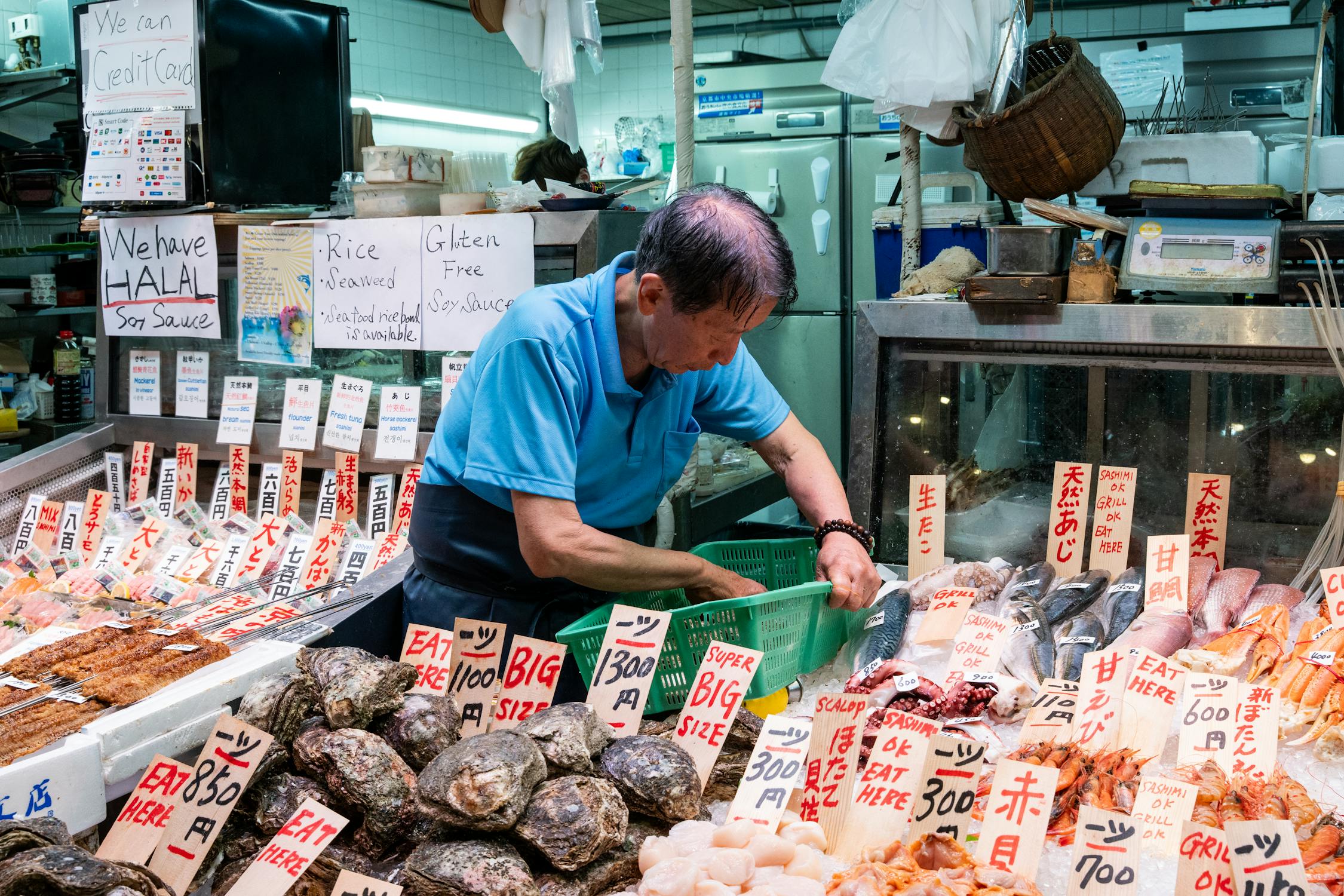
Kuromon Market at a glance
- Where: 2-4-1 Nipponbashi, Chuo-ku. Nearest station is Nipponbashi (Sakaisuji or Sennichimae lines), a three-minute walk.
- Size: 600 metres, roughly 150 stalls.
- Hours: most stalls 9:00–18:00. A few early fish dealers open at 5:00; some food stalls run to 21:00.
- Closed: many stalls shut Sundays and holidays. Always check before you build a day around it.
- Cost: free to enter. Budget ¥2,000–¥4,000 a head across four to six stalls.
- Time: 1.5 to 3 hours if you actually eat. Thirty minutes to walk straight through.
Why Kuromon is different from the usual tourist market
Most food markets that end up on travel lists drift toward the photo and away from the cooking. Kuromon manages both at once, and the reason is the clock. From 5:00 to 8:00 it’s still genuine wholesale, with Osaka restaurant chefs picking up sashimi, ikura, and live shellfish for the night’s service. Mid-morning, regular residents arrive to shop for dinner. By lunch the tourists fill in and the stalls switch to “buy and try” portions sized for eating on your feet.
That layering is what keeps the quality honest. The wholesale buyers in the morning won’t accept second-rate fish, and the same suppliers are selling to you by noon. You’re eating off the back of a professional supply chain, not a tourist one.
What to eat at Kuromon Market
Tuna sashimi at Entoki Maguro
Entoki Maguro has held its spot since 1927, and tuna is the whole point: akami, chutoro, and otoro sliced fresh and served on skewers or in small takeaway cups, roughly ¥500 to ¥1,500. It draws the longest line of the seafood stalls, which is exactly the signal you want. Get in it.
Oysters, shucked in front of you
Hiroshima Bay oysters, often pulled from that morning’s auction, get shucked at the counter with a squeeze of lemon for ¥300 to ¥500 each. The dedicated oyster bars near the east entrance do them best. If you only eat one raw thing here, make it these.
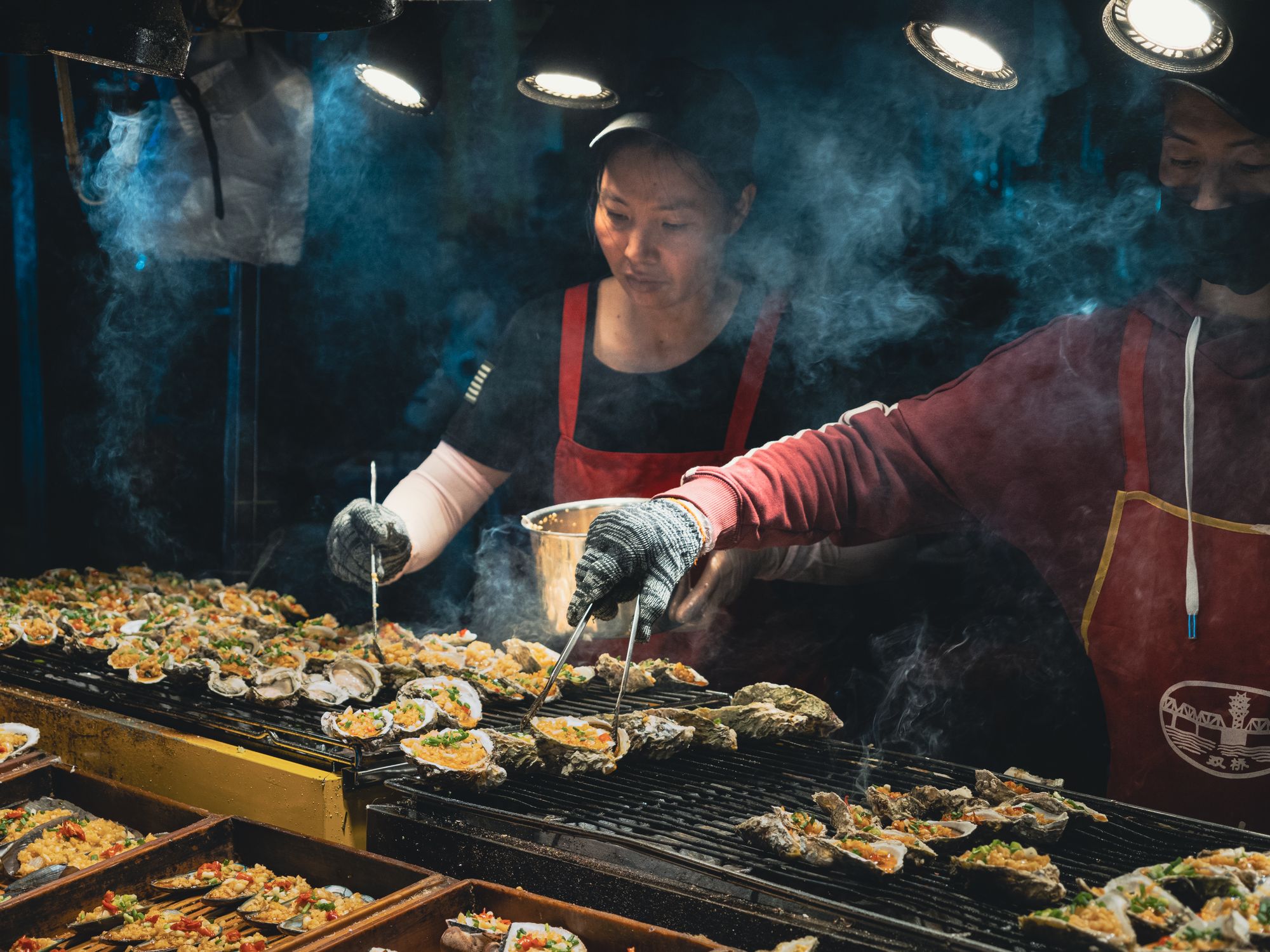
Wagyu and Kobe beef skewers
This is the cheat code for trying premium Japanese beef without booking a teppanyaki dinner. Wagyu skewers run ¥800 to ¥1,500; certified Kobe pushes to ¥3,500–¥4,500. The chef grills it in front of you at the premium stalls mid-market on the southern side. Watch it cook; that’s half of what you’re paying for.
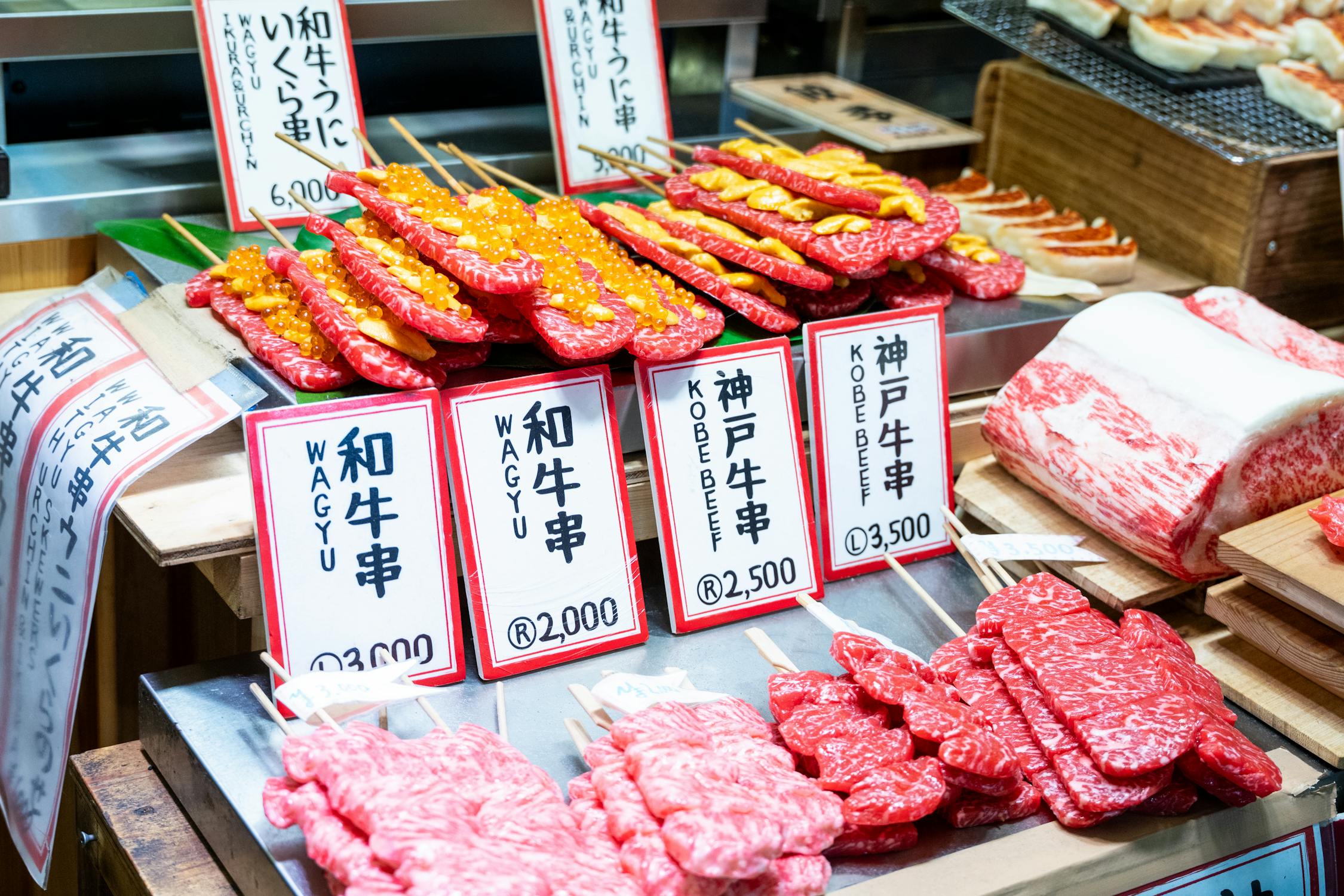
Tamagoyaki
The rolled-egg stalls here have been at it for fifty-plus years. The egg is layered, rolled, and handed over still warm in slices on a little wooden tray, ¥300 to ¥500. Sweet-savoury, simple, and a good palate reset between richer bites.
Uni and ikura over rice
Sea urchin and salmon roe piled over a small bed of sushi rice in a takeaway cup, ¥800 to ¥2,500 depending on grade. Eat it standing at the stall. The uni is the splurge; the ikura pops.
The seasonal stuff worth timing your visit around
- Snow crab legs — steamed and served whole on a stick, ¥1,000–¥2,500. Best November to February. Look for the live tanks in the central section.
- Fugu (pufferfish) — sashimi or simmered, October to March, prepared only by licensed chefs because the alternative is fatal. ¥1,500–¥3,500 for a small portion.
- Grilled scallops — in the shell with butter and soy, ¥500–¥800. The sizzle as the butter melts is most of the appeal.
- Yakiimo — roasted sweet potato wrapped in newspaper, ¥400–¥700, sweet enough for dessert. Autumn and winter.
Premium fruit (look, maybe buy)
Kuromon’s fruit specialists deal in the famous Japanese gift fruit: muskmelons, white peaches, premium strawberries, Kyoho grapes. A single melon slice is ¥1,000 to ¥2,000; a whole one can run ¥10,000 and up in peak season. The presentation is half the product. A slice is the sane way to taste what the fuss is about without taking out a loan.
Takoyaki, pickles, and the rest
Wanaka, the well-known takoyaki name, runs a Kuromon branch with the same crisp-outside, molten-inside formula as its Sennichimae original — ¥600 for eight. For something to carry off, the pickle stalls sell takuan, daikon, umeboshi, and beni-shoga for ¥300 to ¥800 a pack, which makes a decent souvenir or hotel-room snack.
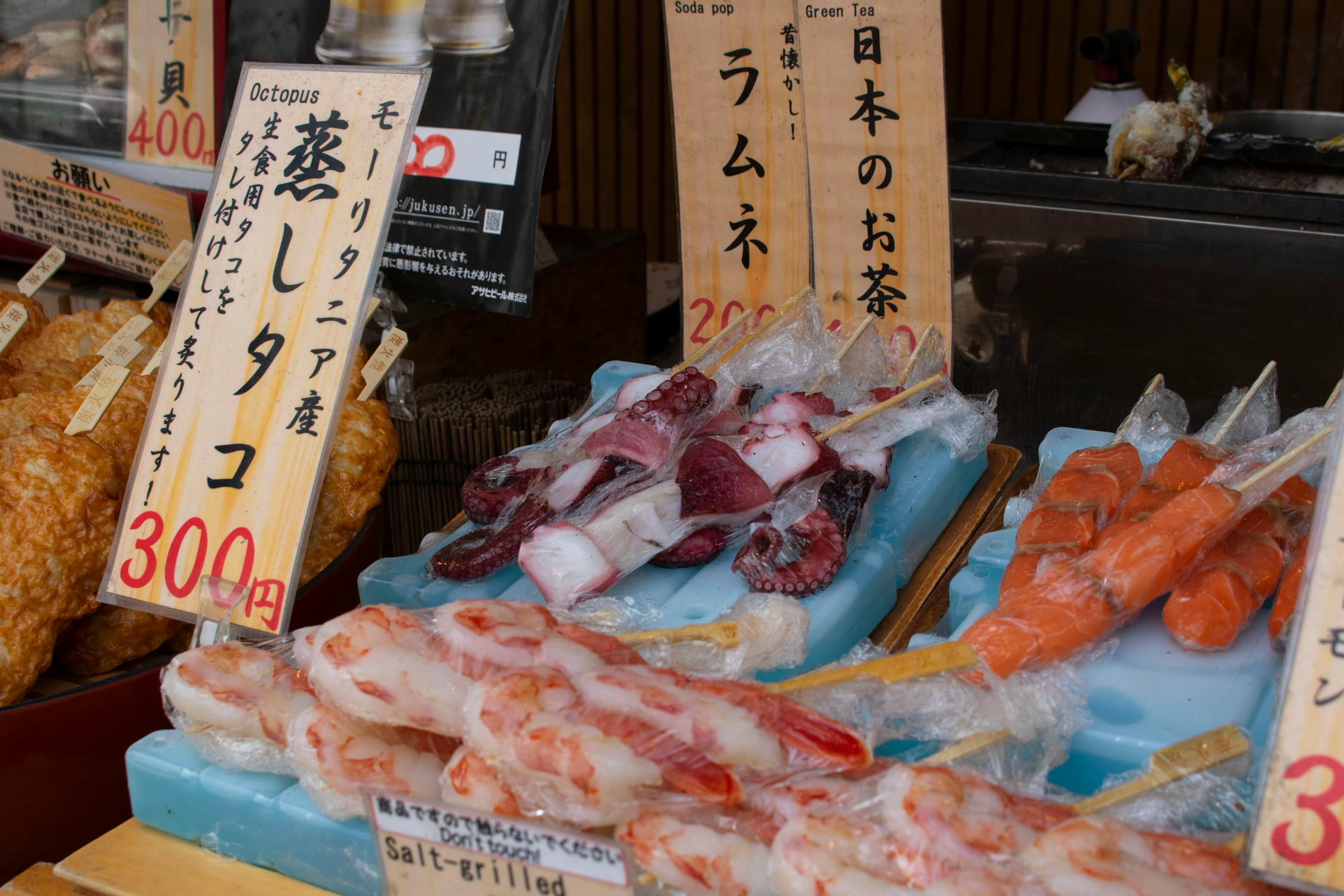
When to go
Timing changes the market more than your stall choices do. The window matters.
- 5:00–8:00: wholesale hours. Atmospheric, but most buy-and-try stalls aren’t open. For early-rising photographers mainly.
- 9:00–11:00: the sweet spot. Stalls fully open, crowds still manageable, food at its freshest.
- 11:00–14:00: peak. Lines at the famous stalls hit thirty minutes or more.
- 14:00–16:00: the lull. Some stalls have sold out of the fresh stuff.
- 16:00–18:00: evening shoppers come for dinner; a few stalls start discounting.
- Avoid: Sunday morning, when a lot of stalls are simply shut.
A 90-minute eating crawl
If you want a route instead of wandering, this one covers seven distinct dishes and lands around ¥6,400 for two-ish hours of top-grade eating. Enter from the east, near the Sennichimae end.
- 10:00 — tamagoyaki at the egg specialist (¥400).
- 10:15 — tuna sashimi cup at Entoki Maguro (¥800).
- 10:30 — a fresh oyster with lemon (¥400).
- 10:45 — a wagyu beef skewer (¥1,200).
- 11:00 — a grilled scallop (¥600).
- 11:15 — uni and ikura over rice (¥1,500).
- 11:30 — a melon slice (¥1,500), plus a small fruit pack to take away.
Etiquette and practical tips
- Eat at the stall, not on the move. Walking and eating is frowned on. Most stalls keep a small standing counter for exactly this.
- Bin your trash at the vendor you bought from. Public bins are scarce across Japan, and Kuromon is no exception.
- Carry cash. Some stalls take cards now; plenty don’t. Bring ¥10,000 to ¥20,000.
- Ask before photographing a chef at work. A quick “shashin ii desu ka?” buys a lot of goodwill.
- Don’t haggle. Prices are fixed, especially on the premium fruit.
- Wear closed shoes. The floor near the seafood stalls gets wet.
Pair it with the rest of your day
- Kuromon morning, Dotonbori afternoon — ten minutes apart on foot. The classic Osaka food day.
- Kuromon then Hozenji Yokocho for dinner — a lantern-lit alley nearby for the evening shift.
- Kuromon and Shinsaibashi shopping — five minutes to the covered shopping arcades.
- Kuromon and Den-Den Town — the anime-and-electronics quarter is right next door for shoppers.
Guided food tours
If you’d rather have someone translate the stalls and pick the good ones, a few operators run Kuromon tours. byFood’s foodie tour covers five to eight stops over 1.5 to 3 hours for ¥6,000–¥9,000. MagicalTrip uses local English-speaking guides who steer you off the obvious stalls. Klook bundles Kuromon with Den-Den Town if you want the market plus the electronics district in one go.
How to avoid the tourist-trap stalls
Not every stall in Kuromon is pulling its weight. As the market got famous, a handful of spots started coasting on foot traffic, charging more for less. The tells are consistent. Be wary of stalls that pile pre-cut seafood on ice with no one buying it; turnover is everything with raw fish, and a stall the locals skip is a stall you should skip too. Photo-menu boards in five languages with prices that seem high for the portion are another flag — the genuinely good seafood stalls often have the least English and the longest local queue.
- Follow the line, not the sign. A queue of Japanese shoppers at 10am is the single best signal in the market.
- Watch for fish being cut to order rather than sitting pre-sliced. Entoki and the busy oyster bars do this.
- Be realistic about premium fruit. A ¥1,500 melon slice is a treat, not a rip-off, but a whole gift melon is priced for gifting, not snacking.
- If a stall only sees tourists, ask why. Sometimes it’s a language thing; sometimes the locals know something.
Getting there and the lay of the land
Nipponbashi Station puts you at the market in about three minutes on foot, and it’s served by the Sakaisuji and Sennichimae subway lines, so most central Osaka hotels are a short ride away. If you’re already in Namba, you can simply walk — it’s roughly ten minutes from the Dotonbori canal, which is why the Kuromon-then-Dotonbori day works so neatly. Coming from Umeda, take the Midosuji line south to Namba and transfer, or ride to Nipponbashi directly depending on where you start.
The market runs roughly north to south as one long covered arcade with a few side spurs. Enter from the Sennichimae (east) end if you want to follow the crawl above; enter from the south if you’re coming up from the Nipponbashi exits. You can’t really get lost — it’s a single street — but the seafood and oyster specialists cluster toward the east entrance, the wagyu stalls sit mid-market on the south side, and the fruit vendors are scattered throughout. Walk it once end to end before you start eating so you know what’s ahead and don’t fill up on the first thing you see.
Going with kids, or with a dietary restriction
Kuromon is an easy win with children if you steer toward the cooked stuff — grilled scallops, wagyu skewers, tamagoyaki, sweet potato, and the takoyaki at Wanaka all land well with younger eaters, and the standing-counter format means no long restaurant sit. The narrow arcade gets tight at peak, so a morning visit with a stroller is far less stressful than fighting the lunch crush.
Dietary restrictions are workable with a little planning. Vegetarians will find fruit, pickles, sweet potato, and tamagoyaki, though the egg and most stalls share grills and dashi, so strict diets need care. Shellfish and fish allergies are the bigger concern here given what the market is built around — stick to the fruit, beef, and produce stalls and ask before you order. Carrying a written note of your restriction in Japanese smooths over the language gaps at the smaller stalls.
A quick word on the morning market
It’s worth understanding what you’re walking into if you come early, because the pre-8:00 market is a different animal from the lunchtime one. This is when Kuromon does the job it has done for two centuries: supplying Osaka’s restaurants. Chefs and shop owners move through quickly, inspecting fish, hauling crates, and buying in volume, and most of the buy-and-try stalls aren’t open yet. It’s atmospheric and photogenic in a working way, but you’ve come to watch, not to graze.
If you do come at dawn, be respectful of the trade going on — keep out of the way of carts and don’t block a stall a chef is trying to buy from for the sake of a photo. The payoff is seeing the supply chain that makes the rest of the day’s eating so good, and getting your shots before the arcade fills. Then go grab a coffee nearby and circle back around 9:30 when the food stalls open and the crowds are still thin. That one-two of early atmosphere and mid-morning eating is the most rewarding way to do Kuromon.
What to take home from Kuromon
Not everything at the market is for eating on the spot. Kuromon doubles as a solid souvenir stop if you know what travels. Packaged pickles (tsukemono) — takuan, umeboshi, pickled daikon — are vacuum-sealed, cheap at ¥300 to ¥800, and survive a long flight home far better than anything fresh. Dried goods like quality katsuobushi, kombu, and dashi packets are light, compact, and turn an ordinary kitchen into one that can actually make Japanese stock.
For edible gifts with a shorter shelf life, the premium fruit vendors will box and wrap a melon or a tray of strawberries to gift-shop standard, which is a genuinely Japanese thing to give and receive. Just don’t buy the perishable stuff on day one of a long trip — save it for the end, or for the same evening. And skip anything that needs refrigeration if you’ve got days of travel left; the pickles and dried goods are the smart buys for a suitcase.
Kuromon Market: FAQ
What time does Kuromon Market open?
Most stalls open at 9:00 and run to 18:00. A handful of seafood wholesalers open as early as 5:00, and some food stalls stay open until 21:00. Many stalls close on Sundays.
How much should I budget?
¥2,000 to ¥4,000 a person covers four to six stalls and a satisfying visit. Lean into the Kobe beef, top-grade tuna, and premium fruit and you can clear ¥7,000 without trying.
Is it open on Sunday?
Many stalls close on Sundays. Some restaurants and tourist-focused vendors stay open, but Saturday is the more reliable weekend day.
What’s the most famous food here?
The seafood headlines: tuna sashimi at Entoki Maguro and the Hiroshima oysters. After that, the wagyu skewers and the tamagoyaki. The premium fruit is a Japanese specialty you mostly find at markets like this one.
Can you eat sushi at Kuromon?
Yes — plenty of sashimi-on-a-stick and uni-and-ikura-over-rice stalls. For full sit-down sushi, several restaurants line the market and the streets just off it.
How long does it take to walk through?
About thirty minutes end to end without stopping. Allow 1.5 to 3 hours if you’re eating your way down it, which you should be.
Plan the rest of your Osaka eating
Kuromon slots neatly into a wider food plan. Start with the full Osaka food guide, then follow the trail into our Osaka street food guide for the stalls beyond the market walls. The takoyaki you’ll spot at Wanaka’s Kuromon branch gets its own treatment in our best takoyaki in Osaka roundup. The other covered arcades are worth a look too, mapped out in our Osaka markets guide, and the market is one of the better spots for a meal under JPY 1,000.


