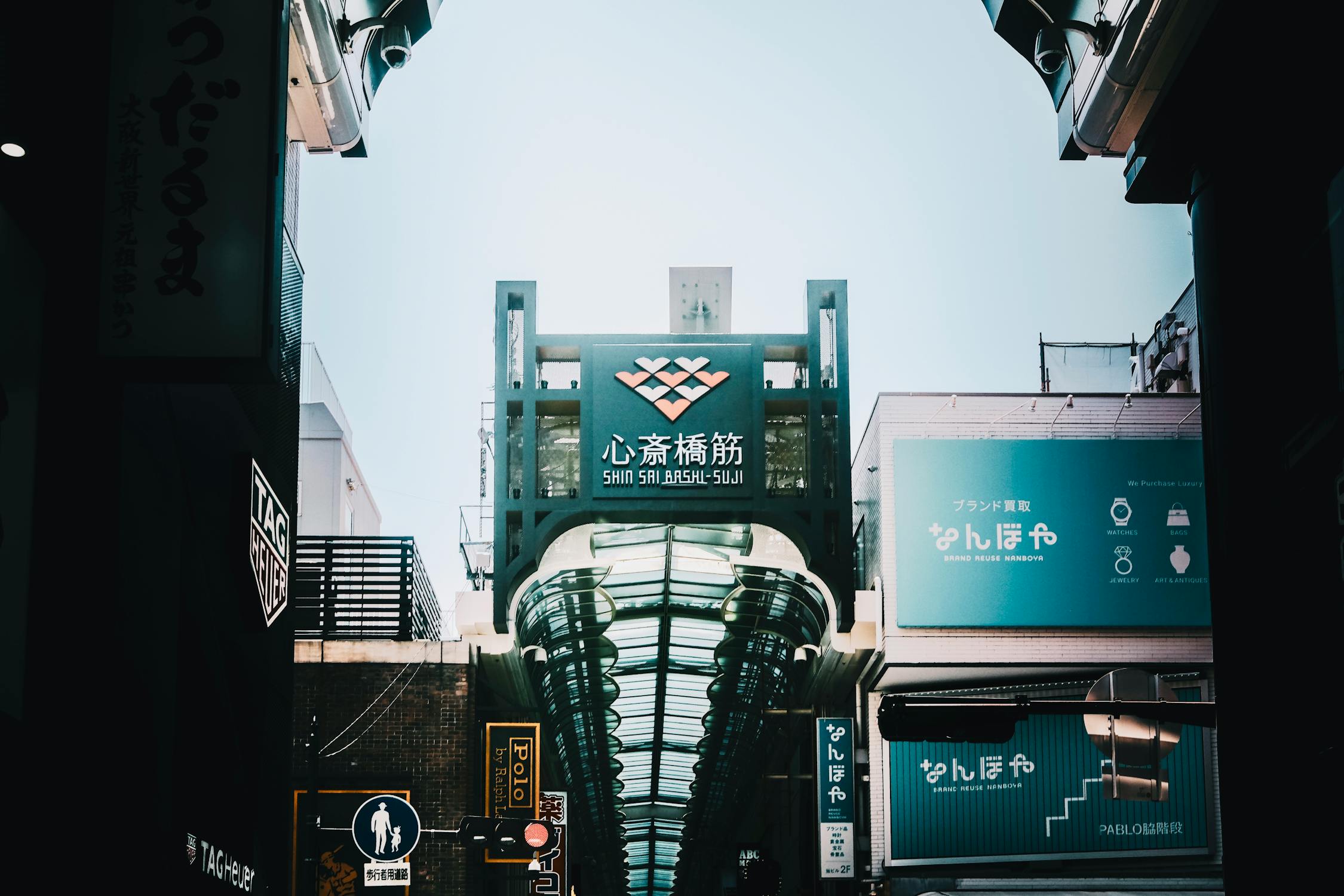
Shinsaibashi is where Osaka does its shopping, and has been since the mid-1700s. The headline act is the Shinsaibashi-suji arcade: 600 metres of covered shopping that runs dead straight from the subway station down to Ebisubashi Bridge, where it spills you out across the water from Dotonbori’s Glico sign. One street over to the west sits Midosuji, the tree-lined boulevard that holds Osaka’s flagship Hermes, Louis Vuitton and Cartier stores. So in the space of about ten minutes on foot you go from ¥100 socks to five-figure handbags. That range is the whole point of the place.
This guide breaks down the district the way you’ll actually walk it: the covered arcade, the Daimaru flagship, the Midosuji luxury strip, the discount giants like Don Quijote and BIC Camera, the slide west into Amerikamura, where to eat without queuing for an hour, and how not to lose an afternoon in the underground passages. Most of it is doable as a half-day, and almost none of it cares what the weather is doing.
The basics: where it is and how to get there
Shinsaibashi sits in Chuo-ku, smack in central Osaka. The obvious arrival is Shinsaibashi Station on the Midosuji line, the city’s main north-south artery. Exits 4, 5 and 6 dump you straight into the arcade’s northern end. Coming from the west? Yotsubashi Station on the Yotsubashi line is a two-minute walk. And if you’re already down at Namba, you don’t even need a train, it’s a five-minute stroll north up the arcade.
- Nearest stations: Shinsaibashi (Midosuji line, exits 4-6), Yotsubashi (Yotsubashi line), Namba (5 min south on foot).
- Time to budget: 3 to 6 hours if you’re shopping in earnest; a half-day covers it comfortably alongside Dotonbori.
- Walk to Dotonbori: zero to five minutes. The arcade ends at the bridge.
- Cost to be here: nothing. Walking the streets is free; you control the rest.
One thing nobody warns you about: the underground. Crystal Nagahori and the connecting passages run for more than a kilometre beneath the streets, linking Shinsaibashi, Yotsubashi and Namba. Handy in the rain, easy to get turned around in. If you surface and nothing looks familiar, find an exit number on the wall and match it to a map, the exits are numbered consistently and that’s faster than guessing.
Getting your bearings
Shinsaibashi confuses people because it works on two levels and three streets at once. Hold this simple map in your head and you won’t get lost.
Run a line north to south. At the top is the station and the start of the covered arcade. Walk south and the arcade carries you 600 metres to Ebisubashi Bridge and Dotonbori. That’s your main axis. Now picture two parallel streets: the arcade in the middle, Midosuji (luxury) one block west, and the Amerikamura tangle a little further west again. Don Quijote, BIC Camera and the chain stores cluster around the lower half of the arcade and the streets either side of it.
Below all of that runs the Crysta Nagahori underground mall, an east-west shopping concourse that crosses beneath the arcade and feeds the subway network. It’s useful for dodging weather and for moving between the Midosuji and Yotsubashi lines, but it’s also where most visitors lose their orientation. The fix is boring and reliable: the exits are numbered, signage points to those numbers in English, so pick your exit number above ground before you descend, and you’ll always pop back up roughly where you meant to.
Practically, that geography means you don’t have to plan a route so much as pick a direction. Drop in at the top, drift south, dip west into Amerikamura when you feel like a change of pace, and you’ll have covered the district by the time you reach the bridge.
Shinsaibashi-suji: the covered arcade
Start here. The arcade is the spine of the district and the reason most people come. Six hundred metres, fully roofed, both sides packed with a mix you’d struggle to find assembled anywhere else: cosmetics chains, drugstores stacked to the ceiling, apparel from cheap to mid-range, accessory shops, a handful of musical instrument stores, and the ¥100 shops that somehow always have a queue at the till.
The history is real, not marketing. The street traces back to the mid-18th century when the Matsuya kimono shop set up, which over the generations grew into the Daimaru that still anchors the arcade today. You’re walking a retail strip that predates most of the countries its tourists fly in from.
- Hours: most shops run 11:00 to 21:00. The arcade itself never closes, but shutters drop around 9pm.
- Walk it in: 30 minutes end to end if you don’t stop. Two hours-plus if you do, and you will.
- When to come: late afternoon for the energy. Weekend lunchtime is a crush, genuinely shoulder to shoulder, so skip that window if crowds wear you down.
Daimaru, the department store anchor
The Daimaru flagship is the heavyweight. Floor after floor of it, from high fashion (Chanel, YSL, Tiffany counters) up through a beauty hall, a cooking school, and the part most travellers care about: the depachika in the basement. Food halls in Japanese department stores are an event in themselves. Get there mid-afternoon and graze, the sushi and bento counters discount stock as the evening approaches.
Two specific draws if you’ve got kids or a soft spot: the Pokemon Center on the 13th floor and a Nintendo Store in the same building. Both get busy on weekends. Daimaru also runs a tax-free desk for foreign passport holders, which matters once your spending adds up, more on that below.
Midosuji: the luxury strip
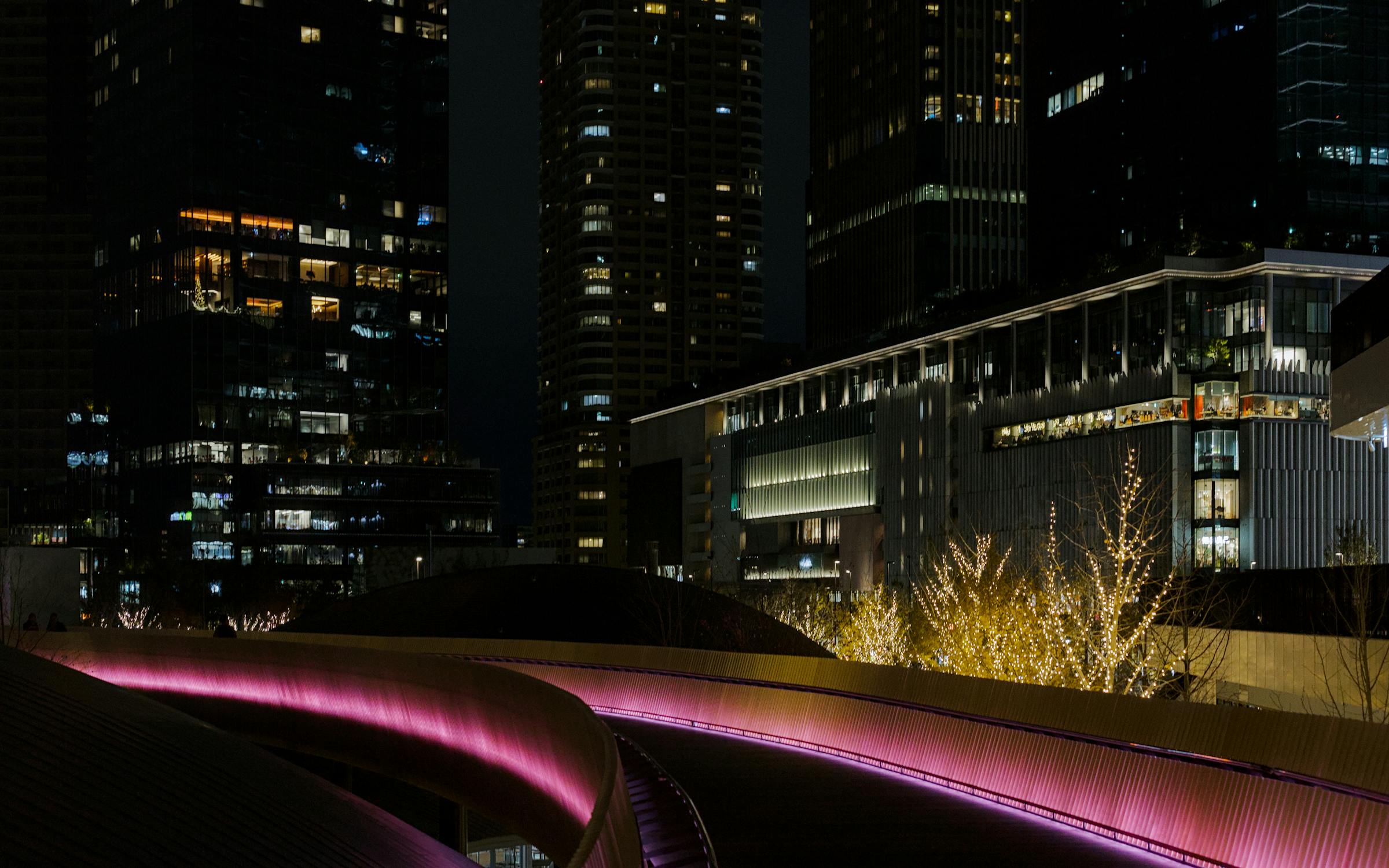
Walk one block west of the arcade and the whole register changes. Midosuji is the wide, ginkgo-lined boulevard that holds Osaka’s flagship luxury houses, Hermes, Louis Vuitton, Cartier, the lot. People reach for the Ginza or Champs-Elysees comparison, and it earns it. Even if you’ve no intention of buying, it’s worth the five-minute detour: the architecture is the show, and the gold light through the ginkgo trees in autumn is one of central Osaka’s better free spectacles.
The discount and electronics giants
This is where Shinsaibashi earns its keep for most travellers. Three names matter.
Don Quijote
The flagship Don Quijote is a multi-floor maze of cosmetics, snacks, electronics, gag gifts and souvenirs, open 24 hours, and cheaper than you’d expect even by Japanese discount standards. The aisles are deliberately overstuffed and a little chaotic; that’s the format. Come for Kit Kat flavours you can’t get at home, drugstore skincare, and the kind of weird souvenir that makes a good story. Late at night it’s near empty, which is the move if you hate crowds.
BIC Camera
The Shinsaibashi BIC Camera flagship is the electronics stop, cameras, phones, laptops, gadgets, plus a surprising amount of cosmetics and household goods upstairs. Tax-free for foreign visitors. If you’re buying anything pricey, it’s worth a five-minute price check against Don Quijote and the nearby Yodobashi at Umeda; on cosmetics and small electronics the gaps are real.
UNIQLO and Mandarake
The UNIQLO flagship carries the full Japanese line, including pieces that never make it to overseas stores, at the usual cheap-basics prices that make it a reliable stop for travellers who packed light. And for secondhand anime, manga and doujinshi, Mandarake has several branches in the area, the chain that built its name on used otaku goods. If that’s your thing, you’ll lose an hour happily.
What’s actually worth buying here
Shinsaibashi will sell you anything, which is exactly why it’s worth knowing what it does better than other parts of the city. A few categories punch above their weight.
Drugstore skincare and cosmetics. Japanese drugstore brands, the sheet masks, sunscreens and the cult skincare lines, are cheaper here than at the airport and the selection is wider. Matsumoto Kiyoshi and the cosmetics floors of Don Quijote are the value picks. Buy the bulk of it on your last day or two so you’re not hauling it around.
Kitchen knives and homewares. The Daimaru kitchen floors carry serious Japanese steel, and a good knife is the souvenir that outlasts every fridge magnet. If you want the full knife-town experience you’d go to Sakai, but for a single quality blade with tax-free paperwork, Shinsaibashi does the job.
Character goods. Between the Pokemon Center, the Nintendo Store and the Mandarake branches, this is one of the strongest patches in Osaka for anime, game and character merch outside Den Den Town. Prices on new goods are fixed; the fun is in the secondhand finds.
Vintage and streetwear. That’s the Amerikamura side, covered below, but worth flagging that the secondhand fashion here genuinely rivals Tokyo. American imports, designer resale, the occasional steal in a basement bin.
Slide west into Amerikamura
The arcade isn’t the only show. Cross to the west side of the district and you’re in Amerikamura, Osaka’s youth-fashion and vintage quarter, built around the Triangle Park (Sankaku Koen) where the city’s 18-to-25 crowd gathers on weekends. It’s a different mood entirely: thrift stores, themed cafes, street art, cheaper drinks. If you want the full picture, the Amerikamura guide covers it street by street, but even a 20-minute loop through it gives Shinsaibashi a second flavour beyond the polished retail.
Where to eat
Shinsaibashi itself is more shopping than dining, but you’re never more than a few minutes from a good meal because Dotonbori sits right at the southern end. A handful of reliable calls:
- Mizuno for okonomiyaki, two minutes south in Dotonbori. It’s a long-standing favourite and the queue moves, eat off-peak (before noon or after 2pm) and you’ll wait less.
- Daimaru depachika for a quick, high-quality lunch. Grab sushi or a bento takeout and you’ve skipped every queue in the area.
- Kani Doraku, the crab restaurant under the giant moving crab sign in Dotonbori, more of an occasion than a cheap feed, but a proper Osaka set-piece.
- Ichiran for solo-booth tonkotsu ramen, also in Dotonbori, open late and forgiving of odd hours.
- Specialty coffee in the Amerikamura backstreets if you need to sit down and reset between bags.
Timing it right
The arcade has rhythms worth knowing. Weekday mornings just after the 11am openings are the calmest, good if you want to browse without being swept along. Late afternoon into early evening is when the place feels most alive, when locals are off work and the lights come up. The window to avoid, if crowds aren’t your thing, is Saturday and Sunday lunchtime, when the central stretch near Daimaru slows to a shuffle.
Seasonally, the covered arcade is a refuge. Osaka summers are brutally humid, and Shinsaibashi-suji lets you shop for hours without stepping into the heat. In rain, it’s the obvious move, link it with the underground passages and you can cover the whole district barely getting wet. Autumn is the one time to make a point of walking Midosuji in daylight, when the ginkgo trees turn and the boulevard earns every Champs-Elysees comparison.
If you only have an evening, that works too. Most arcade shops stay open until 9pm, Daimaru a touch earlier, and Don Quijote never closes. An after-dinner wander down a lit arcade, then across the bridge to the Glico sign, is one of the easiest good nights in central Osaka.
A shopping strategy that actually works
- Bank your tax-free. Daimaru, BIC Camera, Don Quijote and most major stores do tax-free for foreign passport holders on ¥5,000-plus in a single transaction. Carry your passport, not a photo of it.
- Dodge weekend midday. The arcade between roughly 12 and 2 on a Saturday is a slow shuffle. Mornings and evenings move.
- Compare before big buys. BIC Camera, Yodobashi and Don Quijote price the same cosmetics and gadgets differently. Five minutes can save real money.
- Tap with ICOCA. Most chain stores take IC-card payment, faster than fishing for change.
- Keep some cash. Smaller independent shops, especially in Amerikamura, don’t all take cards.
A half-day, walked in order
- 11:00 – In at Shinsaibashi Station, exit 5. Start down the arcade from the north end.
- 11:30 – Daimaru. Luxury floors if you like, Pokemon Center on 13F if that’s the call.
- 13:00 – Lunch in the Daimaru depachika. Sushi or bento, eat fast, keep moving.
- 14:00 – One block west to Midosuji for the luxury strip and the architecture.
- 15:00 – Don Quijote for souvenirs and the tax-free haul.
- 16:30 – Cut into Amerikamura. Triangle Park, a thrift store or two, a coffee.
- 17:30 – South to the end of the arcade and across Ebisubashi for the Glico photo.
- 18:00 – Dinner in Dotonbori. You’ve earned it.
Where to stay nearby
Shinsaibashi is one of the smartest bases in Osaka if shopping and central walkability are your priorities, you’re within ten minutes of Dotonbori, Namba and the Midosuji line. Our Shinsaibashi hotels guide breaks down where to book by budget. And if you want the deep retail rundown, every arcade and side street, the dedicated Shinsaibashi shopping guide goes further than there’s room for here. For the area immediately south, see the Dotonbori guide and the wider Namba guide, or step back to the Osaka neighborhoods overview to see how the central districts connect.
Shinsaibashi Osaka FAQ
What is Shinsaibashi known for?
Shopping, top to bottom. The 600-metre Shinsaibashi-suji covered arcade, the Daimaru flagship, the Midosuji luxury boulevard, and a direct walk into both Amerikamura and Dotonbori. It’s the densest concentration of retail in Osaka.
Is Shinsaibashi the same as Dotonbori?
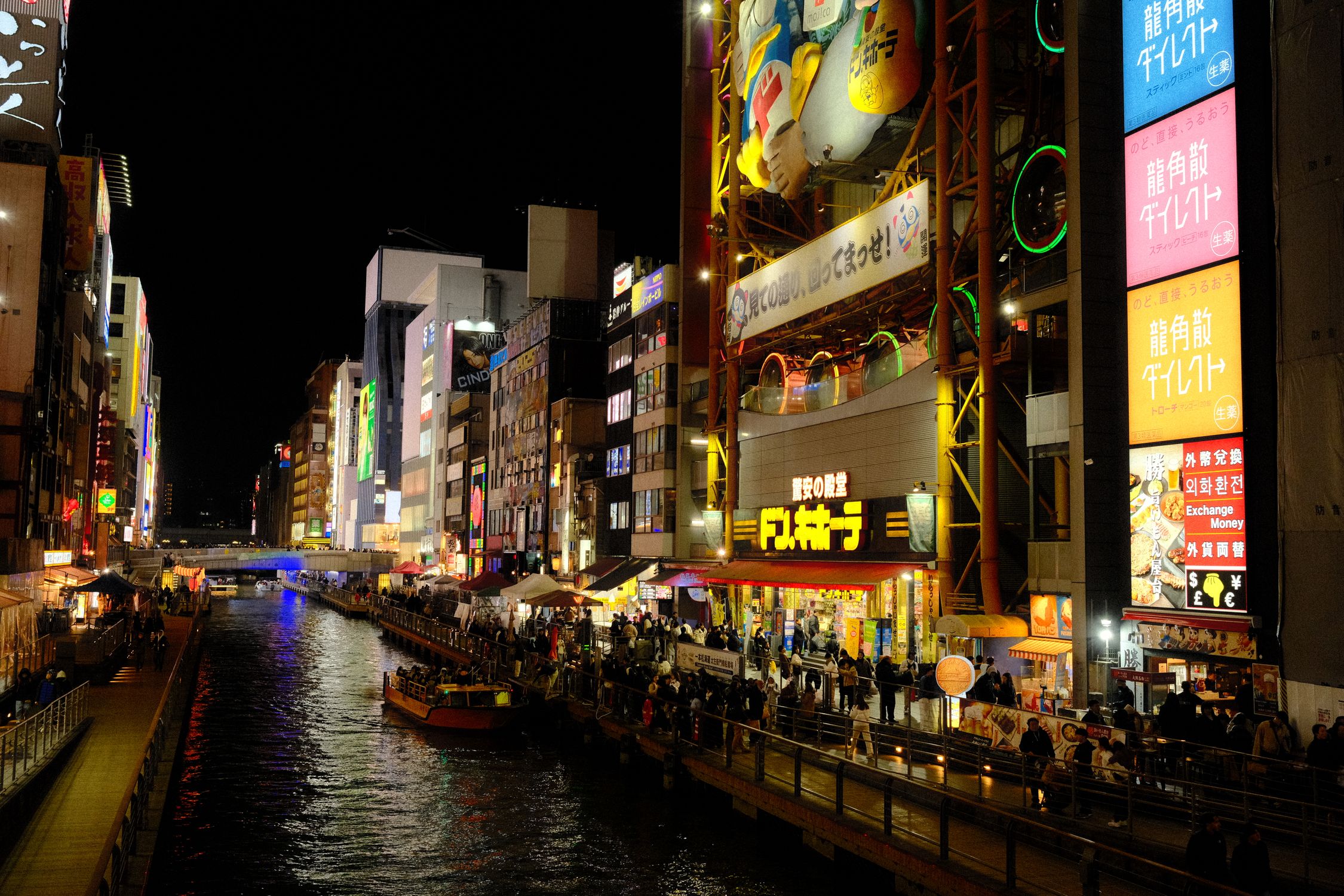
No. They’re adjacent but separate. Shinsaibashi is the shopping district to the north; Dotonbori is the neon-lit food and entertainment strip along the canal. The arcade ends at Ebisubashi Bridge, which is the line between the two. You can walk from one to the other in under five minutes.
How long do I need in Shinsaibashi?
Three to six hours for proper shopping. If you’re folding it into a day that also takes in Dotonbori and Namba, half a day is enough to hit the highlights.
Can I shop tax-free in Shinsaibashi?
Yes. Daimaru, BIC Camera, Don Quijote and most major stores offer tax-free for foreign visitors who spend ¥5,000 or more in a single transaction. Bring your actual passport to the tax-free counter.
Is the arcade covered if it rains?
The full 600-metre Shinsaibashi-suji is roofed end to end, so it’s a reliable wet-weather or peak-summer option. The connecting underground passages add even more sheltered walking between Shinsaibashi, Yotsubashi and Namba.
Is Shinsaibashi or Umeda better for shopping?
Different jobs. Shinsaibashi is street-level, walkable and broad, arcade chains, luxury on Midosuji, discount giants and vintage all within a few minutes. Umeda is vertical and department-store heavy, with Hankyu, Hanshin and the Grand Front complex stacked around the station. For a wander-and-browse afternoon, Shinsaibashi wins. For one-stop, weather-proof, high-end department-store shopping, Umeda has the edge.
What’s on Midosuji Avenue?
The high-end strip one block west of the arcade: Hermes, Louis Vuitton, Cartier, Chanel, Tiffany and the rest, set along a wide ginkgo-lined boulevard often compared to Ginza or the Champs-Elysees. Worth a walk even if you’re only window-shopping.