Namba is where most first-time trips to Osaka actually happen. Officially it’s Minami, the city’s “south,” and it’s the messy, brilliant heart of the place, the canal at Dotonbori, the food, the shopping arcades, the anime shops of Den-Den Town, and a railway hub that connects the airport, the subway, and the lines out to Kyoto and Nara. If you only base yourself in one part of Osaka, this is the one that puts the most within walking distance.
This 2026 Namba Osaka guide is built to stop you wasting time. It untangles the Namba/Dotonbori/Shinsaibashi confusion, sorts out which “Namba” station you actually want, and lays out the attractions, the food, and the shopping in the order that makes sense on foot. Less marketing, more “here’s where to turn.”
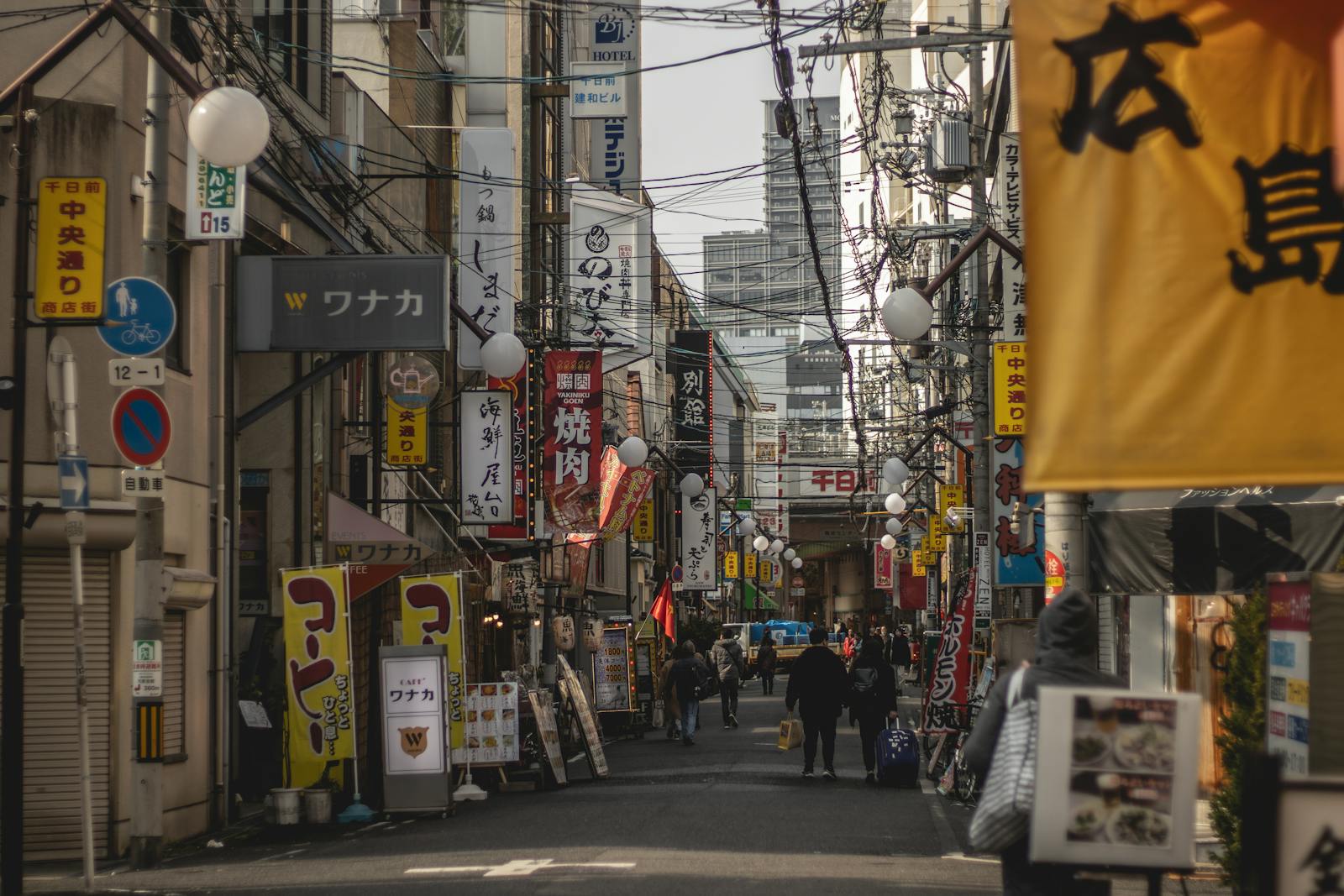
Namba at a glance
- Where: Chuo-ku and Naniwa-ku, the south-central core of Osaka.
- The big stations: Namba (Midosuji, Yotsubashi, Sennichimae subway lines), Nankai Namba (the airport terminus), Kintetsu and Hanshin Namba, JR Namba.
- Best for: Food, shopping, nightlife, and first-timers who want everything close.
- Time to set aside: A full day, ideally two, to do it without sprinting.
- To Dotonbori: About 5 minutes north on foot, it’s inside the district.
- To Shinsaibashi: Roughly 10 minutes north, straight up the arcade.
Namba, Dotonbori, Shinsaibashi: the confusion, cleared up
Almost everyone arrives muddling these three, and it’s not your fault, the names genuinely overlap. Here’s the clean version:
- Namba (Minami): The umbrella. The whole southern entertainment zone, station area, malls, Den-Den Town, the restaurants south of the canal. When a hotel says it’s “in Namba,” this is what it means.
- Dotonbori: The 600-metre canal strip with the Glico sign, the moving crab, and the wall of food stalls. It sits inside Namba, not next to it.
- Shinsaibashi: The covered shopping arcade running north from the canal. The retail half of Minami. Shops, not signs.
Top to bottom, you can walk all three in about half an hour. So when you’re picking a hotel or planning a route, stop agonising over the labels, they’re all the same patch of city, just with different jobs.
What to actually do in Namba
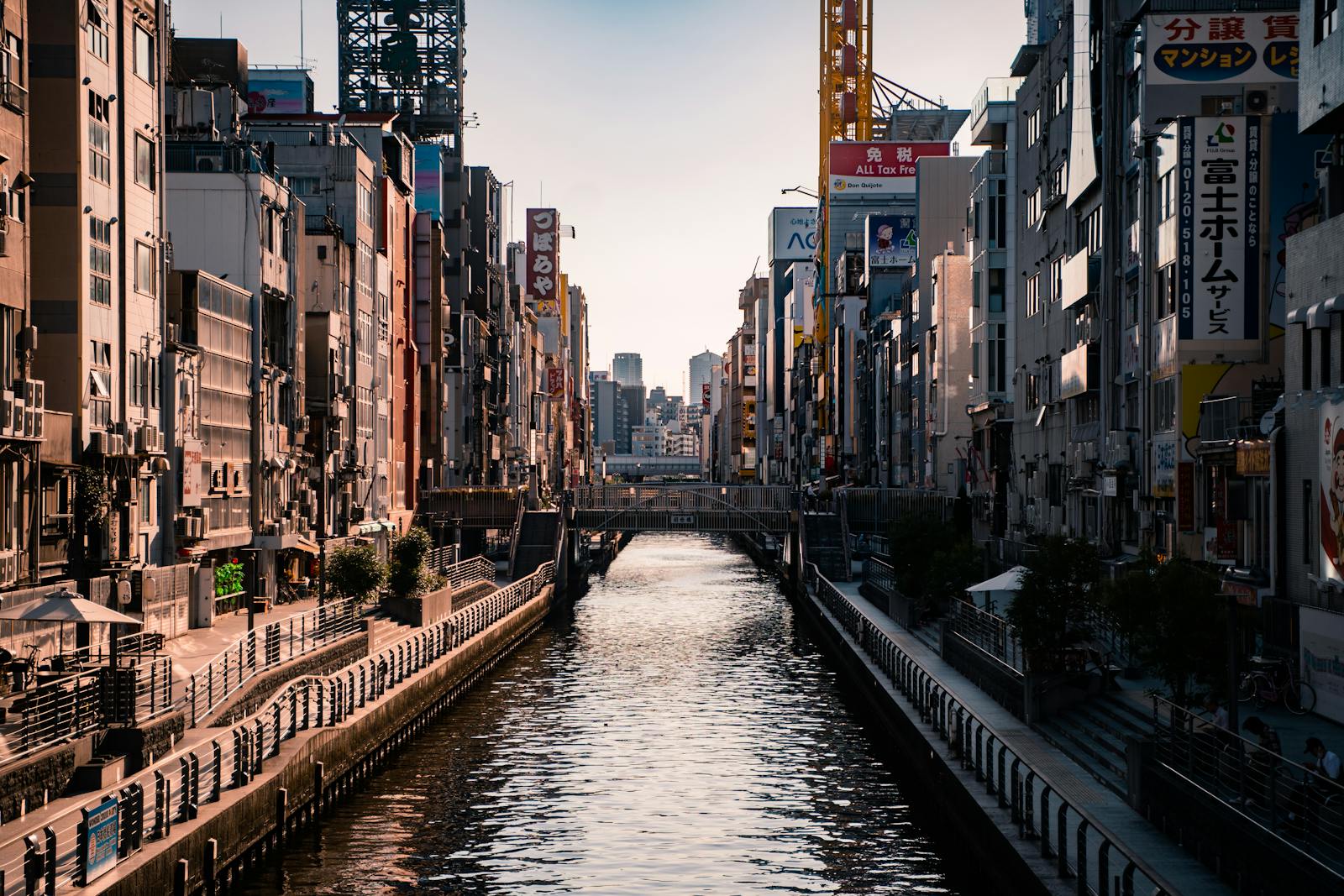
Dotonbori, the showpiece
The canal strip is the marquee Namba experience, the Glico runner, the giant Kani Doraku crab, Don Quijote’s tower, and the densest street food in Japan. It earns its own deep dive; our full Dotonbori guide covers where the food’s worth it, where to stand for the photo, and how to time it around the crowds. Treat it as the evening centrepiece and build the rest of your day around it.
Namba Parks, the rooftop you didn’t expect
A 120-tenant mall built to look like a stepped canyon, with a terraced rooftop garden climbing eight floors above the shops. There’s a cinema, an amphitheatre, and plenty of restaurants. Walking it is free, the garden is a genuinely calm break from the street-level crush, and it’s right on top of Nankai Namba station. Good with kids, good when it rains.
Kuromon Market, the morning move
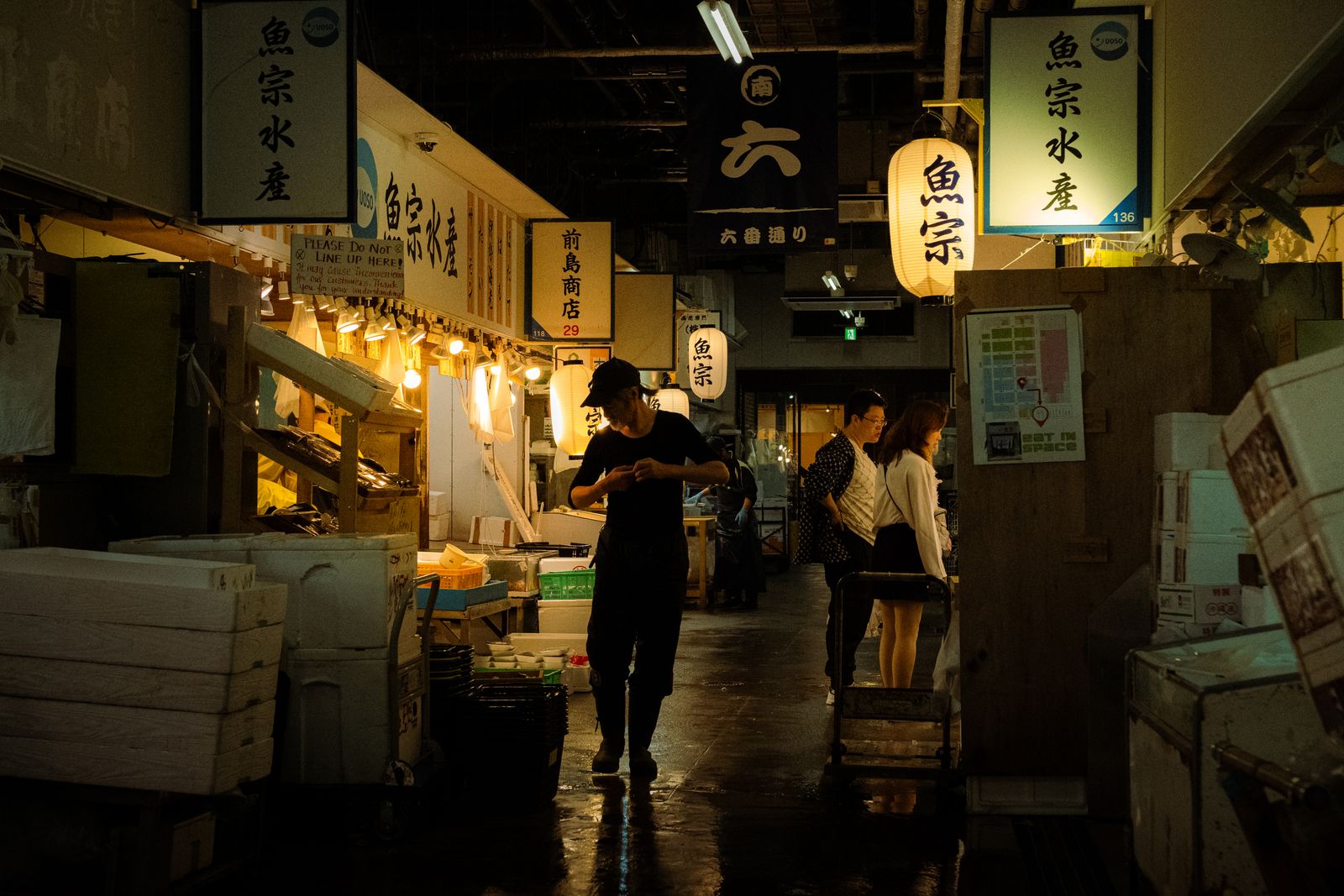
Osaka calls itself the nation’s kitchen, and Kuromon is the proof, 600 metres of covered market with 150-odd stalls of sashimi, grilled oysters, wagyu skewers, fat strawberries, and tamagoyaki on a stick. It’s on Namba’s eastern edge, an easy walk from Nipponbashi station. Go before noon when it’s freshest and least mobbed; many stalls grill to order so you eat standing right there. The full rundown of what to order is in our Kuromon Market guide.
Den-Den Town, Osaka’s Akihabara
A multi-block grid packed with electronics shops, manga and anime stores, retro game sellers, maid and themed cafés, and rows of gachapon machines. It’s grittier and less polished than Tokyo’s Akihabara, which is rather the point. Closest station is Ebisucho. Even if you’re not a collector, it’s worth a wander for the sheer density of stuff. Our Den-Den Town guide maps out the best shops by what you’re hunting for.
Amerikamura, where Osaka gets young
West of the canal, “Ame-mura” is the city’s youth-culture quarter, vintage clothing, streetwear, record shops, themed cafés, and street performers around the small Triangle Park. It’s the closest Osaka comes to Tokyo’s Harajuku, loud on weekends and dead quiet on a weekday morning. A good counterweight if Dotonbori’s tourist energy is wearing thin; the Amerikamura guide has the details.
Hozenji Yokocho and Namba Yasaka Shrine
Two quick, atmospheric stops. Hozenji Yokocho is an 80-metre lantern-lit cobblestone alley just behind Dotonbori, with the moss-covered Mizukake Fudo statue at its heart, splash it and make a wish. A few minutes south, Namba Yasaka Shrine has a 12-metre lion-head stage said to swallow bad luck; it’s free, photogenic, and takes five minutes. Both are easy add-ons that break up the shopping.
Eating your way through Namba
You don’t come to Namba to eat well by accident, you come to eat constantly. The trinity is non-negotiable: takoyaki, okonomiyaki, kushikatsu. Where to chase each one:
- Takoyaki: Wanaka near Sennichimae, or Juhachiban in Dotonbori for the sakura-shrimp version. Our best takoyaki in Osaka roundup goes deeper.
- Okonomiyaki: Mizuno carries a Michelin Bib Gourmand and a queue to match.
- Kushikatsu: Kushikatsu Daruma in Dotonbori. One sauce pot, no double-dipping, ever.
- Crab kaiseki: Kani Doraku, under the giant moving crab. Touristy, genuinely good.
- Pork buns: 551 Horai, around ¥190 each, the perfect between-stalls snack.
- Standing-bar bites: the tiny izakayas of Hozenji Yokocho, a drink and a small plate, elbow to elbow.
One rule the locals live by and visitors flout: don’t walk and eat. Stand at the stall, finish, bin it there. And bring cash, plenty of the small places still don’t take cards.
Shopping in Namba
- Namba Parks: 120 shops plus the rooftop garden. Modern, calm, family-friendly.
- Takashimaya Namba: A premium department store with a knockout depachika food basement.
- Shinsaibashi-suji arcade: 600 metres of covered shopping running north from the canal, everything from Daimaru to fast fashion. Full breakdown in our Shinsaibashi guide.
- Don Quijote Ebisu Tower: Eight floors, open 24 hours, the souvenir-and-gag-gift mothership.
- Den-Den Town: anime, electronics, collectables.
- Amerikamura: vintage and streetwear.
The station puzzle, solved
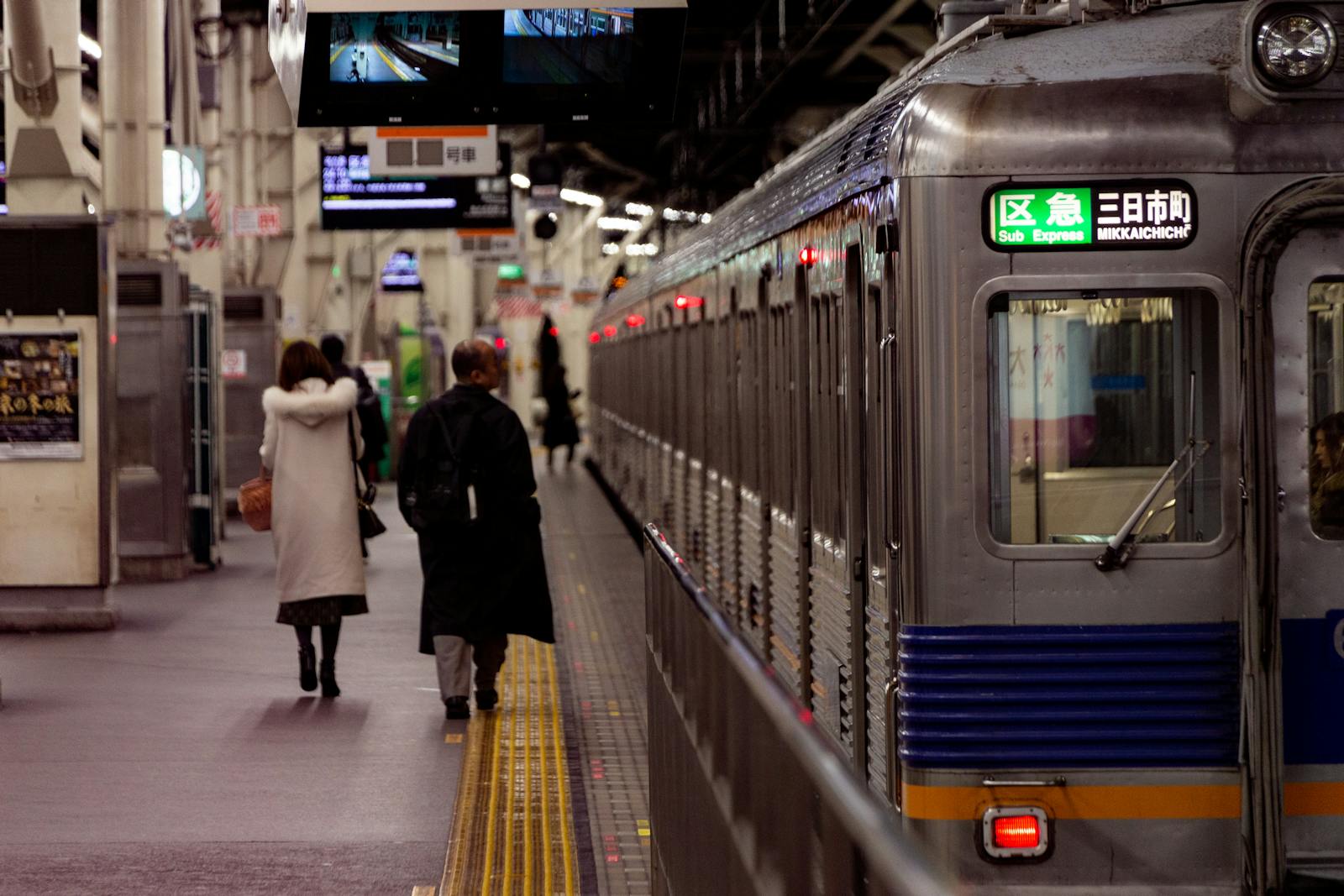
This trips up more visitors than anything else in Namba. There isn’t one Namba station, there are several, run by different companies, linked by a warren of underground passages. Knowing which is which saves you a frustrating twenty minutes:
- Namba (Osaka Metro): Three subway lines, Midosuji (red), Yotsubashi (blue), Sennichimae (pink). Your everyday workhorse.
- Nankai Namba: The grand terminus for the airport line. The Rapi:t limited express reaches Kansai Airport in about 38 minutes.
- JR Namba: A bit south and west, on the Yamatoji line. Handy for some routes, less central for the food and shopping.
- Kintetsu Nippombashi: Just east, with direct trains to Nara.
- Hanshin and Hankyu Namba: Adjacent to the metro station, for direct runs north toward Kobe and Kyoto.
The practical takeaway: all of these connect underground, but the walk between them can run 5 to 10 minutes through long corridors. When you’re meeting someone or catching a specific train, name the exact station and operator, not just “Namba.” And if the subway map looks like spilled spaghetti, our Osaka subway guide makes sense of the colours and lines.
Namba after dark
Namba doesn’t switch off when dinner ends. The obvious move is the Dotonbori neon walk, but the more interesting drinking happens just off it. Duck into Ura-Namba, the grid of backstreets east of the canal around the Sennichimae and Nipponbashi blocks, and you’ll find standing bars, tiny izakayas, and counter joints where locals pile in after work. Drinks are cheap, plates are small, and the vibe is a world away from the tourist crush a block over. It’s the part of Namba that feels like Osaka rather than a postcard of it.
Amerikamura has its own late energy, bars stacked in narrow buildings, music spilling onto the street. And if you want a proper night out rather than a wander, the whole southern district is dense with karaoke boxes, late-night ramen, and bars that don’t get going until eleven. Pace your eating earlier in the evening so you’ve still got room, and an appetite, for a second wind. Just keep half an eye on the clock: the subway stops around midnight and taxis home from the centre aren’t cheap.
Namba as a launch pad
Half of Namba’s value is that it gets you out of Osaka fast. This is a hub, and the day trips practically queue up at the station. From Kintetsu Namba (signed as Osaka-Namba), the direct line runs to Nara in around 40 minutes, deer, giant Buddha, ancient temples, an easy half-day. The same operator reaches the edge of Kyoto, and from the metro you can change for the faster routes north. Heading the other way, Nankai trains run south toward Wakayama and the cable car up to the temple-stay mountain of Koya-san.
The point is that you can base yourself in Namba, sleep beside the food and the neon, and still strike out to Nara or Kyoto for the day without backtracking up to the main station first. For the full menu of escapes and how long each one takes, see our day trips from Osaka guide.
A one-day Namba plan that flows
This route runs roughly east to west and saves the neon for last, which is exactly when it looks best:
- 9:30am: Arrive Namba, walk to Kuromon Market.
- 10:00am: Graze the market while it’s fresh.
- 11:30am: On to Den-Den Town.
- 12:30pm: Lunch at a themed café in Den-Den Town.
- 2:00pm: Back to Namba Parks, browse and ride the escalators up the rooftop garden.
- 4:00pm: Coffee in the garden.
- 5:00pm: Up the Shinsaibashi arcade.
- 6:30pm: Hozenji Yokocho lanterns and a standing-bar bite.
- 7:30pm: Dotonbori for dinner, takoyaki and okonomiyaki.
- 9:00pm: Glico photo, neon walk along the canal.
- 10:30pm: Back to Namba station.
Where to stay in Namba
Basing yourself here means rolling out of bed into the food and the trains, which is exactly why so many leisure travellers pick it over the slicker north. The range runs the full ladder, from the cheap and cheerful Toyoko Inn Namba up through the mid-range Cross Hotel Osaka and Citadines Namba to the premium Swissotel Nankai sitting right above the airport line, and on to the W Osaka and St Regis at the luxury end. For the honest pros and cons of each tier, our best Namba hotels guide breaks it down by budget and what each spot is actually good for.
Practical tips
- Don’t try to cram Namba into four hours. Dotonbori, Kuromon, Den-Den, and Shinsaibashi together want a full day.
- Wear shoes you can walk 5 to 10 km in. You will, without noticing.
- Carry cash. Markets and small stalls lean cash-only.
- Mind your bag in dense crowds. Pickpocketing is rare here, but the bridge at peak is shoulder-to-shoulder.
- Last subway runs around midnight. Private lines stop earlier, so check before a late dinner.
- Save Dotonbori for after dark. By day it’s half the spectacle.
Namba FAQ
What is Namba known for?
Dotonbori and its neon canal, street food, the Shinsaibashi shopping arcade, the Glico runner, and the anime-and-electronics sprawl of Den-Den Town. It’s also the main rail hub for southern Osaka and the airport line.
Is Namba the same as Dotonbori?
No. Namba is the wider district; Dotonbori is the 600-metre canal strip sitting inside it. You walk from one to the other in about five minutes.
How do I get to Namba?
From Umeda, the Midosuji subway takes about 8 minutes for roughly ¥240. From Kansai Airport, the Nankai Rapi:t reaches Nankai Namba in about 38 minutes for around ¥1,490.
How long do I need in Namba?
Give it a full day to take in Dotonbori, Kuromon, Shinsaibashi, Den-Den Town, and Hozenji Yokocho without rushing. Two days if you also want to shop properly.
Is Namba safe at night?
Very. Heavy foot traffic, bright lights, and a steady police presence. Normal big-city awareness in dense crowds is all you need.
Should I stay in Namba or Umeda?
Namba for food, nightlife, and walkable sightseeing. Umeda for transit, business stays, and Shinkansen connections. Most leisure travellers lean Namba.
Where Namba fits in your Osaka trip
Namba is the natural base for a first Osaka visit, close to almost everything, well connected to the airport, and walkable from end to end. From here you’re a short subway ride from the retro streets of Shinsekai and the towers of Umeda in the north. To weigh up every district before you book, start with our Osaka neighborhoods guide, then come south and let Namba do the rest.