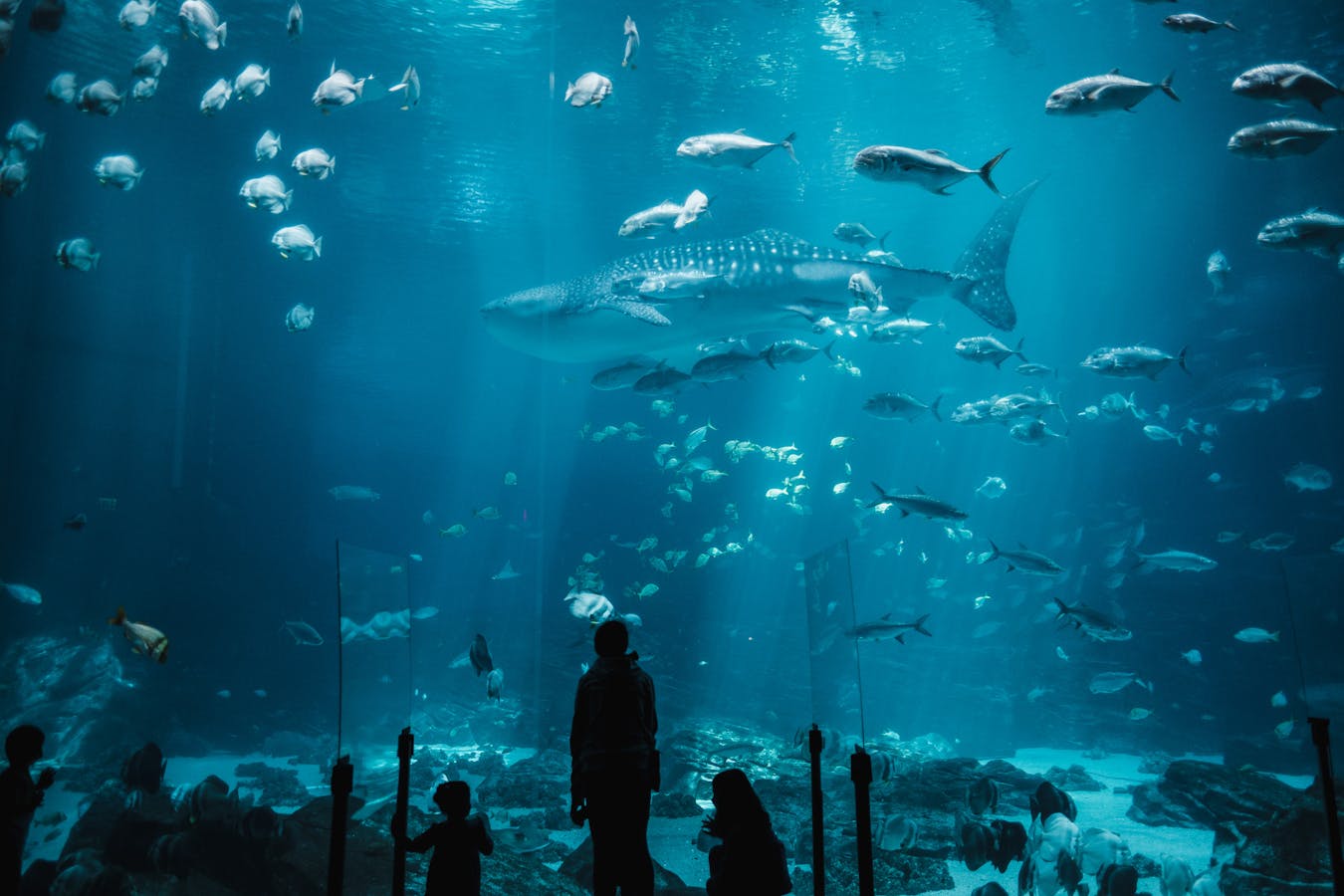
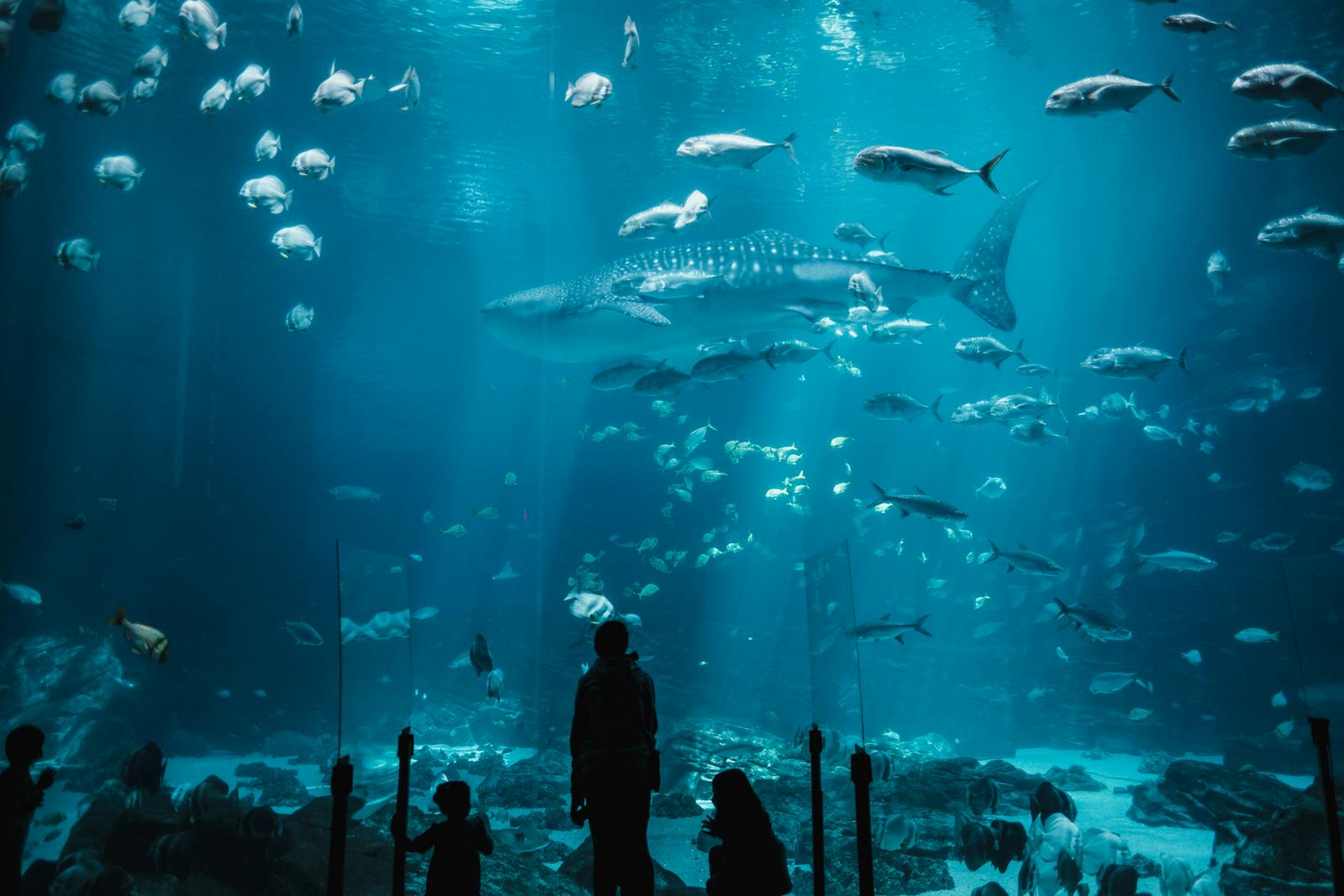
The Osaka Aquarium Kaiyukan, or just Kaiyukan if you ask anyone local, is built around one idea that sets it apart from almost every other aquarium on the planet. Instead of walking past tanks at floor level, you ride an escalator to the 8th floor and then spiral slowly down a single ramp wrapped around one colossal Pacific Ocean tank, 9 meters deep and holding 5,400 tons of water. You meet the same tank again and again as you descend, from the sunlit surface down to the dark deep, and somewhere in the middle a whale shark glides past at eye level. It turns a routine aquarium walk into a 2.5-hour descent through 14 marine worlds.
It sits on the Tempozan waterfront in Osaka Bay, about 25 minutes from Umeda, and slots neatly into a half-day with the Ferris wheel, the Santa Maria cruise, and the Legoland Discovery Center right next door. This guide covers the ticket prices, the hours, the order to walk the exhibits, the feeding times worth timing your visit around, and the practical stuff most people only figure out on their way out. If you are bringing small children, our guide to Kaiyukan with kids adds the stroller route, the touch-pool timing, and how to handle the darker galleries.
Kaiyukan at a glance
- Address: 1-1-10 Kaigandori, Minato-ku, in the Tempozan Harbor Village.
- Hours: generally 10:00 to 20:00, last admission 19:00, with some seasonal extensions.
- Closed: a handful of maintenance days a year, announced about six months out.
- Adult ticket (16 to 59): ¥2,400 weekday, ¥2,700 peak.
- Children (7 to 15): ¥1,200 to ¥1,400. Ages 4 to 6, ¥500 to ¥700. Under 4 free.
- Time to budget: two to three hours.
- Closest station: Osakako on the Chuo subway line, a 5-minute walk.
- Reputation: regularly named among the world’s top 10 aquariums and one of Japan’s three largest.
Why the vertical layout changes the whole visit
Most aquariums are flat and you wander through them in any order you like. Kaiyukan is the opposite. You go straight up to the 8th floor and then walk one continuous spiral down around the central tank, seeing it from 14 different angles and depths. Cambridge Seven Associates, an American firm, designed it that way back in 1990, and the logic is simple: you start at the ocean surface, with the sea otters and California sea lions, and you sink. By the lower floors you are deep in the water with the whale sharks, manta rays, and hammerheads cruising past the glass.
That design has three consequences first-timers do not see coming:
- Most exhibits look onto the same central tank, so you keep meeting the whale sharks at deeper and deeper levels as you go. It is the same tank, but it never looks the same twice.
- Backtracking is a pain. Once you have spiralled down, going back up means fighting the flow of everyone behind you. Pace yourself on the way down.
- Pacing actually matters. Linger too long on the upper floors and you reach the headline whale-shark depths feeling rushed, which is exactly backwards.
How to walk it without wearing out
Because the route is a one-way spiral, the single biggest mistake is treating the top floors like the main attraction. They are the warm-up. The sea otters and sea lions near the surface are charming and they will hold a crowd, but the building saves its best material for the depths, and you want fresh legs and patience when you get there.
- Move briskly through the first few floors. Glance, enjoy, keep going. You will pass the central tank again lower down with far better sightlines.
- Bank your time for the bottom. The deepest whale-shark window and the jellyfish gallery are where you want to stop, not the entry tunnel.
- Let a tour group pull ahead. If you hit the spiral right behind a school trip, hang back five minutes near a side exhibit and let the bottleneck clear. The path does not let you overtake easily.
- Use the elevators if your knees or a stroller need them. They reach every floor and skip the ramp entirely, which is also the quiet way down on a busy afternoon.
Tickets, hours, and beating the queue
2026 pricing
- Adult (16 to 59): ¥2,400 weekday, ¥2,700 weekend or holiday.
- Senior (60+): ¥2,000 to ¥2,200.
- Elementary and junior high (7 to 15): ¥1,200 to ¥1,400.
- Young child (4 to 6): ¥500 to ¥700.
- Under 4: free.
- Annual passport: ¥4,500 to ¥5,500 for adults, which pays for itself on the second visit.
- Combo tickets: bundles pairing the aquarium with the Tempozan Ferris Wheel, the Santa Maria cruise, or the Legoland Discovery Center save 10 to 20%.
Hours and closures
The standard run is 10:00 to 20:00, last admission 19:00. During Golden Week, the summer holidays, and New Year, the hours usually stretch an hour at each end. Always check your date against the official Kaiyukan calendar, because the aquarium shuts for major maintenance roughly four days a year, and it would be a shame to find that out at the gate.
How to skip the line
- Buy a timed e-ticket ahead of time through Klook, KKday, or the official Kaiyukan site. You get a QR code and a dedicated entrance.
- Use the Osaka Amazing Pass (1-day or 2-day), which includes admission. Tap in at the gate.
- Arrive at 10:00 sharp on a weekday for the shortest queues.
- Or come after 17:00 for the “Night Mode” lighting and the smallest crowds of the day. This is the move most people miss.
The 14 exhibits, in the order you meet them
- Aqua Gate. A glass entry tunnel with tropical fish swimming above and around you. Sets the mood.
- Japan Forest. Asian small-clawed otters and freshwater fish from a Japanese mountain stream.
- Aleutian Islands. Sea otters, a guaranteed crowd-stopper. Watch them dive for crab and stack stones.
- Monterey Bay. California sea lions and harbor seals, where the main feeding shows happen.
- Gulf of Panama. Tropical reef fish and trigger species, bright colors at eye level.
- Ecuador Rainforest. A miniature jungle with tropical river fish, capybaras, and a sloth that is usually asleep.
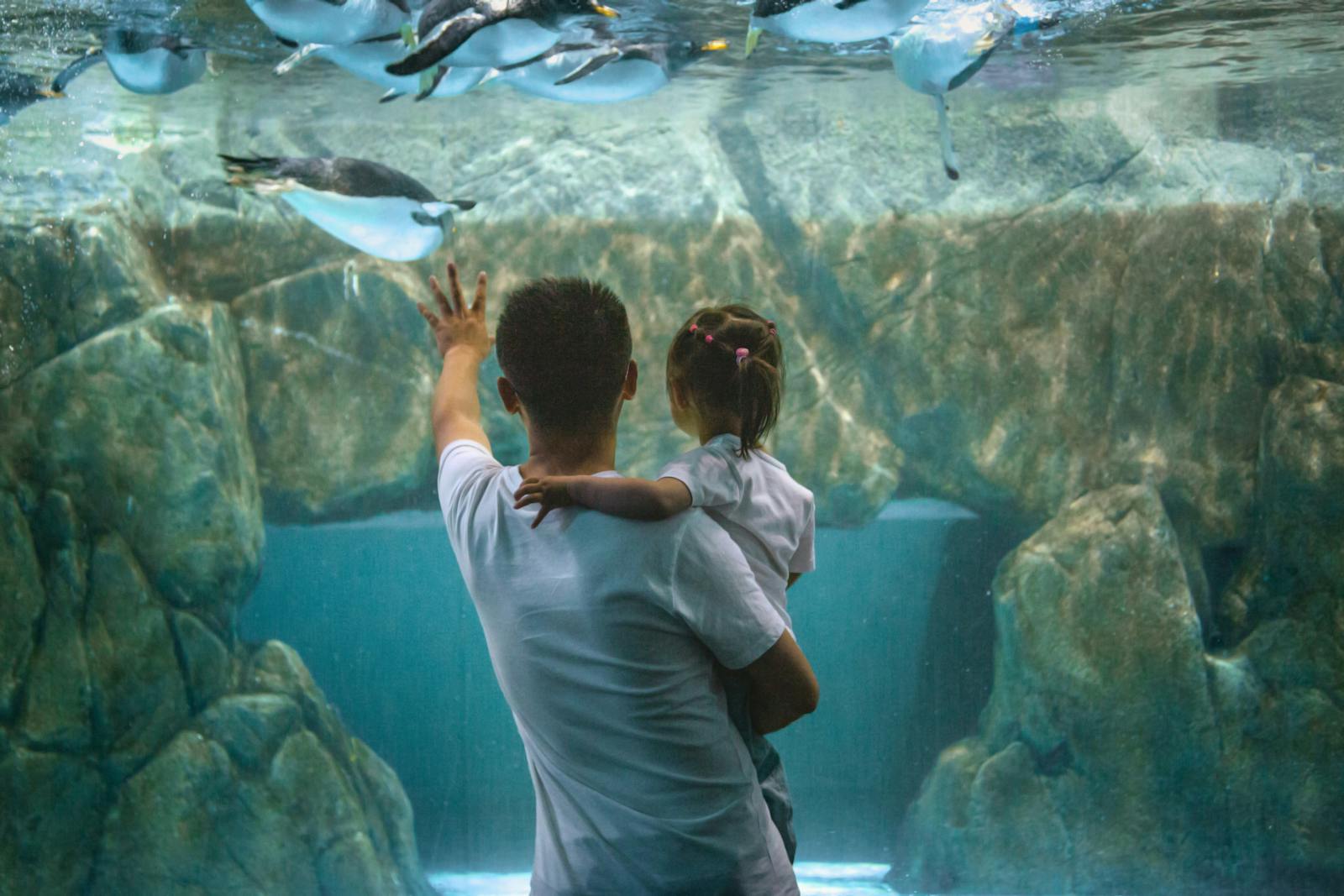
- Antarctica. King and gentoo penguins on rocks under simulated polar light.
- Tasman Sea. Pacific dolphins (currently in temporary rotation, so confirm before you count on it).
- Great Barrier Reef. Reef sharks, clownfish, anemones, and coral in full color.
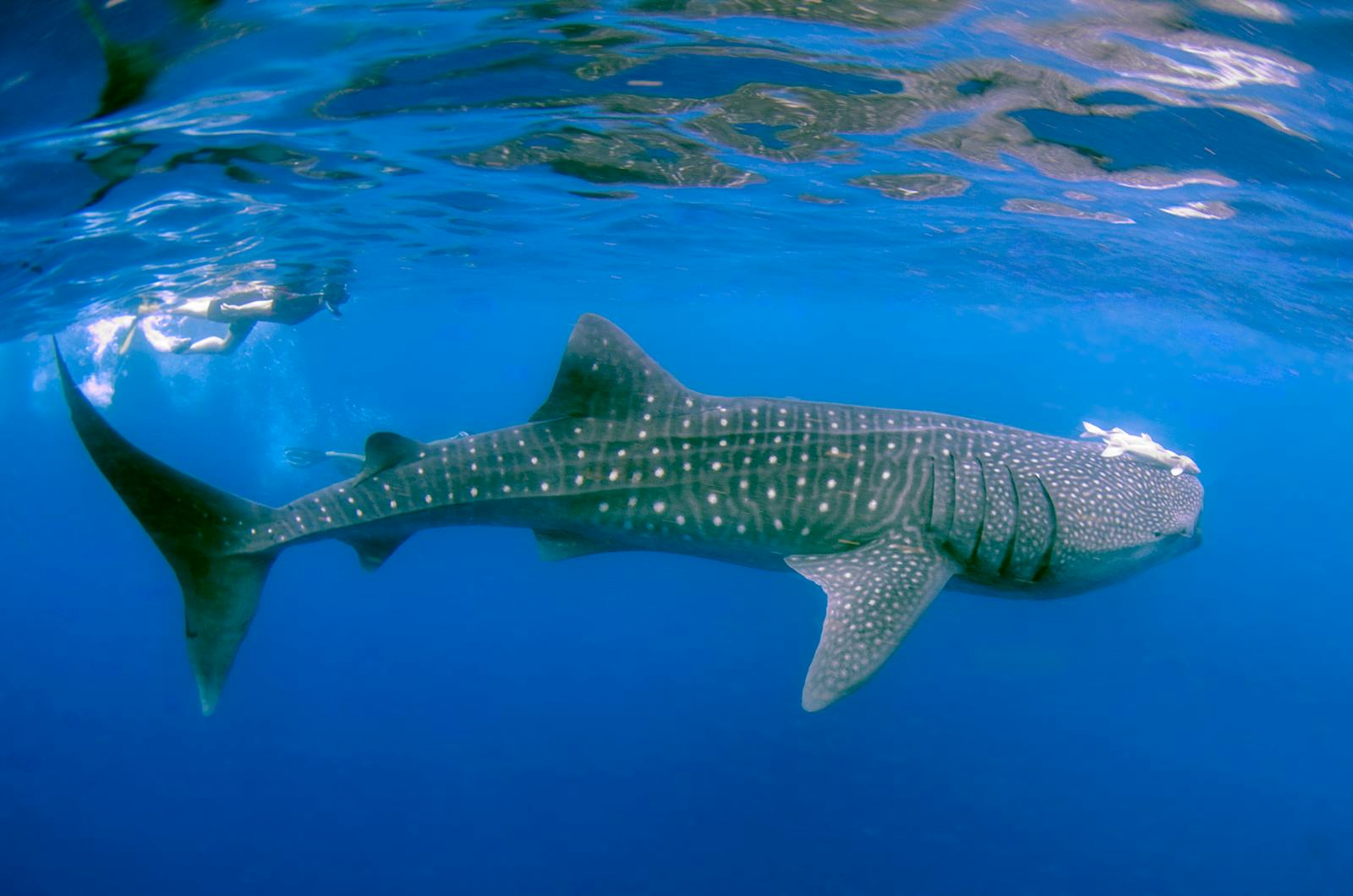
- Pacific Ocean. The main event. Whale sharks, a manta ray, hammerheads, schooling tuna, all in the tank you have been circling the whole way down.
- Japan Deeps. Spider crabs, deep-sea fish, and the genuinely strange residents of Japan’s depths.
- Coast of Chile. Tropical fish.
- Cook Strait. New Zealand species.
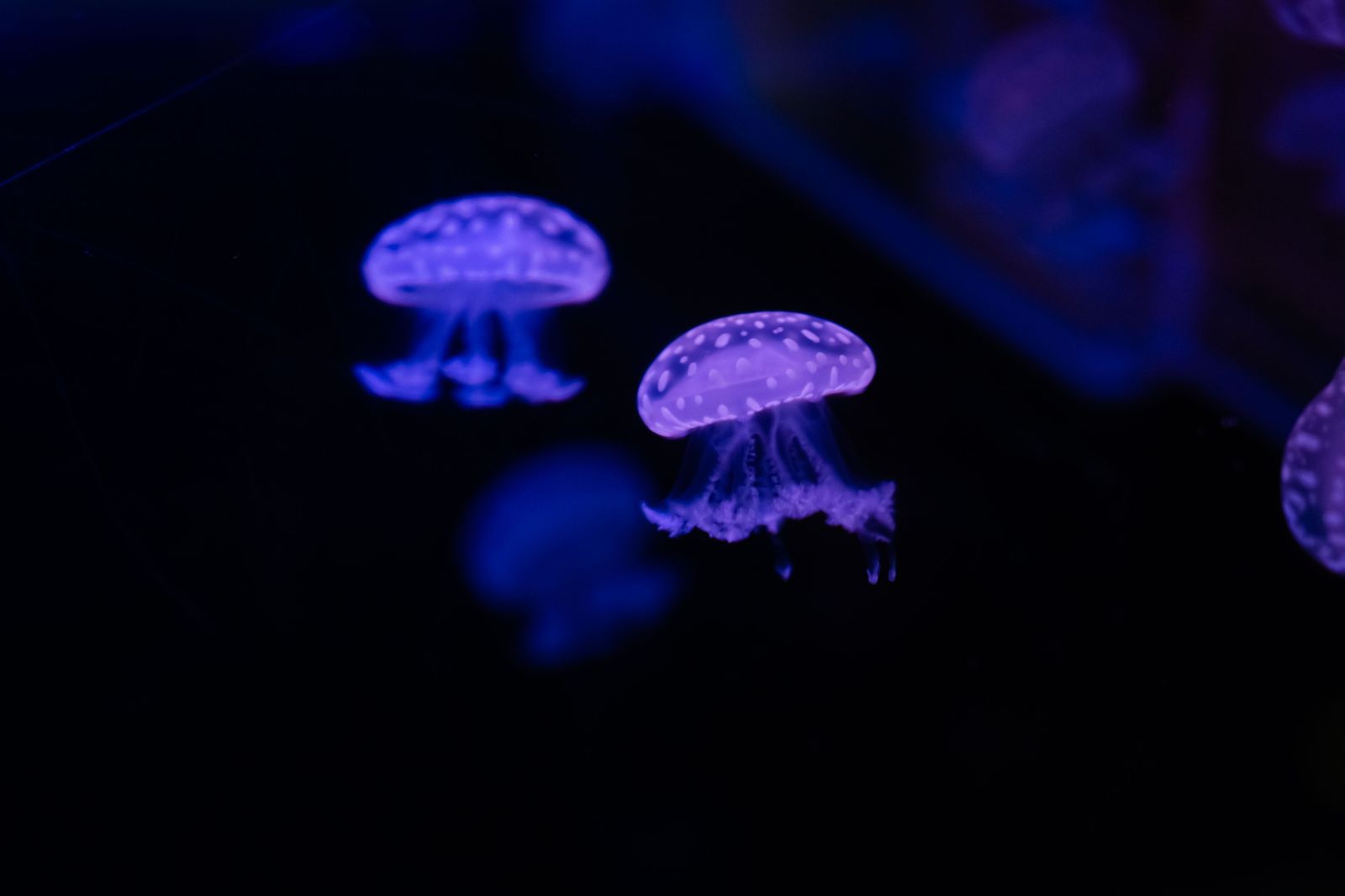
- Kura, the jellyfish gallery. A standalone, dimly lit room of jellyfish, and the best photo opportunity in the building.
- Maldives touch tank. Small ray and shark species you can touch gently under staff supervision (you will need to wash your hands first).
The whale sharks, and how to actually see them
Kaiyukan has kept whale sharks since the 1990s. As of 2026, two share the central tank, an older male and a younger female, with juveniles rotating through. They are the largest fish on Earth, and the residents here typically run 4 to 7 meters long, fed five times a day on krill, krill paste, and fish.
Here is the part worth knowing. They are slow, calm swimmers, and the best view is not at the top of the tank where everyone clusters first. It is at the deepest viewing window on the lower floors, where they pass within an arm’s reach of the glass. Give that lowest level at least 15 minutes. And if you can time it for early evening, when the lighting shifts to Night Mode, the tank looks its absolute best, blue and quiet and a little eerie.
Feeding times and shows worth timing
- Sea otter feeding: 10:30 and 14:30 at the Aleutian Islands tank.
- Penguin feeding: 11:30 and 15:00 in the Antarctica zone.
- Whale shark feeding: roughly hourly across the central tank, narrated by a staff diver.
- Sea lion show: 12:00 and 16:00 in Monterey Bay.
- Daily diver presentation: a diver enters the central tank around 14:00 to hand-feed the rays.
These times drift a little by season, and the current schedule is posted at the entrance, so glance at it on your way in. The diver-alongside-whale-shark moment is the one to plan around. Be at the lowest deep-tank window when it is announced, and you will not forget it.
When to go
- Best day: Tuesday or Wednesday afternoon. The Monday after a holiday weekend is usually quiet too.
- Best time: either 10:00 at opening or after 17:00 for the Night Mode lighting.
- Avoid: Saturday and Sunday between 11:00 and 15:00, when the spiral path bottlenecks badly and you spend more time waiting than watching.
- Best season: it is indoors, so any time works, but the bay-front area is most pleasant in March to May or October to November.
One more timing note that catches people out: rainy days and the height of summer both push crowds indoors, and Kaiyukan is the obvious refuge. If you are visiting in a downpour or during the August heat, get your timed e-ticket in advance and aim for that late-afternoon window rather than turning up midday with half of Osaka.
Getting to the aquarium
- From Umeda / Osaka Station: Midosuji Line to Honmachi (4 min), change to the Chuo Line to Osakako (10 min), then a 5-minute walk. About 25 minutes total, ¥240.
- From Namba: Yotsubashi Line to Hommachi, change to the Chuo Line to Osakako. Roughly 25 minutes.
- From Kansai Airport: JR Kanku Rapid to Tennoji, then the Midosuji Line to Hommachi and the Chuo Line to Osakako. About 75 minutes.
- From USJ: take the Captain Line water bus straight across the bay to Tempozan, a 10-minute scenic ride that is a small attraction in its own right.
- By taxi: ¥2,500 to ¥3,500 from Umeda or Namba.
What else is at Tempozan Harbor Village
One of the underrated reasons to make the trip is the waterfront itself, which has grown into a small entertainment district around the aquarium. Tempozan was reclaimed land turned port turned redevelopment project, and the result is a compact cluster of attractions you can cover on foot without ever needing a train. If the weather is good, the bay breeze and the views back toward the city make it a pleasant place to kill an extra hour either side of your aquarium slot.
- Tempozan Ferris Wheel. Once the tallest in Asia, still 112.5 meters, with bay and mountain views.
- Santa Maria Cruise. A replica of a Columbus-era ship that runs scenic 45-minute loops around Osaka Bay.
- Legoland Discovery Center. An indoor Lego attraction pitched at kids 3 to 10.
- Tempozan Marketplace. Restaurants, souvenir shops, and the Naniwa Kuishinbo Yokocho food court, styled after 1950s Osaka.
- Captain Line water bus. The link across the bay to Universal Studios Japan.
Eating at and around Kaiyukan
- Cafe Marina, inside the aquarium, does light meals, drinks, and a whale-shark-themed dessert.
- Naniwa Kuishinbo Yokocho in the Marketplace is a retro indoor food court with okonomiyaki, kushikatsu, takoyaki, ramen, and udon.
- Mosaic Garden food trucks handle the casual outdoor option.
- Be honest about the bay food, though. It is convenience-focused, not destination dining. A lot of travellers eat properly in Umeda or Namba before or after.
Visiting with kids
- Strollers are fine throughout, and elevators connect every floor as a stroller-friendly alternative to the spiral ramp.
- Toilets sit every two or three floors, with diaper-changing stations.
- The touch pool at the end of the spiral is the highlight for most kids, so save a little energy for it rather than burning out on the upper floors.
- Audio guides in English, Korean, and Chinese are at the entrance for ¥500.
- A sensory note: the place is mostly dark and dimly lit, which some children find a lot. Check the lobby map for the brighter exhibits and start there if you need to ease in.
- Lockers are on the ground floor and outside the entrance.
A few things worth knowing
- Photography is fine in all exhibits, but flash is not allowed.
- Bring a sweater. The interior runs around 20°C, which is cool in summer and comfortable in winter.
- Go easy on the coffee beforehand. The spiral takes 2.5 hours and bathroom access is limited until you have fully descended.
- The exit is on the ground floor by the gift shop, so budget 15 minutes for the inevitable whale-shark plush negotiation.
- No re-entry on a single ticket. If you want to slot in a Santa Maria cruise mid-visit, you will need a separate aquarium re-entry ticket.
- Free public Wi-Fi inside.
Pairing Kaiyukan with the rest of your day
- Kaiyukan plus USJ. Both are full-day attractions, so spread them across two days rather than cramming.
- Kaiyukan plus Osaka Castle. Aquarium in the morning, castle in the late afternoon, with the Chuo Line running direct between them.
- Kaiyukan plus the Marketplace and Ferris wheel. A full, easy half-day at the bay front.
- Kaiyukan plus Legoland Discovery Center. Best for families with kids 3 to 8, and both sit in our family travel planner for Osaka alongside the rest of the kid-friendly stops.
Osaka Aquarium Kaiyukan FAQ
How long do you need at Kaiyukan?
Two to three hours. Two is the rushed minimum; three lets you catch the whale-shark feeding and linger in the jellyfish gallery without having to backtrack against the crowd.
Is Kaiyukan worth visiting?
Yes, especially for families, marine-life fans, and anyone wanting an indoor-friendly day in the itinerary. The spiral-around-one-mega-tank design is genuinely unusual, even to people who visit a lot of aquariums.
Are the whale sharks really there?
Yes. As of 2026, two whale sharks live in the Pacific Ocean tank, and Kaiyukan has kept and rotated them for more than three decades.
Can you bring food in?
Outside food is generally not allowed inside the exhibits. Cafe Marina and the Tempozan Marketplace next door cover the options, and sealed water bottles are tolerated.
Is it accessible?
Yes. You can navigate the whole spiral by elevator instead of the descending ramp, and free wheelchair rentals are at the ground-floor information desk.
How does it compare to other Japanese aquariums?
Against Tokyo’s Sumida Aquarium, Kaiyukan is much larger (roughly four times the floor space), has whale sharks, and runs on that vertical spiral. Sumida is newer but smaller and lacks the marquee species. Most travellers rate Kaiyukan the better aquarium experience in Japan, alongside Okinawa’s Churaumi.
Build out the rest of your trip
Kaiyukan is a half-day stop that slots cleanly alongside Osaka’s other landmarks. Use our things to do in Osaka guide to map the full itinerary, pair it with the Osaka Castle visitor guide for a same-day combo on the Chuo Line, or run it back to back with Universal Studios Japan across the bay if you are doing both big bay-front attractions. If rain is in the forecast, it also lands on our rainy-day Osaka shortlist, which is exactly when a few hours under one enormous tank feels like the right call.