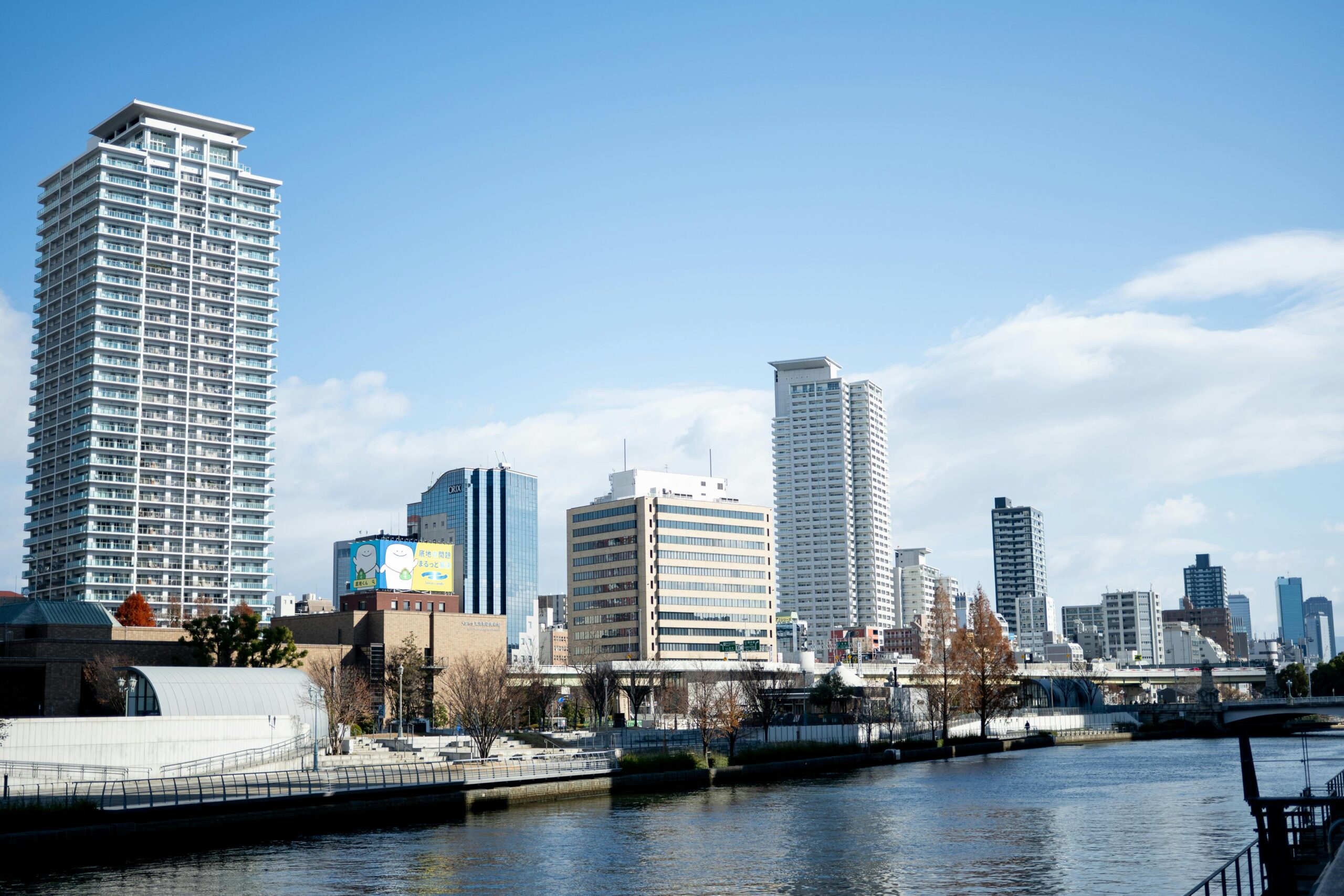
Nakanoshima is the calm in the middle of Osaka. It’s a long, thin island, about three kilometres end to end, wedged between the Dojima and Tosabori rivers right at the city’s centre. No neon, no takoyaki queues, no one hustling you into a bar. What you get instead is four good museums, a clutch of grand century-old buildings, a free rose garden, and riverside paths where you can actually hear yourself think. After a day in Dotonbori, that’s worth a lot.
This guide walks you through the museums worth your time, the architecture worth slowing down for, when the roses are actually out, and how to fold Nakanoshima into a half day without rushing it. Plan on three to five hours. Bring shoes you can walk in.
The short version: what Nakanoshima is good for
Osaka opened its first public park here in 1891. It built its Renaissance-style public hall here in 1918. And it has kept stacking culture onto the island ever since, so today you’ve got the National Museum of Art and the black-cube Nakanoshima Museum of Art a few minutes apart, the Osaka Science Museum next door, and the riverbanks linking it all. It’s flat, it’s quiet, and it rewards a slow pace.
One way to think about the island: the western half is culture, the eastern half is green. The museums and the science centre sit toward the Higobashi end. The park, the rose garden, and the old civic buildings spread across the middle and east toward Naniwabashi. A single flat walk links the two, with the river on both sides the whole way. You don’t need a plan more complicated than that.
- Where: Kita-ku, central Osaka, between the Dojima and Tosabori rivers.
- How long: three to five hours for the main museums plus a walk.
- Stations: Yodoyabashi (Midosuji + Keihan), Higobashi (Yotsubashi), Watanabebashi and Naniwabashi (both Keihan) all sit on or beside the island.
- Best for: people who like art and old buildings, families with the Science Museum in mind, and anyone who wants a quiet stroll.
- The one rule: don’t come on a Monday. Most museums shut.
Getting there, and which station to pick
Because the island is so long, the station you choose decides where your day starts. They all bracket Nakanoshima, and none of them leaves you more than about five minutes’ walk from the action.
- Higobashi (Yotsubashi line): the closest stop to the museum cluster. Use this if NMAO and the Nakanoshima Museum of Art are your priority, which for most first-timers they are.
- Yodoyabashi (Midosuji + Keihan): the most useful hub. The Midosuji line connects it straight to Namba and Umeda, so it’s the easy in-and-out point. It also drops you near the river-cruise pier.
- Watanabebashi (Keihan): handy for the central stretch, the Festival Tower complex, and the Conrad.
- Naniwabashi (Keihan): the eastern end, right by the park, the rose garden, and the Central Public Hall.
A neat way to do it without backtracking: start at Higobashi in the west, work through the museums, then walk east through the park to finish at Naniwabashi or Yodoyabashi. You see the whole island and never retrace your steps. If you’re arriving from the south, the Midosuji line to Yodoyabashi is the simplest single ride; from Umeda it’s just a few minutes down the same line.
The museums, ranked by who they’re for
Four museums cluster at the western end of the island, all walkable from one another. You won’t do all four well in a day, and you shouldn’t try. Pick two. Here’s how to choose.
National Museum of Art, Osaka (NMAO)
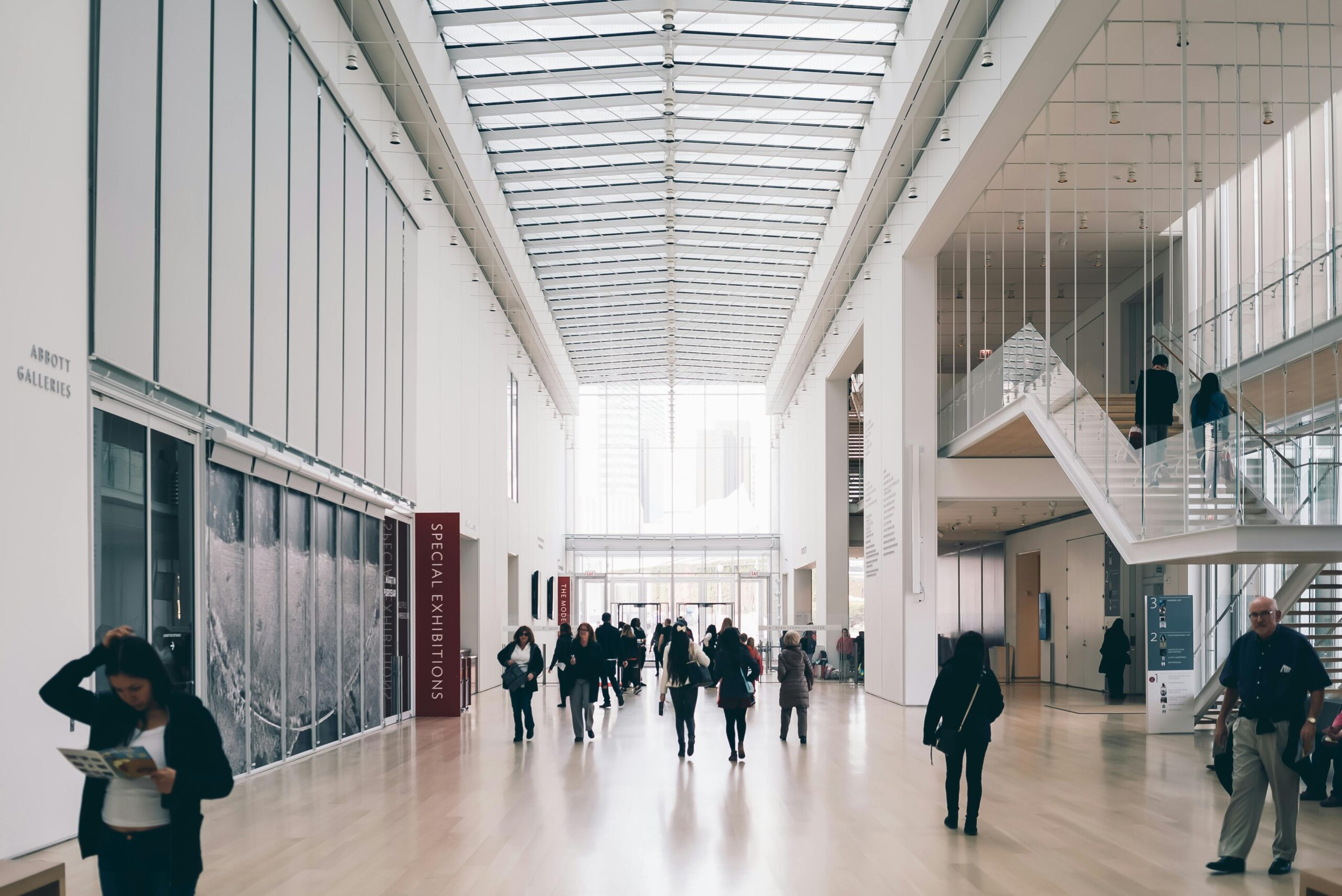
This is the one to see for the building alone. Argentine architect Cesar Pelli designed it so the entire museum sits underground, with a sweeping curved steel structure rising out of the plaza like bamboo bending in wind. You descend to reach the galleries, which is a strange and lovely thing to do on the way to looking at modern and contemporary art. The collection rotates and there’s usually a strong special exhibition running alongside it.
It’s the kind of place where the permanent collection might be modest one month and the headline show is the whole reason to go. Check what’s on before you commit a chunk of your day. The underground galleries also make it a smart rainy-day call, since you’re inside and out of the weather the moment you arrive.
- Hours: 10:00 to 17:00, open until 20:00 on Fridays and Saturdays. Closed Mondays.
- Admission: around ¥430 for the collection; special exhibitions are priced separately and cost more.
Nakanoshima Museum of Art
The newcomer. It opened in 2022 as a windowless black cube, and inside it holds a collection of more than 6,000 works, including significant pieces by Foujita and Modigliani. The interior plays with light and floating staircases in a way that photographs well. If you only have time for one art museum and you care more about the art than the architecture, this is the pick. Tickets run about ¥1,500 for a standard exhibition.
It sits almost next door to NMAO, which is why people pair the two. The atrium is free to walk into even if you don’t buy a ticket, and it’s a good spot to duck out of the heat or the rain for a few minutes. The shop is better than most museum shops in the city.
- Hours: 10:00 to 17:00. Closed Mondays.
- Admission: roughly ¥1,500, varying by exhibition.
Osaka Science Museum
Bring the kids here. Four floors of hands-on exhibits cover electricity, the universe, and everyday physics, and there’s a planetarium with one of the largest domes in Japan at 26.5 metres across. You can buy exhibits and the planetarium separately or together. Easily a couple of hours if the children are engaged, which they usually are.
The planetarium shows are in Japanese, so factor that in with younger or non-Japanese-speaking kids, though the visuals carry a lot regardless. The hands-on floors need no translation at all. It’s right beside NMAO, which makes a split-the-family plan easy: one parent takes the kids to the science floors while the other does an hour in the art museum next door.
- Admission: about ¥400 for exhibits, ¥600 for the planetarium, ¥800 combined.
Fujita Art Museum
The quietest of the four and the most specialised. Rebuilt and reopened in 2022, it holds the private Fujita collection of tea-ceremony art, including National Treasures and Important Cultural Properties. This is one for people already keen on classical Japanese art rather than a first-timer’s catch-all. Admission is around ¥1,500.
It’s set a little apart from the main cluster, toward the eastern side of the island, so treat it as a deliberate stop rather than a casual add-on. If you’ve already done a tea ceremony elsewhere in the city and want to understand the objects behind the ritual, this is where the good ones live.
If you’re weighing museums beyond the island too, our guide to the best museums in Osaka sets these in context against the rest of the city.
The old buildings, and why they’re here
Before the museums, Nakanoshima was Osaka’s civic and financial heart, and the architecture still shows it. A century ago this island was where the city did its serious business, and the buildings were meant to look the part. They’re best done as a slow loop on foot, ideally with the camera out and no particular rush.
- Osaka City Central Public Hall (1918): the red-brick Renaissance Revival landmark everyone photographs from the bridge. You can usually join a free guided tour of the interior, which is grander than the outside suggests, with a painted ceiling in the great hall that catches people off guard.
- Nakanoshima Library (1904): a domed Beaux-Arts building next door, still a working library, with a marble entrance hall worth a look. Step inside; it’s free and nobody minds a quiet visitor.
- Bank of Japan, Osaka Branch (1903): a Western-style stone facade that looks more Vienna than Osaka. You’re admiring it from the outside, but the outside is the point.
- Naniwabashi Bridge: a handsome stone bridge at the eastern end, with lion statues and good views back along the river. A natural place to end the architecture loop.
The three big buildings stand within a couple of minutes of each other near the eastern end, so you can knock them out in well under an hour, longer if you take the Public Hall tour. The contrast with the underground NMAO at the other end of the island is the whole appeal: a hundred years of Osaka civic ambition, bookended.
The rose garden and the riverside walks
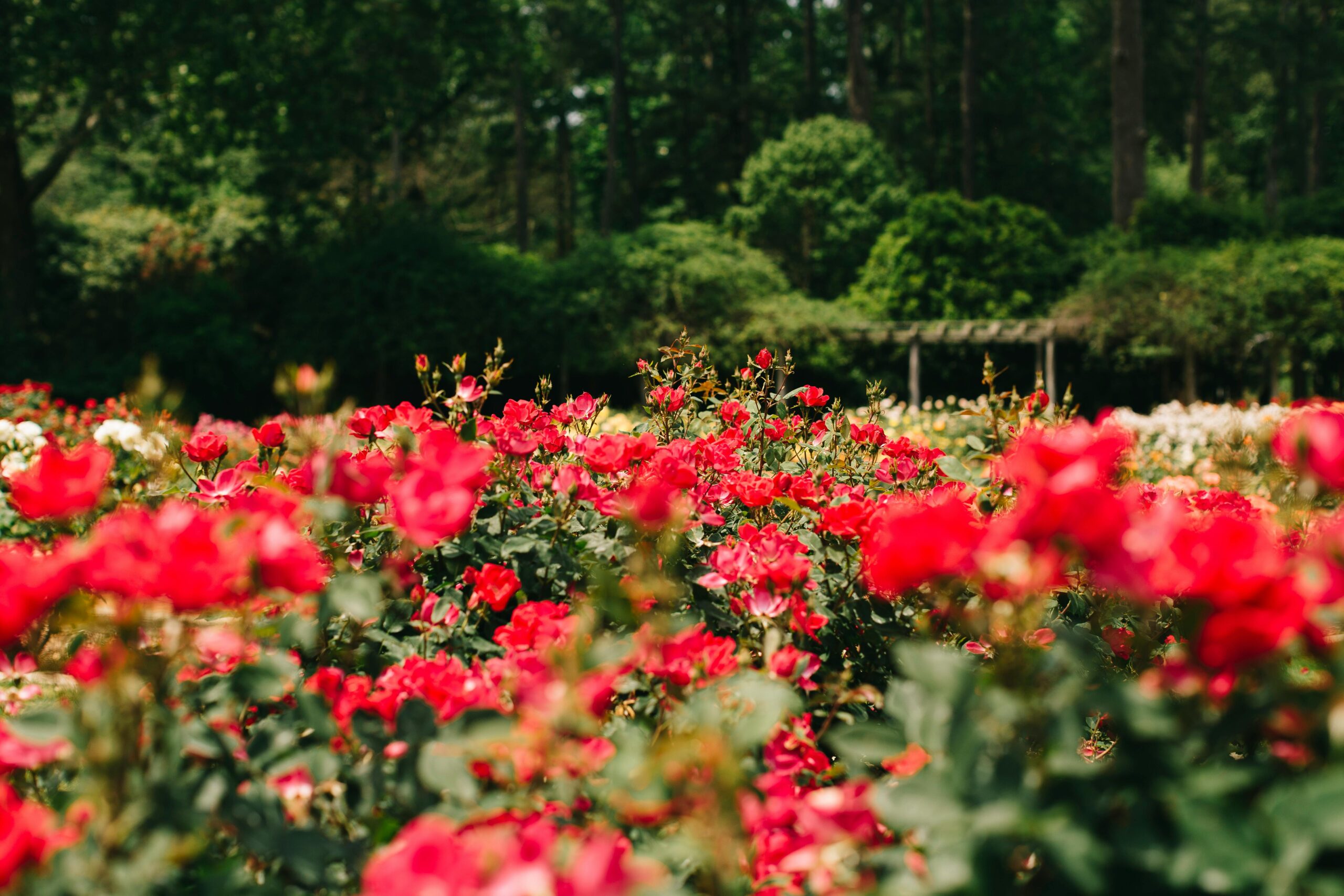
Nakanoshima Park runs along the eastern half of the island and it’s free, open around the clock. The rose garden inside it is the headline: roughly 3,700 plants across 310 varieties. It peaks twice a year, around mid-May and again in mid-October. Outside those windows it’s still a pleasant green space, just less of a show. Come in the off-season and you’ll have it largely to yourself.
The two peaks are worth planning around if your dates are flexible. The May flush tends to be the fuller one; the October bloom is smaller but comes with cooler, more comfortable walking weather. Either way, mornings are calmer than late afternoons, and weekdays beat weekends by a wide margin.
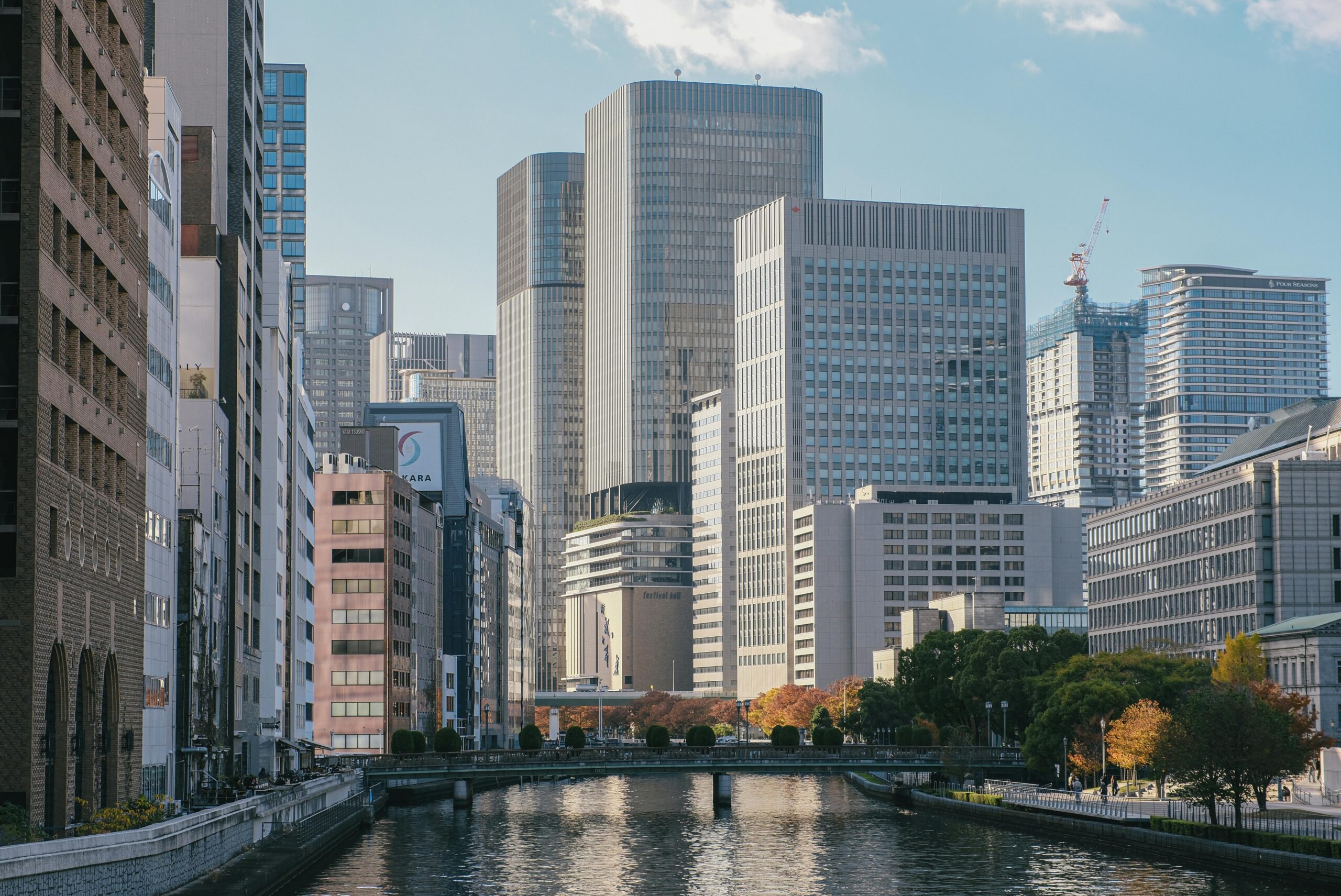
The riverside paths are the part most visitors skip and shouldn’t. More than a kilometre of flat walking runs along both rivers, and it’s the closest central Osaka gets to a proper riverbank stroll. Naniwabashi Park sits at the eastern tip with open views. Late afternoon into dusk is the sweet spot, when the light goes soft and the office crowds thin out.
This is also a fine place to picnic. Grab something from a depachika food hall in Umeda on the way down, find a bench facing the water, and you’ve got one of the cheaper good afternoons in the city. The grass near the rose garden gets busy at lunch with local office workers doing exactly that.
Seeing it from the water
Because the island is defined by its two rivers, a boat is a genuinely good way to take it in. The Aqua-Liner river cruise loops past Nakanoshima’s bridges and historic buildings, and you can board near Yodoyabashi. It’s a low-effort way to see the architecture from the angle it was built to impress from. The Public Hall and the bridges read completely differently from the water than they do from the pavement.
The ride is short and gentle, which makes it an easy add for tired legs or restless kids mid-afternoon. If you want to compare your options on the water, our Osaka river cruises guide breaks down the routes, times, and prices.
Where to eat and drink on the island
Nakanoshima isn’t a food destination the way Namba is, and that’s fine. It does coffee and views better than it does dinner. A few reliable stops:
- Takamura Wine & Coffee Roasters: a roaster in a converted warehouse with serious coffee and a striking interior. Worth a detour even if you’re only after a flat white.
- Cafe Madragoa: a small specialty-coffee spot for a quiet break between museums.
- The museum cafes: both NMAO and the Nakanoshima Museum of Art have decent mid-range cafes, handy when you don’t want to leave the cluster.
- Festival Tower: several floors of restaurants if you want a proper sit-down lunch with options.
- Conrad Osaka, 40th floor (Atmos bar): the splurge. A drink up here buys you one of the better skyline views in the city. Save it for the end of the day.
For dinner proper, most people drift north to Kitashinchi or south toward Namba, both a short ride away. The island empties out in the evening once the offices close, so don’t count on a buzzing dinner scene here. Treat it as a daytime place and you won’t be disappointed.
A half day that actually flows
This works whether you came for the art or just to slow down for an afternoon. Adjust the museum stops to your taste.
- 10:00 — Arrive at Higobashi Station and walk over to NMAO.
- 10:15 — NMAO, around 90 minutes, building included.
- 11:45 — Short walk to the Nakanoshima Museum of Art.
- 12:00 — Nakanoshima Museum, about an hour.
- 13:00 — Lunch at a museum cafe or over at Festival Tower.
- 14:00 — Walk east to the rose garden in Nakanoshima Park.
- 14:30 — Central Public Hall: photos outside, lobby tour if one’s running.
- 15:30 — Riverside walk, then a drink at the Conrad’s 40th-floor bar.
- 17:00 — Train back into the centre.
Travelling with kids? Swap NMAO for the Science Museum and skip the Fujita entirely. Short on time? Cut to one museum, the Public Hall, and the river path, and you’ve still got the essence of the island in a couple of hours.
Practical things worth knowing
- Mondays are dead. Nearly every museum closes. If Monday is your only day, do the buildings, the park, and a river cruise instead.
- It’s a walking island. Three kilometres end to end, flat the whole way. Wear something comfortable.
- Coin lockers run about ¥400 at the museums if you’re carrying bags.
- Wi-Fi is reliable in the major museums and most cafes.
- Light matters here. The riverbanks and the Public Hall both photograph best in the last hour before sunset.
- Shade is thin in summer. The riverside paths bake in July and August, so carry water and lean on the air-conditioned museums in the worst of the heat.
Nakanoshima Osaka FAQ
What is Nakanoshima known for?
Art and architecture, mostly. The National Museum of Art and the Nakanoshima Museum of Art anchor the island, the Osaka Science Museum draws families, and the 1918 Central Public Hall is the photogenic landmark. The free rose garden and the riverside paths round it out.
How long do I need in Nakanoshima?
Three to five hours. That covers two museums, the rose garden, and a walk past the historic buildings without feeling rushed. Add an hour if you want a river cruise or a long lunch.
How do I get to Nakanoshima?
Several stations sit on or beside the island: Yodoyabashi (Midosuji and Keihan lines), Higobashi (Yotsubashi line), and Watanabebashi or Naniwabashi (both Keihan). Any of them puts you within about five minutes’ walk of where you want to be. From Namba or Umeda, the Midosuji line to Yodoyabashi is the simplest single ride.
Is the Nakanoshima rose garden free?
Yes, and it’s open around the clock with no gate. The blooms peak around mid-May and mid-October. Outside those weeks the garden is still a nice green space, just without the colour.
Which Nakanoshima museum should I choose?
Go to NMAO if the architecture excites you as much as the art. Choose the Nakanoshima Museum of Art if you want the Foujita and Modigliani works and a more conventional gallery experience. Families with children should head straight for the Science Museum.
Is Nakanoshima good for a rainy day?
It’s one of the better wet-weather options in central Osaka. NMAO is entirely underground, the other museums keep you indoors for hours, and the buildings are close enough together that you’re only briefly exposed between them. Skip the rose garden and the river walk in the rain and lean on the galleries.
Where to go next
Nakanoshima pairs naturally with the area just north of it. The Umeda district is a ten-minute hop away and flips the mood entirely, all towers, department stores, and crowds. For the full lay of the land, the Osaka neighbourhoods guide shows how the island fits between the city’s louder districts.