This article contains advertising. Our booking links are routed through a partner that adds commission tracking automatically, so if you book through one we earn a commission from the provider, at no extra cost to you. It never affects what we recommend. Affiliate disclosure
Most Osaka itineraries you will find online are written by people who spent two nights here on the way to Kyoto. They front-load the castle, march you down Dotonbori, and call it a city. Osaka rewards a different approach. It is compact, brilliantly connected, and organised around two poles that sit fifteen minutes apart on one subway line, which means you can see a great deal in very little time as long as you stop zig-zagging between them.
This is the hub for every Osaka itinerary on this site. Below you will find day-by-day plans for one, two, three, four and five days, plus the Kyoto split, the full Kansai week, and the awkward cases nobody plans for, such as a nine-hour layover or a trip built entirely around Universal Studios. Each one is time-boxed and costed, and each assumes you are staying somewhere sensible and using the subway rather than taxis.
If you are still at the stage of choosing dates and booking flights, start with our Osaka travel guide and come back here once you know how many nights you have.
How many days do you actually need?
The honest answer is three. Two days covers the sights, three days covers the city, and the difference between them is whether you experience Osaka as a checklist or as a place.
Here is how the trip lengths break down in practice:
- One day. Enough for the Minami half of the city, done well. You will see Dotonbori, eat properly, and get one major sight in. You will not see the castle and Dotonbori and Umeda in one day without hating it.
- Two days. The standard stopover. Day one Minami and the castle, day two Kita and the bay, or a day trip. This is the shortest stay that feels complete.
- Three days. The sweet spot. Two days in the city plus one full day for Nara, Kyoto or Universal Studios, without cutting anything short.
- Four days. Three city days at a human pace plus a proper day trip, or two day trips and a lighter city load.
- Five or more. Now Osaka becomes a base rather than a destination. Kobe, Himeji, Koyasan and Kinosaki all come into range.
One thing worth saying plainly: if your trip includes Universal Studios Japan, that is a whole day gone, and realistically a whole day plus a slow morning after. Budget it as a day trip, not an afternoon.
| Trip length | What fits | Day trips | Best for |
|---|---|---|---|
| 1 day | Minami only | None | Layovers, stopovers |
| 2 days | Minami + Kita/Bay | None, or one instead of day 2 | Short city breaks |
| 3 days | The whole city | One full day | Most first-time visitors |
| 4 days | City at a relaxed pace | One or two | Adding Universal Studios |
| 5–7 days | City plus southern Osaka | Three or four | Using Osaka as a Kansai base |
Four decisions to make before you pick a plan
Every itinerary below assumes you have settled these four things. Get them wrong and the best-planned day falls apart at the ticket gate.
1. Base yourself in Minami, not Kita
Namba and Shinsaibashi put you inside walking distance of Dotonbori, Kuromon Market, Amerikamura and Den Den Town, and on the Midosuji line for everything else. Umeda is the better transport hub for day trips and the better neighbourhood for a business trip, but it is a worse place to sleep on a short holiday because the good evenings are all in the south. Our where to stay in Osaka guide breaks the areas down properly, and Namba hotels covers the specific bookings.
Whatever you choose, do not move hotels mid-trip on a stay of four nights or fewer. The half-day you lose to check-out and luggage is worth more than the small gain in convenience.
2. Get an ICOCA card on arrival, and think hard about the Amazing Pass
The IC card is not optional. Buy an ICOCA card at the airport, or add one to your phone before you fly, and use it for every train, bus, locker and convenience store for the rest of the trip.
The Osaka Amazing Pass is a separate question and the maths changed recently. The one-day pass now runs about ¥3,500 and covers unlimited subway and bus travel plus entry to a long list of attractions. Given that Osaka Castle is around ¥1,200, the Umeda Sky Building observatory around ¥2,000 and the Tombori River Cruise around ¥2,000, the pass pays for itself the moment you do two paid sights and any real amount of travelling. It stops making sense on a day built around Universal Studios, Nara or Kyoto, none of which it covers.
Two things to watch. Several headline attractions, the Umeda Sky Building among them, only give free entry with the pass before 15:00 and drop to a small discount after that, so a pass day needs an early start. And the two-day physical card has been discontinued, so the two-day version is a digital QR ticket only.
3. Book the things that sell out
Universal Studios tickets and Express Passes, Super Nintendo World timed entry, any Michelin-listed restaurant, teamLab-style ticketed shows, and a kimono rental slot in cherry blossom season all need booking ahead. Everything else in these itineraries you can walk up to.
4. Accept the Osaka rhythm
Museums and castles here open at 9:00 or 9:30 and shut their gates at 16:30 or 17:00. Markets are a morning thing. The city then goes quiet in the late afternoon and comes back to life hard after 18:00 and stays loud until well past midnight. Plan sightseeing for mornings, shopping and coffee for the dead hours, and food and neon for the evening. Fighting this rhythm is the single most common way visitors waste a day.
One day in Osaka
A single day means picking one half of the city. Pick the south. This plan keeps you inside a small area, avoids long transit legs, and ends where you want to be after dark.
08:30 – Kuromon Ichiba Market. Start here while the stalls are fresh and before the crowds thicken. Kuromon is a covered market five minutes from Nippombashi Station, and it works best as breakfast: grilled scallops, tuna cut to order, fruit skewers, a bowl of something hot. Budget ¥1,500 to ¥2,500 and eat standing up. Note that many stalls wind down by late afternoon, so this genuinely is a morning stop. Our Kuromon Market guide has the stall-by-stall detail.
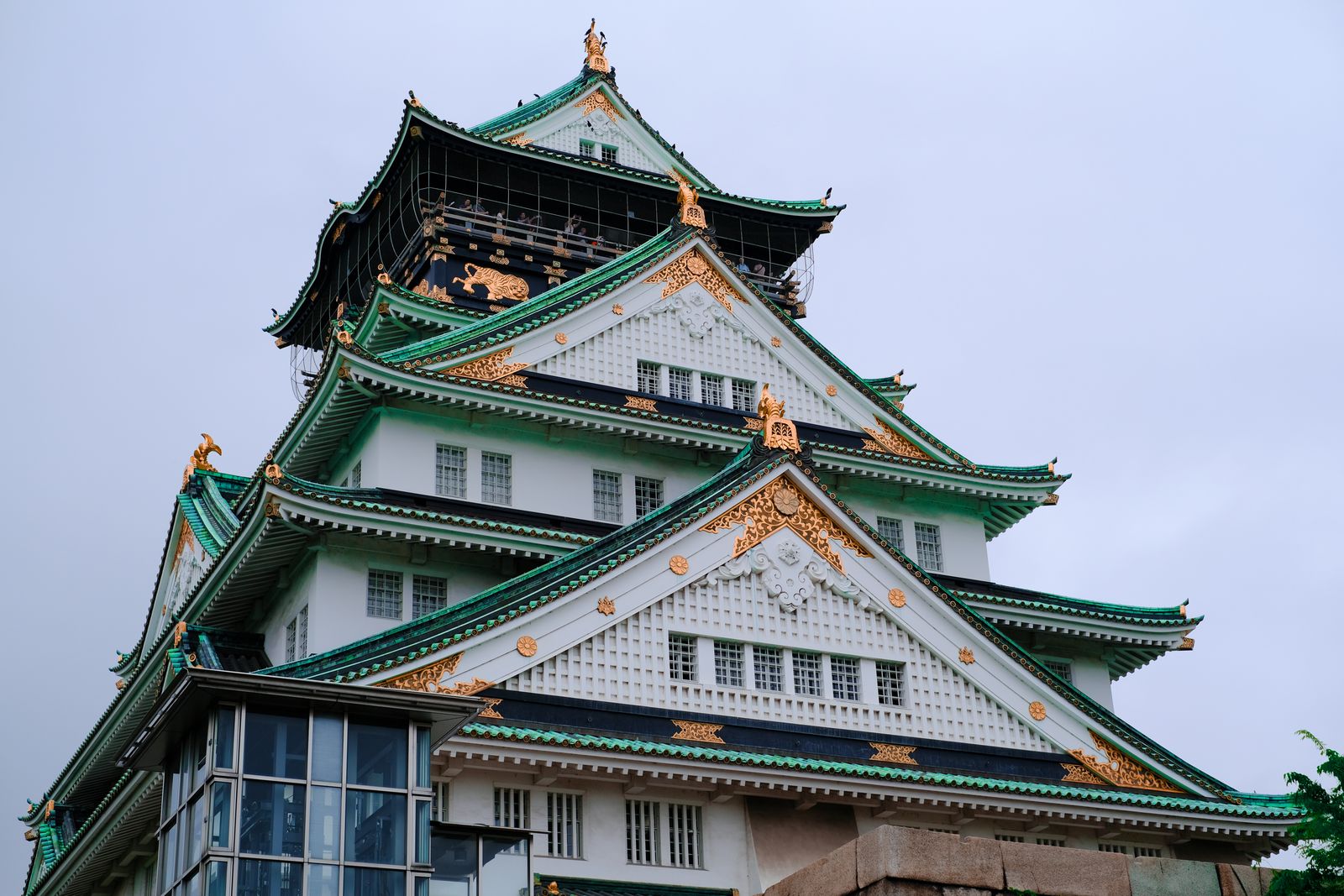
10:00 – Osaka Castle. Twelve minutes on the Chuo line from Nippombashi to Tanimachi 4-chome, then a walk through the park. The reconstructed keep houses a museum with a viewing floor at the top; entry is around ¥1,200 and the last admission is well before closing, usually 16:30. If the queue for the keep is long, the grounds, moats and Nishinomaru Garden are the better half of the experience anyway. Two hours covers it. See our full Osaka Castle guide, and the history behind it if you want context before you go.
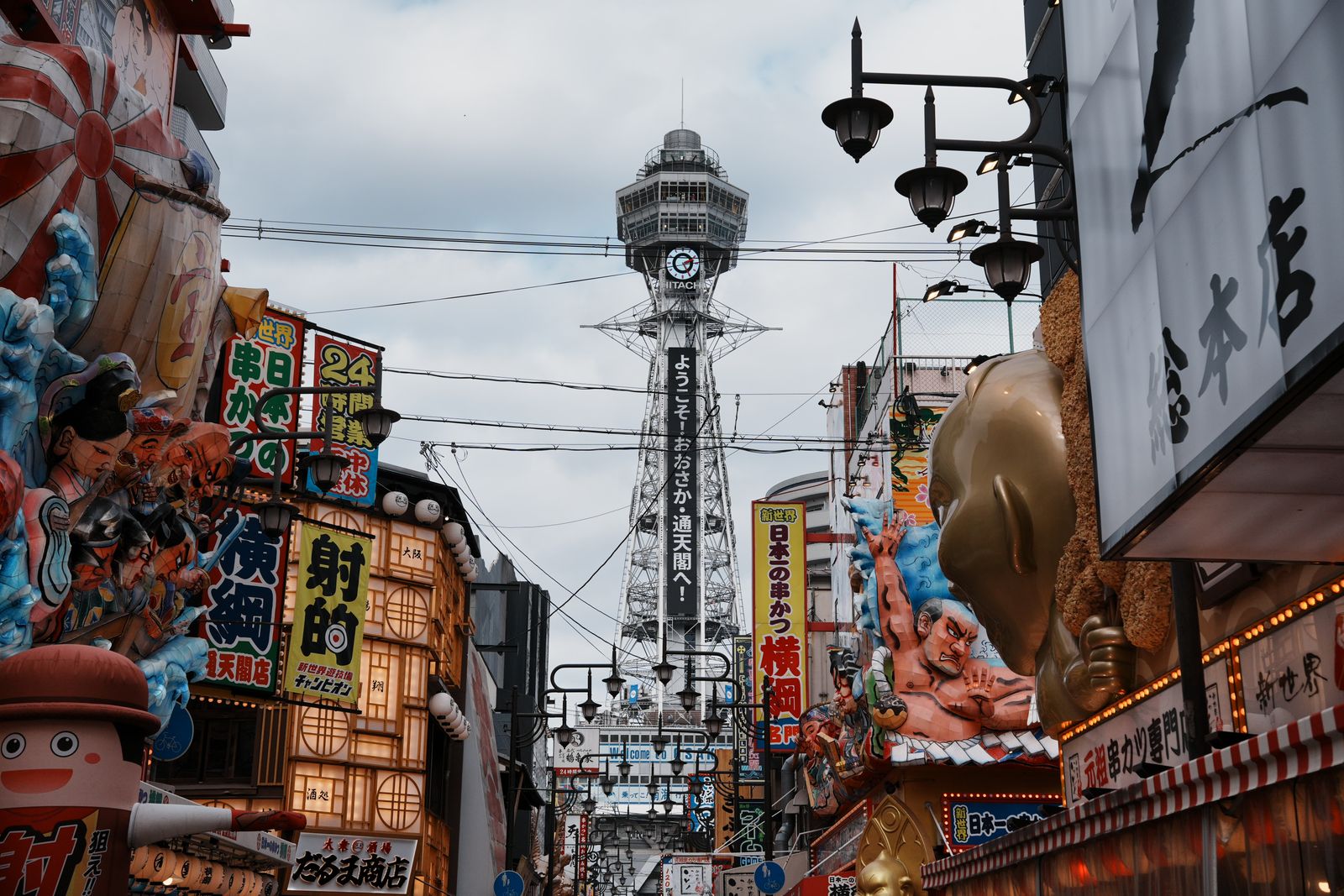
13:00 – Lunch in Shinsekai, and Tsutenkaku. Back on the subway to Ebisucho or Dobutsuen-mae. Shinsekai is the city’s unreconstructed retro quarter and the home of kushikatsu, deep-fried skewers served with a communal sauce pot. The rule that matters: no double-dipping, ever. Lunch here runs ¥1,500 to ¥2,500. Tsutenkaku tower sits in the middle of it if you want a view.
15:30 – Shinsaibashi and Amerikamura. Walk or ride north. Shinsaibashi-suji is a covered shopping arcade running most of a kilometre; Amerikamura, a block west, is the vintage and streetwear district. This is the right slot for the dead hours. Our Shinsaibashi shopping guide and Amerikamura guide cover both.
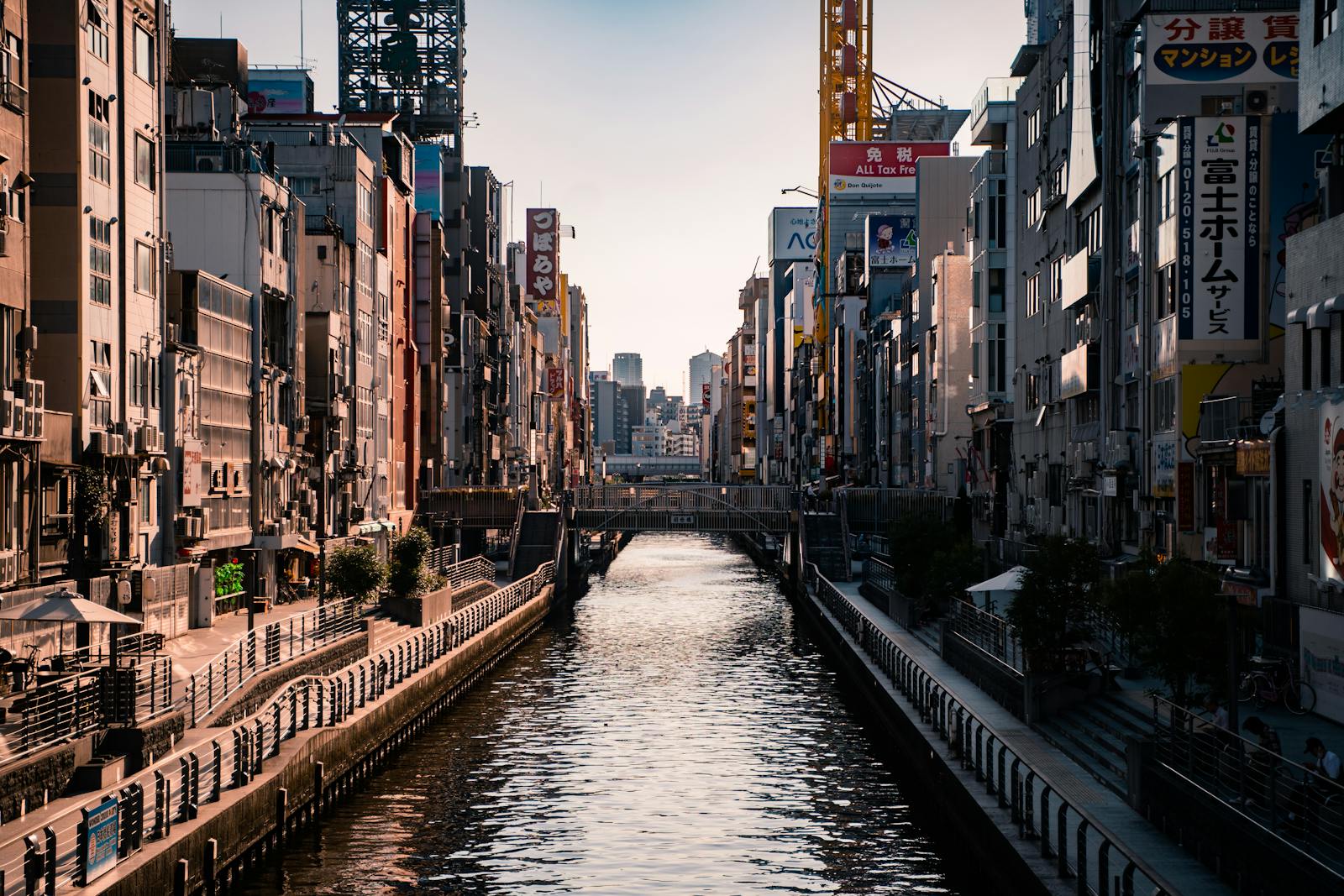
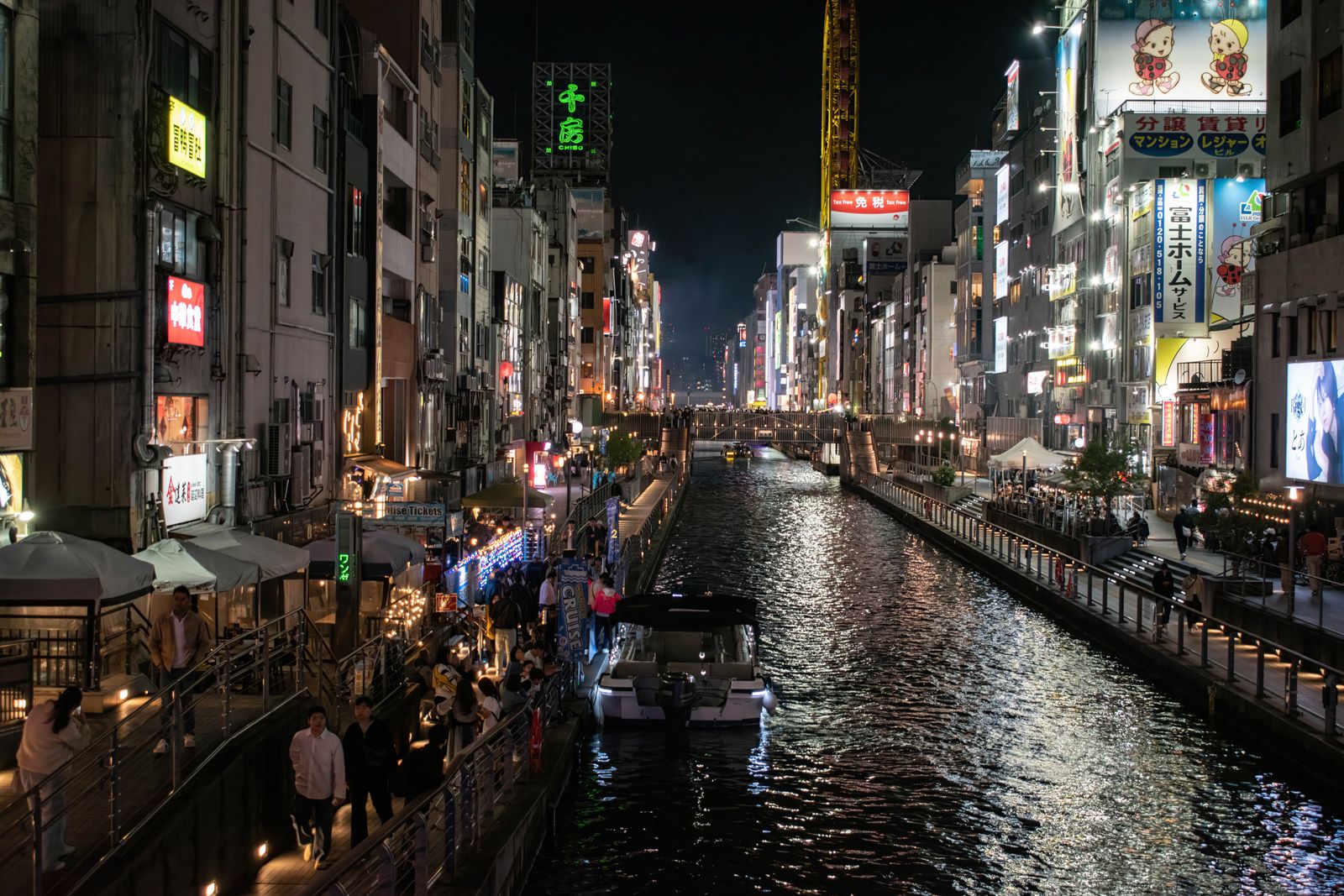
18:00 – Dotonbori, until you are done. The canal, the Glico running man, the mechanical crab, the noise. Eat takoyaki from a stall, then sit down for okonomiyaki. Duck into Hozenji Yokocho, a lantern-lit stone alley one street south, for the version of this neighbourhood that existed before the neon. If you want the canal from the water, the Tombori River Cruise is about ¥2,000 and takes twenty minutes. Our Dotonbori guide maps the whole strip.
Day total, excluding accommodation: roughly ¥7,000 to ¥10,000 per person including entry, food and transport. An Amazing Pass would cover the castle, the cruise and all the subway legs.
Two days in Osaka
Day one as above. Day two crosses the river and picks up everything the south does not have.
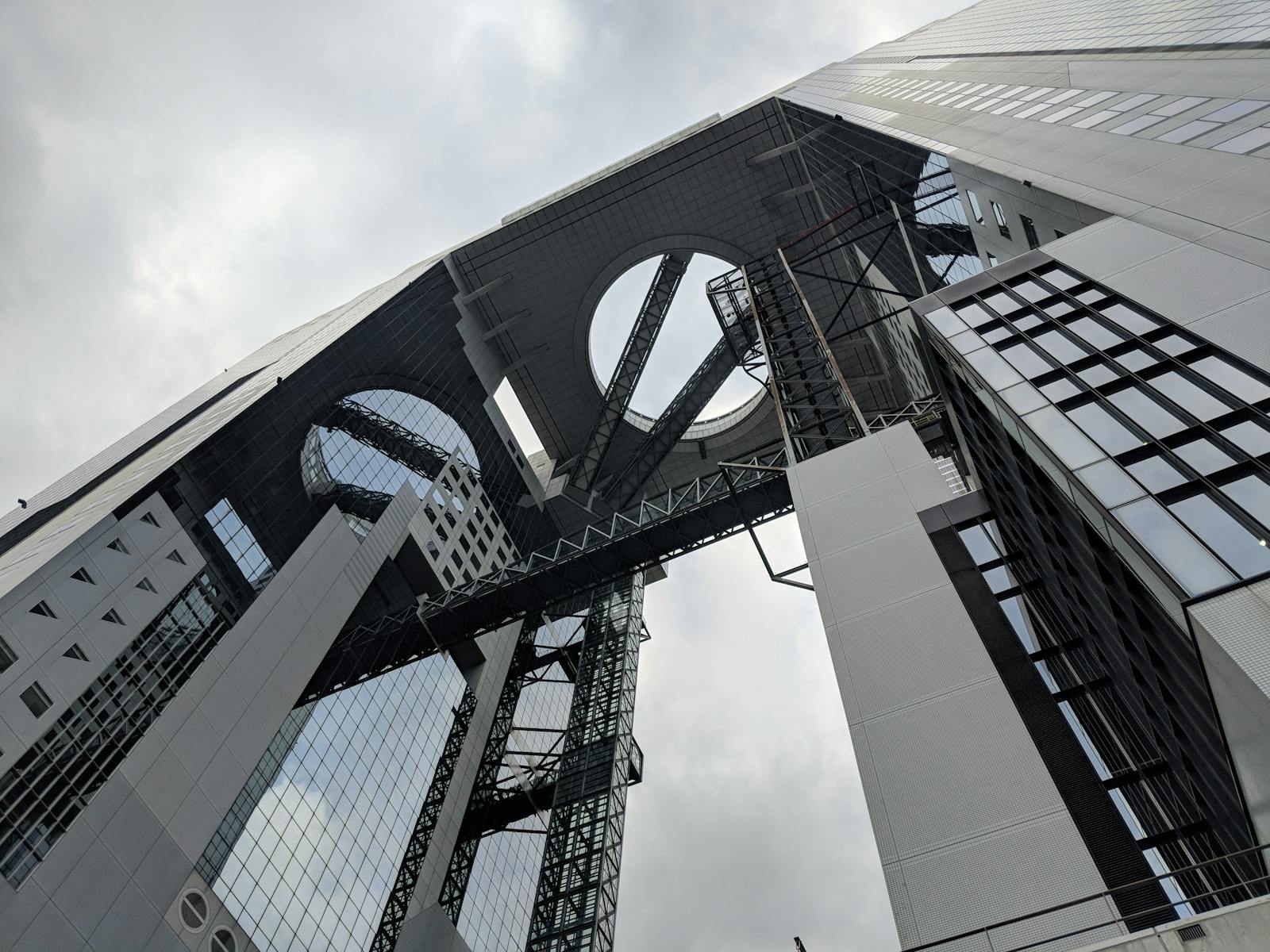
09:00 – Umeda Sky Building. The Kuchu Teien observatory is an open-air ring 170 metres up, reached by an escalator suspended through open space, which is the actual attraction. Entry is around ¥2,000. Go early, both for the light and because the Amazing Pass free entry here cuts off at 15:00. Allow ninety minutes including the ride up.
11:00 – Nakanoshima. A long thin island between two rivers, and the calmest part of central Osaka: the rose garden, the red-brick Central Public Hall, the Nakanoshima Museum of Art, and enough riverside bench to recover from yesterday. Our Nakanoshima guide has the walking route.
13:30 – Osaka Aquarium Kaiyukan, or the Bay. Twenty minutes on the Chuo line to Osakako. Kaiyukan is one of the largest aquariums in the world, built around a central tank holding whale sharks, and the route spirals downward through it. Entry is around ¥2,700 and you want two to three hours. The Tempozan Ferris wheel and market sit next door. See our Kaiyukan guide and the Osaka Bay area guide.
17:30 – Umeda for the evening. Back north. Umeda is the department-store and underground-mall half of the city, and it does a completely different evening to Dotonbori: rooftop bars, izakaya under the tracks, and the Kitashinchi drinking district if you want somewhere more grown-up. Our Umeda guide and Kitashinchi guide cover it.
If you would rather spend day two out of the city entirely, swap it for Nara. Both work; the bay day gives you a more rounded picture of Osaka, and Nara gives you the better photographs.
Three days in Osaka
This is the itinerary I would recommend to almost everyone. Days one and two exactly as above, then a full third day outside the city.
Day three, option A: Nara
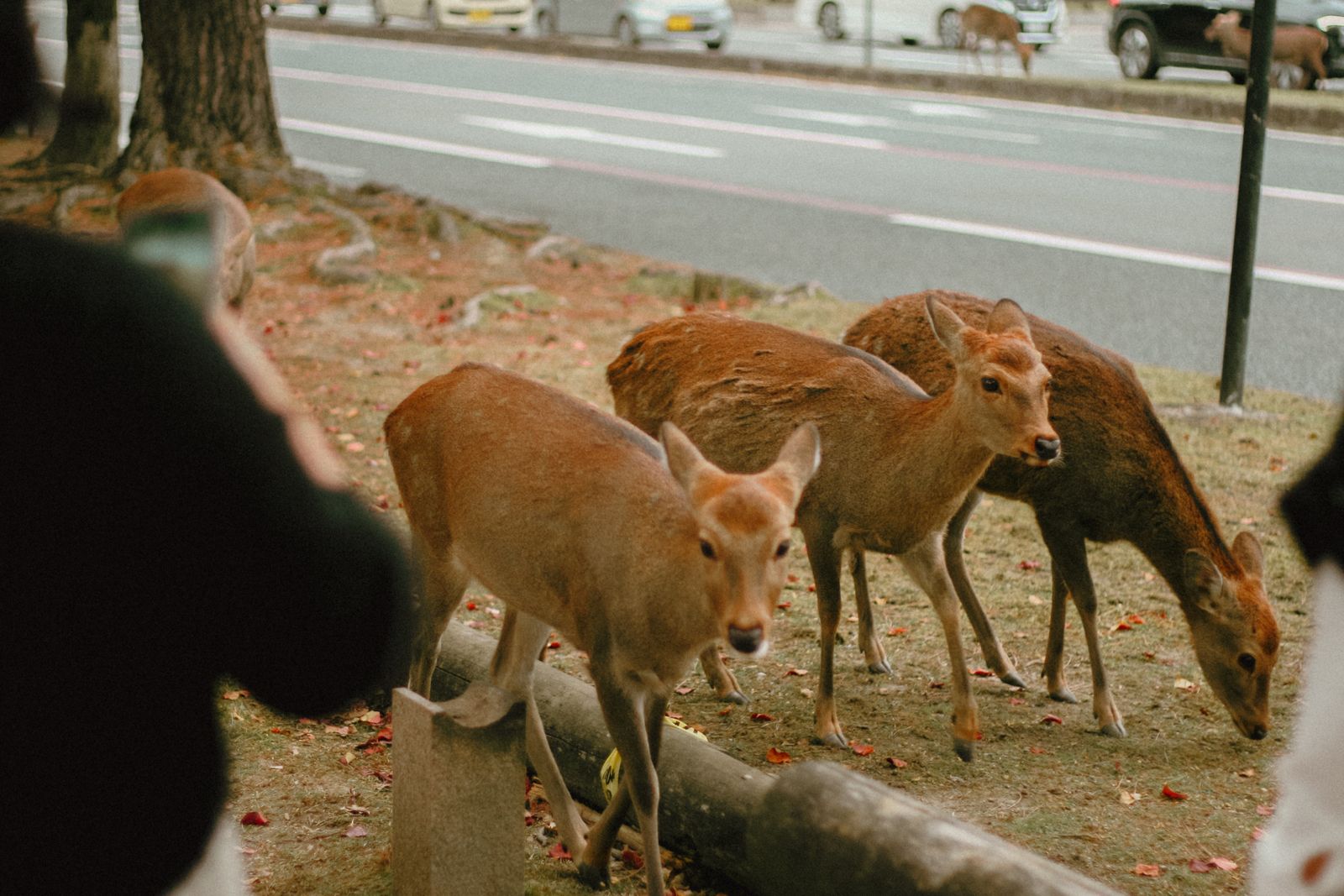
Nara is the easiest and most rewarding day trip from Osaka. The Kintetsu Nara line from Osaka-Namba runs to Kintetsu Nara Station in roughly forty minutes and drops you within walking distance of the park, which the slower JR route does not.
The shape of the day: Nara Park and its famously bold sika deer, Todaiji and its enormous bronze Buddha, Kasuga Taisha and its stone lantern paths, and Naramachi’s old merchant streets for lunch. Deer crackers cost about ¥200 a bundle and the deer know exactly what the transaction is; hold the crackers behind your back until you are ready. Back in Osaka by 18:00 for dinner. Full detail in our Nara day trip guide and the Osaka to Nara transport guide.
Day three, option B: Kyoto
Kyoto is thirty minutes away on the JR Special Rapid from Osaka Station, with departures every fifteen minutes. That closeness is a trap: Kyoto deserves days, not one, and a single day there will feel like a highlights reel.
If you do it, pick one district and stay in it. Southern Higashiyama, from Kiyomizudera down through Sannenzaka to Yasaka Shrine and Gion, is the strongest single-day route. Fushimi Inari is the other obvious target and works best either before 08:00 or after 16:00, when the tunnels of vermilion gates are actually walkable. See our Kyoto day trip guide and the Osaka to Kyoto transport comparison.
Day three, option C: Universal Studios Japan
If USJ is the reason you came, give it the whole day and start at rope drop. Universal City Station is about fifteen minutes from Osaka Station via a change at Nishikujo. Buy tickets in advance, decide on an Express Pass before you go rather than at the gate, and understand that Super Nintendo World is a separately controlled area that needs either an Express Pass with timed entry or a free area ticket pulled in the official app the moment you enter the park. Our Universal Studios Japan guide covers the strategy, and USJ with kids handles the family version.
Four days in Osaka
Four days lets you stop compressing. Rather than adding a fourth block of sightseeing, spread the first three days out and add one more trip.
- Day 1. Minami: Kuromon, Shinsekai, Shinsaibashi, Dotonbori at night. Drop the castle from this day.
- Day 2. Osaka Castle in the morning at a proper pace, then the Museum of History across the road for the view down onto the keep, then Nakanoshima and Umeda in the evening.
- Day 3. Nara, full day.
- Day 4. Either Universal Studios, or the bay day plus a southern add-on: Sumiyoshi Taisha, with its steep arched bridge and pre-Buddhist architecture, is fifteen minutes from Namba on the Nankai line and is the most underrated sight in the city.
Four days is also the point at which it is worth building in a deliberately unstructured half-day. Nakazakicho, a pocket of pre-war houses turned into cafes and secondhand shops one stop from Umeda, is the best place in the city to spend an afternoon with no plan at all.
Five days and beyond: Osaka as a base
At five nights, stop thinking of Osaka as a destination and start thinking of it as the cheapest, best-connected bed in Kansai. Hotels here cost less than Kyoto, the food is better, and you are within an hour of an unreasonable number of places.
A five-day version: two city days, then Nara, then Kyoto, then Kobe or Himeji. Himeji is the one to prioritise if you only pick one; it is the finest surviving castle in Japan, it was never destroyed or rebuilt in concrete, and it is about an hour from Osaka Station on the Special Rapid. Kobe is closer, smaller and better for an evening return, with the harbour, Kitano’s foreign merchant houses and the beef.
At seven days, add Koyasan, which really wants an overnight in a temple lodging rather than a day trip, and consider whether a regional rail pass beats individual tickets. Our day trips from Osaka guide ranks every option by travel time.
Splitting your trip between Osaka and Kyoto
This is the most common Kansai planning question, and the usual advice to split your nights between the two cities is usually wrong for trips of a week or less.
The two cities are thirty minutes apart. Changing hotels costs you a morning: check out, luggage, transit, check in, and the afternoon is gone. On a six-night Kansai trip, splitting three and three means you lose most of a day to logistics and pay Kyoto prices for half your stay.
The better structure for most people is to base in Osaka and day-trip to Kyoto twice. You get cheaper accommodation, better dinners, and you can hit Kyoto’s two golden hours, before 09:00 and after 17:00, by simply going on different days rather than staying there.
The exception is if the traditional-inn experience is a priority. One or two nights in a Kyoto ryokan, or in a ryokan closer to home, is worth the disruption because it is the point rather than the accommodation. In that case, do Osaka first and Kyoto second, so you end the trip somewhere calm.
Three variations on the same two days
The two-day skeleton above is built for a first-time visitor who wants the headline sights. If that is not you, keep the structure and swap the contents.
The food version
Drop the observatories and the aquarium entirely. Day one: Kuromon at opening, a food tour through Dotonbori in the late afternoon, then Ura-Namba for the second half of the evening, where the bars are smaller and the queues are shorter. Day two: Tenjimbashisuji, Japan’s longest shopping arcade, for lunch, then an izakaya crawl in Kitashinchi or under the tracks at Umeda. Osaka is the one Japanese city where building a trip entirely around eating is the sensible plan rather than the indulgent one.
The history and architecture version
Osaka wears its age badly at first glance, because most of it burned in 1945 and was rebuilt fast. It is still there if you look. Sumiyoshi Taisha predates Chinese architectural influence entirely. Shitennoji was founded in 593 and is arguably Japan’s oldest officially administered temple. The Museum of History, Nakanoshima’s Meiji and Taisho civic buildings, and the Shinsekai of 1912 fill the rest. Our temples and shrines guide sequences them.
The second-visit version
If you have already done Dotonbori and the castle, spend both days south and east instead. Sumiyoshi Taisha and the Nankai line, Tennoji and Abeno, Shinsekai properly rather than as a lunch stop, then Nakazakicho and the rest of the hidden gems list. The city gets considerably better on a second visit, which is not true of everywhere.
The awkward cases
A layover, six to twelve hours
From Kansai International, the Nankai Rapi:t reaches Namba in under forty minutes, and there is luggage storage at the station. With eight hours on the clock, allow ninety minutes each way plus a safety margin and you have roughly four usable hours, which is exactly enough for Dotonbori, Kuromon and one sit-down meal. Do not attempt the castle. See Kansai Airport to Osaka for the transfer options.
Rain
Osaka is unusually good in bad weather because so much of the centre is covered. Shinsaibashi-suji, Tenjimbashisuji, the Umeda underground malls and Kuromon are all indoors, and Kaiyukan, the Cup Noodles Museum and the museums fill a day easily. Our rainy day Osaka guide has the full list.
Travelling with children
Shorten every block, put the aquarium or Universal Studios early in the trip rather than late, and use Kids Plaza or the parks as pressure valves. Our Osaka with kids guide restructures these itineraries around nap times and shorter days.
On a tight budget
Osaka is the cheapest of Japan’s big three for food and beds. Skip the paid observatories in favour of the free one on the 16th floor of Osaka City Hall or the Umeda Sky Building’s lower level, eat from markets and convenience stores, and stay in a hostel. Our Osaka on a budget guide and free things to do list will take a day down to well under ¥5,000.
What an Osaka itinerary costs
Rough per-person daily costs, excluding flights, for a mid-range trip in 2026:
- Accommodation: ¥3,000 to ¥5,000 in a hostel or capsule, ¥9,000 to ¥18,000 for a decent mid-range double, ¥30,000 and up for luxury.
- Food: ¥3,000 to ¥6,000 a day eating well without booking anything. A convenience-store breakfast, a ¥900 lunch and a ¥2,500 izakaya dinner is a completely normal Osaka day.
- Transport: ¥800 to ¥1,200 a day on the subway, or ¥3,500 for an Amazing Pass day.
- Attractions: ¥0 to ¥3,000, depending entirely on whether you are doing observatories and the aquarium.
- Day trips: ¥1,500 to ¥3,000 return for Nara, Kyoto or Kobe; more for Himeji.
Call it ¥12,000 to ¥20,000 per person per day all in for a comfortable mid-range trip. Our Osaka trip cost breakdown goes further into it.
Practical notes that make or break these plans
- The Midosuji line is your spine. Red on the map, running north to south through Umeda, Shinsaibashi, Namba and Tennoji. If a plan has you crossing the city more than twice in a day, rewrite it.
- Carry some cash. Cards and IC cards work in most places now, but small izakaya, shrine offices, market stalls and older restaurants are still cash-only. Seven-Eleven and Japan Post ATMs take foreign cards reliably.
- Last trains are earlier than you think. The subway stops around midnight. Dotonbori does not. Know how you are getting back before the second drink.
- Do not queue for the famous stall. Osaka’s food quality floor is extraordinarily high. A forty-minute line for takoyaki buys you a marginally better version of something excellent two doors down.
- Check what is closed. Many museums close on Mondays, and if a national holiday falls on a Monday they close Tuesday instead. Check before you build a day around one.
- Prices move. Everything quoted here is a 2026 figure and admission prices in particular have risen sharply across Japan in the last two years. Treat them as planning estimates, not quotes.
Frequently asked questions
Is three days in Osaka too long?
No. Three days is the shortest stay that lets you see the city without rushing and still take a full day trip. If anything, the common mistake is the opposite: giving Osaka a single night on the way to Kyoto and concluding it is only worth a single night.
Should I stay in Osaka or Kyoto?
Osaka, for most trips of a week or less. It is cheaper, the food is significantly better, it is more central for day trips to Nara, Kobe, Himeji and Koyasan, and Kyoto is thirty minutes away. Stay in Kyoto if the traditional inn experience or early-morning temple access is the specific thing you came for.
Is the Osaka Amazing Pass worth it?
On a day when you are doing two or more paid attractions from its list and moving around the city, yes, comfortably. On a day built around Universal Studios, Nara or Kyoto, no, because it covers none of them. Start early, because free entry at several attractions ends at 15:00.
Can I do Osaka, Kyoto and Nara in three days?
You can, but you will get a thin version of all three. A better three-day split is two days in Osaka and one in Nara, saving Kyoto for a trip where it gets the time it deserves. If you must do all three, base in Osaka and accept that Kyoto will be one district only.
How many days do I need for Universal Studios Japan?
One full day, arriving before opening. Two days if you want Super Nintendo World and the Wizarding World without either feeling rushed, or if you are travelling with young children who cannot sustain a twelve-hour park day.
What is the best time of year for these itineraries?
Late March to early April for cherry blossom and November for autumn colour, both of which are also the busiest and most expensive. May and October give you the best weather-to-crowd ratio. Avoid mid-July to August unless you tolerate heat and humidity well, and note that the indoor-heavy itineraries above work far better in summer than the outdoor ones. See our best time to visit Osaka guide.
Where to go next
Pick the itinerary that matches your trip length and work through it, then use the deeper guides for the individual stops. Things to do in Osaka is the full attraction list if you want to swap something out, the Osaka food guide will fill every meal slot above, and the transportation guide covers every ticket, pass and line mentioned here.
Three days is the length most visitors actually have, and it has its own page — our 3 days in Osaka itinerary lays it out hour by hour, including which day trip to pick.
If Osaka is one leg of a longer trip rather than the whole of it, the planning question changes shape. Our Japan 10 day itinerary builds Tokyo, Kyoto and Osaka around two bases instead of three, and runs the rail pass maths honestly.