This article contains advertising. Our booking links are routed through a partner that adds commission tracking automatically, so if you book through one we earn a commission from the provider, at no extra cost to you. It never affects what we recommend. Affiliate disclosure
If it’s your first trip to Osaka and you only have time to learn one neighbourhood name, make it Namba. This is the south end of the city — locals call the whole area “Minami” — and it’s where the food, the late nights, and the cheap-to-splurge hotels all sit within a ten-minute walk of each other. Step out of most Namba hotels and you’re minutes from the Dotonbori canal, Kuromon Market’s breakfast counters, and the kushikatsu joints under the Glico sign. The train situation is the other reason people pick it: Nankai Namba runs a direct airport express, and the subway underneath connects four lines.
This guide is built for 2026 and sorted by what you’ll actually pay. Budget rooms from around ¥6,500 (the Toyoko Inn and Dotonbori Hotel end), mid-range design hotels like the Cross Hotel and Citadines in the ¥15,000–¥28,000 band, and the luxury towers — W Osaka, Conrad, St Regis — once you’re past ¥45,000 a night. I’ll tell you what each one is good at, what’s within walking distance, and the booking traps that catch first-timers.

The fast answer: best Namba hotels by budget
- Under ¥10,000 a night: Toyoko Inn Osaka Namba, Hotel Vista Premio Namba, Dotonbori Hotel.
- ¥10,000–¥25,000: Cross Hotel Osaka, Citadines Namba, Holiday Inn Osaka Namba.
- ¥25,000–¥45,000: Centara Grand Hotel Osaka, Hotel Royal Classic Osaka.
- ¥45,000 and up: W Osaka, Conrad Osaka, St Regis Osaka, Swissotel Nankai.
- Travelling with kids: Citadines Namba for the kitchenette, Holiday Inn for the space.
- Couples: Cross Hotel for the location, W Osaka for the scene.
- Solo or working: Toyoko Inn or Hotel Hankyu Respire.
Why Namba, and when to pick somewhere else
Osaka really comes down to two hotel zones for visitors: Namba in the south and Umeda up north by the main JR station. The split is simple. Namba is where you sleep if eating and wandering at night are the point of the trip. You can roll out of dinner at Hozenji Yokocho, cut through the arcades, and be back in your room in fifteen minutes without touching a train.
Pick Umeda instead if your days revolve around the Shinkansen — lots of trips out to Kyoto, Hiroshima, or Tokyo — or if you’re here for work and want the department-store, glass-tower side of the city. Our guide to Umeda hotels breaks that side down. And if you can’t decide between south-side neighbourhoods, the Shinsaibashi hotels sit a few minutes north of Namba with more of a shopping lean. For the citywide view, start with the broader where-to-stay-in-Osaka overview.
Budget rooms under ¥10,000 a night
Toyoko Inn Osaka Namba
The dependable choice when you just want a clean bed near the action. Rooms are small — Japanese-business-hotel small — but the breakfast buffet is free, check-in staff handle English fine, and the guest scores hover around 9.2, which for this price is hard to argue with. There are several branches in the area; the plain Osaka Namba and the Osaka Namba Nipponbashi locations are both well placed. Expect ¥6,500 to ¥9,500 depending on the night. Best for solo travellers and anyone who values predictability over personality.
Dotonbori Hotel
You’ll spot this one immediately — four enormous carved faces hold up the facade, and it sits right by the canal. The interiors are a little dated next to the newer chains, but you’re paying for the address, and the address is excellent. Roughly ¥7,500 to ¥11,000. Good for a first-timer who wants to be on Dotonbori itself rather than a few streets back.
The Bridge Hotel Shinsaibashi and APA Namba
Two more worth a look at this tier. The Bridge sits just north of Namba proper but stays walkable — about ten minutes to Dotonbori, five to Shinsaibashi — with a cleaner mid-2010s look than the budget chains. APA has several Namba branches; rooms are tight but functional, with the deep little soaking tubs the chain is known for. Prices shift branch to branch, so check the exact address against the map before you commit.
Mid-range: ¥10,000 to ¥25,000
Cross Hotel Osaka
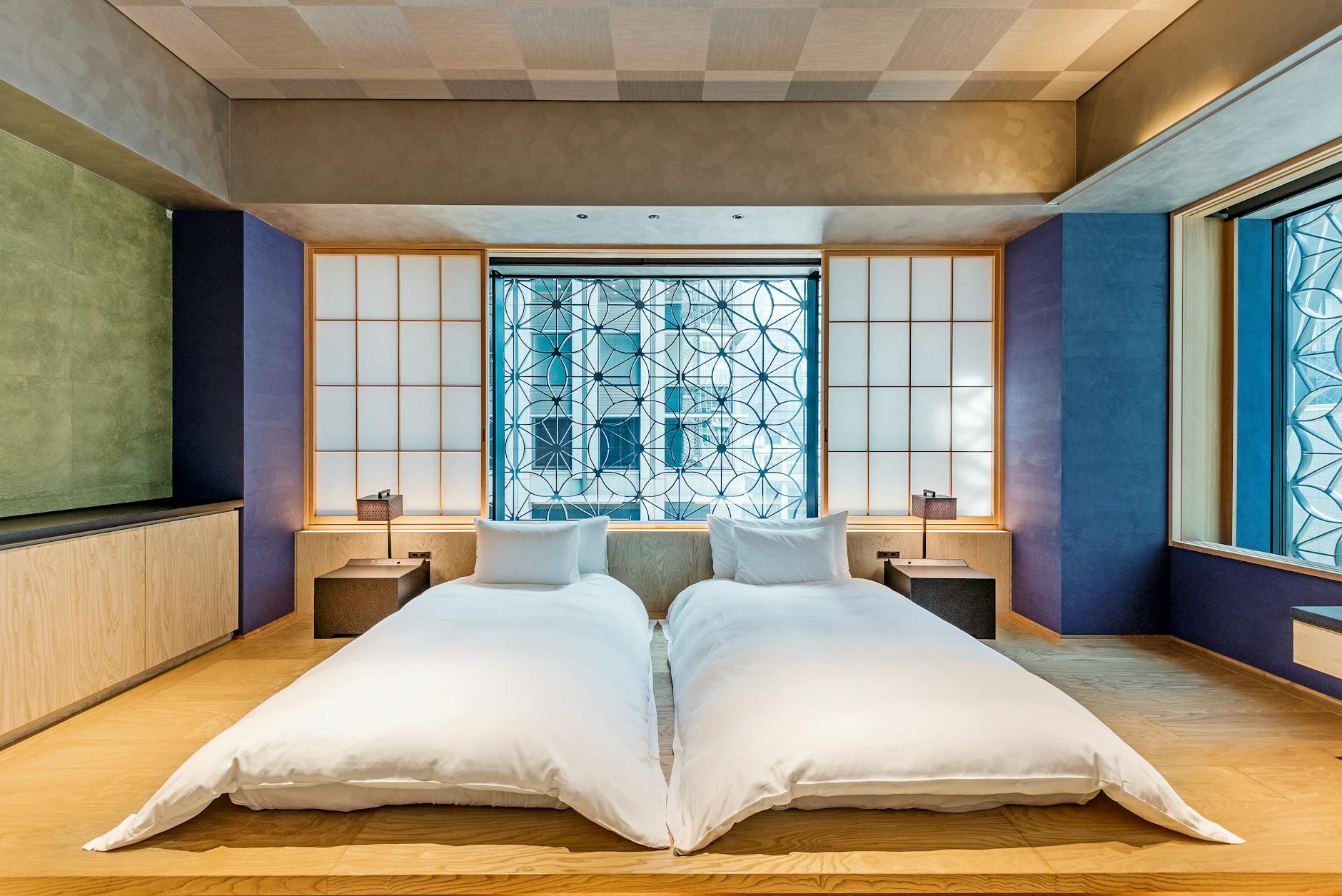
If I had to hand one Namba hotel to a couple on their first trip, it’d be this. The Cross sits on Midosuji a corner away from Dotonbori, the rooms run larger than the Osaka average, and the glazing actually keeps the street noise out — which matters here more than almost anywhere. Three minutes to the Namba subway, a top-floor lounge with city views, and a design sensibility that doesn’t feel like a chain. Reckon on ¥18,000 to ¥28,000. Couples and design-minded solo travellers get the most out of it.
Citadines Namba Osaka
This is the one to book when you’re staying a while or travelling as a group. Every unit has a kitchenette, and the layouts run from standard rooms up to one- and two-bedroom apartments. That kitchen earns its keep fast: breakfast in, leftovers from Kuromon stored in the fridge, a kettle that isn’t the size of a teacup. It’s walkable to both Namba and Den-Den Town. Around ¥15,000 to ¥30,000. Families and anyone here four nights or more, this is your default.
Holiday Inn, Hankyu Respire and Granvia
The Holiday Inn Osaka Namba is the safe international pick — dependable, business-friendly, with an on-site restaurant and genuinely good IHG points value, usually ¥17,000 to ¥26,000. Hotel Hankyu Respire flies under the radar but pulls consistently strong reviews for a clean, modern room within walking distance of the station. And the Namba branch of Hotel Granvia is worth a look if you’re leaning hard on a JR rail pass, given the chain’s station ties.
Premium: ¥25,000 to ¥45,000
Centara Grand Hotel Osaka
A newer arrival that reviewers keep praising for two things: quiet rooms and a direct link into Namba station and the mall attached to it. There are larger suites if you want room to spread out. It lands in the ¥28,000 to ¥45,000 range — the move for travellers who want a luxury feel without paying W Osaka money. The Hotel Royal Classic, also recent, sits in the same band with a more restrained, quietly Japanese design and a strong run of early reviews.
Luxury: ¥45,000 and up

W Osaka
Marriott’s design brand dropped a jet-black Tadao Ando tower onto Midosuji, roughly between Namba and Shinsaibashi, about 200 metres from the Namba shrine. Inside it’s loud in the good way — bold colour, several bars, a rooftop pool, the kind of place where the lobby is part of the show. Rooms run ¥55,000 to ¥95,000. This is for couples and Bonvoy members who want a hotel with a pulse, not a hushed one.
St Regis Osaka
The opposite energy. St Regis runs the famous butler service, three signature restaurants — Italian, French, and teppanyaki — and the old-school St Regis Bar. It sits on Midosuji a little north of Namba, about a fifteen-minute walk in, and the service is as polished as anything in the city. Nightly rates stretch from ¥70,000 well past ¥150,000. Save it for the anniversary, the honeymoon, or the trip someone else is paying for.
Conrad Osaka
Hilton’s top brand stacks its rooms across the 38th to 40th floors of a skyscraper, so the views are the whole point. Contemporary-Japanese interiors, a food and drink program that punches hard, and a lobby bar — Atmos — that’s one of the better high-up drinks in Osaka. It’s a touch north of Namba but still walkable. Figure ¥55,000 to ¥100,000. The pick for view-seekers and Hilton Honors members who want the highest rooms in the building. If you’re weighing the whole top tier across the city, the luxury hotels in Osaka roundup compares them side by side.
Swissotel Nankai Osaka
The argument for this one is logistics. It connects straight into Nankai Namba Station — the airport-train terminal — so there’s zero transit between stepping off the Rapi:t and reaching your room. Swiss-managed service, a multi-floor mall underneath, rooms generally ¥35,000 to ¥65,000. If a smooth airport arrival ranks above everything else, this is the answer.
What’s actually within walking distance
- Dotonbori canal: 5–10 minutes from anywhere you’d call Namba.
- Shinsaibashi arcades: 5–15 minutes north.
- Kuromon Market: 5–15 minutes — go before 10am for the seafood counters.
- Amerikamura: 10–15 minutes for the vintage and youth-culture streets.
- Hozenji Yokocho: 5–10 minutes; the lantern-lit alley to eat in at night.
- Den-Den Town: 10–15 minutes for electronics and anime.
- Namba Parks: 5 minutes — the terraced mall with a rooftop garden.

Getting around from Namba
- Kansai Airport: the Nankai Rapi:t express runs it in about 38 minutes for ¥1,490 — the cleanest route from KIX into the south of the city.
- Osaka Castle: Midosuji then Tanimachi line, roughly 15 minutes.
- Universal Studios Japan: Yotsubashi to Chuo to the JR Yumesaki line, about 25 minutes.
- Kyoto: Midosuji up to Shin-Osaka, then 12 minutes on the Shinkansen — or the direct Hankyu Limited Express in around 50.
- Nara: the Kintetsu Namba line runs direct in about 35 minutes.
- Kobe: Hanshin or JR, roughly half an hour.
Your first night, landing late at KIX
A lot of Osaka trips begin with a long-haul flight and a foggy arrival, and Namba handles that better than most areas. If you land at Kansai after dark, buy the Nankai Rapi:t ticket at the terminal, ride it to the Namba end of the line, and you’re a short walk — or no walk at all, if you’re at the Swissotel — from bed. The convenience stores around the station run late, so a forgotten toothbrush or a first-night onigiri is never a problem. One small thing worth knowing: the last Rapi:t leaves KIX mid-evening, so on a genuinely late landing you’ll fall back on the regular Nankai express or the limousine bus, both of which still reach Namba directly.
For an early departure at the end of the trip, the same geography works in reverse — being able to walk to the airport train rather than changing lines with luggage at 6am is the quiet luxury of a Namba base. If you’re weighing a cheaper bed for that first jet-lagged night, the budget hostels in Osaka guide covers the sub-¥5,000 end, much of it clustered around the same southern stations.
What to eat before you’ve even unpacked
The reason to sleep in Namba is that dinner is downstairs. Takoyaki is the obvious first bite — the stalls near the Glico sign run roughly ¥600 for eight, and the queue at the busier ones moves faster than it looks. Kushikatsu, the deep-fried skewers, is the other Minami staple; the rule that everyone breaks once is no double-dipping in the shared sauce. For something quieter, Hozenji Yokocho is a narrow stone-paved alley two minutes off the canal where small counter places serve until late and the moss-covered Buddha statue out front gets a ladle of water from passers-by.
Mornings, walk to Kuromon Market before the tour groups — the seafood counters and the tamagoyaki stands are at their best before about 10am. None of this needs planning. That’s the whole pitch for staying here: you can wander out hungry with no reservation and eat well within a five-minute radius of almost any Namba hotel.
Booking Namba without getting burned
- Book two to four months out for the better mid-range and luxury rates, especially over cherry-blossom season in late March and April and the autumn-foliage weeks in October and November.
- Price the same room across platforms. Booking.com, Agoda, Klook, and the hotel’s own site can differ by 10 to 25 percent on the identical night.
- Don’t trust the word “Namba” in a hotel name. A few sit a kilometre or two out. Drop the address into a map before you pay.
- Calibrate on room size. The Osaka standard is 13–18 m². “Larger” hotels start around 20–25. Anything past 30 is genuinely roomy here.
- Ask for a high floor. Above the 15th, the Dotonbori noise mostly falls away.
- Confirm a non-smoking room. Smoking floors still exist at the older Japanese chains.
- Treat breakfast as optional. It usually is — though the buffets at the Cross, the W, and the Conrad are worth the add-on.
Three nights in Namba, by hotel
- Cross Hotel base: Dotonbori and the arcades on day one, Kuromon plus a castle-and-aquarium afternoon on day two, then loop back each evening for the neon walk.
- Citadines apartment: cook breakfast in, lunch out, and use the central position to reach the rest of the city without backtracking.
- Conrad or W splurge: sundown drinks at the lobby bar, then down to Dotonbori for late-night street food before the crowds thin.
Namba hotels: common questions
Is Namba a good area to stay in Osaka?
For most first-timers, it’s the strongest base in the city. You can walk to Dotonbori, Kuromon, and Shinsaibashi, and the transit reaches the rest of Osaka and beyond without much effort.
How much do Namba hotels cost?
Budget rooms sit around ¥6,500 to ¥10,000 a night. Mid-range runs ¥15,000 to ¥25,000. The luxury towers stretch from ¥45,000 up past ¥150,000 at the very top.
Is Namba safe at night?
Very. The streets stay busy and lit well into the early hours, with steady foot traffic. Keep the usual city wits about you and you’ll be fine.
Should I stay in Namba or Umeda?
Namba wins for food, nightlife, and walking-everywhere days. Umeda wins for Shinkansen trips, business, and quieter mornings. Leisure travellers usually land on Namba.
How far is Namba from Kansai Airport?
About 38 minutes on the Nankai Rapi:t express, at ¥1,490 — the quickest direct run from KIX into the south of the city.
Which Namba hotel is best for couples?
The Cross Hotel for the balance of design and location, W Osaka for a livelier scene, or the Conrad if you’re after height and quiet.
Plan the rest of your trip
Once the hotel’s sorted, line it up against the rest of the itinerary. The where to stay in Osaka guide compares every neighbourhood, the things to do in Osaka overview covers the days, and the first-time Osaka tips cover the small stuff that trips people up.