This article contains advertising. Our booking links are routed through a partner that adds commission tracking automatically, so if you book through one we earn a commission from the provider, at no extra cost to you. It never affects what we recommend. Affiliate disclosure
At nine on a Sunday morning Shinsaibashi-suji is shuttered and almost silent. By three in the afternoon the same covered street is so full that you walk at the pace of whoever happens to be in front of you. A weekend in Osaka has a shape like that, and the city imposes it whether you plan for it or not: markets that keep shopkeepers’ hours, arcades that wake up late, a business district that switches off on Sundays, and a Saturday night on Dotonbori that is the loudest the city gets all week.
This plan for 2 days in Osaka works with that shape rather than against it. It assumes the most common version of a short stay — you get in on Friday night or early on Saturday, and you leave on Sunday evening — and it puts each thing on the day, and at the hour, when it is at its best. Saturday is the south: the market, Shinsekai, the neon. Sunday is the castle, a long walk through the old north of the city, and an evening that finishes a few minutes from the platform you leave from.
If you have read our 3 days in Osaka itinerary, this is not its first two days with the third one cut off. A weekend changes the order. Kuromon has to happen on Saturday, the castle wants the first hour of Sunday, and the last afternoon belongs in the north, because that is where the trains go from.
The shape of the weekend
Osaka splits into two halves that locals simply call Minami (“south”) and Kita (“north”). Minami is Namba, Dotonbori, Shinsaibashi and the faded showbiz streets of Shinsekai: food first, neon second, sleep a distant third. Kita is Umeda and the station district, all department stores, glass towers and underground malls. Osaka Castle sits to the east, between the two, and the Midosuji subway line joins north to south in under ten minutes.
Two days means one half each, and the weekend decides which way round:
- Saturday goes south because Kuromon Market is a Saturday thing. A fair number of its stalls take Sunday off — which ones varies by shop, and the published hours disagree — and a market with half its shutters down is not the market you came for. Saturday night is also when Dotonbori is at full volume, and with a hotel in Namba you can walk home from it.
- Sunday goes north because the castle is calmest in its first hour, before the weekend family crowd arrives, and because the north is where you leave from. Shin-Osaka, for the Shinkansen, is one stop from Osaka Station, and the airport express Haruka now leaves from Osaka Station itself. Spend the last afternoon there and the journey out takes minutes rather than an hour of backtracking.
- Kitashinchi is closed on Sunday, or near enough. Osaka’s upmarket bar-and-restaurant quarter runs on company expense accounts, and a large share of it shuts on Sundays and public holidays. Plans that send you there for a final-night dinner were written for a weekday.
What the plan leaves out — Kyoto, Universal Studios Japan, the aquarium, a second observation deck — it leaves out on purpose. The section on what to skip says why, and the alternative Sundays show how to swap one in if it matters more to you than the castle does.
Before Saturday morning
- Get an ICOCA card at the airport or the first station you pass through, or add one to Apple Wallet or Google Wallet. It pays for every train and subway on this plan, plus lockers, vending machines and most convenience-store shopping.
- Book Saturday dinner, or plan to eat early. Half past seven on a Saturday is the hardest table of the week in Minami. Restaurants that take reservations fill first, and the ones that do not grow a queue. Sitting down before six solves it.
- Reserve your seat home. Shinkansen trains back towards Tokyo on a Sunday evening are busy, and the unreserved cars of a Sunday-night Nozomi can mean standing as far as Nagoya. If you are flying, read the section on leaving, below, before you settle on a flight time.
- Carry ¥10,000–15,000 in cash. Cards and IC cards work nearly everywhere in 2026, but market stalls, the smallest izakaya and temple counters still want notes. The Seven Bank ATMs in every 7-Eleven take foreign cards; more in money and payments in Osaka.
- Do not buy an Osaka Amazing Pass on reflex. At around ¥3,500 a day it breaks even on this plan at best, and its free entry at the Umeda Sky Building ends at 15:00, which would push Sunday’s observation deck into the flattest light of the day. The FAQ below does the sums.
One habit to pick up on the first escalator: Osaka stands on the right and walks on the left, the opposite of Tokyo. Osaka travel tips covers the rest of the practical ground, from bins (there are almost none) to where you can and cannot eat on the move.
More in our guide to Japanese etiquette in Osaka.
Friday night, if you have one
Most weekend visitors arrive on Friday evening, either off a Shinkansen at Shin-Osaka or off a plane at Kansai Airport. From Shin-Osaka the Midosuji line runs straight down to Namba in about fifteen minutes. From the airport, Nankai’s Rapi:t limited express reaches Namba in about 38 minutes and the cheaper airport express in about 45, and both deliver you to the right half of the city for this plan.
Drop the bags and keep the evening small. The temptation is to do Dotonbori properly tonight. Resist it: you will be tired, it will still be there tomorrow, and Saturday’s version is better. Walk instead to Ura-Namba, the grid of back lanes east of Namba station where the bars seat eight and the izakaya write their menus on the wall. A few skewers, a highball, bed. If you land late, our guide to late-night food in Osaka knows what is still frying after midnight — which matters, because the subway stops running at about that time.
Saturday — the south, from the market to the neon
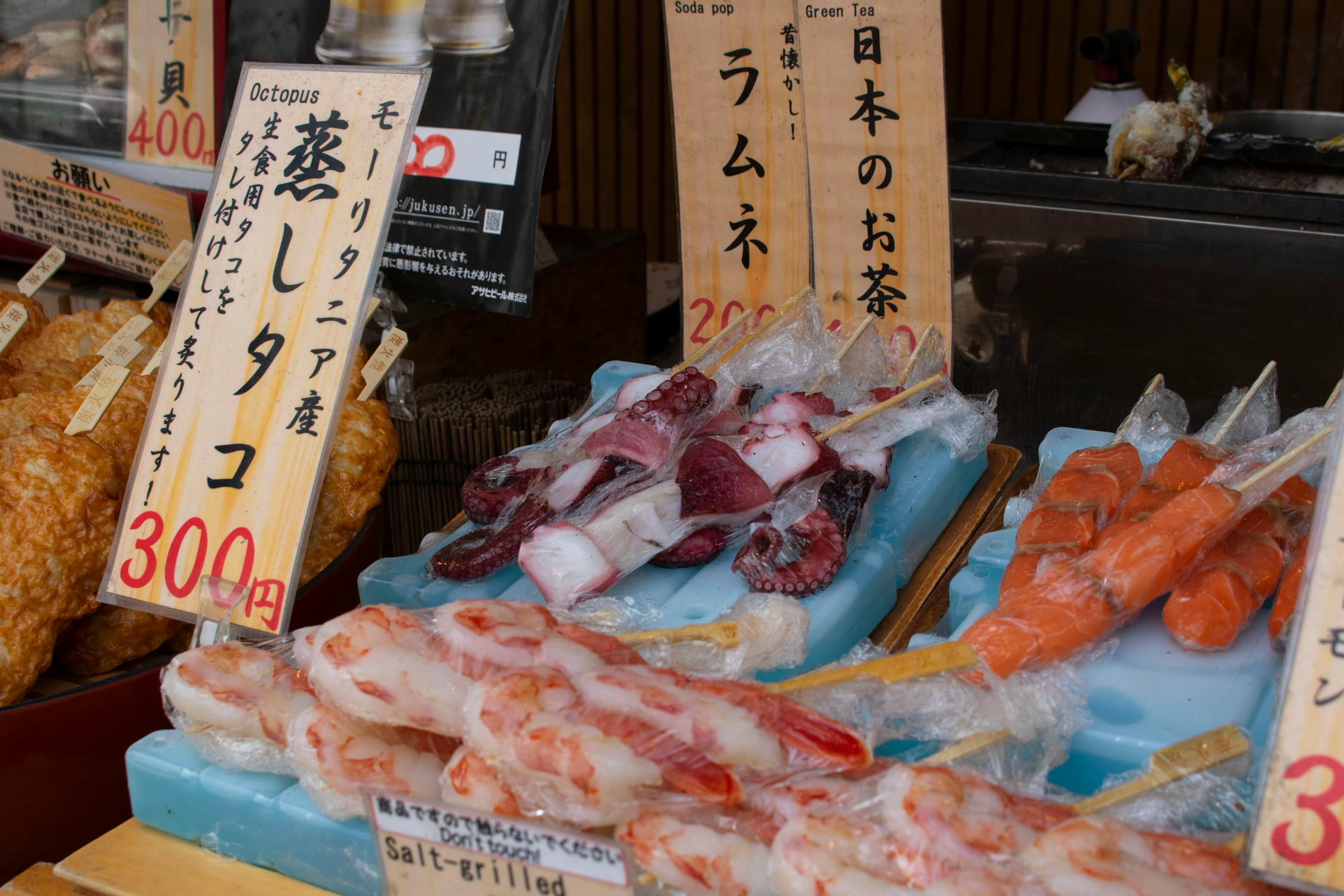
08:30 — Kuromon Market
Kuromon Market is a covered street of fishmongers, greengrocers and grill stalls a couple of minutes’ walk from Nippombashi station, and it has been feeding the city’s kitchens for about two hundred years. Most stalls run from around eight or nine in the morning until about six in the evening. Get there early. At half past eight the vendors are still setting out the day’s stock and have time to talk; by eleven on a Saturday it is a slow procession of phones held at arm’s length.
Treat it as breakfast. Grilled scallops, a slab of sweet tamagoyaki (rolled omelette), a skewer of steamed octopus, strawberries in season — ¥2,000–3,000 covers a proper grazing breakfast. Be clear-eyed about the rest. The wagyu skewers and whole crab legs are priced for visitors now, and a few mouthfuls can run to several thousand yen. They are good. They are not a bargain. Most stalls want cash.
09:45 — Walk south through Den Den Town
From the south end of Kuromon, cross to Sakaisuji Avenue and walk south. This is Den Den Town, Osaka’s electronics and otaku district: more than 150 specialist shops selling anime figures, retro games, model kits and second-hand cameras, with Ota Road, one lane to the west, as its manga-and-maid-cafe heart. At ten on a Saturday most shutters are only just going up, so you are walking it for the street rather than the shopping. If retro games are your thing, Super Potato on Ota Road opens at around eleven and is worth a return trip; the rest of the district is mapped in Den Den Town shopping.
Keep heading south and after fifteen minutes or so the avenue delivers you to Ebisucho station, at the northern edge of Shinsekai.
10:30 — Shinsekai and Tsutenkaku

Shinsekai — the name means “new world” — was laid out in 1912 as a modern amusement quarter, its northern half modelled on Paris and its southern half on Coney Island. It went to seed after the war and has spent the decades since as Osaka’s most theatrical neighbourhood: giant pufferfish lanterns, hand-painted signs, shogi parlours and kushikatsu counters packed into a few blocks. The centrepiece is Tsutenkaku Tower, which opens at 10:00. Arriving half an hour later usually means a short queue rather than a long one.
Entry to the main deck is around ¥1,000 (a 2026 estimate, with paid extras above it). Be honest with yourself about why you are going up. The view, from under 90 metres, is modest in a city with a 300-metre skyscraper ten minutes’ walk away. The reasons to go are the tower itself, a 1956 period piece, and the Billiken, a pointy-headed American good-luck figure Osaka adopted more than a century ago, whose upturned soles you rub for luck. If your budget only stretches to one observation deck this weekend, save it for Sunday and admire Tsutenkaku from the street.
More in our guide to Tsutenkaku Tower.
11:30 — Kushikatsu, early, and the one rule
Shinsekai is the home of Osaka’s kushikatsu: skewers of meat, vegetables and seafood, breadcrumbed and fried in seconds, eaten with a thin Worcestershire-style sauce from a shared steel tray. Lunch at half past eleven beats lunch at half past twelve by the length of a queue. Kushikatsu Daruma, whose scowling chef statue stands outside its Shinsekai branches, has the famous lines; the skewers at the counter next door are rarely any worse. Eat wherever has stools free.
Then observe the one rule that every counter in the district posts on the wall: nido-zuke kinshi, no double-dipping. You dip each skewer once, before you bite. If you want more sauce later, scoop it up with a leaf of the free raw cabbage and drip it on. Ten skewers and a beer comes to roughly ¥2,000–2,500.
13:00 — Shitennoji, or the tall option
Walk east out of Shinsekai, around the edge of Tennoji Park, to Shitennoji, about twenty minutes on foot. Prince Shotoku founded it in 593, which makes it one of the oldest temples in Japan, although fire and war mean that the five-storey pagoda and halls you see are careful post-war reconstructions in concrete. The outer grounds are free and rarely crowded; the inner precinct and the garden each charge a few hundred yen. If your Saturday falls on the 21st or 22nd of the month, the grounds fill with a sprawling flea market of antiques, old kimono and glorious junk — one of the best free things a weekend can land on.
The alternative is height. Abeno Harukas, the 300-metre tower over Tennoji station, has the Harukas 300 observation deck on its top three floors, around ¥2,200 at the counter and a little less if you book online by the day before. On a clear afternoon it is spectacular. It is also the second observation deck of a two-day trip, and this plan already has one. Choose Harukas if you want the highest view in western Japan; choose Shitennoji if you would rather stand somewhere that has been sacred for fourteen centuries. The whole southern triangle, tower to temple to Shinsekai, is laid out in our Tennoji and Abeno guide.
15:00 — Go back to the hotel
Take the Midosuji line a few stops from Tennoji back to Namba and go to your room. This is the most important appointment of the weekend, and almost nobody keeps it. Between about three and six on a Saturday afternoon, Dotonbori and the Shinsaibashi-suji arcade are about as crowded as they get all week, and you will see both later, lit, at a better hour. Two hours off your feet now is what makes Saturday night possible.
If you are a shopper, this is your window instead, and you should go in with your eyes open. Shinsaibashi and the streetwear lanes of Amerikamura start five minutes’ walk north of Namba. Tax-free shopping changes on 1 November 2026: shops will charge the full tax-inclusive price, and the 10% comes back as a refund once customs has confirmed the export at the airport when you leave, rather than being knocked off at the till. Keep the receipts and keep the goods unused, and read our drugstore shopping guide before you fill a basket.
17:30 — Dotonbori at dusk, from the water
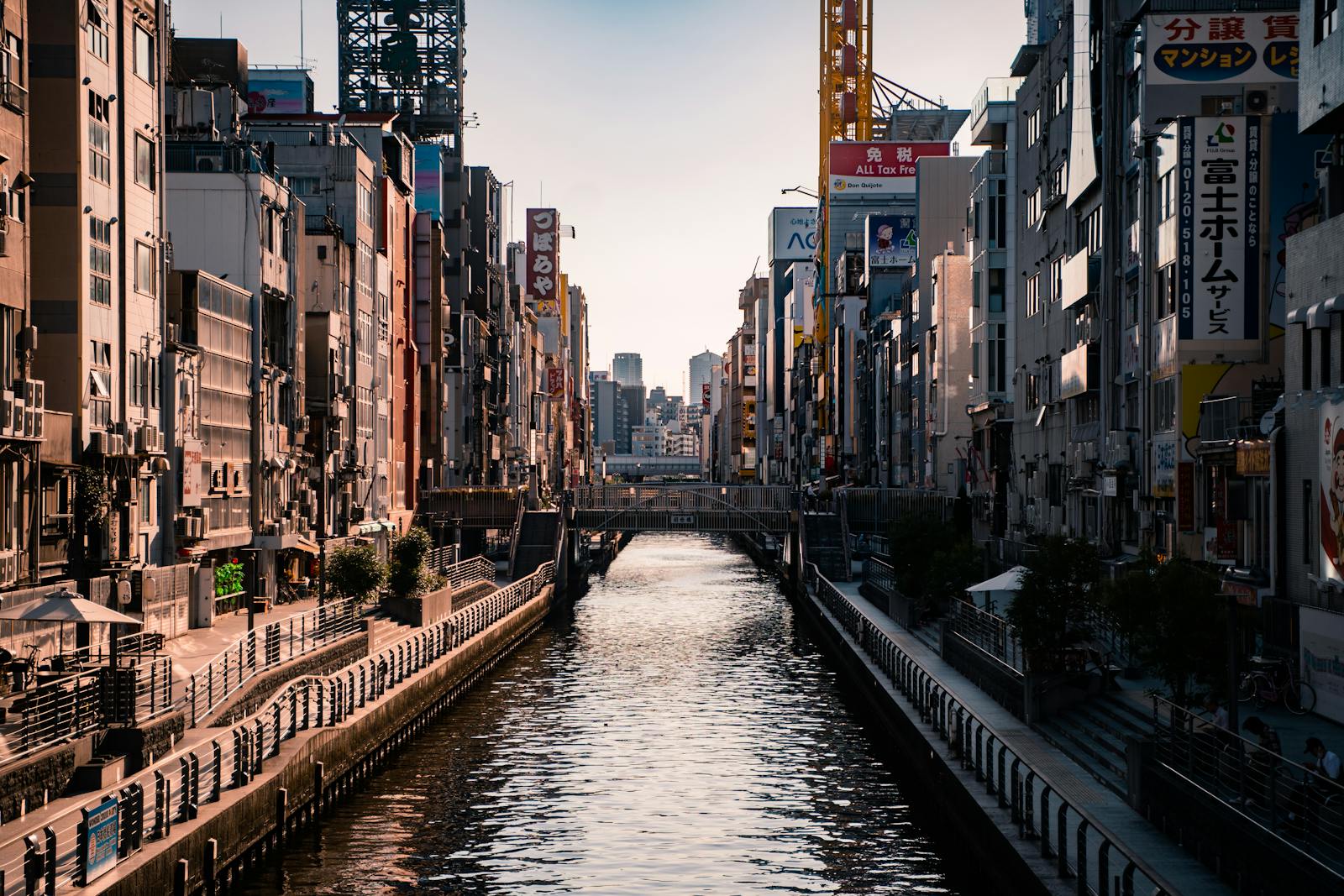
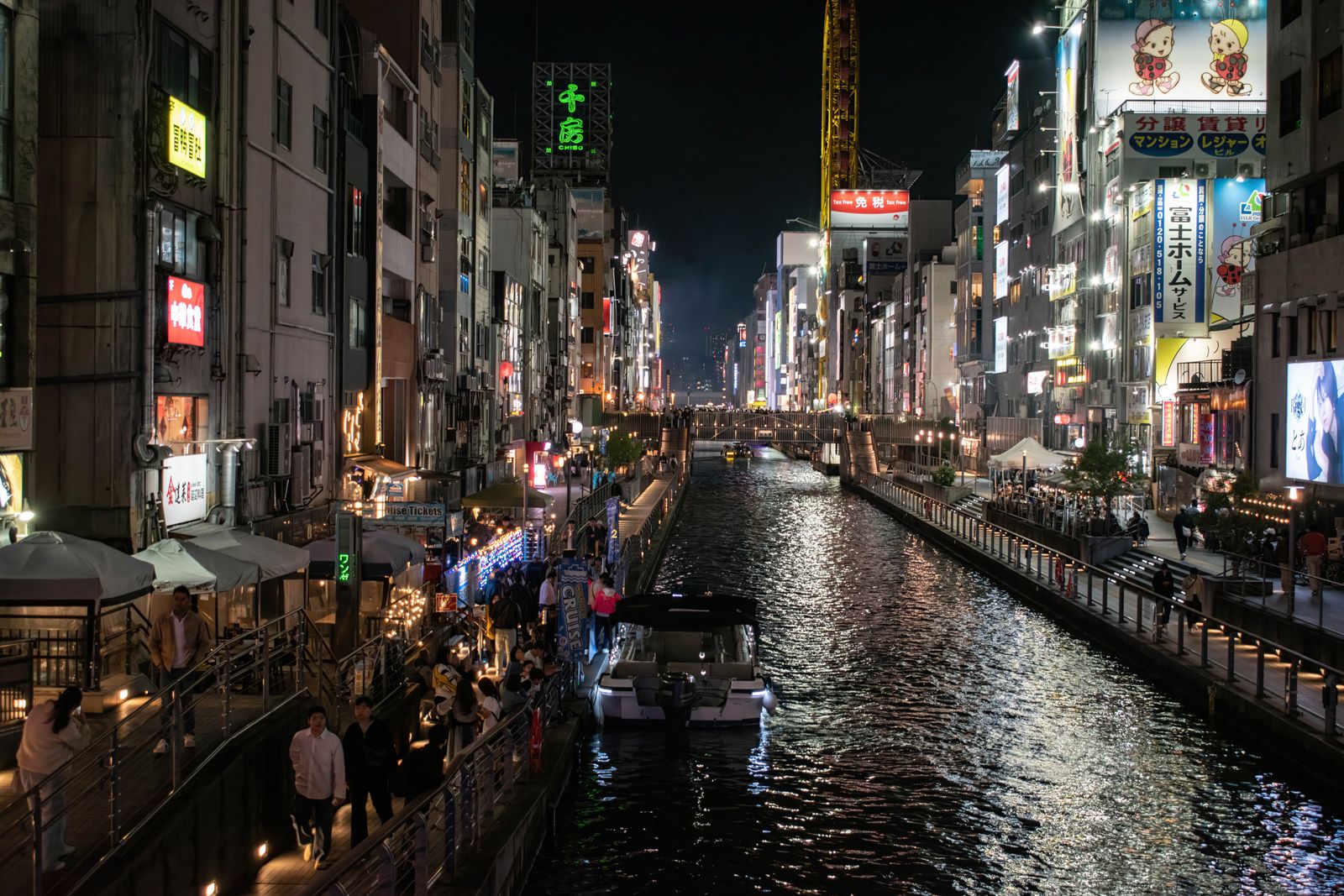
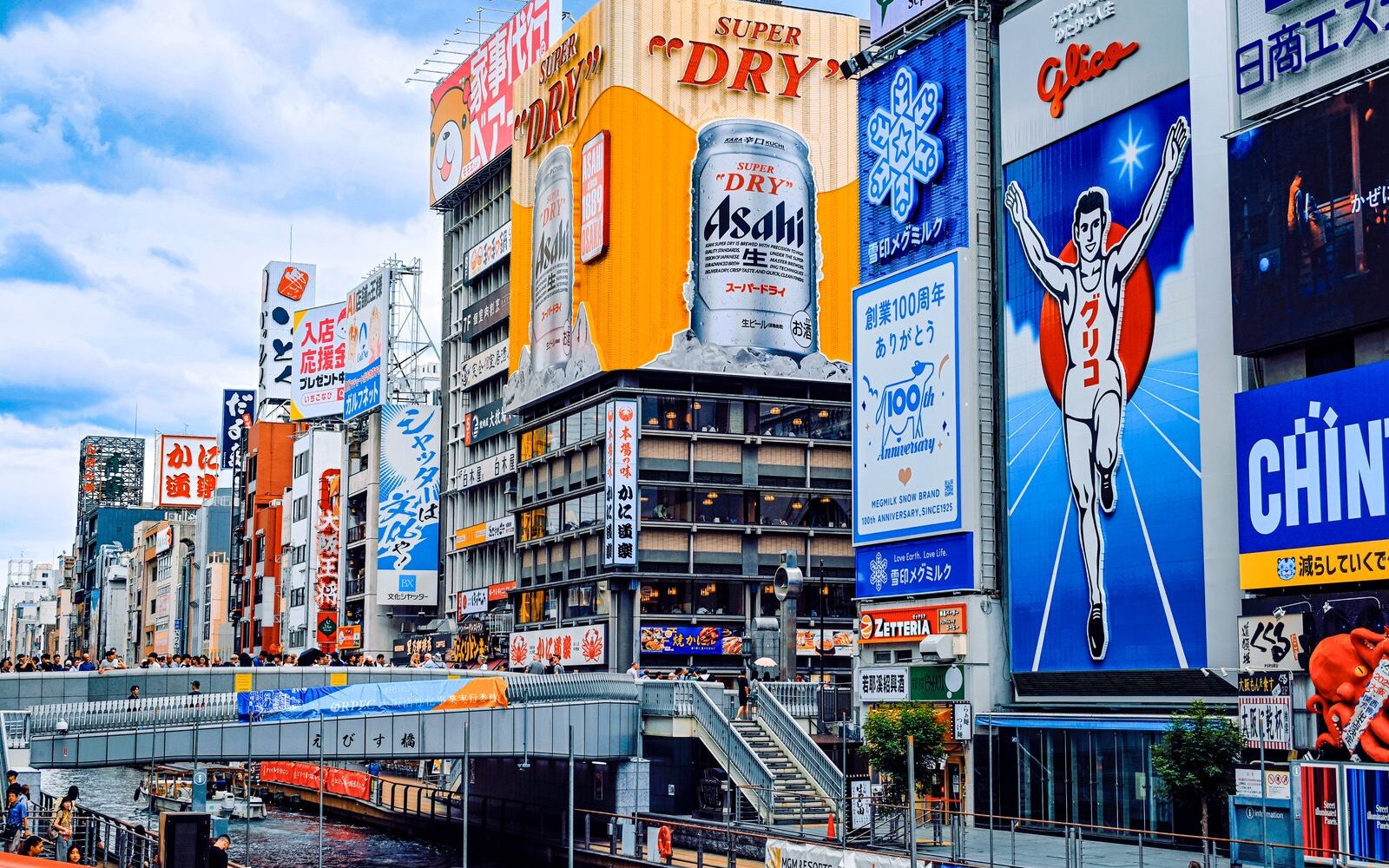
Walk up to Ebisu Bridge as the light goes. The Glico running man, the mechanical crab over Kani Doraku and the canyon of signs along the canal switch from daytime shabby to night-time absurd in about twenty minutes, and dusk is the only time you see both versions at once. Sunset runs from around 16:50 in December to after 19:00 at midsummer, so slide this hour to suit the month.
Then get on the water. The Tombori River Cruise runs a twenty-minute loop of the canal from a pier beside the Don Quijote Ferris wheel, for around ¥2,000. It is short, slightly cheesy and the best way to see Dotonbori’s neon, because from canal level the signs stack up above you instead of competing with the crowd for your attention. Buy a ticket at the pier; on a Saturday evening the next few departures may already be full, so take a later one and go and find a drink. Longer cruises are compared in Osaka river cruises, and the strip itself is mapped in our Dotonbori guide.
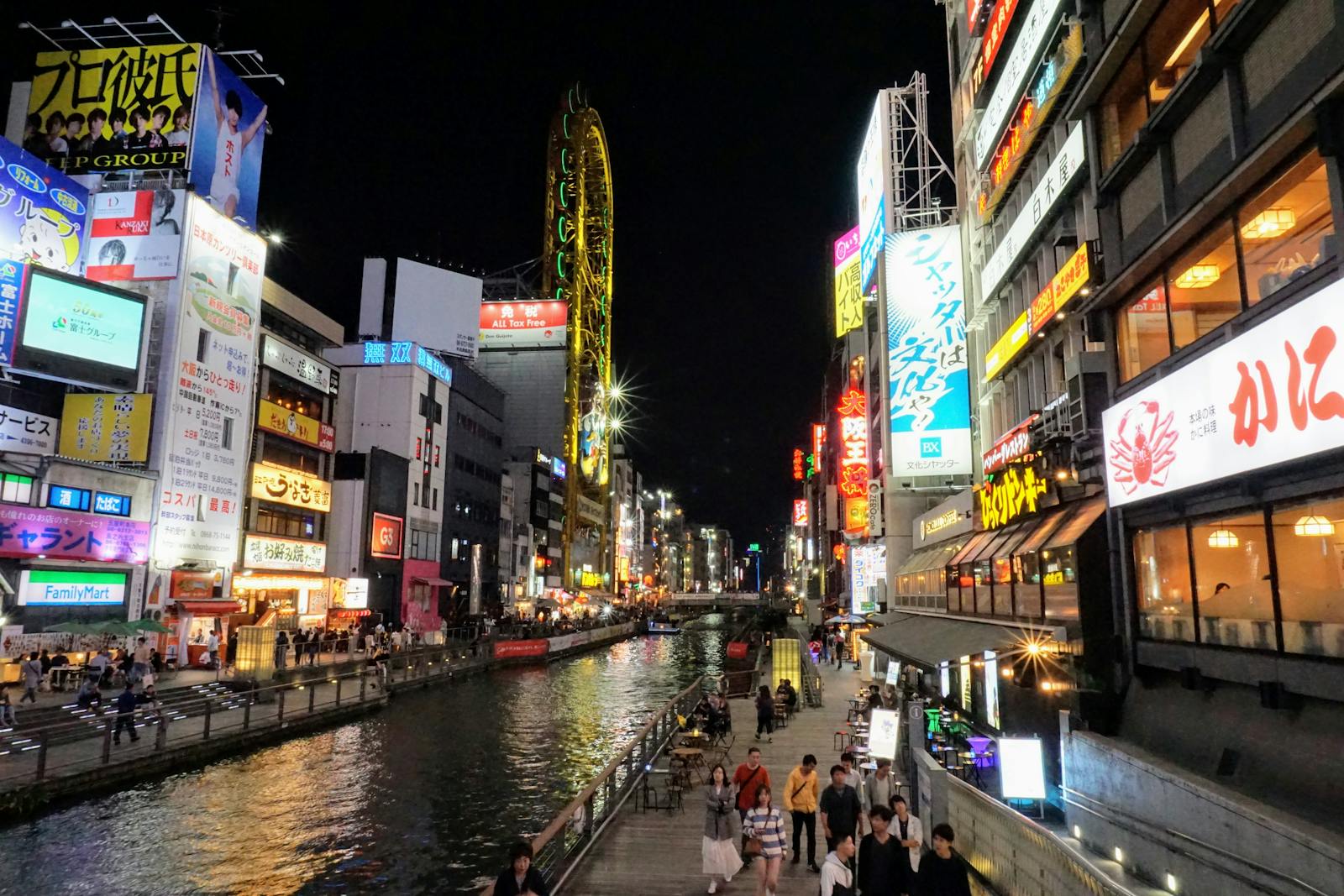
19:00 — Saturday dinner
There are two good answers. The first is okonomiyaki, the cabbage-and-batter pancake that Osaka considers its own, cooked on a hotplate set into your table. Minami has dozens of places doing it, and the best of them are not on the canal. The second is an izakaya in the back lanes, which is where Osaka actually spends its Saturday nights: small plates, cold beer and a room that gets louder as it fills. Either way, if you did not book, aim to sit down before six or after half past eight.
The thing to skip is a queue. Some of Dotonbori’s takoyaki stands and ramen counters draw forty-minute lines on a Saturday night, and none of them is forty minutes better than the stall with no line round the corner. Our takoyaki guide names the stands worth a short wait, and the best izakaya in Osaka has the back-lane picks.
Vegetarians should know that okonomiyaki batter and nearly every izakaya broth are usually made with dashi, a fish stock, so “no meat” on a menu is not the same thing as vegetarian. Ask, or plan this meal in advance.
More in our guide to vegan and vegetarian Osaka.
21:00 — Hozenji Yokocho and the late shift
Two minutes south of the canal, Hozenji Yokocho is a pair of stone-paved alleys lit by lanterns, with old restaurants and tiny bars behind wooden fronts. At one end is Hozenji, a small temple whose Mizukake Fudo statue has been splashed with water by so many people making wishes that it is completely furred in green moss. Take the ladle, splash, bow. It costs nothing, you can visit late, and it is the right last stop before a drink.
After that it depends on your stamina. The bars of Ura-Namba stay busy late, karaoke boxes run until morning, and GiGO’s three-floor arcade on Dotonbori stays open until about 01:00 if you want to feed coins into crane games. Because you are staying in Namba, the midnight end of the subway is not your problem. Our Dotonbori after dark guide has the rest of the night.
Sunday — the castle, the long arcade and the way out
08:30 — Check out, and solve the bags
Sunday’s first job is luggage, and the answer depends on where you leave from. If you are flying out of Kansai on a Nankai train from Namba, leave your bags at the hotel desk — almost every hotel in Osaka will hold them free after check-out — and come back for them at the end of the day. If you are leaving from the north, by Shinkansen or Haruka, take the bags with you now: the Midosuji line runs from Namba to Umeda in about eight minutes, and Osaka Station has hundreds of coin lockers at around ¥400–800 a day by size. The large ones go first at weekends. If they are full, Osaka luggage storage covers the bookable alternatives.
09:15 — Osaka Castle at opening
From Osaka Station, the JR Loop Line reaches Osakajokoen in about ten minutes. From Namba, take the Midosuji line to Hommachi and change to the Chuo line for Tanimachi 4-chome. Either way, walk in through the park, under the stone walls, and be at the keep soon after it opens at 09:00. By late morning at a weekend, the ticket queue and the lift inside are at their slowest.
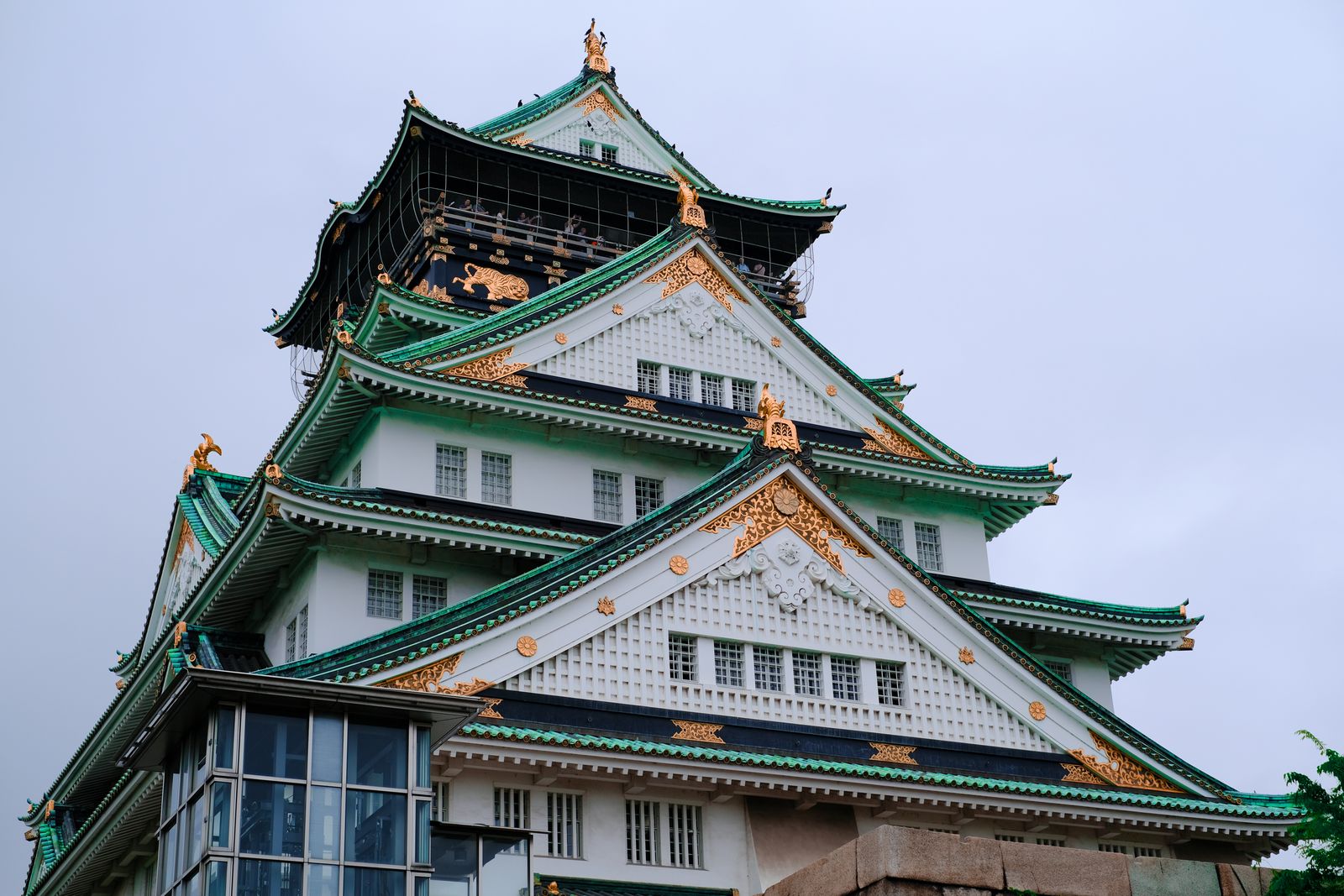
Know what you are buying. The keep you see is a 1931 reconstruction in reinforced concrete, with a lift inside, and its eight floors hold a museum of the Toyotomi family and the sieges of 1614 and 1615, topped by an observation gallery under the roof. Entry is around ¥1,200, with last admission at 16:30. It is a decent museum, but the best of Osaka Castle is outside and free: the moats, the gates and the colossal stones of the walls, the largest of which, the Tako-ishi by the Sakuramon gate, is a single slab bigger than the side of a double-decker bus. Budget ninety minutes in all, and if the story grabs you, Osaka Castle’s history fills in what the museum tells in fragments.
11:15 — Osaka Tenmangu
Walk out through the west side of the park to Tanimachi 4-chome or Temmabashi station and take the Tanimachi line north to Minamimorimachi, one or two stops. Five minutes from the exit is Osaka Tenmangu, the shrine to Sugawara no Michizane, the ninth-century scholar who is worshipped as the god of learning. On a Sunday morning it is full of families and anxious students hanging wooden ema plaques inscribed with exam hopes. It is free and it takes twenty minutes. Every July the shrine launches the Tenjin Matsuri, one of Japan’s three great festivals, and all year round it stands at the bottom of the longest shopping street in the country.
12:00 — Lunch up Tenjinbashisuji
Tenjinbashisuji is a single covered shopping street that runs north from the shrine for about 2.6 kilometres, the longest in Japan. There are no sights on it, exactly. What it has is Osaka on its day off: butchers frying croquettes for a queue at the window, tea merchants, discount pharmacies, standing sushi bars, and set-lunch counters with plastic food in the windows serving some of the cheapest good meals in the city. Lunch here is the opposite of Saturday night on Dotonbori, and it costs a fraction as much — roughly ¥800–1,200 for a set meal at a counter.
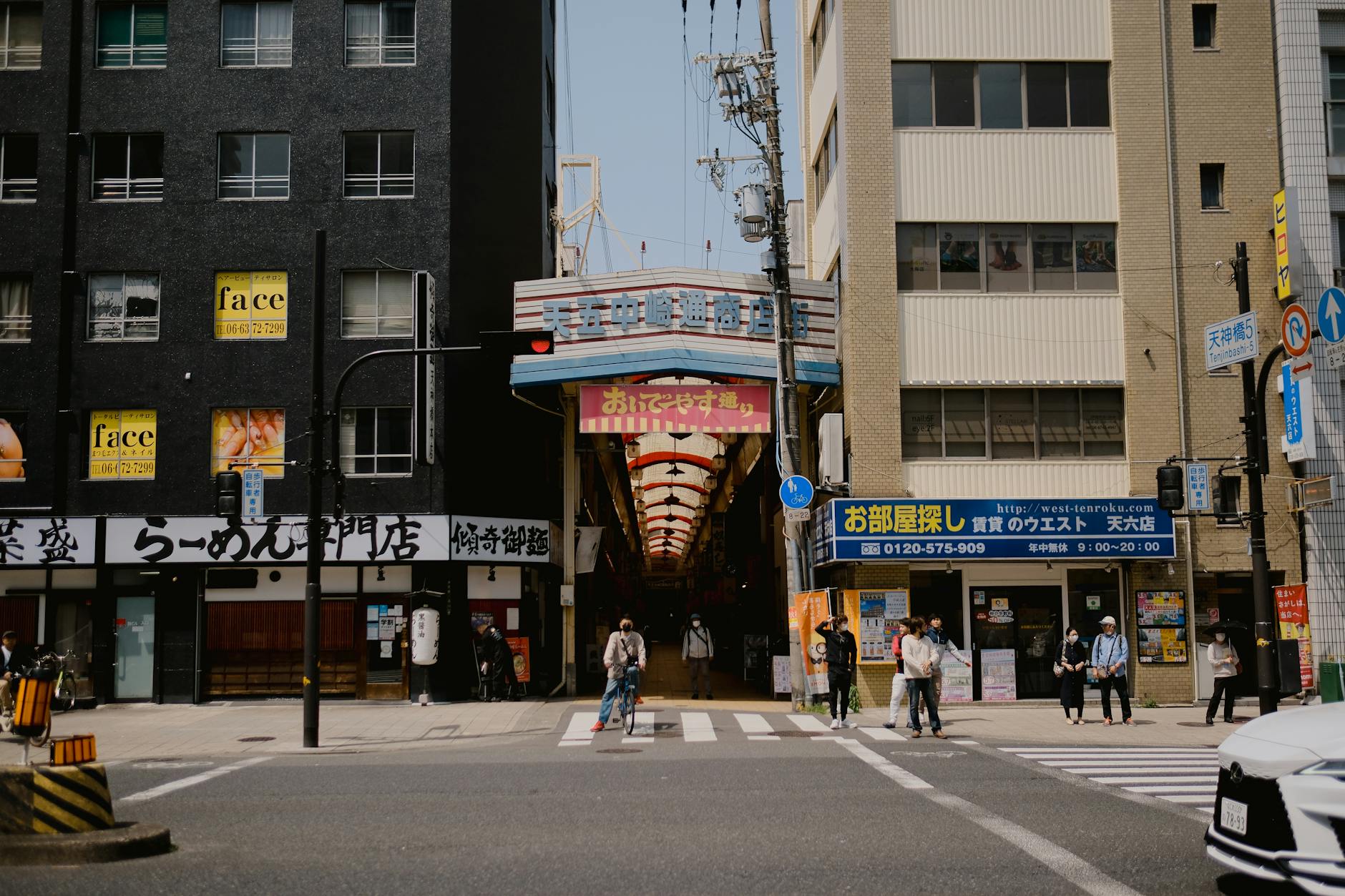
Walk north as far as your legs and appetite allow. The arcade is divided into numbered blocks, chome, and the northern end at Tenjinbashisuji 6-chome is known to everyone simply as Tenroku. Halfway up, JR Temma station sits just off the arcade with Temma’s cheap and cheerful drinking lanes packed around it. You do not need to walk the whole length; the Sakaisuji subway line runs underneath, with stations at both ends and one in the middle, if your feet give out.
14:00 — Coffee in Nakazakicho
From Tenroku, walk about fifteen minutes south-west into Nakazakicho, a pocket of narrow lanes and low wooden houses that came through the wartime air raids and now hold independent cafes, vintage clothing shops and small galleries. It will be the calmest place you are all weekend, and it is a few minutes’ walk from the towers of Umeda. Popular cafes can have a twenty-minute wait at Sunday brunch time, which is another reason to arrive after two.
15:30 — Umeda, from the basement up
Umeda’s department stores are open on Sundays, and their basement food halls, the depachika, are the best free show in the north: counter after counter of wagashi, bento, pickles and immaculate fruit, with staff calling out the day’s specials. Hanshin’s basement, beside Osaka Station, is locally famous for ikayaki, a squid-and-batter pancake pressed flat on a hot plate, and Hankyu’s food hall across the road is the more upmarket of the two. This is the place to buy edible souvenirs, because everything is packed to travel, and a sensible place to buy dinner if your train leaves early.
17:00 — The Umeda Sky Building at dusk
Walk west under the tracks to the Umeda Sky Building, about ten minutes from Osaka Station. Its two towers are joined at the top by the Kuchu Teien, the “floating garden”, a ring-shaped observatory across the 39th and 40th floors with an open-air rooftop deck above it. You ride a glass lift to the 35th floor and then an escalator that crosses the open air between the towers, which is half the experience. Entry is around ¥1,500, and it is open until 22:30, with last entry at 22:00.
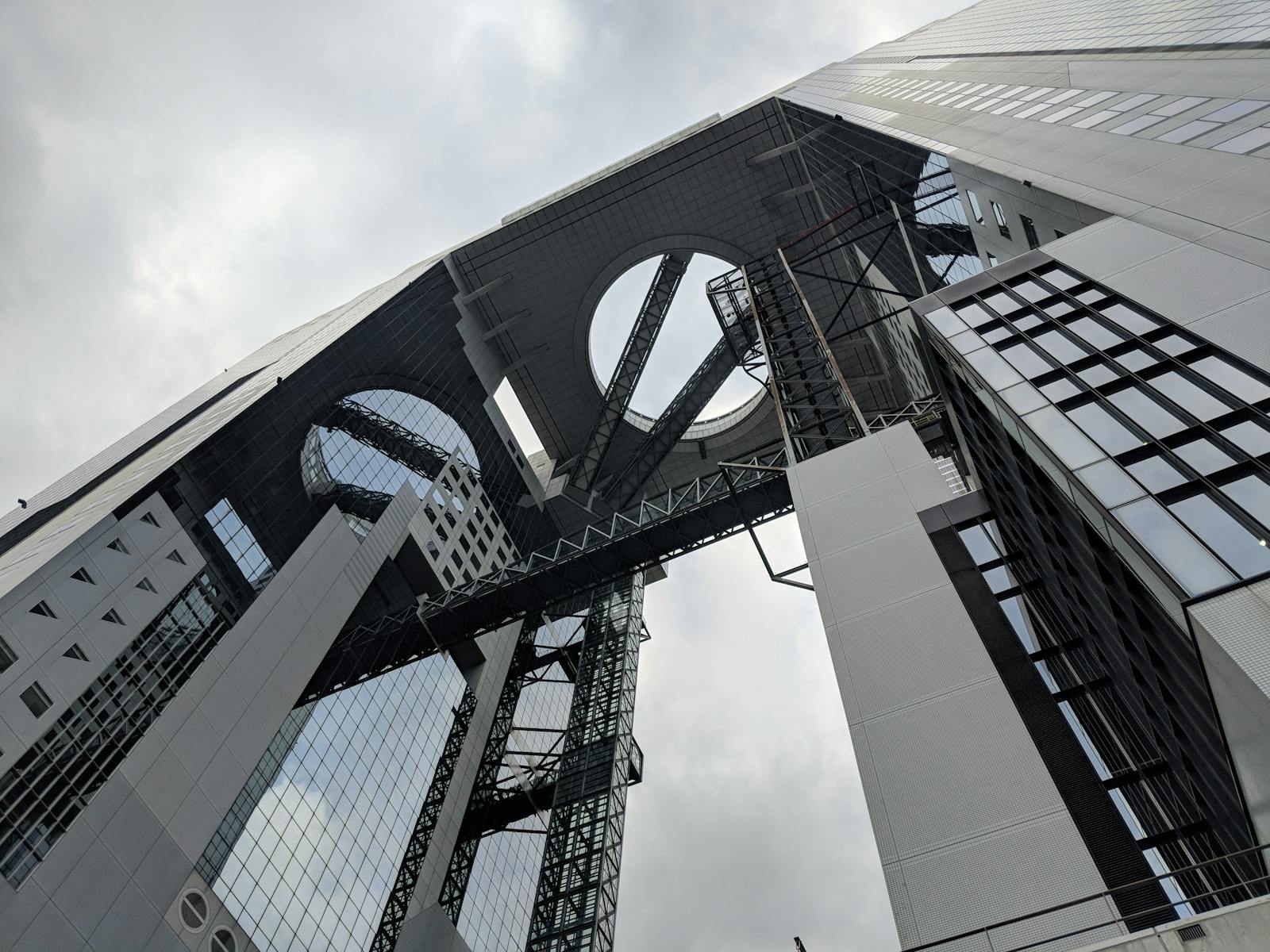
Time it for the last hour of daylight if your departure allows, which in most months means going up somewhere between four and six. That is the hinge between the day city and the lit one, and it is why this plan saves its single observation deck for the last afternoon. If your train leaves before dark, go straight up at half past three; the view is still the best-value high view in Osaka. The rest of the north is covered in our Umeda guide, and the city’s other decks are compared in Osaka observation decks.
18:30 — Sunday dinner, not in Kitashinchi
This is where plans written for weekdays go wrong. Kitashinchi, the bar-and-restaurant quarter just south of the station, is the obvious final dinner on any other night, and on a Sunday much of it is dark. Eat in the station complex instead. The restaurant floors at the top of the department stores and station buildings open every day, with plastic food in the windows and no need to book. For something older and smokier, Shin-Umeda Shokudogai is a cramped post-war alley of tiny izakaya and kushikatsu counters tucked under the tracks between JR Osaka and Hankyu Umeda, and plenty of its counters open on Sundays. For a last drink with a view, a couple of the city’s high-floor bars are a short walk away.
20:00 — Leaving
The exits are all close:
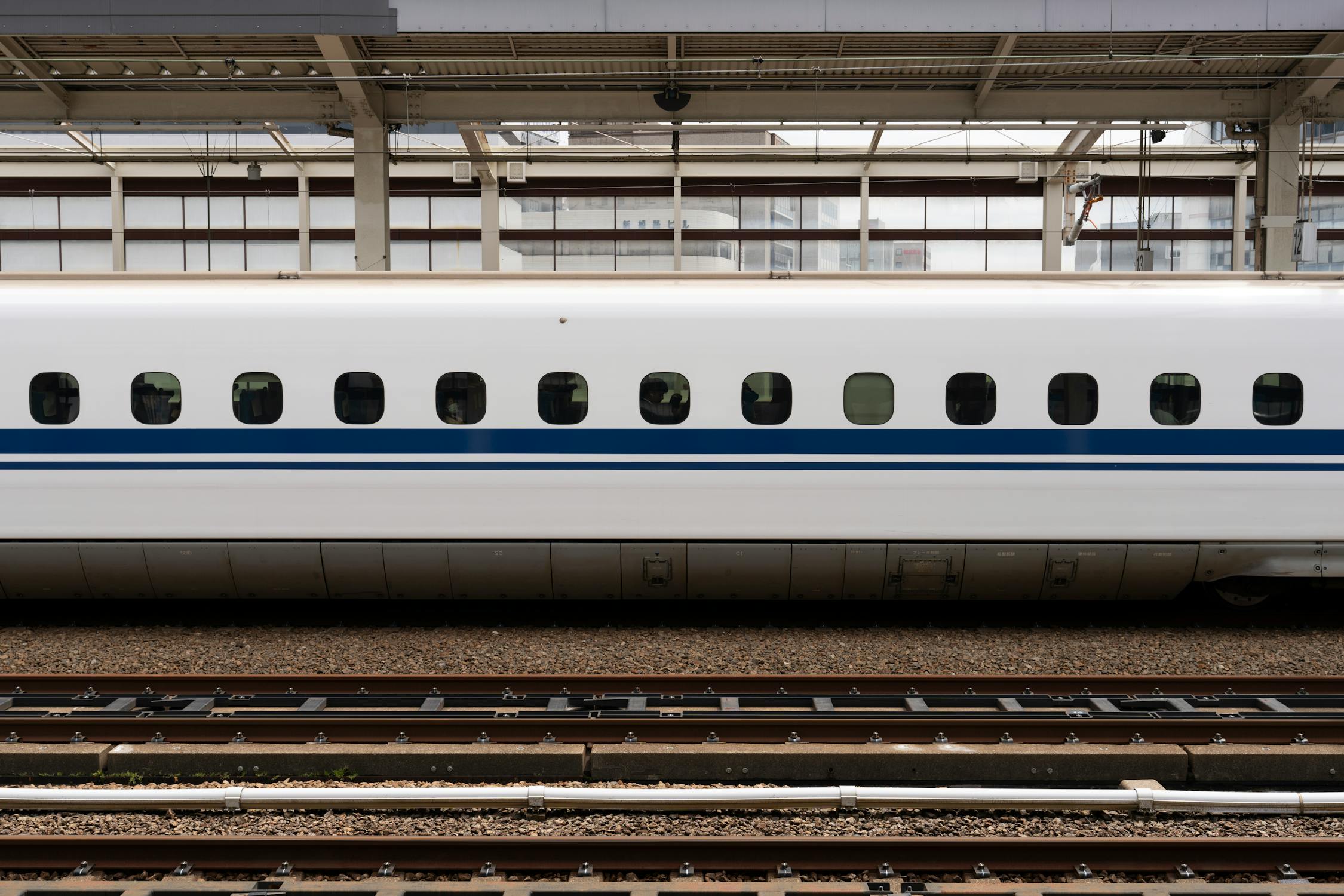
- Shinkansen. Shin-Osaka is one stop from Osaka Station on the JR Kyoto line, about four minutes, or three stops on the Midosuji line. A Nozomi reaches Tokyo in about two hours twenty. Check the last same-night departure for your date before you settle into dinner, and buy an ekiben, a station lunchbox, for the ride.
- Kansai Airport. The Haruka limited express now leaves from the underground Umekita platforms at Osaka Station, usually platform 21, so allow time for the walk to the west side of the station; our Osaka Station guide has the route. The alternative is Nankai from Namba, which is where you left your bags if you chose that option.
- Itami Airport, for domestic flights: the limousine bus from Umeda takes about half an hour. See our Itami Airport guide.
More in our Shin-Osaka station guide.
Three other ways to spend Sunday
Nara instead of the castle
Here is a small heresy: if you have never seen Nara, it is probably a better use of Sunday morning than Osaka Castle. Kintetsu trains from Osaka-Namba reach Nara in about 40 minutes, and the station is a short walk from Nara Park, its bowing deer (crackers around ¥200 a bundle) and Todai-ji, whose Great Buddha sits in one of the largest wooden buildings in the world. Leave Namba at half past eight, be back by two, and pick the plan up in Umeda for the food halls and the Sky Building at dusk. You lose the castle and Tenjinbashisuji; you gain something you cannot get anywhere else. If you are leaving from the north, put the bags in a locker at Namba before you board and collect them on the way back through. Our Nara day trip has the walking route, and Osaka to Nara compares the trains.
Universal Studios Japan
If the park is the reason you came, then it is one of your two days and the other is Saturday as written. Know what that costs. A weekend is the most expensive and most crowded version of USJ: the 1-Day Studio Pass is priced by date from around ¥8,900, and Saturdays and Sundays sit near the top of the range. 2026 is the park’s 25th-anniversary season, and on peak dates standby waits for the headline rides have run to three and four hours. If there is any way to move the park day to a Friday or a Monday, do it. Start with USJ tickets and our Universal Studios Japan guide; from Osaka Station to Universal City takes about fifteen minutes, changing at Nishikujo.
Rain
Osaka is unusually good in the wet, because so much of it has a roof. Kuromon, Shinsaibashi-suji and Tenjinbashisuji are all covered arcades, and the underground malls of Umeda and Namba join stations together for kilometres. On a properly wet Sunday, swap the castle park for the Osaka Museum of History across the road from it, or for the Kaiyukan aquarium if you have children with you. More ideas in rainy day Osaka.
If your weekend isn’t Saturday and Sunday
- Sunday and Monday. Flip the plan. Do the north on Sunday and the south on Monday, when Kuromon’s stalls are back to full strength, and leave from Namba, where the airport trains start. Watch the museums: many in Japan close on Mondays, so check before you build a rainy-day fallback around one.
- A Japanese holiday weekend. Japan has several three-day weekends a year, Sports Day on the second Monday of October among them, plus three long peaks — Golden Week in early May, Obon in mid-August and New Year. On those dates every night is priced like a Saturday and every attraction queues like one, and Osaka Castle’s keep closes from 28 December to 1 January. Book everything earlier than feels necessary.
- Arriving on Saturday morning. Drop Kuromon unless you land before ten, and start at Shinsekai in time for lunch. Everything after that still fits.
- Leaving on Sunday morning. Then you have a day and a half, not two. Keep Saturday intact, and on Sunday do the castle at 09:00 and nothing else. It is the one piece of the north that does not need an afternoon around it.
Where to stay for two nights
Stay in Namba or Shinsaibashi for both nights. Saturday ends on Dotonbori and in Hozenji Yokocho, and walking back to your room at midnight is worth more than any amount of Umeda’s convenience; the Midosuji line puts the north eight minutes away on Sunday morning. Our Namba hotels and Shinsaibashi hotels guides have the shortlists, and where to stay in Osaka compares every district.
The exception is the traveller who arrives late on Friday and leaves early on Sunday, by Shinkansen or by Haruka. Then a hotel in Umeda, ideally one of the hotels at Osaka Station, takes the friction out of both ends, and you ride south for Saturday night.
Two things about weekend pricing. Saturday is reliably the most expensive night of the week in Osaka hotels, so book it first and book it early. And do not split the two nights between two hotels to save money: the check-out, the bags and the check-in cost you half a morning you do not have. If the budget is tight, a good capsule hotel or one of the city’s hostels is the better trade.
Flying out early on Monday morning instead? A third night out by the airport turns a pre-dawn train into a short walk to the terminal.
More in our guide to hotels near Kansai Airport.
What to skip on a two-day trip
Two days rewards subtraction. These are the things this plan leaves out on purpose:
- Kyoto. It is thirty minutes away on the JR Special Rapid, which is exactly why people try, and Kyoto in half a day is a queue at Fushimi Inari and a bus to somewhere else. Give it its own day: Kyoto day trip.
- The second observation deck. The Umeda Sky Building, Abeno Harukas and Tsutenkaku all show you the same flat, enormous city from slightly different heights. Pick one.
- The aquarium, unless it rains. Kaiyukan is one of the largest aquariums in the world, and it is out at the bay, half a day away from everything else on this plan. Take it with children or on a washout; otherwise save it for next time.
- Any queue over thirty minutes. For takoyaki, ramen, cheesecake or anything else. Osaka has too many good places with no line for that to be a sensible use of a weekend.
- Spa World. The giant bath complex beside Shinsekai is fun, and it eats three hours you do not have. A soak at a neighbourhood sento on a longer trip is the better version.
- Trying to see the whole city. You will not, and the people who enjoy two days in Osaka most are the ones who made peace with that before they arrived.
What the weekend costs
| Budget | Comfortable | Generous | |
|---|---|---|---|
| Accommodation, per night (Saturday rate) | ¥3,000–5,000 capsule or hostel | ¥10,000–18,000 business hotel | ¥30,000+ |
| Food, per day | ¥3,000 | ¥6,000–8,000 | ¥15,000+ |
| Transport, both days | ¥1,000 | ¥2,000 | ¥5,000 with taxis |
| Entry fees, both days | ¥1,200 (the castle only) | ¥5,700 (castle, Sky Building, Tsutenkaku, cruise) | ¥8,000+ |
| Weekend total | about ¥16,000 | about ¥50,000 | ¥100,000+ |
Coming from Tokyo, add roughly ¥29,000 for a reserved-seat Nozomi there and back, or about ¥26,000 if you can book the early-bird EX Hayatoku 21 fare three weeks ahead on the trains it covers. Full workings are in Osaka trip cost, and ways to shave them in Osaka money-saving tips.
2 days in Osaka FAQ
Is 2 days in Osaka enough?
For the city itself, yes — just. Two days covers both halves of central Osaka properly if you give each its own day, and it is the shortest stay that feels like a visit rather than a stopover. It is not enough for day trips as well. Add a third day for Nara, Kyoto or Universal Studios rather than squeezing one into these two; the Osaka itinerary hub has plans from one day to a week.
Should I add Kyoto or Nara to a two-day trip?
Not Kyoto. Nara, possibly, as a swap for Sunday morning: it is about forty minutes from Namba, compact and walkable, and you can be back in Umeda by mid-afternoon. You give up the castle to do it.
Is the Osaka Amazing Pass worth it for two days?
For this plan, rarely. A one-day pass is around ¥3,500, and even if every paid entry on one of these days were on its list, the entries plus the subway rides only just match the price — before you account for the free entry at several big attractions ending at 15:00. Buy it only if you rebuild a day around its included sights with an early start. Our Amazing Pass guide does the sums attraction by attraction.
Where can I leave my luggage on the last day?
At your hotel if you will pass it again, or in a coin locker at the station you leave from, around ¥400–800 a day by size. At weekends the big lockers go first, so stow bags early. Details in Osaka luggage storage.
What is closed in Osaka on a Sunday?
Less than you might expect. Department stores, shopping arcades, the castle, the observation decks, the aquarium and nearly every restaurant in Minami open as normal. The exceptions are a share of Kuromon Market’s stalls, much of Kitashinchi, and the small family-run shops and eateries that take Sunday as their day off. Museums are more likely to close on a Monday than a Sunday.
Can I do Osaka as a weekend trip from Tokyo?
Easily. The Nozomi takes about two hours twenty from Tokyo to Shin-Osaka, so a Friday-evening train down and a Sunday-evening train back gives you two full days, and this plan is built for exactly that. Reserve seats both ways; the Sunday-evening trains back fill first. Our Osaka to Tokyo guide compares the train with the night bus and flying, and how to get to Osaka covers arrivals from everywhere else.
Where to go next
For longer stays, the Osaka itinerary hub covers one day to a week, and our three-day plan adds a day trip to everything here. The list-shaped version — everything ranked rather than scheduled — is things to do in Osaka, and the districts themselves are in Osaka neighbourhoods.
If this is your first trip to Japan, read first-time Osaka tips before you fly. The Osaka food guide covers everything you will eat between the sights, and the best time to visit Osaka explains why a weekend in May or late October beats one in August.