This article contains advertising. Our booking links are routed through a partner that adds commission tracking automatically, so if you book through one we earn a commission from the provider, at no extra cost to you. It never affects what we recommend. Affiliate disclosure
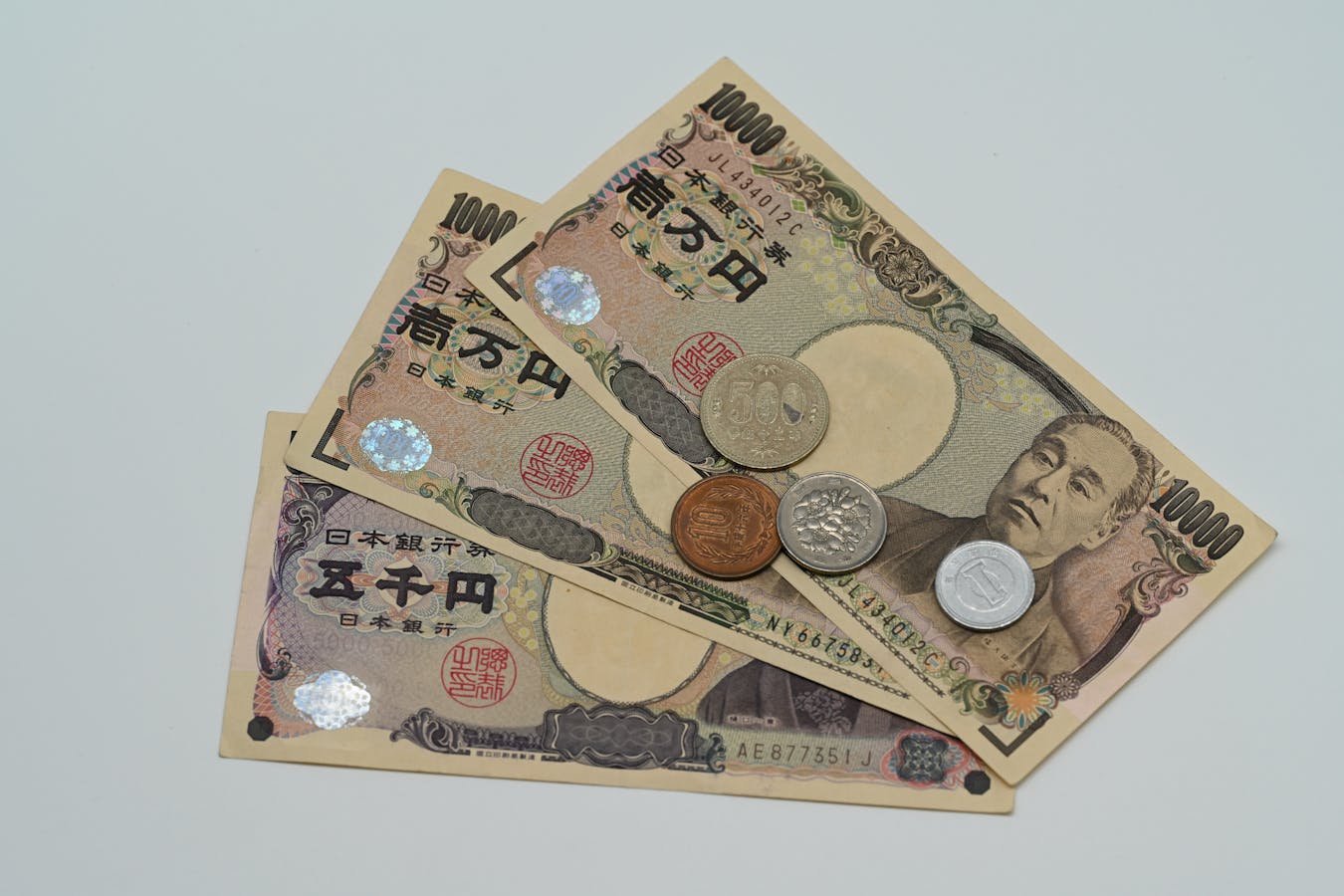
Japan is the country that put a robot on the reception desk and still wants a ¥10,000 note for the best bowl of ramen on the street. It is the country where you tap a card to open a train barrier, tap the same card to buy a coffee from a machine on the platform, and then find that the eighty-year-old okonomiyaki counter you have been queuing for takes nothing but cash and has no ATM within four hundred metres.
This contradiction confuses more visitors than anything else about Japanese travel, and it is entirely manageable once you understand the shape of it. The cash or card Japan question does not have a single answer, but it has a very reliable rule, and this guide gives you that rule, the exceptions, and everything practical around it — where to get money, what it costs, which card to bring, and the two 2026 rule changes that catch people out.
The short answer for 2026
Carry ¥10,000 to ¥20,000 in cash and use your card for everything that will take it. That is it. That covers you for the cash-only exceptions without leaving you walking round with a fortune, and it means you are not hunting for an ATM at nine in the evening.
Japan has moved a long way towards cashless in the last decade. Cards work in the great majority of places a visitor spends money: hotels, chain restaurants, department stores, convenience stores, drugstores, big attractions, taxis, and increasingly the smaller places too. But the tail of cash-only businesses is long and it contains a disproportionate number of the things you actually came for.
Where cards work, and where they don’t
Reliably card
- Hotels of every size, including business hotels and most capsule hotels
- Convenience stores — 7-Eleven, Lawson, FamilyMart — down to a ¥120 coffee
- Chain restaurants, cafes and fast food
- Department stores and the drugstore chains
- Major attractions, museums, theme parks, observation decks
- Taxis, essentially universally now
- Train ticket machines and JR ticket offices
- Supermarkets and electronics shops
Reliably cash
- Small independent restaurants and izakaya, particularly the older ones and the ones with six seats. This is the big one, and it is where the best eating is — see the izakaya guide.
- Shrine and temple offices, for charms, votive plaques and goshuin calligraphy stamps. The temples guide covers the etiquette.
- Market stalls — Kuromon is mostly card now, but individual stalls are not, and the smaller neighbourhood markets are cash country.
- Street food stalls, festival stalls and anything operating out of a hatch
- Small ryokan and family-run guesthouses outside the cities
- Coin lockers, though newer ones take IC cards
- Some doctors and clinics, which is worth knowing before you need one
The grey zone
Mid-range restaurants and small shops go either way, and the giveaway is at the door: a sticker showing card logos, or a QR payment sticker, or nothing. If there is nothing, assume cash. If you are already seated and unsure, ask kaado wa tsukaemasu ka — can I use a card — before you order rather than after you have eaten. The phrase guide has more of these.
Getting yen
ATMs, and which ones work
Most Japanese bank ATMs do not accept foreign cards. Two networks reliably do, and they are everywhere:
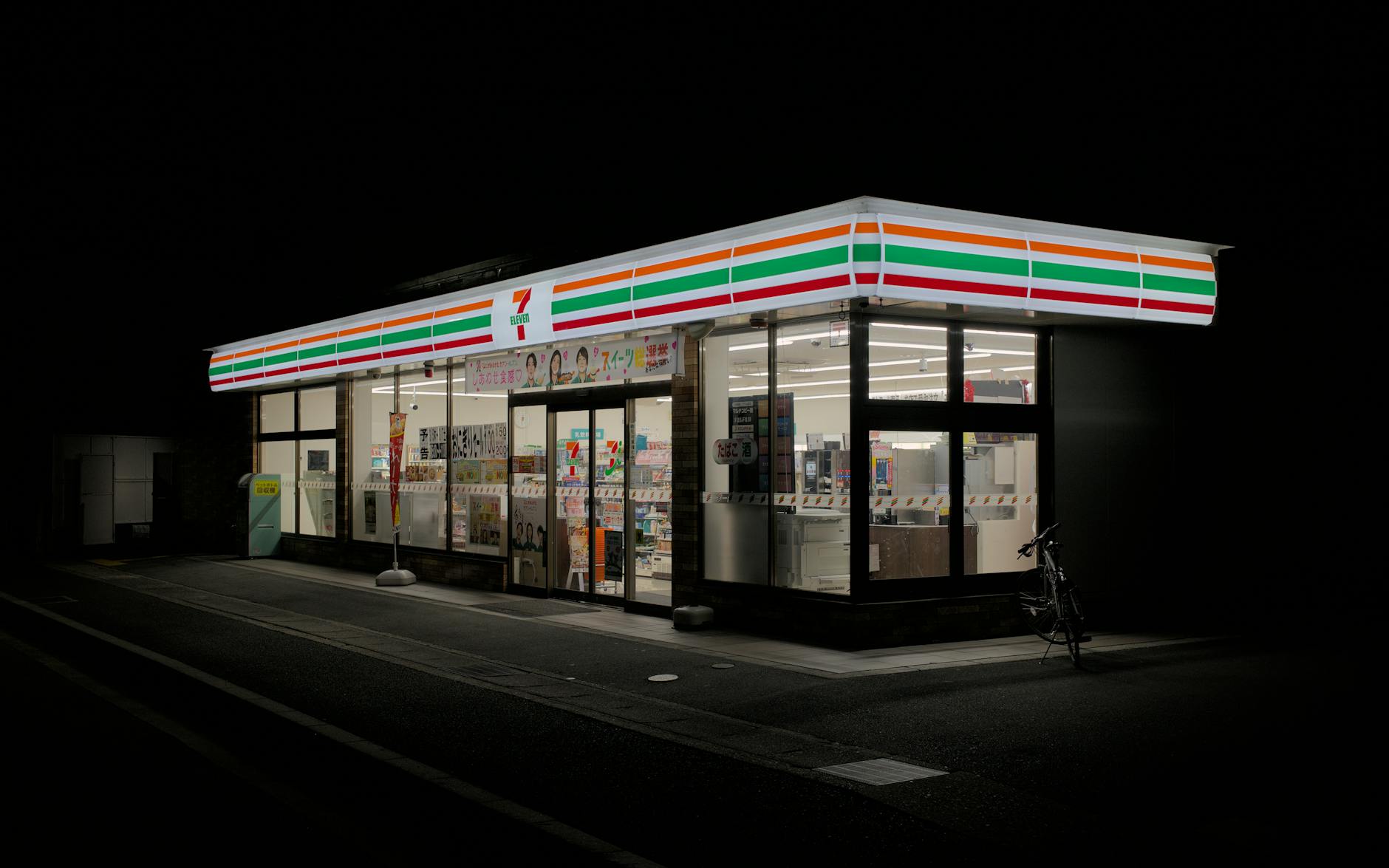
- Seven Bank, in every 7-Eleven. Open whenever the shop is, which is usually always. English menu, foreign cards, and the default answer to "where is an ATM".
- Japan Post Bank, in post offices and some stations. Equally reliable, but bound by post office opening hours, which are not 24 hours.
Practical figures as of 2026: Seven Bank sets a per-withdrawal limit of ¥100,000 for overseas-issued cards (¥30,000 for magnetic-stripe transactions), with fees of about ¥110 to ¥220 per withdrawal depending on the amount. Japan Post Bank’s per-withdrawal limit is around ¥50,000, with a ¥220 usage fee that applies to some foreign cards. Limits also vary by the country that issued your card, and the rules were adjusted during 2026 — if a withdrawal is refused for an amount, try a smaller one before assuming the card is the problem.
Because there is a flat fee per withdrawal, take out larger amounts less often. Four ¥5,000 withdrawals cost four times what one ¥20,000 withdrawal does.
The single most important rule: always choose yen
When an ATM or a card terminal offers to charge you in your home currency instead of yen, decline it. This is dynamic currency conversion, and the exchange rate baked into it is typically 3 to 5% worse than what your own bank would give you. The offer is worded to sound helpful — "would you like to be charged in GBP?" — and it is not.
Always press the option for Japanese yen. Every time, at every machine and every till. Over a ten-day trip this one habit is worth more than any other money tip on this page.
Airport exchange or ATM?
ATM, in almost every case. Airport exchange counters at Kansai Airport take a spread that is worse than an ATM fee plus your card’s own rate, and city exchange bureaux are worse still. Withdraw ¥20,000 or ¥30,000 on arrival at the airport 7-Eleven and get on with your trip.
Bringing cash from home to exchange only makes sense if your home currency exchanges unusually well in Japan, or if your bank charges punitive foreign ATM fees. Check what your bank actually charges before you leave; that number decides the whole strategy.
What not to do
- Do not rely on a single card. Bring two, on different networks, kept in different places. Cards get blocked, swallowed and demagnetised, and being cardless in a foreign country is a bad afternoon.
- Do not forget to tell your bank you are travelling, if your bank still requires that. A first-transaction block in a 7-Eleven at midnight is a common way to start a trip badly.
- Do not use a credit card for cash advances unless you have no alternative. Interest usually starts immediately and the fees are worse than the ATM’s.
IC cards: the third payment method
The rechargeable IC card — ICOCA in Kansai, Suica or Pasmo in Tokyo, all interoperable nationwide — is the payment method most visitors underuse. It handles all local transport, and it also works at convenience stores, vending machines, coin lockers, many restaurants and a lot of small shops. Tapping is faster than cash and faster than a card.
The practical significance is that an IC card covers a good part of the cash-only tail. A small shop that will not take Visa will very often take ICOCA, because the terminal is cheap and every Japanese customer has one.
Top it up in cash at any station machine, or at a convenience store till. Foreign Visa and Mastercard top-ups work as of 2026, and the card can be added to Apple Wallet or Google Wallet, which means your phone becomes the card. Full detail on buying, charging and refunding one is in the ICOCA card guide — that is the how-to page and this is the why.
QR payments: PayPay and the rest
PayPay is genuinely ubiquitous in Japan, and you will see its sticker on counters that accept nothing else electronic. It is also, for most visitors, unavailable — the standard account requires a Japanese phone number and usually a Japanese bank account.
There have been visitor-facing versions and international wallet tie-ups at various points, and the situation continues to move. It is worth a five-minute check before you travel to see whether your own country’s wallet app has a current Japan arrangement. But do not build your trip around it, and do not assume a PayPay sticker means you can pay — for a visitor it usually means the opposite.
Which card to bring
- Visa and Mastercard are accepted essentially everywhere cards are taken. Bring at least one of each if you can.
- JCB is the Japanese network and is universal here, but few visitors hold one.
- American Express works at hotels, department stores and larger restaurants, and is refused often enough at smaller places that it should not be your only card.
- Contactless is widespread now and the limit before a PIN is requested is generous. Know your PIN anyway — older terminals ask for it, and some ask for a signature.
- Multi-currency travel cards such as the well-known fintech accounts work well in Japan, generally give a better rate than a high-street bank, and are worth setting up if you do not already have one. They do not remove the ATM’s own fee.
Check your card’s foreign transaction fee before you go. A 2.75% fee on ¥300,000 of spending is around ¥8,000, which is a very good dinner given away for nothing.
The coin problem
Nobody warns you about this and everybody experiences it. Japan has six coins in circulation, including a ¥500 coin worth roughly the price of a coffee, and if you pay cash for everything you will accumulate a heavy, useless handful within three days.
Three fixes, in order of usefulness:
- Dump coins into your IC card. Station charging machines take coins and turn them into transport credit. This is the single best use for them.
- Pay the awkward amount deliberately. For a ¥1,320 bill, hand over ¥1,520 and get a ¥200 coin back instead of ¥680 in shrapnel. Cashiers do this automatically and will not find it strange.
- Use the coin trays. Cash is placed on the small dish on the counter rather than into the cashier’s hand, and change comes back the same way. It is not a rule so much as a universal habit.
Paying in a restaurant: how it actually works
The mechanics differ enough from most countries to be worth spelling out, because getting it wrong is one of the few genuinely awkward moments available to a visitor here.
- You pay at the counter, not at the table. When you are finished, take the small printed slip from your table — it was left there when you ordered — and carry it to the till by the door. Waving for the bill at your table will usually be met with a polite gesture towards the front.
- Bills are generally not split. One person pays the total and the group settles up afterwards. Some places will split evenly by headcount if asked; almost none will itemise per person. This is worth agreeing among yourselves before you sit down.
- Cash goes on the tray. The small dish on the counter is for exactly this, and change comes back on it. Handing notes directly is not offensive, but nobody does it.
- The otoshi is not a scam. At many izakaya a small dish arrives unordered and a few hundred yen per person appears on the bill. It is a table charge, it is standard, and it is not negotiable. Budget ¥300–700 a head for it. Sky bars and hotel lounges charge a larger version of the same thing.
- Service charges of 10–15% appear at hotel restaurants and high-end places. That is not a tip and you do not add one on top.
- Ticket machines. At ramen shops and many cheap counters you buy a meal ticket from a vending machine by the door before sitting down, then hand the ticket to the chef. Most take cash only, some take IC cards, and the buttons are frequently in Japanese alone — the top-left button is conventionally the house speciality if you are guessing.
None of this requires Japanese. The staff at any place used to visitors will steer you through it, and the ones that are not used to visitors will be patient about it. Street food is simpler still: you pay when you order, in cash, at the hatch.
What to budget per day
| Per person, per day | Frugal | Comfortable | Generous |
|---|---|---|---|
| Accommodation | ¥3,500 | ¥11,000 | ¥25,000 |
| Food and drink | ¥3,000 | ¥6,000 | ¥12,000 |
| Local transport | ¥600 | ¥900 | ¥1,500 |
| Attractions | ¥500 | ¥1,500 | ¥3,000 |
| Daily total | ~¥7,600 | ~¥19,400 | ~¥41,500 |
Osaka sits at the cheaper end of Japan’s big cities, particularly on food, and the frugal column is genuinely liveable here rather than theoretical — cheap eats makes the case. If your trip covers Tokyo and Kyoto as well, budget roughly 20 to 30% more for those legs; our ten-day Japan itinerary totals a multi-city trip properly.
Tipping: there is none
Do not tip. Not in restaurants, not in bars, not in taxis, not at hotels. It is not expected, it is not welcomed, and leaving money on a table will usually result in a member of staff following you out of the door to return it, which is more awkward for everyone than simply not doing it.
Service is included in the price, and the standard of it is high because that is the professional norm rather than because it is being bought. The correct thing to leave behind is gochisousama deshita as you go — roughly, that was a feast.
The narrow exceptions: a private guide, and housekeeping at a high-end ryokan, where a folded note in a small envelope is the accepted form. Never loose cash, and never in an ordinary restaurant.
Prices: what things actually cost
| Item | Typical 2026 price |
|---|---|
| Convenience store coffee | ¥120–180 |
| Bowl of ramen | ¥900–1,300 |
| Takoyaki, six pieces | ¥500–700 |
| Restaurant lunch set | ¥1,000–1,800 |
| Izakaya dinner with drinks | ¥3,000–5,000 |
| Subway single fare | ¥190–280 |
| Museum or castle admission | ¥600–1,500 |
| Beer in a bar | ¥600–900 |
| Business hotel, per night | ¥9,000–15,000 |
These are 2026 estimates and Japanese prices have been rising after two decades of not doing so. For a full budget, see the Osaka trip cost breakdown, and cheap eats for how far ¥1,000 actually goes here, which is a surprisingly long way.
Consumption tax, and the 2026 tax-free change
Japan’s consumption tax is 10%, reduced to 8% on most food and drink bought to take away. Displayed prices are generally tax-inclusive, so what you see on the shelf is what you pay — a pleasant contrast to some countries.
Visitors can shop tax-free above a threshold, usually ¥5,000 before tax in one shop on one day, and the system changes fundamentally on 1 November 2026:
- Until 31 October 2026: show your passport at the till and pay the tax-free price on the spot. Consumables get sealed in a bag.
- From 1 November 2026: you pay the full tax-inclusive price, customs confirms the export at an airport kiosk when you leave, and the shop refunds the 10% — within 90 days of purchase and before you leave Japan. The sealed-packaging rule for consumables goes away, but the goods still must not be used or consumed in Japan.
Practically: bring the physical passport, not a photo. Consolidate purchases into one shop to clear the threshold. Keep receipts. Allow extra time at the airport after November. Our tax-free shopping guide and drugstore shopping guide both cover it from the shopper’s end.
The departure tax
Japan’s International Tourist Tax rose to ¥3,000 for departures on or after 1 July 2026, up from ¥1,000. It is included in the price of your air ticket and collected at purchase, so there is nothing to pay at the airport and nothing to arrange. Worth knowing about only so that it is not a surprise on a fare breakdown.
Where the money actually goes wrong
A few smaller drains that add up quietly over a fortnight, and are easy to close:
- Airport exchange counters, both directions. Changing leftover yen back at Kansai on the way home costs you the spread a second time. Spend it, or keep it for next time — yen does not expire and you will come back.
- Taxis for distances the subway covers. Osaka’s flagfall is not cheap and traffic in Namba at night is dense. The subway runs until around midnight and costs a tenth as much — the taxi guide covers when a cab genuinely is the right call, which is mostly after the last train.
- Day passes bought reflexively. A one-day subway pass only pays for itself past three or four rides, and the Osaka Amazing Pass needs a genuinely packed day with an early start — several of its headline attractions are only free before 15:00.
- Vending machine drinks. ¥160 each, several times a day, in an Osaka summer, is a real number by the end of a trip. A supermarket bottle is half that, and a refillable bottle is nothing.
- Souvenirs bought at the airport. Comprehensively more expensive than the same items in the city, and the selection is worse. Buy in Osaka — the souvenir guide covers what is worth carrying.
None of these are large individually. Together they are comfortably a good dinner, and closing them takes no effort at all — the money-saving guide has the rest.
If something goes wrong
- Card blocked or swallowed. This is why you brought a second card. Call your bank on the number on the back of the other one; most have 24-hour lines that accept reverse-charge calls from abroad.
- No cash, ATM refusing you. Try a smaller amount first — per-withdrawal limits vary by issuing country and a refusal is often a limit rather than a block. Then try the other network: if Seven Bank says no, try Japan Post, and vice versa.
- Lost wallet. Report it at the nearest koban (police box). Japan’s lost-property system is genuinely extraordinary and wallets are returned intact at a rate that surprises everyone. It is worth reporting even when it feels hopeless.
- Medical costs. Some clinics take cash only and expect payment on the day. This is one of several good reasons to have travel insurance sorted before you fly.
Frequently asked questions
Is Japan cash or card in 2026?
Both, with cards working in most places a visitor spends money and a persistent cash-only tail that includes many small restaurants, shrine offices and market stalls. Carry ¥10,000–20,000 in cash and card everything else.
How much cash should I bring to Japan?
You do not need to bring much at all — withdraw on arrival instead. ¥10,000 to ¥20,000 in hand at any time is a comfortable working balance for two people.
Where can I withdraw cash?
Seven Bank ATMs inside every 7-Eleven, and Japan Post Bank ATMs. Both take foreign cards and have English menus. Most other Japanese bank ATMs do not.
What are the ATM fees?
Roughly ¥110–220 per withdrawal at Seven Bank, and ¥220 at Japan Post for some foreign cards, on top of whatever your own bank charges. Because the fee is flat, withdraw larger amounts less often.
Should I choose yen or my home currency at the terminal?
Always yen. Being charged in your home currency uses dynamic currency conversion, typically 3–5% worse than your bank’s own rate.
Can I use Apple Pay or Google Pay?
Yes, wherever contactless cards are taken, and you can also add an ICOCA or Suica card to the wallet, which is more useful still because it works at the many places that take IC cards but not credit cards.
Do I need to tip anywhere?
No. Tipping is not practised and attempting it causes confusion. Say gochisousama deshita instead.
Can I use PayPay as a tourist?
Usually not — a standard account needs a Japanese phone number and bank account. Arrangements for visitors have come and gone, so check before you travel, but do not plan around it.
Are prices shown with tax included?
Generally yes. Consumption tax is 10%, or 8% on takeaway food and drink, and displayed prices are usually tax-inclusive.
Is it safe to carry cash in Osaka?
Yes. Osaka is a very safe city and street crime is rare. Ordinary precautions apply, but carrying ¥20,000 in a wallet is entirely normal here and Japanese people routinely carry more.
Where to go from here
Two habits cover nearly all of this. Withdraw a decent amount on arrival at a 7-Eleven, and always choose yen when a machine offers you a choice. Everything else is detail.
Read the ICOCA card guide next for how to actually buy and charge the card that solves the cash-only tail, then the money-saving guide and Osaka on a budget for where the real savings are. If you are still planning, the trip cost breakdown puts numbers on a whole visit and the first-timer’s tips covers the rest of the practical ground.