This article contains advertising. Our booking links are routed through a partner that adds commission tracking automatically, so if you book through one we earn a commission from the provider, at no extra cost to you. It never affects what we recommend. Affiliate disclosure
There is a version of this decision that takes four seconds: take the Shinkansen. For the overwhelming majority of travellers that is the right answer, and everything below is really about the minority of cases where it is not — a very tight budget, an awkward time of day, or an onward flight from Narita. But it is worth knowing why the train wins, because the reasons are not the obvious ones, and because “the flight is cheaper” is true on the ticket and false door to door.
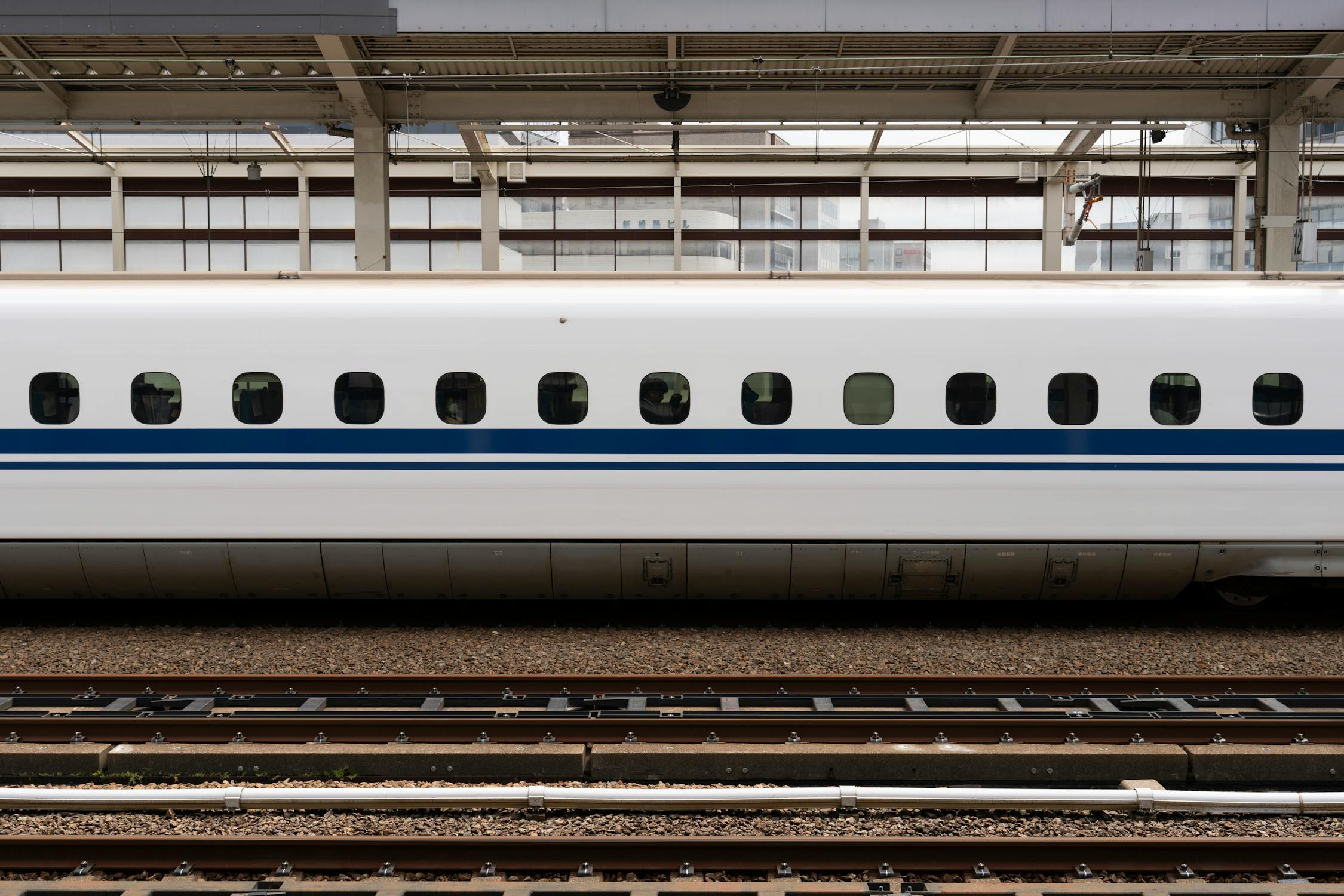
This page compares the Shinkansen, the plane and the night bus on time, cost and what the journey is actually like, with 2026 prices. It also covers the things that catch visitors out: the Nozomi surcharge on a JR Pass, the oversized luggage rule, and which seat to book if you want Mount Fuji.
The three options at a glance
| Shinkansen | Flight | Night bus | |
|---|---|---|---|
| Journey time | 2 h 21 min (Nozomi) | 70–80 min in the air | 8–9 hours |
| Realistic door to door | about 3 hours | 3.5–5 hours | Overnight |
| Typical cost | ¥14,000–15,000 | Highly variable | From about ¥4,000 |
| Frequency | Every few minutes | Hourly-ish | Several a night |
| Reliability | Exceptional | Weather-dependent | Traffic-dependent |
| Comfort | High | Moderate | Low to moderate |
| Best for | Almost everyone | Narita connections, deals | Tight budgets |
The Shinkansen
Three services, and only two you should consider
- Nozomi — the fast one. Shin-Osaka to Tokyo Station in about 2 hours 21 minutes, stopping only at the major cities. Departures every few minutes through the day. This is the default.
- Hikari — about half an hour slower with a few more stops, and around ¥13,320. Worth taking for two reasons: it is slightly cheaper, and it is covered by the nationwide JR Pass without a surcharge.
- Kodama — stops everywhere and takes closer to four hours. Do not take this to Tokyo unless you are using a Kodama-specific discount ticket and have a book.
Fares, and the early-bird that actually saves money
A reserved seat on the Nozomi runs roughly ¥14,000–15,000 as of 2026. The single best-known discount is EX Hayatoku 21, an early-bird fare of about ¥12,980 when you book 21 days ahead through the EX reservation system. That is around ¥2,000 saved for the price of committing to a date three weeks out.
Two things to understand about Shinkansen pricing, because they are the opposite of how airlines work. First, the standard fare essentially does not move — there is no scramble to book early to avoid a price spike, and a walk-up ticket costs what an advance ticket costs. Second, discounts come from named products (EX early-bird fares, Platt Kodama, seasonal offers) rather than from dynamic pricing. If you have not bought a specific discount product, you are paying standard fare, and that is fine.
Reserved, unreserved or Green Car
- Reserved (shitei-seki) — the sensible default, and only a few hundred yen more than unreserved. Book it and stop thinking about it.
- Unreserved (jiyu-seki) — cheapest, in the first few cars, and fine on a quiet weekday. A genuinely bad idea on a Friday evening, a Sunday afternoon, or anywhere near Golden Week, Obon or New Year, when you will stand for two and a half hours with your suitcase.
- Green Car — the first-class equivalent, roughly 30–50 per cent more, with 2+2 seating and noticeably more space. Worth it if you are tall, working, or travelling at a peak time. Not worth it for the food, because there is not any.
The JR Pass question
This is where visitors most often go wrong. The nationwide Japan Rail Pass does not cover the Nozomi as standard — pass holders either take the slower Hikari and Kodama, or pay a surcharge to ride the Nozomi. That has been the position since the 2023 revision.
The larger point: a nationwide JR Pass is rarely worth buying for a Kansai-based trip with one Tokyo leg. The pass makes sense when you are criss-crossing the country. For Osaka plus one return to Tokyo, buy the two Shinkansen tickets and keep the difference. Our JR Pass for Osaka and Kansai page runs the arithmetic properly, and the regional alternatives are in our Kansai region guide.
Which station, at both ends
In Osaka: the Shinkansen leaves from Shin-Osaka, not Osaka Station. They are different stations. Shin-Osaka is one stop north of Osaka Station on JR, about four minutes, or three stops north of Umeda on the Midosuji line — about fifteen minutes from Namba. Build in the transfer, and note that Shin-Osaka is large; allow fifteen minutes inside it. See our subway guide and transportation guide.
In Tokyo: trains call at Shinagawa before Tokyo Station. If your Tokyo accommodation is in the south or west of the city — Shibuya, Shinjuku, Meguro, Ebisu — get off at Shinagawa. It is on the Yamanote line and will save you twenty minutes and a fight with a suitcase across Tokyo Station.
Seat E, for Mount Fuji
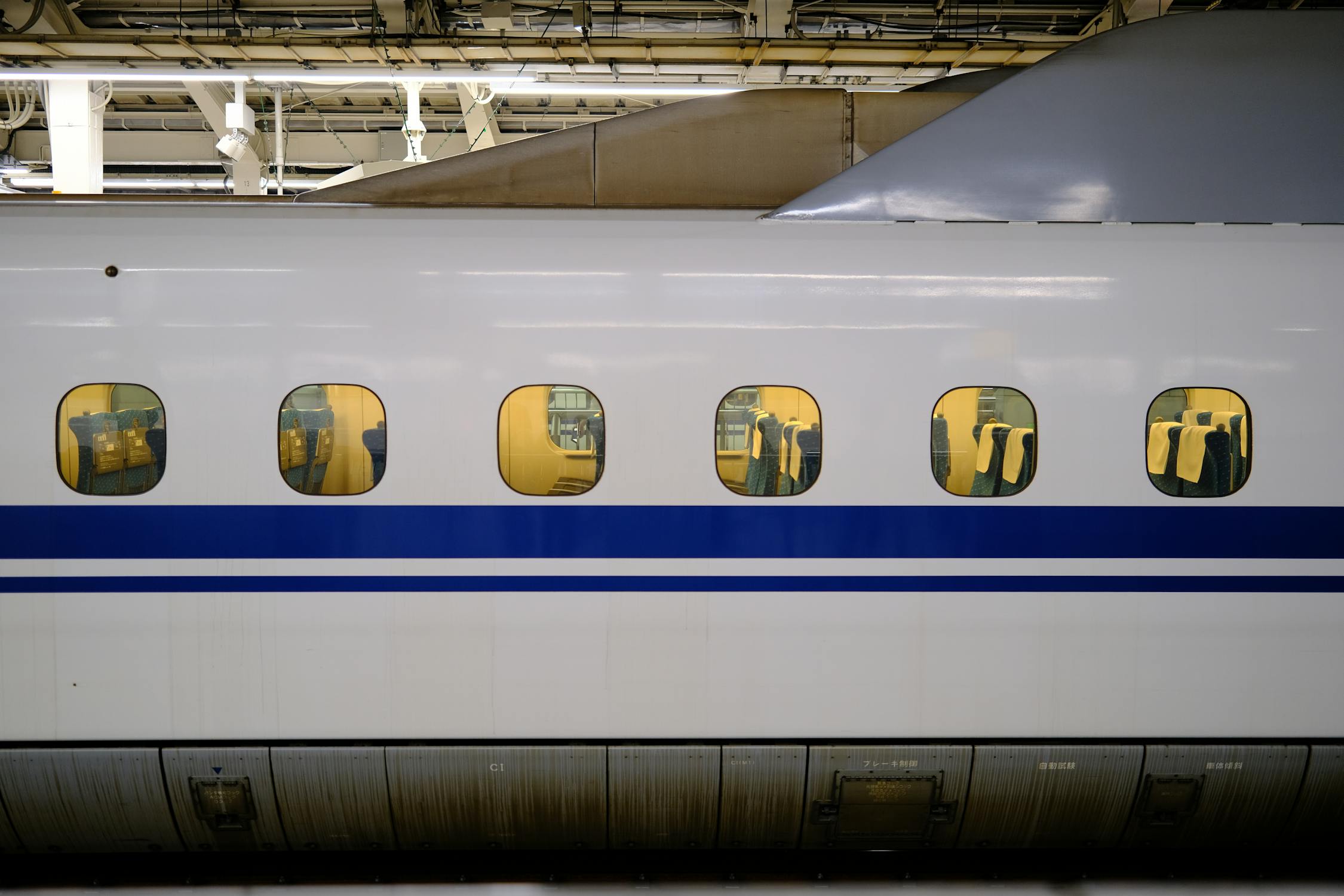
Mount Fuji sits north of the line, and because the carriages keep a fixed orientation, the Fuji side is seat E — the window seat of the two-seat pair — in either direction. It appears roughly forty minutes out of Tokyo, or about an hour and forty minutes into a journey from Shin-Osaka.
Manage your expectations: Fuji is visible on perhaps a third of days, best in the clear air of winter and early morning, and frequently invisible in summer haze. You get about a minute. Have the camera ready before Shin-Fuji station rather than after.
Luggage: the rule people do not know
On the Tokaido Shinkansen — the Osaka–Tokyo line — baggage over 160 cm in total dimensions requires a free advance reservation for a seat with the oversized baggage space behind it. Turn up without one and you may be charged a fee and directed to a different storage area.
Most normal suitcases are under the limit and can go on the overhead rack or in the space behind the back row. But large sports equipment and oversized cases need the booking, and it costs nothing if you do it when you buy the ticket. If you would rather not travel with luggage at all, takkyubin forwarding will move a case to a Tokyo hotel overnight for roughly ¥2,000–3,000 — see luggage storage in Osaka.
Ekiben
Buy your food before you board. Ekiben — station bento — are a genuine part of Shinkansen travel, sold on the Shin-Osaka concourse, regionally specific and considerably better than the trolley. Osaka’s are worth the two minutes: pressed sushi, beef, takoyaki-adjacent oddities. Eating on a Shinkansen is entirely normal, unlike on a local train, where it is not. A beer with it is also normal. See our Osaka food guide for what the city does well.
Flying
The air route between Tokyo and Osaka is one of the busiest in the world, and on paper it looks fast: 70 to 80 minutes in the air. Door to door it is three and a half hours or more once you add the trip to the airport, check-in, security and the trip from the airport at the other end. The Shinkansen puts you in the centre of Tokyo in about three hours from central Osaka, with no check-in at all.
When flying does make sense:
- You are connecting to an international flight at Narita or Haneda. A through-ticketed domestic leg removes the risk and often the cost.
- You have found a genuinely cheap fare. Domestic fares are dynamic and the low-cost carriers can undercut the train substantially. Check the total, including the airport transfer at both ends.
- You are starting or ending near an airport anyway.
The airports: Osaka has two. Itami (ITM) is the domestic airport, closer to the city and the sensible choice for a Tokyo flight. Kansai (KIX) is the international one, further out on its artificial island. In Tokyo, Haneda is far more convenient than Narita — a Narita landing can add an hour and ¥3,000 to the journey and wipes out any saving. See Kansai Airport to Osaka and how to get to Osaka.
The other consideration is weather. Typhoon season runs roughly August to October and closes airports with a day’s notice; the Shinkansen keeps running through a great deal of weather that grounds aircraft. On a tight schedule in September, that reliability has a real value.
The night bus
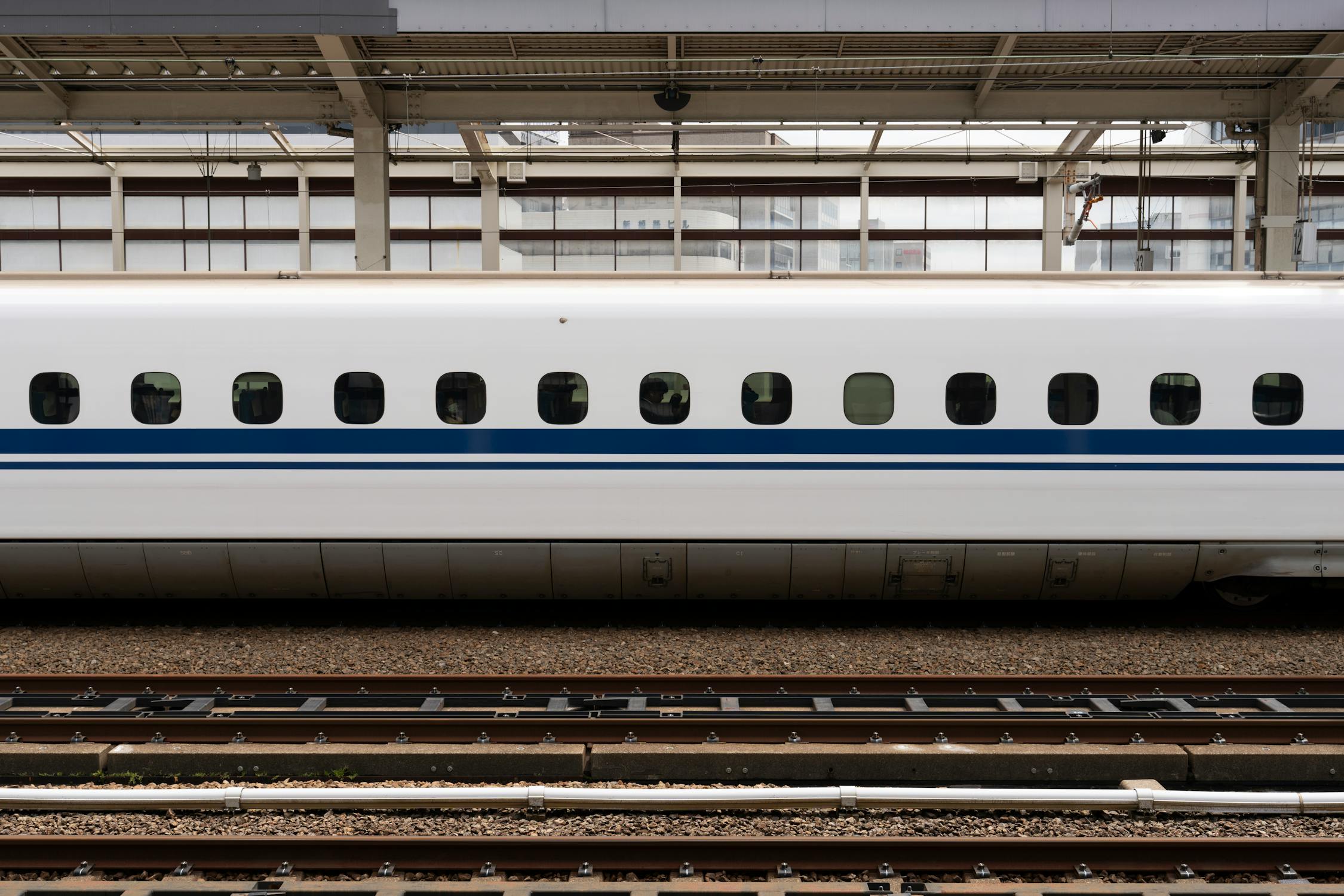
Eight to nine hours overnight, from about ¥4,000, departing between 22:00 and 23:00 and arriving in Tokyo between 06:00 and 08:00. Several operators run the route nightly, with a wide spread of comfort levels.
The real economics are better than the headline. You save the fare difference — roughly ¥10,000 against the Shinkansen — and you also save a night’s accommodation, which in Tokyo is another ¥8,000 or more. On a tight budget that is a genuinely large saving, and it is why the buses are full of Japanese students rather than only of backpackers. See budget travel in Osaka.
The honest costs. You will not sleep well. Expect to arrive tired, and expect to lose most of the first morning in Tokyo, which eats into the saving. Choose your tier carefully: the cheapest four-across seats are cramped, while three-across seats with proper recline, a curtain and a footrest cost more and are worth it. Women-only sections and women-only buses exist and are widely used.
- Book ahead for weekends and holidays; the cheap seats go first.
- Bring an eye mask, earplugs and a neck pillow. Non-negotiable.
- Buses stop at service areas every couple of hours for a few minutes. Note your bus’s number plate before you get off.
- Arriving at 06:30 with a suitcase and no hotel room until three in the afternoon is the part nobody plans for. Find the station lockers first, then have breakfast.
- Day buses also run, at eight to nine hours in daylight. These are the worst of both worlds for most people.
Buying the ticket
Four routes to a Shinkansen ticket, in rough order of usefulness to a visitor.
- The EX reservation system online. The only way to get the Hayatoku early-bird fares, and it lets you change a booking without a fee up to departure — genuinely useful when a day in Kyoto runs long. Registration takes a few minutes and a foreign card works.
- The green ticket machines at Shin-Osaka. English interface, take cards, and quick outside peak hours. Perfectly fine if you are buying on the day.
- The midori no madoguchi ticket office. Staffed, slower, and the right choice for anything complicated — a pass exchange, an oversized baggage booking, a group.
- Third-party resellers. Convenient if you want everything in one app, but they add a fee and cannot access the EX discounts.
Note that an ICOCA card does not pay for the Shinkansen itself. It gets you to Shin-Osaka and it gets you around Tokyo on arrival, since IC cards are interoperable nationwide, but the bullet train needs its own ticket.
What the journey is actually like
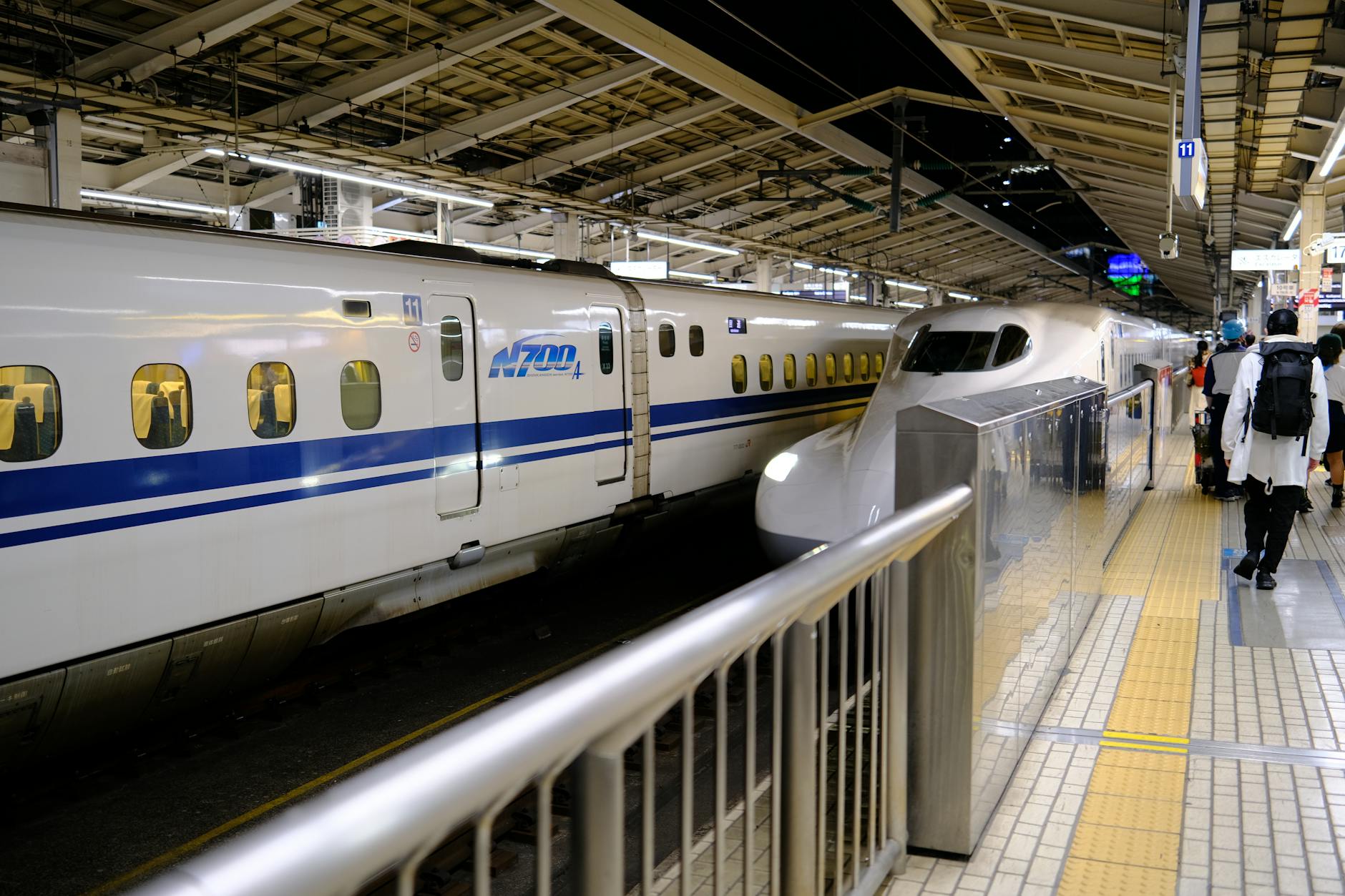
If you have not done it before, the choreography is worth knowing, because it is fast and it assumes you know what you are doing.
- Platform markings show where each car will stop. Find your car number and stand on it. The train arrives, and the doors open exactly there.
- The stop at Shin-Osaka is short — a couple of minutes. Board promptly with your luggage already in hand.
- Cleaning crews turn the train around in about seven minutes at terminus stations, bowing as they enter and leave. It is a genuinely impressive piece of theatre.
- Seats rotate to face the direction of travel. If yours is backwards, there is a foot pedal at the base.
- Phone calls happen in the vestibule, not at your seat. Music through headphones is fine; a speaker is not.
- Reclining: a glance behind before you do it is normal courtesy and costs nothing.
- There is free wifi on the Tokaido Shinkansen, and it is adequate rather than good. Do not plan a video call around it.
- Announcements are in Japanese and English, and the scrolling display shows the next station in both.
The other thing that surprises first-timers: the train is not noticeably fast from the inside. It is smooth, quiet, and it holds around 285 km/h without any sense of drama. The only clue is how quickly the scenery in the middle distance disappears.
Other ways, for completeness
- Local trains all the way. Around nine hours with numerous changes, and cheap only if you hold a Seishun 18 ticket — a seasonal, date-limited pass sold in the school holidays that gives unlimited local and rapid JR travel for a flat daily rate. A real option for students with time and no money, and a bad one for anyone else.
- Daytime highway buses. Eight to nine hours in daylight, cheap, and they cost you a whole day without saving a hotel night. Hard to recommend.
- Driving. Roughly six hours on the expressway before traffic, with substantial tolls and Tokyo parking on arrival. Only sensible as part of a wider road trip.
- The Platt Kodama discount plan, which packages a Kodama seat with a drink at a reduced price. Cheaper than a Nozomi ticket, and four hours long. Reasonable if the saving matters more than the afternoon.
Which should you take?
- Almost everyone: the Nozomi, reserved seat, booked whenever suits you. Book EX Hayatoku 21 if your dates are fixed three weeks out.
- JR Pass holders: the Hikari, and read the surcharge rules before you assume the Nozomi is included.
- Connecting to an international flight: fly, ideally through Haneda, on a through ticket.
- Tight budget, flexible body: the night bus, in a three-across seat, and accept that you lose the next morning.
- Travelling with small children: the Shinkansen, without hesitation. You can walk around, there are proper toilets, and nobody has to be strapped in. See Osaka with kids.
- Heavy luggage: the Shinkansen, plus a forwarding service for the big case.
Doing it as a day trip
Possible, and rarely a good idea. Two and a half hours each way means five hours on trains and around ¥29,000 in fares for perhaps seven usable hours in Tokyo. It works for a single fixed commitment — a meeting, a concert, one specific exhibition — and it does not work for sightseeing.
If Tokyo is genuinely on your list, give it two nights minimum. And consider the alternative: the same money and time spent on day trips from Osaka gets you Kyoto, Nara, Kobe and Himeji, all of them under an hour away. Our Kansai region guide makes the case that a Kansai-based trip beats a Tokyo–Osaka shuttle for almost everyone.
Which end to base yourself
For a two-city trip, the practical question is where the nights go. Osaka is cheaper to sleep in, cheaper to eat in, and better placed for Kyoto, Nara, Kobe and Himeji. Tokyo has more of everything and costs accordingly.
The shape we would recommend for a ten-day first trip: four or five nights in Osaka doing Kansai properly, then the Shinkansen east for the rest. Doing it in that order means you arrive in Tokyo already fluent in Japanese trains, which makes the harder city considerably easier. Our where to stay in Osaka guide covers the Osaka half, and the Osaka itinerary hub has plans from one to seven days.
Osaka to Tokyo FAQ
How long does the Shinkansen take from Osaka to Tokyo?
About 2 hours 21 minutes on the Nozomi from Shin-Osaka to Tokyo Station. The Hikari takes roughly half an hour longer and the Kodama closer to four hours.
How much is the Shinkansen from Osaka to Tokyo?
Roughly ¥14,000–15,000 for a reserved seat on the Nozomi in 2026, or about ¥12,980 with the EX Hayatoku 21 early-bird fare booked 21 days ahead. The Hikari is around ¥13,320. Prices are stable rather than dynamic.
Is it cheaper to fly from Osaka to Tokyo?
Sometimes on the ticket, rarely once you count everything. Airfares are dynamic and can undercut the train, but the airport transfers at both ends push the door-to-door time to three and a half hours or more and add cost. Flying makes most sense when you are connecting to an international flight.
Does the JR Pass cover the Nozomi?
Not as standard. Pass holders take the Hikari or Kodama, or pay a surcharge for the Nozomi. For an Osaka-based trip with one Tokyo leg, the nationwide pass is usually not worth buying at all.
How much is the night bus from Osaka to Tokyo?
From about ¥4,000 for an eight- to nine-hour overnight journey, leaving 22:00–23:00 and arriving 06:00–08:00. Paying more for a three-across seat with proper recline is money well spent.
Which side of the Shinkansen for Mount Fuji?
Seat E, the window seat of the two-seat pair, in either direction. Fuji appears about an hour and forty minutes out of Shin-Osaka, and it is visible on perhaps a third of days — best in clear winter air.
Shin-Osaka or Osaka Station?
Shin-Osaka. They are two different stations, and the Shinkansen only calls at Shin-Osaka, one stop north of Osaka Station on JR or three stops north of Umeda on the Midosuji line. Allow fifteen minutes inside the station itself.
Should I get off at Shinagawa or Tokyo Station?
Shinagawa if you are staying in the south or west of Tokyo — Shibuya, Shinjuku, Ebisu, Meguro. It comes first and it is on the Yamanote line.
Can I do Tokyo as a day trip from Osaka?
Physically yes, sensibly no. Five hours of travel and around ¥29,000 buys you about seven hours in the city. Worth it for one fixed commitment; not worth it for sightseeing.
Where to go next
Before you decide to leave Kansai at all, look at what is within an hour: our day trips from Osaka page and the Kansai region guide cover Kyoto, Nara, Kobe, Himeji, Koyasan and Hiroshima, and most first-time visitors underestimate how much is close by.
For the Osaka half of a two-city trip, start with the Osaka travel guide, the Osaka itinerary hub and our 3 days in Osaka plan. Read Osaka travel tips for money, etiquette and the 2026 rule changes, and the ICOCA card guide for the card that works on both ends of this journey.
Most people ride this line once, in the middle of a longer trip. Our ten-day Tokyo, Kyoto and Osaka itinerary puts the journey where it belongs in the week and explains why a nationwide rail pass loses money on this exact route.
Flying between the two cities means landing at Itami, which is closer to the centre than most people expect — our Itami airport guide explains the fastest way into town.
For the Osaka end of the journey, our Shin-Osaka Station guide covers the layout, the transfers from the Midosuji line and JR, which platform you need and where to buy an ekiben.