This article contains advertising. Our booking links are routed through a partner that adds commission tracking automatically, so if you book through one we earn a commission from the provider, at no extra cost to you. It never affects what we recommend. Affiliate disclosure
For years, the advice for anyone touring Kansai on a budget was a single sentence: buy a Thru Pass. One card, two or three days, almost every private railway, subway and a good many buses from Kyoto to Kobe to Koyasan, and you never had to think about a fare again. It was the pass that made the region feel small.
The Kansai Thru Pass no longer exists. It was retired in 2024, and its replacement has since been renamed, re-priced and trimmed back. Plenty of blogs, forum answers and even some ticket resellers still describe the old pass as if nothing had happened, which is how travellers end up planning a trip around a product they cannot buy. This guide sets out what replaced it, what the current version actually covers, whether it is worth the money, and which of the region’s other passes — JR, Kintetsu, and a handful of single-company tickets — does the job better for particular trips.
One conclusion up front, because it saves most readers the rest of the page: for a typical Osaka-based trip with day trips to Kyoto, Nara and Kobe, no regional pass pays for itself. An ICOCA card and pay-as-you-go fares are cheaper. The passes win on specific, heavy itineraries, and the rest of this guide is about spotting whether yours is one of them.
The short answer
- The Kansai Thru Pass is gone. It was replaced in 2024 by the Kansai Railway Pass, which on 1 April 2026 became the Kansai Railway Pass Lite.
- The Lite costs ¥5,200 for two days or ¥6,500 for three, half price for children aged 6–11. The days do not have to be consecutive.
- It covers private railways and subways — Osaka Metro, Hankyu, Hanshin, Keihan, Kintetsu, Nankai and more — but not JR, not the Kyoto City Subway, not the Randen tram to Arashiyama and not buses.
- It is sold online only, as a QR-code e-ticket, and the current edition stops selling on 30 September 2026. Check what is on sale when you travel.
- It rarely pays off unless you are doing two out-of-town trips a day, or one of the longest runs it covers.
- Better alternatives for specific trips: the JR Kansai Wide Area Pass for one long trip such as Kinosaki or Okayama; the Kintetsu Rail Pass for Nara, Yoshino and Ise; the Koyasan World Heritage Ticket for Koyasan; an ICOCA card for almost everything else.
What happened to the Kansai Thru Pass
The Thru Pass was sold by Surutto Kansai, the association of the region’s private railways, and its genius was scope. It covered nearly every non-JR train and subway in Kansai plus a long list of bus companies, including Kyoto’s city buses, which is where most visitors actually spend their transport money in Kyoto. You could land at Kansai Airport, ride the Nankai into Osaka, take the Keihan to Kyoto, bus around the temples, ride Kintetsu to Nara and the Hanshin to Kobe, and never buy another ticket. It was also cheaper than its successors.
In 2024 the operators retired it. The replacement, the Kansai Railway Pass, kept the idea of a multi-company rail pass but dropped the buses entirely, which quietly removed a large share of the value for anyone spending time in Kyoto. It sold for about ¥5,600 for two days and ¥7,000 for three.
Then, from 1 April 2026, that became the Kansai Railway Pass Lite. The name is honest. The Lite is a little cheaper again, and it is very much a pass for the main private railways: the Kyoto City Subway, the Randen tram lines to Arashiyama and the Keihan lines around Otsu are not included, though the old Thru Pass covered all of them. Two replacements in two years, each a step further from the old all-in-one pass, is the clearest possible signal that the operators no longer see a regional private-rail pass as a priority — and that you should treat whatever is on sale on the day you book as the only version that matters.
So if someone tells you to buy the Kansai Thru Pass, they mean well and they are out of date. The rest of this guide is about the pass that exists now, and whether you need it.
The Kansai Railway Pass Lite in detail
| 2-day | 3-day | |
|---|---|---|
| Adult | ¥5,200 | ¥6,500 |
| Child (6–11) | Half price | Half price |
| Cost per day, adult | ¥2,600 | About ¥2,170 |
| Days | Any two or three calendar days within the validity period; they need not be consecutive | |
| Format | Digital QR-code e-ticket, sold online only through resellers such as Klook, KKday and WAUG | |
What it covers
- Osaka Metro — every subway line in the city, plus the Osaka Monorail, which is the rail route to Itami airport.
- Hankyu — Umeda to Kyoto-Kawaramachi, to Kobe-Sannomiya, and the branch to Arashiyama.
- Hanshin — Osaka-Umeda and Namba to Kobe, and through trains towards Himeji with the Sanyo Railway.
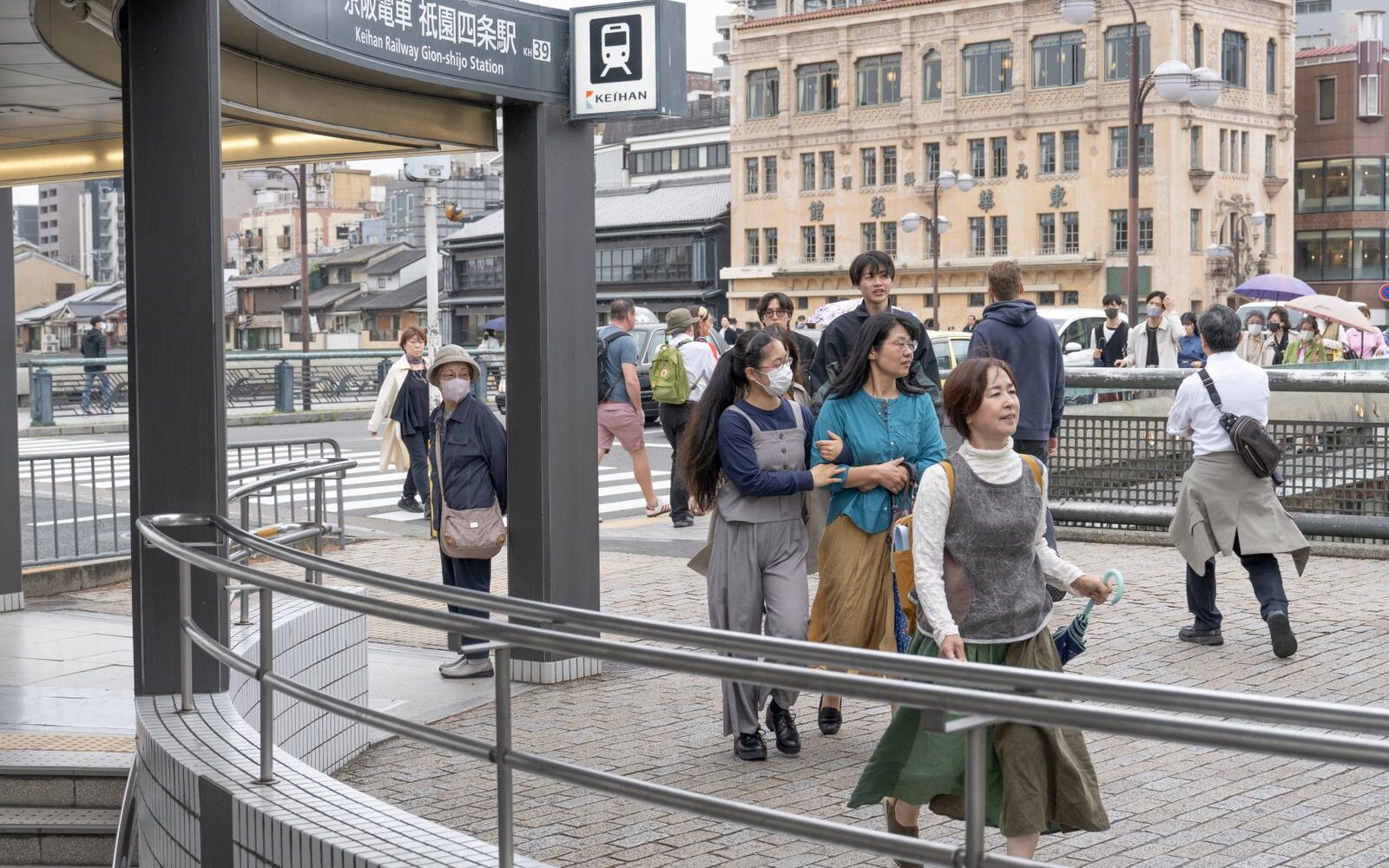
- Keihan — the main line from Yodoyabashi and Kyobashi to Kyoto (Gion-Shijo, Sanjo, Demachiyanagi), but not its lines around Otsu.
- Kintetsu — Namba to Nara, the line to Yoshino (with a small supplement, about ¥520 each way, for the final stretch), and much of the rest of its network in the Osaka–Nara–Kyoto area.
- Nankai — Namba to Kansai Airport, to Wakayama, and to Gokurakubashi at the foot of Koyasan.
- Kobe — the Kobe subway, the Kobe Electric Railway, the Sanyo Railway, and the Port Liner and Rokko Liner automated lines.
What it does not cover
- Any JR train. That includes the JR Special Rapid to Kyoto, the Loop Line, the Haruka airport express and all Shinkansen.
- The Kyoto City Subway — a real problem, because it is how you cross central Kyoto.
- The Randen (Keifuku) tram lines to Arashiyama, and the Keihan lines around Otsu.
- Buses, anywhere. In Kyoto that means most of the city’s temples are outside the pass once you get off the train.
- Surcharges for reserved-seat and limited express trains on Kintetsu, Nankai, Keihan and Hankyu. The pass pays the base fare; the Nankai Rapi:t to the airport, Kintetsu’s limited expresses and Keihan’s premium cars all cost extra.
The rules that trip people up
- It is phone-only. There is no physical card. The QR code on your phone is the ticket — where a gate has no reader for it, show it at the staffed gate — screenshots are not accepted, and a flat battery is a flat pass.
- Online purchase only. You cannot buy it at a station window.
- Editions expire. The spring–summer 2026 edition went on sale on 25 March, stops selling on 30 September 2026, and can be used up to 1 October (two-day) or 2 October (three-day). At the time of writing the operator had not announced what follows it. Do not buy for a trip that falls outside the edition’s dates.
- Attraction discounts at selected facilities come with the pass, valid for one person on a day you are using it. They are small and should never be the reason you buy.
Does it pay off? The honest maths
Kansai’s private railways are cheap, which is exactly the problem for the pass. These are typical one-way adult fares, taken from our route guides:
| Journey | Line | One way | Return |
|---|---|---|---|
| Osaka to Kyoto | Hankyu or Keihan | Around ¥410 | Around ¥820 |
| Namba to Nara | Kintetsu | ¥680 | ¥1,360 |
| Osaka to Kobe-Sannomiya | Hanshin or Hankyu | ¥320–330 | Around ¥650 |
| Kansai Airport to Namba | Nankai Airport Express | ¥970 | — |
| Around Osaka | Osaka Metro | From around ¥190 | — |
Now compare those with ¥2,600 a day on the two-day pass, or about ¥2,170 a day on the three-day.
A typical four-day trip
Say you are based in Namba and doing what most first-time visitors do:
- Day 1 — arrive at Kansai Airport on the Nankai, two subway rides in the evening: about ¥1,350.
- Day 2 — Kyoto on the Hankyu, two subway rides in Osaka: about ¥1,200, plus Kyoto buses or subway that the pass would not cover anyway.
- Day 3 — Nara on Kintetsu, two subway rides: about ¥1,740.
- Day 4 — Kobe on the Hanshin, two subway rides: about ¥1,030.
Because the Lite lets you pick non-consecutive days, you would put a two-day pass on your two most expensive days: Nara and the arrival day, about ¥3,090 of fares for a ¥5,200 pass. A three-day pass on the top three days covers about ¥4,290 of fares for ¥6,500. Either way you lose around ¥2,000. That is the result for most trips, and it is why our budget travel guide tells people to skip it.
When it does pay
The pass comes out ahead only when a single day contains roughly ¥2,600 of private-railway fares. In practice that means one of these:
- Two out-of-town trips in a day. Nara in the morning and Kobe for the evening, with a few subway rides either side, comes to around ¥2,700 — just over the two-day pass’s daily cost. It is also an exhausting day.
- The longest runs the pass covers. The Hanshin–Sanyo through trains to Himeji, the Nankai to Gokurakubashi at the foot of Koyasan, and the Kintetsu out to Yoshino are all big enough fares to tip a day over the line on their own, or nearly. Himeji is slower this way than on JR’s Special Rapid, and for Koyasan, check whether the current edition includes the cable car up the mountain — the buses at the top are not included.
- Heavy city days on top. If you ride the Osaka subway six or eight times a day, the metro fares add up faster than you would expect. For city-only days, though, a subway day pass or the Osaka Amazing Pass is the better comparison — see our day pass comparison.
The simplest test: write down the two or three heaviest days of your trip, add up their private-railway and subway fares, and compare the total with the pass price. If you are not clearly over, do not buy it. Convenience alone is not worth ¥2,000 when an ICOCA card is just as convenient.
The JR regional passes

JR West sells its own regional passes, which cover the JR lines the Lite does not. We compare them in full, alongside the nationwide Japan Rail Pass, in our JR Pass for Osaka and Kansai guide; the short version for a regional trip:
- JR Kansai Area Pass — one to four consecutive days, roughly ¥3,000 for one day up to about ¥7,200 for four. It covers JR lines in the Kansai core, from Kyoto and Nara to Himeji and Kansai Airport, including unreserved seats on the Haruka. It pays off mainly if an airport run on the Haruka falls inside its days alongside a Kyoto or Himeji trip.
- JR Kansai Wide Area Pass — about ¥12,000 for five consecutive days, half price for children aged 6–11. This is the regional pass that genuinely earns its money, because it reaches much further: the Sanyo Shinkansen as far as Okayama, the limited express to Kinosaki Onsen, Takamatsu on Shikoku, and the Kumano region down the Kii Peninsula. One long trip inside the five days usually covers most of the cost on its own.
- Longer combinations — JR West also sells passes pairing Kansai with Hiroshima and with Hokuriku (Kanazawa), and the Hokuriku Arch Pass for a loop between Osaka, Kanazawa and Tokyo. These are for multi-region trips and are covered in the JR guide.
The fundamental choice between the JR passes and the Lite is really a choice between railways. In Kansai, JR and the private lines often run parallel routes to the same places: JR’s Special Rapid to Kyoto Station is quicker, while the Hankyu and Keihan drop you closer to Gion and the old city. Pick the pass that matches the stations you actually want, not the one with the bigger map.
The Kintetsu Rail Pass
Kintetsu is the largest private railway in Japan, and its network is shaped like a trip plan: Osaka, Nara, Kyoto, Yoshino, Ise-Shima and Nagoya. For visitors whose Kansai trip leans east and south, its own pass can beat the Lite.
- What it is — a Kintetsu-only pass for overseas visitors, sold in short versions covering the Osaka–Nara–Kyoto core and longer five-day versions reaching Ise-Shima and Nagoya. A “Plus” variant adds some buses.
- When it wins — a trip that includes Nara more than once, Yoshino in cherry-blossom season, or Ise, where the Lite is not the tool for the job. The five-day version is also a sensible way to travel Osaka–Ise–Nagoya on the way to or from Tokyo.
- What it does not do — get you to Kobe, Arashiyama, Koyasan or Kansai Airport.
Prices have been revised several times in recent years, so check Kintetsu’s official site for the current figures before you compare. Our Nara day trip guide explains which Kintetsu trains to take.
Single-trip and single-company tickets
Often the best-value ticket is not a regional pass at all but a purpose-built ticket for one trip.
- Koyasan World Heritage Ticket — Nankai’s discounted package for Koyasan, bundling the round trip from Osaka, the cable car and unlimited buses on the mountain, plus small discounts at temples. For a Koyasan trip this is usually better than the Lite, precisely because the buses are included. Details in our Mount Koya day trip guide.
- One-company tourist passes — Hankyu, Hanshin and Keihan have each sold cheap one- or two-day tickets for overseas visitors covering their own lines. They are worth it only if you will ride that company’s line more than once in the day, which is rarer than it sounds.
- Airport tickets — the Nankai Rapi:t is noticeably cheaper as an online e-ticket, and JR West sells a discounted Haruka ticket to overseas visitors. Both are covered in Kansai Airport to Osaka.
- Kyoto’s own day ticket — Kyoto sells a subway-and-bus day ticket for getting around the city once you arrive. Because the Lite covers neither Kyoto’s subway nor its buses, this, rather than any regional pass, is what saves money in Kyoto itself. See our Kyoto day trip guide.
For Arashiyama specifically, the Hankyu branch line is covered by the Lite but the Randen tram is not — our Arashiyama from Osaka guide compares the routes.
Passes that are not regional
Two passes turn up in every search for Kansai rail passes and belong on other pages:
- The Osaka Amazing Pass covers Osaka city only — the subway plus free entry to a list of attractions — and nothing in Kyoto, Nara or Kobe. It is a sightseeing pass, not a regional one. Our Osaka Amazing Pass guide does the sums.
- The nationwide Japan Rail Pass covers all JR lines in Japan, costs about ¥50,000 for seven days, and rarely pays off on a trip that only links Tokyo and Kansai. See the JR pass guide and Osaka to Tokyo.
No pass at all: the honest default
For most visitors the cheapest option is to buy nothing and tap an ICOCA card everywhere. It works on every railway, subway and bus in Kansai — JR and private lines alike, including the ones no pass covers — and in convenience stores and lockers too. You never have to decide in advance which company you will ride, which on a real trip, with weather and tired feet and changes of plan, is worth more than any theoretical saving.
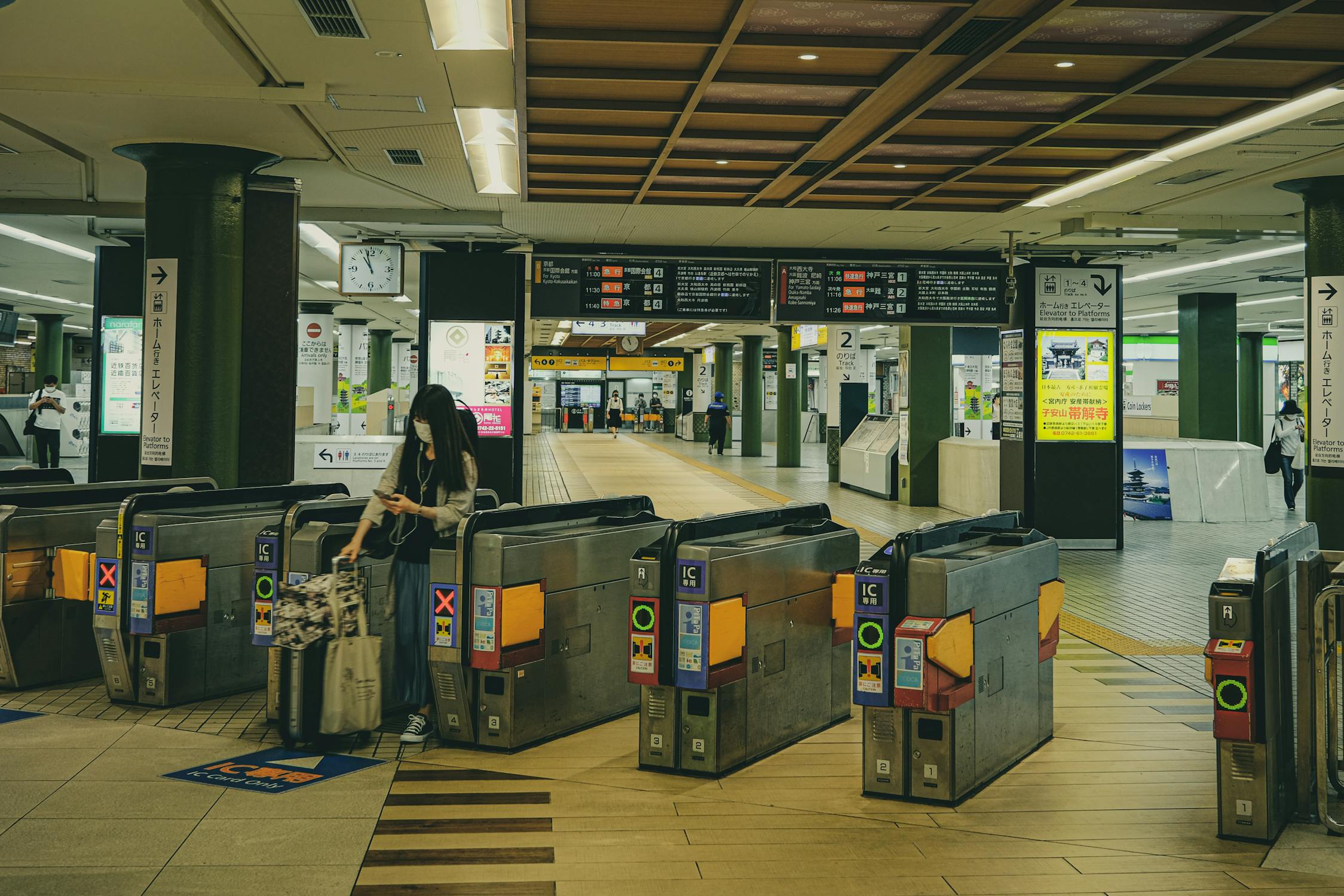
The fares, as the table above shows, are low. A day trip to Kyoto costs less than a coffee and a pastry in the city centre. Our ICOCA guide explains how to get one, including adding it to your phone, and our money-saving tips cover the other places a budget actually leaks.
Travelling with children
Children aged 6–11 pay half fare on every railway in Kansai, and pre-school children generally ride free with a paying adult. The passes follow the same pattern: the Lite is half price for 6–11s, and so is the JR Kansai Wide Area Pass.
That has a consequence most families miss. Because a child’s fares and a child’s pass are both exactly half the adult price, the break-even maths is identical for children. If the pass does not pay for the adult, it does not pay for the child either, and buying one for everyone doubles the loss rather than spreading it.
The practical catch is the card, not the pass. An ordinary ICOCA charges adult fares whoever taps it, so a child using an adult card is overpaying on every ride. A child ICOCA charges child fares automatically, but has to be bought in person at a JR ticket office with the child’s passport — ask on arrival rather than hunting for one in a ticket machine. Our Osaka with kids and Osaka with toddlers guides cover pushchairs, lifts and the rest of the logistics.
When the season changes the answer
The fares do not change with the calendar, but the trains do. At the peak of cherry blossom season in late March and early April, and again in the autumn leaf season from mid-November, the lines to Kyoto, Nara and above all Yoshino are packed, and reserved seats on the limited expresses sell out days ahead. Golden Week and the mid-August Obon holiday are the same story; our Golden Week guide explains how to work around the crowds.
Two things follow. First, the surcharge for a reserved seat, which most passes do not include, is worth paying at those times rather than standing for an hour, so budget for it whichever ticket you hold. Second, a crowded day is a slow day, and slow days mean fewer journeys — which makes a pass even less likely to pay off. In peak season, plan fewer, longer outings, start early, and let the ICOCA card do the rest.
All the passes side by side
| Pass | Price (adult) | Days | Covers | Best for |
|---|---|---|---|---|
| Kansai Railway Pass Lite | ¥5,200 / ¥6,500 | 2 or 3, non-consecutive | Private railways and subways, not JR, Kyoto subway or buses | Heavy days on private lines |
| JR Kansai Area Pass | About ¥3,000–7,200 | 1–4 consecutive | JR in the Kansai core, including the Haruka | Airport run plus Kyoto or Himeji on JR |
| JR Kansai Wide Area Pass | About ¥12,000 | 5 consecutive | JR across Kansai, Shinkansen to Okayama, Kinosaki, Takamatsu, Kumano | One long trip inside five days |
| Kintetsu Rail Pass | Check current prices | 1, 2 or 5 | Kintetsu only; longer versions reach Ise and Nagoya | Nara, Yoshino, Ise |
| Koyasan World Heritage Ticket | Check current prices | Round trip | Nankai to Koyasan, cable car, mountain buses | Koyasan |
| ICOCA, no pass | Pay as you go | Any | Everything | Most trips |
Which pass for which trip
- Three to five days, Osaka base, Kyoto, Nara and Kobe as day trips — no pass. ICOCA.
- Osaka base plus Kinosaki, Okayama, Kurashiki or the Kumano area — JR Kansai Wide Area Pass, timed so the long trip falls inside the five days.
- Nara-heavy, or Yoshino, or Ise — Kintetsu Rail Pass.
- Koyasan overnight — Koyasan World Heritage Ticket.
- Two or three very full days on private lines — Himeji by Hanshin and Sanyo, Nara plus Kobe, Wakayama — the Kansai Railway Pass Lite, if you have done the sums and are clearly over the break-even.
- Arriving at Kansai Airport and staying in Kyoto — the discounted Haruka ticket, or a JR Kansai Area Pass if the next few days are JR-heavy.
- Osaka and Tokyo on one trip — usually no pass; buy the Shinkansen legs individually. See our Osaka and Tokyo itinerary.
Flying into Itami rather than Kansai Airport? The Osaka Monorail is on the Lite, and our Itami airport guide explains the rest.
The mistakes that cost real money
- Buying the “Kansai Thru Pass” from an out-of-date listing. If a reseller still calls it that, read the small print to see which product you are actually getting.
- Assuming a Kansai pass covers JR. The Lite covers no JR trains at all. The JR passes cover no private lines. There is no single pass for both.
- Buying the Lite for Kyoto. It gets you to Kyoto, and then stops working: no Kyoto subway, no buses, no Randen.
- Forgetting the surcharges. Limited expresses and reserved seats cost extra on every pass here except where the pass says otherwise.
- Buying outside the edition dates. The spring–summer 2026 Lite stops selling on 30 September 2026 and cannot be used after 1–2 October.
- Buying a pass for peace of mind. An ICOCA card gives you exactly the same peace of mind for free.
Kansai rail passes: FAQ
Is the Kansai Thru Pass still available?
No. The Kansai Thru Pass was retired in 2024 and replaced by the Kansai Railway Pass, which became the Kansai Railway Pass Lite on 1 April 2026. Listings that still use the old name are out of date, or are selling the Lite under it.
What replaced the Kansai Thru Pass?
The Kansai Railway Pass Lite: a two- or three-day pass for the region’s private railways and subways, sold online as a QR e-ticket. Unlike the Thru Pass, it covers no buses, and it does not cover the Kyoto City Subway or the Randen tram, both of which the Thru Pass did.
How much is the Kansai Railway Pass Lite?
¥5,200 for two days and ¥6,500 for three, with children aged 6–11 at half price, for the spring–summer 2026 edition. Prices have changed between editions, so check the current one.
Does the Kansai Railway Pass Lite cover JR?
No. It covers no JR trains, including the JR Special Rapid to Kyoto, the Osaka Loop Line and the Haruka. For JR you need a JR pass or an ICOCA card.
Can I use it to get to Kyoto?
Yes, on the Hankyu or Keihan. But once you are in Kyoto it covers neither the city subway nor the buses, so you will pay separately to get around. Kyoto’s own subway-and-bus day ticket is the better buy there.
Does it cover Kansai Airport and Nara?
Yes to both: the Nankai line from Kansai Airport to Namba, and Kintetsu from Namba to Nara. The Nankai Rapi:t and Kintetsu limited expresses carry a surcharge.
Do the days have to be consecutive?
No. You can use any two or three calendar days within the edition’s validity period, which is one of the pass’s genuine advantages over the JR regional passes.
Is the Kansai Railway Pass Lite worth it?
For most trips, no. A typical visit with day trips to Kyoto, Nara and Kobe comes out around ¥2,000 cheaper on pay-as-you-go fares. It pays off only on days with two out-of-town trips, or with the longest runs it covers, such as Himeji, Koyasan or Yoshino.
Where to go next
For the JR side of the decision, read our JR Pass for Osaka and Kansai guide. For getting around the city itself, start with the Osaka transportation guide, the subway guide and the Osaka Station guide.
To decide where the trains should take you, the Kansai region guide covers every destination in the region by how long it needs, and day trips from Osaka ranks the best of them — from Himeji Castle to Fushimi Inari and Hiroshima. Then fold it all into the Osaka itinerary hub, and check what an Osaka trip costs once the transport is sorted.