This article contains advertising. Our booking links are routed through a partner that adds commission tracking automatically, so if you book through one we earn a commission from the provider, at no extra cost to you. It never affects what we recommend. Affiliate disclosure
Osaka in autumn is arguably the best season to visit the city. Daily highs 14-22°C, low humidity, dry weather, deep-red momiji foliage from mid-November, plus a calendar of distinctive autumn festivals – all without the spring sakura prices or summer humidity. Peak foliage in central Osaka falls late November to early December, with the Minoo mountains (Minoo Park, Katsuo-ji Temple) peaking 1-2 weeks earlier in mid-November. The 4 km Midosuji Avenue with its ~970 ginkgo trees turns gold late November. This 2026 guide covers everything: peak foliage dates, the best koyo viewing spots, festivals, what to eat, what to wear, and a recommended 7-day autumn Osaka itinerary.

Osaka in Autumn at a Glance
- Season: September through November (foliage peak mid-Nov to early Dec)
- Weather: Sep 22-30°C (cooling, typhoon risk); Oct 14-22°C (ideal); Nov 9-18°C (crisp)
- Foliage peak in Osaka city: Late Nov to early Dec
- Foliage peak in Minoo mountains: Mid- to late November
- Crowd level: Moderate (much lower than sakura season)
- Hotel pricing: Moderate; rises sharply during foliage peak weekend
- Best months for visiting: Late October to mid-November (overall) or mid-November (for foliage)
Best Autumn Foliage Spots in Osaka
Minoo Park
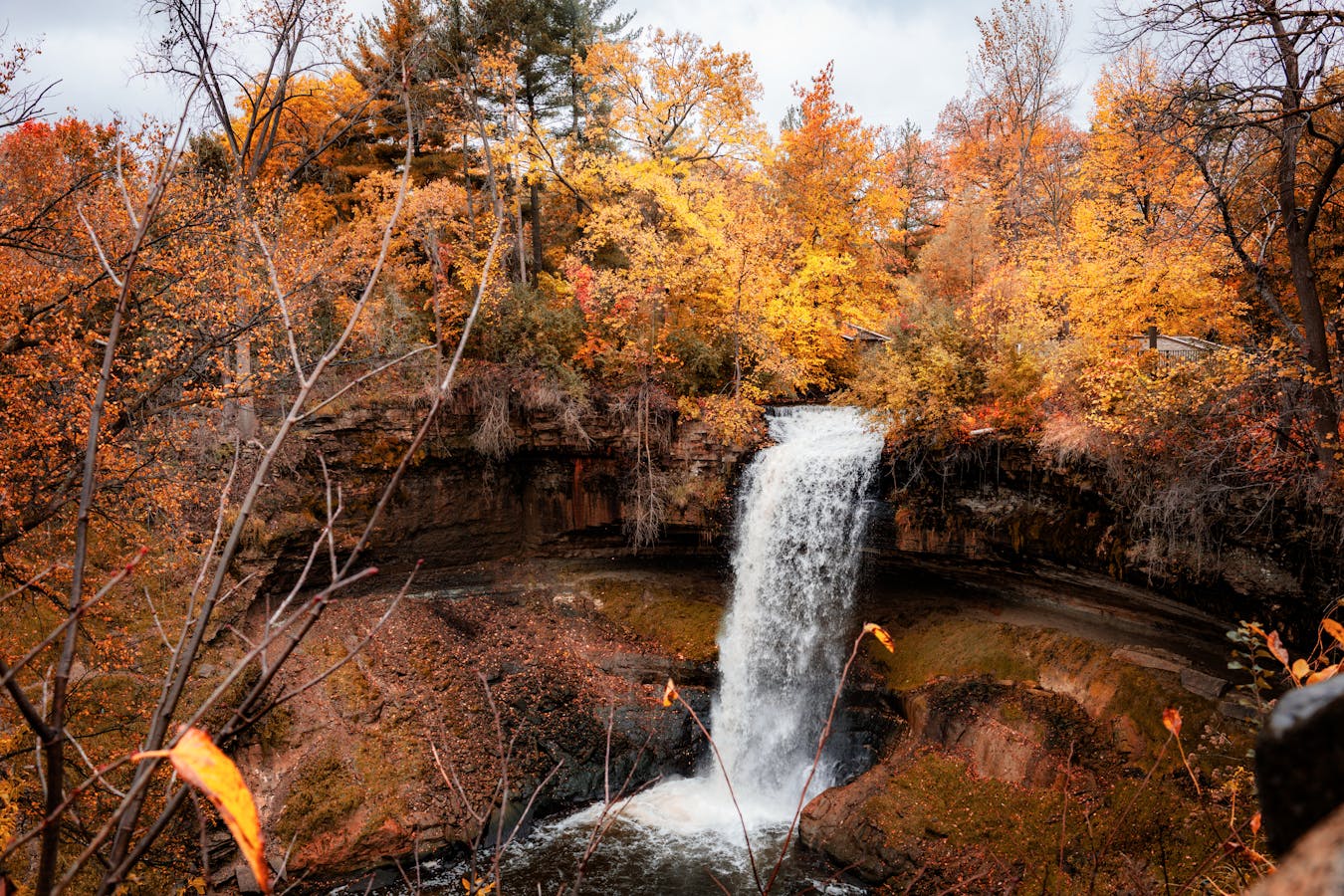
Minoo Park is Osaka’s most famous autumn foliage destination – a 3 km hiking trail along a stream leading to the 33-meter Minoo Waterfall, lined with hundreds of red maples. The trail is paved, takes about 45 minutes one-way, and is suitable for casual walkers. Peak is mid- to late November.
- Access: Hankyu Mino-o Station (Takarazuka Line, ~30 min from Umeda)
- Hours: Open 24/7; daytime visit recommended for foliage
- Admission: Free
- Time needed: 2-3 hours (round trip with waterfall photos)
- Famous food: Momiji tempura (fried maple leaves) – JPY 500-700 per bag at trail vendors
- Best time to visit: Weekday morning to avoid weekend crowds
- Special event: Minoo Otaki Festival – weekend illuminations in November
Katsuo-ji Temple (Minoo Mountains)
The Daruma Doll Temple in the Minoo mountains, surrounded by maples that peak mid-November. The combination of rust-red Daruma dolls + crimson maple foliage is one of Kansai’s most photographically distinctive autumn scenes. Adult JPY 500; bus from Senri-Chuo. See our Katsuo-ji Temple guide for details.
Osaka Castle Park
The castle outer moat is lined with ginkgo trees that turn gold late November. The grounds also have several maples and Japanese zelkova (keyaki) trees contributing red and amber tones. Free outer grounds; Nishinomaru Garden separate entry. Less famous than the spring sakura season but the photographs (gold ginkgos + white castle) are striking.
Midosuji Avenue
The 4 km avenue from Umeda to Namba is lined with approximately 970 ginkgo trees that turn gold late November. Walking the full avenue takes 60-90 minutes; the gold foliage creates one of Osaka’s most photogenic urban scenes.
Settsukyo Park “Momiji Valley” (Takatsuki)
30 km north of central Osaka. A 1 km gorge filled with maples – peak mid-November. Free entry; JR Takatsuki + bus. Local favorite for serious koyo viewing without the Kyoto crowds.
Hoshida Park (Katano)
The Hoshi-no-Buranko suspension bridge crosses a maple-filled canyon – one of the most photographically rewarding spots in northern Osaka. Free; JR Hoshida Station. Combine with the famous yamatosanmyaku night sky observatory (Katano is one of Japan’s officially designated dark-sky preserves).
Daisen Park (Sakai)
Sakai‘s largest park with Japanese garden (JPY 200), bicycle museum, and historic burial mound. Foliage peak late November. Combine with the nearby Mozu Tombs UNESCO World Heritage site.
Autumn Day Trips from Osaka
Tofukuji (Kyoto)
One of Japan’s most famous autumn foliage temples. 50 minutes via JR from Osaka. Tsutenkyo Bridge over the maple-filled valley is the shot everyone comes for. JPY 600 admission; arrive at opening to beat tour buses.
Mt. Koya (Koyasan)
Buddhist mountain monastery 2 hours south. Combines temple stay (shukubo) with autumn foliage. Peak late October to early November (earlier than central Osaka).
Arashiyama (Kyoto)
The bamboo grove and surrounding hills turn red mid-late November. 60 minutes via JR. Combine with the Sagano Romantic Train scenic railway (mid-October through mid-December special operations).
Autumn Festivals in Osaka
- Naniwa Yodogawa Hanabi (Oct 17, 2026): ~10,000 fireworks along the Yodogawa River – recently shifted from August due to extreme heat. Free riverside; paid seats JPY 4,000-15,000
- Kishiwada Danjiri Matsuri Round 2 (mid-October): Second round of the famous danjiri (festival float) cart races, smaller than September’s main event
- Midosuji Festival (mid-October): Cultural street festival on Osaka’s main avenue
- Shitennoji Wasso (Nov 3): Multi-cultural parade celebrating Osaka’s historical role as an international port
- Festival of Lights / Osaka Hikari Renaissance (opens Nov 3): Nakanoshima area lit nightly through Dec 31
- Midosuji Illumination (opens early Nov): 4 km of LED lights from Umeda to Namba – world’s longest illuminated street
- Minoo Otaki Festival (weekends in November): Evening illuminations along the Minoo trail and waterfall
What to Eat in Autumn
- Momiji tempura: Fried maple leaves coated in sweet batter – Minoo specialty, JPY 500-700/bag
- Sanma (Pacific saury): Whole-grilled fish, the autumn fish everyone waits for; izakaya seasonal menus
- Matsutake (pine mushroom): Premium autumn mushroom; kaiseki and high-end menus JPY 5,000-15,000
- Kabocha (Japanese pumpkin): Tempura, soup, sweets – everywhere in autumn
- Sweet potato (satsumaimo): Yaki-imo street vendors with carts roaming residential streets
- Chestnut sweets (kuri): Wagashi shops feature autumn chestnut moshi and kintsuba
- New sake (hiyaoroshi, akiagari): Autumn sake releases from local breweries; JPY 1,500-3,500 per bottle
What to Wear in Autumn Osaka
- September: Light shirt + light cardigan; rain jacket for typhoon season
- October: Long sleeves + light sweater or jacket; comfortable walking shoes
- November: Sweater + medium jacket; layers (mornings cold, midday warm); scarf optional
- Late November-early December: Warm jacket; gloves for evening illuminations
- Hiking (Minoo, Katsuo-ji): Good walking shoes (some paths uneven); layers for temperature swings
- Festivals and illuminations: Dress warmer than your daytime temperature for after-dark events
Typhoon Considerations (September)
- September averages 1-2 typhoons affecting Osaka
- Most cause heavy rain and wind but no major disruptions
- Major typhoons (Category 3+) can ground flights for 24-48 hours
- Travel insurance with weather coverage strongly recommended for September trips
- Check JMA forecasts 5-7 days before arrival
- Hotels rarely cancel reservations during typhoons
- If your trip overlaps with a major typhoon: stay indoors during the storm (typically 12-24 hours); the day after often features clear skies and excellent foliage photography conditions
Suggested 7-Day Autumn Osaka Itinerary
- Day 1 (Wednesday, late Oct): Arrive; rest; evening at Dotonbori
- Day 2: Osaka Castle Park (foliage building) + Tenma area
- Day 3: Minoo Park hike (waterfall + momiji)
- Day 4: Katsuo-ji Temple + Expo ’70 Park
- Day 5: Day trip to Tofukuji + Kyoto Higashiyama
- Day 6: Midosuji walking tour (ginkgo gold) + Shinsekai food crawl
- Day 7: Osaka Hikari Renaissance evening illumination + departure
Photography Tips for Autumn Osaka
- Golden hour: Late afternoon (15:30-16:30 in November) gives warm light through maples
- Overcast days: Best for foliage saturation (no harsh shadows)
- Polarizing filter: Cuts glare on wet leaves; intensifies colors
- Minoo Falls: Slow shutter (1/2 – 2 seconds) for waterfall blur; tripod recommended
- Katsuo-ji: Daruma + red maple combinations – shoot at multiple focal lengths
- Midosuji ginkgo: Look up – the canopy is the photo
- Yamato Hoshida suspension bridge: Wide-angle from the bridge approach; long lens from the parking lot
- Drone: Prohibited at all major parks and temples
Crowd Tips
- Foliage weekends (mid-late November) are the busiest of the autumn season
- Minoo Park weekend crowds can triple weekday levels – arrive at 09:00 or after 14:30
- Kyoto day trips during foliage peak need very early starts (07:00 train from Osaka)
- Midosuji Illumination is best on weeknights 18:00-21:00; weekends have foot-traffic photography challenges
- Hotel rates peak the weekend closest to maximum foliage; book 6-8 weeks ahead for peak weekend
Practical Tips
- Layered clothing essential – the day-to-night temperature swing can be 10-12°C
- Sunscreen for outdoor hikes (especially Minoo and Katsuo-ji)
- Cash for park food stalls and momiji tempura
- Charged phone for navigation; foliage spots can have weak service in valleys
- Comfortable walking shoes – autumn days commonly cover 18,000+ steps
- Reusable bottle – vending machines abundant but bring your own for parks
- Travel insurance recommended (typhoon September risk)
- Book onsen day trips well in advance for autumn weekends (Arima, Kinosaki)
Final Word: Osaka in Autumn
Osaka in autumn is the best-value, best-weather, best-photography season of the year. Plan a visit for the second or third week of November – cool days, low rain, peak foliage at Minoo and Katsuo-ji, ginkgo gold on Midosuji, and lower hotel prices than spring or summer festival weeks. Build at least one day at Minoo Park, one at Katsuo-ji, and one Midosuji walking tour into the trip, and you’ll experience the best of what the season offers. For how November stacks up against the rest of the year, read the season-by-season breakdown.