This article contains advertising. Our booking links are routed through a partner that adds commission tracking automatically, so if you book through one we earn a commission from the provider, at no extra cost to you. It never affects what we recommend. Affiliate disclosure
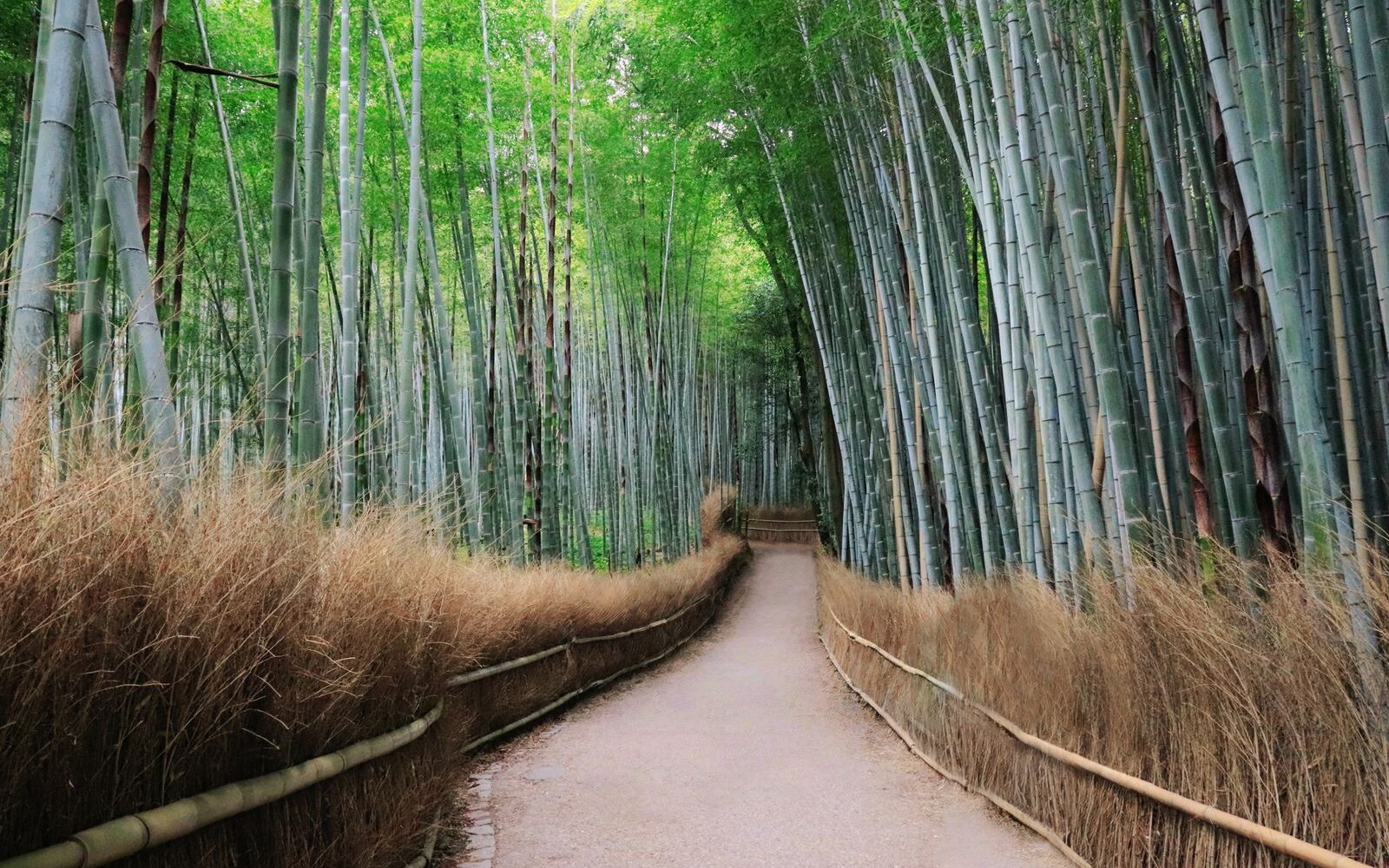
The photograph of Arashiyama that everyone has seen — a path running between walls of green bamboo, empty, the light coming down in stripes — was taken at dawn. By ten o’clock the same path holds a slow-moving crowd shuffling shoulder to shoulder between the fences, phones held overhead, rickshaws edging through. Both versions are real. Which one you get depends almost entirely on what time you leave Osaka.
Arashiyama is the western edge of Kyoto, where the city runs out against forested hills and a broad river comes down out of a gorge. The bamboo grove is the headline, but it is also the smallest part of the day. Around it are a UNESCO-listed Zen temple with one of Japan’s finest gardens, a hillside villa with the best cup of tea in the district, a mountain full of monkeys, a scenic railway, a two-hour boat ride down the gorge, and a string of quiet temples to the north that most day-trippers never reach. Arashiyama from Osaka is an easy trip — under an hour and a few hundred yen each way — and it rewards a proper plan more than almost anywhere else in the region.
At a glance
| Travel time from Osaka | About 45–50 minutes |
| Cheapest route | Hankyu from Osaka-umeda, changing at Katsura: ¥410 each way |
| Fastest route to the bamboo | JR via Kyoto to Saga-Arashiyama |
| Bamboo grove | Free, open all the time. Arrive before 08:00 |
| Main paid sights | Tenryu-ji garden around ¥500; Okochi Sanso around ¥1,000 with tea; Monkey Park around ¥800, cash only |
| Time needed | A full day, or a long morning if you only want the highlights |
| Best seasons | Mid-November to early December for autumn leaves; early April for cherry blossom — also the busiest |
Getting to Arashiyama from Osaka
Three railways reach Arashiyama, and they arrive at three different stations. That matters, because Arashiyama is spread out along both banks of the river, and the right station depends on where you want to start.
Hankyu: the cheapest
From Hankyu’s Osaka-umeda terminal, take a Limited Express on the Kyoto line to Katsura, then change to the short Hankyu Arashiyama branch line to its terminus. The whole trip takes about 48–50 minutes and costs ¥410 each way. On some weekends in the peak seasons Hankyu has run direct trains, which saves the change; otherwise it is a quick cross-platform walk at Katsura.
Hankyu’s Arashiyama station is on the south bank of the river, a few minutes’ walk from the Togetsukyo Bridge. It is the natural station for the monkey park and the riverside, and a slightly longer walk to the bamboo grove on the far side. The Kansai Railway Pass Lite covers this route; an ICOCA card works too.
JR: the fastest to the bamboo
From Osaka Station, take the JR Special Rapid to Kyoto (about 30 minutes), then the JR Sagano line to Saga-Arashiyama (about 15 minutes more). Allowing for the change, that is roughly 45–50 minutes, at about twice the Hankyu fare. Saga-Arashiyama station is on the north side, a short walk from the bamboo grove and right next to the scenic railway’s Torokko Saga station — which makes JR the best choice for the early start the bamboo demands. The JR Kansai Area Pass covers it; see our JR pass guide.
Randen: the scenic one
The Randen (Keifuku) tram line runs from Shijo-Omiya in central Kyoto to its own Arashiyama station, in the middle of the main street. It is slow, charming and useful if you are combining Arashiyama with central Kyoto, or with Ryoan-ji and the Golden Pavilion via its Kitano branch. The station itself is decorated with the Kimono Forest, hundreds of pillars wrapped in kimono fabric that glow after dark. The Randen is not covered by the Kansai Railway Pass Lite.
Which to use
The best plan is a loop: arrive by JR at Saga-Arashiyama for an early start in the bamboo, walk south through the district during the day, and leave by Hankyu from the south bank after crossing the Togetsukyo Bridge at sunset. You never walk the same street twice, and the Hankyu drops you back at Umeda. Our Osaka to Kyoto guide compares all the routes into the city in detail, and the Kansai rail passes guide explains which pass covers which line.
The bamboo grove, honestly
The grove, Chikurin-no-michi (the bamboo path), is free, never closes, and is much smaller than its fame suggests: a few hundred metres of path running between Nonomiya Shrine, the north gate of Tenryu-ji and the hill up to Okochi Sanso. You can walk all of it in fifteen minutes. The bamboo itself is extraordinary — thick, dense and very tall, creaking and knocking in the wind in a way no photograph captures.
The problem is everyone else. From about nine in the morning until late afternoon the path is solid with people, and the experience becomes one of queuing through a green corridor. Be there before 08:00. At seven the light is soft, the path is close to empty and the sound of the wind is the main thing you notice. Late evening is the other quiet window, though the light fades fast inside the grove.
- Nonomiya Shrine, at the eastern end, has a kuroki torii, a gate of unbarked black timber, and associations with The Tale of Genji. It is small and a popular stop for anyone praying for luck in love.
- Do not touch the bamboo. Visitors carving names into the stalks has become a real problem, and the damaged canes have to be cut down.
- Rickshaws work the path and the district, pulled by fit young men with a good line in history. It is an expensive way to see Arashiyama and, if it appeals, a fun one.
- A quieter bamboo walk runs behind Adashino Nenbutsu-ji in north Sagano. It is shorter and less dramatic, and you may have it to yourself.
Tenryu-ji
Tenryu-ji is the reason Arashiyama is more than a photo stop. Founded in 1339 by the shogun Ashikaga Takauji in memory of Emperor Go-Daigo, the emperor he had driven out of Kyoto, it was once the most important Zen temple in Kyoto, and its buildings have burned and been rebuilt many times. The garden has survived all of it. Laid out by the monk and garden designer Muso Soseki around the Sogenchi pond, with the Arashiyama hills borrowed as its backdrop, it is one of the most influential gardens in Japan and part of Kyoto’s UNESCO World Heritage listing.
- Admission: around ¥500 for the garden, with around ¥300 more to enter the main buildings.
- Hours: roughly 08:30–17:00.
- The north gate opens directly onto the bamboo grove, which makes Tenryu-ji the obvious next stop after an early walk through the bamboo. Be at the gate for opening time and you will see the garden quieter than almost anyone else does.
Is it worth paying for the buildings as well as the garden? The garden is the essential part. The halls are handsome, and the dragon painted on the ceiling of the Dharma Hall is famous, though it is shown separately, on limited days and for its own fee. If you are pacing yourself for a long day, the garden alone is enough. Our guide to temples and shrines explains what you are looking at in a Zen temple, and the temple’s own vegetarian restaurant serves shojin ryori, Buddhist temple cuisine, if you want to make lunch part of the visit.
Okochi Sanso
At the top of the bamboo path, where most visitors turn round, is the former villa of Denjiro Okochi, a star of Japanese silent cinema, who spent thirty years building a hillside garden here. Admission is around ¥1,000 and includes a bowl of matcha and a sweet at the teahouse. It is open roughly 09:00–17:00.
This is the best value in Arashiyama. The garden climbs through moss, maples and stone paths to viewpoints over Kyoto on one side and the river gorge on the other, and because the entrance fee filters out the crowds, it feels a world away from the bamboo path fifty metres below. Take your time. The tea at the end is not an afterthought; sitting in the garden with it is the point. If you want a more formal experience, see our tea ceremony guide.
Togetsukyo Bridge and the river
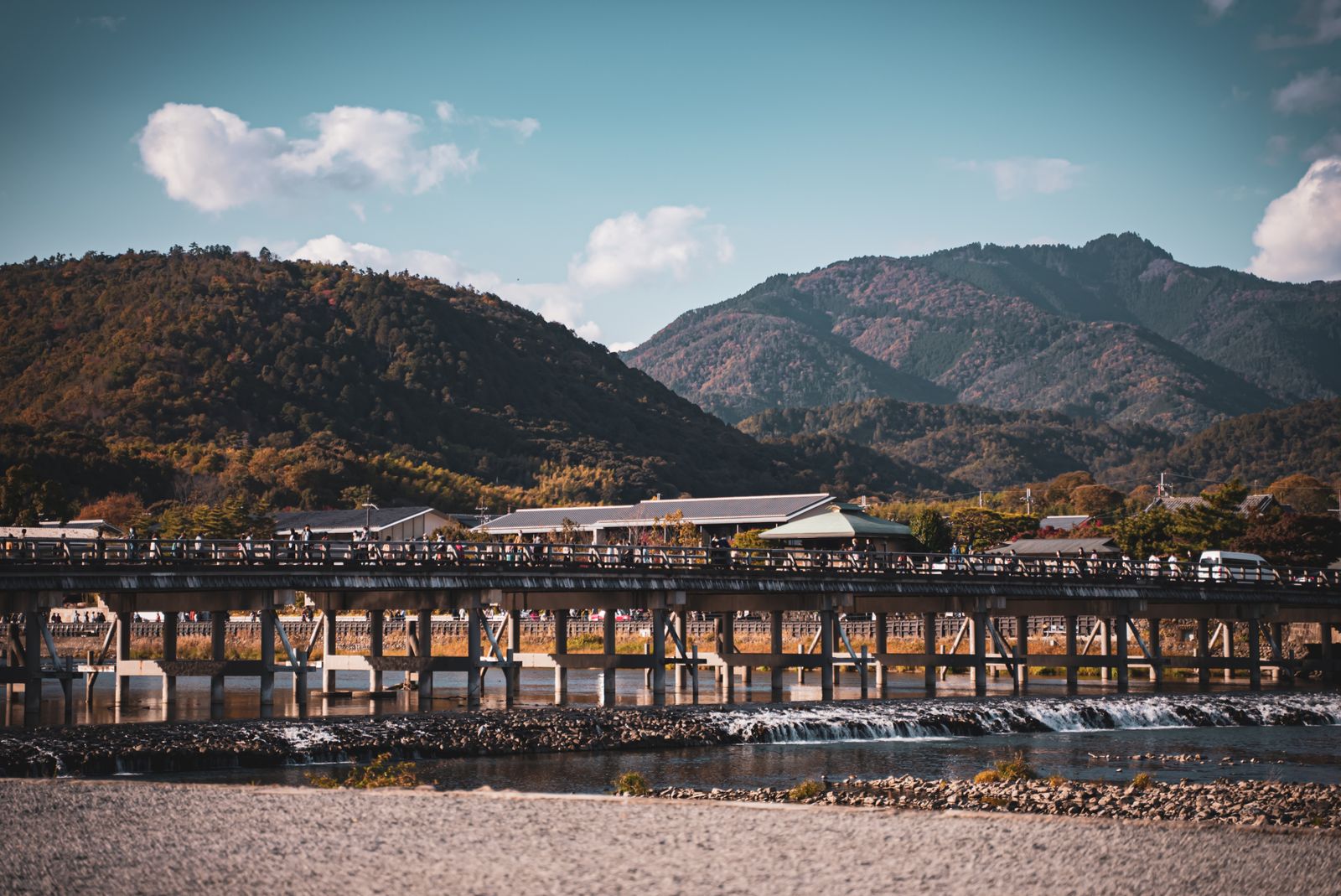
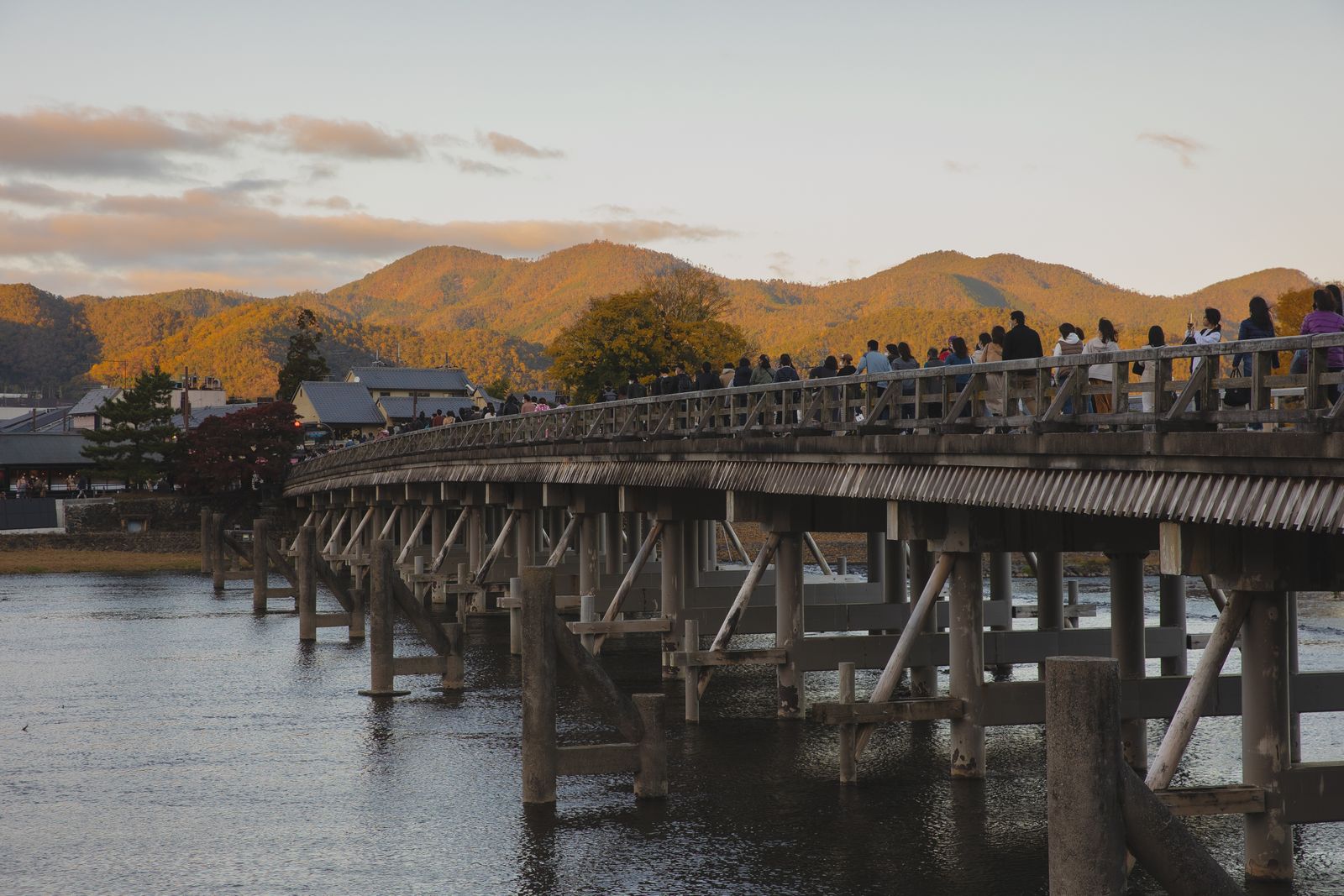
The long wooden-railed bridge across the river is Arashiyama’s other famous view. The name means “moon-crossing bridge”, after an emperor who thought the moon appeared to be crossing it. The bridge you walk over today is a modern structure built to look old, but the view from it, up the river towards the gorge and the forested slopes, is the real thing, and at its best in autumn colour and at sunset.
- Rowing boats can be rented on the river above the bridge, which is a lovely way to spend half an hour, especially with children.
- Cormorant fishing, ukai, takes place on summer evenings, with fishermen using trained birds by firelight. It is touristic and atmospheric in equal measure.
- The south bank, across the bridge, is quieter than the main street, with the Hankyu station and the path up to the monkey park.
Iwatayama Monkey Park
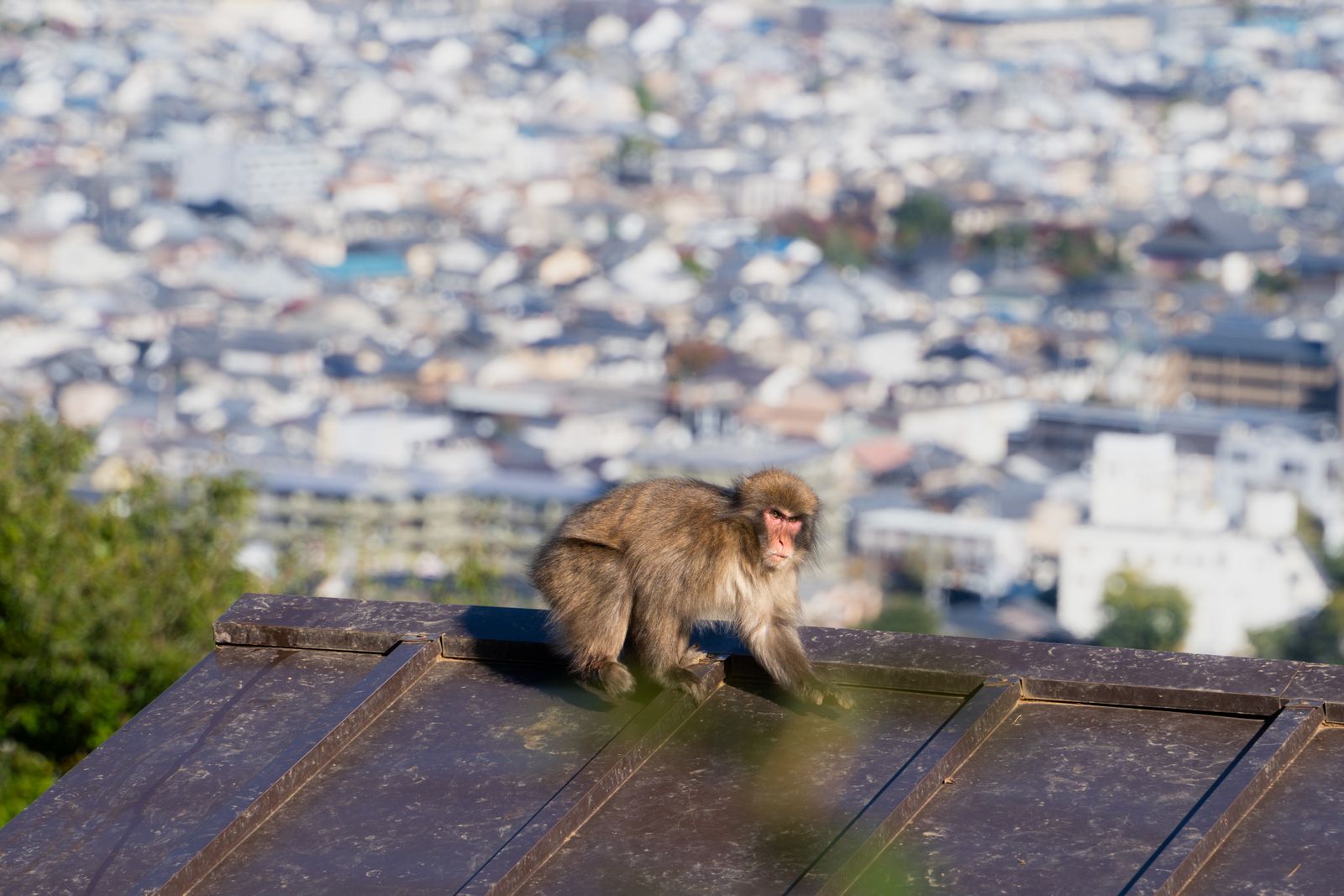
On the hill above the south bank lives a troop of wild Japanese macaques, and the Iwatayama Monkey Park lets you walk up to the clearing where they gather. It costs around ¥800 for adults and ¥400 for children aged 4–15, cash only at the gate, with no advance tickets.
The catch is the climb: a steep, zigzagging path of about twenty minutes up the hillside. At the top you get a sweeping view over the whole of Kyoto and monkeys everywhere — grooming, squabbling, sunning themselves, ignoring you completely. You can buy food to feed them, but only from inside a hut, through the wire. For once, the humans are in the cage.
Our verdict: excellent with children and for anyone who likes animals, and the view is a genuine bonus. Skip it on a sweltering summer afternoon, when the climb is punishing, and if you have limited mobility. Do not stare at the monkeys, do not eat outside the hut, and keep bags closed.
North Sagano: the walk most people miss
North of the bamboo grove, the crowds thin out almost immediately, and the lanes climb gently through the Sagano district towards the hills. This is the part of Arashiyama that locals love and day-trippers never reach, and it is the best reason to give the area a full day rather than a morning. Each of these temples charges a small admission fee.
- Jojakko-ji — a hillside temple of mossy steps and maples, one of the finest autumn-leaf spots in the district.
- Nison-in — a long maple-lined approach and a quiet temple with a large cemetery on the slope above.
- Gio-ji — a tiny thatched temple in a garden of deep, soft moss beneath the maples. Ten minutes here is worth an hour anywhere else in Arashiyama.
- Saga-Toriimoto — a preserved street of old thatched and wooden houses running uphill, with a couple of traditional teahouses.
- Adashino Nenbutsu-ji — thousands of small stone Buddhas and statues gathered from the surrounding hills, commemorating the dead who were once left in this area. Sombre and very beautiful, with that quieter bamboo path behind.
- Otagi Nenbutsu-ji — further up, and a joy: some 1,200 stone rakan, the disciples of the Buddha, carved by amateur sculptors in the 1980s, each with its own face — laughing, weeping, clutching a sake cup, holding a camera. It is a little out of the way. Go anyway.
The Sagano Romantic Train and the Hozu river boats
The scenic railway, officially the Sagano Romantic Train and known locally as the Torokko, runs in old-fashioned carriages along the Hozu river gorge from Torokko Saga, next to JR Saga-Arashiyama, to Torokko Kameoka, in about 25 minutes. The classic combination is to ride it up the gorge to Kameoka and then come back down the river on a traditional Hozugawa river boat, poled and steered by boatmen through the rapids, a trip of roughly two hours that lands you back in Arashiyama near the bridge.
- Book the train ahead. Seats are reserved and sell out in the autumn-leaf season and at weekends. Online booking takes up to eight people at a time. Same-day tickets are sold first come, first served at the station counters, from around 08:35 at Torokko Saga and a little later at the other stations.
- Fares: groups of 15 or more pay ¥800 an adult one way, so expect individual fares to be a little higher. Check the current price when you book.
- It does not run every day and closes for part of the winter. Check the operating calendar before you plan around it.
- The river boats are weather-dependent and their prices have risen in recent years; check the current fare and that they are running on your date.
Is it worth it? In the autumn-leaf season, with seats booked, the train and the boat together make one of the best half-days in Kansai. In high summer the boat is hot and the train is merely pleasant. If you only have one day and want the temples, skip both.
Eating in Arashiyama
The main street between the Randen station and the bridge is lined with snack stalls and souvenir shops: matcha soft-serve, grilled rice cakes, croquettes, pickles. Fine for grazing; not where you want to eat lunch.
- Yudofu — tofu simmered in a clear kelp broth, the district’s signature dish, served in set meals at restaurants around Tenryu-ji and the riverside. Delicate, filling and very Kyoto.
- Shojin ryori — Buddhist vegetarian cooking, served at Tenryu-ji’s own restaurant.
- Coffee by the river — the stand of a famous Kyoto coffee brand by the water draws a queue out of all proportion to the size of its cups. The view is lovely; the line, at weekends, is not.
- Budget — bring a picnic from Osaka’s department-store food halls and eat it by the river, which is what half of Kyoto does on a sunny weekend.
A day in Arashiyama, by the clock
This plan starts early and ends at sunset, and sees the whole district without once fighting the crowds at their worst.
- 06:40 — leave Osaka Station on the JR Special Rapid; change at Kyoto for the Sagano line.
- 07:30 — arrive at Saga-Arashiyama and walk to the bamboo grove. Nonomiya Shrine, then the length of the path.
- 08:30 — Tenryu-ji through the north gate at opening time. Walk the garden slowly.
- 09:30 — back up the bamboo path, now filling, to Okochi Sanso. Tea in the garden.
- 10:45 — walk north through Sagano: Jojakko-ji, Gio-ji, Saga-Toriimoto, Adashino Nenbutsu-ji. Otagi Nenbutsu-ji if your legs agree.
- 13:00 — lunch: yudofu near Tenryu-ji, or back towards the station.
- 14:30 — cross the river for the monkey park, or ride the Romantic Train if you booked it.
- 16:30 — the riverside and the Togetsukyo Bridge as the light goes.
- 17:30 — Hankyu from the south bank back to Osaka-umeda, about fifty minutes.
For a shorter trip, do the first four stops and head home by lunchtime; that is the best of Arashiyama in half a day. Either way, this is one full day of a Kyoto trip, not a stop on a tour of the whole city.
When to go
- Autumn — mid-November to early December, when the maples turn, is Arashiyama at its most beautiful and its most crowded. Go on a weekday, go early, and book the Romantic Train well ahead. Our Osaka in autumn guide covers the season.
- Spring — cherry blossom in early April lines the river and the hills. Crowds match the autumn. See our cherry blossom guide.
- Summer — hot and humid, with the bamboo grove offering welcome shade and cormorant fishing in the evenings. Start very early and retreat by midday. Osaka weather by month explains what to expect.
- Winter — the quietest season, occasionally dusted with snow, and a very good time for the temples if you do not mind the cold. The Romantic Train closes for part of it.
Combining Arashiyama with the rest of Kyoto
Arashiyama is in the far west of Kyoto, and the sensible pairing is with the other western sights: Kinkaku-ji, the Golden Pavilion, and Ryoan-ji‘s rock garden, both reachable by the Randen’s Kitano branch plus a short walk or bus, or by taxi. That makes a full, varied day.
What does not work is adding the eastern side of the city. Fushimi Inari, Kiyomizu-dera and Gion are on the other side of Kyoto, and trying to fit them into the same day as Arashiyama means seeing everything in a hurry and nothing properly. Give each side of the city its own day. Our Kyoto day trip guide covers the eastern side.
What to skip
- The bamboo grove at midday. If you cannot be there early, go at the end of the day, or walk the quieter bamboo at Adashino instead.
- Lunch on the main street. Graze there if you like; eat properly elsewhere.
- The monkey park in the heat of the day, in summer. Morning or late afternoon only.
- The Romantic Train without a booking in autumn. You will spend your morning in a queue for same-day seats.
- Arashiyama and Fushimi Inari on the same day. Pick one side of Kyoto.
Practical notes
- Wear proper shoes. A full day here involves several kilometres on foot, the monkey park climb and plenty of steps. See what to pack for Osaka.
- Carry cash. The monkey park is cash only, as are several of the smaller temples.
- Leave luggage in Osaka. There are lockers at the stations, but they fill early; see luggage storage if you are travelling on the same day.
- Wet days are not a disaster: the bamboo and the moss gardens are beautiful in rain, and the crowds disappear. The boats may not run.
- With children: the monkey park, the rowing boats and the Romantic Train make this one of the best Kyoto days for families. See Osaka with kids.
- Kimono: Arashiyama is a favourite place to wear one, and there are rental shops in the district. Our kimono rental guide covers renting in Osaka before you set off.
Arashiyama from Osaka: FAQ
How do I get to Arashiyama from Osaka?
The cheapest way is the Hankyu line from Osaka-umeda, changing at Katsura: about 50 minutes and ¥410 each way. The fastest way to the bamboo grove is JR from Osaka Station to Kyoto, then the Sagano line to Saga-Arashiyama, about 45–50 minutes in total.
Is the Arashiyama bamboo grove free?
Yes. The bamboo path is free and open at all hours. The paid sights around it include Tenryu-ji’s garden, around ¥500, and Okochi Sanso, around ¥1,000 with tea.
What time should I get to the bamboo grove?
Before 08:00. From about nine until late afternoon the path is very crowded. Early evening is the other quieter window.
Is Arashiyama worth a day trip from Osaka?
Yes, as long as you arrive early and give it the whole day, or at least a full morning. Treated as a quick stop on a whirlwind Kyoto tour, it is mostly crowds.
How long do you need in Arashiyama?
Half a day covers the bamboo grove, Tenryu-ji and Okochi Sanso. A full day adds north Sagano’s temples, the monkey park or the Romantic Train and the river.
Can I combine Arashiyama with Kinkaku-ji?
Yes. Both are in western Kyoto, linked by the Randen tram and a short bus ride or taxi. Do not try to add Fushimi Inari as well; it is on the other side of the city.
Do I need to book the Sagano Romantic Train?
In the autumn-leaf season and at weekends, yes. Seats are reserved and sell out. Same-day tickets are sold at the station counters on a first-come basis.
Where to go next
For the rest of Kyoto, read our Kyoto day trip guide, Fushimi Inari from Osaka and Osaka to Kyoto. For other days out, day trips from Osaka ranks them all — from Nara to Himeji and Kobe — and the Kansai region guide explains how they fit together.
Then build the rest of the trip around them with our Osaka itinerary hub.