This article contains advertising. Our booking links are routed through a partner that adds commission tracking automatically, so if you book through one we earn a commission from the provider, at no extra cost to you. It never affects what we recommend. Affiliate disclosure
Most railway stations smell of brakes and floor polish. Tsuruhashi smells of beef fat and charcoal. The yakiniku restaurants wedged under the elevated JR tracks vent their smoke straight upwards, and on a weekday evening it drifts across the platform before the train doors have even opened. Commuters who change here every day stopped noticing decades ago. First-time visitors step off the train, inhale, and start looking for the stairs down.
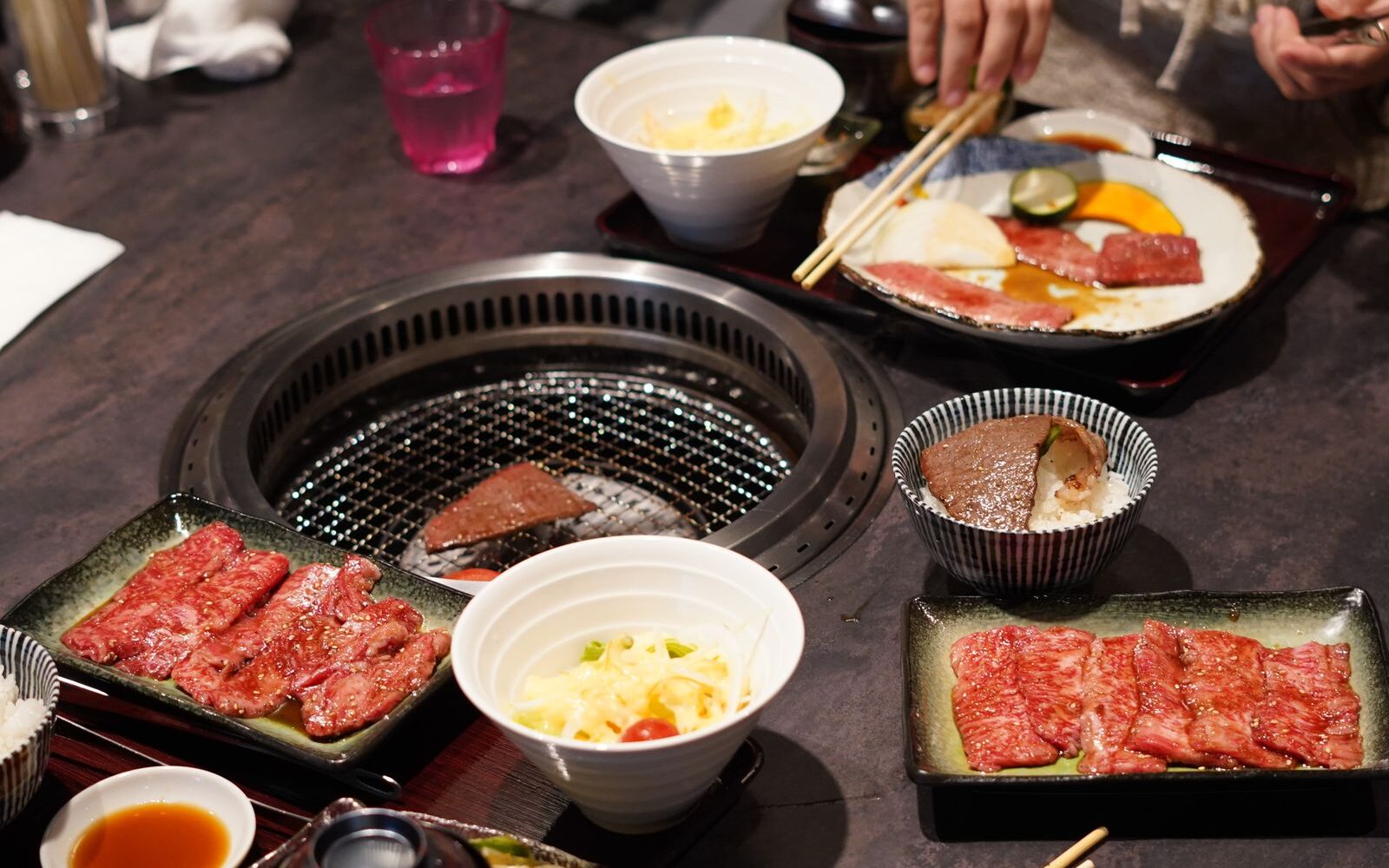
Yakiniku means, literally, grilled meat: bite-sized cuts of beef and offal that you cook yourself over a grill set into the table. It is one of the great social meals in Japan, noisy and smoky and cheap enough to do on a weeknight, and Osaka has a stronger claim to it than anywhere else in the country. Much of the best yakiniku Osaka has to offer is within ten minutes’ walk of that platform, in a neighbourhood that has been cooking it longer than almost anywhere in Japan.
This guide explains why that is, how a yakiniku meal works if you have never ordered one, which cuts and offal to try, where to eat in Tsuruhashi and elsewhere in the city, and what it all costs in 2026. It is also honest about the bits that are not worth your evening.
Why Tsuruhashi, and why Osaka
Ikuno, the ward that Tsuruhashi sits on the edge of, has the largest community of Zainichi Koreans in Japan — ethnic Koreans whose families settled here, many of them from Jeju Island, during the 1920s and 30s, drawn by factory work and a direct ferry route to Osaka. After 1945, a black market grew up around Tsuruhashi station, as it did around most big stations in the bombed-out city, and Korean traders were at the centre of it. The market never really left. Nor did the restaurants.
Korean-Japanese cooks built what Japan now thinks of as yakiniku: marinated beef and, crucially, offal, grilled at the table and eaten with kimchi and rice. Offal was cheap because Japanese butchers did not want it, and it became the working-class meat of post-war Osaka. The word the city uses for it, horumon, has a story attached that everyone in Tsuruhashi will tell you: that it comes from the Osaka dialect horumon, “things thrown away”. It almost certainly does not — the likelier origin is the European word hormone, from a pre-war idea that organ meat was invigorating — but the folk version has outlived every correction, and it captures something true about where the dish came from.
Seventy-odd years on, yakiniku is mainstream across Japan, with chain restaurants in every shopping centre. But Tsuruhashi is still where Osaka goes when it wants the real thing, and the neighbourhood around it is one of the most interesting and least touristy parts of the city.
How a yakiniku meal works
If you have eaten Korean barbecue elsewhere, yakiniku will feel familiar, with a few differences. Portions are smaller, the cuts are thinner, and you order in rounds rather than all at once.
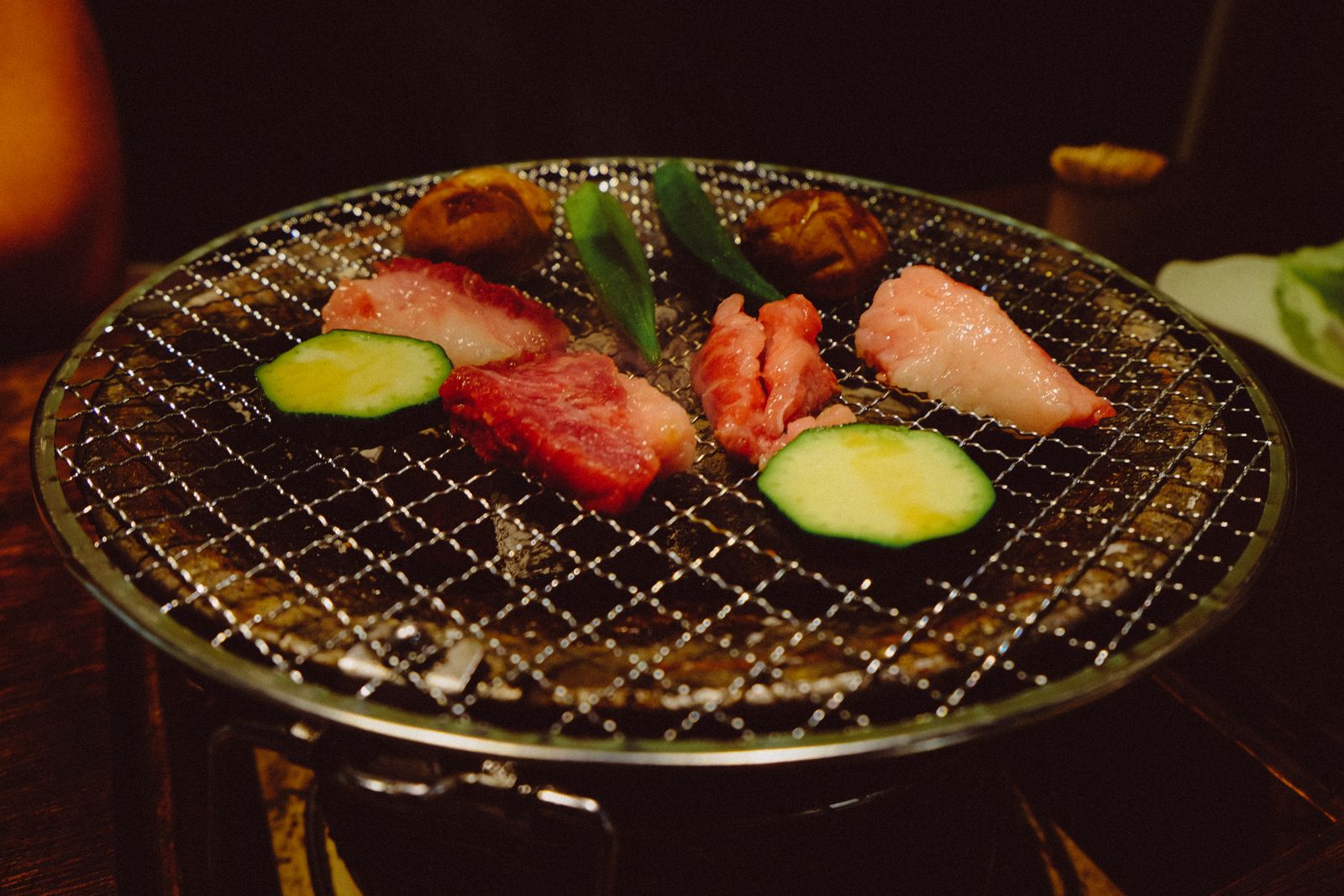
- You cook. Each table has its own grill — a gas burner, a smokeless down-draft grill, or in the older places a small charcoal shichirin with a wire mesh on top. Staff will change the mesh when it gets charred; ask for ami kōkan if they have not noticed.
- Order in waves. Two or three plates to start, then more as you go. Nobody minds, and it keeps the grill from getting crowded.
- Start with tongue. The classic opening order is tan shio, thinly sliced beef tongue grilled briefly and eaten with salt, lemon and spring onion. Then the fattier cuts with sauce, then the offal.
- Use the tongs. Tongs for raw meat, chopsticks for eating. Using the same chopsticks for both is the one hygiene rule staff will actually care about.
- Dip, do not drown. Most meat comes either salted (shio) or marinated in a sweet-savoury sauce (tare), with a dish of extra dipping sauce on the side. Salted cuts get lemon; sauced ones get the dip.
- Finish with carbohydrate. The usual closers are bibimbap, a bowl of kuppa (rice in beef soup), or Korean-style cold noodles, reimen, which cut through all that fat better than anything else on the menu.
Sides arrive fast and are worth ordering: kimchi, namul (seasoned vegetables), and choregi salad, a Korean-Japanese lettuce salad dressed with sesame oil and salt that turns up at nearly every yakiniku table in Osaka. Lettuce leaves for wrapping are sometimes on the menu as sanchu.
What to order: a cut-by-cut guide
Menus in the older Tsuruhashi places can be a single laminated sheet in Japanese, so it helps to know the words. Prices on these are per plate, usually enough for two people to have a few pieces each.
The meat
- Tan (タン) — beef tongue. Order it first, salted. Jō-tan is the thicker, premium cut and is worth the extra.
- Karubi (カルビ) — short rib or belly, marbled and rich. The default yakiniku order; usually served in tare.
- Rōsu (ロース) — loin, leaner than karubi.
- Harami (ハラミ) — skirt, technically offal because it is the diaphragm, and one of the best-value cuts on any menu: beefy, tender and cheap.
- Jō- and tokujō- prefixes mean “premium” and “special premium”. On a karubi, they are usually worth one step up and rarely worth two.
The horumon
- Tecchan (テッチャン) — large intestine, the signature horumon of Osaka, known as shimachō in Tokyo. Fatty, chewy, marinated in miso or tare. Grill it skin side down until the fat side puffs and crisps. If you try one piece of offal in Osaka, make it this one.
- Mino (ミノ) — the first stomach. Firm and clean-tasting, grilled quickly and eaten with salt. A good gateway offal for the nervous.
- Senmai (センマイ) — the third stomach, often served blanched and cold with vinegared miso rather than grilled.
- Hachinosu (ハチノス) — honeycomb tripe.
- Hatsu (ハツ) — heart. Lean and mild, closer to steak than most people expect.
- Rebā (レバー) — liver. Grill it all the way through: serving raw beef liver has been banned in Japan since 2012, and anyone offering it is breaking the law.
- Koptchan (コプチャン) — small intestine, softer and fattier than tecchan.
A sensible first order for two at a Tsuruhashi horumon place: a plate of tan shio, a plate of harami, a plate of karubi, tecchan and mino, kimchi and a choregi salad, then reimen to finish. That is a proper meal, and it tells you in one sitting which direction to go next time.
Eating in Tsuruhashi
Tsuruhashi station sits where the JR Osaka Loop Line crosses the Kintetsu lines, with the Osaka Metro Sennichimae line underneath. From Namba it is about seven minutes on the Sennichimae line; from Osaka Station, around a quarter of an hour on the Loop Line; from Tennoji, three stops round the loop. Our subway guide covers the lines, and an ICOCA card works on all of them.
The restaurants cluster in three places: directly under and beside the JR tracks, in the alleys of the market to the south, and along the streets running north of the Kintetsu line. You will smell your way there regardless.
The famous names
- Sora — the Tsuruhashi main branch of this horumon specialist is the one everyone queues for: loud, packed and permanently smoky, known above all for its tecchan. Budget around ¥3,000–5,000 a head with drinks. At the time of writing it closes on Tuesdays and Wednesdays. Book dinner a few days ahead by phone if you can; lunch and weekdays are easier as a walk-in.
- Tsuruichi — open since the late 1940s and one of the oldest yakiniku restaurants in the neighbourhood, a few minutes north-west of the station. More about beef than offal, with a well-known premium karubi. Allow roughly ¥4,000–7,000 a head. Its closing day has been reported differently by different sources, so check before you make a special trip.
Both are genuinely good. Neither is so much better than its neighbours that you should queue for ninety minutes in the smoke. That is the single most useful piece of advice about eating in Tsuruhashi: if the famous place has a line out of the door, walk twenty metres and eat next door. The small under-track places have been cooking the same horumon for as long as the famous ones, their regulars are often the same people, and the food is frequently indistinguishable. What you are queuing for is the name.
How to pick a place you have never heard of
- Look for smoke and locals. A full room of office workers at 18:30 on a Thursday is the best review you will get.
- Look for a short menu. A place that does ten cuts well beats one with a sixty-item picture book.
- Look at the extractor. Old charcoal places have no hoods and you will leave smelling of it. Newer places with down-draft grills are far less smoky. Choose according to how much you care about your jacket.
- Do not be put off by a Japanese-only menu. Point at the list in this guide, or at what the next table is eating. Our Japanese phrases for Osaka covers the basics of ordering.
The market, and what to eat that is not grilled
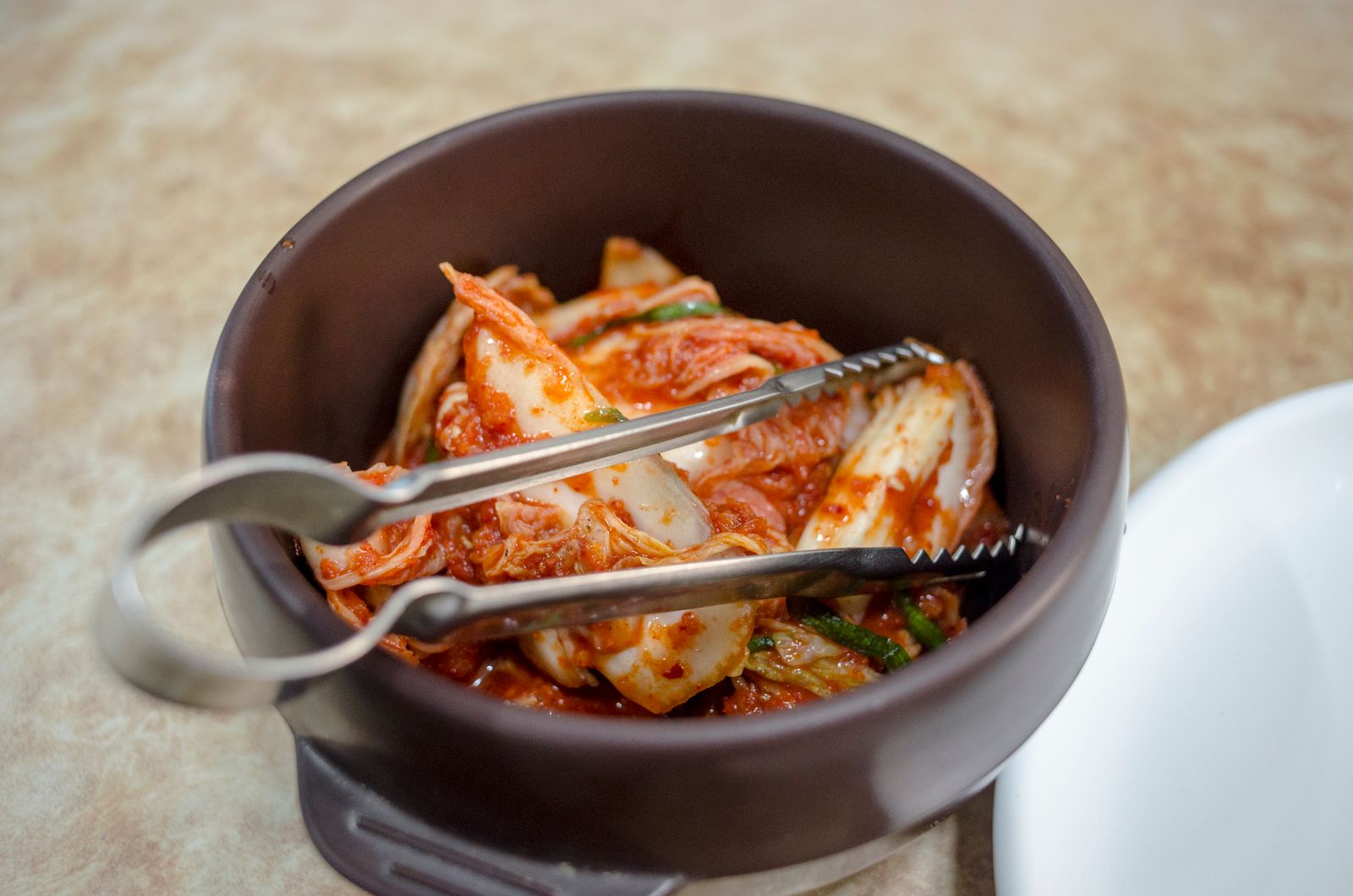
South of the station, the Tsuruhashi market is a maze of narrow covered alleys, hundreds of shops deep, that grew out of that post-war black market and still feels like it. Kimchi shops sit next to fishmongers, Korean grocery stores, dried-seafood merchants and tailors selling brilliantly coloured chima jeogori, the Korean traditional dress, for weddings and coming-of-age ceremonies. It is a working market for the neighbourhood, not a tourist attraction, which is precisely why it is worth an hour.
- Kimchi — napa cabbage, radish, cucumber, perilla leaves and more, sold by weight. If you have a fridge where you are staying, buy some; if not, it is a good souvenir in the vacuum-packed versions.
- Korean pancakes and snacks — chijimi (savoury pancakes), kimbap and rice cakes from the takeaway counters.
- Cash — most market stalls and kimchi shops are cash only. Bring yen; our money and payments guide explains where to get it.
- Hours — the market is a daytime place, roughly from morning until early evening, and many stalls close on at least one weekday. It is best from late morning to mid-afternoon.
One non-Korean detail worth knowing: Tsuruhashi is where the okonomiyaki chain Fugetsu started out, in 1950, and the neighbourhood still takes its okonomiyaki seriously. Our okonomiyaki guide has the full story. For more of the city’s markets, see Osaka markets and our guide to Kuromon Market, which is far more expensive and far more touristy than this one.
Osaka Koreatown: Miyuki-dori
Ten to fifteen minutes’ walk south-east of the station is Osaka Koreatown, the Miyuki-dori shopping street: around five hundred metres of shops and restaurants, roughly 150 of them, with gates marking the way in. Momodani, one stop round the JR Loop Line, is the other nearby station.
It has changed a great deal in the last decade. What was once a quiet neighbourhood street selling ingredients and ceremonial goods to local Korean families is now, at weekends, packed with young Japanese fans of Korean pop culture buying cosmetics, K-pop merchandise and hotteok, sweet filled pancakes fried to order. The older shops are still there between the newer ones, and the contrast is part of the interest.
The Osaka Korea Town Museum, which opened on the street on 29 April 2023, tells the story of the community in a few well-made rooms — the migration from Jeju, the pre-war factories, the post-war years and the long argument over belonging. It is small and worth half an hour, and it makes the street outside make a lot more sense. Check its current hours and admission before you go.
A good order of events: the market in the afternoon, then the walk to Koreatown while the shops are open — most close by around 20:00 — then back to the station for dinner at around 18:00 or 19:00, which is when the smoke is at its thickest and the restaurants are at their best.
Yakiniku beyond Tsuruhashi
You do not have to cross the city to eat well. Yakiniku is everywhere in Osaka, and the right choice depends on what you are after.
Wagyu yakiniku in Namba and Dotonbori
The side streets around Namba and Dotonbori are full of yakiniku restaurants aimed at visitors: English menus, tablet ordering, and a heavy emphasis on A5 wagyu, the top grade of Japanese beef, often from named regions such as Matsusaka and Kobe. The quality can be excellent and the meat is often beautiful. The prices reflect both of those things and the postcode. Expect to spend ¥8,000–15,000 a head for a proper wagyu dinner, sometimes more.
Our honest view: A5 wagyu is so rich that four or five slices is plenty for most people, and after that you are paying premium prices for diminishing returns. Order one plate of the good stuff to taste, then fill up on harami and horumon, which are better value in every price bracket.
If Kobe beef specifically is the point, the Kobe day trip puts you in the city it is named after, twenty to thirty minutes away — see Osaka to Kobe.
High-end yakiniku in Kitashinchi
At the top end, Kitashinchi, Osaka’s expense-account dining district, has yakiniku restaurants that serve meat as a tasting menu: one cut at a time, cooked for you or in front of you, in quiet rooms that do not smell of anything. It is superb and a completely different experience, with prices to match — commonly ¥15,000 and up a head. It is also the one form of yakiniku where booking weeks ahead is normal. For the city’s other special-occasion dining, see Michelin restaurants in Osaka.
Solo yakiniku
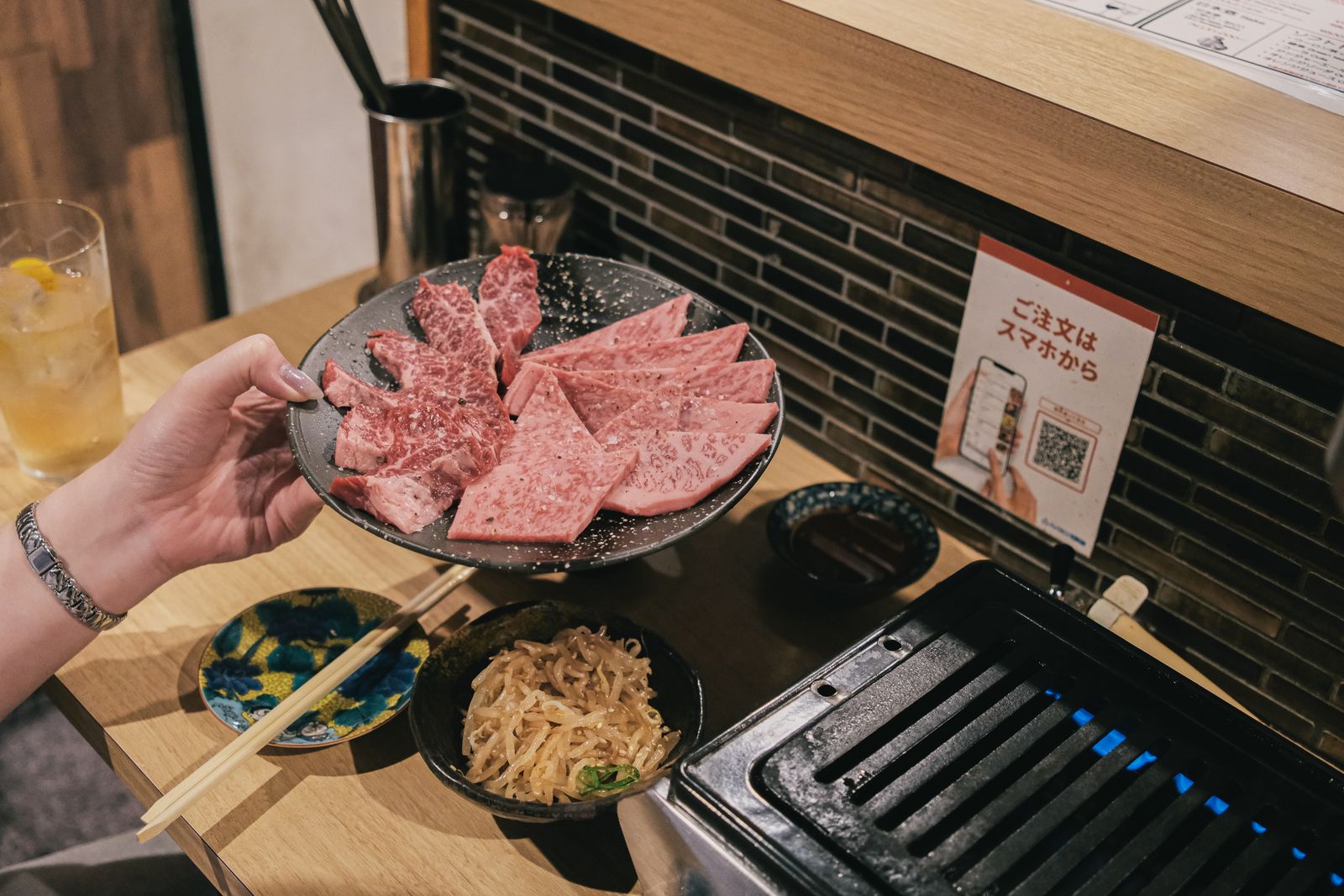
Yakiniku used to be a group activity by definition. It no longer is. Solo-grill chains such as Yakiniku Like seat you at a counter with your own small grill and let you order individual portions, usually by scanning a QR code with your phone. A lunch set with rice, soup and a plate of meat can cost well under ¥1,500. They are not the full Tsuruhashi experience, but for a solo traveller who wants yakiniku without a table for four, they are ideal, and they are all over Umeda and Namba.
All-you-can-eat
Tabehōdai yakiniku, all-you-can-eat within a time limit of 90 or 120 minutes, is hugely popular with students and families, usually at around ¥3,000–5,500 a head depending on the grade of meat included. It is excellent value for quantity and rarely memorable for quality. Worth it with teenagers; less so if you only have a few evenings in the city and want to remember what you ate.
Standing horumon bars
At the other end of the scale are the small standing counters in Shinsekai and the cheap drinking districts, where offal is grilled on skewers or on a hotplate and eaten with a highball. They are closer in spirit to an izakaya than a yakiniku restaurant, and they are a fine place to try horumon for the price of a drink. Our izakaya guide and late-night food guide cover the territory.
What it costs in 2026
| Type | Typical spend per person | Best for |
|---|---|---|
| Solo counter (lunch set) | Around ¥1,000–2,000 | Solo travellers, quick lunches |
| Tsuruhashi horumon place | Around ¥3,000–5,000 with a drink or two | The real thing |
| All-you-can-eat chain | Around ¥3,000–5,500 for 90–120 minutes | Groups, big appetites, teenagers |
| Wagyu yakiniku, Namba/Dotonbori | Around ¥8,000–15,000 | A wagyu splurge with an English menu |
| Kitashinchi tasting-menu yakiniku | From around ¥15,000 | Special occasions |
Two money points. Many of the older Tsuruhashi restaurants still prefer cash, so do not assume a card will work. And as everywhere in Japan, do not tip; say gochisōsama deshita on the way out instead. For a wider view of what eating out costs, see cheap eats in Osaka and how much an Osaka trip costs.
Smoke, clothes and other practicalities
- You will smell of it. In the old charcoal places, your hair and clothes will carry the evening back to the hotel. Many restaurants hand out plastic bags or covers for coats and bags, or have lidded bench seats to store them in; use them. Do not wear the jacket you are flying home in.
- Book at weekends. The well-known places fill up on Friday and Saturday nights. Weekday evenings and lunchtimes are much easier.
- Closing days. Many Tsuruhashi restaurants and market stalls close on one or two weekdays, often early in the week. Check before you make a special trip.
- Groups. Tables are small. Four is ideal; six or more usually needs a booking.
- Children are welcome almost everywhere, though the grills are hot and at child height. Family chains are easier with small children — see family restaurants in Osaka.
- Allergies and diets. Marinades usually contain soy, wheat and sesame, and sometimes fruit. Yakiniku is hard work for vegetarians: beyond the salads, namul, kimchi (which usually contains fish products) and grilled vegetables, there is little.
What to skip
- The long queue at the famous place, as above. Eat next door.
- A5 wagyu at a horumon restaurant. Order what the place is known for. Tsuruhashi’s offal specialists are not where you go for your once-a-trip wagyu.
- The top-grade everything. One premium plate is a treat. A table of tokujō karubi is a very expensive way to feel ill.
- Yakiniku on your last night, unless you have a clean set of clothes for the plane.
- Koreatown on a weekend afternoon, if crowds bother you. Go on a weekday, or accept that you will shuffle.
A Tsuruhashi afternoon and evening
The neighbourhood rewards a half-day rather than a quick dinner. A plan that works:
- 15:00 — arrive at Tsuruhashi and spend an hour getting lost in the market. Taste some kimchi. Buy some.
- 16:00 — walk to Osaka Koreatown, visit the Osaka Korea Town Museum, and eat a hotteok on Miyuki-dori.
- 18:00 — back to the station area for dinner, while the tables are still turning over. Tan shio, harami, tecchan, reimen.
- 20:00 — ride three stops to Tennoji for the night view from Abeno Harukas, open until 22:00, or head back to Namba for a drink.
It pairs naturally with a day in the south of the city: our Tennoji and Abeno guide covers what to see beforehand, and the Osaka itinerary hub shows where it fits in a longer trip.
Yakiniku in Osaka: FAQ
What is yakiniku?
Japanese grilled meat: bite-sized cuts of beef and offal that you cook yourself on a grill built into the table, eaten with dipping sauces, rice, kimchi and salads.
Is yakiniku Japanese or Korean?
Both. It grew out of Korean barbecue as cooked by Korean-Japanese restaurateurs, particularly in Osaka, after the Second World War, and has since become a thoroughly Japanese meal with its own cuts, sauces and customs.
What is horumon?
Offal — intestine, stomach, heart and so on — grilled yakiniku-style. Osaka is the capital of it, and Tsuruhashi the best place in the city to try it. The signature cut is tecchan, large intestine.
How much does yakiniku cost in Osaka?
Roughly ¥3,000–5,000 a head at a Tsuruhashi horumon restaurant with a drink, ¥1,000–2,000 for a solo lunch set, and ¥8,000–15,000 or more for a wagyu dinner in Namba. These are 2026 estimates.
Do I need to book?
For the famous Tsuruhashi names on a Friday or Saturday night, yes. Otherwise, usually not — and if the place you wanted is full, the one next door will be good too.
How do I get to Tsuruhashi?
About seven minutes from Namba on the Osaka Metro Sennichimae line, around fifteen minutes from Osaka Station on the JR Loop Line, or three stops round the loop from Tennoji. Kintetsu trains also stop there.
Is Tsuruhashi worth visiting if I am not eating yakiniku?
Yes. The market and Osaka Koreatown make a very good afternoon on their own, and the Osaka Korea Town Museum is one of the more thoughtful small museums in the city.
Is yakiniku OK for vegetarians?
Not really. There are vegetable sides and salads, but the meal is built around meat, and kimchi often contains fish products.
Where to eat next
Yakiniku is one strand of the city’s food culture. Start with the Osaka food guide, then work through kushikatsu in Shinsekai — remember, no double-dipping in the communal sauce — okonomiyaki, takoyaki and ramen.
If you would rather have someone guide you through it, our Osaka food tours guide compares the options, and Osaka street food covers what to eat standing up. For the neighbourhoods themselves, start with Osaka neighbourhoods.


