This article contains advertising. Our booking links are routed through a partner that adds commission tracking automatically, so if you book through one we earn a commission from the provider, at no extra cost to you. It never affects what we recommend. Affiliate disclosure
Osaka’s nickname is kuidaore — eat until you collapse — and it comes from a merchant culture that spent its money on food rather than on temples. So there is a certain irony in the fact that the city’s Michelin haul is dominated by exactly the kind of hushed, eight-seat, book-three-months-ahead counters that kuidaore was never about. Both things are true at once, and a visitor who understands the difference eats far better than one who does not.

This is a guide to the Michelin Osaka landscape rather than a fan letter to it: how many stars the city actually holds, what the tiers mean in practice, what a meal costs, how to get a table as a foreign visitor without a Japanese phone number, and — the part most of these articles skip — whether it is worth doing at all when the city’s best value sits several rungs below a star.
Osaka’s 2026 numbers
| Tier | Osaka, 2026 edition | What it means |
|---|---|---|
| Three stars | 3 restaurants | “Worth a special journey” |
| Two stars | 12 restaurants | “Worth a detour” |
| One star | 66 restaurants | “High-quality cooking” |
| Bib Gourmand | 59 restaurants | Excellent value, no star |
| Green Star | 3 restaurants | Sustainability |
| Total listed | 235 | Including Selected entries |
What changed in 2026: Osaka gained one new two-star restaurant, Teruya, along with four new one-stars, nine new Bib Gourmands and sixteen newly Selected entries. Hajime holds three stars.
A note on naming names. We are not going to print a full roster of star-holders on this page, and you should be sceptical of any travel site that does. The guide is revised annually, restaurants gain and lose stars every spring, and several of the lists circulating online are two or three editions out of date — which means a visitor plans a trip around a restaurant that no longer holds the star, or worse, no longer exists. The authoritative, current list is on the MICHELIN Guide’s own site, filterable by city and star level, and it takes thirty seconds to check. Use that, then come back here for how to actually get in.
Osaka against Kyoto and Tokyo
Context matters here. Tokyo has more starred restaurants than any city on earth by a wide margin. Kyoto, immediately next door and reachable in thirty minutes, is the traditional home of kaiseki and carries a density of high-end Japanese dining that Osaka does not match.
Osaka’s character is different, and better understood as follows: the city’s genius is at the middle and the bottom of the price range, not the top. The most distinctively Osakan food — okonomiyaki, kushikatsu, takoyaki, the standing bars — is by nature unstarrable. What Osaka does hold in quantity is Bib Gourmands, at fifty-nine of them, and that is the category most worth a visitor’s attention. More on that below.
If a starred kaiseki dinner is the specific thing you want, it is worth knowing that Kyoto is a half-hour train ride away — see Osaka to Kyoto and our Kansai region guide. Osaka is the better base regardless; it is cheaper to sleep in and the ordinary food is better.
What you actually get
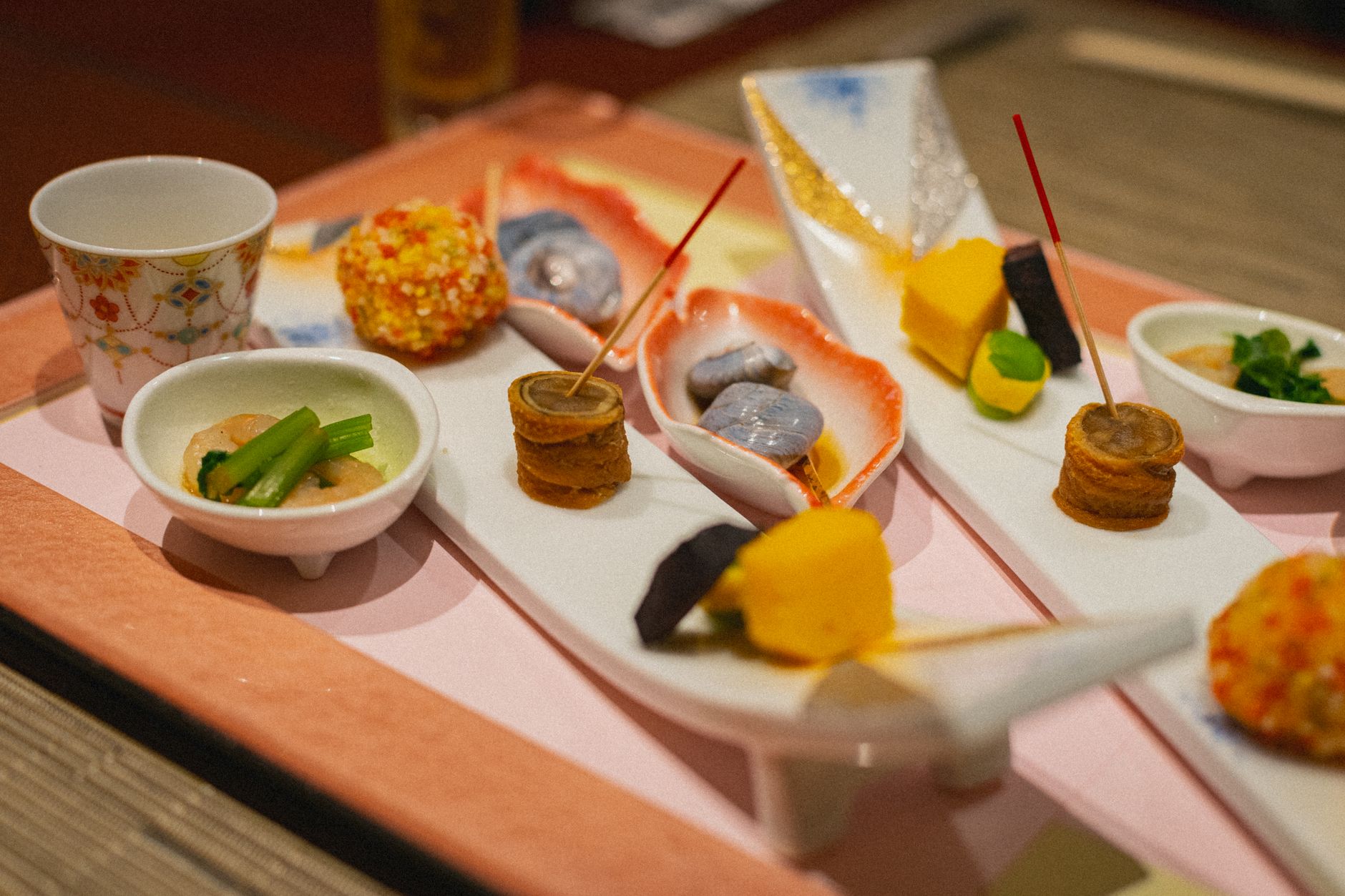
The overwhelming majority of Osaka’s starred restaurants fall into a handful of formats, and knowing which you are booking prevents most disappointments.
- Kaiseki — the multi-course seasonal Japanese format, ten to fifteen small courses in a fixed progression. Two to three hours. The most formal and the most likely to have rules about photography, perfume and children.
- Kappo — counter-based Japanese cooking, less rigid than kaiseki, with the chef working in front of you and some interaction. Osaka’s most characteristic high-end format, and the friendliest for a visitor.
- Sushi omakase — eight to twelve seats, chef’s choice, forty-five minutes to ninety. Fast, precise, and often the shortest meal at the highest per-minute price. See our Osaka sushi guide.
- Tempura and teppanyaki counters — single-technique specialists, often excellent, generally more relaxed.
- French and Italian — Osaka has a real fine-dining scene in both, frequently more accommodating to foreign guests and easier to book.
Where they are. The concentration is in Kitashinchi, Osaka’s expense-account district north of the river, with clusters in Honmachi, Shinsaibashi and the streets around Nakanoshima. Kitashinchi is where to look first, and it is a completely different city from Dotonbori — quiet, unmarked doors, no English signage, no atmosphere of tourism at all.
What it costs
| Tier | Dinner, per person | Lunch, per person |
|---|---|---|
| Three star | ¥40,000–80,000+ | often ¥15,000–30,000 |
| Two star | ¥25,000–50,000 | ¥10,000–20,000 |
| One star | ¥15,000–35,000 | ¥5,000–15,000 |
| Bib Gourmand | ¥2,000–5,000 | often under ¥2,000 |
The lunch trick is the single most useful thing on this page. A great many starred restaurants in Osaka serve a lunch course from the same kitchen, by the same chef, at somewhere between a third and a half of the dinner price. You get fewer courses and a shorter sitting. You get the same cooking. If the point is to eat this food rather than to have a three-hour evening, book lunch — and use the money you saved on two more days of eating in the city.
Budget context: a ¥40,000 dinner is four nights in a good business hotel, or roughly a week of very good ordinary eating in Osaka. Our Osaka trip cost page puts that in proportion.
Getting a table
This is the genuine obstacle, and it is worse in Japan than almost anywhere. Many of the best restaurants in Osaka do not want walk-ins, do not have a website, take reservations only by telephone in Japanese, and in some cases only accept guests introduced by an existing customer.
What works
- Ask your hotel concierge, weeks before you arrive. This is the most effective route by a distance. A good concierge at an upper-tier Osaka hotel has relationships that a booking platform does not, and will call on your behalf. Email them before you fly, not on the day. See luxury hotels in Osaka.
- International booking platforms — several now carry Japanese fine dining and handle the deposit and the language. They charge a fee and cover a limited subset of restaurants, but they work without a Japanese phone number.
- The restaurant’s own online form, where one exists. Increasingly common at French, Italian and newer Japanese places.
- Book the moment the window opens. Many take reservations exactly one, two or three months ahead, to the day. The good tables go within hours.
What does not work
- Turning up. Not at this level, not on a Tuesday, not for one person.
- Booking a week out for a weekend. Two to three months is the realistic lead time for a starred restaurant, longer around cherry blossom season and in autumn.
- Assuming English. Confirm in writing, and have your hotel confirm the day before.
Cancellation
Take this seriously. No-shows are a real problem for eight-seat restaurants where one empty chair is an eighth of the night’s revenue, and cancellation fees of the full menu price within a few days of the booking are standard. If your plans change, tell them as early as you can. Failing to appear is genuinely damaging, and it is the reason some restaurants stopped taking foreign bookings at all.
Rules and etiquette at the counter
- Arrive on time. Not early, not late. A ten-course meal starts as a group and cannot be held.
- No strong fragrance. Explicitly requested at many kaiseki and sushi counters, because it interferes with other guests’ food. This is not a suggestion.
- Ask before photographing. Some allow food photographs and no video; some allow nothing. Assume no until told otherwise.
- Eat sushi when it is put down, not after you have photographed it. The temperature is part of the dish and the chef is watching.
- Tell them about dietary restrictions when you book, not on the night. A fixed seasonal menu cannot be rewritten at the counter, and dashi — fish stock — is in nearly everything, which makes strict vegetarian dining genuinely difficult at this level.
- Children are frequently not admitted at all. Check.
- Do not tip. Ever, anywhere in Japan. Service is included where it exists. Say gochisousama deshita on the way out — see our Japanese phrases guide.
- Dress smart-casual as a minimum. Jacket for men at the top tier. Shoes may come off; wear socks you would be happy to be seen in.
How to read the guide properly
Two misreadings cause most of the disappointment, and both are easy to avoid.
Stars rate the food on the plate, and nothing else. Not the room, not the service, not the view, not whether you had a nice evening. A one-star restaurant in a strip-lit basement with six stools can be exactly as it should be. Conversely, a beautiful dining room with no star is not being snubbed — it was simply assessed on its cooking. Visitors who expect a star to mean “luxury” are frequently baffled by Japanese one-stars, which are often tiny, plain and single-minded.
“Selected” is not a consolation prize. Of Osaka’s 235 listed restaurants, most hold neither a star nor a Bib. Inclusion in the guide at all means an inspector visited and thought it worth listing, which in a city of this density is a meaningful filter. Some of the most interesting entries in the Osaka book sit here.
The third thing worth knowing is that the guide is a Kyoto–Osaka volume, published jointly and revised each spring. When a headline says a new three-star has appeared, check which of the two cities it is in before you rearrange your trip.
Booking timeline
Work backwards from your travel dates. This is the sequence that actually gets results.
- Three to four months out — decide whether you want this at all, and pick two or three targets rather than one. Check the current MICHELIN Guide listing for each; do not rely on a blog.
- Two to three months out — email your hotel concierge with the restaurant names, your dates, party size, and any dietary restrictions in one message. If you have not booked the hotel yet, this is an argument for booking one with a proper concierge desk.
- The day the window opens — many restaurants release tables exactly one, two or three months ahead. Know which, and be ready. Popular counters fill within hours.
- One month out — if nothing has landed, widen to lunch sittings, to French and Italian restaurants, and to Bib Gourmands. Lunch availability is dramatically better than dinner.
- One week out — reconfirm in writing. Ask about dress code, photography and whether the restaurant takes cards, because a surprising number at this level still do not.
- The day before — have the hotel call to confirm, and get the address written in Japanese for the taxi. Many of these places have no exterior signage at all.
Finding the door is a genuine part of the exercise. Kitashinchi restaurants are frequently on the fourth floor of an unmarked building with a single character on a plate by the lift. Allow fifteen minutes more than you think, and see Osaka taxis for getting there.
Seasonality matters more here than anywhere
Japanese fine dining is organised around the season to a degree that has no real equivalent in Europe, and the same restaurant in March and in November serves genuinely different food. If you have any flexibility, this is worth planning around.
- Spring — bamboo shoots, sea bream, cherry blossom used as garnish and as flavour. The most theatrical season, and the hardest to book. See cherry blossom in Osaka.
- Summer — hamo (pike conger), ayu, chilled dishes and glass tableware. Kansai’s summer kaiseki is a specific tradition worth seeking out. See Osaka in summer.
- Autumn — matsutake mushrooms, chestnut, sanma. The consensus best season for eating in Japan, and priced accordingly. See Osaka in autumn.
- Winter — crab, fugu, oysters and hot pots. Osaka is a serious fugu city — more of it is eaten here than anywhere in Japan — and winter is when to try it. See Osaka in winter.
Avoid Golden Week, the New Year period and Obon for booking: many of the best restaurants close entirely, and those that open are full of domestic guests who booked in advance.
The Bib Gourmands, which are the real story

The Bib Gourmand is Michelin’s award for excellent food at moderate prices, and Osaka holds fifty-nine of them. For most visitors this is a far more useful list than the starred one, for three reasons.
- You can actually get in. Many take walk-ins, or same-day bookings.
- They cost a tenth as much. Frequently under ¥5,000 for dinner and under ¥2,000 at lunch.
- They are more Osakan. Ramen, udon, kushiage, small kappo counters, neighbourhood places that have done one thing for thirty years. This is the food the city is actually about.
Our honest recommendation for a visitor with a week in Osaka and a real food budget: one starred lunch, and five Bib Gourmand dinners. You will eat better across the week than you would from a single ¥60,000 evening, and you will have seen considerably more of the city. Start with our Osaka food guide, ramen guide, secret restaurants and cheap eats.
Is it worth it? The honest verdict
Yes, if: high-end Japanese cooking is a specific reason you came to Japan; you are willing to plan two to three months ahead; and you understand that you are buying a two-to-three-hour piece of theatre with rules, not a relaxed dinner. At its best, a kappo counter in Kitashinchi is one of the great eating experiences anywhere, and Japan does this better than any other country.
No, if: you are on a first trip with four days and a long list; you want to eat spontaneously; you dislike fixed menus; or you have any significant dietary restriction, which at this level constrains you far more than it would at home.
And the specifically Osakan caveat: this is the city where the best thing you eat may well cost ¥900 and be handed to you through a hatch. Do not spend a week’s food budget on one evening and then discover, on day five, standing in an izakaya in Ura Namba, that you were happier there. Plenty of people do.
Michelin Osaka FAQ
How many Michelin-starred restaurants does Osaka have?
In the 2026 guide, Osaka holds three three-star restaurants, twelve two-star and sixty-six one-star, plus fifty-nine Bib Gourmands and three Green Stars — 235 listed establishments in total. The guide is revised each spring, so check the official site for the current roster.
What is the most famous Michelin restaurant in Osaka?
Hajime holds three stars in the 2026 guide and is the city’s best-known internationally. For the definitive current list of all three-star holders, check the MICHELIN Guide site directly rather than trusting an undated blog list.
How far ahead do I need to book?
Two to three months for a starred restaurant, and many open reservations exactly one, two or three months ahead to the day. Bib Gourmands are frequently same-day or walk-in.
Can I book without a Japanese phone number?
Yes, through a hotel concierge, through an international fine-dining reservation platform, or via the restaurant’s own online form where one exists. The concierge route is the most effective — email them weeks before you arrive.
Is lunch cheaper than dinner?
Substantially — often a third to a half of the dinner price, from the same kitchen, with fewer courses. It is the single best way to eat starred food in Osaka on a normal budget.
Are Bib Gourmand restaurants worth it?
For most visitors, more so than the starred ones. Osaka has fifty-nine of them, they cost a fraction as much, they are far easier to get into, and they serve the food the city is genuinely known for.
Do I tip at a Michelin restaurant in Japan?
No. Never, anywhere in Japan, at any price point. Staff will return the money.
Is Osaka or Kyoto better for fine dining?
Kyoto for traditional kaiseki, which is its home ground. Osaka for kappo counters, for value, and for the food the city invented. They are thirty minutes apart, so you do not have to choose — base yourself in Osaka and travel for dinner if you want to.
Where to go next
For the rest of the city’s eating, start with the Osaka food guide, then street food, izakaya and secret restaurants. For the districts, Kitashinchi is where most of the starred kitchens are and Dotonbori is where none of them are.
If you want to understand the cooking rather than only eat it, an Osaka cooking class or a food tour is a better use of ¥15,000 than most one-star lunches. And for planning the trip around all this, see the Osaka itinerary hub, our 3 days in Osaka plan, and Osaka travel tips.


