This article contains advertising. Our booking links are routed through a partner that adds commission tracking automatically, so if you book through one we earn a commission from the provider, at no extra cost to you. It never affects what we recommend. Affiliate disclosure
Tokyo gets the ramen headlines, but Osaka quietly holds its own, and in a couple of categories it wins outright. This is the home of Takaida-kei, the near-black soy ramen that’s slowly spreading across the rest of Japan. It’s got Bib Gourmand bowls, a heavy chain presence from Ichiran and Ippudo, and a 24-hour standing counter on Dotonbori that’s been feeding the after-midnight crowd since the 1980s. Prices run from an ¥800 counter slurp to a ¥2,500 chef-driven bowl, and there’s always somewhere open when you stumble out of the bars.
This is a working list of where to eat, grouped by style rather than ranked one to fifteen, because the “best” bowl depends entirely on what you’re in the mood for. Each entry has the location, the rough price, what to order, and how long you’ll likely wait. Hours and prices are what shops were running as of 2026, so use them as a guide.
If you only read one list
Short on time? These are the bowls I’d send a first-timer to, sorted by what they do best.
- The local style (Takaida-kei shoyu): Kinguemon, Tennoji and branches. The “Naniwa Black.”
- Tonkotsu: Muteppo in Esaka. Worth the train ride.
- The famous one: Ichiran Dotonbori, for the solo-booth ritual.
- Late night: Kinryu Dotonbori, 24 hours, ¥600, free kimchi.
- Critics’ darling: Ramen Jinrui Mina Menrui in Kyobashi.
- Vegan: T’s Tantan inside Osaka Station.
The styles, quickly
Ramen is a category, not a dish, and Osaka serves all of it. Knowing the broad families helps you order with intent instead of pointing at a picture.
- Tonkotsu: pork-bone broth simmered for eight to twelve hours, sometimes longer, until it turns creamy white. Came up from Kyushu, took over the Osaka chains. Rich and thick.
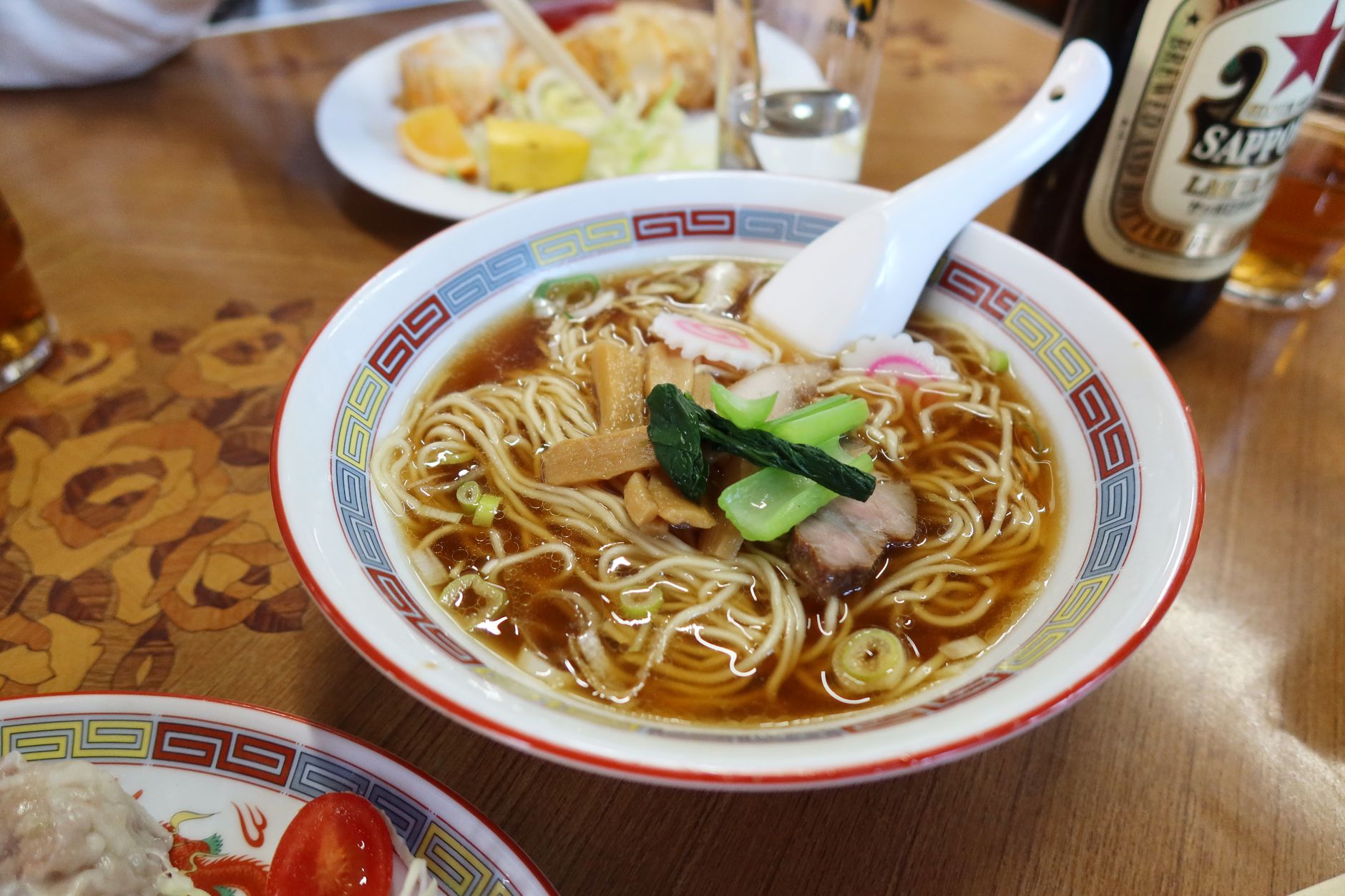
- Shoyu: clear soy-based broth. Lighter and cleaner, the traditional Tokyo template that Osaka cooks adapted.
- Takaida-kei: the Osaka special. Dark soy broth, thick noodles, raw sliced onion piled on top, the whole thing nearly black. Mostly a southeast-Osaka thing.
- Miso: fermented soybean broth, warming and full-bodied. A Hokkaido import you’ll find everywhere now.
- Tsukemen: noodles served dry alongside a thick, concentrated dipping broth. You dunk each bite.
- Mazesoba: no soup at all. Sauce stirred through the noodles, increasingly popular with the younger crowd.
Where to eat by neighbourhood
Osaka’s ramen isn’t spread evenly. If you’re already somewhere, here’s what’s within reach so you’re not crossing the city for a bowl.
- Dotonbori and Namba: the tourist heart, and the obvious one. Ichiran’s booths, the 24-hour Kinryu under its dragon, plus the late-night counter in Hozenji Yokocho a couple of streets back. Convenient, busy, open late.
- Umeda and Osaka Station: the northern hub, where you go for variety and shelter. Ippudo, the Tokyo-import Setagaya for shio, and T’s Tantan for the vegan bowl, all reachable without leaving the station complex.
- Tennoji and the south: Kinguemon’s main shop and the home turf of the Takaida-kei style. This is the part of the city where the dark-soy bowl actually belongs.
- Kyobashi and the east: quieter, more local, and where you’ll find the critics’ favourite Jinrui Mina Menrui. Worth a trip if you’re chasing the serious stuff.
- Esaka, just north: a short ride out for Muteppo and its eighteen-hour tonkotsu. The one detour on this list that tonkotsu people consider non-negotiable.
Kinguemon, the local hero
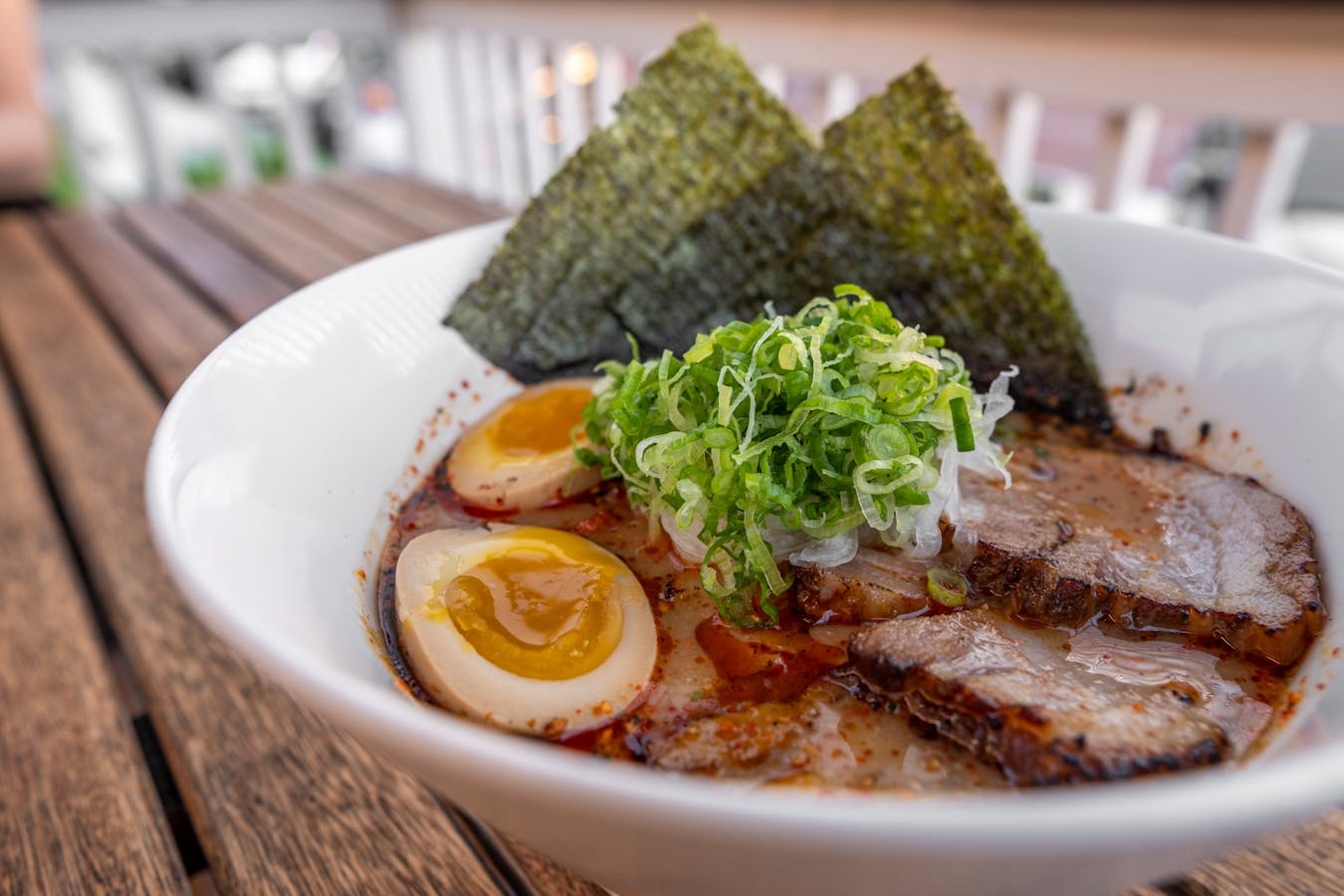
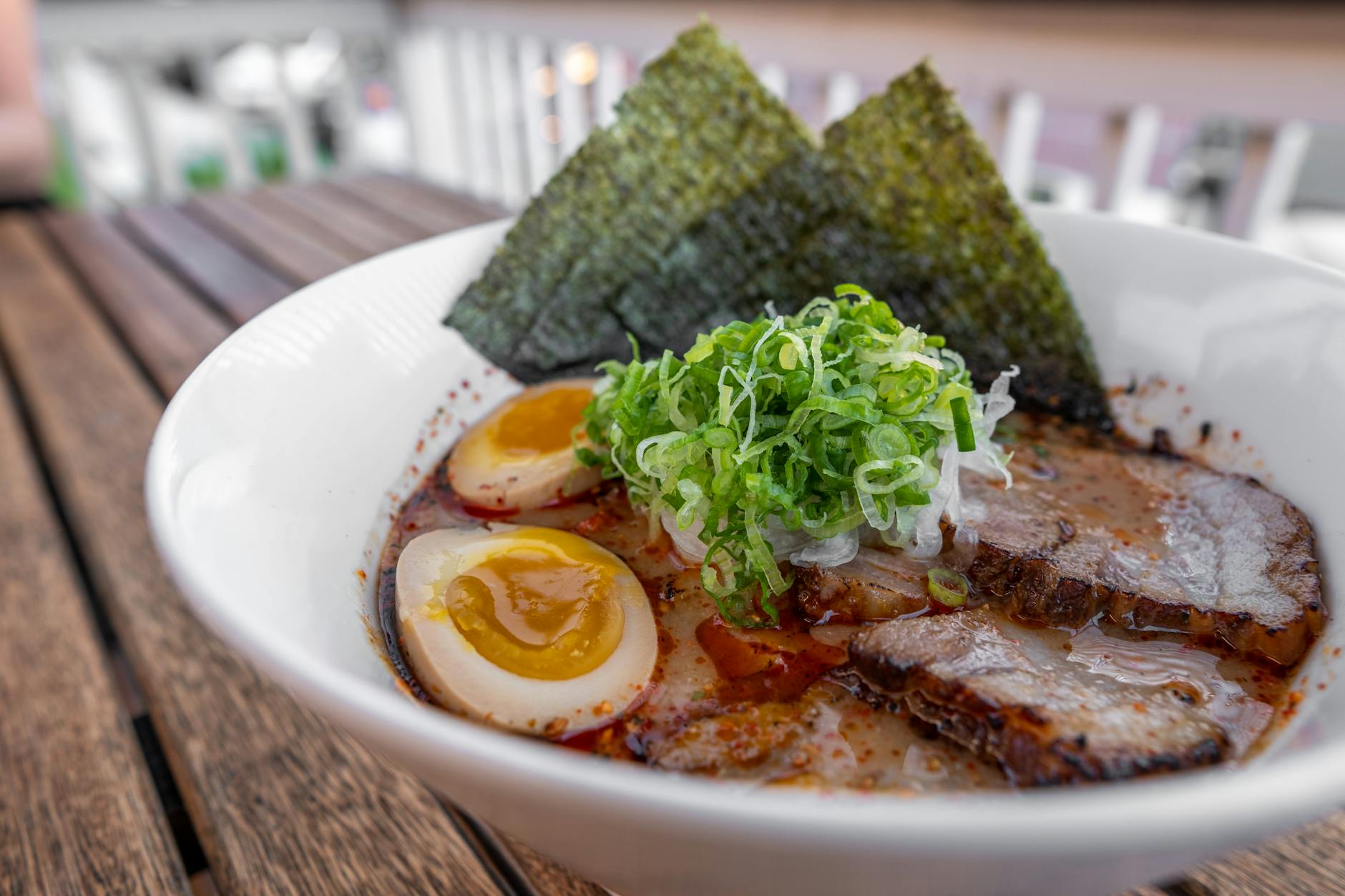
Start here if you want to eat something you can’t easily get outside Osaka. Kinguemon is the flagbearer for Takaida-kei: dark soy broth, thick noodles, a fistful of raw onion. The “Naniwa Black” bowl looks, from across the room, like a plate of squid-ink pasta. The soy sauce is made by an artisan supplier just for the shop, and it’s the whole personality of the bowl. The main shop is in Tennoji, with branches around the city, and the line tends to run fifteen to forty-five minutes.
- Where: Tennoji main shop, plus branches.
- Price: ¥1,000 to ¥1,400.
- Order: Naniwa Black with extra raw onion.
- Line: 15 to 45 minutes.
Muteppo, the tonkotsu detour
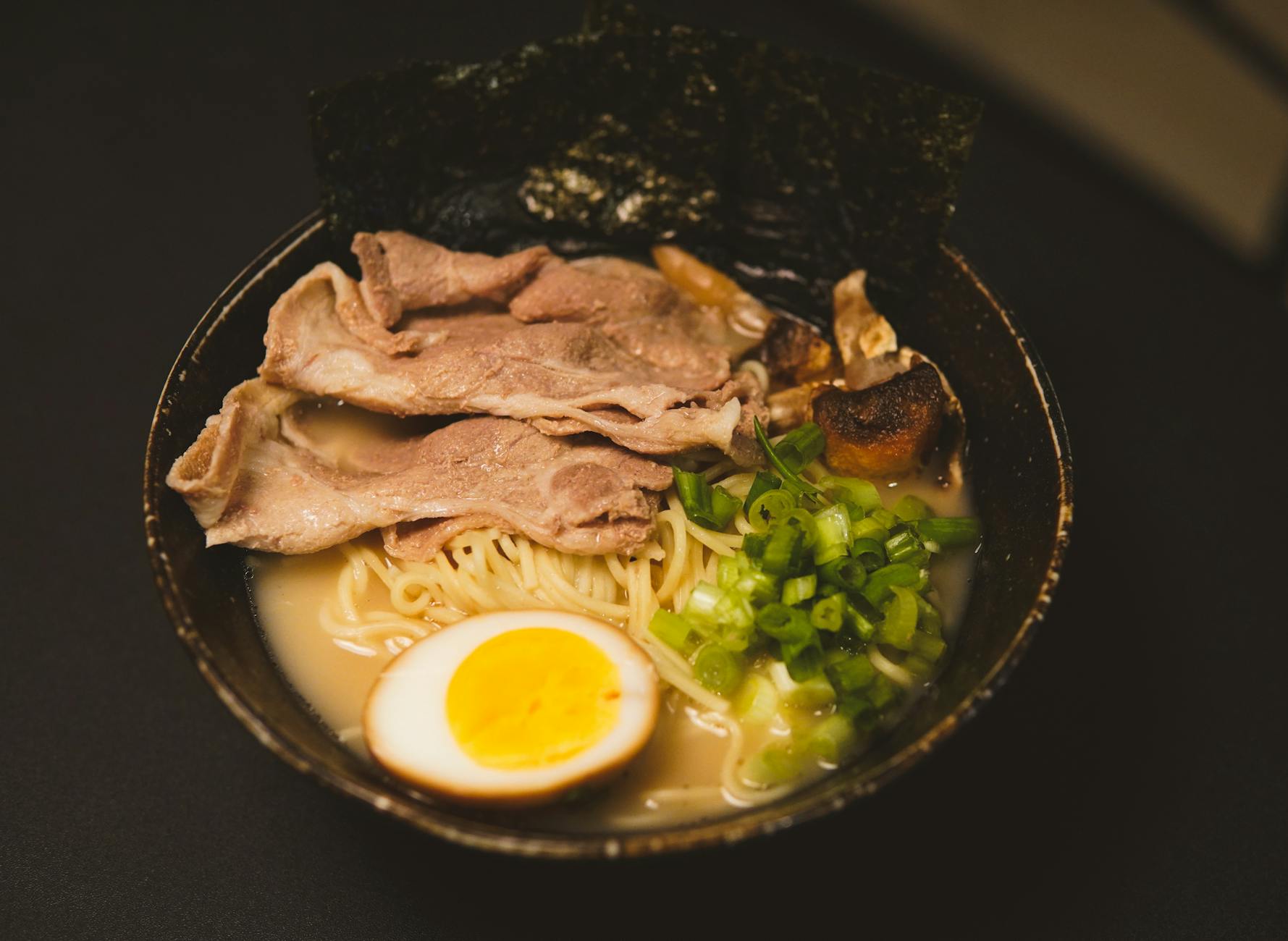
Muteppo means something like “no holds barred,” and the broth earns it. They boil the pork bones for eighteen hours, until the soup is thick enough that the cooks can practically stack it on a spoon. It’s out in Esaka, a short ride north of the central districts, so you have to want it. Tonkotsu fans do. Get a bowl with the chashu rice on the side and you won’t need dinner.
- Where: Esaka.
- Price: ¥1,000 to ¥1,500.
- Order: tonkotsu with chashu rice on the side.
Ichiran Dotonbori, the famous booth
You’ve probably seen the booths online. Ichiran is the chain that puts you in your own little cubicle, a curtain in front, a slot to pass your bowl through, so you can eat Hakata-style tonkotsu with zero distraction. You fill out a paper form, broth richness, oil level, garlic, noodle firmness, how much of the “secret sauce,” then pay the machine and slurp behind the curtain. It’s a tourist favourite and, honestly, deservedly so. The ramen is good and the gimmick is genuinely fun once.
- Where: Dotonbori canalside, plus branches.
- Price: ¥980 base, ¥1,200 to ¥1,500 loaded up.
- Order: the standard ramen, extra garlic, secret sauce at level one or two.
Ippudo, the gentle introduction
The other big tonkotsu name, and the easiest place to fall for the style. Ippudo’s “Akamaru Shin-aji,” the red bowl, works miso into the standard pork broth for a rounder, slightly sweeter result that converts a lot of first-timers on the spot. There are branches in Umeda and Namba, English menus on the table, no stress. Not the most exciting bowl in this guide, but a reliable one.

Kinryu, the 24-hour institution
The giant golden dragon over the entrance is the landmark. Kinryu opened on Dotonbori in 1982 and gets credit for dragging tonkotsu broth into the Osaka ramen conversation. It’s a standing counter, open round the clock, ¥600 for a basic bowl with free kimchi and rice on the side. Nobody’s calling it the best ramen in the city. But at 3am, half a beer deep, leaning on a counter eating a cheap bowl under the neon, it’s about as Osaka as eating gets.
- Where: Dotonbori, under the golden dragon.
- Hours: 24 hours.
- Price: ¥600 to ¥900.
Ramen Jinrui Mina Menrui, the critics’ pick
The name translates to something like “Humanity is All Noodles,” which tells you the kind of place this is. Tucked in Kyobashi, it’s one of Osaka’s most decorated shops, working from a niboshi base that leans on dried anchovy for a deep, slightly bitter umami, plus a rotation of chef-driven seasonal bowls. It lands on best-of lists year after year. Go hungry and go curious.
The rest of the lineup
Beyond the headliners, here’s a quick run through the shops worth knowing depending on where you are and what you’re craving.
- Ramen Yuji (tsukemen): the dip-and-eat specialist. Cold noodles, a hot fish broth that’s basically a concentrate of pure umami. Worth the slightly fussy ritual.
- Menya Joroku (multi-style): a modern shop running rotating specials. Recent menus have hit chicken-clam, lobster broth, seasonal vegetable bowls. A place to come back to.
- Hakata Ippudo Yokota: a quieter Ippudo branch with the same tonkotsu minus the Umeda crowds.
- T’s Tantan (vegan): inside Osaka Station’s concourse. Fully plant-based ramen built on soy and sesame instead of pork. A rare safe harbour in a meat-heavy cuisine.
- Ramen Mazeru (mazesoba): soup-less noodles loaded with minced pork, chives, garlic chips, and a soft egg to stir through.
- Hozenji Sanpei: a counter in the lantern-lit Hozenji Yokocho alley. Classic shoyu, late-night atmosphere, a contrast to the Dotonbori chaos two streets over.
- Setagaya: a Tokyo import in Umeda that locals grudgingly admit makes excellent shio, the clean salt-based bowl. Light and refreshing.
- Yamato: old-school Osaka shoyu with thin noodles, a family business going since 1968.
- Ramen Engawa (premium): top-tier, chef-driven, seasonal, with reservations sometimes available. ¥1,800 to ¥2,500.
Reading the menu and the toppings
Half the fun of a bowl is in the additions, and most shops list them as cheap upgrades. A few terms worth recognising before you order:
- Chashu: braised or rolled pork belly, the default protein. “Chashu-men” means a bowl piled with extra of it.
- Ajitama: a soft-cooked, marinated egg with a jammy centre. The single best ¥150 you’ll spend on a bowl.
- Menma: seasoned bamboo shoots, the slightly crunchy strips along the edge.
- Negi: green onion. “Negi-mashi” gets you a heap of it; at the Takaida-kei shops it’s raw and sharp.
- Kaedama: an extra round of noodles to drop into your leftover broth, a tonkotsu-shop tradition. Order it before the broth goes cold.
- Katame / yawarakame: firm or soft noodles. If you like a bit of bite, ask for katame.
How to order without slowing the line
Most Osaka ramen shops run on a rhythm, and a few small things keep you in step with it.
- Buy a ticket from the machine first. Most shops have a vending machine by the door. Feed it cash, hit the button for your bowl, take the ticket.
- Hand the ticket over as you sit down at the counter.
- Answer the questions if they ask. Noodle firmness comes up most, with “katame,” meaning firm, the usual request. Ichiran lets you fine-tune everything.
- Eat while it’s hot. Ramen waits for nobody. Slurping is fine, even expected; it cools the noodles and pulls in the aroma.
- Try kaedama at tonkotsu shops. When the noodles are gone but you’ve still got broth, order an extra portion of noodles for ¥150 to ¥200 and keep going.
- Don’t tip. It isn’t a thing here.
- Clear out when you’re done. There’s usually a line outside. Eat, settle up, free the stool.
Your first bowl, step by step
If you’ve never eaten at a counter ramen shop in Japan, the first one can feel like there are unwritten rules. There basically aren’t, but here’s how it usually goes so you can walk in relaxed. You’ll often spot the shop by the short queue out front and the steam. Slot into the line. When a stool opens, the staff will wave you forward, so don’t hover waiting to be formally seated.
Buy your ticket at the machine, which is sometimes outside and sometimes just inside the door. Pictures on the buttons help, and the top-left button is frequently the shop’s signature bowl if you’re unsure. Sit, slide the ticket across or into the little holder, and a glass of water or cold tea usually appears on its own. The bowl follows fast, often within a couple of minutes. Eat it hot, slurp without apology, and when you’re done, a quiet “gochisousama” on the way out is a nice touch but nobody minds if you skip it. Settle anything outstanding, and go. The whole thing, start to finish, is often under twenty minutes.
What it costs in 2026
Ramen is one of the better-value meals in the city. A standard bowl runs ¥800 to ¥1,200, which buys you a serious amount of food. The chef-driven shops climb to ¥1,500 and up, and a premium tasting bowl can hit ¥2,500. At the other end, the 24-hour Kinryu on Dotonbori sits at ¥600, about as cheap as a hot, filling meal gets in central Osaka. Toppings and sides barely move the needle.
- Standard bowl: ¥800 to ¥1,200.
- Premium chef bowl: ¥1,500 to ¥2,500.
- Tsukemen: ¥1,200 to ¥1,700.
- Toppings (egg, extra chashu): ¥150 to ¥400.
- Side (gyoza or rice): ¥300 to ¥500.
Beating the lines
The famous shops draw queues, and there’s a simple way around most of them: avoid the obvious times. Noon to one and the dinner rush from seven are when you’ll wait longest. Slide in during the dead afternoon, roughly two to five, and you’ll often walk straight to a stool at the same place that had a wraparound line an hour earlier. Late dinner after nine works too. And take heart: ramen seatings turn over fast, often in fifteen minutes, so even a long-looking line usually clears quicker than you’d guess.
Best ramen in Osaka: FAQ
What is the most famous ramen shop in Osaka?
For overseas visitors, Ichiran on Dotonbori is the name everyone knows, thanks to the solo booths. Among locals, the most loved are Kinguemon for the Takaida-kei soy bowl, Muteppo for tonkotsu, and the 24-hour Kinryu for the late-night ritual.
How is Osaka ramen different from Tokyo ramen?
Tokyo defaults to a lighter shoyu bowl. Osaka has the dark-soy Takaida-kei style you won’t easily find elsewhere, plus a strong tonkotsu chain presence through Ichiran and Ippudo. These days both cities serve every major style, so the lines blur, but Takaida-kei is the genuinely local thing here.
How much does a bowl of ramen cost in Osaka?
Usually ¥800 to ¥1,500 for a standard bowl. The premium chef shops charge ¥1,800 to ¥2,500. The cheapest of the well-known spots is the 24-hour Kinryu on Dotonbori at ¥600.
Is there vegetarian or vegan ramen in Osaka?
It’s hard, because most broths lean on pork or fish stock. The reliable option is T’s Tantan inside Osaka Station, which is fully vegan. A few shops run vegetable-only seasonal bowls, but always confirm before you order, since dashi sneaks into a lot of broths.
What is Takaida-kei ramen?
It’s the Osaka local style: dark soy broth, thick noodles, raw sliced onion heaped on top. The name comes from the Takaida district. Kinguemon is the best-known practitioner, and its near-black “Naniwa Black” bowl is the classic example.
How long will I wait at a popular ramen shop?
Expect 15 to 45 minutes at the well-known spots during meal times. Mid-afternoon, roughly two to five, and late dinner after nine are much quieter. The good news: seatings turn over in around fifteen minutes, so lines move faster than they look.
Honest advice and a couple of warnings
A few things I’d tell a friend visiting for the first time, the stuff the rankings tend to skip.
- Don’t make Ichiran your only ramen. It’s good and the booth is fun, but it’s a national chain you can eat in Tokyo or Fukuoka too. Spend at least one bowl on something Osaka actually owns, like Kinguemon’s Takaida-kei.
- Pace the tonkotsu. A proper pork-bone bowl is heavy. Two in one day is a lot. Break up the rich stuff with a clean shio or shoyu bowl, which is exactly what Setagaya is for.
- Cash and small shops. The ticket machines at older counters often take cash only, and not always big notes. Keep some coins and ¥1,000 bills on you.
- It’s loud, and that’s correct. Slurping isn’t rude here, it’s the point. Quietly nursing a bowl marks you as the tourist more than anything else.
- Solo is normal. Counter ramen is built for eating alone. If you’re travelling solo and feeling self-conscious about restaurants, ramen is the easiest, most welcoming room in the city.
Where to go next
Ramen is one of the dishes you shouldn’t leave Osaka without trying, but it’s only part of the meal plan. Pair it with the best takoyaki in Osaka for a proper konamon fix, and block out an evening for the Osaka street food crawl down the canal. The full Osaka food guide pulls the whole eating city together, from okonomiyaki to the markets. On a tight budget, our list of meals under JPY 1,000 covers where the ramen money goes furthest, and the izakaya guide handles the drinking half of the evening.