This article contains advertising. Our booking links are routed through a partner that adds commission tracking automatically, so if you book through one we earn a commission from the provider, at no extra cost to you. It never affects what we recommend. Affiliate disclosure
Tenjin Matsuri on July 24-25 is one of Japan’s three biggest festivals – on equal footing with Kyoto’s Gion Matsuri and Tokyo’s Kanda Matsuri – and represents the cultural climax of Osaka’s summer. The 1,000-year-old festival honors Sugawara no Michizane (the Heian-period scholar deified as Tenjin, god of learning) and has been held annually at Osaka Tenmangu Shrine since 951 AD. The headline events: a 3,000-person land procession in Heian and Edo costume, a 100-boat river procession on the Okawa River, and a 5,000-shell fireworks display visible across central Osaka. Attendance reaches 1.3+ million across two days. This 2026 guide covers the hour-by-hour timeline, free viewing spots, paid grandstand seats, where to eat, what to wear, and how to plan the perfect Tenjin Matsuri evening.
Tenjin Matsuri 2026 Schedule
- Dates: July 24-25, 2026 (annual fixed dates)
- Day 1 (July 24, Yoimiya): Opening ceremonies, religious rites, smaller crowds
- Day 2 (July 25, Honmiya): Main day – 15:30 land procession, 17:00 river procession, 19:30-20:50 fireworks finale
- Venue: Osaka Tenmangu Shrine + Okawa River
- Access: Minamimorimachi Station (Osaka Metro Tanimachi/Sakaisuji); Osakatenmangu Station (JR Tozai)
- Attendance: 1.3+ million across 2 days
- Free attendance
Hour-by-Hour July 25 Timeline (Main Day)
Morning (09:00-13:00)
Morning religious ceremonies at Osaka Tenmangu Shrine. Smaller crowds; locals offering prayers. Visit the shrine in the morning to see the ema (votive plaques) wall before crowds arrive.
14:00-15:00 (Pre-Procession)
Procession participants gather at the shrine; spectators stake out viewing positions along Tanimachi-suji. Yatai food stalls open along the procession route.
15:30-17:00 (Land Procession – Rikutogyo)
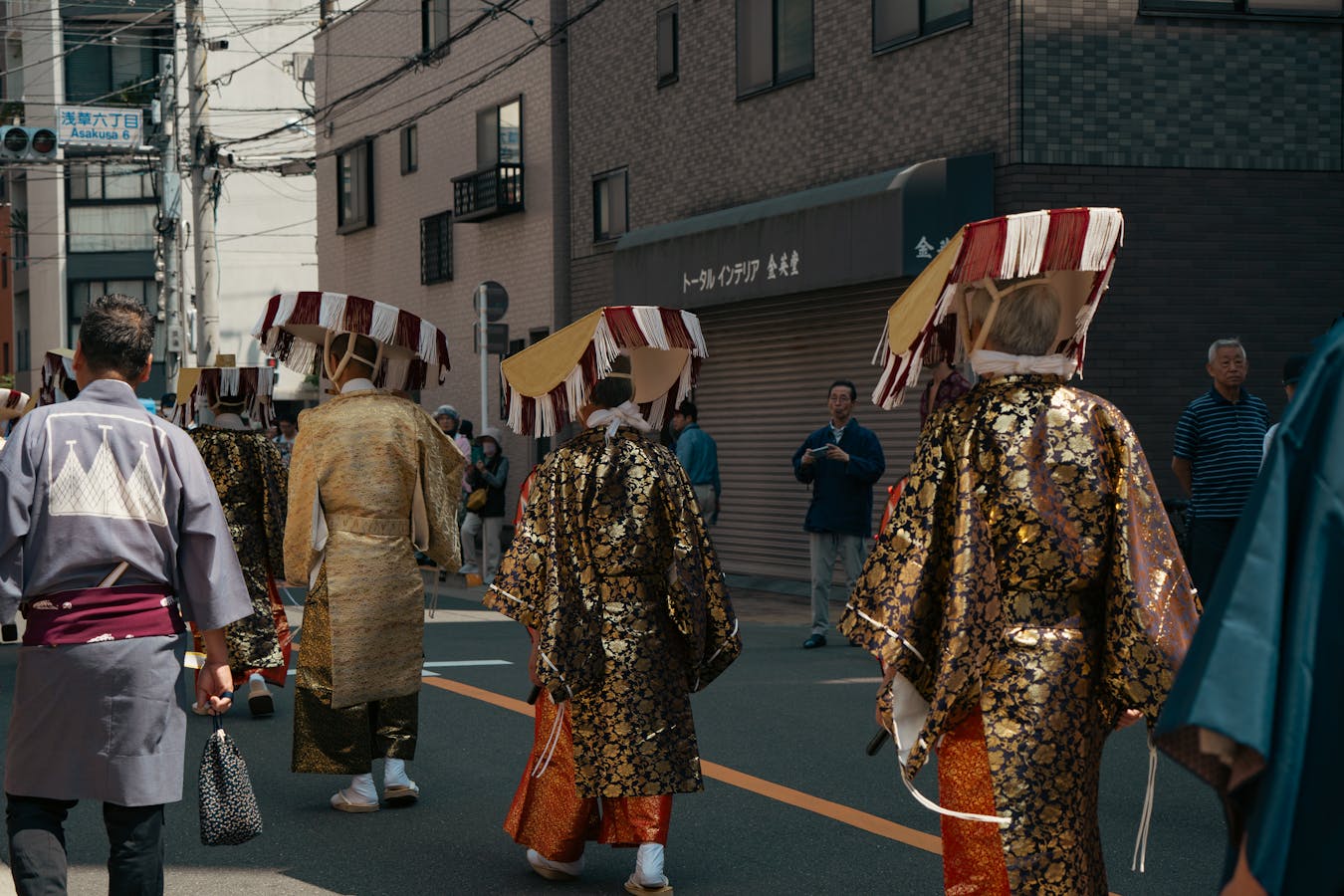
The 3,000-person land procession leaves the shrine. Participants wear Heian-era and Edo-era costumes; the route includes 12 ox carts, lion dancers, court musicians playing traditional gagaku, and the principal mikoshi (portable shrine) carrying the deity. Spectators line the route – typically 5-10 deep on Tanimachi-suji.
17:00-19:00 (River Procession – Funatogyo)
The procession reaches the Okawa River, and 100 boats including 6 ceremonial boats and 6 musical boats parade up and down with the deity riding aboard. The musical boats play traditional shrine music. The boats are lit with candles and lanterns – the visual highlight of the festival when light fades.
19:30-20:50 (Fireworks Finale)
Approximately 5,000 fireworks launched from the riverbanks around Sakuranomiya Bridge. The fireworks accompany the river procession and create the climactic combined spectacle – boats with lanterns + fireworks reflecting on the river. The crowd peaks during this hour.
20:50-22:00 (Departure)
Boats return; spectators disperse. Major stations are extremely crowded for 90+ minutes after fireworks end.

Free Viewing Spots Along the Okawa
Sakuranomiya Park
The most popular free viewing spot for the fireworks finale. Direct line of sight to the launch zones; large green space; family-friendly. Arrive by 16:00 to claim a leisure-sheet spot. Access: Sakuranomiya Station (JR Loop, Tozai).
Tenjinbashi Bridge
The bridge itself becomes a viewing platform; foot traffic regulated by police. Good elevated view of both the river procession and fireworks. Arrive by 17:30 for a spot at the railing.
Naniwabashi Bridge
Slightly less crowded than Tenjinbashi; closer to the river-procession route midpoint.
Riverside Embankments (Both Sides)
The grassy riverbanks between Sakuranomiya and Tenjinbashi accommodate the largest free crowds. Foot traffic is one-way during peak hours; police direct movement.
Paid Grandstand Seats
- Standard riverside seats: JPY 3,000-7,000 – secured spot on bleacher seating
- Premium riverside seats: JPY 7,000-15,000 – closer position with light meal/drink
- VIP boat watching: JPY 15,000-31,000 – reserved seats with food and drink
- Booking: Klook, Viator, GetYourGuide; tickets sell out 2-3 months ahead
- Inclusions vary: Some include meals, drinks, hand fans, uchiwa (paper fans); read details carefully
What to Wear
Yukata (Recommended)
Yukata is the traditional festival attire and the universally welcomed look. Rental shops near the festival (Wargo, Kawaii Osaka) charge JPY 3,300-5,000 for a yukata rental + dressing. Book 1-2 weeks ahead during festival week.
Casual Summer Wear
Lightweight breathable clothing – cotton shirts, shorts, comfortable walking shoes. The festival is hot and humid; you’ll sweat regardless of clothing choice. Avoid leather or heavy fabric.
Essentials to Bring
- Hand fan or battery-operated neck fan (JPY 1,500 at Don Quijote)
- Bottled water (2+ liters per person)
- Towel for sweating (cooling towels available at convenience stores)
- Sunscreen + hat (afternoon exposure)
- Cash for yatai food (JPY 5,000+ recommended)
- Phone charger battery (you’ll take many photos)
- Light cardigan for after dark
Festival Food (Yatai)
Yatai (food stalls) line the procession route and surrounding streets. Cash only; JPY 300-800 per item. Popular options:
- Takoyaki: JPY 600-800 for 8-12 balls
- Ikayaki (grilled squid): JPY 500-700 per skewer
- Okonomiyaki on a stick: JPY 500-700
- Yakisoba (fried noodles): JPY 500-700
- Karaage (fried chicken): JPY 400-600
- Cotton candy: JPY 500-800
- Candied apples: JPY 500
- Shaved ice (kakigori): JPY 500-800
- Beer and chu-hi: JPY 400-600
- Watermelon: JPY 500 per slice
The History of Tenjin Matsuri
The festival was first held in 951 AD – 51 years after Sugawara no Michizane’s death and deification. The original ceremony was a hokonagashi-shinji (halberd-floating rite) in which a halberd was floated down the Okawa River to determine the route of the river procession. This rite is still performed on July 24 (Yoimiya) each year.
The festival has been held continuously for over 1,000 years, surviving the Onin War, the Tokugawa period, the Meiji Restoration, the 1945 firebombing of Osaka (which destroyed most of the original procession boats), and the COVID-19 pandemic (when it was scaled down but not canceled). The current scale – 3,000-person procession, 100 boats, 5,000 fireworks – dates from the post-war revival.
Sugawara no Michizane (845-903) was a Heian-period scholar, poet, and politician who was framed in a political conspiracy and exiled to Dazaifu in Kyushu, where he died. After his death, natural disasters and deaths among his political enemies were attributed to his vengeful spirit, and the imperial court built shrines (Tenmangu) across Japan to appease and honor him. He is worshipped today as Tenjin, the kami of learning and scholarship.
The Significance of the Boat Procession
The river procession (Funatogyo) is the festival’s photographic and atmospheric centerpiece. 100 boats parade up and down the Okawa River – 6 ceremonial boats carrying the deity and shrine officials, 6 musical boats playing traditional gagaku court music, and 88 smaller boats carrying festival participants, geisha, and corporate sponsors.
As darkness falls, the boats light up with candles and paper lanterns. The combination of glowing boats + traditional music + reflections on dark water + 5,000 fireworks creates one of the most distinctive visual experiences in Japanese culture. The full effect is visible only during the 19:00-21:00 window on July 25.
Best Photo Spots
For the Land Procession
- Outside Osaka Tenmangu Shrine (15:30 procession departure)
- Tanimachi-suji street 5-10 min walk south of the shrine (16:00-17:00)
- The shrine itself for early-procession close-ups before departure
For the River Procession
- Tenjinbashi Bridge railing – high angle of boats below
- Sakuranomiya Park – close to launch zone with bridge backdrop
- Riverside embankments – same level as boats; intimate photos
For the Fireworks
- Sakuranomiya Park – closest viewing; widest angle
- Naniwabashi Bridge – elevated, away from peak crowds
- Paid grandstand seats – guaranteed unobstructed view
Practical Festival Tips
When to Arrive
- Land procession watching: 14:30-15:00 for first-row position
- River procession at Sakuranomiya: 16:00-16:30 for picnic spot
- Tenjinbashi Bridge viewing: 17:00-17:30 for railing position
- Paid grandstand: Time specified on ticket; usually 17:00-17:30
Transit Strategy
- Going to festival: Take Tanimachi or Sakaisuji Line to Minamimorimachi; or JR Tozai to Osakatenmangu; or JR Loop to Sakuranomiya
- Returning home: Stations packed for 90+ minutes after fireworks. Walk 10-15 minutes to a less crowded station to save time
- Last trains run normal: Approximately midnight; budget for taxi if staying near the riverside until very late
Hotel Strategy
Hotels in Tenma/Tenjinbashisuji area or near Osaka Station double in price during festival week. Book 3-6 months ahead for festival-zone hotels; or book a Namba/Umeda hotel and budget for a JPY 1,500-2,500 post-festival taxi.
Weather Strategy
- July 25 typically 30-34°C with 70-80% humidity
- Bring 2-3 liters water per person
- Cooling towels at Don Quijote (JPY 500)
- Sunscreen + hat for afternoon
- Light cardigan for after dark
- Rain backup: light raincoat or compact umbrella (event proceeds rain or shine; only typhoon cancels)
Etiquette
- Follow police instructions for crowd movement
- Don’t disrupt the procession – stay behind crowd-control barriers
- Quiet observation during religious rites at the shrine
- No flash photography during ceremonies
- Dispose of trash in temporary festival bins (additional bins placed for the event)
- Don’t sit on the procession route
- Drone photography prohibited
- If you bring a leisure sheet, take it with you when leaving
Combine With Osaka Tenmangu Shrine Visit
Visit Osaka Tenmangu Shrine during a calmer day (not festival day) to see the shrine in normal operation. Free admission; 30-45 minutes; combine with the adjacent Tenjinbashi-suji shopping arcade (Japan’s longest at 2.6km). See our Osaka Tenmangu Shrine guide for details.
Tenjin Matsuri vs. Other Major Osaka Festivals
- Tenjin Matsuri (Jul 24-25): Japan top 3; 1.3M; 5,000 fireworks – SIGNATURE summer festival
- Sumiyoshi Matsuri (Jul 30 – Aug 1): Closes summer trio; largest mikoshi in Osaka
- Aizen Matsuri (Jun 30 – Jul 2): Opens summer trio; palanquin processions
- Toka Ebisu (Jan 9-11): Winter commerce-prayer festival; 1M attendance
- Kishiwada Danjiri (Sep): Famous float-cart races
Common Mistakes
- Arriving at 18:00: Too late to find a good free spot
- Not booking grandstand seats early: Sell out 2-3 months ahead
- Underestimating heat: July 25 humidity is dangerous; pack 2+ liters water
- Trying to use major stations immediately after fireworks: Stations packed; walk 10 min to less busy alternative
- Forgetting cash: Yatai stalls all cash-only
- Booking flights leaving Osaka on July 26 morning: Hotels saturated July 25 night; alternative is risky
- Wearing nice clothes: You will be sweaty by the end
Final Word: Tenjin Matsuri
Tenjin Matsuri is one of the most significant cultural events in Japan – 1,000 years of continuous tradition, 1.3+ million attendees, the country’s third-biggest festival. If your Osaka trip overlaps with July 24-25, build your day around it: morning shrine visit, afternoon land procession watching, evening river procession + fireworks. Book grandstand seats if you want a guaranteed view, or arrive at Sakuranomiya Park by 16:00 for a free spot. Wear yukata if you can rent one. Bring water, cash, and a hand fan. The result is one of the most memorable single events available in Japanese cultural tourism. Tenjin Matsuri is one date in a busy year; the month-by-month guide to Osaka covers what else lands when. Dates for the rest of the year sit in our Osaka festival calendar.