Of all the Kansai day trips, Kyoto is the one nobody talks you out of. The JR Special Rapid covers the 56 kilometres from Osaka Station in about 24 minutes for ¥580, and on the far end you have more than 1,600 Buddhist temples, 400-odd Shinto shrines, and 1,200 years of being the capital before Tokyo existed. You cannot see all of that in a day. You can comfortably see four or five of the best bits if you start early and stop overplanning.
This is the itinerary, not the train manual. We pair the orange torii tunnels at Fushimi Inari with the wooden stage at Kiyomizu-dera, walk the old Higashiyama lanes down into the geisha quarter at Gion, and get you back to Osaka in time for dinner. For the nuts and bolts of fares and platforms, the Osaka to Kyoto transit guide compares every option side by side. Here we just tell you what to do once you arrive.
Kyoto Day Trip Quick Facts
- Distance from Osaka: 56 km / 35 miles.
- Fastest train: 15 min by Shinkansen, 24 min by JR Special Rapid, 44 min by Hankyu Limited Express.
- One-way fare: ¥580 (JR), ¥410 (Hankyu), ¥1,450 (Shinkansen).
- Time on the ground: 10-12 hours for the classic loop.
- Attraction spend: roughly ¥1,000-¥3,000 in entry fees.
- Whole-day budget: ¥4,500-¥7,500 per person, all in.
- Peak seasons: late March to early April for cherry blossom, late October to late November for autumn colour.
Two numbers do the heavy lifting here. The first is the ¥580 JR fare, which makes the Shinkansen pointless unless a JR Pass is already paying for it. The second is the clock: get to Fushimi Inari before the tour buses and the whole day opens up. Miss that window and you spend it queueing.
The One-Day Itinerary, Hour by Hour
The plan below is built around beating crowds, not around hitting a checklist. Fushimi Inari first because it is free, it photographs badly once packed, and it sits right on the JR line in from Osaka. Everything after that flows downhill, literally, through Higashiyama into Gion.
7:00 – Leave Osaka Station
Catch one of the early JR Special Rapid services. You want to be standing under the torii at Fushimi Inari by quarter to eight, before the first coach tours roll in. Grab a coffee and an onigiri at the station; you will not stop for a proper meal until midday.
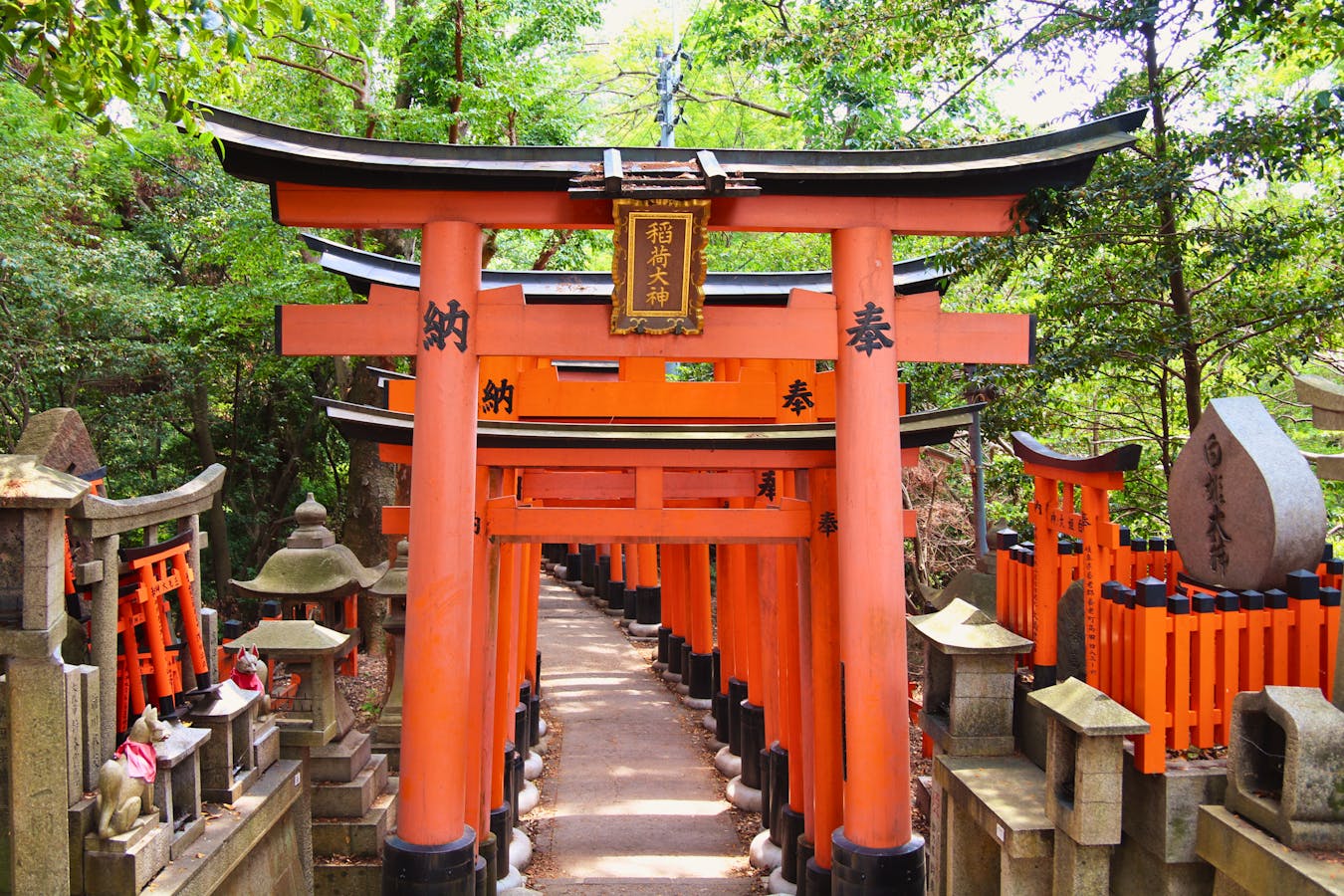
7:45 – Fushimi Inari Taisha
This is the shrine with the tunnels of vermilion gates climbing the hillside, and it is the single image most people associate with Kyoto. Entry is free, it never closes, and at this hour you can actually walk through the famous lower stretch without a stranger in every frame. Forty-five minutes to an hour on the lower loop gets you the photographs and a sense of the place. The full summit climb takes about two hours round trip and is for people who genuinely want the hike, not the shrine. By 10am the lower gates are shoulder to shoulder, so this early start is the whole point.
9:30 – Cross town to Kiyomizu
Hop the JR Nara Line two stops back to Kyoto Station, then bus 100 or 206 to the Kiyomizu-michi stop (about 8 minutes, ¥230 with your ICOCA). From the stop it is a 15-minute walk uphill past souvenir shops to the temple gate. The climb is part of the experience, but it is a climb, so pace yourself.
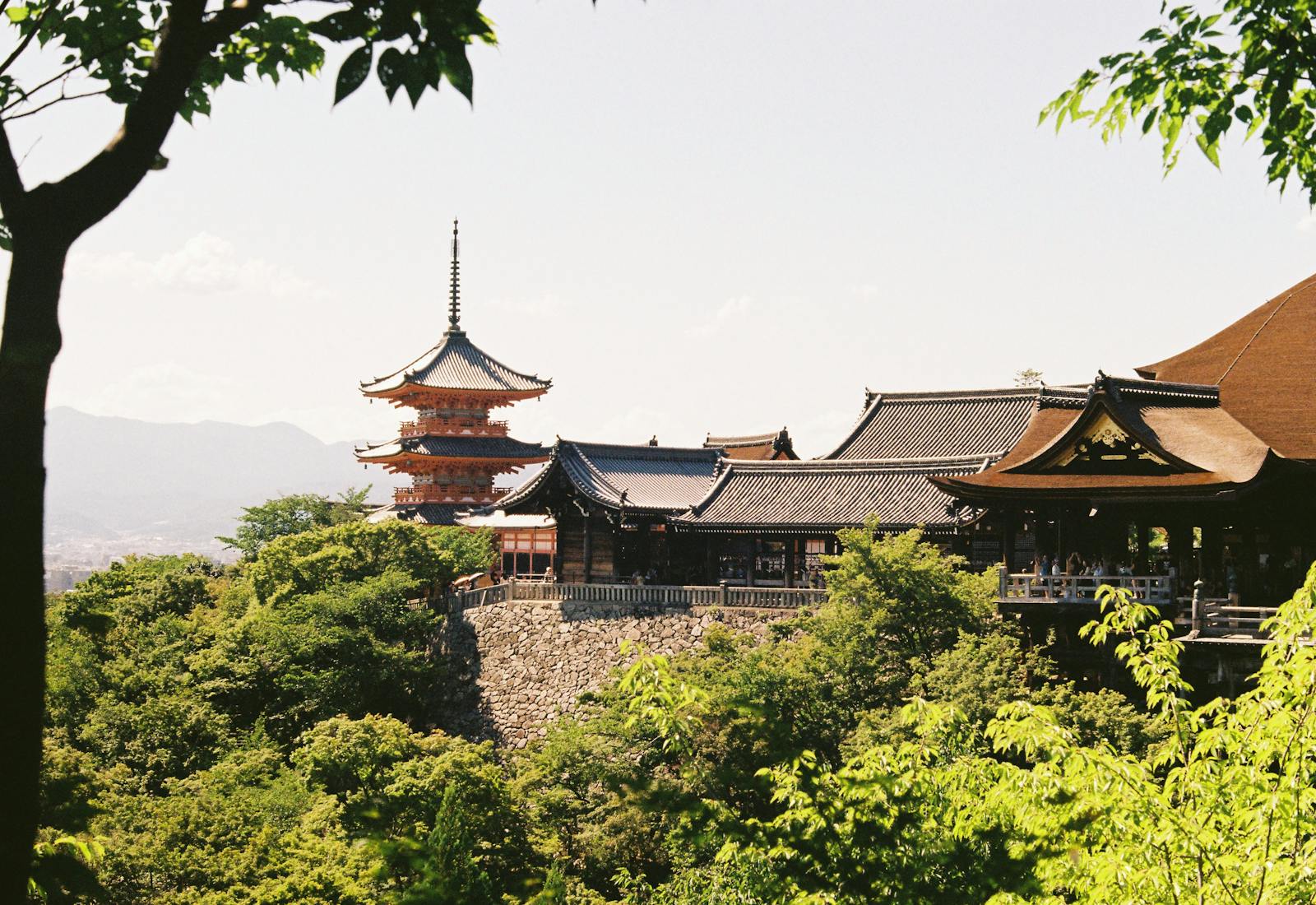
10:30 – Kiyomizu-dera
A UNESCO World Heritage temple whose main hall stands on a wooden stage pegged together without a single nail, projecting out over the hillside. Entry is ¥500. The view from the veranda back across the valley toward the city is the shot you came for, and in blossom or autumn season it earns every yen. Give it 60 to 90 minutes; the grounds are bigger than the famous platform and reward a slow wander.
12:00 – Walk down Sannenzaka and Ninenzaka
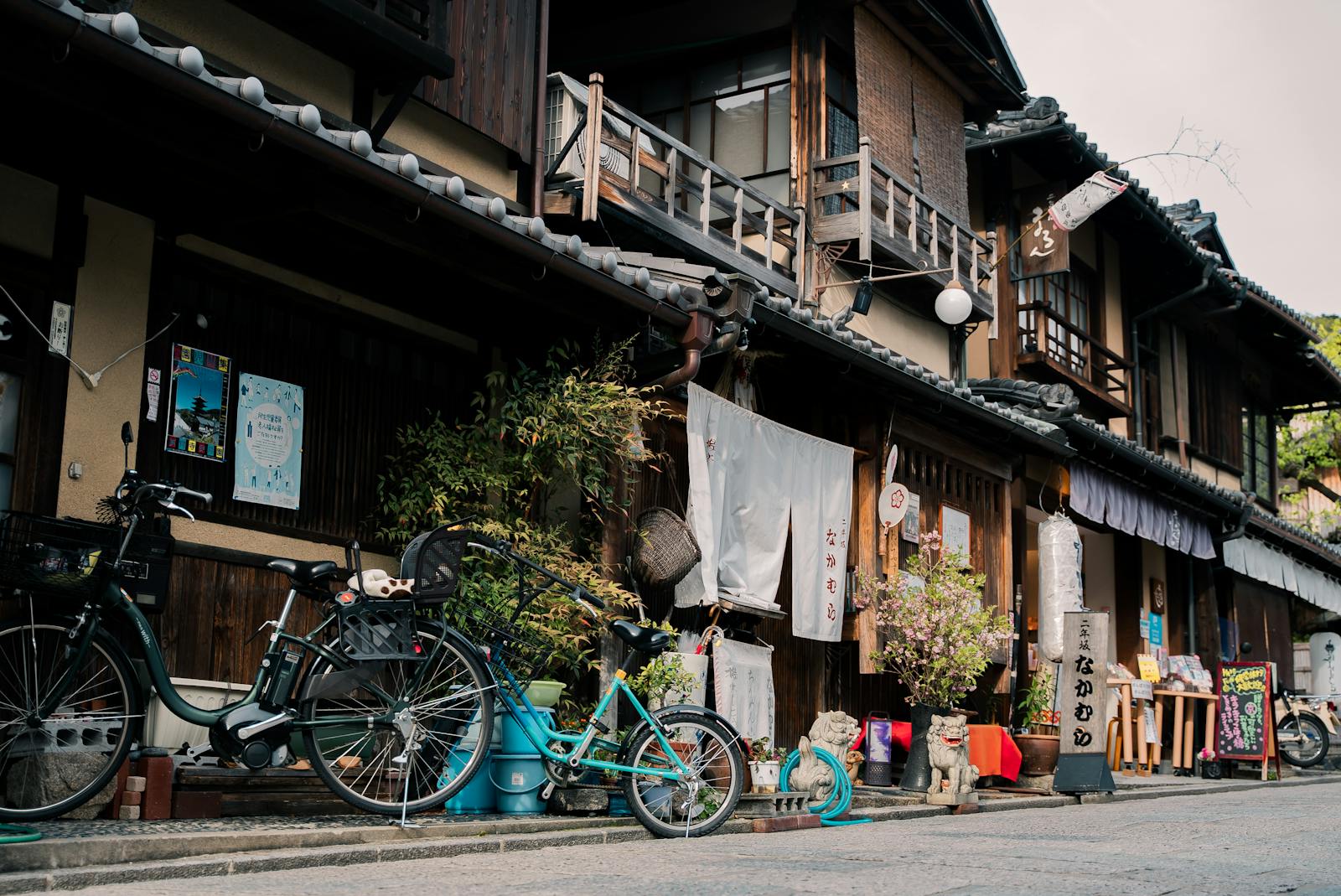
From Kiyomizu you descend through two stone-paved lanes, Sannenzaka and Ninenzaka, lined with wooden shopfronts, matcha cafes, pickle sellers and kimono-rental crowds. This is the prettiest walking in the city centre and it costs nothing. Pick up a matcha soft-serve or some warabi mochi as you go – eating while strolling is part of the rhythm here. Watch your footing; the steps are worn smooth and the saying goes that a stumble on Sannenzaka brings three years of bad luck.
13:00 – Lunch around Yasaka Shrine
The lanes spill out near Yasaka Shrine and Maruyama Park, where you have your pick of casual udon, ramen and bento spots without the Gion price markup. In blossom season Maruyama Park is one of the best spots in the city to sit under the trees with a takeaway lunch. Budget ¥1,200 to ¥2,000 for a decent sit-down meal.
14:30 – Gion
Kyoto’s historic geisha quarter, and the one stop where your manners matter as much as your camera. Walk Hanami-koji and the lantern-lit Pontocho alley to take in the preserved teahouses. The streets are free to wander. A formal tea ceremony at a place like Camellia Garden runs around ¥4,000 if you want to sit down properly. One firm rule: the geiko and maiko who work here are not a photo opportunity. No flash, no following, no blocking their path as they hurry to evening appointments. Private lanes are increasingly off-limits to tourists, and signs make that clear – respect them.
16:00 – Nishiki Market
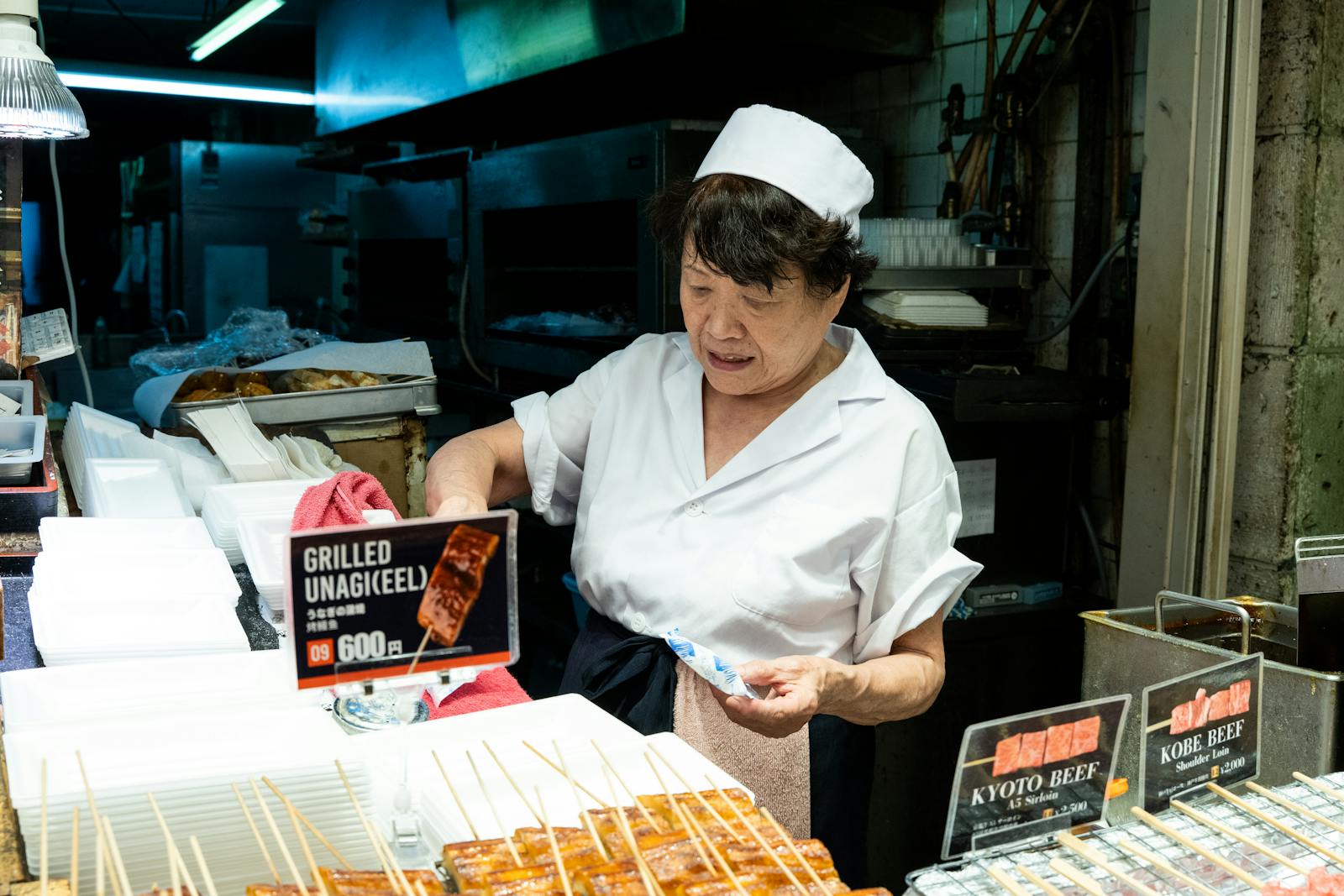
A 5-minute walk from Gion drops you into Nishiki, the 400-metre covered arcade locals call “Kyoto’s Kitchen.” This is where you graze: yatsuhashi (the cinnamon-and-bean Kyoto sweet), pickles by the barrel, tofu doughnuts, skewered seafood, sake samples. Note the timing – most stalls start shutting around 17:00, so this is a late-afternoon snack stop, not a dinner plan.
17:30 – Head back to Osaka
You have two easy ways home. The Hankyu Limited Express from Kawaramachi runs back to Osaka-Umeda in about 44 minutes for ¥410, and Kawaramachi is right by Nishiki. Or backtrack to Kyoto Station for the faster JR. Either way you are in Osaka before 19:00.
18:30 – Dinner in Osaka
Get off at Namba and finish the day in Dotonbori with takoyaki, kushikatsu or a bowl of ramen. After a day of refined Kyoto restraint, Osaka’s neon and noise feels like exhaling.
Two Worthwhile Swaps
The loop above is the efficient default, but it is not the only good day. If a particular photo or experience is the reason you came, here is how to fit it in without blowing up the schedule.
Arashiyama bamboo grove
Want the towering bamboo path? Skip Nishiki and instead take a JR train from Kyoto Station out to Saga-Arashiyama, about 15 minutes; the grove is a 5-minute walk from the station. Go early or near closing – midday it is as crowded as anywhere in Kyoto. Budget an extra 90 minutes and accept that you are trading the market for the bamboo.
Kinkaku-ji, the Golden Pavilion
The gold-leafed pavilion reflected in its pond is a showstopper, but it sits in the northwest of the city, awkward to reach from the Higashiyama loop (buses 50 or 101 from Kyoto Station). Adding it costs about 90 minutes of transit and viewing. Honestly, it pairs better with Arashiyama on a separate half-day than crammed into this one.
A proper tea ceremony
Several operators in Higashiyama and Gion run 45-minute ceremonies for roughly ¥3,500 to ¥5,000. It is a lovely, calm counterpoint to a fast walking day – just reserve ahead, because the good ones fill up, and slot it into your Gion window rather than adding it on top.
What the Day Actually Costs
Kyoto is not Osaka-cheap, but a day here is very manageable if you skip the taxi habit and lean on trains and buses. Here is a realistic per-person breakdown for the classic loop:
- Round-trip JR Osaka-Kyoto: ¥1,160 (or ¥820 by Hankyu).
- Buses and local trains in Kyoto: ¥600-¥800.
- Kiyomizu-dera entry: ¥500.
- Lunch: ¥1,200-¥2,000.
- Snacks along Higashiyama and Nishiki: ¥800-¥1,500.
- Realistic total: ¥4,500-¥7,500 per person.
Most of the headline sights here – Fushimi Inari, the Higashiyama lanes, Gion, Maruyama Park – cost nothing to walk through. The spend is trains, food, and the one or two temples where you actually go inside.
Tips That Save the Day
- Wear shoes you can walk 18,000 steps in. A full Kyoto loop is genuinely that much, much of it uphill or on stone.
- Keep ICOCA in your pocket. Tap it for JR, buses, the Hankyu line and convenience stores – no fumbling for fares all day.
- Carry cash. Temple offerings, small market stalls and some older restaurants still do not take cards.
- Go midweek if you can. Tuesday through Thursday are noticeably calmer than weekends at every stop.
- In blossom or autumn season, push everything earlier. The crowds in late March, April and November are no joke; a 6:30 start is not overkill.
- Pack a small daypack, not a suitcase. You will be on and off trains and walking constantly; the transit guide covers luggage lockers if you arrive with bags.
Kyoto Day Trip from Osaka FAQ
Is a Kyoto day trip from Osaka worth it?
Easily. It is the most popular day trip in Kansai for a reason – 24 minutes and ¥580 each way buys you four or five of Japan’s most famous temples and districts, with time to spare for dinner back in Osaka. The only real downside is that one day leaves you wanting more.
How many hours do I need in Kyoto?
Plan on 10 to 12 hours door to door. That comfortably covers Fushimi Inari, Kiyomizu-dera, the Higashiyama walk and Gion – the classic loop. Add an hour or two if you want Arashiyama or the Golden Pavilion on top.
Should I take the Shinkansen from Osaka to Kyoto?
Only if a JR Pass is covering it. Paying out of pocket, the Shinkansen costs ¥1,450 to save nine minutes over the ¥580 Special Rapid – poor value. For the full comparison, see the Osaka to Kyoto transit guide.
What time should I leave Osaka for Kyoto?
Around 7:00, so you reach Fushimi Inari by 7:45 to 8:00. Crowds build fast after 9:30, especially in spring and autumn, and an empty torii tunnel is worth the early alarm.
Can I see geisha in Gion on a day trip?
Possibly, but treat it as luck, not a guarantee. Dusk, roughly 17:00 to 18:30, is when geiko and maiko move between appointments. If you do see one, give her space – no flash, no chasing. They walk fast and on purpose.
When is the best season for a Kyoto day trip?
Late March to early April for cherry blossom and mid-to-late November for autumn colour are the showstoppers. Both bring heavy crowds, so start earlier than you think you need to. Late spring and early autumn outside those peaks are quieter and still lovely.
What to Skip When the Clock Is Tight
A one-day Kyoto trip lives or dies on what you leave out. The temptation is to add Arashiyama, Kinkaku-ji, the Bamboo Grove and a tea ceremony onto the core loop, then spend the day sprinting and seeing none of it properly. Pick a lane. If this is your first time, do the Higashiyama loop in full and skip the far-flung sights entirely – they will still be there next visit.
Two specific things to drop without guilt. First, the full Fushimi Inari summit hike: it is two hours of stairs through gates that look much the same as the photogenic lower stretch, and it eats a third of your day. Second, queuing for a famous matcha cafe in Higashiyama – the wait can run an hour, and the soft-serve from a stall two doors down is 90 percent as good with none of the line.
Eating Your Way Through the Day
Kyoto food leans gentle and refined next to Osaka’s fried, sauced street fare, and a day trip is a chance to taste the contrast. You do not need a reservation at a kaiseki temple to eat well – some of the best bites are cheap and handheld.
- Yudofu near the temples: simmered tofu hotpot is the Higashiyama and Nanzenji specialty, light and warming, especially welcome on a cold day.
- Matcha everything: soft-serve, warabi mochi, parfaits and lattes line Sannenzaka. Uji-grade matcha is the real thing here, not a flavour.
- Yatsuhashi at Nishiki: the soft, triangular cinnamon-and-bean sweet is the classic Kyoto souvenir; most stalls give you a free sample first.
- Obanzai for lunch: Kyoto’s home-style small-plate cooking, served set-meal style at modest spots around Gion and Kawaramachi for ¥1,200-¥2,000.
- Saba-zushi (mackerel sushi): a landlocked-Kyoto classic from the days before refrigeration, pressed and pleasantly vinegary.
Save the big celebratory meal for Osaka. Kyoto in the daytime is for grazing as you walk; the city’s famous high-end dinners need bookings and a free evening you will not have on a day trip.
Picking Your Season
Kyoto changes more by season than almost anywhere in Japan, and your day trip will feel completely different depending on when you go.
- Late March to early April: cherry blossom. Maruyama Park, the Philosopher’s Path and Kiyomizu’s grounds are at their peak – and so are the crowds. Start before dawn light if you want photos without people.
- May and June: fresh green maples and far thinner crowds. June brings the rainy season, but a wet temple garden has its own quiet appeal.
- Late October to late November: autumn colour, arguably the most spectacular and the busiest season of all. Kiyomizu and the eastern hills glow red.
- December to February: cold, clear and uncrowded. A dusting of snow on a temple roof is rare and worth the chilly fingers.
- July and August: hot, humid and sticky, but home to the Gion Matsuri, one of Japan’s great festivals, across the whole month of July.
One Day, or Should You Stay Over?
Here is the honest trade-off. A day trip from Osaka gives you the headline sights and gets you back to a cheaper, livelier base for the night. What it cannot give you is early-morning or after-dark Kyoto – the temples at opening before the buses arrive, or the lantern-lit lanes of Gion once the day-trippers have gone home. Those quiet hours are when the city is at its best.
For most visitors on a tight itinerary, the day trip is the right call: Osaka makes a better-value home base, and the ¥580 train means Kyoto is barely further than crossing Osaka itself. If you have the nights to spare and Kyoto is a priority, one overnight transforms it – you trade the rushed loop for the chance to linger. Either way, do not try to also fold Nara or Arashiyama into the same day. Spreading yourself across three places leaves you with a memory card full of station platforms.
Plan the Rest of Your Kansai Days
Kyoto is the obvious first day trip, but it is not the only one worth your time. Browse the full day trips from Osaka guide for the wider menu, pair Kyoto with the deer and Great Buddha on a Nara day trip, or head the other direction for beef and harbour views on a Kobe day trip.