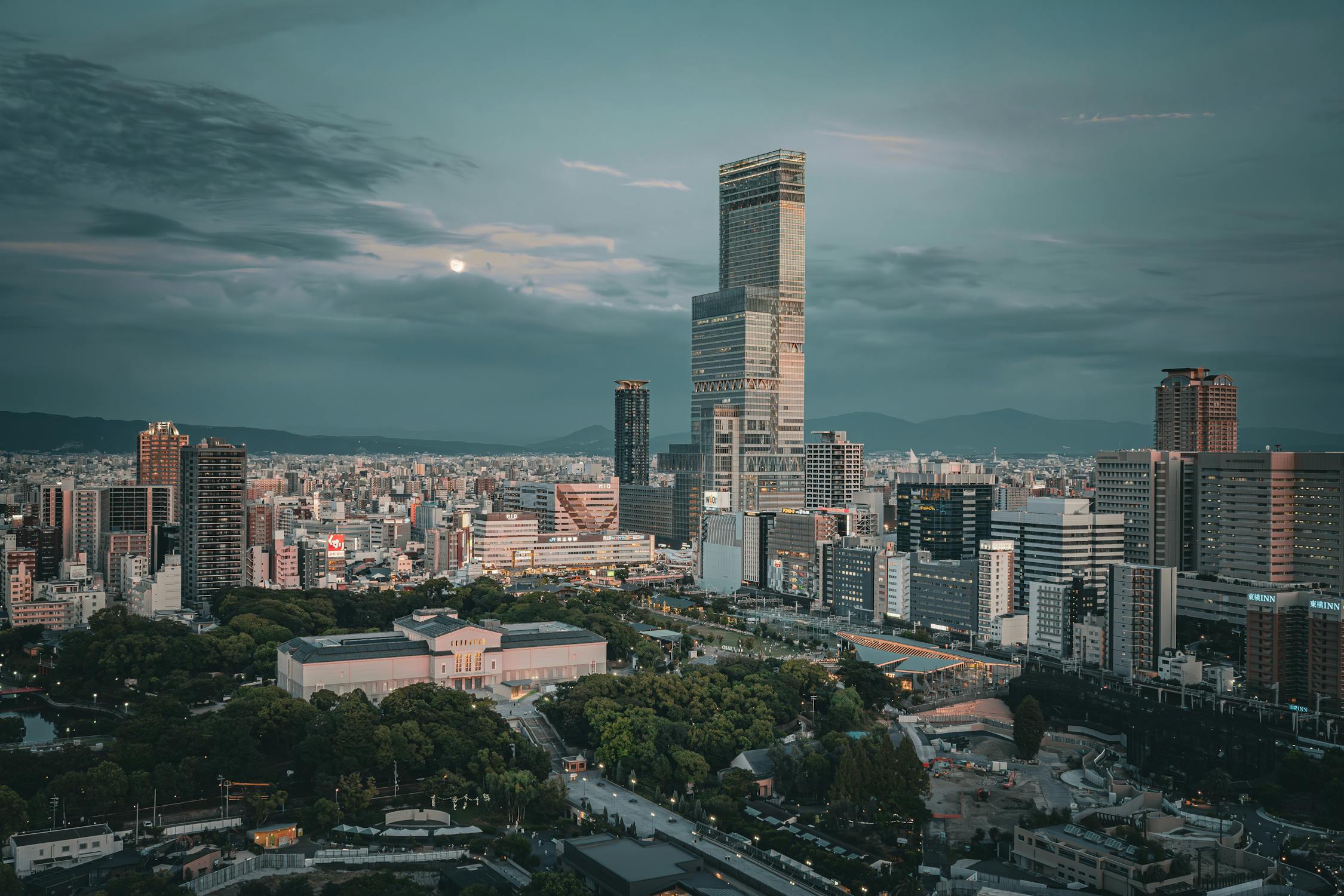
Tennoji, with its twin Abeno next door, is the part of Osaka where the city’s oldest and newest sit a five-minute walk apart. On one side, Abeno Harukas, the 300-metre glass tower that has been Japan’s tallest building since 2014. On the other, Shitennoji, a Buddhist temple founded in 593 AD, older than almost anything else standing in the country. Between them: a sprawling park with a zoo and a century-old stroll garden, a 24-hour bathhouse, and a quick walk west into the gloriously faded Showa-era streets of Shinsekai. Tennoji spent decades as a rough-edged transit hub. Over the last ten years or so it has quietly turned into one of the more rewarding half-days in the city.
This guide covers the lot: the Harukas 300 observatory and the free Sky Garden most people don’t know about, Shitennoji and its monthly flea market, Tennoji Park, the zoo and the Keitakuen Garden, Spa World for tired legs, and how to chain it all together with Shinsekai into a satisfying south-Osaka day that costs a fraction of what the headline attractions suggest.
The basics: where it is, how to reach it
Tennoji sits at the southern end of central Osaka, spanning the Tennoji and Abeno wards. It’s a serious transit knot, which is exactly why it’s easy to get to. Tennoji Station is served by JR, the Midosuji subway line and the Tanimachi line; Abenobashi Station (Kintetsu) sits right alongside, under Abeno Harukas itself. From Umeda it’s about 15 minutes straight down the Midosuji line; from Namba, roughly 8 minutes south on the same line. Coming in from Kansai Airport, the JR Haruka or a Kanku Rapid service gets you here in around 35 minutes, which makes Tennoji a smart first or last stop on an Osaka trip.
- Major stations: Tennoji (JR + Midosuji + Tanimachi), Abenobashi (Kintetsu, under Harukas), Tennojikoen-mae.
- Time to budget: 4 to 6 hours for the headline sights, a full day if you add Spa World and a museum.
- Walk to Shinsekai: about 10 minutes west.
- From the airport: roughly 35 minutes by JR, handy on arrival or departure day.
The geography is friendly. The big sights cluster within a compact triangle, Harukas at the station, Shitennoji about eight minutes northeast on foot, the park immediately west of the temple, and Shinsekai a short walk beyond that. You can see almost everything without touching a train once you’ve arrived.
Why Tennoji feels different now
It’s worth knowing what Tennoji used to be, because it explains why it still has more edge and character than the polished districts up north. For a long time this was a working-class transit corner with a reputation, the kind of area guidebooks told you to pass through rather than linger in. The southern stretch toward Shinsekai and the Nishinari district has historically been Osaka’s roughest patch.
Then Abeno Harukas opened in 2014, and the area’s whole centre of gravity shifted. The tower pulled in department stores, restaurants and crowds; the station precinct was redeveloped; the park got a facelift. What didn’t happen, mercifully, was a total scrub-down. Tennoji kept its grit and its cheap eats while gaining a genuine reason to visit, and the result is a district where you can ride to the top of the country’s tallest building and then walk ten minutes into a Showa-era kushikatsu alley that looks like 1965. That contrast is the appeal, and it’s why Tennoji feels distinct from the more uniform polish of Umeda or the tourist crush of Namba.
Abeno Harukas: the view, free and paid
The tower is the obvious starting point, and there’s a decision to make. The headline experience is Harukas 300, the observatory occupying the top three floors, 58, 59 and 60, with floor-to-ceiling glass on all four sides and a genuine 360-degree sweep across Osaka to the mountains and the bay. On a clear day it’s the best high view in the south of the city.
- Hours: 9:00 to 22:00.
- Price: around ¥1,500 adult, ¥1,200 student.
- Heliport tour: roughly ¥500 extra to step out onto the rooftop helipad.
- Also inside: a department store, restaurant floors, an art museum and a hotel, so the building is a destination in itself.
Here’s the part the brochures bury: the Sky Garden on the 16th floor is free, open-air, and still well above the surrounding rooftops. It’s nowhere near as high as the 300 deck and the panorama is partial rather than full, but if you’re on a budget or just want a quick look without paying, it’s a genuinely good substitute. My honest steer: on a clear day with time to spare, pay for the 300 deck, the height difference is dramatic. On a hazy day or a tight budget, the 16th-floor Sky Garden does the job for nothing. If you want to weigh it against the city’s other high points, our Osaka observation decks guide compares them all.
Shitennoji: 1,400 years of temple
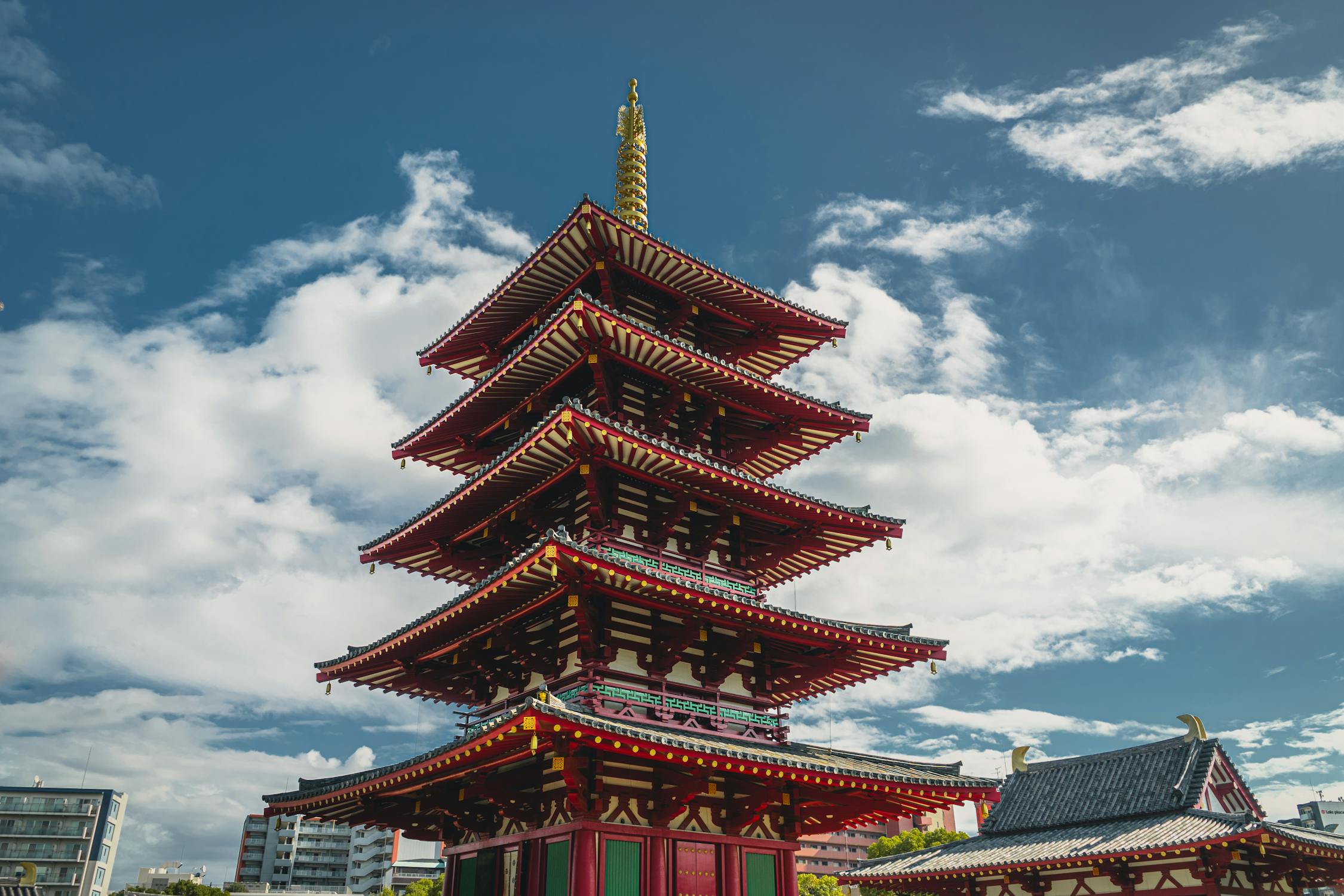
Eight minutes’ walk from the station, and a world away in time, is Shitennoji. Founded in 593 AD by Prince Shotoku, it’s one of Japan’s oldest officially administered Buddhist temples, predating Kyoto’s famous sites by a long stretch. The five-story pagoda is the photograph everyone takes, set in a classic symmetrical layout that’s been rebuilt faithfully over the centuries.
- Hours: 8:30 to 16:30.
- Price: the outer grounds are free; the inner pagoda area runs about ¥300, the treasure house around ¥500.
- The flea market: on the 21st of every month, hundreds of stalls of antiques, crafts, vintage kimono and street food fill the grounds. If your dates line up, plan around it.
- From Tennoji Station: about 8 minutes on foot.
Even if you skip the paid inner area, the free outer grounds are worth the walk, calm, spacious and a sharp tonal shift from the retail bustle around the station. If temple history is your thing, the dedicated Shitennoji Temple guide goes deep on the layout, the Prince Shotoku connection and the best times to visit.
Tennoji Park, the zoo and the old garden
West of the temple, the park is the green lung of south Osaka and a genuinely pleasant place to slow down, especially with kids. It splits into a free outer area and several paid attractions.
- Outer park: free. A broad lawn, the Chausuyama hill (a real battlefield site from Osaka’s siege history) and an open-air stage.
- Tennoji Zoo: about ¥500 adult. Japan’s third-oldest zoo, modest by modern standards but a hit with younger kids and a cheap couple of hours.
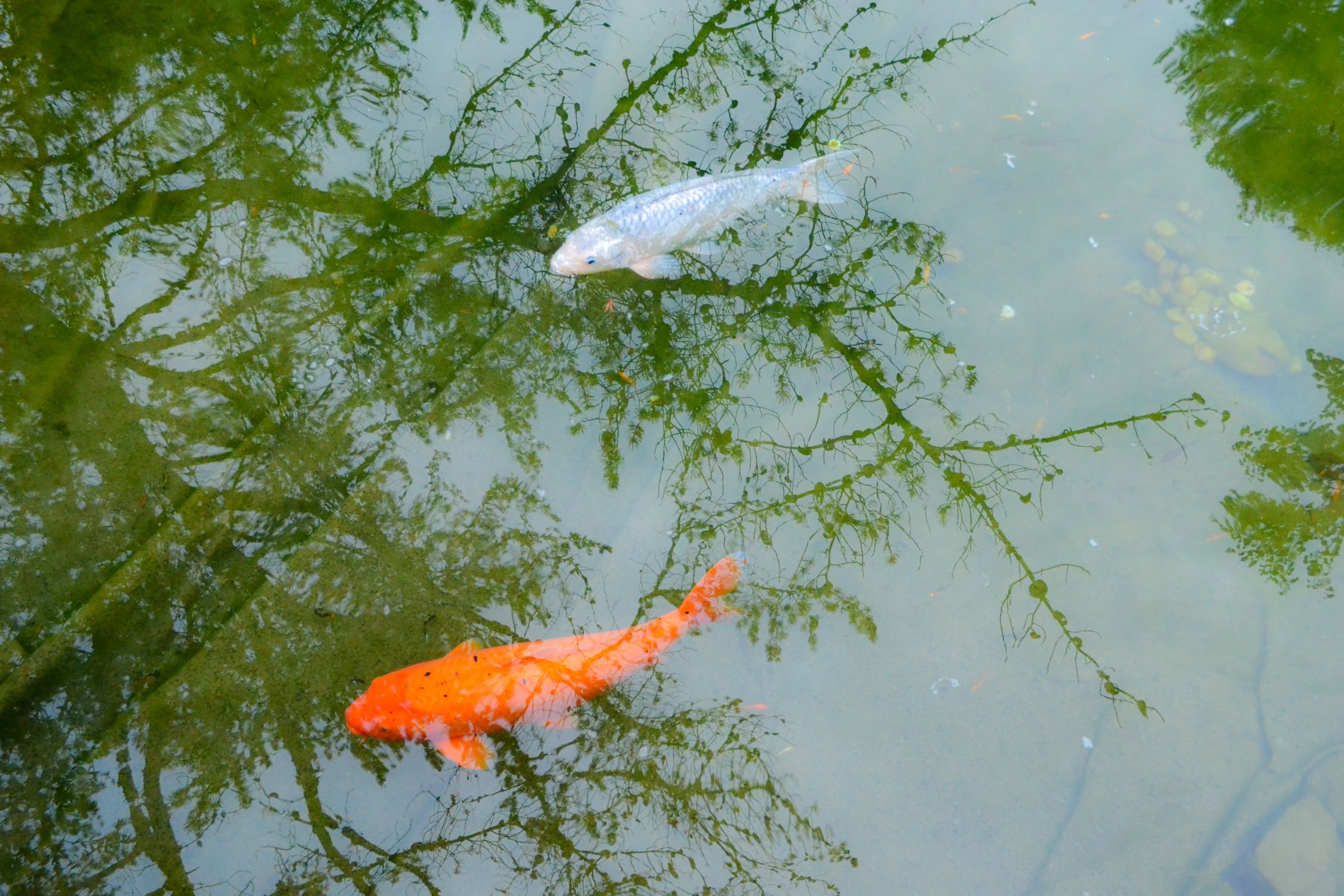
- Keitakuen Garden: around ¥150. A traditional stroll garden laid out in 1909 around a koi pond, a quiet, photogenic escape for the price of a vending-machine drink.
- Osaka City Museum of Fine Arts: from around ¥300 depending on the exhibition. The area’s main art museum.
If you only pick one paid spot in the park, make it Keitakuen, ¥150 for a century-old garden is one of the better small-money experiences in the city. The zoo is the call if you’ve got children in tow.
Spa World: where tired legs go
After a day on your feet, Spa World is the obvious payoff. It’s an eight-floor bathing complex with world-themed zones, Mediterranean, European, Asian, plus separate men’s and women’s areas that rotate by month, so the layout you get depends on when you turn up. Day passes run roughly ¥1,500 to ¥2,500, and it’s open 24 hours, which makes it equally good as an evening soak or a late-night warm-up before catching a cheap capsule nearby.
It’s more amusement-park-meets-onsen than serene mountain hot spring, and it draws families and groups rather than purists. But after walking Tennoji and Shinsekai all day, lowering yourself into a hot bath at 9pm is hard to argue with.
Tennoji with kids
This is one of the more family-friendly corners of central Osaka, and not by accident, the attractions stack up well for a day with children. The zoo is cheap and compact, the right size for small legs that tire fast. The park’s open lawns give kids room to run between the paid sights, free of charge. Abeno Harukas turns the lift ride itself into an event, and the view holds a child’s attention longer than you’d expect. And Spa World, with its themed pools and family areas, is an easy win to finish on.
Practical notes for parents: the station complexes and malls all have lifts and family facilities, so a stroller is manageable, though the temple grounds and park paths involve some walking. The Harukas depachika and the mall food courts cover fussy eaters without a fight. If you’re building a wider family itinerary, Tennoji pairs naturally with the green space and slower pace that younger kids need between the bigger-ticket Osaka attractions.
Shinsekai, ten minutes west
You can’t really do Tennoji without crossing into Shinsekai, the retro district just to the west, built around the Tsutenkaku tower and absolutely dense with kushikatsu (deep-fried skewers) joints. It’s all faded Showa-era signage, cheap eats and old-Osaka swagger, the perfect grubby counterpoint to Harukas’s glass-and-steel gleam. Kushikatsu Daruma is the famous name, and the rule is the same everywhere: no double-dipping the communal sauce. For the full rundown of the tower, the eateries and the atmosphere, see the dedicated Shinsekai guide.
Shopping around the station
Tennoji turned into a serious shopping hub during its renaissance, and most of it is clustered right at the station, easy to dip into between sights or kill time before a train.
- Q’s Mall: a large, modern shopping mall a short walk from the station, with a relaxed open-air feel.
- Abeno Harukas Department Store: floors of luxury and casual retail inside the tower itself, with a strong depachika food hall in the basement.
- Mio Plaza: connected directly to Tennoji Station, mid-range fashion and an easy rainy-day option.
- Tennoji underground arcade: blocks of sheltered underground shopping linking the station complexes.
Where to eat
- Kinguemon: the Tennoji ramen pick, a specialist in Takaida-style “Naniwa Black” ramen, dark, soy-heavy and properly local.
- Yamachan: a local-favourite takoyaki spot for a cheap, hot snack between sights.
- Abeno Harukas restaurant floors: the safe, all-weather option, dozens of choices at every price tier high above the street.
- Shinsekai kushikatsu: ten minutes’ walk west and the obvious dinner move.
- Spa World food court: for refuelling after a bath without getting dressed to go out.
Timing your visit
A few timing calls make the day run better. Shitennoji opens at 8:30 and is calmest first thing, so it’s the natural opener before the station crowds build. Save Abeno Harukas for when the light is good, late afternoon into early evening rewards you with the city lights coming on below, and clear winter days give the sharpest distance views out to the mountains. Spa World, open round the clock, slots in best as a late stop once your legs have had enough.
If you can, line your visit up with the 21st of the month for the Shitennoji flea market, it turns an already-good temple stop into a half-day in itself, with antiques, old kimono and street food across the grounds. Seasonally, spring brings cherry blossom to Tennoji Park and Chausuyama, and autumn colour to the garden, both worth factoring in if your dates are flexible. Avoid timing the Harukas deck for a grey, hazy day; the view is the whole point, and on a bad-weather afternoon the free Sky Garden makes more sense than the paid ticket.
What it costs
One of Tennoji’s quiet strengths is how little you have to spend to fill a day. Here’s the rough math on the headline sights.
- Shitennoji outer grounds: free. Inner pagoda area about ¥300.
- Sky Garden (Harukas 16F): free.
- Harukas 300 observatory: around ¥1,500.
- Keitakuen Garden: about ¥150.
- Tennoji Zoo: about ¥500.
- Spa World day pass: roughly ¥1,500 to ¥2,500.
Go frugal, free temple grounds, free Sky Garden, the ¥150 garden, a bowl of ramen, kushikatsu in Shinsekai, and you’ll have a full, rewarding day for well under ¥3,000 plus food. Splurge on the paid observatory and an evening at Spa World and you’re still nowhere near what a comparable day costs in many cities. It’s one of the better value districts in Osaka for travellers watching the budget.
A south-Osaka day, in order
- 9:00 – In at Tennoji. Walk to Shitennoji (8 min) before the crowds.
- 9:30 – Shitennoji grounds and pagoda, about an hour.
- 10:30 – Into Tennoji Park.
- 11:00 – Zoo with kids, or the Keitakuen Garden for quiet, roughly 90 minutes.
- 12:30 – Lunch. Kinguemon ramen, or graze the Harukas depachika.
- 14:00 – Abeno Harukas observatory while the light’s good.
- 15:30 – Walk west to Shinsekai (10 min).
- 16:30 – Tsutenkaku and an early kushikatsu dinner.
- 19:00 – Spa World for an evening soak.
How Tennoji fits your trip
Tennoji rewards travellers who want range in a single area, ancient temple, modern tower, green space and retro grit, all on foot and most of it cheap. It pairs naturally with Shinsekai for a full day, and because it’s only about 35 minutes from Kansai Airport, it’s an efficient first or last stop. For how it sits relative to the rest of the city, the Osaka neighborhoods overview maps the districts and which to combine.
Tennoji Osaka FAQ
What is Tennoji known for?
The mix. Abeno Harukas (Japan’s tallest building), the ancient Shitennoji Temple, Tennoji Park and Zoo, the Keitakuen Garden, Spa World, and easy access to retro Shinsekai next door. It’s where old and new Osaka sit side by side.
How tall is Abeno Harukas?
300 metres, which has made it Japan’s tallest building since 2014. The Harukas 300 observation deck spans floors 58 to 60, with a free open-air alternative on the 16th-floor Sky Garden.
How long do I need in Tennoji?
Four to six hours covers the headliners, Harukas, Shitennoji, the park and a hop into Shinsekai. Make it a full day if you want to add Spa World in the evening and the fine-arts museum.
How do I get to Tennoji?
From Umeda it’s about 15 minutes direct on the Midosuji line; from Namba, roughly 8 minutes south. From Kansai Airport, the JR Haruka or a Kanku Rapid service runs about 35 minutes. Tennoji Station and Abenobashi sit right next to each other.
Should I pay for Harukas 300 or use the free Sky Garden?
On a clear day with time to spare, the ¥1,500 Harukas 300 deck on floors 58 to 60 is worth it for the full 360-degree height. On a hazy day or a tight budget, the free 16th-floor Sky Garden gives a decent, open-air view for nothing.
Is Shitennoji Temple worth visiting?
Yes, especially if you care about Buddhist architecture or Japanese history, it dates to 593 AD. The outer grounds are free, the inner pagoda area is a small fee, and the monthly flea market on the 21st is a great reason to time your visit.