Dotonbori is loud, neon-soaked, and packed shoulder to shoulder after 7pm. Yes, it’s touristy. Go anyway. This 600-metre strip along the Dotonbori Canal in southern Osaka is where takoyaki, okonomiyaki, and kushikatsu were turned into an art form, and where the Glico runner has been advertising chocolate-coated biscuits since 1935. Come hungry, come a little early, and you’ll see why locals still bother showing up too.
This guide gets you through it without the rookie mistakes: where the food is actually good versus where you’re paying for the sign out front, where to stand for the Glico photo, the quieter lantern alley two blocks south, and how to keep your group together when the bridge turns into a wall of phones. It’s written for 2026 and kept current.
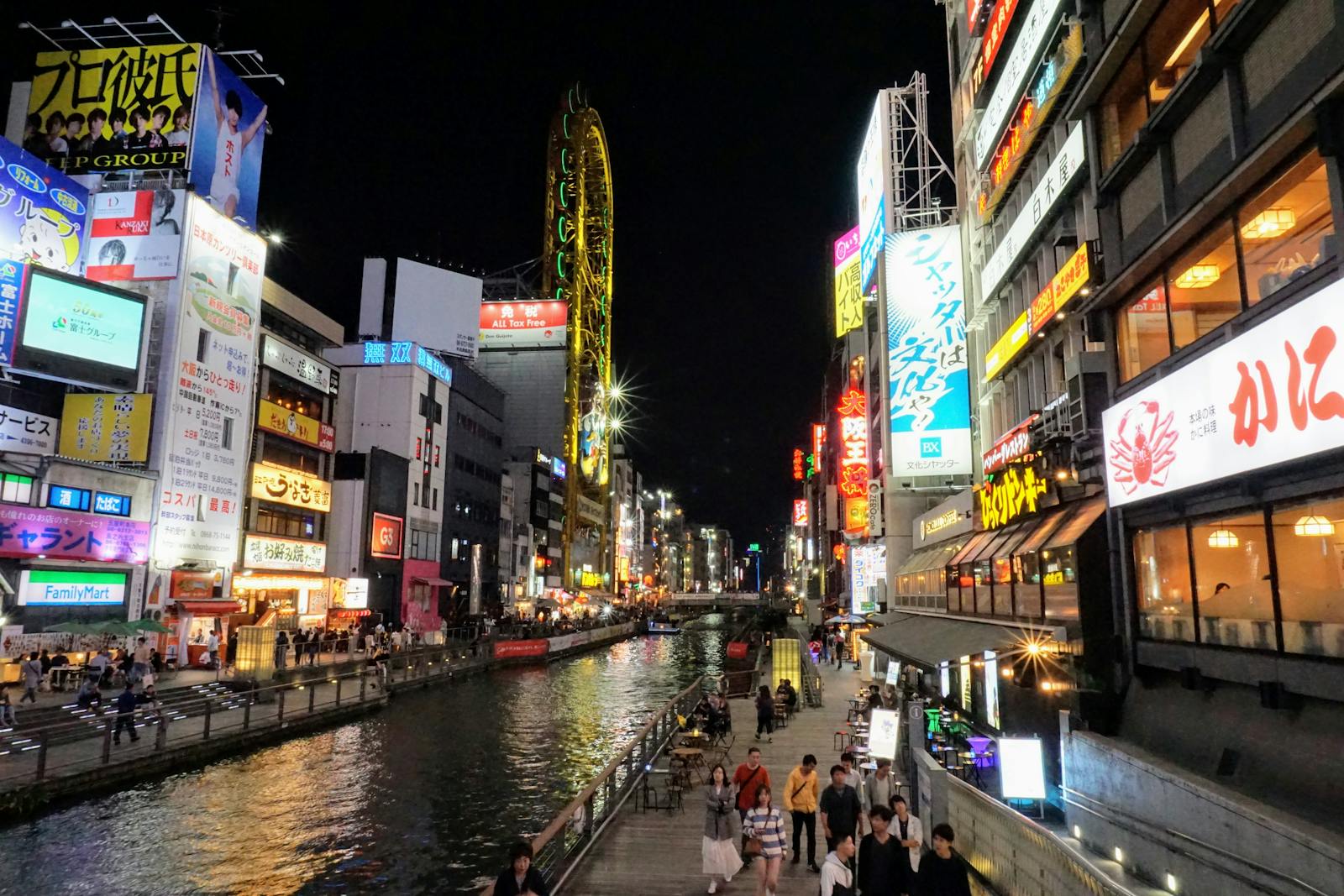
Dotonbori at a glance
- Where: Chuo-ku, southern Osaka, running east to west along the Dotonbori Canal.
- How long it is: About 600 metres of canal-side strip.
- When to go: 6pm to 10pm for full neon. The signs only earn their reputation after dark.
- Cost to walk it: Nothing. You pay for what you eat.
- Time to set aside: Two to four hours, eating included.
- Closest stations: Namba (Midosuji, Yotsubashi, Sennichimae lines) and Nipponbashi. Both put you a five-minute walk out.
- Worst crowds: Friday and Saturday nights, plus any festival. Tuesday through Thursday are noticeably calmer.
Why Dotonbori looks the way it does
A bit of background pays off here, because it explains the food and the chaos. The canal was dug in the early 1600s by a merchant named Doton, who didn’t live to see it finished, the city named the waterway after him. For three centuries the south bank was Osaka’s theatre district: kabuki houses, puppet theatres, and the teahouses and restaurants that fed the crowds before and after the shows.
The theatres mostly went, but the appetite stayed. That’s why the strip is wall-to-wall food rather than nightclubs, and why the signage runs to giant crabs, dragons, and pufferfish instead of subtle branding. Osaka has a word for the local attitude to eating, kuidaore, roughly “ruin yourself through food.” Dotonbori is that idea turned into a street. Once you read it as a 400-year-old dining quarter rather than a neon novelty, the over-the-top signs make a lot more sense.
The Glico runner, and where to actually stand
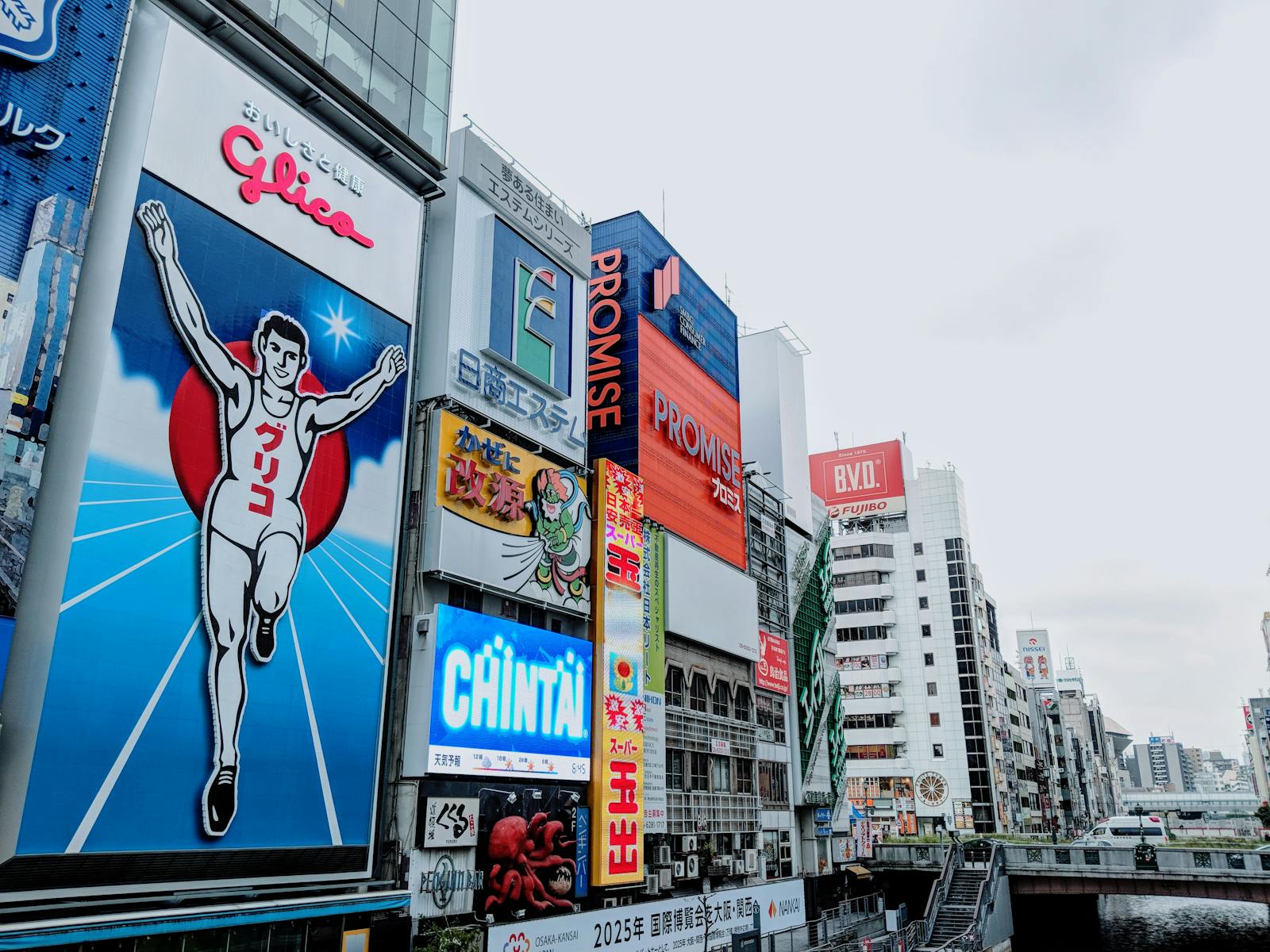
The Glico Running Man is the photo every visitor takes, and the reason Ebisubashi Bridge is rarely empty. The first version went up in 1935 for Glico, the company behind Pocky and Pretz. What you see now is a high-resolution LED panel unveiled in 2014, so the runner’s backdrop shifts with the seasons and the odd event. It’s the closest thing Osaka has to a civic logo.
The default move is to stand mid-bridge with the sign behind you and your arms up like the runner. Fine, but you’ll be jostling for it. A few alternatives, ranked by how much hassle they save you:
- Ebisubashi Bridge: The classic frame, the worst crowds. Go just after sunset before it fills, or accept you’re queuing for a spot.
- The riverside balcony across the canal: Walk the path on the opposite bank, find the Nanohana cosmetics shop, and head up the stairs marked with yellow tape. The balcony on the right gives you the full running-track angle and a fraction of the people.
- From the water: The Tombori River Cruise passes the sign head-on. A different photo entirely, and you’re sitting down.
- Don Quijote Ebisu Tower: Head up the building for a high-angle view over the whole strip.
A small etiquette note that saves friction: the bridge is a working thoroughfare, not just a photo stage. Take your shot, then step to the railing to review it rather than standing dead-centre scrolling while a hundred people wait. Everyone’s after the same frame, and the crowd moves better when nobody camps the middle.
What to eat, and what to skip
This is the densest stretch of street food in Japan, which is a blessing and a trap. Some stalls coast on the location. Here’s where the food holds up, with the prices the original guide recorded, treat them as a guide rather than gospel since menus move:
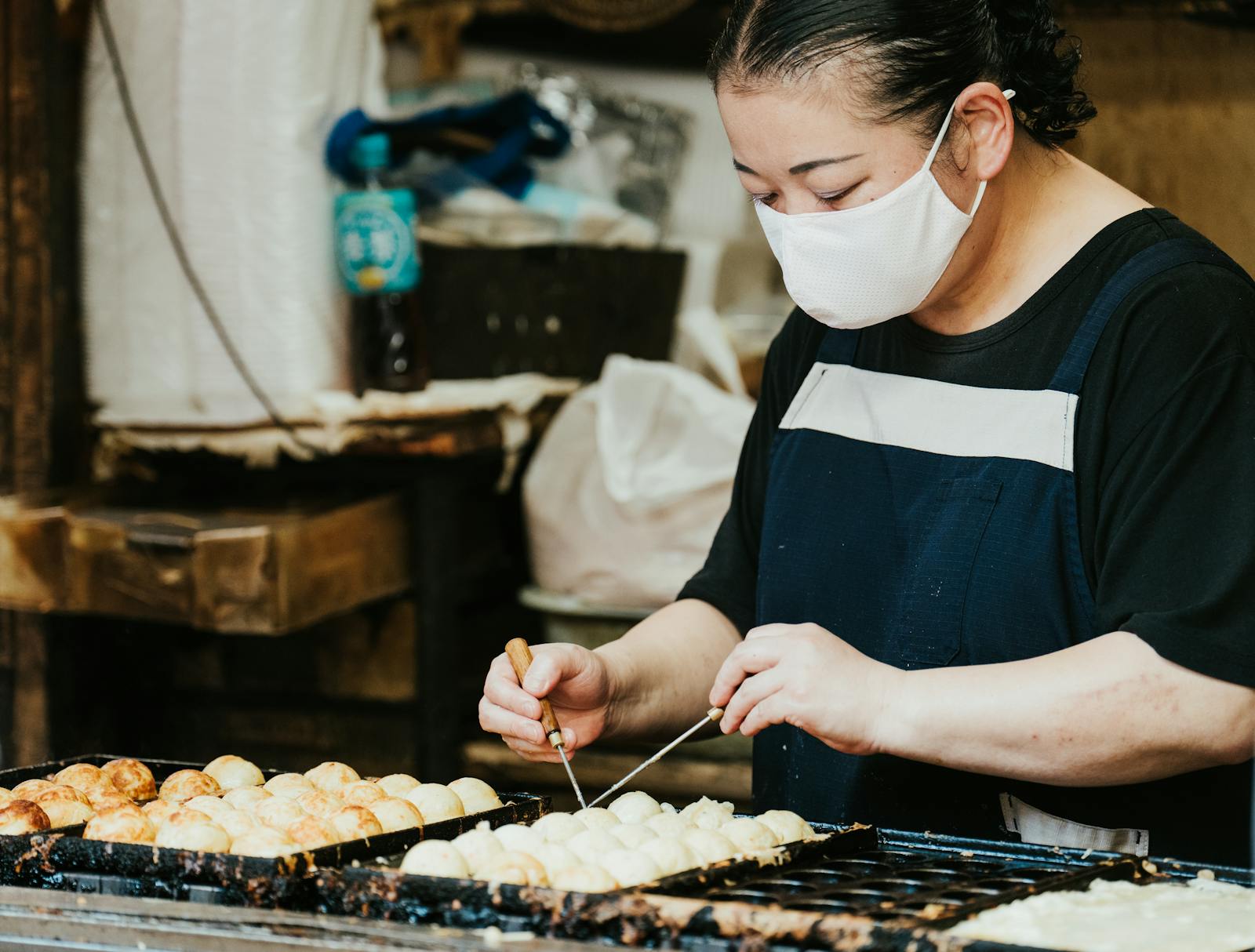
- Takoyaki at Wanaka (Sennichimae): Around ¥600 for eight. Crisp outside, molten inside. The Sennichimae branch is a short walk off the main drag and the queue moves.
- Takoyaki at Juhachiban: The interesting one, sakura shrimp, ginger, and tempura bits worked into the batter. Order this if you’ve already had the standard version elsewhere.
- Okonomiyaki at Mizuno or Chibo: Roughly ¥1,400 to ¥2,800 a head. Mizuno carries a Michelin Bib Gourmand and the queue to match. Chibo is the safe, reliable sit-down option with canal views.
- Kushikatsu at Daruma: Skewers run about ¥110 to ¥300 each. One sauce pot per table, and the rule is sacred, no double-dipping.
- Crab at Kani Doraku: The restaurant under the giant moving crab. Sets land between roughly ¥3,500 and ¥10,000. You’re paying partly for the landmark, but the crab is genuinely good.
- 551 Horai pork buns: Around ¥190 each, steaming, and a perfect walk-between-stalls snack. Lines form and clear fast.
- Rikuro Ojisan cheesecake: About ¥865 for a whole jiggly cake straight from the oven. The wobble is the point.
And what to skip. The fruit-on-a-stick stands selling candied strawberries and whole pineapples are photogenic and overpriced, fine for a photo, forgettable to eat. Be wary of any takoyaki stall with no queue at peak time and a tout out front; the good ones don’t need to chase you. The same goes for the all-you-can-eat crab and sushi places papering the side streets with picture menus, you’re paying tourist rates for ordinary food.
One thing the photos won’t tell you: don’t walk and eat. Stand at the stall, finish there, and drop your rubbish in the vendor’s bin. It reads as rude otherwise, and you’ll be the only person trailing a takoyaki tray through the crowd. For the deeper cuts on each dish, our best takoyaki in Osaka roundup and the Osaka kushikatsu guide name the shops worth the detour.
The landmarks worth slowing down for
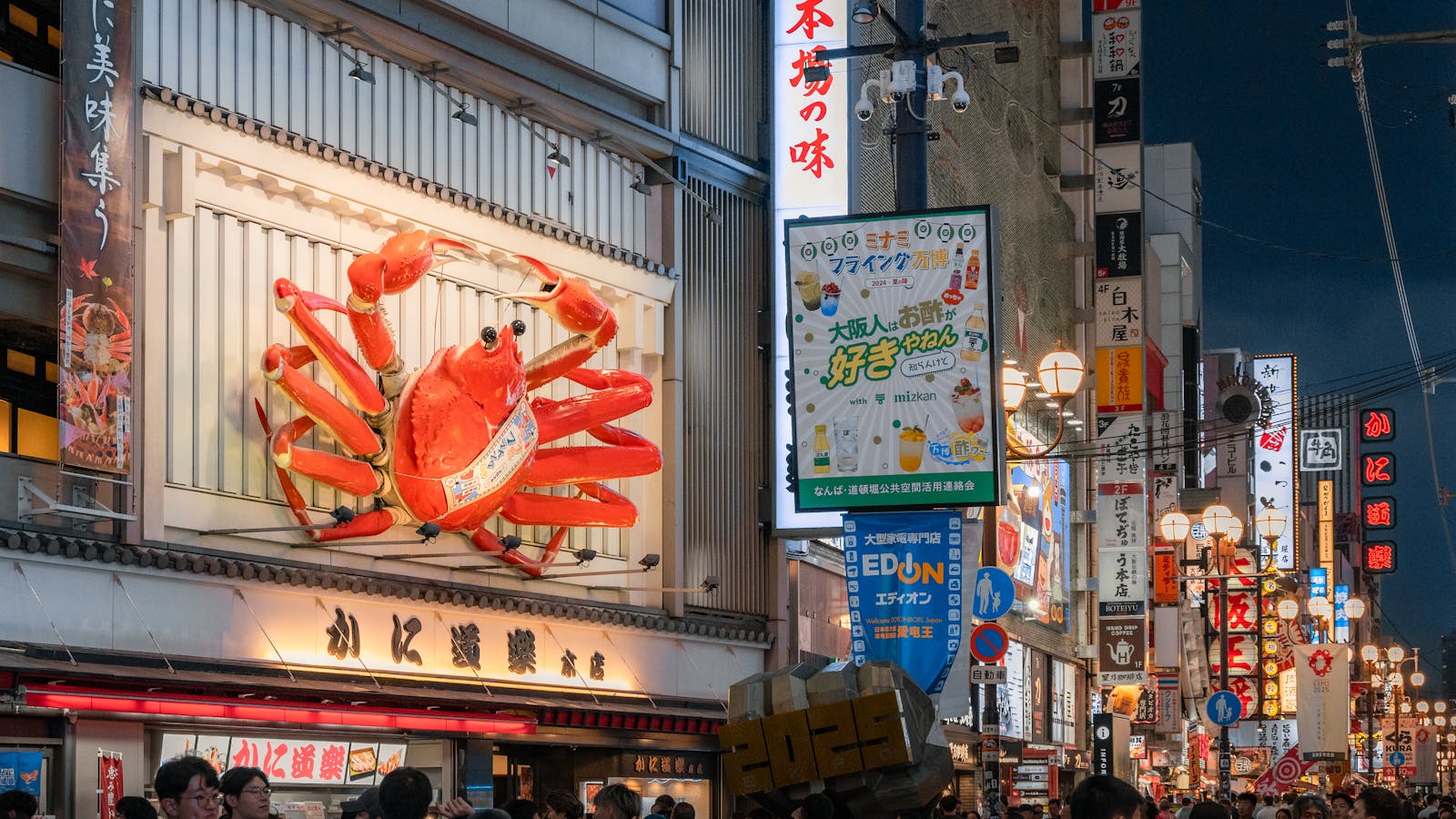
- Kani Doraku’s moving crab: A 6.5-metre animatronic crab that flexes its legs and claws on a loop. Catch it mid-move and it’s genuinely funny.
- Kuidaore Taro: The drumming mechanical clown, mascot of kuidaore, the Osaka habit of eating yourself into ruin. A small, beloved photo stop.
- Don Quijote Ebisu Tower: Eight floors of cosmetics, snacks, gadgets, gag gifts, and souvenirs, open 24 hours. There’s also a Ferris wheel built into the building, the first of its kind, for about ¥600.
- Ebisubashi Bridge: The central crossing and the Glico photo platform. The beating heart of the whole strip.
- Shochiku-za: The historic kabuki and traditional theatre venue, a reminder this district was entertainment long before it was Instagram.
Things to do beyond eating
Walk the canal promenade
The south-side path runs from Ebisubashi Bridge to Tazaemonbashi Bridge. Ten to fifteen minutes if you power through, an hour-plus if you do it properly, stopping for stalls and photos. The reflections off the water are the whole reason to come after dark. The promenade was rebuilt and opened up to pedestrians a couple of decades back, before that the canal was something you crossed, not strolled along.
Take the Tombori River Cruise
A 20-minute loop on the canal, around ¥1,500 for adults, departing roughly every half hour from late morning until about 9pm. It’s touristy and short, but on a first visit the angle on the signs from water level justifies it. The guides keep up a running patter in Japanese with some English, and they’re genuinely funny even if you catch only half of it. If you want more of the city by boat, our Osaka river cruises guide lays out the alternatives.
Slip into Hozenji Yokocho
Two blocks south of the neon sits an 80-metre cobblestone alley strung with paper lanterns and lined with tiny izakayas. At its centre is the moss-covered Mizukake Fudo statue, which visitors splash with water while making a wish, hence the thick green coat. It’s quieter, older, and a far better warm-up than diving straight into the crowds. Do this first.
Ride the Don Quijote Ferris wheel
Yes, there’s a Ferris wheel inside a shop. About ¥600, best at night for the view down the strip. Gimmicky, brief, and exactly the kind of thing Dotonbori does without irony.
Dotonbori, Namba, Shinsaibashi: sorting out the names
First-timers tie themselves in knots over these three, and the maps don’t help. Here’s the short version. Dotonbori is the canal strip you’ve been reading about. Walk north from Ebisubashi and you’re on Shinsaibashi-suji, a long covered shopping arcade that’s all retail, no canal. The whole southern entertainment zone, Dotonbori and Shinsaibashi included, sits under the umbrella name Namba, which is also what the station is called.
In practice you’ll walk between all three without noticing the boundaries. Dotonbori for the food and the neon, Shinsaibashi for shopping, Namba for the stations and the wider sprawl south. Top to bottom is a 20-minute stroll, so don’t overthink which one your hotel claims to be in.
An evening that actually works
You don’t need to ration the evening to the minute, but this order keeps you ahead of the worst crowds and ends you back at a station before the trains stop:
- 5:30pm: Arrive at Namba, walk to Hozenji Yokocho while it’s still soft daylight.
- 5:45pm: Splash the Mizukake Fudo, wander the lantern alley.
- 6:30pm: Cross to Dotonbori for Wanaka takoyaki near Sennichimae.
- 7pm: Glico photo at Ebisubashi before the bridge clogs.
- 7:30pm: A 551 Horai pork bun on the move.
- 7:45pm: Tombori River Cruise.
- 8:30pm: Sit-down dinner, Mizuno or Chibo for okonomiyaki.
- 10pm: Don Quijote for souvenirs, then back to Namba.
Getting there, and getting out
Namba is the anchor, and it’s one of the best-connected points in the city. From Umeda in the north, the Midosuji subway drops you at Namba in about eight minutes for roughly ¥240. Coming straight from Kansai Airport, the Nankai line runs to Nankai Namba, the limited-express Rapi:t does it in about 38 minutes. From the eastern districts, Nipponbashi station leaves you at the quieter end of the strip and is often the smarter exit.
Two practical notes. First, Namba station is enormous and shared across several operators, follow signs for the Midosuji line and the Dotonbori or Ebisubashi exits, not just “Namba,” or you’ll surface a long underground walk from where you wanted to be. Second, mind the last train. The subway runs until around midnight, but the private railways out to the suburbs stop earlier, so check your specific line before the cruise rather than after. If you’re still deciding where to lay your head, the area sits a short hop from the pick of the city’s stays, our best Namba hotels guide covers the ground from capsule to W Osaka.
Dotonbori by season
The strip is an all-year affair, but the experience shifts. Summer evenings are sticky and heaving, the canal-side breeze helps a little and the river cruise is a genuine relief from the heat. Autumn and spring are the sweet spot: mild enough to wander for hours, and the early sunset means the neon kicks in by half five. Winter trades crowds for cold, you’ll have an easier time at the bridge, and a steaming 551 Horai bun makes a lot more sense in January. Whatever the season, the photos are best in the half hour after the sky goes fully dark, when the signs read hardest against the night.
Practical tips from people who’ve done it twice
- Pick your night. Tuesday or Wednesday for atmosphere without the crush. Saturday for full chaotic energy if that’s what you came for.
- Carry cash. Plenty of the small stalls don’t take cards.
- The crush peaks 7pm to 9pm on weekends. Eat early, photograph early.
- Last trains run around midnight. Check your line, the private railways stop earlier than you’d think.
- Drinks are cheap with food. Beer runs roughly ¥350 to ¥600, highballs from about ¥250.
- Agree a meeting point before you arrive. Phone signal on the bridge at peak is unreliable and groups split fast.
- Share plates, pace yourself. The whole point is grazing across stalls, eight takoyaki to yourself and you’ve no room for the okonomiyaki you came for.
Dotonbori FAQ
What is Dotonbori known for?
Neon signs, above all the Glico runner, the densest street-food strip in Japan, the canal cruise, and Osaka’s most photographed night scene. Takoyaki, okonomiyaki, and kushikatsu all trace their popularity to this part of the city.
How much time do I need?
Two to four hours covers it, walking the strip, eating at a few stalls, getting your photos, and fitting in a river cruise. Add Hozenji Yokocho and you’re at the upper end.
When should I go?
After dark, 6pm to 10pm, when the signs are at full brightness. Saturday is busiest by a wide margin; midweek evenings are calmer and the photos are easier.
Is it safe at night?
Very. Heavy foot traffic, bright lights, regular police presence. The usual big-city caution around dense crowds and your bag is all that’s needed.
How do I get there?
Any subway to Namba (Midosuji, Yotsubashi, or Sennichimae), then five minutes north on foot. From Umeda it’s about eight minutes south on the Midosuji line. Nipponbashi station works for the eastern end.
What will it cost?
Walking is free. The food is the variable, budget roughly ¥2,000 to ¥4,000 a person for a proper crawl across several stalls.
Where Dotonbori sits in the bigger picture
Dotonbori is the brightest piece of the larger southern district, so it pairs naturally with what’s around it. The youth-fashion quarter of Amerikamura is a short walk west, and the retro kushikatsu streets of Shinsekai make a gritty counterpoint a few subway stops south. For the full map of where to base yourself and what each pocket of the city is good for, start with our Osaka neighborhoods guide. Then come back, skip dinner beforehand, and let the strip feed you.