This article contains advertising. Our booking links are routed through a partner that adds commission tracking automatically, so if you book through one we earn a commission from the provider, at no extra cost to you. It never affects what we recommend. Affiliate disclosure
Most big cities punish the one-day visitor. You spend half the day on trains between the sights and the other half in queues. Osaka is the exception, and the reason is almost boringly practical: nearly everything a first-timer wants to see sits close to one north–south subway line, the Midosuji, with the castle a short hop to the east. Get the order right and you can see the castle, eat your way through a market, stand under Tsutenkaku, watch the city light up from a rooftop and still be on the Dotonbori bridges when the neon is at its loudest.
Get the order wrong and you’ll do the castle at noon in a crowd, reach Dotonbori in daylight when it looks like any shopping street, and spend the evening on the subway. This guide is about the order. It’s a clock-shaped plan for one day in Osaka, with times, the transfers between stops, what each stop costs in 2026 and the places worth skipping when time is short. For a longer list of ideas without a timetable attached, our things to do in Osaka guide is the place to browse.
The shape of the day
The plan runs roughly east to south to north and back south again. That looks inefficient on a map, but it follows the light. The castle is best in the morning before the coach groups arrive. Kuromon Market is busiest and best stocked from late morning. Shinsekai suits the afternoon. Umeda’s rooftop is the place to be at sunset, and Dotonbori belongs to the night. Every leg is a short subway ride or a walk, and the longest single ride is the run up the Midosuji line from Shinsekai to Umeda.
| Time | Stop | Area | Getting there |
|---|---|---|---|
| 08:30–11:00 | Osaka Castle and park | East-central | Subway to Tanimachi 4-chome or Morinomiya |
| 11:15–12:45 | Kuromon Market (early lunch) | Nipponbashi | Chuo line, then Sakaisuji line to Nipponbashi |
| 13:00–15:00 | Den Den Town walk, Shinsekai, Tsutenkaku | South | On foot, or one stop to Ebisucho |
| 15:00–16:00 | Break: hotel, coffee or Shinsaibashi | Central | Midosuji line |
| Around sunset | Umeda Sky Building | North (Umeda) | Midosuji line to Umeda, then walk |
| Evening to late | Dotonbori, Hozenji Yokocho, river cruise | Namba | Midosuji line, four stops south to Namba |
The sunset slot is the one that moves. In mid-November the sun goes down a little before 17:00, so the afternoon break shrinks and you head north earlier. In June and July it sets after 19:00, which gives you a long, slow afternoon and means you may prefer to do Dotonbori first and the rooftop last. Check the sunset time for your date on the National Astronomical Observatory of Japan’s tables before you fix the plan.
Which ticket to buy
There are two sensible choices, and the right one depends on how many paid sights you’ll actually go into.
- Enjoy Eco Card: unlimited Osaka Metro and city bus rides for a day, ¥820 on weekdays and ¥620 on Saturdays, Sundays and holidays (child ¥310). Single Metro fares for the hops in this plan are a couple of hundred yen each, so the card pays for itself at around four rides on a weekday and three at weekends. Our Osaka day pass guide compares it with the alternatives.
- Osaka Amazing Pass: ¥3,500 for one day, digital, covering Osaka Metro, city buses and the private railways within the city, plus free entry to around 40 attractions. The ones on this route are the Osaka Castle main tower, the Tsutenkaku observation deck, the Tombori River Cruise and the Umeda Sky Building, with one big catch: Umeda Sky is free only until 15:00, and you get just 10% off after that. Our Amazing Pass guide has the full list.
The honest verdict: if you’ll go into the castle, up Tsutenkaku and on the river cruise, the Amazing Pass beats paying at the door even before you count the subway. If you only want the castle grounds, the market and the streets, buy the Eco Card and keep the difference for dinner. Neither pass covers the Kaiyukan aquarium or Universal Studios Japan.
08:30 Osaka Castle, before the crowds
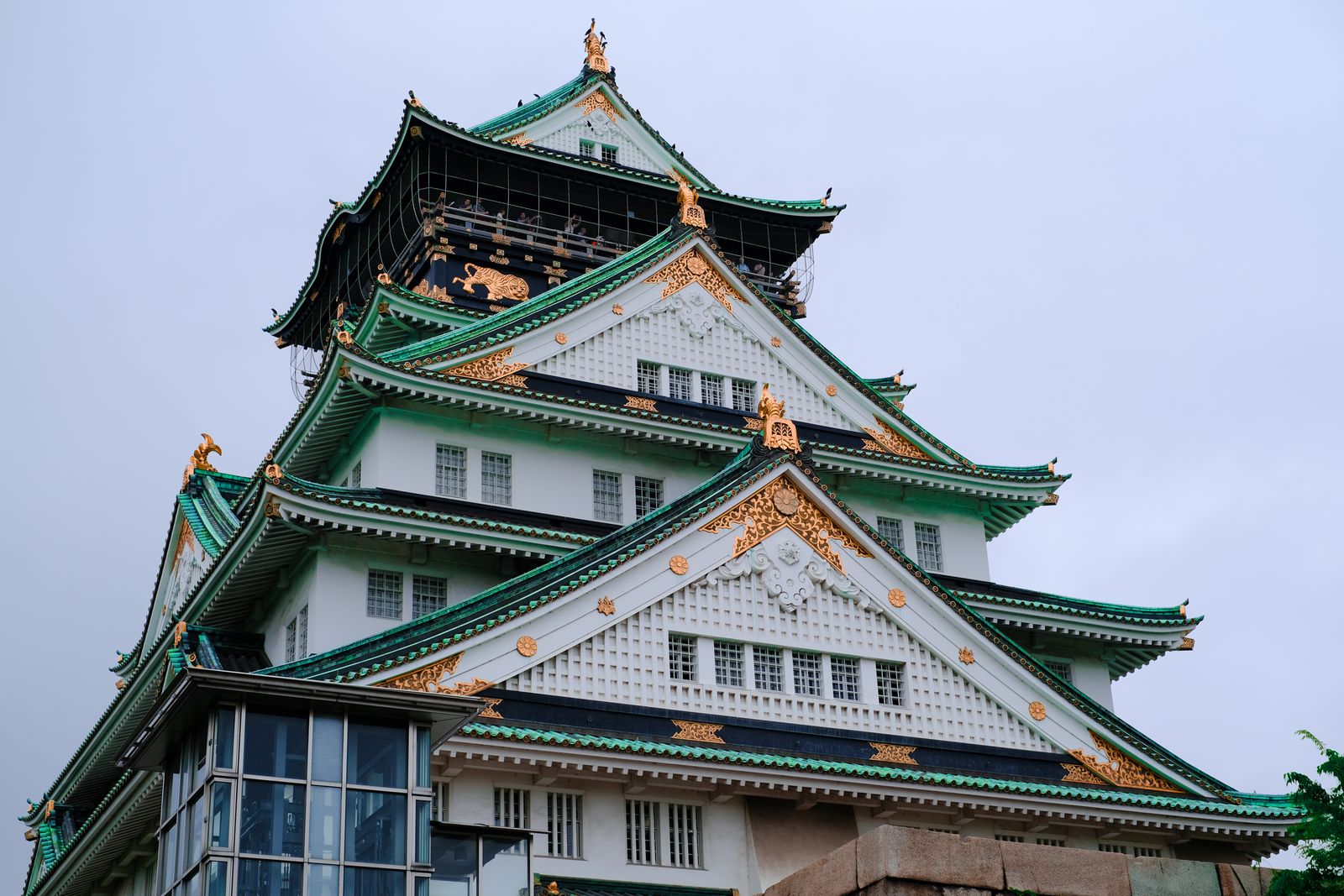
Start at the castle because everyone else starts at the castle a couple of hours later. The main tower opens at 09:00, and the park around it is open long before that. Ride the subway to Tanimachi 4-chome (Tanimachi and Chuo lines) or Morinomiya (Chuo and Nagahori Tsurumi-ryokuchi lines), then walk in. Allow a good 15 to 20 minutes on foot from the surrounding stations to the main tower, through the outer moats and stone gateways. That walk is half the point. The scale of the walls, built from blocks so big it’s hard to believe they were moved by hand, makes more of an impression than anything inside.
About the inside, a word of honesty. The main tower is a 1931 reconstruction in reinforced concrete, with a lift and a museum spread over its floors and an observation level near the top. But if you’re expecting the creaking wooden interior of Himeji, this isn’t it. Entry is ¥1,200 for adults (included in the Amazing Pass), open 09:00 to 18:00 with last entry at 17:30, closed 28 December to 1 January. Check the castle’s own site for any change before you go.
- Go in if you like history museums, you have the Amazing Pass, or the weather is bad.
- Skip the interior if you’re short of time. Walk the grounds, circle the keep, take the classic photograph across the moat, and move on.
- Nishinomaru Garden, on the west side, is a paid lawn and garden (¥300 for adults since April 2026) with one of the best ground-level views of the tower. It’s worth it in cherry blossom season and optional the rest of the year.
If you have an Amazing Pass and some patience, the Gozabune (a gilded tour boat) circles the inner moat. It runs 10:00 to 16:30, lists at ¥1,800 and can be suspended in bad weather. It’s pleasant rather than essential. For the full story of the place, Hideyoshi, the sieges and the rebuilds, read our Osaka Castle guide and Osaka Castle history before you go. If the weather turns, the Osaka Museum of History sits right by Tanimachi 4-chome. It costs ¥600, opens 09:30 to 17:00 and closes on Tuesdays, and its upper floors look straight down on the castle park.
Leave by about 11:00. It’s tempting to linger, but the market waits for no one: by mid-afternoon some stalls are already packing up.
11:15 Kuromon Market for an early lunch
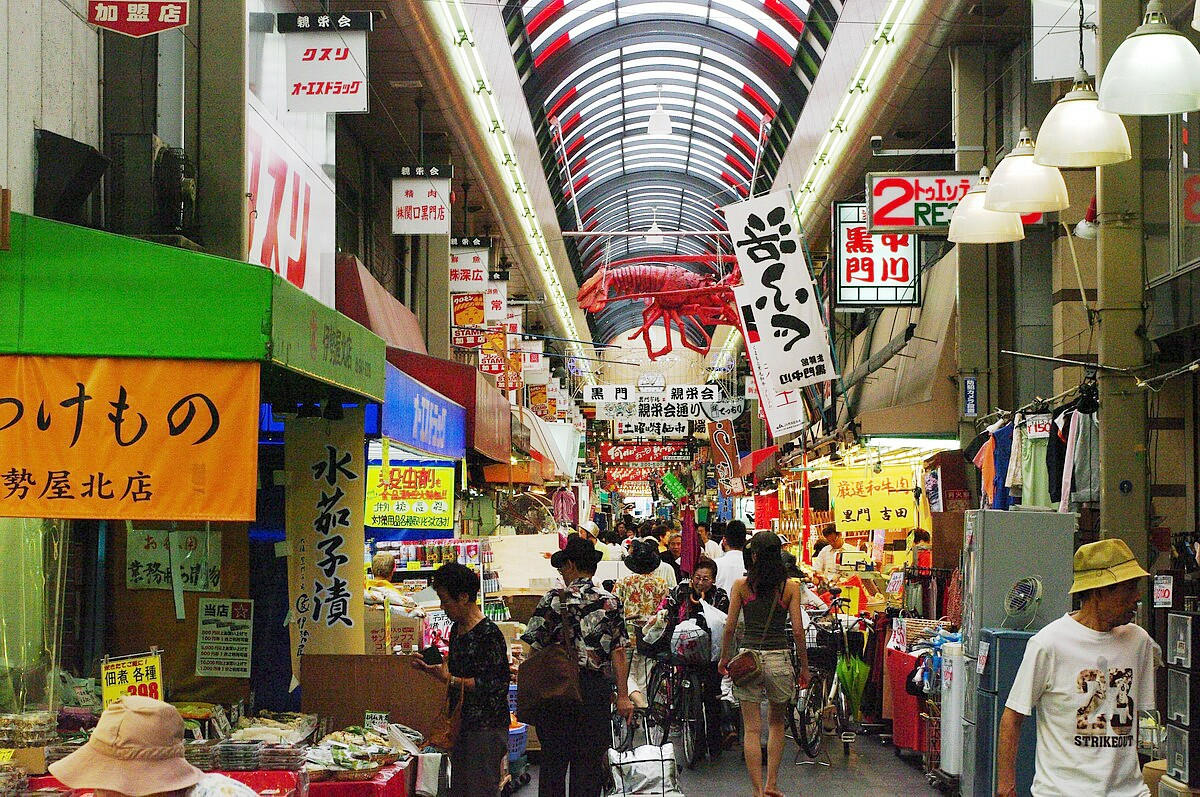
From Tanimachi 4-chome, ride the Chuo line one stop west to Sakaisuji-Hommachi, change to the Sakaisuji line and ride two stops south to Nipponbashi. Kuromon Market starts beside the station. It’s a covered arcade of around 150 shops over roughly 580 metres, and its roots go back to the early 1820s. Locals still call it Osaka’s kitchen, and in the morning it’s mostly buyers. The tourist crowd builds from midday, which is why an early lunch here beats a late one.
What Kuromon does well is small plates eaten standing up: grilled scallops, sea urchin, skewers of beef, fresh fruit, a cup of something hot. What it does less well is value. Prices are pitched at visitors, and a full meal grazed stall by stall can cost more than a sit-down lunch elsewhere in Namba. The way to do it is to walk the whole arcade once before you buy anything, choose two or three things you really want, and stop. Hours and closing days vary from shop to shop, so a Sunday or a public holiday can be patchy. The official site at kuromon.com has the current store map.
Our Kuromon Market guide goes stall by stall. If market food appeals more than the castle does, our Osaka street food guide and the wider Osaka food guide will show you how to eat across the whole day instead of in one sitting.
13:00 Den Den Town, Shinsekai and Tsutenkaku
From Kuromon, the afternoon heads south. If your legs are fresh, walk it: Sakaisuji runs straight down through Den Den Town, Osaka’s electronics and anime district, and the side streets are full of retro game shops, figure stores and maid-café touts. Twenty minutes of wandering here is enough for most people. Fans of games and anime could lose the afternoon. If you’d rather save your feet, ride the Sakaisuji line one stop from Nipponbashi to Ebisucho, which leaves you at the edge of Shinsekai.
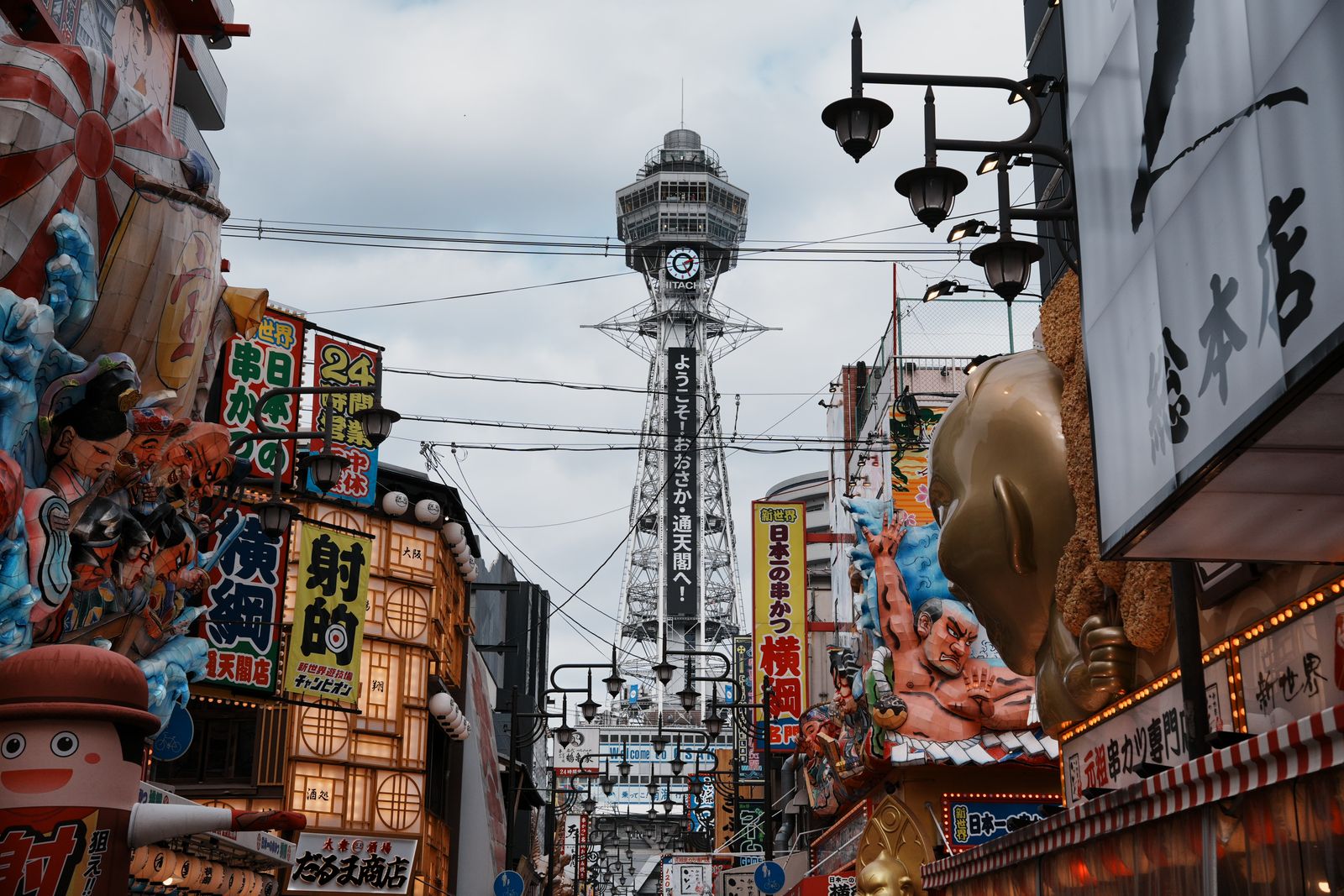
Shinsekai is the Osaka people picture when they say the city has more character than Tokyo. It was built in 1912 as a “new world” amusement district and has stayed a little rough at the edges ever since. Its streets are stacked with oversized signs and lanterns, the scowling chef of the Daruma chain glares from shopfronts, and its restaurants are mostly about one thing: kushikatsu, deep-fried skewers of meat, vegetables and seafood. If Kuromon was a light lunch, this is a second one.
Daruma, founded here in 1929, is the best-known name and its main store is still in Shinsekai. It’s also the one with the queue, and plenty of counters a block away fry just as well with no wait. Whichever you choose, follow the one rule every Osakan will remind you of: no double-dipping in the communal sauce. Dip once, before your first bite. If you want more sauce, use a piece of the free raw cabbage as a scoop. Our kushikatsu guide has the rest of the etiquette.
Is Tsutenkaku worth going up?
Tsutenkaku is the steel tower at the centre of it all. The general observation deck opens 09:00 to 21:45 (last entry 21:15), adult entry is ¥1,500 (children 5–14 ¥800; ¥1,800 and ¥900 from 30 December to 3 January), and visits run on time slots, so check the tower’s own site for booking. It’s included in the Amazing Pass. Inside are the Billiken good-luck statue, whose feet visitors rub, and the Tower Slider, a 60-metre tube slide that drops you from the third floor to the basement in about ten seconds. It’s a separate ticket, open from 09:30 to 20:30 (last entry 20:00), for riders aged 7 to 65 who are at least 120 cm tall.
Here’s the honest verdict. The view from Tsutenkaku is fine, but it’s low by modern Osaka standards, and this plan already has a much better rooftop at sunset. If you have the Amazing Pass, go up, because it costs you nothing extra. If you’re paying at the door and already going to Umeda Sky, the tower looks better from the street than the street looks from the tower. Spend the ¥1,500 on kushikatsu and a beer instead.
The other rooftop option is Abeno Harukas, a short walk south-east of Shinsekai across Tennoji Park. Its Harukas 300 observatory (adult ¥2,200, 09:00 to 22:00, last entry 21:30) is far higher than either of the other viewpoints on this route. It isn’t on the Amazing Pass, and it’s a substitute for Umeda Sky, not an addition. Doing both on one day is the most common way to waste an hour and four thousand yen. Our observation deck comparison sets them side by side, and the Tennoji and Abeno guide covers the rest of the neighbourhood.
15:00 Take the break you’ll want later
A one-day plan that runs non-stop from 08:30 to midnight looks heroic on paper and falls apart around 16:00. Build in an hour off. Head back to your hotel to drop shopping and change shoes, or find coffee. From Shinsekai, Dobutsuen-mae station puts you straight on the Midosuji line, which runs north through Namba and Shinsaibashi on its way to Umeda.
If you’d rather shop than rest, get off at Shinsaibashi. The roofed Shinsaibashi-suji arcade runs for around 600 metres north from the Dotonbori canal and has been the city’s best-known shopping street since the Edo period. It’s the place for drugstores, souvenir chains and Japanese fashion labels. Five minutes west on foot, Amerikamura is its younger, scruffier twin, with vintage clothes, records and streetwear that grew out of 1970s warehouses selling American used goods. Pick one or the other. Trying to “do” both properly in an hour is how afternoons vanish.
In late autumn, take this break in Namba or Shinsaibashi rather than back at the hotel, because the sun will be setting soon after you finish. In summer you can stretch the afternoon, add a stop and save the rooftop for later.
Sunset: Umeda Sky Building
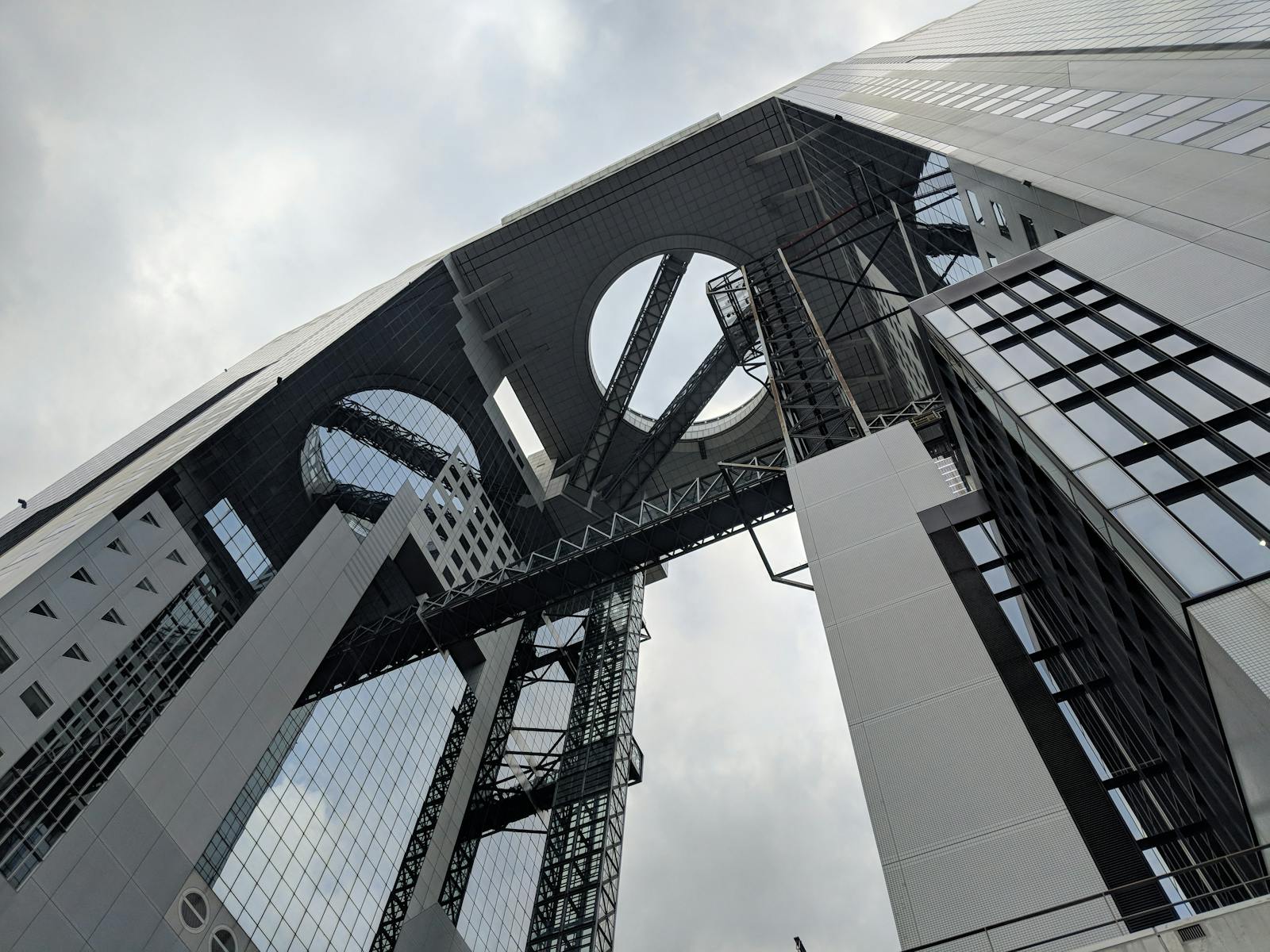
Ride the Midosuji line north to Umeda and walk to the Umeda Sky Building, the pair of towers joined at the top by a ring. Allow more time than the map suggests: the route from the station gates runs through underpasses and around the redeveloped Umekita area, and first-timers lose ten minutes finding the right exit. Our Umeda guide covers the rest of the district.
The Kuchu Teien, or Floating Garden observatory, opens 09:30 to 22:30 with last entry at 22:00, and adult entry is ¥2,000 (¥500 for children aged 4 to 12). Above the enclosed viewing floor is an open-air rooftop deck that circles the building, and that is where you want to be as the sun drops behind Osaka Bay and the city switches on below you. On a clear evening it’s the best-spent ¥2,000 in Osaka. The operator occasionally shortens hours for events, so check its information page on the day.
About that Amazing Pass catch again. Free entry only runs until 15:00, which is exactly when you don’t want to be up here. If your pass would otherwise cover it, the choice is between a free afternoon view and a sunset you pay for. Pay for the sunset. If the weather is flat grey, flip it: use the pass in the early afternoon and spend the evening at ground level.
Umeda also has the city’s densest cluster of department-store food halls, so if you’re hungry before heading south, our department store guide points you to the basements. For the station itself, which genuinely confuses people, see our Osaka Station guide.
Evening: Dotonbori, Hozenji and the river
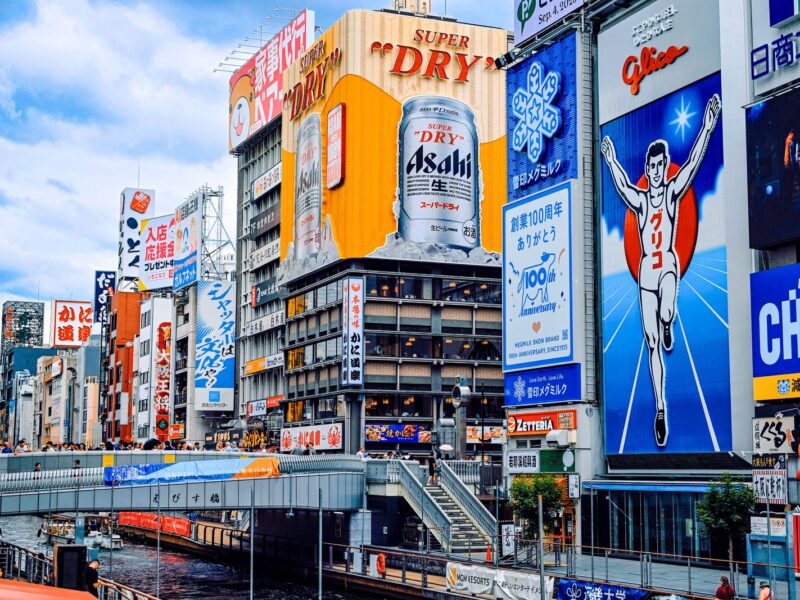
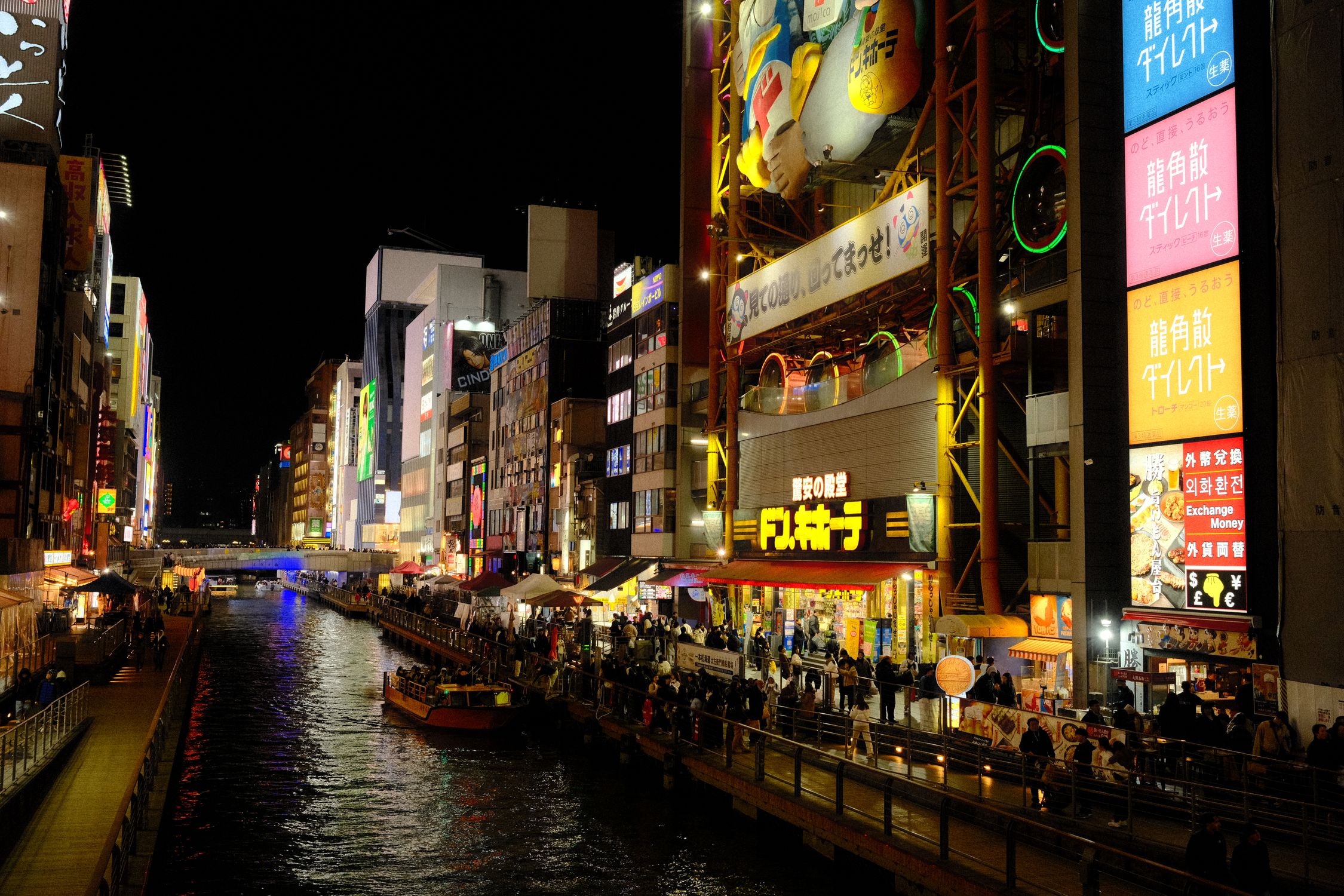
Ride the Midosuji line four stops south from Umeda to Namba and walk north towards the canal. This is the moment the day has been building to. Dotonbori in daylight is a busy street of restaurants. After dark, with the signs lit and reflected in the water, it’s the image on every Osaka postcard. The Glico running man beside the Ebisubashi bridge is lit from sunset until midnight, though the hours can be shortened. Stand on the bridge, take the photograph, then step off it, because the crush on Ebisubashi itself is the worst of the evening.
Dinner here is the classic Osaka trio: takoyaki (octopus dumplings), okonomiyaki (savoury griddled pancake) and anything else that smells good. One piece of advice from long experience: do not queue forty minutes for takoyaki because a stall has a famous name. The difference between the famous stall and the good one next to it is smaller than the difference between eating now and eating in forty minutes. Our Dotonbori after dark guide walks you through the canal by night.
Hozenji Yokocho, the quiet side
Two minutes south of the canal, the noise drops away. Hozenji is a small temple whose buildings all burned in the 1945 air raids, except for one statue of the deity Fudo Myoo. Since the war, visitors have splashed it with water as they pray, and decades of offerings have covered it in thick green moss. The grounds can be visited around the clock, and the lantern-lit temple at night is one of the most quietly beautiful scenes in the city. Ladle a little water over the statue yourself; it’s what the place is for.
Beside it run the two stone-paved alleys of Hozenji Yokocho, each about 80 metres long and barely three metres wide, with more than 60 small restaurants, izakaya (Japanese pubs) and bars. It’s where to go for a calmer dinner than the canal can offer, or a drink afterwards. Hours vary from place to place, and some are small enough that six customers fill them.
The Tombori River Cruise
If you have the Amazing Pass, the Tombori River Cruise is the easiest win of the night. It’s a 20-minute boat ride along the canal under the bridges and signs, departing every half hour from 11:00 to 21:00 from the dock beside the Don Quijote Ferris wheel. The adult fare for those paying is ¥2,000, and the operator’s site has the current sailings. Evening departures sell out, so pick up your boarding ticket when you arrive in Dotonbori and then go to dinner, rather than the other way round. Our Osaka river cruises guide covers this and the longer boats.
Late: bars, back streets and the last train
If you’ve still got energy after dinner, Namba is the right place to be. Ura Namba, the back streets south and east of the station, is a maze of standing bars and tiny counters where the night runs late and cheaply. Our Ura Namba bar-hopping guide has the route. For something louder, see the Osaka nightlife guide.
Mind the last train. Osaka Metro stops running around midnight. Last trains differ by line and direction, so check the Osaka Metro timetable for your station before ordering one more round. Taxis are plentiful in Namba but not cheap. If you’re staying in Umeda, a taxi back after the trains stop is the price of a long night. Our Osaka taxi guide explains the fares.
Adjusting the plan
If it rains
Swap the castle interior and the Osaka Museum of History in for the castle walk, then lean on the covered arcades. Kuromon, Shinsaibashi-suji and much of Namba are roofed or underground, and Umeda’s underground malls link most of the north. Drop Umeda Sky if the cloud is low, since there’s no point paying ¥2,000 to look at fog. Our rainy day guide has more ideas.
With children
Children usually enjoy Shinsekai’s signs, the Tower Slider (if they’re over 120 cm and at least seven) and the river cruise. The castle walk is long for small legs, so consider replacing it with the Kaiyukan aquarium, around five minutes’ walk from Osakako Station, as the morning anchor. The aquarium uses date-based pricing, so check its calendar for your day. It isn’t covered by the Amazing Pass. Our Osaka with kids guide has more.
If you’re coming in from Kyoto
The JR Special Rapid takes around 30 minutes from Kyoto to Osaka Station, so a day trip works well. Reverse the plan: start with Umeda Sky in the morning (and use the Amazing Pass’s free-before-15:00 window), ride the Midosuji line south to Shinsekai and Kuromon, do the castle in the afternoon and finish in Dotonbori before the train back. Our Osaka to Kyoto guide has the train options in both directions.
If you’re arriving from Kansai Airport
Fly in early, drop your bags and you can still salvage most of the day. The Nankai Rapi:t reaches Namba in as little as 34 minutes, and JR West sells the Haruka at a discounted one-way fare for foreign visitors of ¥1,900 to Osaka or Shin-Osaka. Station coin lockers in Umeda, Tennoji and Shinsaibashi run from about ¥300 to ¥900 depending on size. Our Kansai Airport to Osaka guide and luggage storage guide have the details. Base yourself in Namba for this plan and the evening ends at your door. Our where to stay in Osaka guide compares the areas.
What to leave out
The fastest way to ruin a single day here is to try to add things that belong to a different trip.
- Universal Studios Japan. It is a full day on its own, and a long one. If USJ is the reason you’re in Osaka, give it its own day and use this plan on another. Our USJ guide explains why.
- Nara or Kyoto as a side trip. Either one costs you most of the afternoon in travel and shuffling. They’re day trips, not add-ons.
- Two observation decks. Umeda Sky or Harukas 300, not both. Tsutenkaku only if it’s free on your pass.
- A sit-down meal at Kuromon. Graze, then leave. Your stomach has two more food districts to get through.
- Every famous takoyaki queue. Eat from the stall with the shortest line and the freshest batch on the griddle.
What one day in Osaka costs
These are 2026 adult prices, and the free and cheap parts of the day are the best parts. Food is the variable: a grazing lunch at Kuromon, kushikatsu in Shinsekai and dinner in Dotonbori can run from frugal to lavish depending on how you play it.
| Item | Pay as you go | With Amazing Pass |
|---|---|---|
| Transport (Metro all day) | Enjoy Eco Card ¥820 weekday / ¥620 weekend | Included |
| Osaka Castle main tower | ¥1,200 | Included |
| Tsutenkaku observation deck | ¥1,500 (optional) | Included |
| Umeda Sky Building at sunset | ¥2,000 | 10% off after 15:00 |
| Tombori River Cruise | ¥2,000 | Included |
| Pass itself | – | ¥3,500 |
Do everything on that list paying at the door and the attractions and transport come to roughly ¥7,300 to ¥7,550. With the Amazing Pass you’d pay ¥3,500 plus about ¥1,800 for the discounted sunset rooftop. That saving is real, but only if you actually go into all of them. Skip the castle interior and the tower and the Eco Card comes out ahead. For a fuller budget, see our Osaka trip cost guide and money-saving tips.
One day in Osaka: questions people ask
Is one day in Osaka enough?
Enough to see the highlights and understand why people fall for the city, yes. Enough to see it properly, no. One day covers the castle, a market, Shinsekai and Dotonbori by night. It doesn’t cover the food in any depth, the neighbourhoods beyond the centre or a USJ day. Most first-time visitors who try one day wish they’d taken two. Our 2 days in Osaka plan shows what the second day adds.
Can I do Universal Studios Japan and the city on the same day?
Not well. USJ rewards arriving before opening and staying late, and the best of central Osaka happens in the evening. Doing both means half a day at a theme park you’ve paid full price for and a rushed evening in Dotonbori. Choose one.
Where should I stay for a one-day visit?
Namba, because this plan ends there and you’ll be tired. Umeda is the better choice if you’re arriving or leaving by Shinkansen or JR, since it’s closer to Shin-Osaka and Osaka Station. Both are on the Midosuji line, so either works. See our Namba hotels guide.
Is the Osaka Amazing Pass worth it for one day?
Only if you’ll go inside at least three of its attractions. On this route, that means the castle tower, Tsutenkaku and the river cruise, which together with the subway clear the ¥3,500 comfortably. If you mostly want to walk and eat, the Enjoy Eco Card is the better buy.
What’s the best order if I only have an afternoon and evening?
Drop the castle and start at Kuromon around midday, then Shinsekai, Umeda Sky at sunset and Dotonbori for the night. That keeps the two essentials, the food districts and the evening view, and loses only the part of the day that is easiest to come back for.
Where to go next
If one day has left you wanting more, the obvious next step is our 3 days in Osaka itinerary, which adds the neighbourhoods and a day trip without the rush. For everything else, start at the Osaka itinerary hub or our first-time tips, and keep the subway guide open on your phone for the day itself.
Photo credits
Kuromon Market arcade: JP-osaka-arkade by Bgabel, CC BY-SA 3.0, via Wikimedia Commons.