This article contains advertising. Our booking links are routed through a partner that adds commission tracking automatically, so if you book through one we earn a commission from the provider, at no extra cost to you. It never affects what we recommend. Affiliate disclosure
There is a genre of internet post in which somebody redraws the Umeda station complex as a video-game dungeon map, complete with floor levels, boss rooms and a warning about the point of no return. It is funny because it is basically accurate. Roughly two and a half million people pass through this half-kilometre of northern Osaka every day, across six separate stations run by four different companies, stacked over four levels, connected by underground malls that have their own names, their own exits and no obvious relationship to the streets above them.
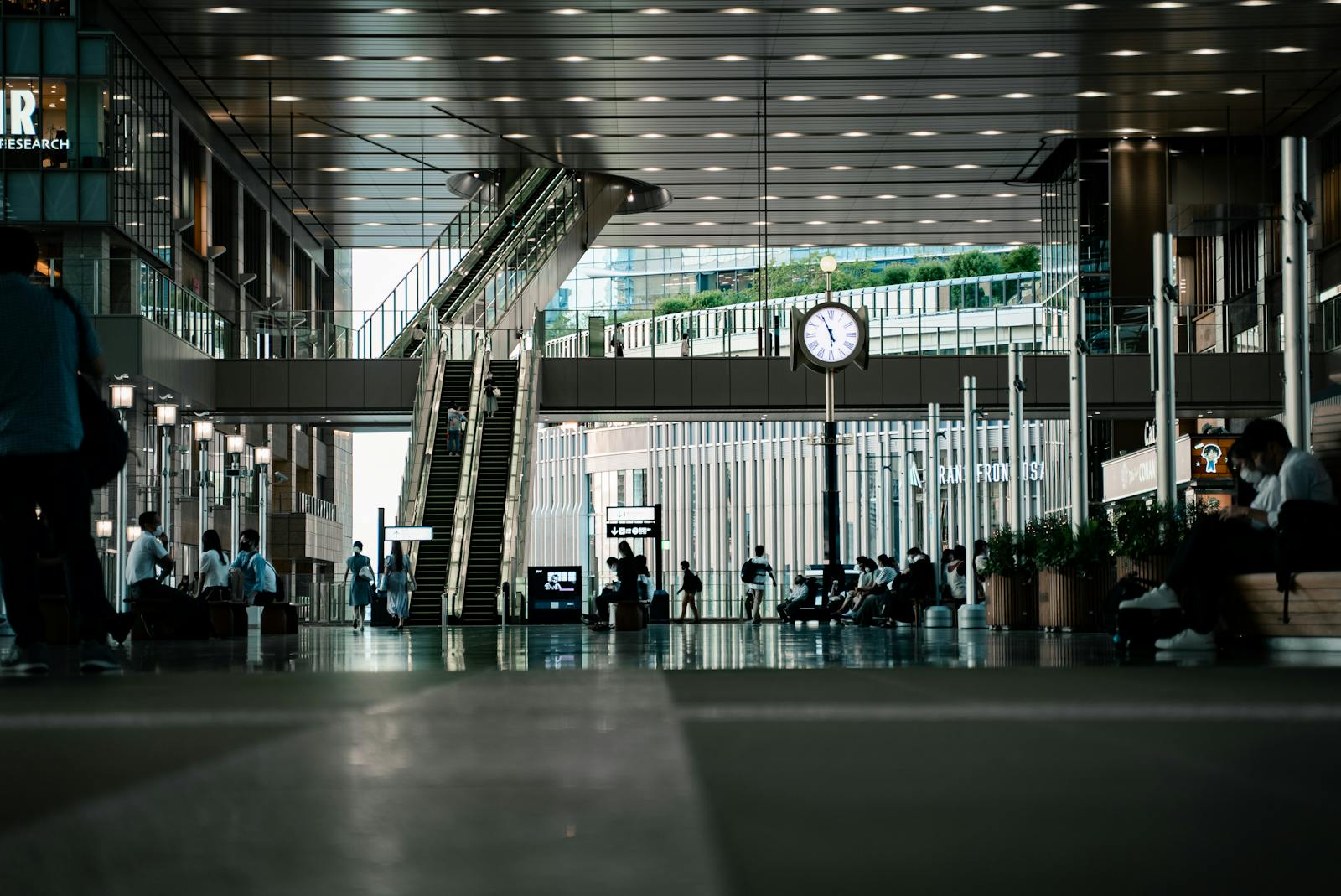
Here is the good news. The complex is confusing for exactly one reason, and once you understand that reason it stops being confusing almost immediately. This Osaka Station guide is organised around it: first the reason, then the layout, then a route from the JR gates to every other platform, and finally the landmarks that let you navigate without reading a single sign.
The one thing that confuses everybody
Osaka Station and Umeda Station are different stations. They are also the same place.
JR West calls its station Osaka. Every other operator in the same block calls theirs some version of Umeda, because Umeda is the name of the district. They are all within a few minutes’ walk of one another, mostly underground, and they are not connected by a single ticket gate. When your navigation app tells you to change at Umeda and you are standing in Osaka Station, nothing has gone wrong — you simply have a short walk ahead of you, and you will be leaving one company’s gates and entering another’s.
Here is the full cast:
| Station | Operator | Lines | Level | Walk from JR gates |
|---|---|---|---|---|
| Osaka | JR West | Kyoto, Kobe, Osaka Loop, Takarazuka, plus the Umekita underground platforms | Ground and B2 | — |
| Osaka-umeda | Hankyu | Kyoto, Kobe, Takarazuka lines | Elevated, 3F | 5–7 min |
| Osaka-Umeda | Hanshin | Hanshin Main Line (Kobe, Koshien) | Underground | 5–7 min |
| Umeda | Osaka Metro | Midosuji Line (red, M16) | Underground | 4–6 min |
| Nishi-Umeda | Osaka Metro | Yotsubashi Line (blue, Y11) | Underground | 6–8 min |
| Higashi-Umeda | Osaka Metro | Tanimachi Line (purple, T20) | Underground | 7–9 min |
| Kitashinchi | JR West | JR Tozai Line | Underground | 8–10 min |
Note the last one especially. Kitashinchi is a JR station that is not inside Osaka Station, and transfers between them are a street-level walk. If a route planner sends you from Osaka to Kitashinchi, budget ten minutes and do not expect a corridor.
How the complex is actually laid out
Think in three horizontal bands rather than in a map.
The underground, B1 and B2
This is where most of the walking happens, and it is where every subway station lives. It is also a shopping mall — several, in fact, each with its own name, which is the second great source of confusion. The underground level runs roughly from Nishi-Umeda in the west to Higashi-Umeda in the east, and you can cross the entire district down here without ever seeing daylight. In August that is a gift, and in the rain it is close to essential.
Ground level
JR Osaka Station’s ticket gates, the bus terminal, the taxi ranks and most of the street entrances. Confusingly, the JR platforms are themselves one level up from the gates, on a raised deck under the enormous barrel roof.
The deck level, 2F and 3F
A network of covered pedestrian bridges links Osaka Station City to Hankyu, to Grand Front Osaka and to the Hep Five building. Hankyu Osaka-umeda’s platforms are up here too, which is why it is the only major station in the district you approach by going up. When the underground is heaving, the deck is quicker and far more pleasant.
The gates of JR Osaka Station
JR Osaka has several sets of ticket gates and choosing the right one saves five minutes every time:
- Midosuji Gate (south side) — the one you want for the Midosuji subway line, for Hanshin, and for the Daimaru department store. If you are unsure, this is the default answer.
- Central Gate — north and south halves, feeding the middle of the concourse and the escalators up to the platforms. Good for Hankyu via the deck.
- Sakurabashi Gate (south-west) — quieter, and the fastest way towards Kitashinchi and the underpass to the Umeda Sky Building.
- The Umekita gates (B2) — serving the underground platforms where the Kansai Airport trains stop. New enough that older signage sometimes ignores them.
The single most useful habit: before you tap out, look at the overhead sign and pick the gate named after where you are going, not the gate nearest the escalator you happened to come down.
What leaves from JR Osaka Station itself
Before worrying about the other five stations, it helps to know that JR Osaka alone covers a great deal of Kansai. The platforms sit on a raised deck under the barrel roof, numbered from the south side northwards, and four services matter to visitors:
- The JR Kyoto Line — the Special Rapid reaches Kyoto in about 30 minutes, with departures roughly every fifteen. It is the fastest surface route between the two cities and it is covered by any JR pass. Full comparison against Hankyu and Keihan in Osaka to Kyoto.
- The JR Kobe Line — the same Special Rapid, running the other way: Sannomiya in around 20 to 25 minutes, Himeji in about an hour. One train, two of the best day trips in the region.
- The Osaka Loop Line — the orange circle around the inner city, calling at Osakajokoen for Osaka Castle, Tsuruhashi for the Korean quarter, Tennoji, and Nishikujo where you change for Universal Studios Japan. It is the single most useful line in Osaka after the Midosuji subway.
- The Takarazuka Line — north into the hills, and the JR route towards the Arima and Takarazuka side of the prefecture.
Add the Umekita underground platforms on B2, which handle the airport Haruka and the Kuroshio services down the Wakayama coast, and a great deal of the day trip list starts inside this one building without any transfer at all.
Umekita and Grand Green Osaka
The land immediately north of the station was a freight yard until recently and is now the largest urban redevelopment in the country. Grand Green Osaka opened in phases from 2024, with a genuine public park at its centre — unusual in a district where every other square metre is retail. It is worth ten minutes if you are early for a train, and it explains why the northern half of the station feels permanently under construction: it is. Signage on that side changes from year to year, so trust the current signs over any map, including printed ones.
Getting from JR Osaka to every other platform
To Hankyu Osaka-umeda
Hankyu is the line for Kyoto on the cheap (it terminates at Kawaramachi, right in the middle of the city, and costs roughly half the JR fare), for Minoo Park and for Takarazuka. Leave by the Central or Midosuji Gate, go up to the 2F deck, and follow the covered bridge north-east past Hankyu Sanbangai. Five to seven minutes, all under cover, and the enormous departure board at the concourse is genuinely one of the best things in Osaka to stand and look at — nine platforms, three lines, trains leaving every couple of minutes.
To Hanshin Osaka-Umeda
Hanshin runs along the coast to Kobe and, more importantly for many visitors, to Koshien Stadium. Exit by the Midosuji Gate, go down into the underground, and follow signs beneath the Hanshin department store. Five to seven minutes. Route details for the coastal run are in Osaka to Kobe.
To Osaka Metro Umeda, Midosuji Line
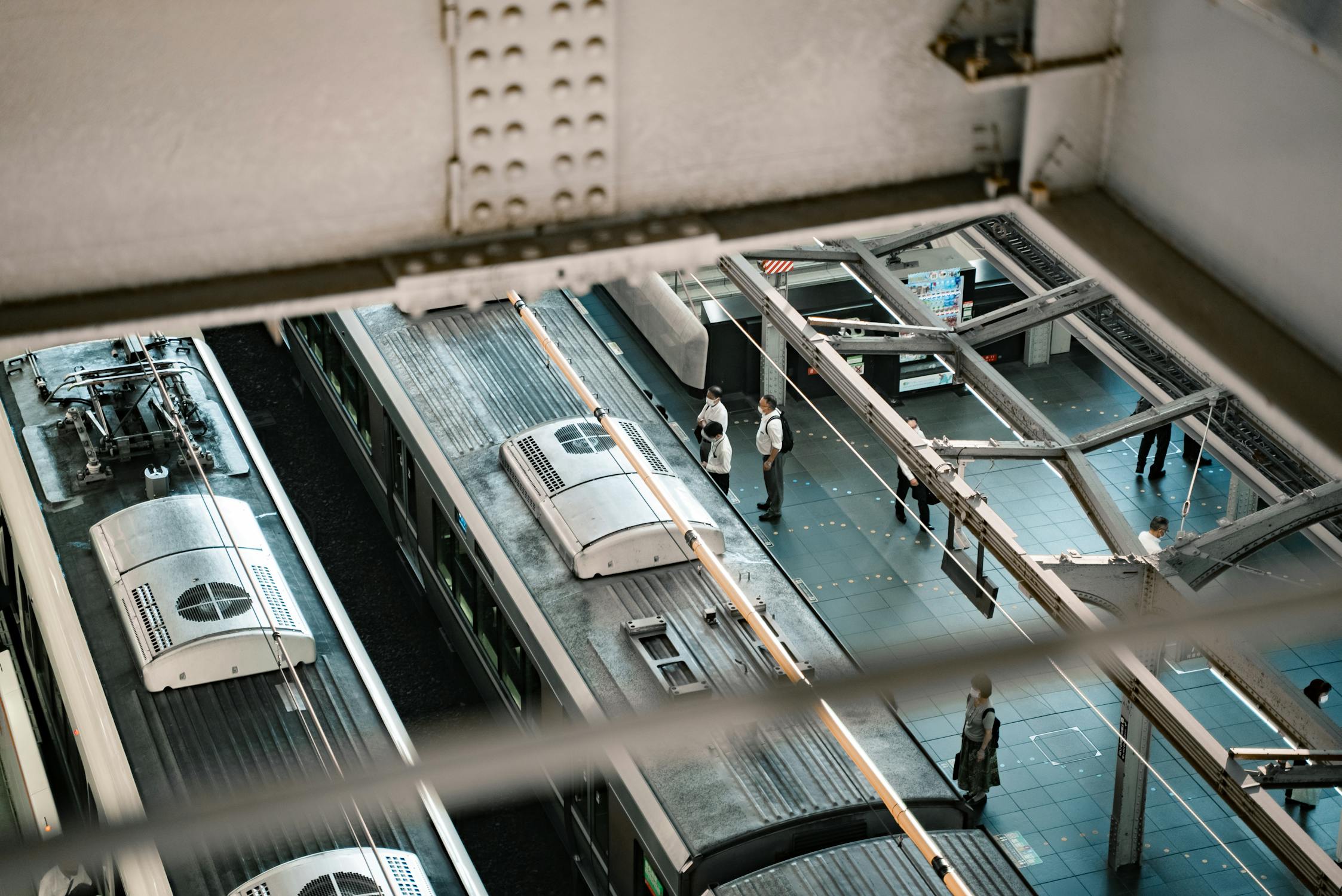
The one you will use most. The red Midosuji line runs Umeda – Shinsaibashi – Namba – Tennoji, which is essentially the spine of every visitor’s Osaka. Midosuji Gate, down the escalator, follow the red circle with the M. Four to six minutes. The full network is in our Osaka subway guide, and if you have not yet sorted a card, read the ICOCA guide before you queue at a machine.
To Nishi-Umeda, Yotsubashi Line
West side, blue line, useful for Namba’s western edge and for Amerikamura. From the Sakurabashi Gate head south-west through the Diamor Osaka underground mall. Six to eight minutes. Diamor is bright, wide and easy to walk; it also has some of the better coffee in the district.
To Higashi-Umeda, Tanimachi Line
East side, purple line, the route to Tennoji and to the Osaka Castle side of town without changing. From the Midosuji Gate, walk east through the Whity Umeda underground mall until the signs turn purple. Seven to nine minutes, and it feels longer than it is because Whity is long, straight and identical in both directions.
To Kitashinchi, JR Tozai Line
South, across the road, about eight to ten minutes. The Tozai line cuts east–west under the city and connects to Osaka Castle at Osakajokitazume. Kitashinchi station also puts you directly under Osaka’s most expensive drinking district — see the Kitashinchi guide for what actually goes on up there.
The airport connection
This changed in 2023 and a lot of older advice has not caught up. JR opened the Umekita underground platforms beneath the north-west of Osaka Station, and the Limited Express Haruka — the airport express — now stops there. That means a direct train between Osaka Station and Kansai Airport with no change at Tennoji or Shin-Osaka, which is a genuine improvement if you are staying in an Umeda hotel with luggage.
Three things to know:
- The Umekita platforms are on B2 and are a walk from the main concourse — follow the signs early rather than at the last minute, and allow a few extra minutes on departure.
- Airport-bound Haruka services generally use platform 21. Coming in from the airport, follow signs for the west gates for the fastest route into the district.
- The Haruka is a reserved-seat limited express with a surcharge. The cheaper alternative is the Kansai Airport Rapid, which is slower and does not use these platforms. The full comparison, including the Nankai Rapi:t from Namba, is in our airport transfer guide.
For Itami, the domestic airport, the answer is not a train at all: the airport limousine bus leaves from the terminal on the north side of Osaka Station and takes about thirty minutes. Details in how to get to Osaka.
The underground malls, and how to use them for navigation
Once you know their names, the malls stop being obstacles and become the clearest street map in the district. Each runs in a fixed direction from the station, so the mall name tells you which way you are facing:
- Whity Umeda — runs east, towards Higashi-Umeda, Hep Five and the Tanimachi line. Long, straight, fluorescent, endless.
- Diamor Osaka — runs south-west, towards Nishi-Umeda, the Yotsubashi line and the Hilton. Newer and noticeably calmer.
- Hankyu Sanbangai — north-east, under and around Hankyu Osaka-umeda. Two basement floors, and the food floor is far better than a station food floor has any right to be.
- Umeda Chika Center and the Hanshin basement — south, under the Hanshin store, towards Hanshin Osaka-Umeda. The Hanshin food hall is a genuine destination in its own right, and the ika-yaki counter has a permanent queue for good reason.
The department store guide covers those basement food halls properly. They are, for what it is worth, the single best reason to get lost down here.
Landmarks to steer by
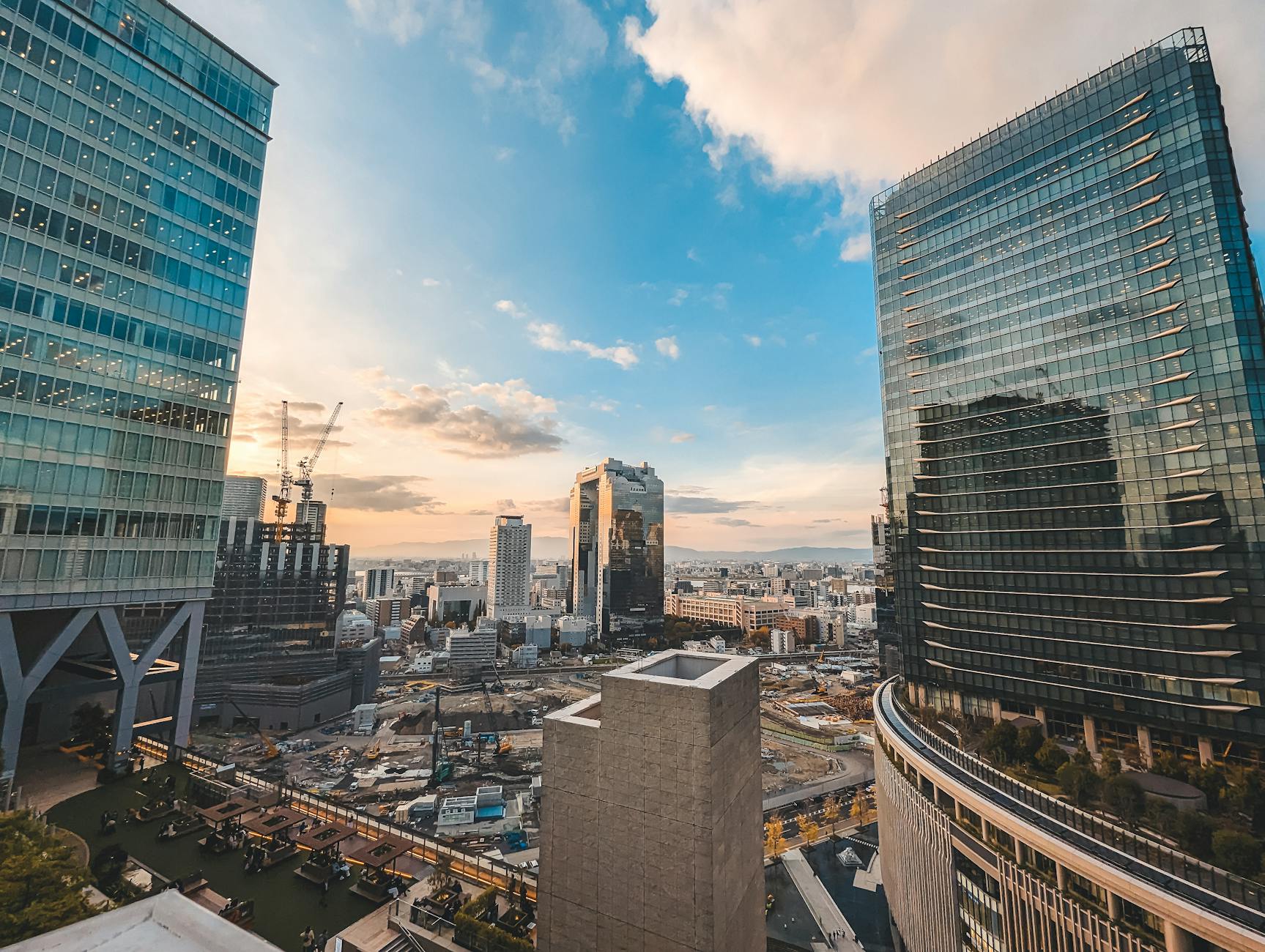
Signage in Umeda is thorough but relentless, and after twenty minutes of reading arrows most people stop taking any of it in. The faster method is to surface and use the skyline. Five landmarks fix the whole district:
- The red ferris wheel on the side of the Hep Five building marks the east, near Higashi-Umeda and the Hankyu shopping streets.
- Grand Front Osaka, the twin towers with the glass atrium, marks the north, directly across the plaza from the station’s north gate.
- The Umeda Sky Building, unmistakable with its floating rooftop ring, marks the north-west, about nine minutes away through a pedestrian underpass beneath the tracks. Worth going up: see our full guide and the observation deck comparison.
- Daimaru occupies the south side of Osaka Station City, and its 13th floor is the character shop floor — Nintendo OSAKA, Pokemon Center Osaka, Capcom — covered in the anime and pop culture guide.
- Yodobashi Umeda, the vast electronics building, sits north-east across a bridge, and is where you go for cameras, adaptors and a SIM card.
The wider district — what to eat, where to drink, what is worth your evening — is in the Umeda neighbourhood guide.
Practicalities
Luggage
Coin lockers exist in quantity at every gate, and at busy times every one of them is full. The reliable fallback is the staffed baggage room on the ground floor, or one of the app-booked storage points nearby. Full details, including which sizes take a large case, are in the luggage storage guide. If you are moving hotels, forwarding the bag by takkyubin (overnight courier) is often cheaper than a locker and always easier than dragging it down Whity Umeda.
Where to meet somebody
Do not say "Osaka Station". Say the Time Space Plaza on the fifth floor of the North Gate Building, or the top of the big escalator by the golden clock, or the Midosuji Gate itself. Any of those is findable. "Osaka Station" is a district.
Tickets and passes
Almost everything here takes an IC card, and tapping is faster than any ticket machine. If you are doing a lot of subway in one day, the one-day subway pass is straightforward maths; the Osaka Amazing Pass bundles transport with attraction entry and is worth it only on a genuinely packed day. For regional trips out of Osaka Station, see the JR pass guide.
Food, if you have twenty minutes
Skip the platform kiosks. The basement food halls at Hanshin and Daimaru, and the restaurant floors in Lucua and Grand Front, are a completely different proposition — and the Hankyu Sanbangai basement does a row of ramen counters that would be a destination anywhere else. Coffee is easy here too.
With a suitcase, a pushchair or a wheelchair
The complex is well served by lifts, but they are not evenly distributed and they are not always where the crowd is going. Two rules make it manageable. First, the 2F deck route to Hankyu and Grand Front is step-free end to end and far less congested than the underground equivalent. Second, at Osaka Metro Umeda the lifts sit away from the main escalator banks — look for the blue wheelchair signage rather than following the flow of people, and allow an extra five minutes. Station staff at the manned gate will walk you to the right lift if you ask, and they do this constantly.
If you are travelling with small children, the north side of the station is the calmer half: Grand Front and the Umekita park have space to let a toddler run, and there are nursing rooms in both the North Gate Building and Daimaru. Osaka with kids has more on getting around the city with them.
Toilets, wifi and the small stuff
Toilets are frequent, free and clean, with the least busy ones on the upper floors of the department stores rather than on the concourse. Free wifi is available across Osaka Station City and the Metro network but requires a sign-in that expires; if that irritates you, a data SIM is the fix. Cash machines that take foreign cards are in every convenience store in the complex — the Seven Bank ATMs inside 7-Eleven are the reliable default.
The mistakes people actually make
- Assuming a transfer is inside the gates. Between JR and Hankyu, Hanshin or the Metro, it never is. You tap out, walk, and tap in again.
- Trusting an app’s transfer time. Route planners tend to allow five minutes for a change at Umeda. With luggage, at rush hour, in the wrong direction, it can be fifteen. Add a buffer.
- Going underground for a short hop. If you are heading to Hankyu or Grand Front, the 2F deck is quicker, better lit and impossible to get lost on.
- Getting on a Hankyu train without checking the type. The limited express and the local both leave from the same concourse; one reaches Kyoto in 45 minutes, the other in nearly 90. The boards are colour-coded and English-labelled — read them.
- Panicking. Nothing in Umeda is more than about a ten-minute walk from anything else. The worst case is a longer walk, not a missed day.
Frequently asked questions
Is Osaka Station the same as Umeda Station?
Practically yes, technically no. Osaka Station is the JR station; Umeda is the name used by Hankyu, Hanshin and Osaka Metro for their stations in the same district. They are a few minutes’ walk apart and are not connected inside the ticket gates.
Is Shin-Osaka the same as Osaka Station?
No, and this one catches people out badly. Shin-Osaka is the Shinkansen station, one stop north on the Midosuji line and about four minutes away by train. All bullet trains to Tokyo, Hiroshima and Hakata leave from Shin-Osaka, not from Osaka Station. Allow twenty minutes between the two, more with luggage. See Osaka to Tokyo.
How long should I allow to change trains at Umeda?
Ten minutes between JR and any of the private lines, fifteen at rush hour or with a suitcase. Within JR Osaka Station itself, five is fine except to the Umekita underground platforms, where you should allow ten.
Can I get from Osaka Station to Kansai Airport without changing?
Yes, since 2023. The Limited Express Haruka calls at the Umekita underground platforms at Osaka Station and runs direct to Kansai Airport. It is a reserved limited express, so there is a surcharge on top of the base fare.
Is there luggage storage at Osaka Station?
Yes, extensively — coin lockers at every gate plus a staffed baggage room — but lockers fill by mid-morning in high season. Our storage guide lists the fallbacks.
What is the best way to avoid the crowds?
Use the 2F deck rather than the underground, and avoid the Midosuji Gate between 08:00 and 09:30. The station is busy all day but genuinely crushing only in those windows.
Do I need cash for the ticket machines?
Not usually. Machines take cards, IC cards work everywhere, and topping up is simple. Cash still matters elsewhere in the city, though — small izakaya, shrine offices and market stalls in particular.
More in our guide to cash, cards and IC cards in Osaka.
Where to go from here
Once Umeda makes sense, the rest of Osaka’s network is straightforward — it is genuinely one of the easiest big-city systems in the world to use, and this is by far its hardest station. Read the subway guide next for the lines and colours, and the transport overview for how buses, taxis and the private railways fit around them.
If you are staying in this part of the city, Umeda hotels and where to stay in Osaka cover the options, and the Umeda guide covers the district itself. For the days that start here, try the itinerary planner or the day trips guide — nearly all of them leave from these platforms.


