This article contains advertising. Our booking links are routed through a partner that adds commission tracking automatically, so if you book through one we earn a commission from the provider, at no extra cost to you. It never affects what we recommend. Affiliate disclosure
Every photograph you have seen of Fushimi Inari is a lie of omission. The tunnel of vermilion gates, empty, glowing, one solitary figure in the distance — that picture exists, and it is taken at about half past five in the morning by somebody who got up in the dark. At eleven o’clock on a Saturday the same corridor is a shuffling queue of people holding phones above their heads, and you will spend more time waiting for a gap than walking through one.
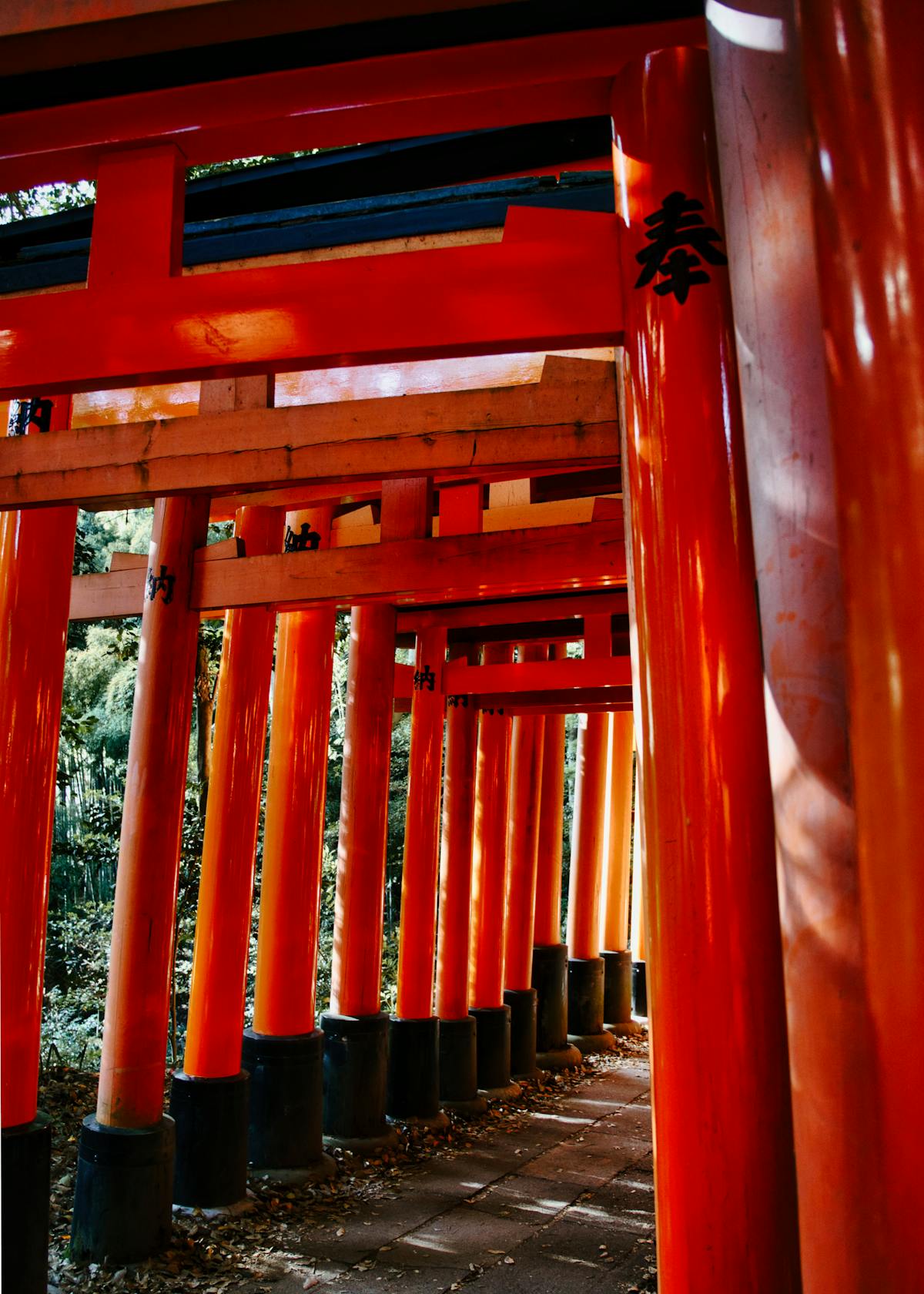
None of which is an argument against going. Fushimi Inari is genuinely one of the most extraordinary places in Japan, it costs nothing, it never closes, and the mountain behind it empties out so completely that within twenty minutes of the crowds you can be alone in a cedar forest with a thousand gates and nobody else. It is an argument for going at the right time and walking further than most people do.
Getting to Fushimi Inari from Osaka takes under an hour and costs less than ¥500 on the right line. Here is how to do it, and what to do when you arrive.
How to get there
Two routes, and the cheaper one is also usually the better one.
The Keihan Main Line — the pick
From Yodoyabashi in central Osaka, the Keihan Main Line runs to Fushimi-Inari station in about 50 minutes for roughly ¥480. The shrine is a five-minute walk east of the station and the route is signposted the whole way.
One catch worth knowing: the fastest Keihan services — the Limited Express and the Rapid Express — do not stop at Fushimi-Inari. Ride one as far as Tambabashi, then change to a Local or Semi-Express for the last few stops. Alternatively, take a Semi-Express the whole way and read a book. Either way you arrive at roughly the same time, so do not stress the transfer.
Yodoyabashi is on the Midosuji subway line, one stop south of Umeda and two north of Shinsaibashi, so from most central hotels this is a single subway ride and then one train.
The JR route — better if you hold a rail pass
Take the JR Special Rapid from Osaka Station to Kyoto, about 30 minutes, then change to a Local service on the JR Nara Line for two stops to Inari. Total journey around 45 to 50 minutes; total fare typically ¥700–800 unless a pass covers it. Inari station is directly opposite the shrine’s main gate — you step off the platform and it is in front of you, which is about as convenient as Japanese railways get.
The catch here mirrors the Keihan one: only Local trains on the Nara Line stop at Inari. Rapid services blow straight through. Check the board at Kyoto Station rather than boarding the first Nara-bound train you see.
If you are carrying a JR pass, the JR route is effectively free and obviously wins. If you are not, Keihan is cheaper, quicker from the Namba end of town, and drops you into the more atmospheric approach street.
| Keihan | JR | |
|---|---|---|
| From | Yodoyabashi | Osaka Station |
| To | Fushimi-Inari | Inari |
| Time | about 50 min | about 45–50 min inc. change |
| Fare | around ¥480 | around ¥700–800 |
| Walk at the far end | 5 min | under 1 min |
| Watch out for | Limited Express does not stop | Rapid does not stop at Inari |
| Best for | Namba and Shinsaibashi bases, tight budgets | Rail pass holders, Umeda bases |
An IC card works on both, and tapping saves fiddling with the fare chart — see the ICOCA guide if you have not sorted one. Fares are checked to September 2026 and do drift upwards; confirm at the machine before you travel.
What you are actually looking at
Fushimi Inari Taisha is the head shrine of some thirty thousand Inari shrines across Japan, and it has been on this hillside since the eighth century. Inari is the kami of rice — and therefore, by a very Japanese logical extension, of harvest, prosperity, and eventually of business success in general. That last association explains everything you are about to see.
The gates are torii, the marker between ordinary space and sacred space, and every single one of them was paid for by somebody. A company that has had a good year, a family business marking a generation, an individual giving thanks for something that went right. Turn round and look at the back of any gate and you will find the donor’s name and the date carved into the upright in black. A small gate costs several hundred thousand yen; the large ones at the bottom of the mountain run well past a million. There are said to be around ten thousand of them on the hill, and the count keeps rising, because the shrine takes new donations continuously and replaces rotted timber as it goes.
The foxes are kitsune, Inari’s messengers, and they are everywhere — hundreds of stone pairs, most holding something in the mouth: a rice sheaf, a key to the granary, a jewel, a scroll. They are not the deity. They carry messages for it. Small distinction, but it is the one the shrine itself makes.
The walk, section by section
The site is a mountain, not a building, and how much of it you see is entirely a decision about how much you want to climb. The route is a single well-marked loop with obvious bail-out points.
The base: Romon gate and the main hall
The enormous vermilion romon (tower gate) was donated by Toyotomi Hideyoshi in 1589, reportedly in gratitude for his mother’s recovery from illness — a nice link to Osaka, since Hideyoshi is also the man who built Osaka Castle. Behind it is the main hall. This first courtyard is where ninety per cent of visitors stop, take a photograph, and leave. Ten minutes.
Senbon Torii
Behind the main hall the path splits into two parallel gate tunnels, densely packed, close enough that the light inside turns orange. Senbon torii means "a thousand gates", which is an understatement rather than a count. The two tunnels run one-way in each direction — keep left going up. This is the section in every photograph and the section where the crowd is worst. It is also short: three or four minutes of walking.
Okusha Hohaisho and the wishing stones
At the top of the Senbon Torii is a small shrine with the most concentrated cluster of fox votive plaques on the site — blank fox faces that visitors draw expressions onto, with results ranging from devout to deeply strange. Behind it are the omokaru-ishi, two stone lanterns with round stones on top. Make a wish, lift the stone: lighter than you expected means yes, heavier means work harder. Almost everybody finds it heavy, which is either a comment on human optimism or on the weight of the stones.
Up to Yotsutsuji

This is the stretch that matters and the one most people skip. Thirty to forty-five minutes of steady climbing on stone steps, through gates that thin and thicken and thin again, past small sub-shrines lit with candles and stacked with miniature torii left by visitors. The crowd falls away sharply within the first ten minutes. By halfway you may have a whole corridor to yourself.
Yotsutsuji is a five-way junction with a viewpoint, a couple of tea houses and a bench. Kyoto spreads out below, best at dusk when the lights come on. If you only do one thing beyond the photograph, do this. For most visitors, Yotsutsuji is the correct place to turn around.
The summit loop
From Yotsutsuji the path becomes a circuit around the peak of Mount Inari, 233 metres, taking in Ichinomine — the highest of the shrine’s inner sanctuaries. Allow two to three hours for the full round trip from the base at an unhurried pace.
Here is the honest verdict, because nobody else will give it to you: the summit is not the best part. There is no view from the top, the shrine there is small, and the gates are sparser than lower down. What the summit loop gives you is solitude, cedar forest, and the feeling of having actually walked a pilgrimage route rather than visited an attraction. If that is what you came for, go. If you came for the gates, Yotsutsuji has already given you all of them, and the extra ninety minutes buys diminishing returns.
The thing almost nobody notices
Step off the main path anywhere above Yotsutsuji and you will find yourself among otsuka — small private stone altars, thousands of them, packed into clearings and terraced up the hillside under the cedars. Each is a miniature shrine erected by an individual or a family to their own named aspect of Inari, wreathed in candle wax and offerings of sake and rice. There are said to be more than ten thousand on the mountain.
They are not a tourist attraction and there is no signage explaining them, which is exactly why they are worth five minutes. This is a working religious site with an unbroken thousand-year practice behind it, not a photogenic corridor, and the otsuka are where that becomes obvious. Walk quietly, do not touch the offerings, and do not photograph anyone praying. Beyond that, nobody minds you looking.
Charms, and a note on photographs
The shrine office at the base sells omamori (protective charms) for around ¥500–1,000, with the business-success and money-luck varieties being the local speciality — entirely on brand for a shrine funded by companies. There is also a distinctive fox-shaped ema votive plaque for about ¥500 that you draw a face on and hang. Both make better souvenirs than anything on the approach street; our souvenir guide covers the rest.
On photography: the empty-corridor shot everyone wants requires being there at dawn, and there is no trick that substitutes for it. What does work at busy times is shooting upwards at the gate crossbeams, or turning round to photograph the black donor inscriptions on the reverse side, which almost nobody does and which is a far more interesting picture.
When to go
This is the whole game. The shrine grounds are open 24 hours a day, every day, free of charge — no gate, no ticket, no closing time. That is unusual in Japan and it is the single most useful fact in this guide, because it means you can dodge the crowd entirely.
- Before 08:00. The best window by a distance. The first Keihan trains get you there around seven, the light is low and orange through the gates, and the tour groups have not arrived. Cafes at the base are shut, so eat before you go.
- After 17:00, and after dark. The mountain paths are lit — not brightly, but enough — and the atmosphere at night is genuinely eerie in the best way. Fewer people than the morning. Take a phone with charge and stay on the main loop; the side paths are unlit and the forest is real forest.
- Between 10:00 and 16:00. Avoid if you possibly can, and if you cannot, walk fast through the Senbon Torii and keep climbing. Twenty minutes up the hill the crowd simply is not there.
- Weekdays over weekends, always. Sundays and Japanese public holidays are the worst.
Season matters less than time of day here, though early January is exceptional in a different way: Fushimi Inari is one of the busiest shrines in Japan for hatsumode, the first shrine visit of the new year, and receives millions of visitors in three days. Beautiful, and completely impassable. Our festival calendar covers what else is happening across the region, and the best time to visit puts the seasons in order.
Autumn colour on the lower slopes peaks in late November and is excellent; see Osaka in autumn. Summer is brutal — this is a climb, in humidity, and the summer guide is not exaggerating about it. Carry more water than you think you need.
What to eat at the base
The approach street from Keihan Fushimi-Inari station is lined with stalls, and two of them sell something you will not find easily elsewhere: grilled quail and sparrow, split, skewered and lacquered with tare sauce. It is a Fushimi Inari speciality with a logic behind it — the birds ate the rice crop, so eating them was a form of protection for the harvest that Inari governs. The quail is decent, a bit like a very small game bird. The sparrow is mostly bone and is ordered for the story rather than the meal. Try it once, expect to be unimpressed, enjoy having done it.
More reliably good: inari-zushi, sweet fried tofu pouches stuffed with sushi rice, which is named after this shrine because fried tofu is the fox’s traditional offering. Also grilled mochi, taiyaki, and matcha soft serve, all at roughly ¥300–600 a go. It is street food of the tourist-approach variety, honestly priced and perfectly good, but it is not the reason to come, and Osaka’s own street food scene is on another level entirely.
Combining it with the rest of Kyoto
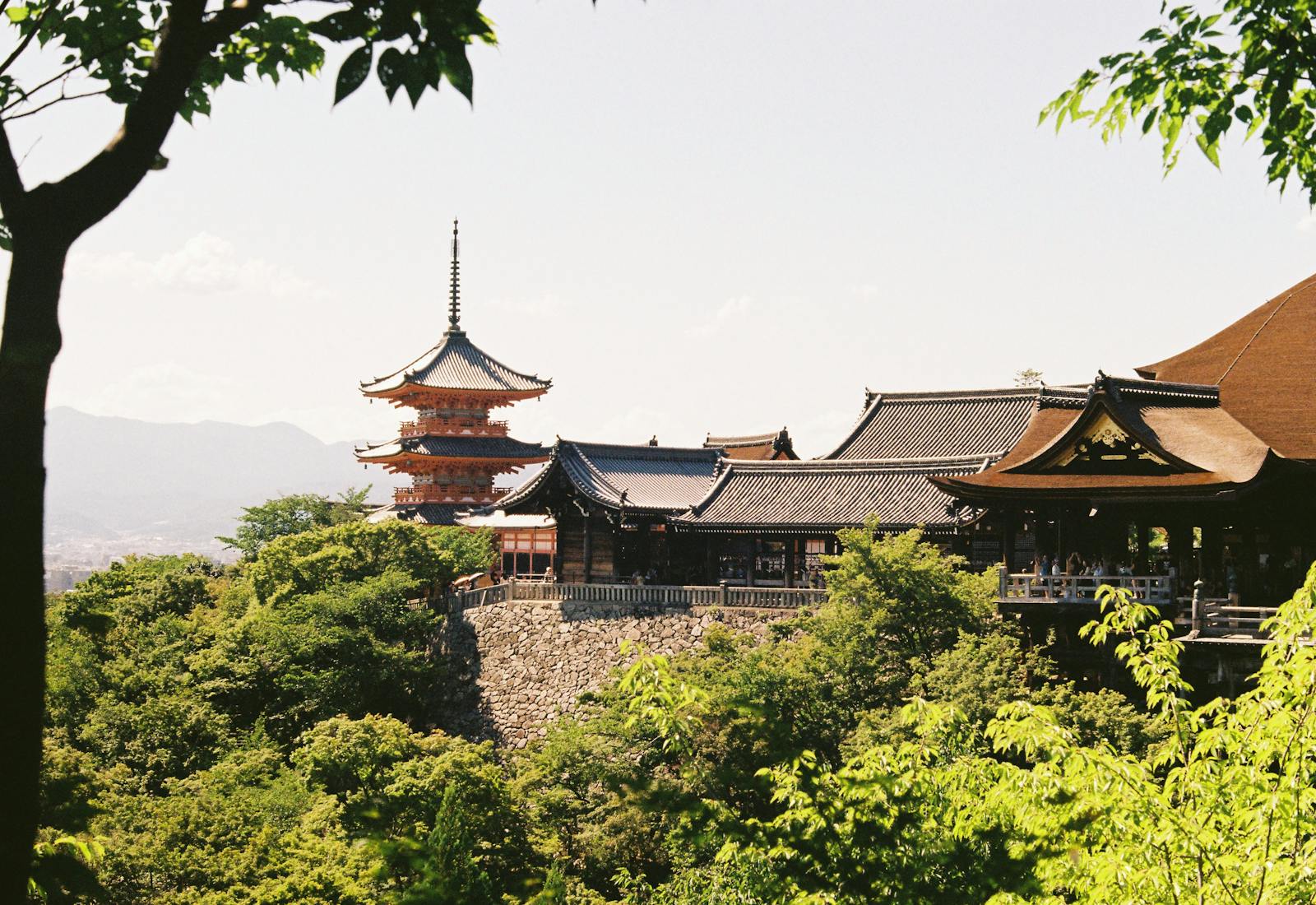
Fushimi Inari sits on the southern edge of Kyoto, which makes it an efficient first or last stop rather than a whole day. Three sensible pairings:
- Fushimi Inari, then Tofuku-ji. One stop up the line on either railway, and one of the great autumn maple temples in the country. Twenty minutes of walking connects them.
- Fushimi Inari, then Higashiyama. Continue north to Kiyomizu-dera, Sannenzaka and Gion. This is the classic Kyoto day and works best done early at Inari and late in Gion. Our Kyoto day trip guide lays out the timings.
- Fushimi Inari, then the sake district. Fushimi is one of Japan’s great brewing towns — soft water, dozens of breweries, tasting rooms open to visitors — and it is two stops further south on the Keihan line at Chushojima. Almost nobody who visits the shrine realises the town below it makes a third of the sake in Kyoto Prefecture. If you like sake, this is the best-value afternoon in the region.
What not to do: try to fit Fushimi Inari, Arashiyama and Kinkaku-ji into one day from Osaka. They are on opposite sides of Kyoto and the day becomes a train journey with photographs attached. Pick one side. The day trips guide has the honest geography of the whole region, and Osaka to Kyoto compares every route between the two cities.
Practical notes
- Admission is free and there is no ticket gate. Donations at the offering box are the norm; ¥5 or ¥100 coins are fine.
- Wear proper shoes. This looks like a shrine visit and is actually a stone-step hillwalk. Sandals and smart shoes both end badly.
- Toilets and vending machines exist at the base and at Yotsutsuji, and are sparse in between. Fill a bottle before you climb.
- Luggage. There are coin lockers at both stations, but they are small and fill early. If you are day-tripping between hotels, leave the bag in Osaka — see the luggage storage guide.
- Kimono rental is popular here and photographs beautifully, but climbing past Yotsutsuji in one is genuinely difficult. Rent in Osaka or Kyoto for the lower shrine only — our kimono rental guide covers how it works.
- Etiquette. Bow slightly as you pass under the first torii, keep to the side of the central path, and wash hands at the temizuya basin. Nobody will correct you if you do not, but the regulars notice. Our temples and shrines guide has the full sequence.
- Cash for the stalls and the charm counters. Many take cards now; some still do not.
Frequently asked questions
How long does it take to get to Fushimi Inari from Osaka?
About 50 minutes door to door on the Keihan Main Line from Yodoyabashi, or roughly the same by JR via Kyoto Station. Neither route needs more than one change.
How much time should I allow at the shrine?
Forty-five minutes for the base and the Senbon Torii. Ninety minutes to two hours to include Yotsutsuji and the view, which is what we would recommend. Three to four hours for the full summit loop at a relaxed pace.
Do I need to book or buy a ticket?
No. The shrine is free, open at all hours, and cannot be booked. There is no queue system and no time slot.
Is the climb difficult?
It is steady rather than steep, on stone steps almost the whole way, and reasonably fit people manage Yotsutsuji comfortably in half an hour. It is not wheelchair accessible above the main courtyard, and it is hard work in summer humidity.
Can I visit at night?
Yes — the grounds never close and the main path is lit. It is one of the quieter and more atmospheric times to come. Stick to the main loop and take a charged phone.
Is Fushimi Inari worth it if I only have one day in Kyoto?
Yes, but do it first thing and treat it as one item, not the day. Arrive by eight, be finished by ten, and spend the rest of the day in Higashiyama or Arashiyama. Doing it at midday will cost you two hours and a bad mood.
Is it suitable for children?
The lower shrine, absolutely — the gates and foxes are a hit. The climb is long for small legs; Yotsutsuji is about the limit for most under-tens. See Osaka with kids for what else works nearby.
Can I use an Osaka pass to get there?
No. The Osaka Amazing Pass covers Osaka city only and does not reach Kyoto. A JR pass or a regional Kansai pass does; the comparison is in our JR pass guide.
Where to go next
Fushimi Inari is the day trip that persuades people Kansai is better than a Tokyo-only trip, and it is worth doing properly rather than at eleven o’clock with everyone else. Set an alarm, take the first Keihan train, walk to Yotsutsuji, and be back in Osaka for lunch.
For the rest of the city it sits in, read the Kyoto day trip guide. For everything else within an hour of Osaka — Nara, Kobe, Himeji, Koyasan — start with day trips from Osaka and the wider Kansai guide. And if you are still assembling the whole trip, the itinerary planner and the three-day guide both build this in.