This article contains advertising. Our booking links are routed through a partner that adds commission tracking automatically, so if you book through one we earn a commission from the provider, at no extra cost to you. It never affects what we recommend. Affiliate disclosure
Osaka has two big airports, and visitors from abroad almost always meet the wrong one first. Kansai International sits on an artificial island in the bay, the best part of an hour from the city. Itami, officially Osaka International Airport, sits in the northern suburbs, so close to the centre that planes on final approach skim low over the rooftops. It handles only domestic flights, which is why so few overseas travellers know it. Anyone who has flown in from Tokyo, Sapporo or Okinawa knows the difference: from Itami you can be checking into an Umeda hotel before a Kansai arrival has even reached the city.
Getting from Itami airport to Osaka is the easiest airport transfer in Japan, but there are still better and worse ways to do it, depending on where you are staying and how much luggage you have. This guide compares every option — the limousine buses, the monorail routes, taxis — covers the direct buses to Kyoto and Kobe and the transfer across to Kansai Airport, and explains what to allow for on the way back.
The short answer
- Staying around Osaka Station or Umeda: the limousine bus, about 30 minutes and around ¥660. Easiest with luggage.
- Staying in Namba: the limousine bus to Namba, about 25 minutes. The monorail and Midosuji subway is the traffic-proof alternative.
- Catching the Shinkansen at Shin-Osaka: the monorail to Senri-Chuo, then the Midosuji line straight to Shin-Osaka.
- Going straight to Kyoto or Kobe: the direct limousine buses — about 50–55 minutes to Kyoto Station, about 40 to Kobe Sannomiya.
- Three or four people with big bags: consider a taxi.
- Connecting to an international flight: there is a direct bus to Kansai Airport, but leave a very wide margin.
Itami or Kansai: which airport is which
The naming does not help. Itami is called Osaka International Airport, and it has not handled an international flight since 1994, when Kansai International opened and took them all. It kept its name anyway. Everyone calls it Itami, after the neighbouring city, and its airport code is ITM.
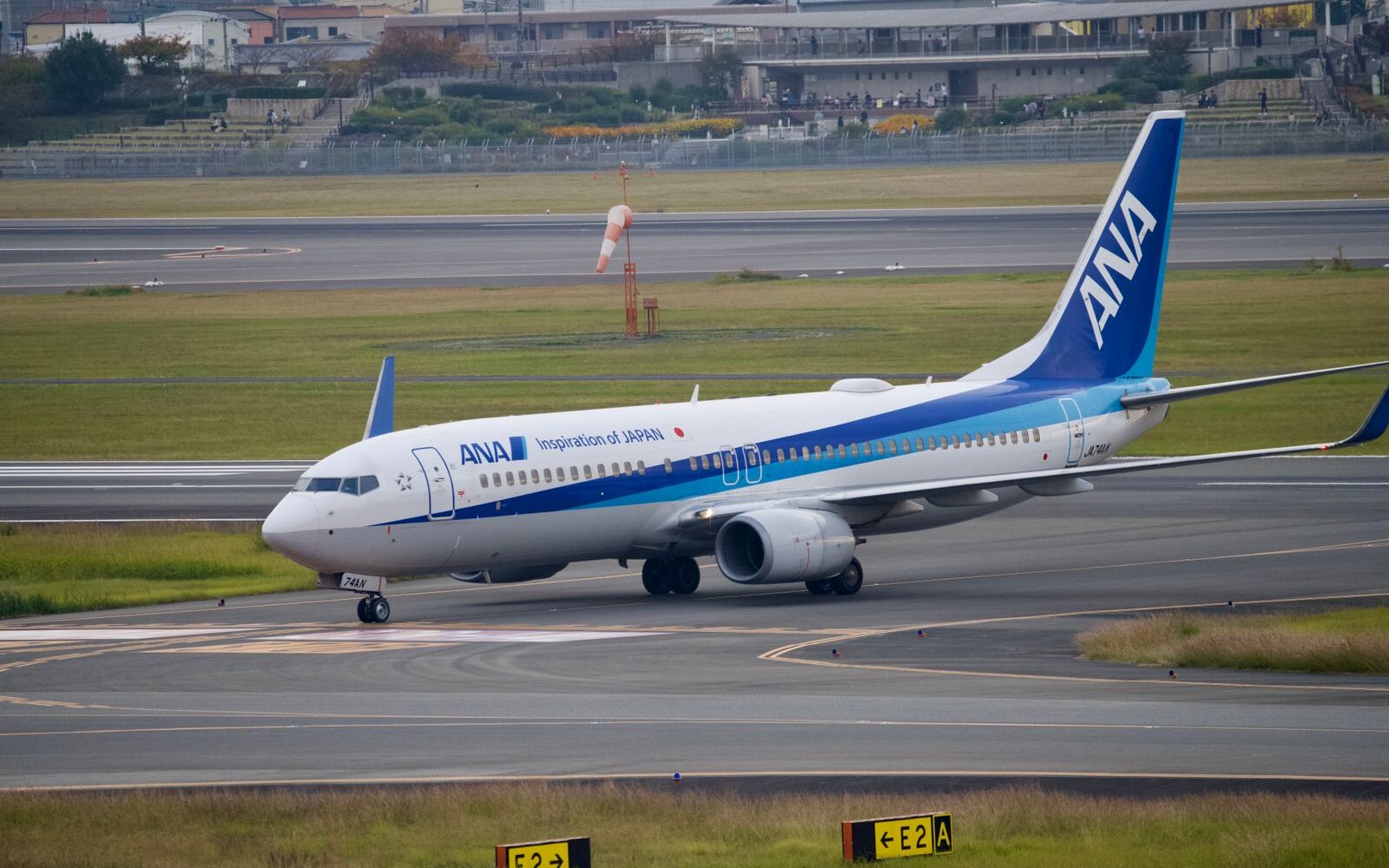
- Itami (ITM) — domestic flights only, mostly JAL and ANA and their regional partners, to Tokyo, Sapporo, Fukuoka, Okinawa and dozens of other Japanese cities. Close to the centre. No JR station.
- Kansai International (KIX) — all international flights, plus a share of domestic flights, especially the low-cost carriers. Further out, and served by JR and Nankai trains. See our Kansai Airport to Osaka guide.
- Kobe Airport (UKB) — a third, smaller option on an island off Kobe, used mainly for domestic flights. Handy for Kobe; rarely the best choice for Osaka.
If you are flying into Japan from abroad, you will almost certainly land at Kansai or in Tokyo. You will meet Itami if you fly within Japan: a Tokyo–Osaka hop, a side trip to Hokkaido or Okinawa, or a domestic connection after landing in Tokyo on an international flight. For the Tokyo run specifically, compare flying with the Shinkansen in our Osaka to Tokyo guide — the train usually wins door to door, but Itami narrows the gap.
One rule that shapes everything at Itami: because the airport is surrounded by homes, flights are restricted to roughly 07:00 to 21:00. There are no red-eyes and no midnight arrivals, and on the ground that means the transport runs to a predictable daytime rhythm.
Your first ten minutes
Itami is small enough that arriving is almost relaxing. There is no immigration and no customs, since every flight is domestic, so the only wait is at the baggage belt.
- Collect your bags and walk out. The arrivals exits open straight onto the kerb, where the bus stops and the taxi rank are. The monorail station is signposted from the arrivals hall and connected to the terminal on foot.
- Decide by luggage, not by habit. Two large suitcases: bus. A backpack and a Shinkansen to catch: monorail. Four people and a pushchair: taxi.
- Use the card you already have. If you are flying in from Tokyo, the Suica or PASMO card in your pocket works on the monorail, the Hankyu, the Midosuji line and almost everything else in Kansai. There is no need to buy an ICOCA just because you have changed cities.
- Get cash if you need it. The airport has ATMs, and a few yen in your pocket smooths the bus ticket and the first meal. Our money guide lists the cards that work most reliably.
Option 1: the airport limousine bus
For most travellers, this is the answer. The airport buses leave from stops directly outside the terminal, take your luggage in the hold, and deliver you to the main hubs without a single change of train.
| Destination | Journey time | Adult fare |
|---|---|---|
| Osaka Station / Umeda area | About 30 minutes | Around ¥660 |
| Namba | About 25 minutes | Check current fare |
| JR Namba (OCAT) | About 25–35 minutes | Check current fare |
| Kyoto Station | About 50–55 minutes | Check current fare |
| Kobe Sannomiya | About 40 minutes | Check current fare |
How to use it
- Find the right stop. Each destination has its own numbered stop outside arrivals, with signs in English. Staff at the stops are used to pointing confused visitors in the right direction.
- Buy a ticket first. Ticket machines stand by the bus stops. Keep some yen handy in case your card is not accepted; our money and payments guide explains where cash still matters.
- Luggage goes underneath. Staff load it and give you a tag; you collect it at the other end.
- Check the drop-off points. The Umeda buses stop at more than one place around Osaka Station, and the Namba buses serve more than one Namba. Pick the stop nearest your hotel, not the first one called.
The catch: traffic
The buses use the expressways, and the Osaka expressways jam at rush hour and on the evenings before holidays. The scheduled 30 minutes to Umeda can stretch well past that at 08:00 on a weekday or on a Friday evening in Golden Week. If you land at a busy time with an appointment to keep, take the train; if you land mid-afternoon with two suitcases, take the bus and enjoy the view.
Option 2: the Osaka Monorail, then a train
The Osaka Monorail starts at the airport itself — the station is a short walk from arrivals, well signposted — and runs east across the northern suburbs. It does not go into central Osaka, but it connects with two lines that do, and choosing between them depends on where you are staying.
Via Senri-Chuo and the Midosuji line
Ride the monorail to Senri-Chuo (around ¥340) and change to the Kita-Osaka Kyuko line, whose trains run straight through onto the Osaka Metro Midosuji line: Shin-Osaka, Umeda, Shinsaibashi, Namba and Tennoji, all without another change. This is the best rail route for anyone staying along the Midosuji line, and by far the easiest way to reach Shin-Osaka for the Shinkansen. Allow roughly 40–50 minutes to Namba including the change. Our subway guide explains the line.
Via Hotarugaike and the Hankyu line
Ride the monorail one stop to Hotarugaike and change to the Hankyu Takarazuka line into Hankyu’s Osaka-umeda terminal. This is the quicker rail route to Umeda itself, and useful if your hotel is on the Hankyu side of the station. From the Hankyu terminal, see our Osaka Station guide for the walk to wherever you are going.
When the monorail makes sense
- At rush hour, when the expressway is jammed and the trains are not.
- For Shin-Osaka, which the Midosuji route reaches directly.
- With light luggage. The monorail and the changes are easy with a backpack and tiresome with two large suitcases on crowded trains.
- For the northern suburbs and beyond: the monorail continues to Bampaku-kinen-koen, for Expocity and the Expo ’70 park, and on to stations connecting with the Hankyu Kyoto line and the Keihan line.
An ICOCA card works on the monorail, the Hankyu, Kita-Osaka Kyuko and the subway, so you can tap through the whole journey. Two pass notes: the Osaka Amazing Pass does not cover the monorail, while the Kansai Railway Pass Lite covers both the monorail and the Hankyu — see our Kansai rail passes guide. A JR Pass is no use at all here, because JR does not serve the airport.
Option 3: a taxi

Taxis wait at a rank outside arrivals. Into central Osaka, expect to pay several thousand yen, plus expressway tolls if the driver takes the expressway, which is usually the fastest route; ask for an estimate at the rank before you set off. For one or two people, the bus is so much cheaper and so nearly as quick that a taxi only makes sense if you have mobility needs or a very early or late connection. For three or four people with heavy luggage, going door to door, the sums start to look reasonable. Our Osaka taxis guide explains fares, tolls and paying by card.
Straight to Kyoto, Kobe or Nara
You do not have to go through Osaka at all.
- Kyoto: the direct limousine bus to Kyoto Station takes about 50–55 minutes, with luggage in the hold and no changes. That is simpler than any rail route from Itami, all of which involve at least two changes. See our Kyoto day trip guide for what to do when you get there.
- Kobe: about 40 minutes by bus to Sannomiya. Itami is on the Kobe side of Osaka, which makes this one of the shortest airport transfers in the region. See Kobe day trip and Osaka to Kobe.
- Nara: there has been a direct bus in the past; check whether it is currently running. Otherwise, the simplest route is into Osaka, then Kintetsu from Namba — see Osaka to Nara.
Connecting to Kansai Airport
If you are flying into Itami on a domestic flight and out of Kansai on an international one, there is a direct limousine bus between the two airports, which takes a little over an hour when the traffic is kind. It is the easiest way across, since the rail alternatives involve several changes.
Two warnings. First, leave a very wide margin: the bus is at the mercy of the expressways, and international check-in closes long before departure. A same-day connection with only a couple of hours in hand is a gamble we would not take. Second, if your domestic and international flights are on separate tickets, a delay on the first is your problem, not the airline’s. If the timing is tight, consider flying into Kansai directly, or spending a night in Osaka between the two.
Itami or the Shinkansen from Tokyo?
If you are reading this because you are deciding how to get from Tokyo to Osaka, here is the honest comparison. The flight from Haneda to Itami is only about 70–80 minutes in the air, but once you add the trip out to Haneda, check-in, security, boarding and the transfer in from Itami, the door-to-door time is typically three and a half hours or more. The Nozomi Shinkansen takes about 2 hours 21 minutes from Tokyo Station to Shin-Osaka, runs every few minutes, and delivers you to a station on the Midosuji line. A reserved seat costs roughly ¥14,000–15,000, a price that barely moves; flight prices are dynamic, and can be much cheaper when booked early or much dearer at peak times.
For most people travelling between central Tokyo and central Osaka, the train wins on time, comfort and simplicity. Flying makes sense if you are starting near Haneda, if you find a genuinely cheap fare, or if you are connecting from an international arrival at Haneda. Itami’s closeness to the city is what keeps flying competitive at all; flying into Kansai Airport instead would lose the race by a distance. Our Osaka to Tokyo guide compares every option, including the night bus.
Which option for where you are staying
| Staying in | Best option | Rush-hour alternative |
|---|---|---|
| Umeda, Osaka Station | Limousine bus to Osaka Station | Monorail + Hankyu via Hotarugaike |
| Namba, Dotonbori | Limousine bus to Namba | Monorail + Midosuji via Senri-Chuo |
| Shinsaibashi, Honmachi | Monorail + Midosuji | Same |
| Shin-Osaka | Monorail + Midosuji | Same |
| Tennoji | Monorail + Midosuji, or bus to Namba then subway | Monorail + Midosuji |
| Kyoto | Limousine bus to Kyoto Station | Bus, leaving extra time |
| Kobe | Limousine bus to Sannomiya | Bus, leaving extra time |
| Bay area, USJ | Bus to Osaka Station, then JR | Monorail + Hankyu, then JR from Osaka Station |
For more on each area, see our guides to Umeda, Namba and Shinsaibashi, and hotels near Osaka Station if you have not booked yet.
Flying out of Itami
The same routes run in reverse, with two things to think about.
- Get there in good time. Domestic check-in cut-offs are short — often around 20 minutes before departure for checked bags — but security queues at busy times are not, and missing the cut-off by a minute means missing the flight. Aim to arrive an hour before departure, more at holiday peaks.
- Allow for traffic on the bus. If you are taking the limousine bus at rush hour, build in extra time or take the monorail route, which is immune to the expressways.
- Know your terminal wing. JAL and its partners use one side of the building, ANA and its partners the other, and the bus stops and signs are split accordingly. Check which airline operates your flight, since codeshares can confuse it.
- Send big bags ahead. If you are going somewhere else first, luggage forwarding to the airport, or to your next hotel, saves hauling cases through the train changes. See luggage storage in Osaka.
At the airport
Itami was comprehensively renovated a few years ago, and it is now a bright, compact and easy airport, the kind where you can walk from the bus to the gate in minutes. A few things worth knowing:
- Food and souvenirs. The shops before security are a good last chance for Kansai souvenirs and food to take home. Our Osaka souvenirs guide explains what is worth buying.
- The observation deck. The terminal has a free rooftop deck looking over the runway, which is a pleasant way to use half an hour if you are early.
- Plane-spotting. Itami is famous among aviation fans for the embankment of the Senri River at the end of the runway, where landing jets pass almost directly overhead, and for the Itami Sky Park, a long park beside the runway. Neither is worth a special trip for most people, but if you have a spare afternoon and a fondness for aircraft, they are a genuinely local experience.
- Connectivity. Sort out mobile data before you arrive if you can; our SIM card and wifi guide covers the options.
With time to spare: a short layover
Because Itami is so close to the city and the northern hills, a few hours between flights is enough for something better than the departure lounge. Minoo Park, with its forest walk to a waterfall, is a short Hankyu ride from Hotarugaike via a change at Ishibashi-handai-mae, and the Expo ’70 park and Expocity are a few stops east on the monorail. Leave your bags in lockers at the airport, and give yourself a generous margin to come back.
What to skip
- A taxi for one or two people, unless mobility or timing demands it. The bus is fast, frequent and a fraction of the price.
- The monorail with heavy luggage at rush hour. Crowded trains and two changes with large cases are the worst of both worlds.
- A tight Itami-to-Kansai connection. Leave hours, not minutes.
- Buying a pass just for the airport run. A single fare costs a few hundred yen. Tap an ICOCA card and move on.
Itami airport to Osaka: FAQ
How do I get from Itami airport to Osaka?
The easiest way is the limousine bus: about 30 minutes to Osaka Station and Umeda for around ¥660, or about 25 minutes to Namba. The alternative is the Osaka Monorail to Senri-Chuo or Hotarugaike, then the Midosuji subway or the Hankyu line into the city.
How long does it take from Itami to central Osaka?
About 25–30 minutes by bus when traffic is light, and roughly 30–50 minutes by monorail and train, depending on where you are going and how long the change takes.
What is the cheapest way from Itami to Osaka?
The monorail and train combination and the limousine bus are both cheap, costing a few hundred yen. The bus is usually simpler; the train is more predictable at rush hour.
Is Itami an international airport?
No. Despite its official name, Osaka International Airport has handled only domestic flights since 1994. International flights use Kansai International Airport.
Is there a train from Itami to Kyoto?
Not directly. The limousine bus to Kyoto Station, about 50–55 minutes, is much simpler than any rail route, all of which need at least two changes.
How do I get from Itami to Kansai Airport?
By the direct limousine bus between the two airports, which takes a little over an hour in normal traffic. Leave a generous margin if you are connecting to an international flight.
Does the JR Pass cover Itami?
No. JR does not serve the airport. Use the bus, or the monorail with the Hankyu or Midosuji lines; an ICOCA card works on all of them.
Can I use ICOCA at Itami?
Yes, on the monorail and the connecting trains. For the buses, buy a ticket at the machines by the stops unless you have confirmed your card is accepted on that route.
Where to go next
For every way into the city, start with how to get to Osaka, and if you are flying in from abroad, read Kansai Airport to Osaka. Once you are here, the Osaka transportation guide covers getting around, and first-time Osaka tips covers the rest.
Then plan the days themselves with the Osaka itinerary hub and things to do in Osaka.