This article contains advertising. Our booking links are routed through a partner that adds commission tracking automatically, so if you book through one we earn a commission from the provider, at no extra cost to you. It never affects what we recommend. Affiliate disclosure
You walk through a green warp pipe and the sound changes. That is the moment the whole thing turns on — the coin chimes, the Koopas rocking on their heels, the question blocks hanging at exactly the height you have wanted to punch them since you were eight. Super Nintendo World is a small area, and the amount of money and obsessive craft poured into it per square metre is faintly absurd. It is also, for a lot of people, the single reason they booked a flight to Osaka.
Which makes it worth saying plainly, at the top: your park ticket does not guarantee you get in. Super Nintendo World Japan is a controlled-entry area inside a theme park, and every year a large number of visitors spend ¥9,000 on a Studio Pass, arrive at eleven o’clock, and never see the inside of it. This guide is mostly about not being one of them, and then about what to do with the two or three hours you get.
What Super Nintendo World actually is
It opened at Universal Studios Japan in March 2021 — the first of the Nintendo areas anywhere, ahead of Hollywood and Orlando — and it was expanded in late 2024 with Donkey Kong Country, which added the Mine-Cart Madness coaster.
The area is compact: a walled bowl you enter through a pipe, with Peach’s Castle on one side, Bowser’s Castle on the other, and the Mushroom Kingdom laid out between them in three dimensions. There are three rides, one restaurant, one large shop, and a layer of interactive games threaded through the scenery that you only unlock if you buy a wristband.
Two to three hours is the honest visit length. Enthusiasts with a Power-Up Band and a full key hunt can stretch it to four. Anybody expecting a whole day here will be finished by lunchtime.
The entry problem

Why it exists
The area is small and the demand is enormous. Rather than let it fill until it becomes unsafe, USJ meters admission — and in the 25th anniversary season, which runs from 31 March 2026 to 30 March 2027, that metering bites earlier in the day than it used to. Headline standby waits across the park have been reported at 180 to 240 minutes on peak dates. Assume the area is capped unless you are visiting on a genuinely quiet weekday.
The three ways in
| Method | Cost | Reliability | Catch |
|---|---|---|---|
| Express Pass including area entry | from about ¥10,800 on top of admission | Highest | Only some variants include it — check the ride list |
| Free Area Timed Entry Ticket | Free | Moderate | Claim in the app only after you are inside the gates; goes fast |
| Walk in before crowd control | Free | Low to moderate | Requires being at the gate very early on a quieter day |
| VIP Pass | Highest tier | Highest | Includes Donkey Kong Country entry, which several Express variants do not |
The Express Pass route. This is the reliable option and the reason to read the product page rather than the product name. USJ sells more than thirty Express Pass variants, and two passes both called “Express Pass 7” can cover completely different attractions. Only some name Super Nintendo World area timed entry. If the pass does not explicitly say so, it will not get you in. This is the most expensive mistake made at this park, and it is made constantly.
The free timed-entry route. Area Timed Entry Tickets are free, issued through the official USJ app, and claimable only once you have physically entered the park. You need the app installed, your park ticket already loaded into it, everyone in your group’s tickets linked, and working mobile data. On a busy day they can be gone within the first hour, and the slots that remain will be late afternoon.
Note the trap in the sequencing: you cannot claim a ticket before you are through the turnstiles, and the best slots go to whoever is through them first. Being at the gate forty-five minutes before opening is effectively worth an Express Pass.
The walk-in route. On genuinely quiet days — midweek in late January, early February, or mid-June — the area runs without entry control, and you simply walk in. Even on moderately busy days there is often a window at opening before crowd control begins. This is free and it works, but it depends entirely on the date. Use the official ticket price calendar as your crowd forecast: USJ charges more on days it expects to be busy.
Setting the app up properly
Do this at your hotel the night before, not in the queue.
- Install the official Universal Studios Japan app and set the language.
- Load every ticket in your party into it, not just yours. A group cannot claim a shared timed-entry slot from separate phones with separate tickets.
- Check your mobile data actually works — see our SIM card and pocket wifi guide. Park wifi is congested at exactly the moment you need it.
- Charge the phone, and bring a power bank. The app is your ticket, your entry pass and your queue times. A flat battery ends the day.
If you do not get in
It happens. Check the app periodically through the day, because slots are occasionally released when no-shows are reprocessed, and go and enjoy the rest of the park — the Wizarding World, The Flying Dinosaur and whatever Universal Cool Japan is running are genuinely excellent and rarely capped. Standing outside the pipe being upset is not a plan. And on a second visit, buy the Express Pass.
Mario Kart: Koopa’s Challenge
The headline ride, and the technically most ambitious thing in the park. You enter through Bowser’s Castle — the queue itself is worth slowing down for, running past trophies, murals and a life-size Bowser — then put on an augmented-reality visor that clips to a Mario cap, sit in a four-person kart, and race.
The ride is a physical dark-ride track with AR layered over it. You steer within a limited arc, and you throw shells at targets by aiming your head and pressing a button on the wheel. Hitting targets scores; the outcome varies between runs, which is what makes it re-rideable.
Honest verdict: extraordinary and slightly divisive. The AR takes a full run to learn — first-timers frequently spend the ride working out what they are looking at, then wish they could go again. The visor is heavy, and it does not always sit comfortably over glasses. Nothing else in the world does what this does, and if you have one ride in the area, this is it.
Practical: the visor requires the cap, which is provided. It is a physically dark, enclosed experience. There is a height requirement, and this is one of the rides at which visiting families most often get caught out at the gate.
Yoshi’s Adventure
A slow, elevated track ride on which you sit on a Yoshi and follow Captain Toad’s treasure map, spotting coloured eggs hidden around the land. There are no drops, no dark tunnels and no thrills at all, which is precisely the point — this is the ride small children can do.
Honest verdict: genuinely charming with a five-year-old and a waste of an hour without one. The real payoff for adults is the elevated view over the whole area, which is the best vantage point in Nintendo World and the source of most good photographs of it. If the queue is under fifteen minutes, ride it for the view. If it is forty, do not.
Donkey Kong Country and Mine-Cart Madness
Donkey Kong Country opened inside Nintendo World in late 2024, after a delay from its original spring target, and it substantially changed the area — both by adding the best ride in it and by adding a second layer of crowding.
Mine-Cart Madness sits inside the Golden Temple and uses a ride system built to sell one specific illusion: that your cart jumps a broken track. It does it by running the cart on a hidden lower rail while the visible rail appears to end. It is convincing, it is genuinely thrilling without being frightening, and it includes a barrel-blast launch. This is a better ride than Mario Kart on pure ride-craft terms, though less novel.
The catch: at peak times Donkey Kong Country can carry its own entry requirement on top of Nintendo World’s, which means getting into the area is not the same as getting on this coaster. The VIP Pass tier includes access; a number of Express Pass variants do not. This is the second thing to check on the product page, after Nintendo World entry itself.
The Power-Up Band
What it does
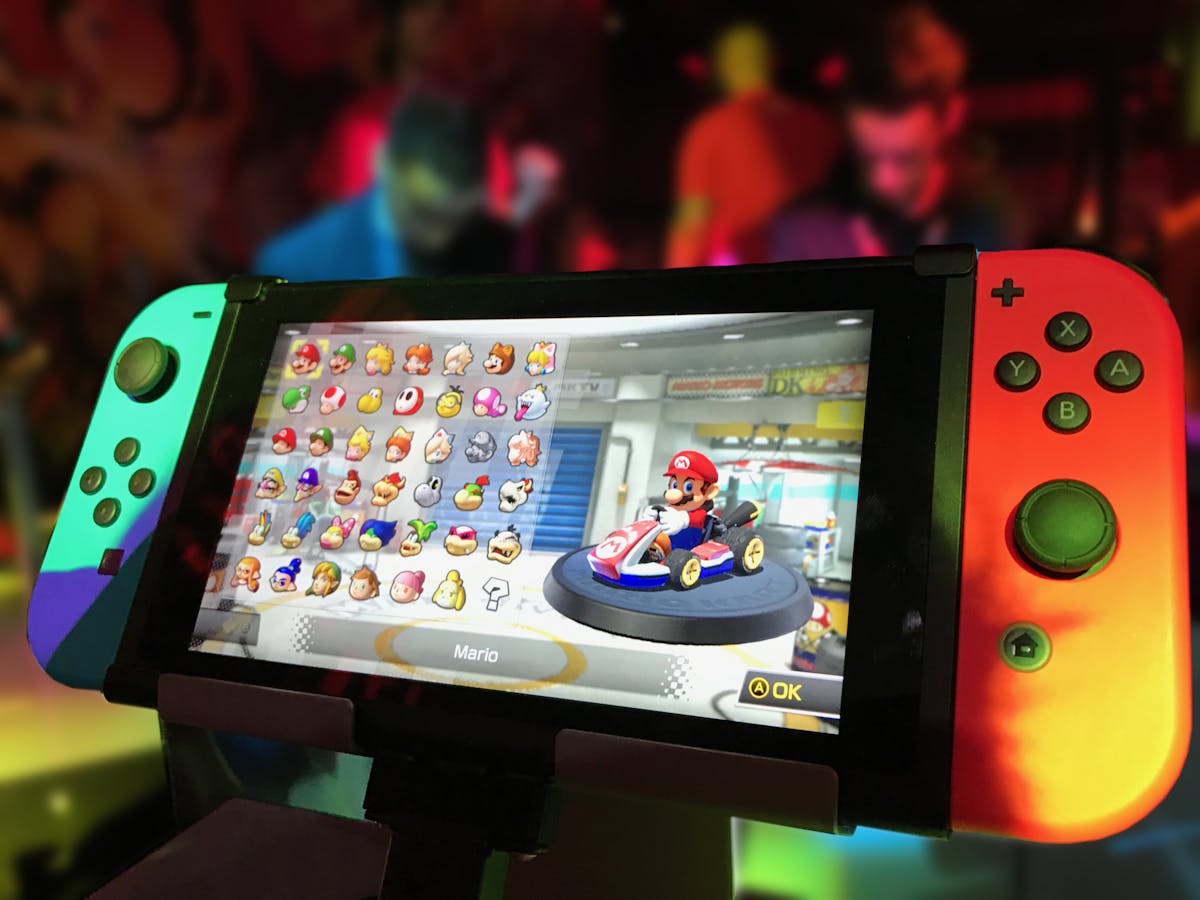
The Power-Up Band is a wristband, around ¥4,000, sold in several character designs, that pairs with the USJ app. Wearing it, you can punch question blocks and they respond, register hits on the interactive games scattered around the land, collect digital coins, and track your total against everyone else in the park on the leaderboards.
It is also the only way to play the key challenges — a set of physical mini-games hidden through the area, each guarded by a Bowser Jr. minion. Beat them, collect the keys, and you unlock the boss battle inside Bowser’s Castle, which is the closing set-piece and is only available to band holders.
Is it worth ¥4,000?
Our honest verdict, which the official material will not give you:
- With a child aged roughly six to twelve: yes, unequivocally. It converts a walk-through area into two extra hours of activity, and it is the difference between “we looked at Mario” and “we played Mario”.
- As an adult couple who want to ride Mario Kart and photograph the place: no. The band adds queueing for mini-games in a land you already have limited time in. Two of you costs ¥8,000, which is a very good dinner in Dotonbori.
- As a serious Nintendo fan who wants the complete experience: yes, and budget three to four hours in the area rather than two.
Critically, the band is not required for any of the three rides. Staff will offer it enthusiastically at the entrance. It is entirely optional.
Two practical notes: it needs pairing with the app before it does anything, which people routinely fail to do and then assume the band is broken; and it works at the Hollywood and Orlando Nintendo areas too, so it holds some value if you are visiting those.
The land itself
Do not spend your whole slot in queues. The area is the attraction, and a slow lap of it is worth twenty minutes.
- The Koopas, Goombas and Piranha Plants move. All of them, constantly, on loops of varying subtlety. Stand still and watch one for thirty seconds.
- The elevation is real. Pipes, staircases and bridges connect three vertical levels, and the sight lines were designed so the land looks complete from every one of them. The upper walkway near Yoshi’s Adventure is the best photograph.
- Peach’s Castle is walkable inside and quieter than the rest of the area, and it is where to go if you need five minutes out of the noise.
- The music is a live-mixed arrangement that shifts as you move between zones. This is the detail people notice last and remember longest.
- Photo spots are heavily used and the queues for the best of them — the Mario and Luigi meet-and-greet in particular — can be as long as a ride queue. Decide in advance whether you want that photograph enough.
Eating and shopping
Toadstool Cafe — known as Kinopio’s Cafe in Japanese — is the area’s restaurant, and it is themed to the point of absurdity, with Toad visible in the kitchen window and food shaped like the game. It usually requires an app reservation, which fills early. Book it in the morning, not when you are hungry, and expect roughly ¥1,500–2,500 for a main.
Is the food good? It is fine. It is theme-park food arranged beautifully. You are paying for the room and the plate design, and if you have children who care, that is a completely reasonable thing to pay for. If you do not, eat elsewhere in the park and use the time on a ride.
The shop at the area entrance carries the exclusive merchandise, and it is busiest in the last hour of the day. If you know you want something, buy it when you arrive rather than fighting for it later. Note that Osaka also has Nintendo OSAKA, the official store on the thirteenth floor of Daimaru Umeda beside JR Osaka Station, open 10:00–20:00 — different stock, no park ticket required. Our Osaka anime and pop culture guide covers that and the rest of the city’s game shopping.
With children
Nintendo World is the best part of USJ for children between about six and twelve, and a mixed experience below that.
- Under 5: Yoshi’s Adventure, the scenery, and the Power-Up Band’s simpler challenges. Mario Kart will likely be a height problem, and the AR visor is not designed for small heads.
- 6–12: the sweet spot. Buy the band. Do the key challenges. Budget three hours.
- Teenagers and adults: the rides, at speed, then Donkey Kong Country, then out.
Measure your children at home. Height limits are strictly enforced at the ride gate, without exception and without appeal, and being turned away at the front of a ninety-minute queue is a genuinely miserable way to spend a morning. Our USJ with kids guide covers the wider park, and Osaka with kids the rest of the city.
A plan for the area
Assuming a morning timed-entry slot:
- Arrive at the pipe five minutes before your slot. Late arrivals are not always accommodated.
- Mario Kart first. It has the longest queue and it will only get longer.
- Mine-Cart Madness second, if your entry covers Donkey Kong Country.
- Then the land. A slow lap, the upper walkway, Peach’s Castle.
- Key challenges next, if you have bands, working outward from the least crowded.
- Yoshi’s Adventure last, and only if the queue is short.
- Boss battle to close, for band holders.
- Buy anything you want on the way out, or earlier if the shop looks calm.
That is a comfortable three hours. Compress it to ninety minutes by doing Mario Kart, Mine-Cart Madness and one lap, and skipping everything else — which is the right call if your slot is late and the park closes at seven.
What it actually costs
| Item | Rough 2026 cost per adult | Necessary? |
|---|---|---|
| 1-Day Studio Pass | from about ¥8,900, dynamic by date | Yes |
| Express Pass with area entry | from about ¥10,800, often far more | On busy days, effectively yes |
| Power-Up Band | about ¥4,000 | No — optional, and best with children |
| Toadstool Cafe main | ¥1,500–2,500 | No |
| Train from central Osaka | about ¥400 return | Yes |
| Merchandise | however much you decide | No |
A realistic all-in figure for an adult who wants the area properly on a busy day is ¥25,000–30,000. Without an Express Pass, on a quiet weekday, closer to ¥12,000. That gap is the single biggest budget decision at this park, and it is worth setting against our Osaka trip cost breakdown before committing — three days of very good eating in Osaka costs less than one Express Pass. Ways to claw it back are in money-saving tips and budget travel in Osaka.
Picking your date
More than anything else, the date decides whether this is a good day or a queue with scenery. The 25th anniversary season keeps the baseline high all the way to March 2027, but the variation within it is enormous.
- Best: weekdays in late January and early February, and mid-June before the school holidays, accepting the rainy season. Osaka in winter covers what a January park day feels like — cold, clear and comparatively empty.
- Acceptable: most non-holiday weekdays in late autumn. See Osaka in autumn.
- Difficult: any Saturday or Sunday, and the whole of the summer holidays — heat plus crowds is the worst combination this park offers.
- Avoid outright: Golden Week, Obon in mid-August, and the New Year period.
Our best time to visit Osaka page has the month-by-month picture, and Osaka weather the temperatures you will be queuing in.
The rest of your USJ day
Nintendo World is two to three hours of an eight- to ten-hour day, so the plan around it matters. If your area slot is in the morning, ride The Flying Dinosaur and Hollywood Dream on standby before it, then take the Wizarding World of Harry Potter in the late afternoon when Hogsmeade empties out. If your slot is in the afternoon, invert that.
Whatever Universal Cool Japan is running that season is frequently the best-executed attraction in the park and is temporary, which makes it worth prioritising over a second lap of anything permanent. The full ranking — including what to skip — is in our Universal Studios Japan guide.
Eat late. The park’s restaurants all fill at noon, and 13:30 costs you forty fewer minutes of queueing. Better still, eat lightly in the park and save the real meal for the city afterwards; the park is fifteen minutes from some of the best food in Japan, and late-night food in Osaka covers what is open when you get back at nine.
What to skip
- Yoshi’s Adventure at any queue over twenty minutes, unless you have a small child.
- The character meet-and-greet queue, unless the photograph genuinely matters to someone in your group.
- Toadstool Cafe without a reservation. The walk-up wait is not worth it for the food.
- The Power-Up Band for adults travelling without children. Save the ¥8,000.
- Re-riding Mario Kart at a ninety-minute wait. It is better the second time, but not that much better.
Practical notes
- Lockers are required at Mario Kart and Mine-Cart Madness for loose items. Free short-term lockers are at the ride entrances, but travel light into the area anyway.
- The area is largely outdoors and has limited shade. In an Osaka July that matters — see Osaka in summer. Carry water; the vending machines take IC cards.
- Getting there: Universal City Station on the JR Yumesaki line, about 15 minutes from Osaka Station changing at Nishikujo. See the transportation guide and use an ICOCA card.
- The Osaka Amazing Pass does not cover USJ, at all, in any form.
- Staying nearby buys you an early arrival, which is the most valuable thing at this park — see hotels near USJ.
Super Nintendo World Japan FAQ
Do I need a separate ticket for Super Nintendo World?
Not a separate paid ticket, but you do need entry: an Express Pass that explicitly names the area, a free Area Timed Entry Ticket claimed in the USJ app after you enter the park, or arriving early enough to walk in before crowd control starts. A standard Studio Pass alone does not guarantee admission.
How do I get a free Area Timed Entry Ticket?
In the official USJ app, after you have physically entered the park, with your ticket already loaded into the app and mobile data working. Claim it the moment you are through the turnstiles. On busy days they can be gone within the first hour.
How long should I spend in Super Nintendo World?
Two to three hours covers the three rides and a proper look at the land. Four if you have Power-Up Bands and intend to complete the key challenges and the boss battle.
Is the Power-Up Band worth buying?
With children aged six to twelve, yes — it roughly doubles the time the area holds their attention. As adults who mainly want to ride Mario Kart, no. It is not required for any ride.
Is Mine-Cart Madness included with Nintendo World entry?
Not always. At peak times Donkey Kong Country can require its own entry on top of the area’s. The VIP Pass includes it; several Express Pass variants do not. Check the specific product before you buy.
What is the best time of year to visit?
Weekdays in late January, early February or mid-June, outside Japanese school holidays. Avoid Golden Week, Obon, New Year and weekends throughout the 25th anniversary season. The official ticket price calendar is a reliable crowd forecast — cheap days are quiet days.
Can I ride Mario Kart if I wear glasses?
Yes, though the AR visor fits over glasses awkwardly and can be uncomfortable on a longer face. Contact lenses are more comfortable if that is an option for you.
Is Super Nintendo World Japan better than the American versions?
Osaka was first, has the full Donkey Kong Country expansion, and is generally regarded as the most complete of the Nintendo areas. It is also the busiest.
Where to go next
This page assumes you have already worked out the ticket and Express Pass question — if not, our Universal Studios Japan guide covers the whole park, the pass tiers and a one-day plan, and USJ with kids covers doing it with a family. For sleeping close enough to be at the gate early, see hotels near USJ.
For the rest of the city, start with things to do in Osaka and the Osaka itinerary hub, and read Osaka travel tips before you fly. Game and anime shopping beyond the park is in our pop culture guide and the Den Den Town guide.
Fitting a park day into a short trip? See our 3 days in Osaka itinerary.
Getting in is a separate problem from getting into the park, and it is the one that catches people out. Our Universal Studios Japan tickets guide explains all three routes into the area and which Express Pass variants guarantee one.