This article contains advertising. Our booking links are routed through a partner that adds commission tracking automatically, so if you book through one we earn a commission from the provider, at no extra cost to you. It never affects what we recommend. Affiliate disclosure
There is a Trevi Fountain on the fourth floor of a building in Shinsekai. Two floors above it you will find a Persian palace, a Balinese temple bath and a tiled hammam, and somewhere in between is a bath themed on the lost city of Atlantis where, by the management’s own account, about twenty kinds of tropical fish keep you company. It is kitsch on an industrial scale. It costs ¥1,500 to get in, and the baths stay open all night.
That is Spa World Osaka, and it is the city’s best answer to the question of what to do at eleven at night when you are tired, a little cold and not ready for bed. This guide covers Spa World and its rival by the bay, Solaniwa Onsen: what each is like inside, what it costs in late 2026, the rules that trip foreign visitors up (tattoos, above all), how staying the night works, and which one suits which kind of evening. If what you are after is a small neighbourhood bathhouse with a ¥600 entry fee and a few regulars, that is a different and equally good experience, and our guide to Osaka’s onsen and sento covers it.
What a big Osaka bathhouse is, and what it isn’t
Japanese has a name for places like this: super sento, the “super” public bath. A neighbourhood sento is a public bathhouse in the plain sense: one or two tiled rooms, a handful of tubs and a set price, ¥600 for adults at the baths in Osaka’s public bathhouse association. A super sento is a leisure centre built around the bath. There are many baths in different themes and temperatures, several saunas, rooms full of reclining chairs, places to eat, and something to wear between soaks, and the whole idea is that you stay for the afternoon, or the night.
You pay more for all that. Spa World starts at ¥1,500, and Solaniwa at ¥2,310 plus a ¥150 bathing tax, against the ¥600 of a sento. In return, towels are included at both, and so is something to wear between baths: loungewear at Spa World, a cotton yukata (a light summer kimono) at Solaniwa. Both publish their rules and prices in English, which a backstreet sento rarely does, and both are far less intimidating for a first-timer than a tiny local bath where everyone knows each other.
What a super sento is not is traditional. Nobody goes to Spa World for quiet contemplation. The setting is closer to a theme park than a mountain inn, and if what you want is wooden bathhouses, steam and silence, you need to leave the city: Kinosaki Onsen is the classic overnight trip, or there are the city’s hotels with their own hot-spring baths. The big bathhouses are for a different mood altogether: a long, warm, slightly silly evening that costs about the same as a decent lunch.
Spa World Osaka
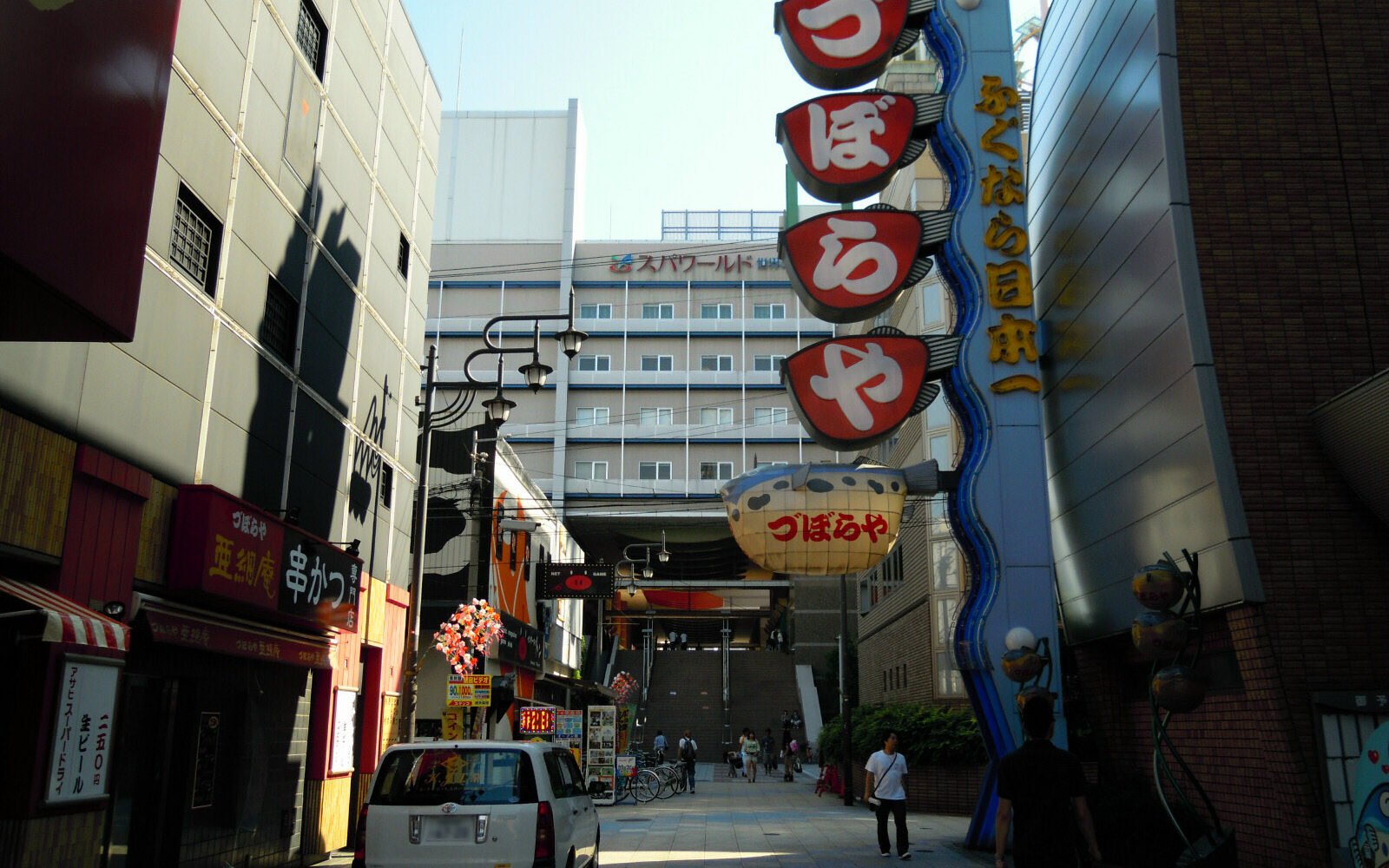
Spa World stands on the southern edge of Shinsekai, right by JR Shin-Imamiya Station, a big pale block with its name across the top. Inside are two floors of themed baths, a pool floor with water slides, stone saunas, places to eat, a gym and an attached hotel. And it keeps the baths open nearly round the clock: from 10:00 until 08:45 the next morning, with a break from 08:45 to 10:00 while the baths are inspected. You could, in theory, walk in on a Tuesday afternoon and not leave until Wednesday breakfast, and the place is set up for exactly that.
Two zones that swap every month
The baths are split between two themed floors: the European Zone on the fourth floor and the Asian Zone on the sixth. One is the men’s side and the other the women’s, and they swap over every month, so which you get depends on when you go. The Opening Hours page on Spa World’s website says which zone is which this month. On changeover days, bathing finishes an hour early, at 07:45 instead of 08:45.
The European Zone is the louder of the two. Its Ancient Rome bath has a copy of the Trevi Fountain, the “Mouth of Truth” from Roman Holiday and a statue of the emperor Augustus, plus a “Golden Bath” that cycles you between warm and cold water. Greece is a herbal bath scented with lavender, rosemary, sage and jasmine, under a ceiling of changing stars with Athena looking on from a mock Parthenon. Atlantis is a half-body bath with micro-bubbles and those tropical fish, and the Blue Grotto of Capri is a cave bath lit an unearthly blue. There is an open-air Spanish bath with a foot bath and two waterfalls, a bright white Mediterranean bath that takes in natural light, and a Finnish sauna with a cold plunge beside it.
The Asian Zone is calmer and, for most visitors, the better of the two. Its highlight is Yamazato no Yu, a Japanese open-air bath set in a mock mountain stream, where you can lie back and listen to the wind in the trees. There is a hinoki cypress bath with that clean, woody smell; a hammam modelled on a mosque courtyard, with coloured tiles and a waterfall shower to pound your shoulders; a Persian bath after the palace at Persepolis, where you can lie flat in one tub or sit and talk in another; a Balinese bath with carved reliefs and stonework; and a Singapore spa themed on Peranakan culture, with four baths including one charged with oxygen and micro-bubbles.
Is it worth timing your visit for one zone over the other? Not really. Both have far more baths than you will use in an evening, and the pleasure of the place lies less in any single pool than in drifting between them with nowhere to be. If you do get the choice, the Asian Zone’s open-air bath on a cold night is the best single moment in the building.
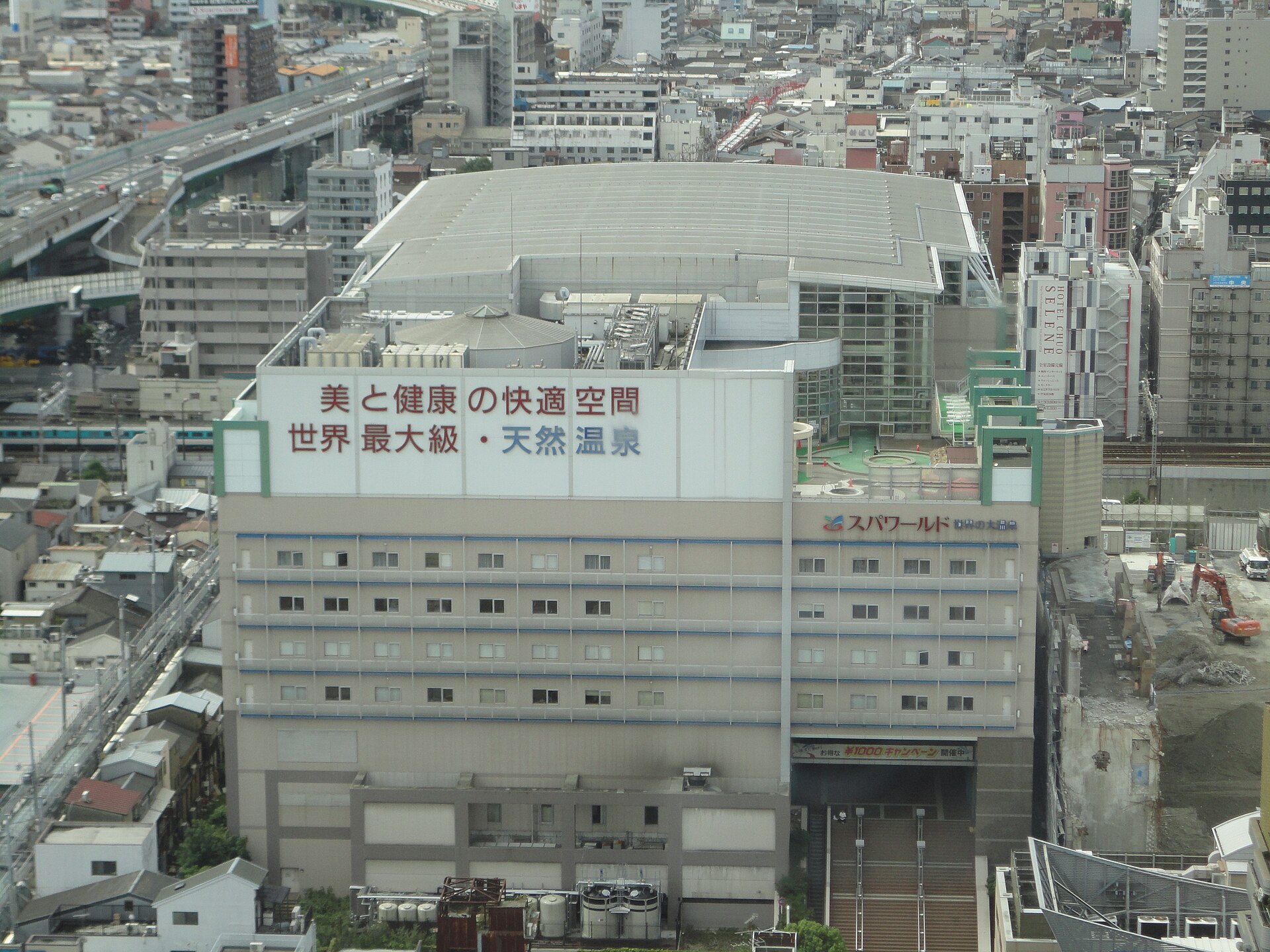
The pool floor
Up on the eighth floor is the one part of Spa World where you wear a swimsuit: indoor pools with water slides, a children’s pool and, in season, a sauna on the roof terrace. Because everyone is in swimwear, it is also the part of the building that couples and families can use together. Swimsuits can be rented for ¥650 if you forget yours, and floats for ¥1,000 with a deposit. The slides cost extra, at ¥500 a ride or ¥1,500 for unlimited rides, with an ¥800 slide pass for children, and slide tickets stop selling an hour before the pool closes.
Check the pool hours before you pay for them. From 1 October the pools have been opening 10:00–19:00 on weekdays and 10:00–22:00 at weekends and on holidays, with the children’s pool closing half an hour earlier, and the hours change through the year. That means the classic after-dinner visit on a weekday is a bath-only visit, whatever ticket you hold. If you are an adult coming for the baths, don’t pay for the pool at all: the bath-only ticket is ¥500 cheaper on a weekday and ¥1,200 cheaper at the weekend.
Stone saunas, food and the extras
The third floor has the ganbanyoku, hot-stone saunas where you lie in the outfit provided on slabs of heated stone and sweat gently rather than dramatically. They cost extra: ¥800 on weekdays and ¥1,000 at weekends, on holidays and on special days, which covers the outfit, a large towel and a bag (there is a deposit). They are open 10:00–05:00, with last entry at 04:00. On a first visit you can skip them without regret; the baths alone will fill your evening.
For food there is a restaurant on the second floor, a robatayaki grill called Osaka-ya on the third, and a food court, the Food Park, that keeps serving until 01:00, or 03:00 on Friday and Saturday nights and the night before a public holiday. You can’t bring your own food in.
Prices and hours at a glance
| Spa World ticket (normal period, from 24 August 2026) | Weekdays | Weekends and holidays |
|---|---|---|
| Baths only, junior high school age and over | ¥1,500 | ¥1,500 |
| Baths only, elementary school age and under | ¥1,000 | ¥1,000 |
| Baths and pools, junior high school age and over | ¥2,000 | ¥2,700 |
| Baths and pools, elementary school age and under | ¥1,200 | ¥1,700 |
| Stone saunas (add-on) | ¥800 | ¥1,000 |
| Entering, leaving or staying between 00:00 and 05:00 | Add ¥1,300, plus ¥150 bathing tax from junior high school age | |
All prices include tax. Spa World labels these its normal-period prices, so check the pricing page for the date you plan to go, particularly around New Year and other holidays. Everyone settles up at the exit on the way out, even if they have bought nothing extra, and Spa World asks visitors to buy tickets in advance and pay in its app where they can, to keep the queues down.
Staying the night
The late-night charge is what makes Spa World a cheap, if unglamorous, place to spend a night. Arrive in the evening, pay ¥1,500 for the baths, and the ¥1,300 surcharge and ¥150 tax take the total to ¥2,950 for a night of bathing and dozing. There are rest areas inside the changing rooms on the fourth and sixth floors, and a men-only rest area on the first floor from 22:00 to 08:00, and you have to leave the rest areas by 08:30.
Be realistic about what this is: a reclining chair in a dim room, not a bed, with strangers snoring a few feet away. It is fine for a late arrival, a missed last train or a night before an early start, and it is not a substitute for a hotel on a trip of several days. Women should note that the first-floor rest area is men-only, although the rest areas in each changing room are not.
If you would like a real bed, Spa World has its own hotel attached. Check-in is from 15:00 and check-out by 10:00, and hotel guests can use Spa World before they check in and after they check out, which makes a final morning soak easy to fit in. Spa World’s website links to the hotel’s booking page, with the room types and current rates.
Tattoos, children and other rules
Spa World does not admit anyone with tattoos, and unlike some baths it does not accept cover-up stickers either. This is the rule most likely to spoil a visit, so take it seriously: if you have visible ink, even a small piece, Spa World is not the place for you. Ask at your hotel about private baths, or look at the options in our onsen and sento guide.
Children are welcome, and the pool floor is built with them in mind, but children of elementary school age and under must come with an adult, and anyone under 18 without a guardian has to leave by 22:00. Staff may ask to see your wristband at any point, so keep it on.
Getting to Spa World
Two stations are close by. Osaka Metro’s Dobutsuen-mae Station, on the Midosuji and Sakaisuji lines, has Exit 5 for Spa World, or you can use the East Exit of JR Shin-Imamiya Station on the Osaka Loop Line. From Namba, Dobutsuen-mae is two stops south on the Midosuji Line; from Umeda it is six stops and about 14 minutes on the same line. An ICOCA card covers every route, and our Osaka subway guide explains the network. The address is 3-4-24 Ebisuhigashi, Naniwa-ku.
The verdict on Spa World
Go, if you don’t have tattoos and you have three hours or more. It is cheap for what it is, it is open when almost nothing else is, and the pairing with Shinsekai is about as good as an Osaka evening gets: kushikatsu and a beer on the main street, the tower lit up overhead, then a long soak until you are too warm and too relaxed to care about the journey home.
Skip it on a short trip with a packed list, because it will swallow an evening whole. Skip the pool ticket unless you have children with you or are visiting on a weekend afternoon. And don’t expect serenity. This is a big, busy, cheerful leisure centre, not a spa in the hushed, white-towel sense, and it can be crowded at weekends.
Solaniwa Onsen Osaka Bay Tower
Solaniwa, which means “sky garden”, is the other big name, and it is a different kind of evening. It is part of the Osaka Bay Tower complex in Bentencho, on the way out towards the bay, and where Spa World goes round the world, Solaniwa stays at home. It calls itself a hot spring resort “filled with the vibes of the Muromachi and Edo periods”, and everyone pads around it in a yukata, which comes with the ticket. Along with nine kinds of bath there is a foot bath, recliners for dozing, photo spots and amusements, and in winter an illumination event, Hikari no Teien, the “garden of light”, which is back for 2026. Solaniwa describes itself as one of the largest hot-spring theme parks in Kansai.
Because you wear a yukata outside the baths, couples and groups can meet up between soaks in the shared spaces, which you can’t do at Spa World outside the pool floor. That makes Solaniwa the better choice for a couple or a mixed group who want to spend the evening together, and for anyone who wants a more Japanese setting than Spa World’s mock Rome. It is also pricier, it closes earlier and it has no overnight option.
Prices and hours
Solaniwa is open 11:00–23:00, with last entry at 22:00 and the baths closing at 22:30. It also closes for maintenance on one Wednesday a month; the next dates are 9 December 2026, 13 January, 3 February and 10 March 2027.
Admission depends on the date. Solaniwa sorts its calendar into five ticket types, A to E, and an adult ticket costs ¥2,310 on an A day, ¥2,640 on a B day, ¥3,080 on C, ¥3,300 on D and ¥3,630 on E, the busiest days. From 17:00 a night rate brings A and B days down to ¥1,980 and C days to ¥2,420; there is no night discount on D and E days. Children pay ¥1,320 and over-70s ¥1,800, and a ¥150 bathing tax is added on top. The yukata and towels are included; a change of yukata costs ¥220, and the stone saunas are an extra ¥1,100 on A and B days or ¥1,320 on C, D and E days. Check the calendar on Solaniwa’s price page for your date before you go, because the gap between the cheapest and dearest days is more than ¥1,300.
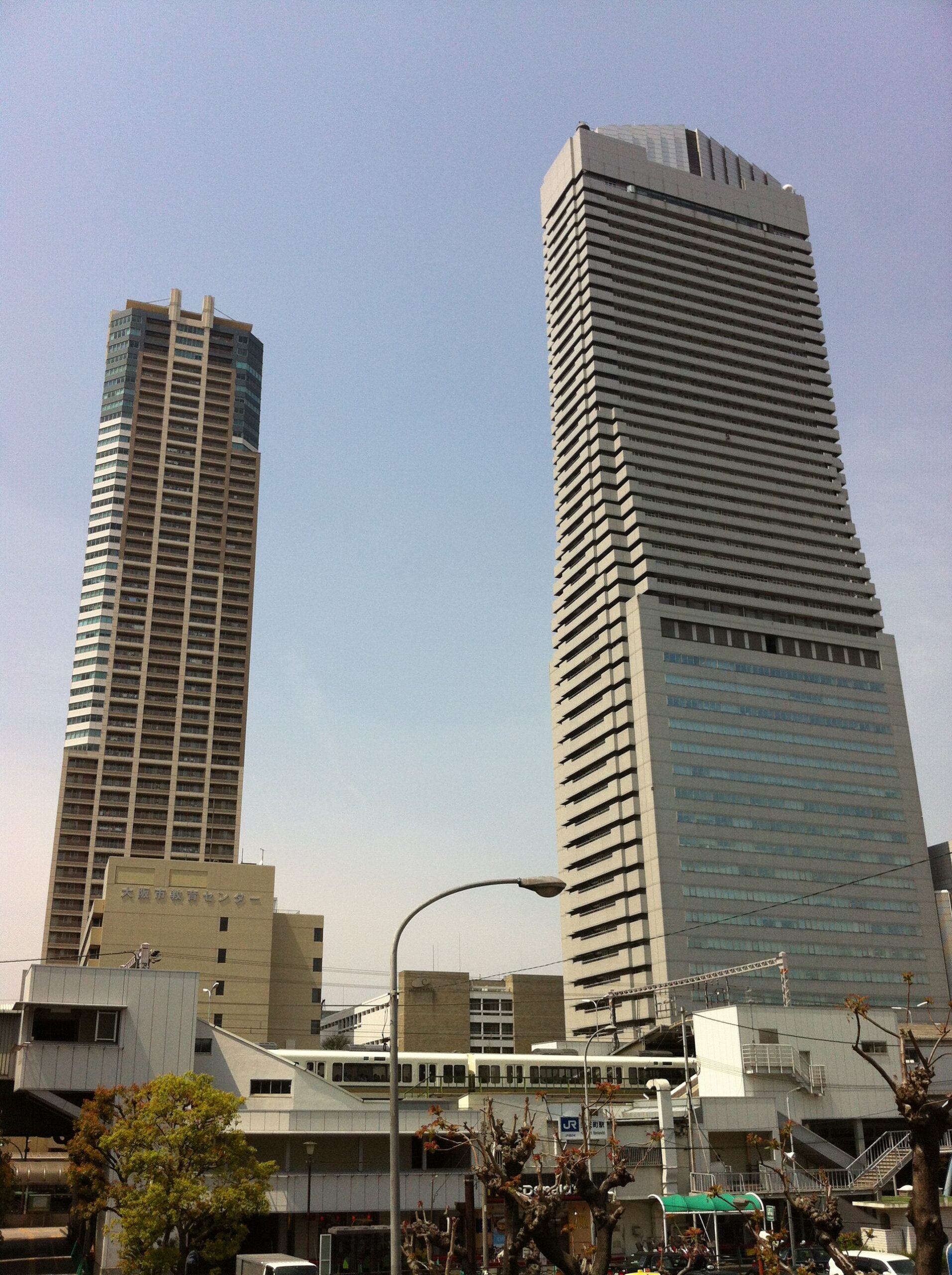
Getting to Solaniwa
Solaniwa is about ten minutes by train from Osaka Station. Take the JR Osaka Loop Line to Bentencho and use the Chuo North Exit, which leads into the building by a connecting passage, or take the Osaka Metro Chuo Line to Bentencho and come up at Exit 2A from the west gate. The address is 1-2-3 Benten, Minato-ku. Bentencho is on the same Chuo Line as Osakako, the station for the Kaiyukan aquarium, so the two fit neatly into one day.
Tattoos at Solaniwa
Officially, tattoos are refused. Solaniwa’s terms of use say so without exception, while its FAQ describes a trial of admitting guests whose tattoos are covered with stickers. The two don’t agree, so if you have a tattoo, contact Solaniwa before you go rather than finding out at the front desk.
The verdict on Solaniwa
Go if you are a couple or a group, if you want a gentler and more Japanese-feeling evening than Spa World offers, or if the yukata is half the appeal. It suits the end of an afternoon better than a late night, since last entry is at 22:00, and the night rate after 17:00 is the sweet spot on cheaper days. Skip it if you are counting yen, because on its busiest days a ticket plus the bathing tax comes to ¥3,780, more than twice Spa World’s bath-only price. Skip it, too, if you want to stay the night: it has no rooms of its own, and points overnight guests to the Art Hotel Osaka Bay Tower instead.
Spa World or Solaniwa?
| Spa World | Solaniwa Onsen | |
|---|---|---|
| Where | Shinsekai, by Dobutsuen-mae and Shin-Imamiya stations | Bentencho, on the JR Loop Line and Chuo Line |
| Hours | Baths 10:00 to 08:45 the next morning | 11:00–23:00, last entry 22:00 |
| Adult price | ¥1,500 baths only; ¥2,000–¥2,700 with the pools | ¥2,310–¥3,630 by date, plus ¥150 tax; from ¥1,980 after 17:00 on cheaper days |
| Worn between baths | Loungewear, included | Yukata, included |
| Theme | Baths of the world, on a European floor and an Asian floor | A Japanese hot spring resort styled on the Muromachi and Edo periods |
| Swimwear area | Pools and slides on the eighth floor | None |
| Overnight | Yes, with a late-night charge, plus an attached hotel | No |
| Tattoos | Refused, stickers or not | Refused in its terms; ask first |
| Best for | Late nights, tight budgets, families who want the pool | Couples, groups and a Japanese atmosphere |
For most first-time visitors, Spa World is the one to do. It is cheaper, it is open when you are free, it sits next to one of the city’s most enjoyable neighbourhoods, and its sheer oddness is part of the fun. Choose Solaniwa instead if you are travelling as a couple and want to spend the evening together, if you are spending the day around the bay anyway, or if mock Roman statues sound more tiring than relaxing. Doing both on one trip is overkill unless you really love a hot bath.
A quieter alternative: Naniwa no Yu
If the theme parks sound like too much, Naniwa no Yu in Kita-ku is the in-between option: a natural hot spring on the eighth floor of a building in the Tenjinbashisuji shopping street area, with a big open-air bath under the sky. The water is pumped up from strata that the bathhouse says are about 1.5 million years old. It costs ¥900 on weekdays and ¥1,000 at weekends and on holidays, with elementary school children at ¥450.
It is open 10:00 to 01:00 on weekdays and 08:00 to 01:00 at weekends and on holidays, with last entry at midnight. Towels are not included here: a small towel costs ¥150 and a bath towel ¥500, so bring your own if you can. Tattoos are refused. It is about ten minutes’ walk north from Exit 5 of Tenjinbashisuji 6-chome Station on the Tanimachi and Sakaisuji lines, which makes it an easy add-on to an afternoon on the shopping street. It has none of Spa World’s spectacle, and that is precisely the appeal.
How to use a big bathhouse without embarrassing yourself
The rules are the same as at any Japanese bath, and they feel natural after the first ten minutes. The order of things goes like this:
- Shoes off at the entrance. They go in a shoe locker, and from there you use a locker key or wristband for the rest of your visit.
- Undress completely in the changing room. Swimsuits are not worn in the baths; at Spa World they are for the pool floor only, and Solaniwa has no swimwear area at all.
- Wash before you soak. Sit on a stool at the showers, wash thoroughly and rinse off every trace of soap before you get into any bath.
- Keep the small towel out of the water. Fold it on your head or leave it by the edge, and tie up long hair so it doesn’t touch the water either.
- No cameras or phones in the bathing areas or changing rooms. Save the photos for the lobby.
- Drink water between baths. Hot water and saunas dehydrate you faster than you notice, and a drink before a sauna is a bad idea.
- Dry off before you go back into the changing room, so you don’t drip on the floor.
A couple of rules surprise parents. At Solaniwa, children aged seven and over, or 120cm or taller, can’t go into the bath of the opposite sex with a parent, so a father with a daughter or a mother with a son of that age needs another adult. At Spa World, the pool floor is the place to be together as a family. For the wider etiquette of Osaka, from queues to trains, our Osaka etiquette guide covers the rest.
Fitting a soak into your day
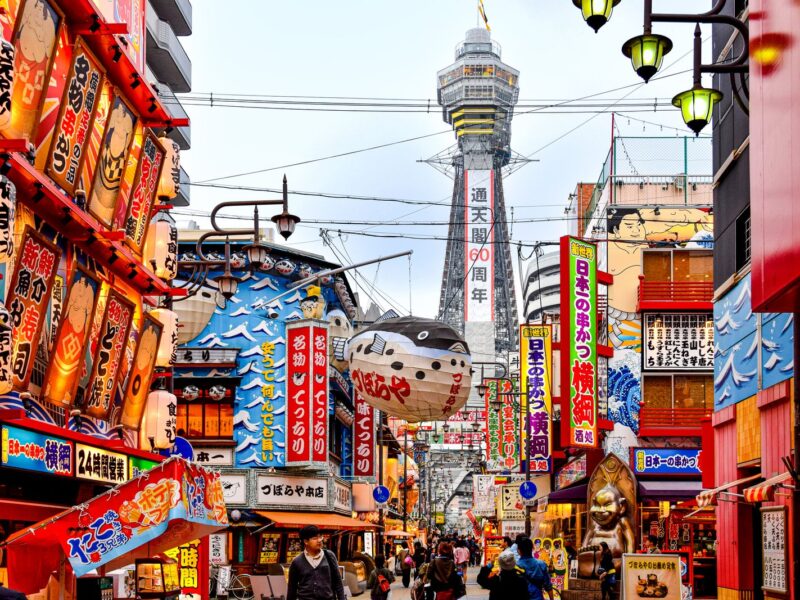
Spa World is the natural end of a day in south Osaka. Spend the afternoon at Tsutenkaku Tower, whose observation deck is open until 21:45 (last entry 21:15, ¥1,500 for adults, rising to ¥1,800 from 30 December to 3 January), eat your way down Shinsekai’s main street, and walk over for a bath. Or start higher up: Abeno Harukas is one stop away at Tennoji on the Midosuji Line, and its Harukas 300 observatory stays open until 22:00 (¥2,200 for adults), so you can watch the city light up and still be in the bath by eight. The plan works brilliantly in winter, when it is dark early and a hot bath is the best place in the city to be; our guide to Osaka in winter has more for the cold months, and it is a good plan for a wet day too, along with the other rainy-day ideas.
Solaniwa belongs to a day by the water: the Kaiyukan in the morning, the rest of the bay area after lunch, then Solaniwa from 17:00, when the night rate starts on the cheaper days. Neither bathhouse is anywhere near Umeda, so on the evening you spend up at the Umeda Sky Building, save the soak for another night. For more ways to fill your days, see our round-up of things to do in Osaka.
Frequently asked questions
Is Spa World tattoo-friendly?
No. Spa World refuses entry to anyone with tattoos and does not accept cover-up stickers. Solaniwa’s terms refuse tattoos too, although its FAQ mentions a trial for stickers, so ask before you go. Naniwa no Yu also refuses tattoos.
Can you stay overnight at Spa World?
Yes. The baths are open from 10:00 until 08:45 the next morning, and entering, leaving or staying between midnight and 05:00 adds ¥1,300 plus a ¥150 bathing tax. You sleep on a recliner in a rest area rather than in a bed, and you have to leave the rest areas by 08:30. There is also an attached hotel.
Which floor is the women’s side at Spa World this month?
It changes monthly. The European Zone on the fourth floor and the Asian Zone on the sixth swap between men and women every month, and the Opening Hours page on Spa World’s website shows the current arrangement.
Are towels included?
At Spa World and Solaniwa, yes. Towels come with admission at both, along with loungewear at Spa World and a yukata at Solaniwa. At Naniwa no Yu they are extra: ¥150 for a small towel and ¥500 for a bath towel.
Can children go to Spa World?
Yes, and the pool floor is aimed at them. Children of elementary school age and under must be with an adult, and anyone under 18 without a guardian has to leave by 22:00. A child’s ticket with the pools costs ¥1,200 on weekdays and ¥1,700 at weekends. For more family ideas, see our guide to Osaka with kids.
Is Solaniwa Onsen worth it?
For couples and groups who want a Japanese-style evening in yukata, yes, especially from 17:00 on the cheaper days, when the night rate starts at ¥1,980. On a budget, or for a solo late-night soak, Spa World is better value.
Is Spa World included in the Osaka Amazing Pass?
No. Neither Spa World nor Solaniwa is on the Osaka Amazing Pass list of free facilities for 2026–27, so budget for the entry fee separately.
Where to go from here
For the small neighbourhood bathhouses that Osakans actually use day to day, start with our onsen and sento guide. If a night in a real hot-spring town appeals, Kinosaki Onsen is the trip to make. And if you are planning the rest of the evening around Spa World, our guides to Osaka nightlife, late-night food and Osaka on a budget will fill in the gaps.
Prices, hours and rules checked in November 2026 against the official sites of Spa World, Solaniwa Onsen and Naniwa no Yu, and the Osaka Amazing Pass list of free facilities.
Photo Credits
Shinsekai street towards Spa World: Spaworld – panoramio (1) by DVMG, CC BY 3.0, via Wikimedia Commons.
Spa World seen from Tsutenkaku: 通天閣 – panoramio (34) by kanesue, CC BY 3.0, via Wikimedia Commons.
ORC200 towers above Bentencho Station: 3 Chome-11 Namiyoke, Minato-ku, Ōsaka-shi, Ōsaka-fu 552-0001, Japan – panoramio by Hiroyuki Sato, CC BY-SA 3.0, via Wikimedia Commons.