This article contains advertising. Our booking links are routed through a partner that adds commission tracking automatically, so if you book through one we earn a commission from the provider, at no extra cost to you. It never affects what we recommend. Affiliate disclosure
Shin-Osaka is not really in the Osaka you came to see. When the first bullet trains were being planned in the early 1960s, rather than force a new high-speed line through the crowded centre around Umeda, the railway built its new station north of the Yodo River, on what was then largely open land, and let the city grow up around it. The name means simply “new Osaka”. Sixty-odd years later it is one of the busiest Shinkansen stations in the country, and it still catches out more visitors than any other station in the city, because the trains that people most want to catch do not stop at the station called Osaka.
This guide to Shin-Osaka Station covers everything between stepping off the Shinkansen and reaching your hotel, and everything between leaving your hotel and finding your seat: how the station is laid out, how the transfers work, which platform you need, what to buy before you board and how much time to allow. Once you know its shape, it is a straightforward station. The trick is knowing its shape before you arrive with a suitcase and eight minutes to spare.
Shin-Osaka Station at a glance
- What stops here: every Tokaido and Sanyo Shinkansen, including all Nozomi. Shin-Osaka is where the Tokaido line from Tokyo ends and the Sanyo line to Hiroshima and Fukuoka begins, though many trains run straight through.
- Also here: the JR Kyoto line between Kyoto and Osaka, the Osaka Higashi line, airport and regional limited expresses including the Haruka, Kuroshio, Thunderbird and Kounotori, and the Osaka Metro Midosuji line.
- To Osaka Station (Umeda): one stop on JR, about four minutes, or three stops on the Midosuji line.
- To Namba: about fifteen minutes on the Midosuji line, direct.
- Time to allow inside: ten to fifteen minutes from the station entrance to your Shinkansen platform, more with luggage or tickets to collect.
- Layout in one line: the Shinkansen gates and concourse are on the third floor, the Shinkansen platforms on the fourth, and the JR conventional lines and the Midosuji line on separate levels below.
Shin-Osaka is not Osaka Station
This is the single most important thing to know, and it is worth saying plainly because it still costs people trains every day. Osaka Station is the big JR station in Umeda, the centre of the north of the city. Shin-Osaka is a separate station a few kilometres north of it, across the river, and it is the only place in the city where you can board a Shinkansen. The two are close and well connected, but they are not the same building, and a ticket from “Osaka” on a Shinkansen means Shin-Osaka.
Getting between them is easy:
- JR Kyoto line: one stop, about four minutes, with trains every few minutes. This is the quickest option if you are staying near Osaka Station; our Osaka Station guide covers the Umeda end.
- Midosuji line: three stops north of Umeda, about six minutes, and the obvious choice from Shinsaibashi, Namba or Tennoji, which are all on the same line with no change.
- Osaka Higashi line: since 2023 this JR line has run from the underground Umekita platforms at Osaka Station through Shin-Osaka towards the east of the city, with some trains through to Nara. Useful if your hotel is near those platforms.
Door to door, allow at least twenty minutes from a hotel in Umeda to a Shinkansen platform at Shin-Osaka, and thirty to forty from Namba, more with luggage or in the rush hour. The Osaka subway guide explains the Midosuji line, and an ICOCA card covers every local leg.
How the station is laid out
Shin-Osaka makes sense once you think of it vertically. The bullet trains run on top, everything else is underneath, and the third floor is where the two meet.
- Fourth floor: the Shinkansen platforms, numbered 20 to 27. Platforms 20 to 22 are generally for westbound trains to Hiroshima, Hakata and Kagoshima; platforms 23 to 27 are for eastbound trains to Kyoto, Nagoya and Tokyo. Check the departure board, because individual trains vary.
- Third floor: the Shinkansen gates and concourse. There are several sets of Shinkansen ticket gates, including the Central Gate, where the ticket office is; the South Gate, near the station’s best-known food shops; and the Transfer Gate, which connects directly with the JR conventional lines without going outside. Inside the gates are a waiting room, a smoking room, shops and a convenience store.
- Below: the JR conventional lines and the Midosuji line, each on its own level, with shops and restaurants in the areas outside the gates.
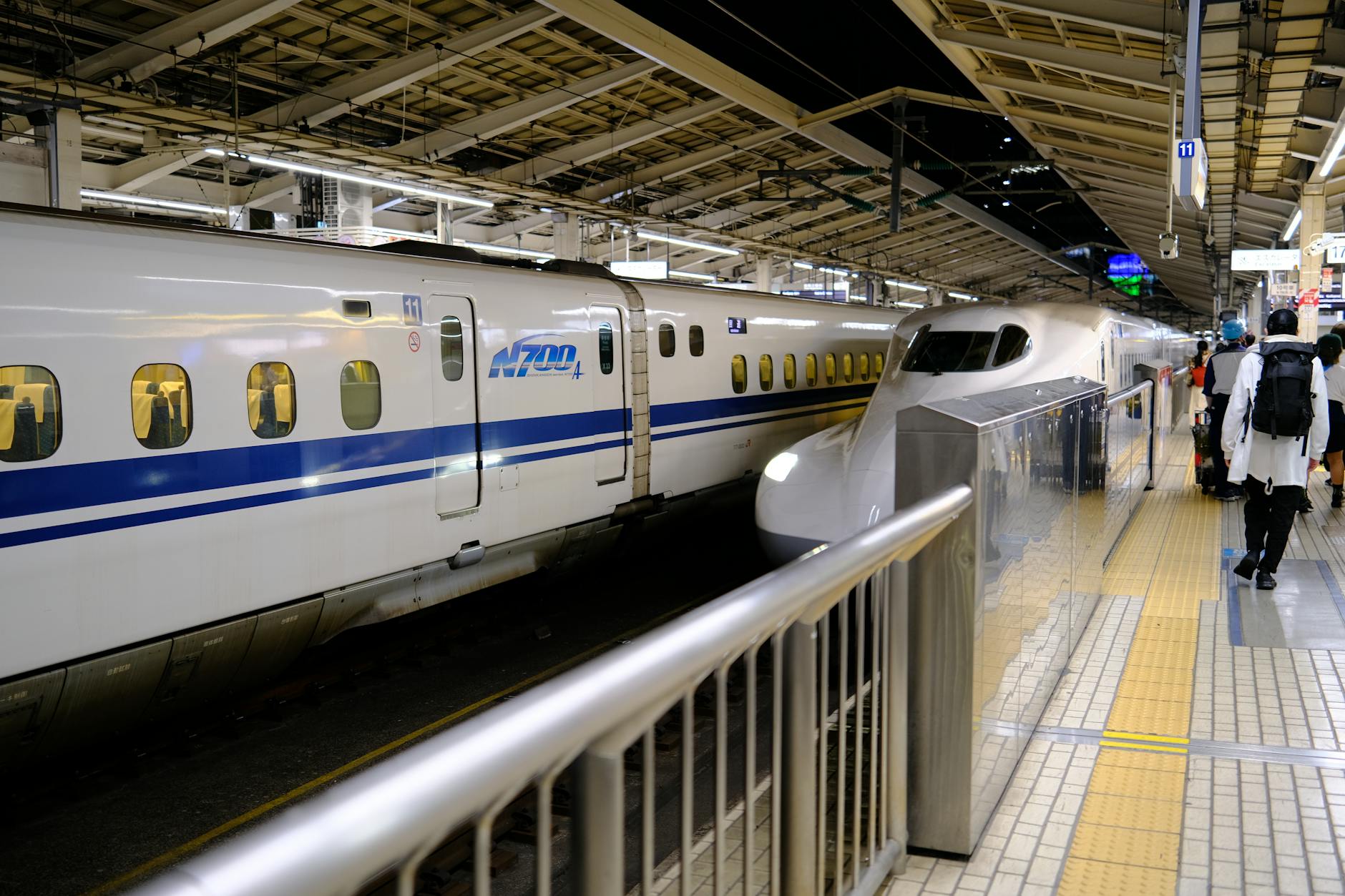
The Shinkansen concourse is large, and the walk from the gates to the far platforms takes longer than it looks on the signs. Aim to be on the platform ten to fifteen minutes before departure, which gives you time to find your car’s position and buy something to eat.
Transfers made simple
From the Midosuji line to the Shinkansen
Ride to Shin-Osaka, the line’s northern hub. On the platform, walk towards the middle and take the escalator down to the concourse, then follow the signs for the Shinkansen to the Central Gate on the third floor. You leave the subway through its own ticket gates, so tap out with your IC card first. Allow ten minutes from subway platform to Shinkansen gate, more if you need to collect tickets.
From a JR local train to the Shinkansen
If you arrive on the JR Kyoto line, or on the Haruka from the airport, you do not need to leave the station. Follow the signs to the Transfer Gate to the Shinkansen, which takes you straight up to the third-floor concourse. If you have paper tickets for both journeys, insert them into the gate together and it will return the ones you still need. If you came on the local train with an IC card, look for the instructions on the gate; many transfer gates let you tap the card and insert your Shinkansen tickets together, and if in doubt the staffed window beside the gates will sort it out in seconds.
From the Shinkansen into the city
Arriving, the same routes run in reverse. For Umeda and Osaka Station, follow the signs for the JR conventional lines through the Transfer Gate and take any train one stop towards Osaka. For Shinsaibashi, Namba or Tennoji, exit through the Central Gate and follow the red Midosuji line signs. If you are heading straight to the airport, the Haruka stops at Shin-Osaka on its way to Kansai Airport; our Kansai Airport to Osaka guide compares it with the alternatives.
To Kyoto: Shinkansen or local?
From Shin-Osaka to Kyoto the Shinkansen takes about fifteen minutes, and the JR Special Rapid on the Kyoto line about twenty-four, for a fraction of the fare. Unless a JR pass covers the Shinkansen anyway, the Special Rapid is almost always the better choice. Our Osaka to Kyoto guide does the full comparison.
| Transfer | Route | Allow |
|---|---|---|
| Midosuji line → Shinkansen | Escalator down, signs to the Central Gate on 3F | 10–15 minutes |
| JR local or Haruka → Shinkansen | Transfer Gate, straight up to 3F | 10 minutes |
| Shinkansen → Osaka Station | Transfer Gate, any JR train one stop | 15 minutes including the ride |
| Shinkansen → Namba | Central Gate, Midosuji line direct | 25–30 minutes including the ride |
Tickets
- Ticket machines in the station sell Shinkansen tickets in English, take cash and most cards, and print the paper tickets for online bookings made with a QR code.
- Online booking through the official EX service, the booking app run by the railways that operate the Shinkansen, lets you choose seats in advance and travel with a QR code or an IC card instead of paper tickets. Early-bird fares such as EX Hayatoku 21 are available only this way.
- The ticket office at the Central Gate handles anything complicated, including pass reservations and changes.
- Japan Rail Pass holders should know that the nationwide pass covers the Hikari and Kodama but needs a supplement for the Nozomi and Mizuho, around ¥4,960 each way between Tokyo and Shin-Osaka. For a trip that is just Tokyo, Kyoto and Osaka, the pass rarely pays for itself; our Osaka to Tokyo guide does the sums.
- Reserved or unreserved. On a sixteen-car Nozomi, cars 1 to 3 are normally unreserved and the Green Cars, the first-class carriages, are in the middle of the train. At the busiest times of year, around New Year, Golden Week and the August Obon holiday, the Nozomi has in recent years run fully reserved, so book ahead for those dates.
- Big luggage. Any bag with a total of length, width and depth over 160 cm needs a seat booked with the oversized-baggage area; without one you pay a ¥1,000 fee on board. Our guide to Japanese etiquette in Osaka covers this and the other train rules that matter.
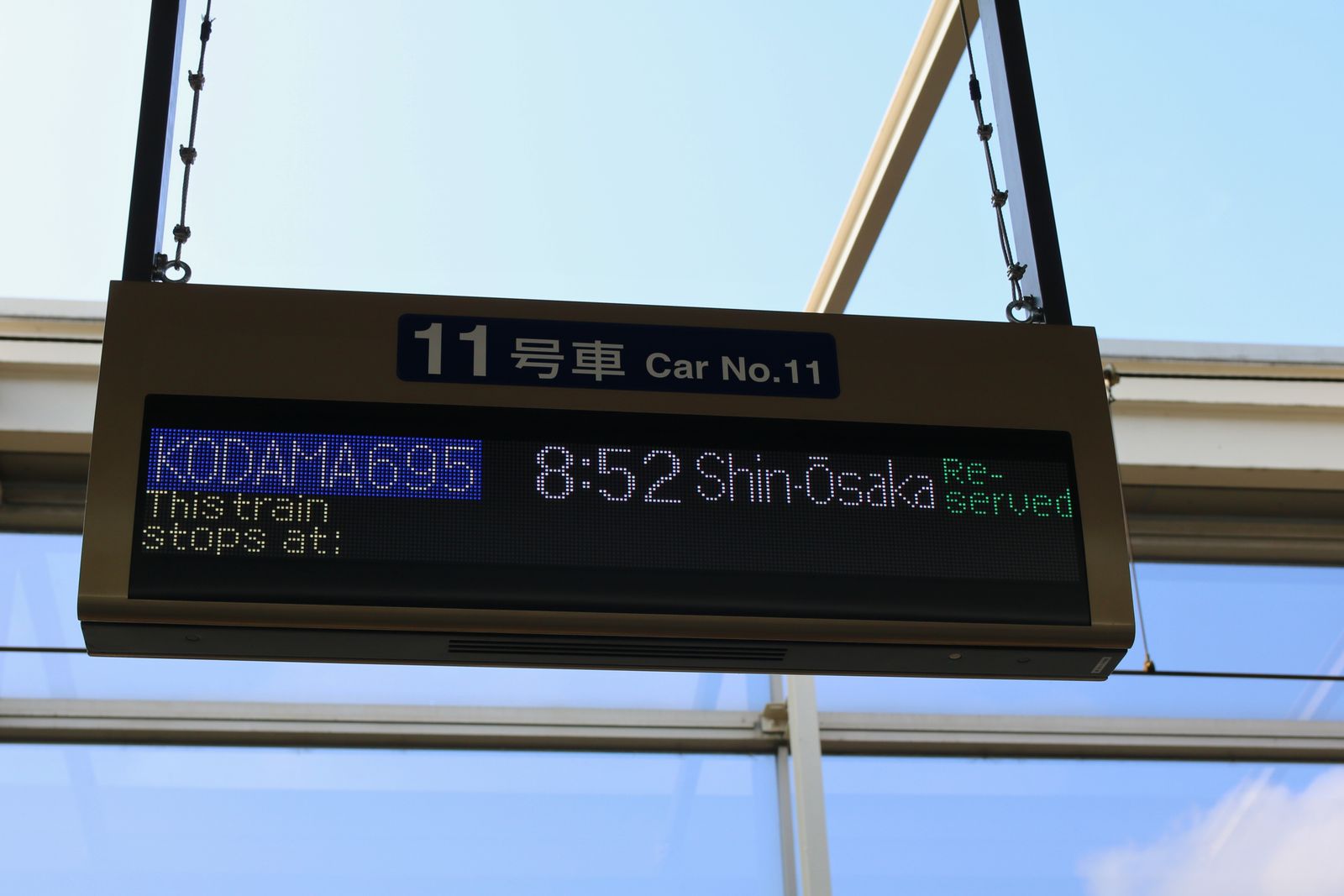
Finding your car on the platform
Japanese platforms are organised to the metre. Your ticket shows a car number and a seat; on the platform, signs above and markings on the floor show exactly where each car will stop, with separate lanes for each train when several are due. Find your car number, join the line at its marking, and the doors will open in front of you. On busy platforms the sign above each position also shows whether that car is reserved or unreserved for the next train, which is how you avoid queuing for the wrong one.
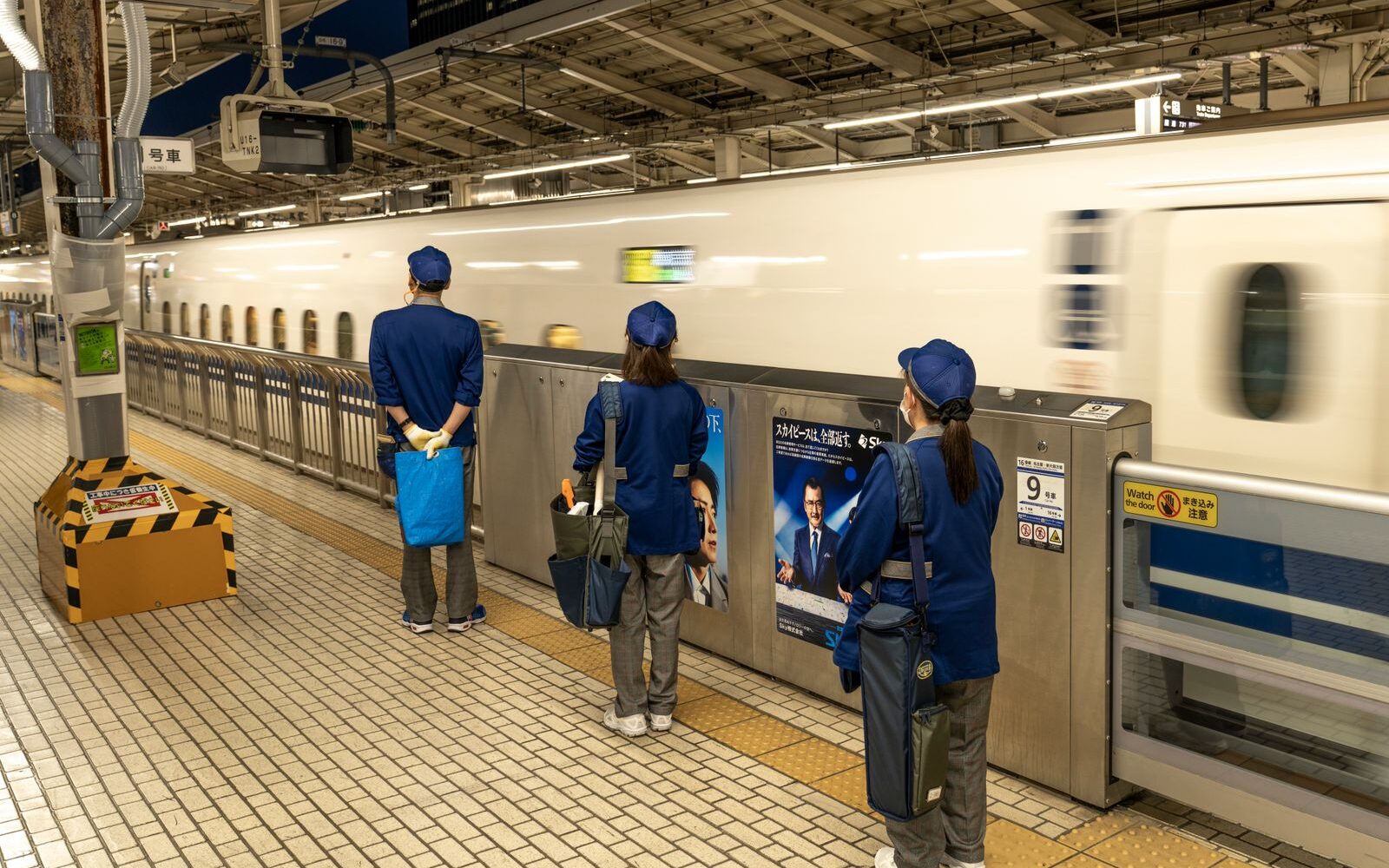
The trains themselves stop for only a few minutes, and less at the busiest times, so be ready to board promptly and to stow your bag quickly. Trains that start or end their journey at Shin-Osaka are cleaned and turned round at the platform before boarding begins; wait for the doors to open even if the train looks ready.
Food and ekiben
Eating on the Shinkansen is entirely normal, and buying an ekiben, a station lunchbox, is half the fun of the journey. Shin-Osaka is a good place to do it.
- 551 Horai, the Osaka chain famous for its steamed pork buns, butaman, has shops near the Shinkansen gates. Carrying a box of 551 back to Tokyo is an Osaka tradition, and the smell of warm pork buns filling the carriage is part of the Shinkansen experience, whether your neighbours like it or not.
- Ekiben shops on the third floor, including Entrée Marché, sell lunchboxes from across the Kansai region and beyond, alongside local sweets and souvenirs.
- Ekimarché Shin-Osaka, the shopping and restaurant area outside the gates, has proper sit-down meals if you have time to spare.
- Inside the gates, a convenience store and smaller kiosks cover drinks and snacks, and there are more on the platforms.
Buy before you go up to the platform if you can: choice on the platforms is limited, and at peak times the queues at the kiosks can be long. For Osaka food to take home, see our guide to Osaka souvenirs; vegetarians should check labels, since most ekiben include fish or meat, and our vegan Osaka guide has the words to look for.
Luggage and waiting
Coin lockers are spread through the station, inside and outside the gates, in several sizes; the large ones fill first at busy times, so do not count on one being free at midday. If you are spending a few hours in the city between trains, a locker at Osaka Station or at your hotel is usually more practical, and our Osaka luggage storage guide covers delivery services that will send your bags ahead to your next hotel or the airport.
Inside the Shinkansen gates there is a waiting room on the third floor, and benches on the platforms. If you are early, the waiting room is a far calmer place to sit than the platform during the rush.
Where the trains go from Shin-Osaka
| Destination | Train | Typical journey time |
|---|---|---|
| Tokyo | Nozomi | About 2 hours 21 minutes |
| Nagoya | Nozomi | About 50 minutes |
| Kyoto | Shinkansen / JR Special Rapid | About 15 minutes / about 24 minutes |
| Shin-Kobe | Shinkansen | About 15 minutes |
| Himeji | Shinkansen | About 30 minutes |
| Okayama | Shinkansen | About 45 minutes |
| Hiroshima | Nozomi or Mizuho | About 1 hour 30 minutes |
| Hakata (Fukuoka) | Nozomi or Mizuho | About 2 hours 30 minutes |
| Kansai Airport | Haruka limited express | About 50 minutes |
| Kii-Tanabe (Kumano Kodo) | Kuroshio limited express | About 2 hours 15 minutes |

Note that the limited expresses, including the Haruka and the Kuroshio, leave from the JR conventional platforms, not from the Shinkansen level. The Thunderbird to the Hokuriku coast now runs only as far as Tsuruga, where you change to the Hokuriku Shinkansen for Kanazawa. Several of these trips are covered in our day trips from Osaka, including Himeji Castle, Hiroshima and the Kumano Kodo.
When Shin-Osaka is at its worst
Most of the time Shin-Osaka is busy but orderly. A few predictable moments turn it into a crush, and planning around them is worth more than any shortcut through the building:
- Friday and Sunday evenings, when business travellers and weekenders head home. Reserved seats on evening trains towards Tokyo sell out first on Sundays.
- The start and end of the big holidays. New Year, Golden Week in early May and the August Obon holiday send half the country home and then, a few days later, back again; the return wave even has a name, the “U-turn rush”. On those days the concourse is packed, unreserved cars are standing room only, and the Nozomi may be fully reserved. Book well ahead, or travel a day either side. Our guide to Golden Week in Osaka covers the spring version.
- The weekday morning rush, roughly 07:30 to 09:00, on the Midosuji line and the JR local trains into the station. With luggage, avoid it if you can.
- Winter snow. Heavy snow around Sekigahara, between Kyoto and Nagoya, can slow the Tokaido Shinkansen in January and February. Delays are usually measured in minutes, not hours, but if you have a tight connection or a flight from Tokyo to catch, give yourself extra time on snowy days.
If something goes wrong
You miss your reserved train. With an ordinary reserved ticket, you can usually still travel the same day in the unreserved cars of a later train, though you lose the reserved seat. Some discounted online fares do not allow this and must be changed before the original departure time, so if you know you will be late, change the booking in the app or at a ticket machine before the train leaves.
You are on the wrong platform. Do not board just because a Shinkansen is in front of you: some trains stop at fewer stations than others, and westbound and eastbound trains share the same concourse. Check the train name and number on the departure board against your ticket, and ask a member of staff; there are always plenty on the platforms.
You leave something on the train. Tell the staff at the station as soon as you notice, with your train, car and seat number. Japan’s lost property system is remarkably effective, and items left on the Shinkansen are very often recovered.
The trains are delayed. Departure boards and announcements are in English as well as Japanese. Typhoons in late summer and autumn and the occasional earthquake check can stop services altogether for a while; in that case staff will explain your options for refunds or later trains, and the ticket office at the Central Gate is the place to go.
Staying near Shin-Osaka
The area around the station is a business district of offices and business hotels, with a scattering of restaurants and bars for the people who work there. It is convenient for one thing: a very early Shinkansen. For everything else, you are better off in Umeda, four minutes away by train, or in Namba, where the city’s food and nightlife are on your doorstep. If you do want to be next to the station, there are plenty of business hotels within a few minutes’ walk, and budget capsule options a stop or two up the Midosuji line. Our guides to hotels at Osaka Station, Umeda hotels and where to stay in Osaka cover the better bases.
Shin-Osaka Station FAQ
Is Shin-Osaka the same as Osaka Station?
No. Shin-Osaka is the Shinkansen station, a few kilometres north of Osaka Station in Umeda. They are one stop and about four minutes apart on the JR Kyoto line, or three stops on the Midosuji line. Shinkansen trains do not stop at Osaka Station.
How long does it take to transfer at Shin-Osaka?
Allow ten to fifteen minutes from the Midosuji line or a JR local train to your Shinkansen platform, more with luggage or tickets to collect. Aim to be on the platform ten to fifteen minutes before departure.
How do I get from Shin-Osaka to Namba?
Take the Osaka Metro Midosuji line south, direct, in about fifteen minutes. It also serves Umeda, Shinsaibashi and Tennoji.
Which platform does the Shinkansen to Tokyo leave from?
Eastbound trains to Kyoto, Nagoya and Tokyo generally leave from platforms 23 to 27 on the fourth floor, and westbound trains to Hiroshima and Hakata from platforms 20 to 22. Always check the departure board for your train.
Can I use an IC card at Shin-Osaka?
Yes, for the Midosuji line and JR local trains. For the Shinkansen you need a ticket, either paper or an online booking linked to a QR code or an IC card through the official booking service.
Where can I buy an ekiben at Shin-Osaka?
At the ekiben and food shops around the third-floor Shinkansen concourse, including 551 Horai for pork buns, and at smaller kiosks inside the gates and on the platforms. Buy before you go up to the platform for the best choice.
Where to go next
For the Tokyo journey itself, our Osaka to Tokyo guide compares the Shinkansen with flying and the night bus, and our Osaka and Tokyo itinerary shows how to split a trip between the two. The wider rail picture, including the passes, is in the Osaka transportation guide and our Kansai rail passes comparison.
If you are arriving for a short stay, the 2 days in Osaka itinerary is built around ending a few minutes from Shin-Osaka, and how to get to Osaka covers every other way in.