This article contains advertising. Our booking links are routed through a partner that adds commission tracking automatically, so if you book through one we earn a commission from the provider, at no extra cost to you. It never affects what we recommend. Affiliate disclosure
In Osaka, Christmas and New Year swap the roles they play in the West. Christmas is a date night: a strawberry sponge cake, a bucket of fried chicken ordered weeks ahead, couples under the illuminations on Midosuji, and a perfectly ordinary working day on the 25th. New Year is the family holiday. Overnight on the 25th, the tinsel comes down and the pine-and-bamboo kadomatsu go up outside the shops; by the 31st the city is cleaning its houses, queuing at the fish stalls, and getting ready to spend the first three days of January at home, at a shrine, or in a department-store sale.
For a visitor, that makes late December and early January two different trips in one. The weeks before Christmas are bright, festive and fully open. The days either side of New Year are the most traditional of the whole Japanese calendar, and also the days when the most things are shut. This guide goes through the season week by week — what to do, what is open, what closes, and how to get home on New Year’s Eve — so an Osaka New Year is something you plan around rather than walk into.
The season at a glance
- Early November to 25 December: illuminations and Christmas markets across the city. Everything is open.
- 24 December: Christmas Eve, a couples’ evening. Restaurants are booked out.
- 25 December: a normal working day. Decorations switch to New Year that night.
- 28–31 December: offices close, museums and some attractions start closing, the markets are packed with New Year food shoppers, hotel prices climb.
- 31 December: New Year’s Eve: temple bells at midnight, shrine visits, and no all-night subway.
- 1 January: the quietest day of the year for shops; the busiest for shrines.
- 2–4 January: things reopen gradually. In 2026 the big department stores held their first sales from 3 January.
- 9–11 January: Toka Ebisu, the merchants’ festival at Imamiya Ebisu Shrine.
December: the Christmas season
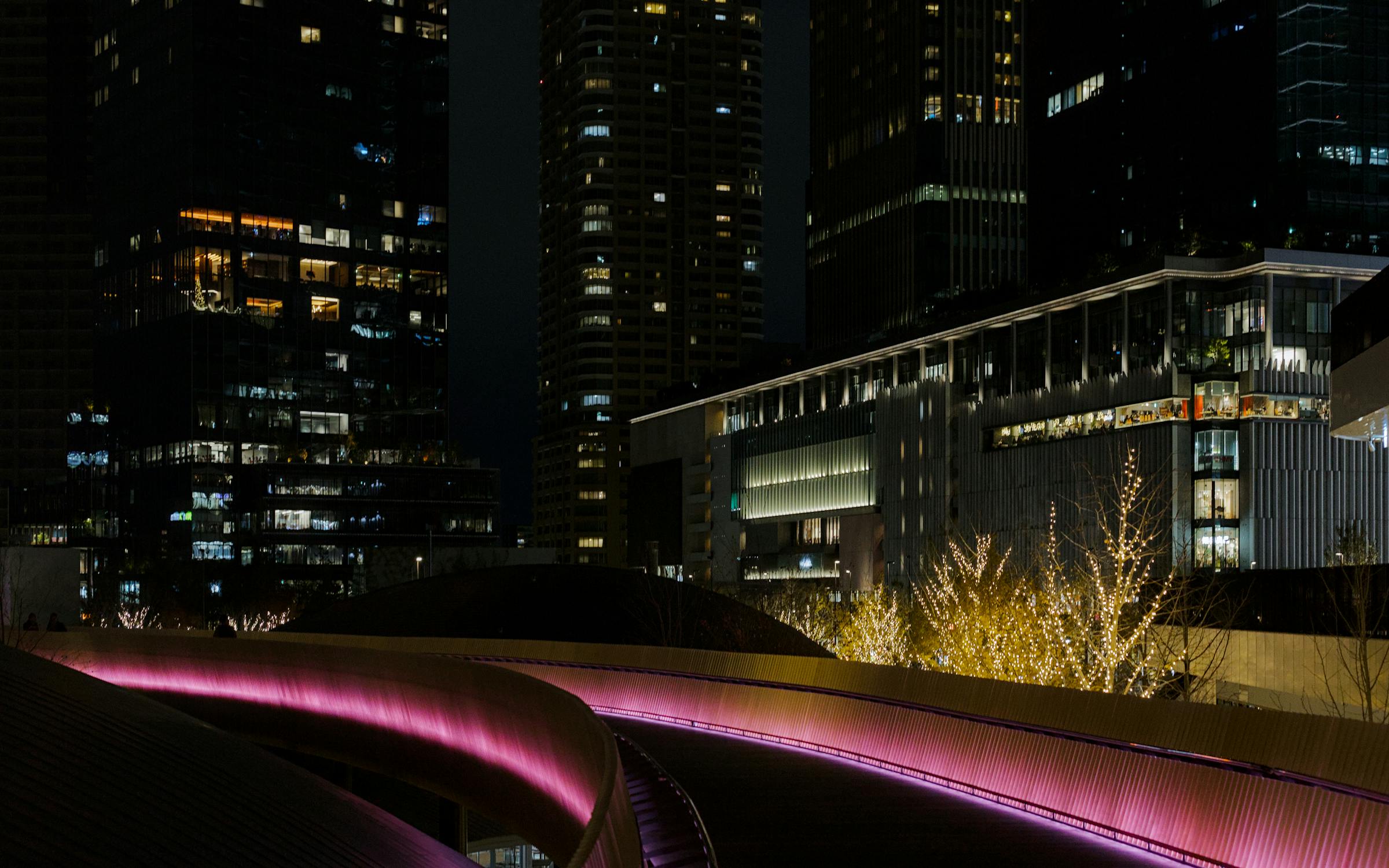
Osaka takes its winter lights seriously, and they are the heart of the Christmas season. The ginkgo trees along Midosuji, the city’s main boulevard, are lit for several kilometres from Umeda to Namba; Nakanoshima hosts a festival of light with projection mapping on the Central Public Hall in the run-up to Christmas; the Umeda Sky Building and Tennoji Park run Christmas markets; and Namba Parks lights a waterfall of LEDs down its terraces. Almost all of it is free. Our Osaka illuminations guide has the full programme and the typical dates.
How Japan does Christmas
Only a small minority of Japanese people are Christian, and Christmas is a secular, commercial and romantic celebration rather than a family one. A few customs are worth knowing:
- Christmas Eve is for couples. Restaurants, especially anything with a view, are fully booked on the 24th, often weeks in advance. If you want a nice dinner that night, book early. See our rooftop bars guide for the high-floor options.
- Christmas cake is a strawberry sponge with whipped cream, sold by every bakery and department store, and ordered in advance by many families.
- Fried chicken is the Christmas meal of choice, thanks to a famously successful advertising campaign by KFC decades ago. The queues at KFC on the 24th are real, and so are the advance orders.
- The 25th is a normal day. Shops, offices, museums and restaurants are open as usual.
Year-end parties
December is also bōnenkai season, when companies and groups of friends hold “forget-the-year” parties. Izakaya and restaurants are packed with them from early December, especially on Friday nights. It is a lively time to be out, but book dinner ahead at the popular places. Our izakaya guide explains where to go.
28 to 31 December: the city winds down
Japanese offices close for the year around 28 December, and the city shifts into holiday mode.
- The markets go into overdrive. Kuromon Market is at its most frenetic in the last days of the year, as Osaka stocks up on crab, fish and ingredients for the New Year meal. It is a spectacle worth seeing, if not a relaxing place to shop.
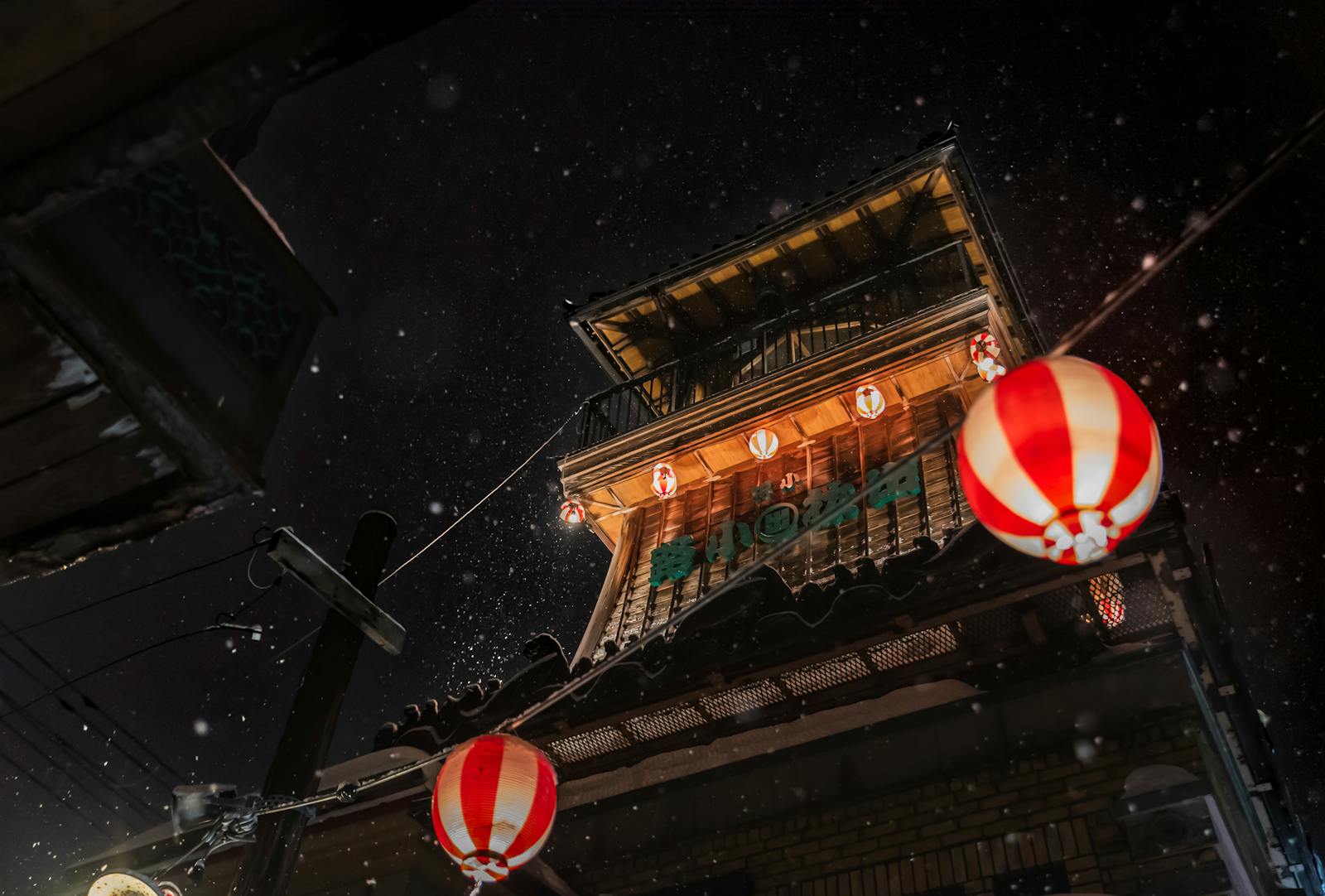
- Decorations go up. Kadomatsu, arrangements of pine and cut bamboo, appear either side of shop doors, and twisted-straw shimekazari hang over entrances to keep bad luck out.
- Museums and some attractions close. The main tower of Osaka Castle closed from 28 December to 1 January in the 2025–26 season, reopening on the 2nd; the Osaka Museum of History closed from 28 December to 4 January. Other museums follow similar patterns. Check before you go.
- Banks close from 31 December to 3 January. The 7-Eleven ATMs keep working; see our money guide, and carry enough cash for the holiday.
- Hotel prices climb towards New Year’s Eve, and the week between Christmas and the first days of January is one of the most expensive of the year. Book well ahead.
New Year’s Eve
Ōmisoka, the last day of the year, is a quiet family evening for most of Japan: a bowl of toshikoshi soba, long buckwheat noodles for a long life, eaten before midnight; the marathon music show on television; and then, at midnight, the temple bells.
- Joya no kane — at temples across the country, the bell is struck 108 times as the year turns, once for each of the worldly desires Buddhism says trouble us. Several temples in and around the city let visitors queue to take a turn. Queues form well before midnight.
- Midnight hatsumode — many people go straight from the bells to a shrine for the first prayers of the year. The big shrines are packed from midnight onwards.
- Countdowns — Dotonbori draws a lively crowd around midnight, though Osaka has no big official countdown event on the scale of some world cities. Universal Studios Japan has run ticketed countdown events in past years; check whether one is scheduled.
For the parks’ Christmas and New Year events, see our guide to USJ seasonal events.
Getting home after midnight
This is the most important practical point of the whole season. In the 2025–26 season, Osaka Metro ran no all-night trains on New Year’s Eve and did not extend its last trains, while JR West ran extended services. The private railways decide their own plans each year. Before 31 December, check the announcements from the lines you need, and have a back-up: a hotel within walking distance of where you will be at midnight, or a budget for a taxi, which will be in heavy demand. Our subway guide and taxis guide explain the options.
New Year’s Day
Ganjitsu, 1 January, is the quietest day of the year in the shopping streets and the busiest at the shrines. Most families spend it at home, eating osechi — the lacquered boxes of New Year food prepared in advance, every item symbolic — and ozōni, a soup with mochi rice cakes. In Kansai, ozōni is made with white miso and round mochi, which Osaka people will tell you is the only correct version.
The first sunrise
Watching hatsuhinode, the first sunrise of the year, is a tradition of its own. The Umeda Sky Building opened its rooftop observatory early on 1 January 2026, from 06:00 to 08:00, for the sunrise over the Ikoma mountains, and similar openings are a regular feature of the season. Abeno Harukas is open every day of the year. Expect to book and to queue.
What is open on 1 January
- Convenience stores, open as always.
- Chain restaurants, fast food, and many restaurants in the tourist areas of Dotonbori and Namba, and in hotels.
- Some attractions: the Kaiyukan aquarium opens every day and opens earlier than usual at peak times in late December and early January; Universal Studios Japan is open and extremely crowded.
- The shrines, of course, open around the clock at the big ones over the first days of the year.
What is closed
- Most department stores. In 2026, the big Osaka department stores, including Hankyu Umeda, Daimaru Shinsaibashi and Takashimaya, stayed closed on both 1 and 2 January.
- Most museums, and some attractions.
- Many small, family-run restaurants, often from about 30 December to 3 January.
- Banks and post offices.
Convenience stores are the backbone of a New Year stay — our konbini guide explains what they sell and how to use them.
Hatsumode: the first shrine visit
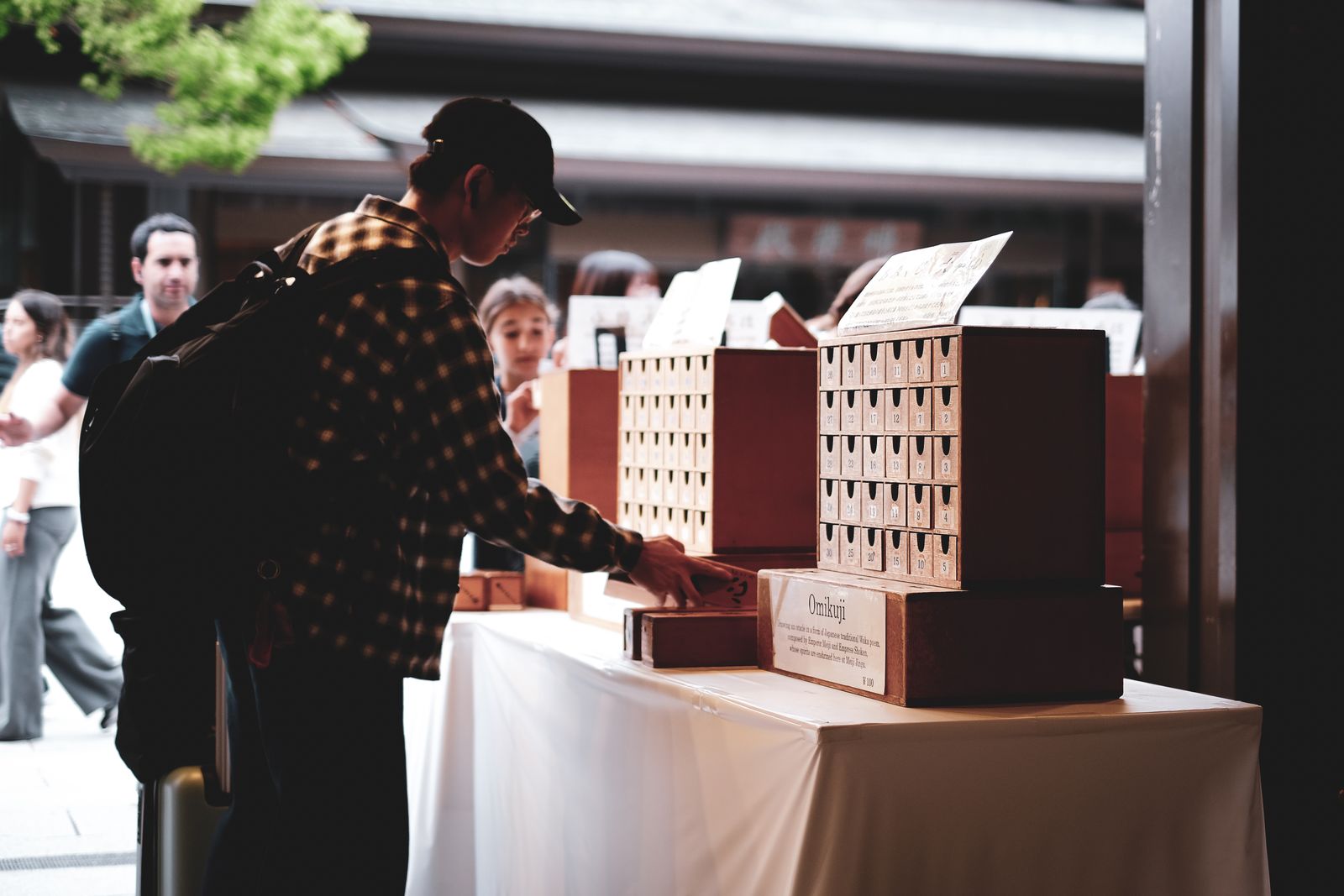
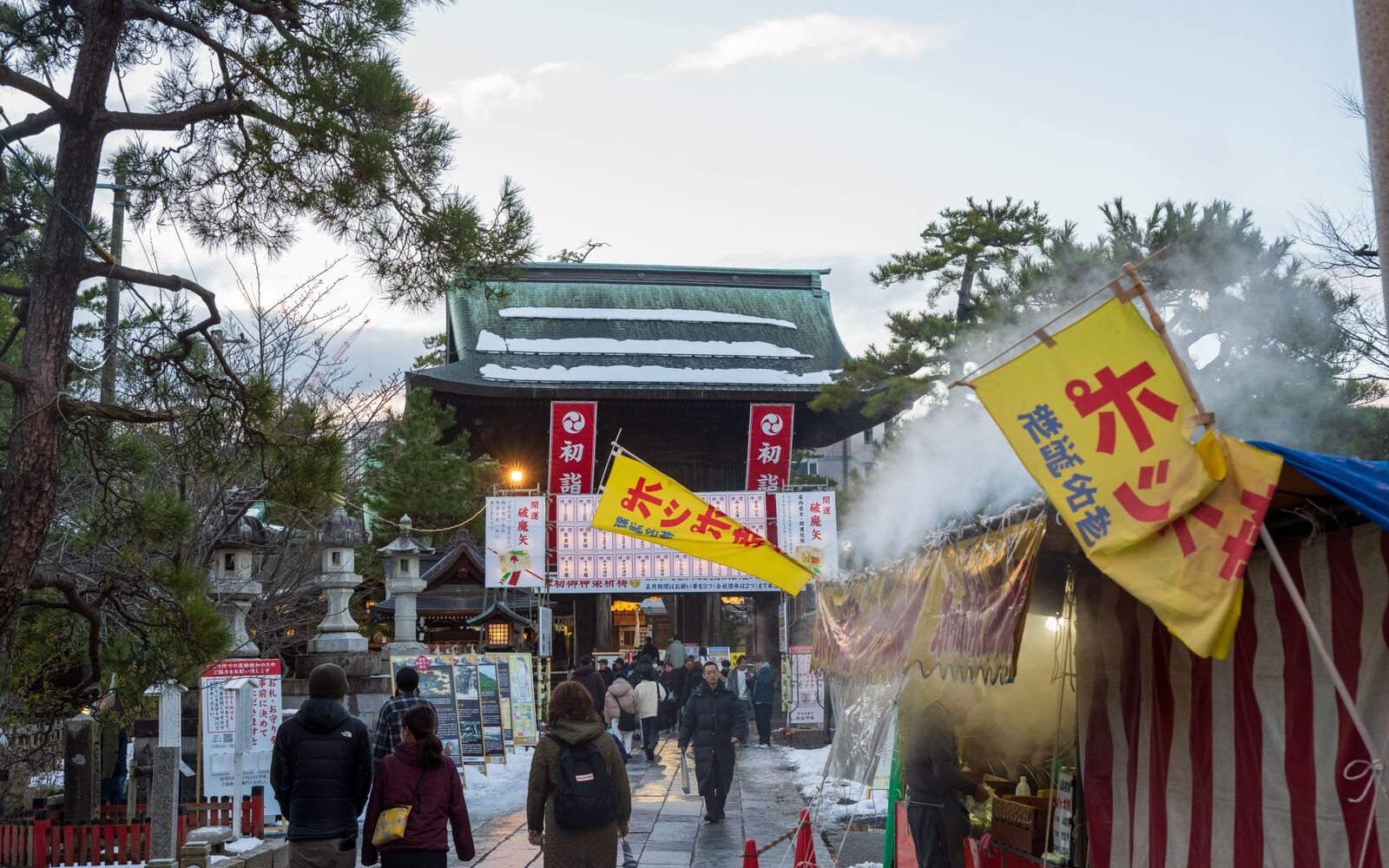
Hatsumode, the first visit of the year to a shrine or temple, is the one New Year custom almost everyone in Japan observes, and joining in is the best way to experience the season. The first three days of January are the peak, and the biggest shrines receive visitors in the millions.
Where to go
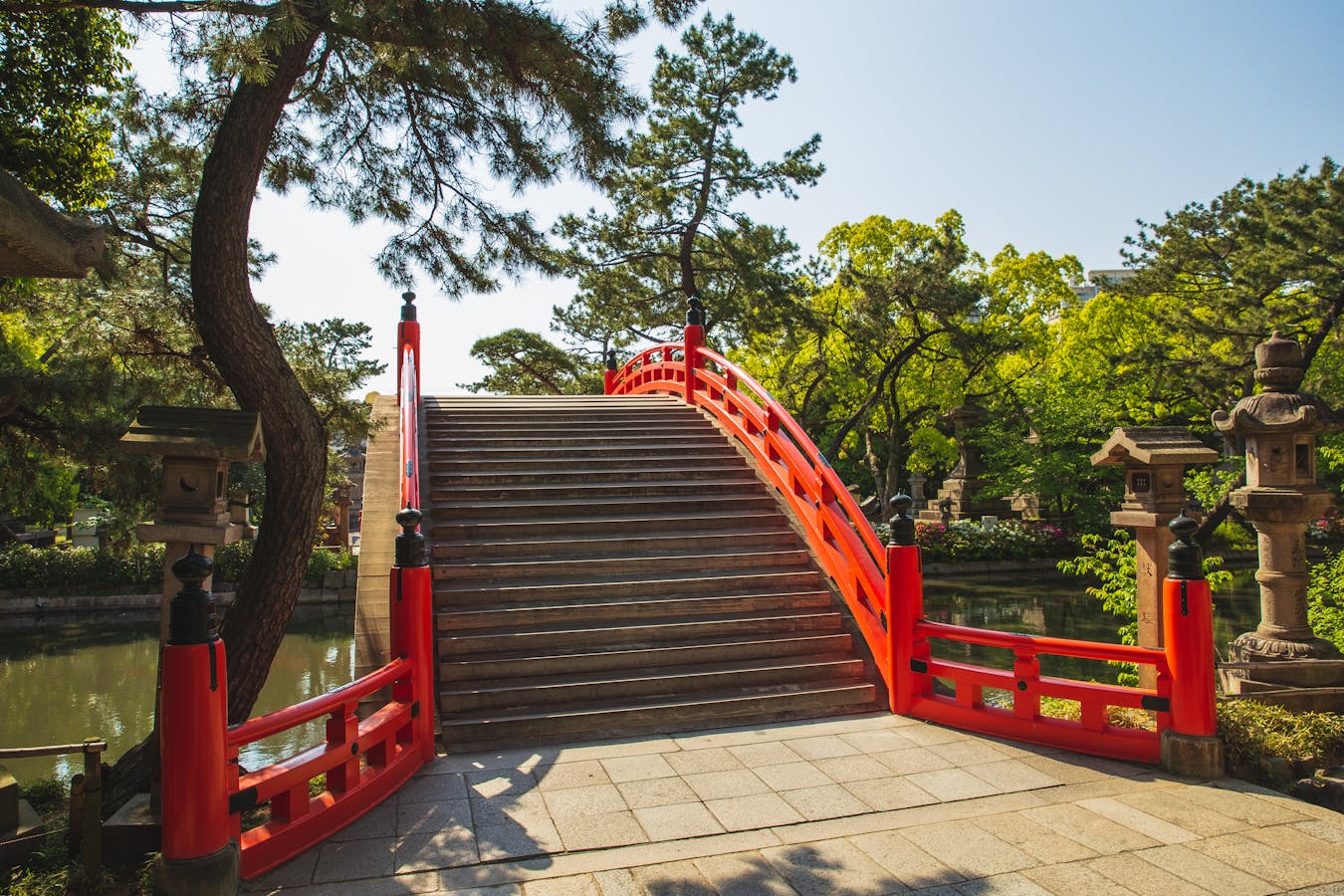
- Sumiyoshi Taisha — Osaka’s great shrine and its biggest hatsumode destination, drawing around 2.3 million visitors over the first days of January. Crossing the steep arched Sorihashi bridge in the crowd is part of the experience. Take the Nankai line or the Hankai tram.
- Osaka Tenmangu — the shrine to the god of learning, popular with students hoping to pass exams, at the head of the long Tenjinbashisuji shopping arcade.
- Namba Yasaka Shrine — the one with the giant lion’s-head stage, a short walk from Namba. Smaller crowds and very photogenic.
- Shitennoji — one of Japan’s oldest temples, and the setting for the Doya-Doya festival on 14 January.
How to do it
- Purify first at the water basin near the entrance: rinse the left hand, the right hand, then the mouth from your cupped hand — never directly from the ladle.
- At a shrine, toss a coin into the offering box, bow twice, clap twice, pray, and bow once more. At a temple, do not clap.
- Draw an omikuji, a paper fortune. If it is bad, tie it to the rack provided and leave the bad luck behind.
- Buy an omamori, a charm, for the year ahead — for health, safe travel, study or love. Last year’s charms are returned to the shrine to be burned.
- Eat from the stalls. The approaches to the big shrines fill with food stalls selling takoyaki, grilled squid, sweet amazake and more.
When to go: for the full crowd experience, the afternoon of 1 January. For something calmer, go early in the morning of the 1st, or between the 4th and 7th, when the decorations are still up and the crowds have thinned. Our temples and shrines guide explains the etiquette in more detail.
2 to 4 January: sales and lucky bags
The first sales of the year, hatsu-uri, are a major event, and the centrepiece is the fukubukuro: a sealed “lucky bag” sold at a fixed price and packed with goods worth considerably more. Queues for the most popular brands start hours before opening.
- Check the dates. Traditionally the sales started on 2 January. In 2026, the big Osaka department stores stayed closed on the 1st and 2nd and began on the 3rd. Check each store’s announcement for 2027.
- Tax-free shopping has changed. From 1 November 2026, visitors pay the full tax-inclusive price in the shop and claim the 10% back after customs confirms the export at the airport on departure, within 90 days of purchase. Keep receipts and allow time at the airport. See our department stores guide.
- Know what you are buying. A lucky bag is a gamble. Clothing bags may not fit; the best value is usually in bags from brands you already like.
By the 4th, which is the first working day for many businesses, the city is largely back to normal, though some smaller restaurants stay closed a day or two longer.
Into January: festivals and fire
The New Year season does not end on the 3rd. Some of the most characterful Osaka events come in the following weeks.
- Toka Ebisu (9–11 January) — the festival of Ebisu, god of business and good fortune, at Imamiya Ebisu Shrine near Shinsekai. Over a million people come over three days to buy fukuzasa, lucky bamboo branches hung with charms, and the shrine stays open through the night. It is loud, cheerful and completely Osaka. In 2027 it runs from Saturday 9 to Monday 11 January.
- Coming of Age Day — a public holiday on the second Monday of January, Monday 11 January in 2027, when twenty-year-olds attend ceremonies, many of the women in spectacular long-sleeved furisode kimono.
- Doya-Doya (14 January) — at Shitennoji, crowds of young men in loincloths scramble for paper charms. Cold, noisy and memorable.
- Bonfires — in mid-January, shrines burn the previous year’s New Year decorations and charms in ceremonial fires.
- Beyond Osaka — Nara sets fire to the grass on Mount Wakakusa in late January, and Kobe Luminarie, the memorial light festival, has moved to late January in recent years. Check the dates; our Nara and Kobe guides cover the trips.
For the full year of events, see our Osaka festival calendar.
Eating over the holiday
- Stock up on the 31st. Convenience stores stay open throughout, but supermarkets and many restaurants close for at least a day or two.
- Try the New Year food. Department stores and hotels sell osechi boxes, usually ordered weeks ahead; some hotels serve osechi or ozōni at breakfast on the first days of January. It is the easiest way for a visitor to taste it.
- Eat where the tourists are. Dotonbori and Namba stay the liveliest, with many restaurants open throughout. See our late-night food guide.
- Warm up with hot pot. Winter is nabe season, and a steaming pot of crab or pufferfish is the best meal of an Osaka January. Our Osaka in winter guide explains the seasonal food.
Weather and packing
Late December and January are cold, dry and often clear, with January daytime temperatures typically around 3–10°C. Snow in the city itself is rare. The cold is most noticeable at night and at the shrines, where you may queue outside for an hour. Bring a warm coat, gloves and good shoes. See Osaka weather and what to pack for Osaka.
Day trips over New Year
The shrines of Kyoto and Nara are even busier than Osaka’s at New Year. Fushimi Inari is among the most visited shrines in Japan for hatsumode, and in the first days of January the climb becomes a slow-moving queue; go before dawn or wait until later in the month. Kyoto’s temples and museums follow the same closure patterns as Osaka’s. Our day trips from Osaka guide suggests alternatives.
Five days over New Year: a sample plan
- 30 December — Kuromon Market in the morning to see the year-end rush; the illuminations along Midosuji and in Namba in the evening.
- 31 December — a day out while things are open; soba for dinner; the temple bells at midnight, or the Dotonbori crowd, with a plan for getting back.
- 1 January — the first sunrise from an observatory if you booked it; hatsumode at Sumiyoshi Taisha; food from the shrine stalls; an early night.
- 2 January — the aquarium, or a quieter shrine such as Namba Yasaka; Osaka Castle’s main tower, if it has reopened.
- 3 January — the department-store sales and lucky bags; the city starting to come back to life.
Is New Year a good time to visit Osaka?
It depends what you want. For atmosphere and tradition, it is one of the most rewarding weeks of the year: the shrines, the decorations, the food, and a city in a genuinely festive mood. For shopping, museums and choosing from the full range of restaurants, it is the worst week of the year, and it is also one of the most expensive for hotels.
Our honest advice: if you have a choice, come in the first three weeks of December for the illuminations and the Christmas markets with everything open, or from the second week of January, when prices fall to some of the lowest of the year. If New Year is when you can travel, come anyway, embrace it, and plan around the closures rather than being surprised by them. Our best time to visit Osaka guide compares the whole year.
Osaka at Christmas and New Year: FAQ
Is Christmas a holiday in Osaka?
No. Christmas Day is a normal working day, and shops, restaurants and attractions are open. Christmas Eve is a couples’ evening, with restaurants booked out.
What is open in Osaka on New Year’s Day?
Convenience stores, chain restaurants, many restaurants in Dotonbori and Namba, the big shrines, the Kaiyukan aquarium and Universal Studios Japan. Most department stores, museums, banks and many small restaurants are closed.
When do the Osaka New Year sales start?
Traditionally on 2 January, but in 2026 the major Osaka department stores stayed closed on 1 and 2 January and began their sales on the 3rd. Check each store’s plans for the coming year.
Do trains run all night on New Year’s Eve in Osaka?
Not the subway, recently. In the 2025–26 season Osaka Metro ran no all-night trains, while JR West ran extended services. Check each operator’s announcements before 31 December and plan your way home.
Where is the best place for hatsumode in Osaka?
Sumiyoshi Taisha, the city’s biggest, with around 2.3 million visitors in the first days of January. For smaller crowds, try Namba Yasaka Shrine or Osaka Tenmangu.
Is Osaka Castle open over New Year?
The castle park is always open, but the main tower closed from 28 December to 1 January in the 2025–26 season and reopened on 2 January.
Is New Year expensive in Osaka?
For hotels, yes: the week around New Year is one of the priciest of the year. Book early, or come in mid-January, when rates are among the lowest of the year.
Where to go next
For the rest of the season, read Osaka in winter and our illuminations guide, and see the Osaka seasonal guide for the whole year. For the festivals, start with the festival calendar and Osaka festivals.
Then build the trip around the dates with the Osaka itinerary hub and things to do in Osaka.
Universal Studios Japan runs its own Christmas season and an all-night countdown party on 31 December, with a separate ticket. See our guide to USJ’s seasonal events for the dates and the shows.