Osaka is a city of distinct Osaka neighborhoods, each with its own personality, food specialties, and atmosphere. Whether you’re drawn to neon-lit entertainment districts, serene temple grounds, cutting-edge shopping arcades, or retro alleyways serving Japan’s best street food, understanding Osaka’s neighborhoods is the key to planning an unforgettable trip. This comprehensive Osaka neighborhoods guide covers every major district — from the bustling southern hub of Namba to the sophisticated northern skyline of Umeda — so you can decide exactly where to go and what to see.
Unlike Tokyo’s sprawling layout, Osaka’s neighborhoods are remarkably compact and well-connected by subway and rail. Most major districts sit along the Midosuji Line, the city’s main north-south artery, making it easy to hop between areas in under 15 minutes. The city naturally divides into two main zones: Kita (the northern business and shopping hub around Umeda) and Minami (the southern entertainment quarter spanning Namba, Dotonbori, and Shinsaibashi). Beyond these two anchors, you’ll discover a fascinating tapestry of Osaka neighborhoods — from the retro charm of Shinsekai to the cultural island of Nakanoshima and the family-friendly waterfront of Osaka Bay.
Kita vs. Minami: Understanding Osaka’s Two Hearts
Before diving into individual Osaka neighborhoods, it helps to understand the city’s fundamental north-south divide. Locals refer to the northern downtown area as Kita (literally “north”) and the southern downtown as Minami (“south”). These two poles have competed for centuries, and each has developed a distinct character that shapes the Osaka neighborhoods within their orbit.
Kita (Umeda area) is Osaka’s polished, modern face. Centered around the massive JR Osaka Station complex and connected Umeda stations, this is where you’ll find corporate headquarters, upscale department stores, rooftop observatories, and sophisticated dining. Kita is sometimes described as “the district of suits and leather shoes” — a nod to its business-oriented atmosphere that softens considerably after working hours when the area’s many restaurants, bars, and entertainment venues come alive.
Minami (Namba area) is Osaka’s soul. This is where the city’s famous personality — loud, fun-loving, and obsessed with good food — shines brightest. The spirit of kuidaore (eating until you drop) was born here among merchants who would spend freely on food and drink. Today, Minami encompasses several interconnected Osaka neighborhoods including Dotonbori, Namba, Shinsaibashi, and Amerikamura, forming the city’s largest entertainment zone.
The two areas are connected by the Midosuji Line subway (just 9 minutes from Umeda to Namba) and the broad, tree-lined Midosuji Boulevard above ground. Most visitors explore both extensively, often basing themselves in or near Minami for its central location and late-night energy. For a deeper look at choosing your base, see our Where to Stay in Osaka guide.
Dotonbori: Osaka’s Iconic Neon-Lit Entertainment Strip
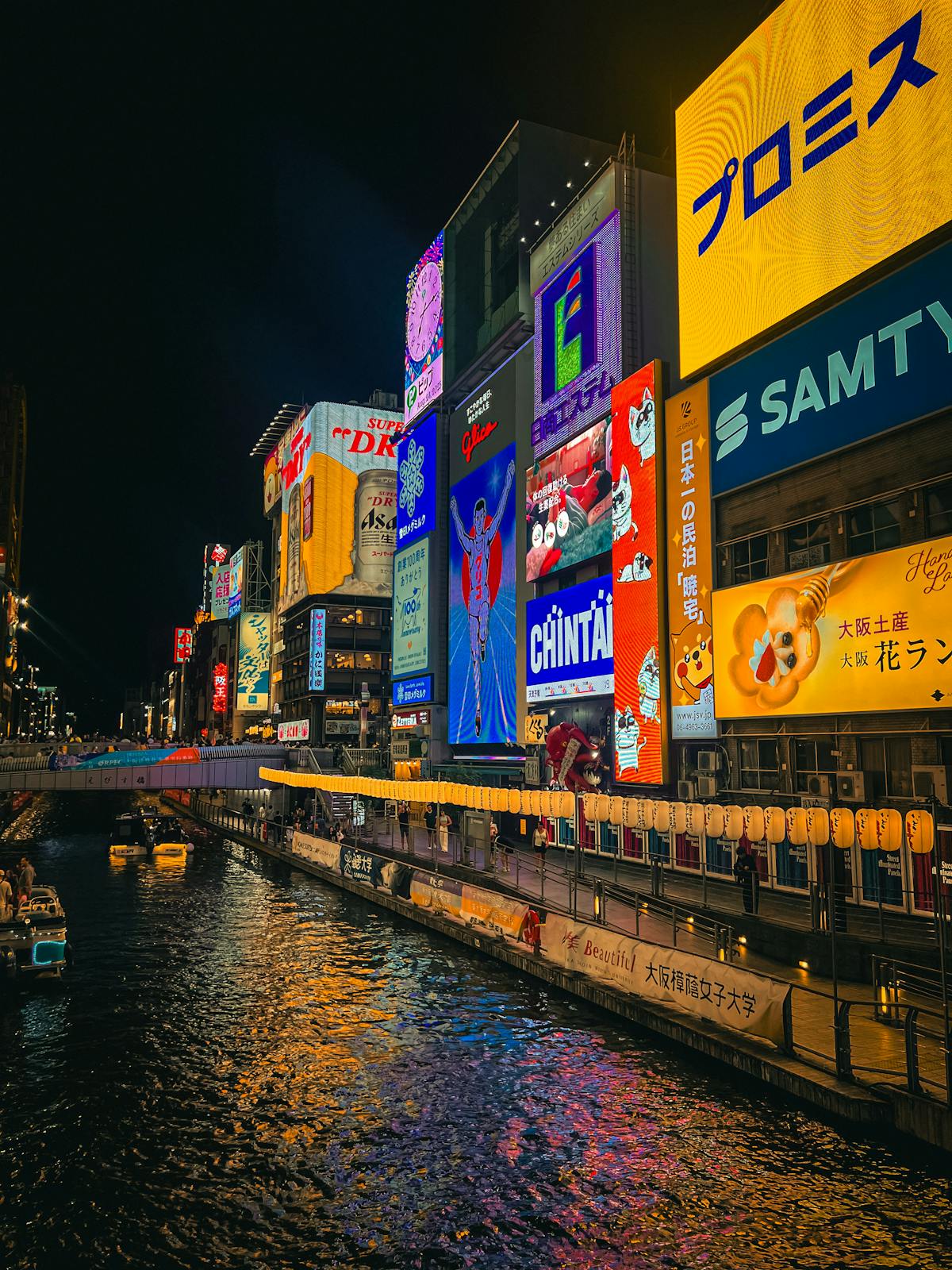
No guide to Osaka neighborhoods is complete without Dotonbori — the single most photographed street in the entire Kansai region. Running parallel to the Dotonbori Canal in the heart of Minami, this dazzling strip is where giant mechanical signs, towering neon billboards, and the aroma of sizzling street food combine to create an atmosphere unlike anywhere else in Japan.
The area’s most famous landmark is the Glico Running Man sign, which has stood at Ebisu Bridge since 1935 (updated multiple times since). Nearby, the enormous Kani Doraku mechanical crab has become another symbol of the district. But Dotonbori is far more than photo opportunities. The district traces its roots to 1612, when local merchant Yasui Doton funded a canal project to boost commerce. By the Edo period, kabuki and bunraku puppet theaters lined the waterway, earning Dotonbori its reputation as Osaka’s premier entertainment destination.
What to eat: Dotonbori is ground zero for Osaka’s street food scene. Line up for takoyaki (octopus balls) at legendary stalls, watch chefs flip okonomiyaki (savory pancakes) on sizzling griddles, and sample gyoza from standing-only counters. For sit-down dining, the narrow side streets — particularly Hozenji Yokocho, a stone-paved alley with a moss-covered shrine — hide intimate izakayas and traditional restaurants. Our Osaka Food Guide covers the best dining spots across the city.
Best time to visit: Dotonbori transforms after sunset. Arrive around 5 PM to watch the neon signs flicker on, then explore until late evening when the energy peaks. Weekend nights can be extremely crowded, so weekday evenings offer a more comfortable experience. For canal-level views, take a Tombori River Cruise (approximately ¥1,000, 20 minutes) departing from Don Quijote’s dock near Ebisu Bridge.
Namba: Osaka’s Southern Entertainment Hub
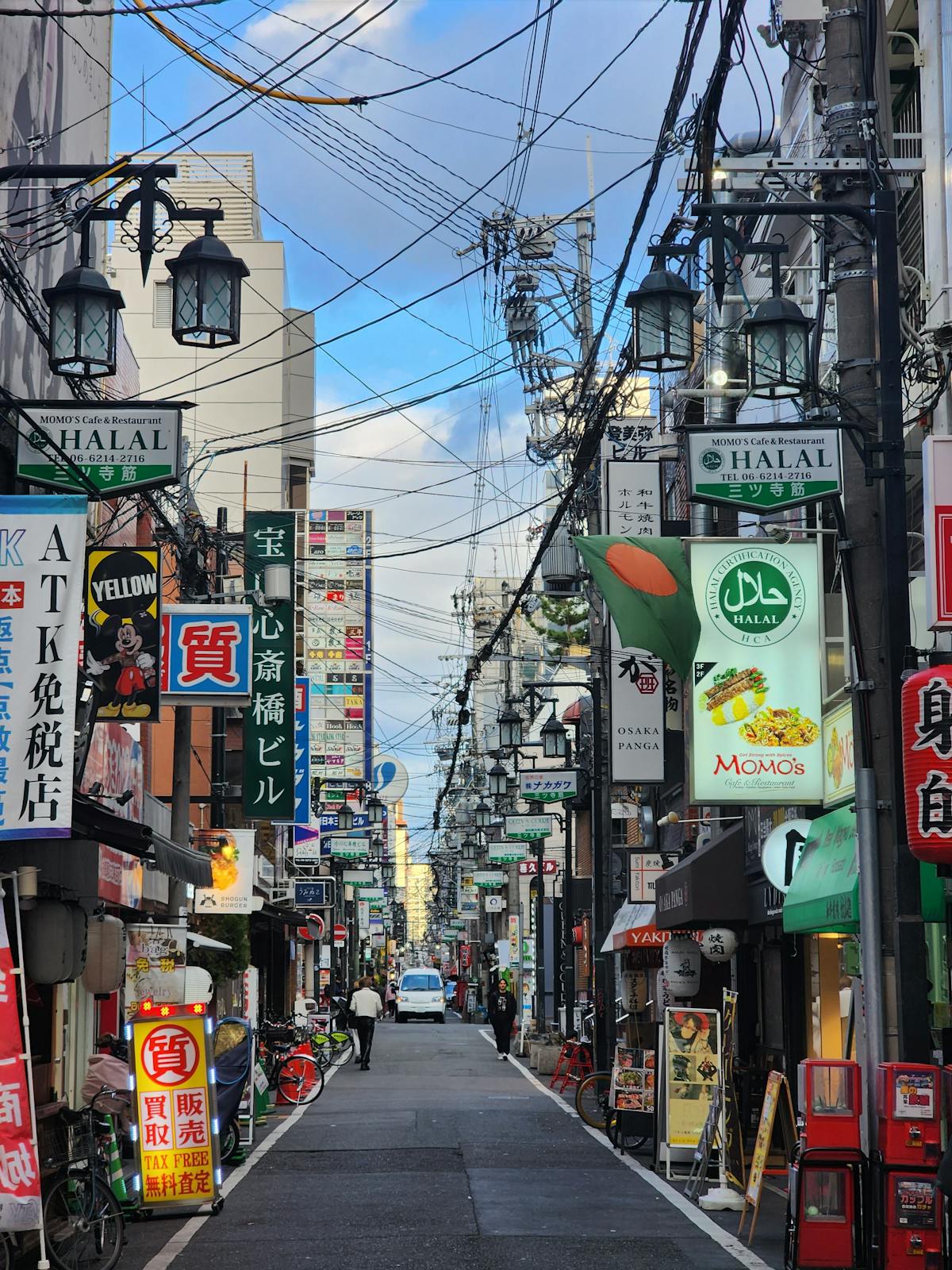
Namba is the transport and commercial heart of Minami, anchored by the massive Namba Station complex that serves multiple rail lines — Nankai Railway (direct to Kansai Airport), Osaka Metro’s Midosuji and Yotsubashi lines, Kintetsu Railway, and JR Namba. This connectivity makes Namba one of the most practical Osaka neighborhoods for visitors, with most of southern Osaka within a few minutes’ ride.
Above ground, Namba is a retail paradise. Namba Parks features a stunning rooftop garden cascading eight stories above a sleek shopping mall — one of the city’s most striking architectural achievements. Adjacent Namba City and the sprawling Namba Walk underground mall connect multiple stations through a climate-controlled shopping corridor that stretches for nearly a kilometer. Namba is also home to Namba Grand Kagetsu, the famous comedy theater where Osaka’s beloved manzai (stand-up comedy) traditions are performed daily.
Key attractions: The area south of Namba Station leads to Nankai Namba Station and the Takashimaya department store, while heading north puts you directly on Dotonbori. East of the station, you’ll find the entrance to Nipponbashi and Den Den Town. This central position makes Namba the perfect starting point for exploring multiple Osaka neighborhoods on foot.
Shinsaibashi: Osaka’s Premier Shopping District
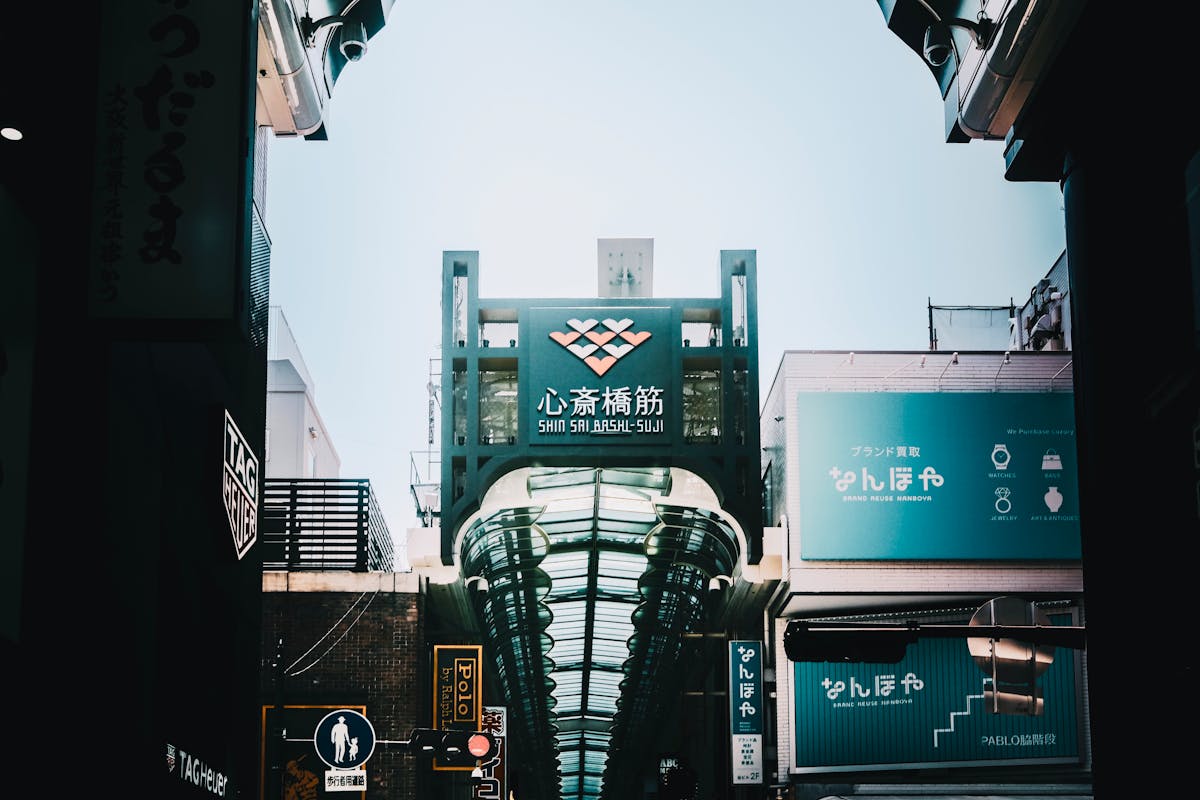
Connecting Namba to the north and flowing into the Dotonbori area, Shinsaibashi-suji is a covered shopping arcade stretching approximately 600 meters. As one of Osaka’s oldest and busiest shopping destinations, this neighborhood has been a commercial center since the Edo period and remains the go-to Osaka neighborhood for serious shoppers today.
The arcade houses an eclectic mix of international luxury brands, Japanese fashion chains, independent boutiques, 100-yen shops, drug stores popular with tourists (many offering tax-free shopping), and restaurants tucked between storefronts. Major department stores like Daimaru Shinsaibashi anchor the district with their blend of high-end retail and basement food halls (depachika) offering premium bento, wagashi sweets, and fresh produce.
Shopping tip: The side streets branching off the main arcade often hold the best discoveries — vintage clothing shops, specialty kitchenware stores, and small cafes that don’t appear in guidebooks. Many stores in Shinsaibashi offer tax-free shopping for purchases over ¥5,000 (bring your passport). The arcade is covered, making it an excellent option for rainy days, and it connects seamlessly with Namba’s underground shopping network. For a complete overview, see our Osaka Shopping Guide.
Amerikamura: Youth Culture & Vintage Finds
Just west of the Shinsaibashi shopping arcade lies Amerikamura (American Village), a compact but vibrant Osaka neighborhood that has served as the city’s youth culture epicenter since the 1970s. The area earned its name from the imported American goods — vintage Levi’s, band t-shirts, vinyl records — that first drew young Osaka residents here decades ago.
Today, Amerikamura centers around Triangle Park (officially Mitsu Park), a small plaza where skateboarders, street musicians, and fashion-forward locals gather. The surrounding blocks are packed with vintage clothing stores, streetwear boutiques, tattoo parlors, record shops, and independent cafes. A small replica of the Statue of Liberty perches atop one building, serving as the area’s unofficial mascot.
What to do: Browse the second-hand shops for rare Japanese streetwear and imported vintage goods. Sample the famous takoyaki at Amemura’s Kougaryu stand near Triangle Park — locals consider it among Osaka’s best. The area also has a thriving cafe culture, with small roasters and specialty coffee shops scattered throughout the narrow streets. Amerikamura is at its liveliest on weekend afternoons when the streets fill with young shoppers and the energy is infectious.
Shinsekai: Osaka’s Nostalgic Retro District
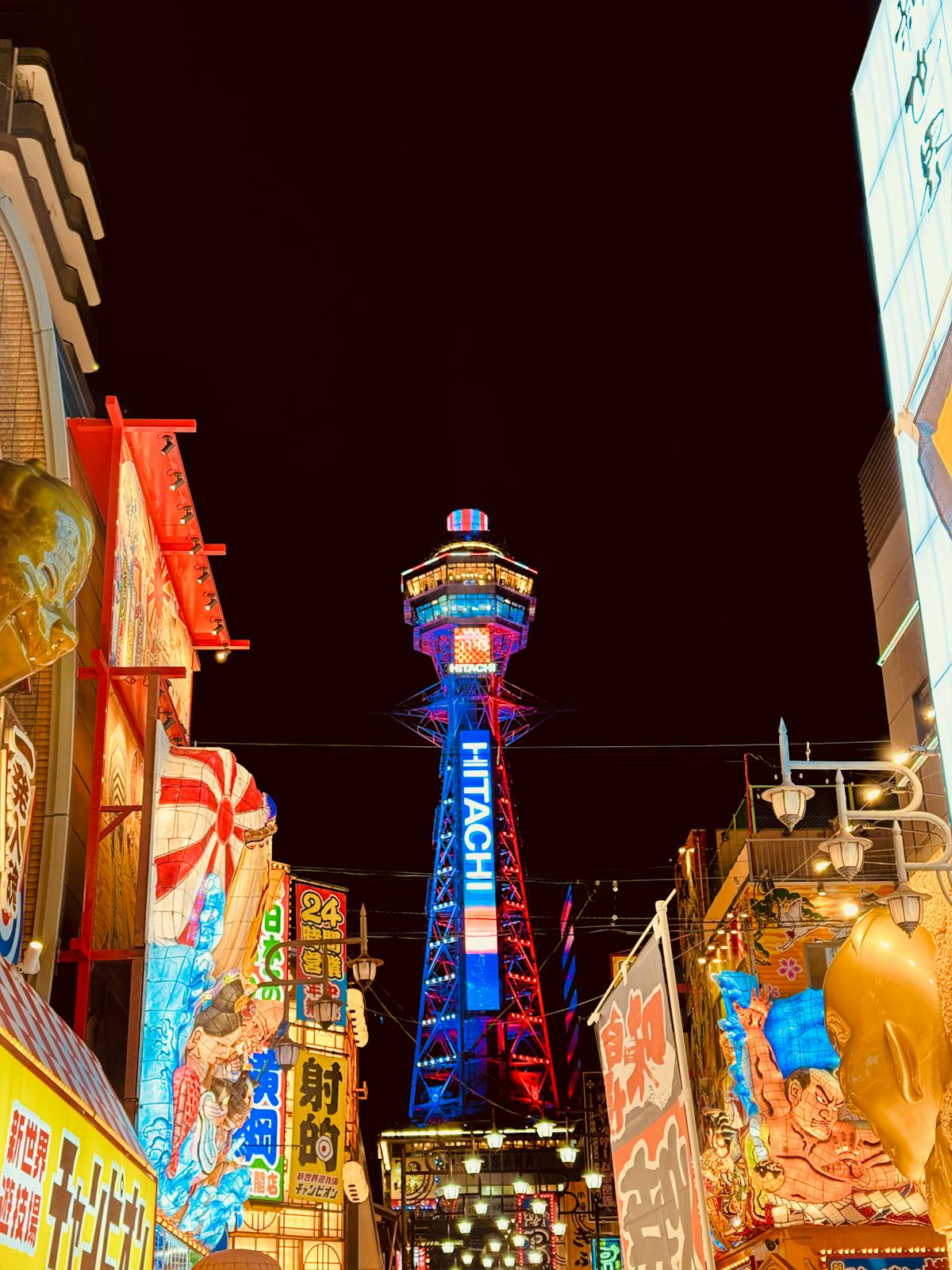
Shinsekai (“New World”) is one of Osaka’s most characterful neighborhoods — a retro entertainment district that feels like stepping into 1960s Japan. Originally developed in 1912 on the site of the 1903 National Industrial Exhibition, the area was designed as a futuristic entertainment quarter: the northern section modeled after Paris and the southern section after New York’s Coney Island. After decades of economic decline in the mid-20th century, Shinsekai has experienced a renaissance while retaining its wonderfully time-warped atmosphere.
The district’s centerpiece is Tsutenkaku Tower, a 108-meter steel tower originally built in 1912, destroyed in 1943, and rebuilt in 1956. The observation deck at 87.5 meters offers panoramic views across the Osaka neighborhoods below, and visitors rub the feet of Billiken — a good-luck deity adopted as the tower’s mascot — for fortune. A newer outdoor deck called TIP THE TSUTENKAKU features a glass-floored walkway for thrill-seekers.
What to eat: Shinsekai is the spiritual home of kushikatsu — deep-fried skewered meat and vegetables dipped in a tangy Worcestershire-based sauce. Dozens of kushikatsu restaurants line the streets, each displaying the golden rule: “No double-dipping!” (the communal sauce pot is shared). Expect to pay ¥800–1,500 for a satisfying meal with beer. The narrow Jan Jan Yokocho alley is lined with old-school eateries, shogi (Japanese chess) parlors, and retro game arcades that perfectly capture Shinsekai’s nostalgic charm.
Best time to visit: Late afternoon through evening (4–9 PM) is ideal. Arrive with daylight to explore the streets and ascend Tsutenkaku, then stay as the neon signs ignite at dusk, transforming the neighborhood into a dazzling spectacle of light and color.
Umeda & Kita: Osaka’s Sophisticated Northern Hub
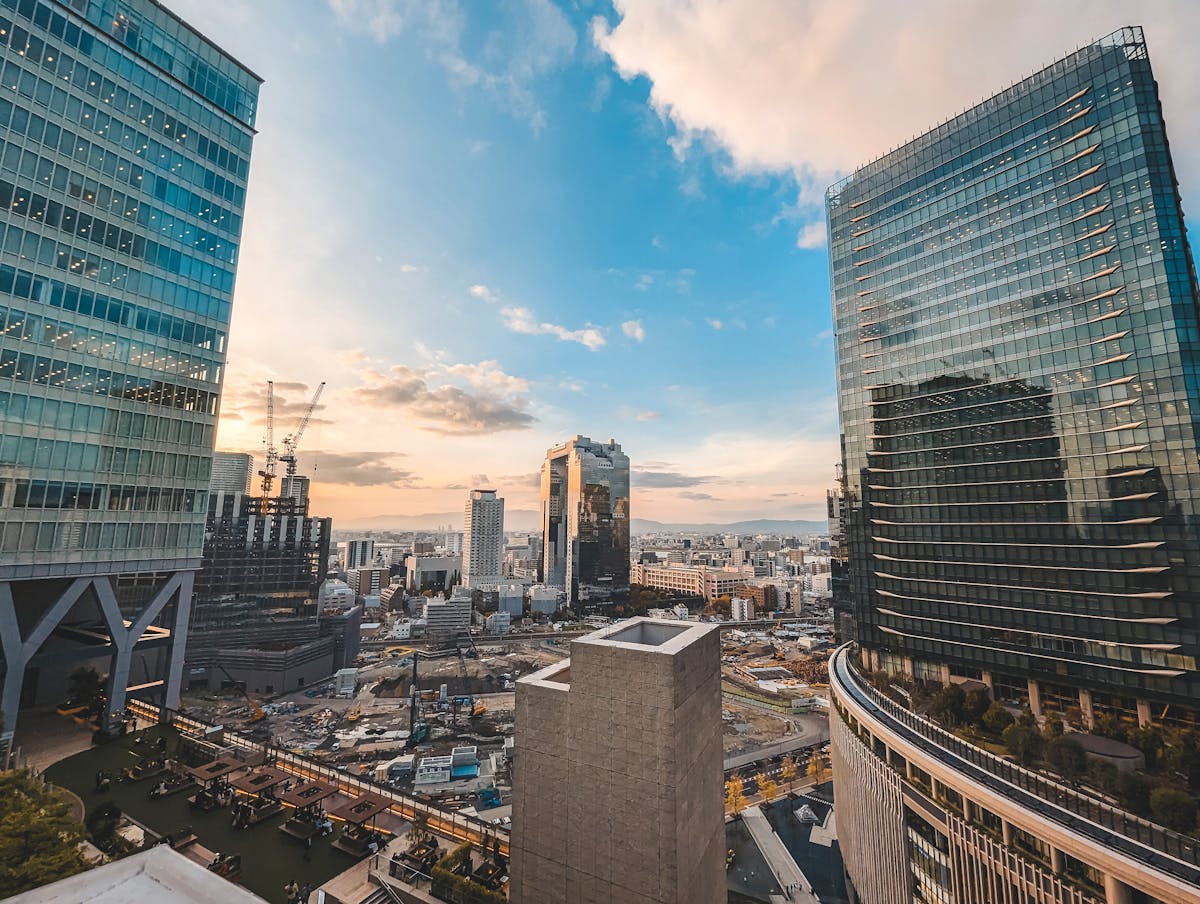
Umeda is Osaka’s northern anchor — a towering cluster of skyscrapers, department stores, and interconnected underground shopping malls centered around JR Osaka Station and the adjacent Umeda subway stations. This is the Osaka neighborhood that most resembles a modern global city, yet beneath its polished surface lies a labyrinthine world of dining, drinking, and shopping that rivals anything in Minami.
The area’s must-visit landmark is the Umeda Sky Building, a striking twin-tower structure connected by a floating “Floating Garden Observatory” at 173 meters. The open-air rooftop deck, with its luminous floor panels that glow at sunset, offers what many consider the best panoramic view of any Osaka neighborhood. The building’s basement houses the atmospheric Takimi Koji restaurant alley, designed to recreate a 1920s Osaka streetscape.
Shopping and entertainment: The Grand Front Osaka complex at the north exit of JR Osaka Station features over 260 shops and restaurants across multiple buildings. Nearby, the HEP FIVE building is unmistakable thanks to its bright red Ferris wheel sitting atop the roof — a 15-minute ride with excellent city views. Below street level, the vast Whity Umeda and Diamor Osaka underground shopping malls connect the various stations with hundreds of retail outlets and restaurants.
Transit hub: Umeda is where nearly all of Osaka’s rail lines converge, including JR lines to Kyoto and Kobe, the Hankyu Railway to Kyoto, Hanshin Railway, and multiple Osaka Metro lines. If you’re planning day trips from Osaka, Umeda is often your departure point. Getting around the area is covered in our Osaka Transportation Guide.
Tennoji & Abeno: History Meets Modern Osaka
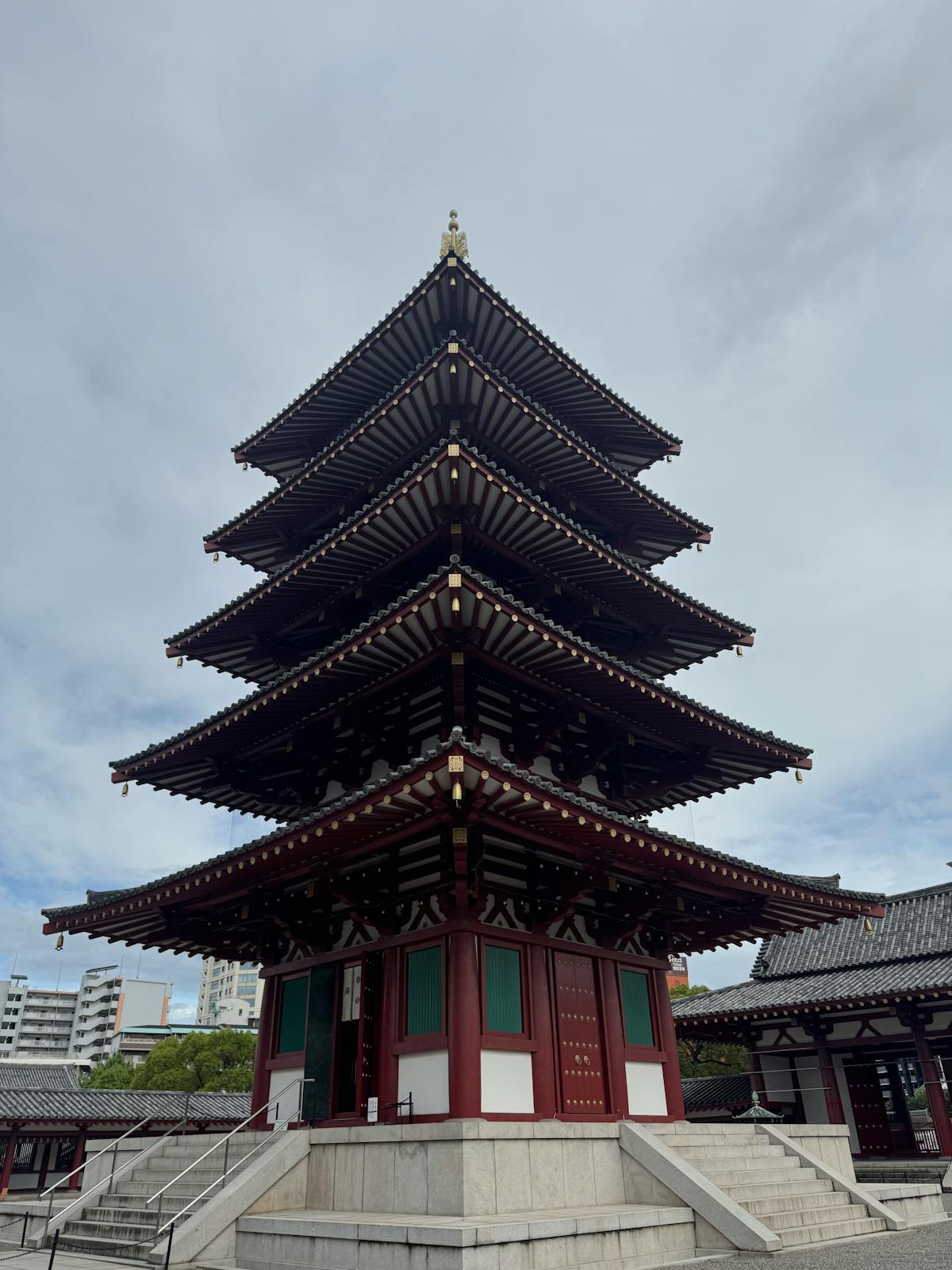
The Tennoji and Abeno area represents one of Osaka’s most fascinating neighborhoods — a place where Japan’s oldest Buddhist temple sits in the shadow of the country’s tallest skyscraper. This juxtaposition of ancient and ultra-modern makes it a compelling destination that many visitors overlook in favor of Minami’s flashier attractions.
Shitennoji Temple, founded in 593 AD by Prince Shotoku, is Japan’s first officially commissioned Buddhist temple. The temple complex features a five-story pagoda, a serene inner garden with a pond and arched bridge (admission ¥300), and a lively flea market on the 21st and 22nd of each month. Walking from the temple’s ancient grounds, you can look up at Abeno Harukas, a 300-meter skyscraper that held the title of Japan’s tallest building from 2014 to 2023. The Harukas 300 observation deck on floors 58–60 offers sweeping views from Osaka Bay to the mountains of Nara.
Tennoji Park contains the Osaka Municipal Museum of Fine Art and Tennoji Zoo (one of Japan’s oldest, established in 1915), surrounded by the beautifully landscaped Keitakuen garden. The adjacent Abeno Q’s Mall and the commercial complex surrounding Tennoji Station have revitalized this Osaka neighborhood into a modern shopping destination.
Why visit: Tennoji delivers a different experience from the tourist-heavy districts to the north. You’ll find authentic local atmosphere, affordable dining, cultural depth, and — from the top of Abeno Harukas — arguably the most spectacular view in all of Osaka. The area connects directly to Shinsekai on foot (about 10 minutes), making it easy to combine both Osaka neighborhoods in a half-day itinerary.
Nakanoshima: Osaka’s Cultural Island
Sandwiched between the Dojima and Tosabori rivers, Nakanoshima is a slender island stretching approximately 3 kilometers through central Osaka. Often overlooked as a tourist destination, this Osaka neighborhood has evolved from an Edo-period rice trading hub into the city’s cultural and governmental center, earning it the nickname “Osaka’s Manhattan” for its mix of stately public buildings and modern high-rises.
The island’s eastern end is home to the Nakanoshima Museum of Art, a striking underground gallery that opened in 2022 featuring modern and contemporary art collections. Nearby, the neoclassical Osaka Central Public Hall (built 1918) is one of the city’s most beautiful Western-style buildings. Nakanoshima Park, centered around a gorgeous rose garden with approximately 4,000 plants, provides a peaceful green escape in the middle of the city — especially stunning during the May and October bloom seasons.
Evening highlight: The riverside promenades along both banks offer beautiful sunset and nighttime views of the illuminated bridges and buildings. Several waterfront restaurants and cafes line the southern embankment, making Nakanoshima an ideal spot for a relaxed dinner away from the crowds of Minami. In winter, the Festival of the Lights (OSAKA光のルネサンス) illuminates the island with spectacular light installations.
Den Den Town (Nipponbashi): Otaku Paradise
Running south from Namba, Den Den Town in the Nipponbashi area is Osaka’s answer to Tokyo’s Akihabara — a multi-block district dedicated to electronics, anime, manga, video games, and all things otaku culture. While smaller than its Tokyo counterpart, Den Den Town offers a more relaxed browsing experience with competitive prices and a distinctly Osaka-flavored atmosphere among its Osaka neighborhoods.
The main strip along Nipponbashi-suji (Sakai-suji street) is lined with multi-story electronics retailers, figure shops, retro game stores selling everything from Super Famicom cartridges to rare arcade boards, and specialty anime merchandise outlets. Mandarake, the famous used-manga and collectibles chain, operates a large branch here with floors organized by genre. Several maid cafes dot the area, offering the quintessential otaku experience.
Annual highlight: The Nipponbashi Street Festa (usually held in March) is one of Osaka’s largest cosplay events, when the main street is closed to traffic and thousands of cosplayers parade through the district in elaborate costumes. Even outside the festival, you’ll spot cosplayers posing for photos on weekends.
Osaka Bay Area: Waterfront Fun
The Osaka Bay Area is the city’s waterfront playground, home to some of its biggest family-friendly attractions. While it feels distinctly different from the urban Osaka neighborhoods inland — wider spaces, ocean breezes, and purpose-built entertainment complexes — it draws millions of visitors annually and deserves a spot on any comprehensive Osaka itinerary.
The headline attraction is Universal Studios Japan (USJ), one of Asia’s most popular theme parks and home to the wildly popular Super Nintendo World and Wizarding World of Harry Potter areas. Nearby, the Osaka Aquarium Kaiyukan ranks among Japan’s finest aquariums, featuring a massive central tank housing whale sharks alongside exhibits representing the Pacific Ring of Fire. The Tempozan Giant Ferris Wheel next door provides sweeping harbor views. For more on planning your visit, check our Things to Do in Osaka guide.
Getting there: The Osaka Bay Area is easily accessible via the JR Yumesaki Line to Universal City Station (for USJ) or the Chuo Line subway to Osakako Station (for Kaiyukan and Tempozan). Budget about half a day for the aquarium area or a full day for USJ.
Hidden Gem Osaka Neighborhoods Worth Exploring
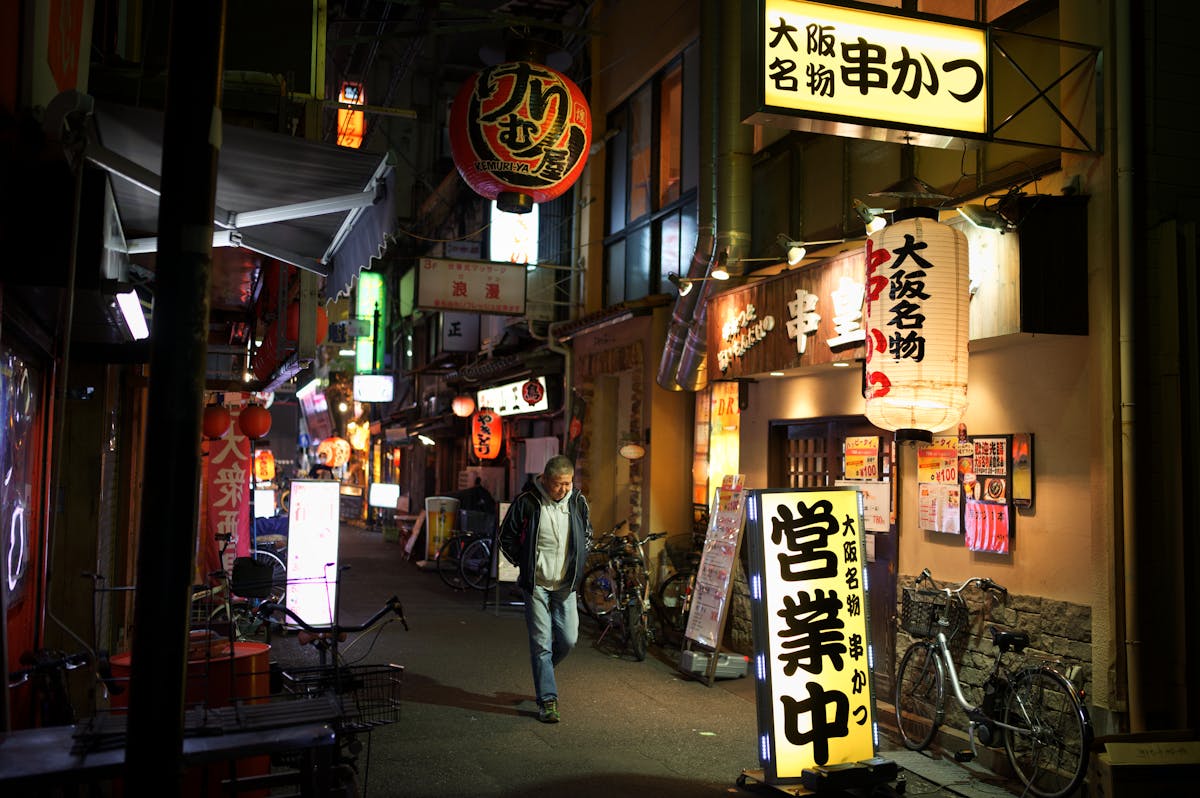
Beyond the major districts, several lesser-known Osaka neighborhoods reward curious travelers with authentic local experiences and far fewer tourists.
Nakazakicho: The Bohemian Quarter
Tucked just east of Umeda, Nakazakicho is Osaka’s bohemian enclave — a charming neighborhood of narrow lanes, pre-war wooden houses, and a thriving indie cafe and vintage shop scene. Because this area survived WWII bombing largely intact, you’ll find original wooden townhouses (machiya) that have been converted into specialty coffee shops, art galleries, and handmade goods boutiques. Midweek mornings offer the quietest experience for wandering the maze-like streets. It’s easily walkable from Umeda in about 10 minutes.
Horie: Artsy and Independent
South of Shinsaibashi, Horie draws creative types with its independent boutiques, design studios, international restaurants, and a relaxed atmosphere that contrasts with the commercial energy of nearby shopping arcades. Orange Street (Tachibana-dori) is the neighborhood’s main artery, lined with furniture shops, lifestyle stores, and carefully curated cafes. Horie Park hosts occasional pop-up markets and community events. This is where Osaka’s expat community and local creatives overlap, giving the area an international yet authentically local character.
Tsuruhashi: Osaka’s Koreatown
Tsuruhashi is home to one of Japan’s largest Korea Towns and the undisputed capital of yakiniku (Korean barbecue) in Osaka. Step out of Tsuruhashi Station and the aroma of grilling meat immediately surrounds you. The neighborhood’s covered market is a labyrinth of small alleys selling Korean ingredients, kimchi, cosmetics, and K-pop merchandise. This is one of the most atmospheric Osaka neighborhoods for food lovers, with dozens of yakiniku restaurants offering premium cuts at prices well below tourist areas.
Tenma & Tenjinbashi: The Longest Shopping Street
The Tenjinbashisuji Shopping Street holds the record as Japan’s longest shopping arcade at approximately 2.6 kilometers. Running through the Tenma neighborhood, this covered arcade is refreshingly local — here you’ll find traditional sembei (rice cracker) shops, neighborhood fishmongers, small clothing stores, and independent restaurants catering to residents rather than tourists. The nearby Osaka Tenmangu shrine and the excellent Osaka Museum of Housing and Living (where you can walk through a recreated Edo-period Osaka streetscape) make Tenma one of the most rewarding Osaka neighborhoods for cultural exploration.
Osaka Neighborhood Food Specialties
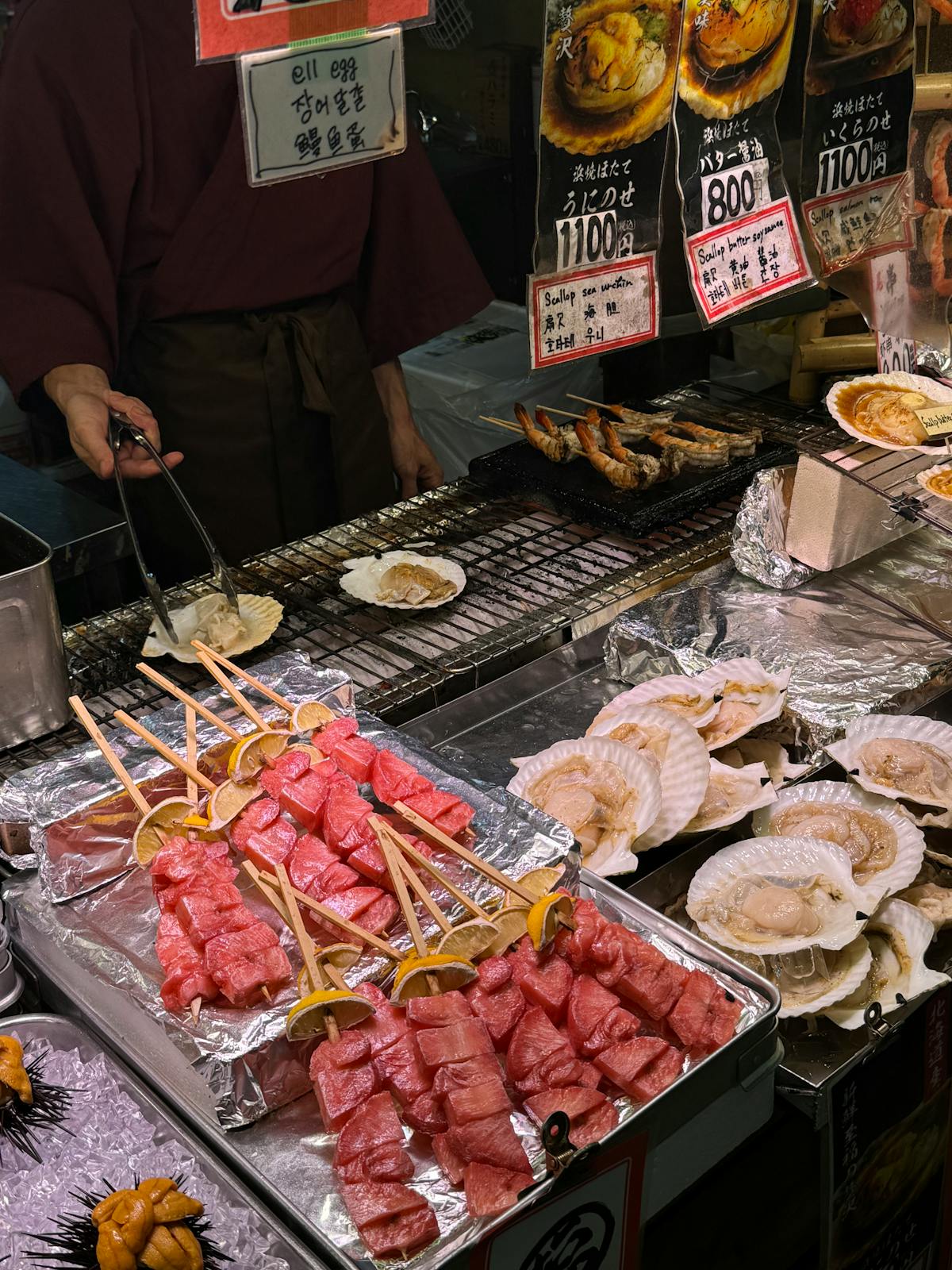
Each Osaka neighborhood has its own food identity. Dotonbori and Namba are the epicenter for takoyaki and okonomiyaki, with famous chains and legendary street stalls competing for customers. Shinsekai owns kushikatsu — you’ll find the highest concentration of deep-fried skewer restaurants anywhere in Japan. Tsuruhashi dominates for yakiniku Korean barbecue, while Tenma’s backstreets hide some of the best-value izakaya (Japanese pub) dining in the city. Umeda’s department store depachika (basement food halls) offer premium bento, wagashi, and specialty ingredients. And for fresh seafood, the stalls around Kuromon Market near Nipponbashi remain a top destination, as detailed in our Osaka Food Guide.
How to Navigate Between Osaka Neighborhoods
Osaka’s compact layout makes moving between neighborhoods remarkably efficient. The Osaka Metro Midosuji Line is your best friend — it connects Umeda (Kita) to Shinsaibashi, Namba, and Tennoji in a straight north-south line, with most rides taking under 15 minutes. An ICOCA card (rechargeable IC transit card) works on all trains, subways, and buses, eliminating the need for individual tickets.
For visitors exploring extensively, the Osaka Amazing Pass (1-day ¥2,800 or 2-day ¥3,600) offers unlimited subway and bus rides plus free admission to over 50 attractions including Tsutenkaku Tower, the Tempozan Ferris Wheel, and Osaka Castle. Several Osaka neighborhoods — Dotonbori, Namba, Shinsaibashi, and Amerikamura — are close enough to explore entirely on foot, as they flow into one another seamlessly. For complete transit information, see our Getting Around Osaka guide.
Osaka Neighborhoods Quick-Reference Guide
Here’s a quick summary to help you plan which Osaka neighborhoods to prioritize based on your interests:
| Neighborhood | Best For | Nearest Station | Highlights |
|---|---|---|---|
| Dotonbori | Street food, nightlife, photos | Namba (Midosuji Line) | Glico sign, canal cruises, takoyaki |
| Namba | Shopping, transit, comedy | Namba (multiple lines) | Namba Parks, Grand Kagetsu, malls |
| Shinsaibashi | Shopping, fashion | Shinsaibashi (Midosuji) | 600m arcade, Daimaru, tax-free shops |
| Amerikamura | Youth culture, vintage | Shinsaibashi (Midosuji) | Triangle Park, vintage shops, cafes |
| Shinsekai | Retro atmosphere, kushikatsu | Dobutsuen-mae (Midosuji) | Tsutenkaku Tower, Jan Jan Yokocho |
| Umeda | Views, upscale shopping | Umeda/Osaka (multiple) | Sky Building, Grand Front, HEP FIVE |
| Tennoji | Temples, panoramic views | Tennoji (Midosuji) | Shitennoji, Abeno Harukas, park |
| Nakanoshima | Art, riverside walks | Naniwabashi (Keihan) | Art museum, rose garden, illuminations |
| Den Den Town | Anime, electronics, gaming | Nipponbashi (Sakaisuji) | Mandarake, retro games, cosplay |
| Osaka Bay | Families, theme parks | Universal City / Osakako | USJ, Kaiyukan, Ferris wheel |
Planning Your Osaka Neighborhood Itinerary
With so many Osaka neighborhoods to explore, it helps to group nearby areas together. For a 3-day visit, consider this approach: spend your first day in the Minami cluster (Dotonbori, Namba, Shinsaibashi, and Amerikamura — all walkable from each other). Dedicate your second day to Shinsekai and Tennoji in the morning, then head north to Umeda for afternoon shopping and sunset views from the Sky Building. Use your third day for the Osaka Bay Area (USJ or Kaiyukan) or explore the hidden gems like Nakazakicho, Tsuruhashi, and Tenma.
If you have 5–7 days, you’ll have time to savor each Osaka neighborhood at a leisurely pace and add day trips to Kyoto, Nara, or Kobe — all within an hour from central Osaka. No matter how long your visit, the diversity of Osaka’s neighborhoods ensures every day brings something different — from the neon-drenched excitement of Dotonbori to the tranquil gardens of Tennoji, from cutting-edge shopping in Umeda to the nostalgic charm of Shinsekai’s retro streets.
Osaka rewards the curious traveler. Look beyond the main tourist strips, duck into a lantern-lit alley, follow the scent of sizzling street food, and let each Osaka neighborhood reveal its own story. In a city where the locals’ motto is “Osaka wa kuidaore” — eat until you drop — the best discoveries are always just around the next corner.