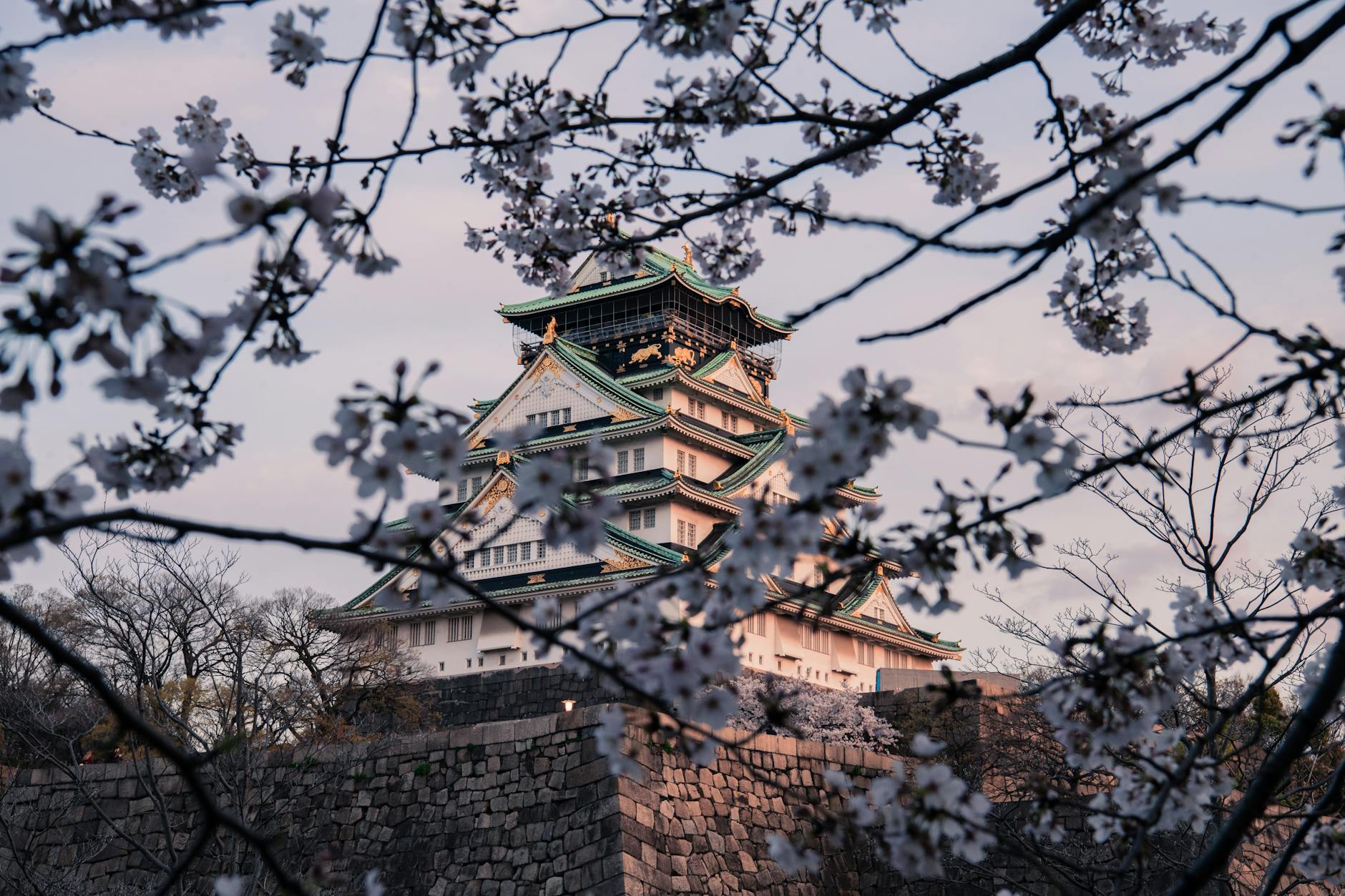
Osaka is a city that rewards the curious. Whether you want to explore a 16th-century castle, ride roller coasters at one of Asia’s best theme parks, eat your way through the nation’s most legendary food district, or discover centuries-old shrines tucked between modern skyscrapers, there is no shortage of things to do in Osaka.
This guide covers more than 50 of the best attractions and activities across the city — from the absolute must-sees that every visitor should experience to the hidden gems that reward those who go a little deeper. We have organized everything by category so you can quickly find what interests you most, whether that is history, food, nightlife, family fun, or outdoor adventures.
Iconic Landmarks: Osaka’s Must-See Attractions
Every trip to Osaka starts with the city’s marquee attractions. These are the places that put Osaka on the map and continue to draw millions of visitors year after year.
Osaka Castle (Osaka-jo)
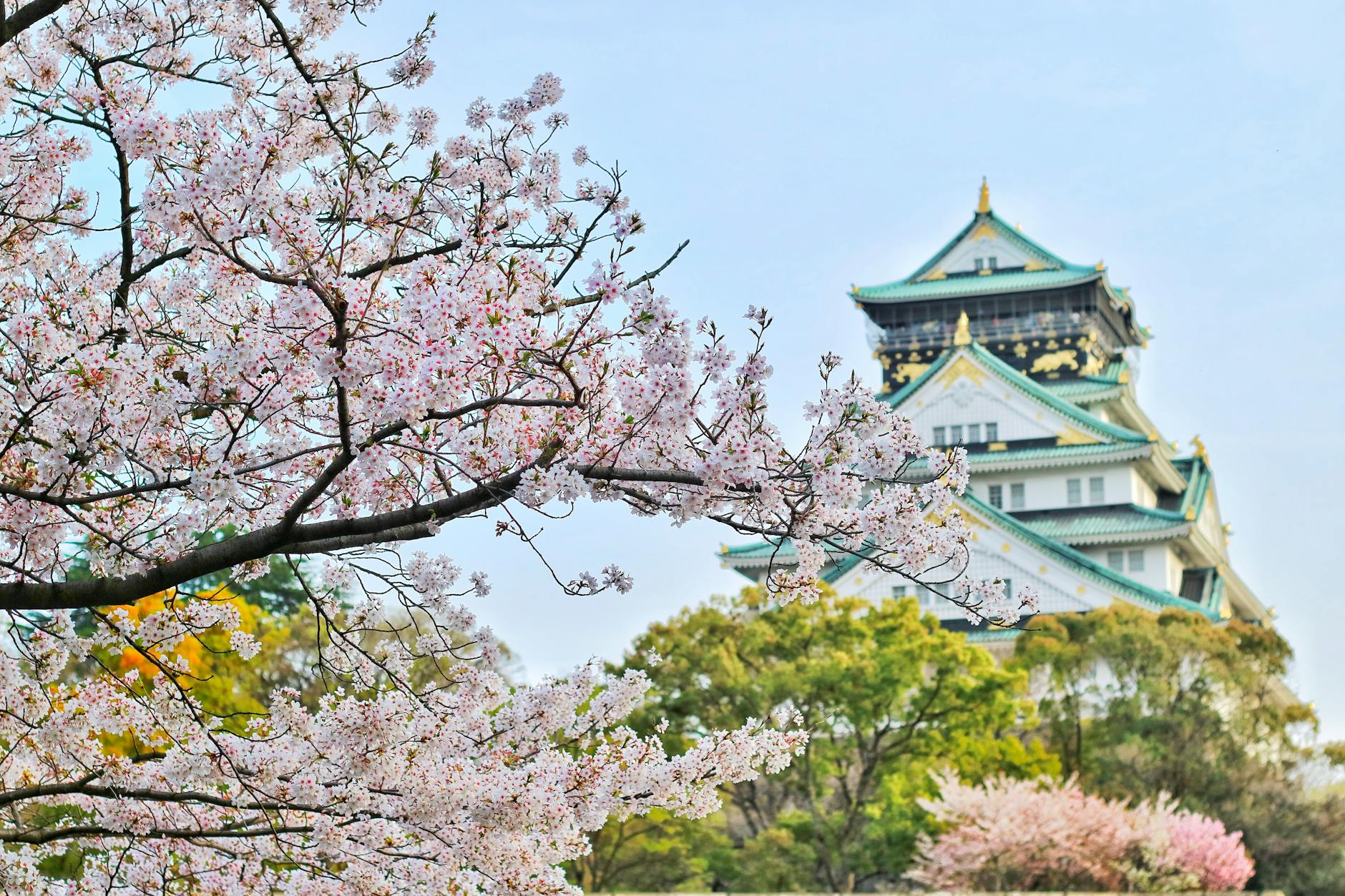
Osaka Castle is arguably the city’s single most recognizable landmark. Originally built in 1583 by the powerful warlord Toyotomi Hideyoshi, the castle played a central role in the unification of Japan during the turbulent Sengoku period. The current reconstruction, which dates to 1931 with major restorations completed in 1997, houses an eight-floor museum tracing Osaka’s transformation from feudal stronghold to modern metropolis.
The observation deck on the top floor delivers sweeping 360-degree views of the city skyline, the surrounding moat, and on clear days, as far as the mountains of Ikoma and Katsuragi. The castle sits within Osaka Castle Park, a 105-hectare green space that is home to roughly 3,000 cherry blossom trees — making it the single best hanami (cherry blossom viewing) spot in the city during late March and early April.
Practical details: Open daily 9:00 AM to 5:00 PM (extended hours during peak seasons). Admission to the castle tower is 600 yen for adults. The surrounding park and moat area are free to explore. Budget two to three hours for a thorough visit. Nearest stations are Osakajokoen (JR Loop Line) or Tanimachi 4-chome (Osaka Metro).
Dotonbori and Namba
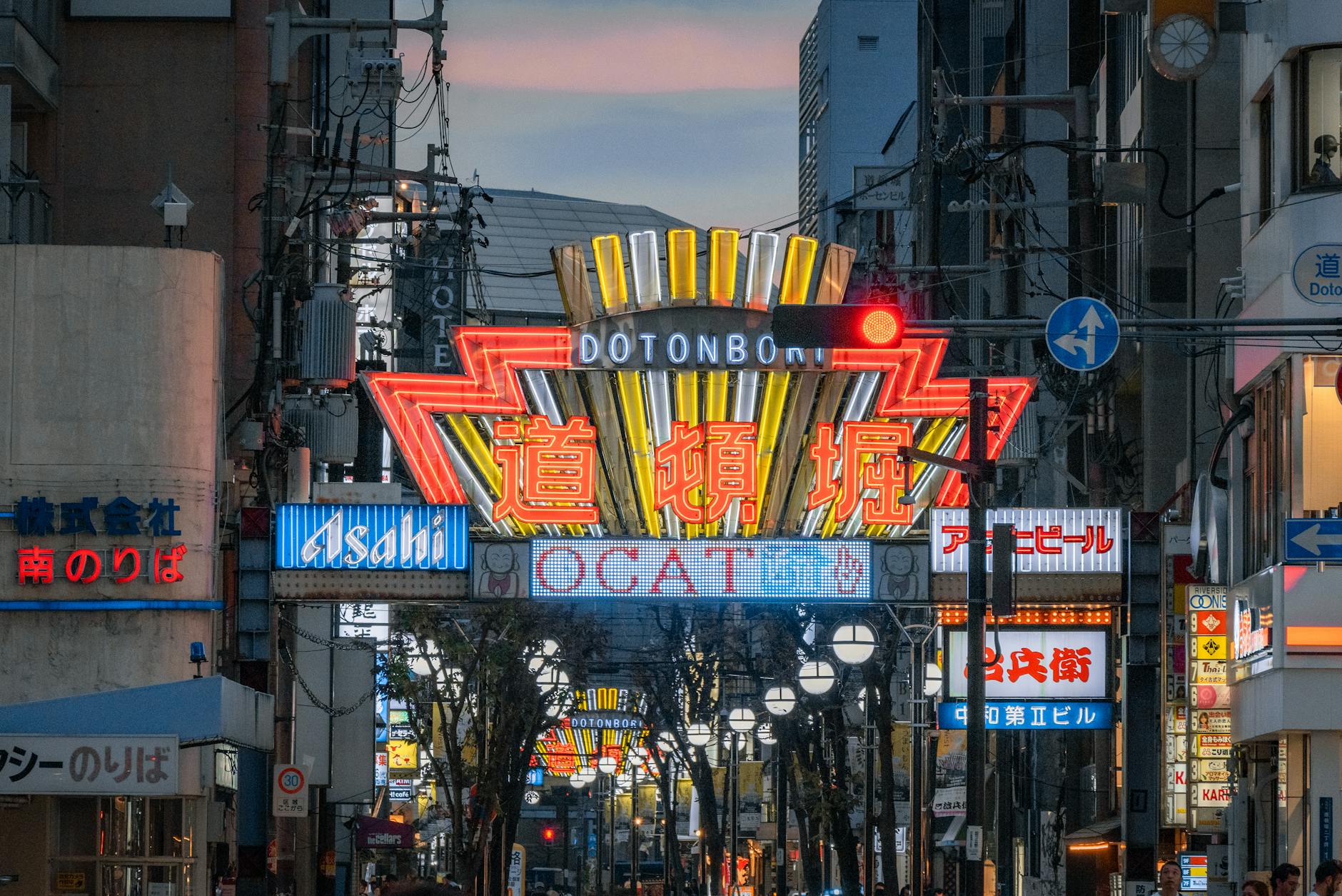
If Osaka Castle represents the city’s past, Dotonbori is its electric present. This 600-meter canal-side entertainment strip in the Namba district is where Osaka’s personality comes alive in its purest form — neon signs the size of buildings, the smell of sizzling takoyaki drifting through packed streets, and a carnival atmosphere that peaks after dark and does not let up until the early morning hours.
The iconic sights include the Glico Running Man sign (which has stood in various forms since 1935 and is now a UNESCO-recognized cultural icon of Osaka), the massive mechanical crab sign above Kani Doraku restaurant, and the Don Quijote Ferris Wheel that rises from the roof of the discount megastore. Tombori River Walk runs along the canal and offers the best vantage point for photos, especially when the reflections of neon lights dance across the water.
Beyond the spectacle, Dotonbori is one of the finest street food destinations in the world. Must-try stops include Takoyaki Kukuru, Okonomiyaki Mizuno, and the numerous kushikatsu stands around the canal area. The parallel shopping arcades of Shinsaibashi-suji and Ebisubashi-suji extend the experience with hundreds of shops.
Practical details: Dotonbori is open 24/7 but is best experienced from late afternoon through midnight. Free to explore. Nearest station is Namba (multiple lines). Allow three to four hours for a full evening of eating, shopping, and exploring.
Shinsekai and Tsutenkaku Tower
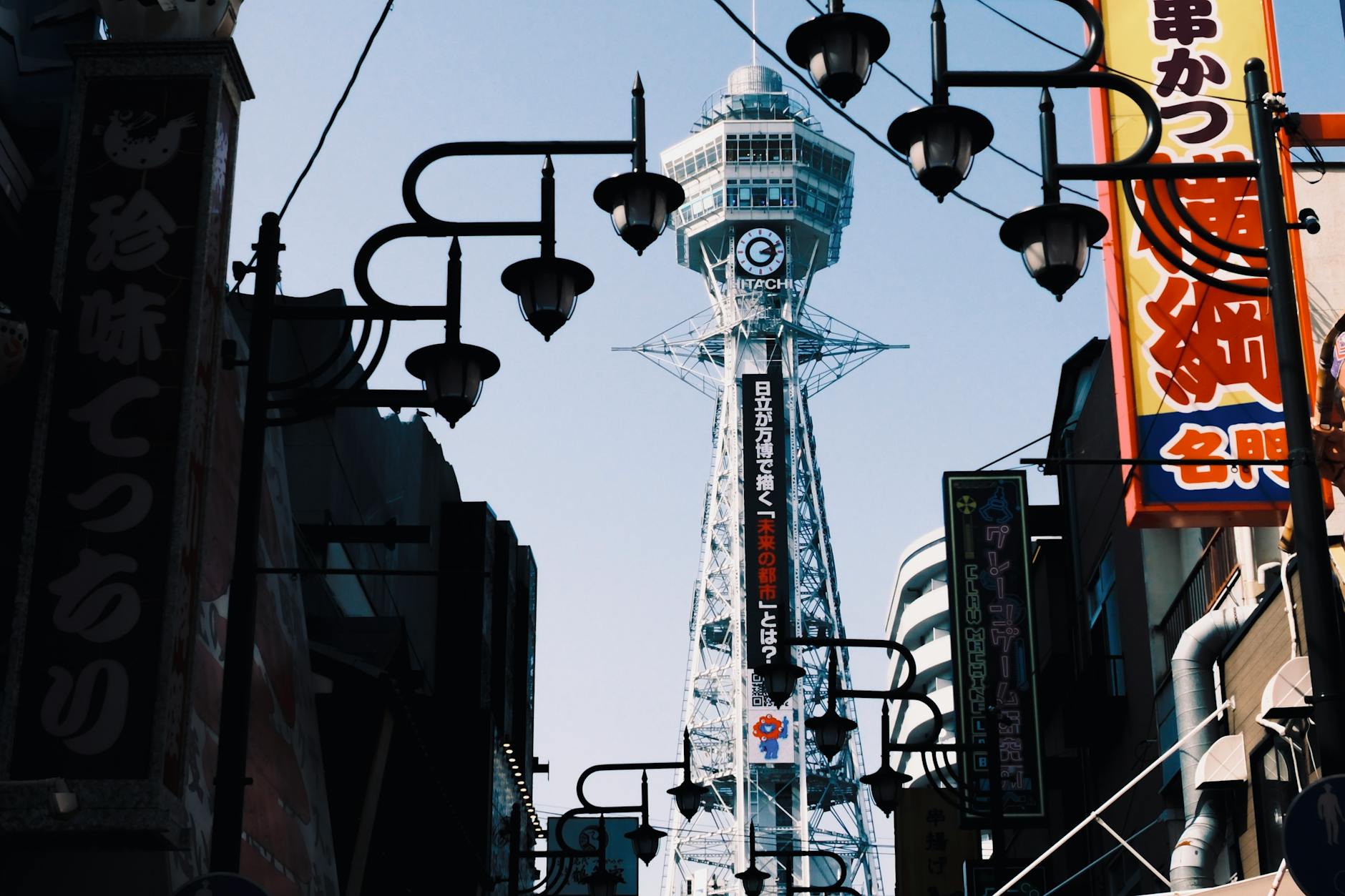
Shinsekai (“New World”) is one of Osaka’s most atmospheric and photogenic neighborhoods. Built in 1912 as a model of modern urban design — with one half modeled on Paris and the other on New York’s Coney Island — the district has aged into a retro wonderland that feels frozen in the Japan of the 1950s and 1960s. Colorful signage, narrow lanes lined with kushikatsu (deep-fried skewer) restaurants, old-school game arcades, and a working-class energy make Shinsekai a fascinating counterpoint to the polished shopping districts elsewhere.
Rising above it all is Tsutenkaku Tower, the 103-meter steel structure that has served as Osaka’s symbolic landmark since it was rebuilt in 1956. The observation deck at 87 meters offers good views, and rubbing the feet of the Billiken statue at the top is said to bring good luck. In 2022, a glass slide was added to the exterior, allowing visitors to slide from the third-floor outdoor observation deck for an adrenaline-pumping experience.
Practical details: Tsutenkaku Tower is open daily 10:00 AM to 8:00 PM. Admission is 900 yen for adults; the slide is an additional 1,000 yen. Nearest station is Ebisucho (Osaka Metro). The neighborhood itself is best explored on foot over two to three hours, ideally at lunchtime for kushikatsu.
Theme Parks and Entertainment
Osaka is home to some of Asia’s most exciting entertainment venues, making it a top destination for families and thrill-seekers alike.
Universal Studios Japan (USJ)
Universal Studios Japan is one of the most visited theme parks in the world, drawing approximately 16 million visitors annually. The park’s crown jewel is Super Nintendo World, an immersive recreation of the Mushroom Kingdom where you wear a Power-Up Band to collect virtual coins, punch question blocks, and ride the incredible Mario Kart: Koopa’s Challenge. The Donkey Kong Country expansion, which opened in late 2024, adds the thrilling Mine Cart Madness coaster.
Other major areas include The Wizarding World of Harry Potter (complete with Hogwarts Castle and Butterbeer), Jurassic World, Minion Park, and the seasonal Universal Cool Japan events that feature limited-time attractions based on popular anime like Demon Slayer, Jujutsu Kaisen, and Detective Conan.
Practical details: Open daily, typically 9:00 AM to 7:00 PM (hours vary seasonally, with extensions to 9:00 PM or 10:00 PM during peak periods). One-day studio pass costs approximately 8,600 to 9,800 yen for adults depending on the date. Express Passes (4,500 to 14,000+ yen) are strongly recommended during weekends and holidays. Nearest station is Universal City (JR Yumesaki Line). Plan a full day.
Osaka Aquarium Kaiyukan
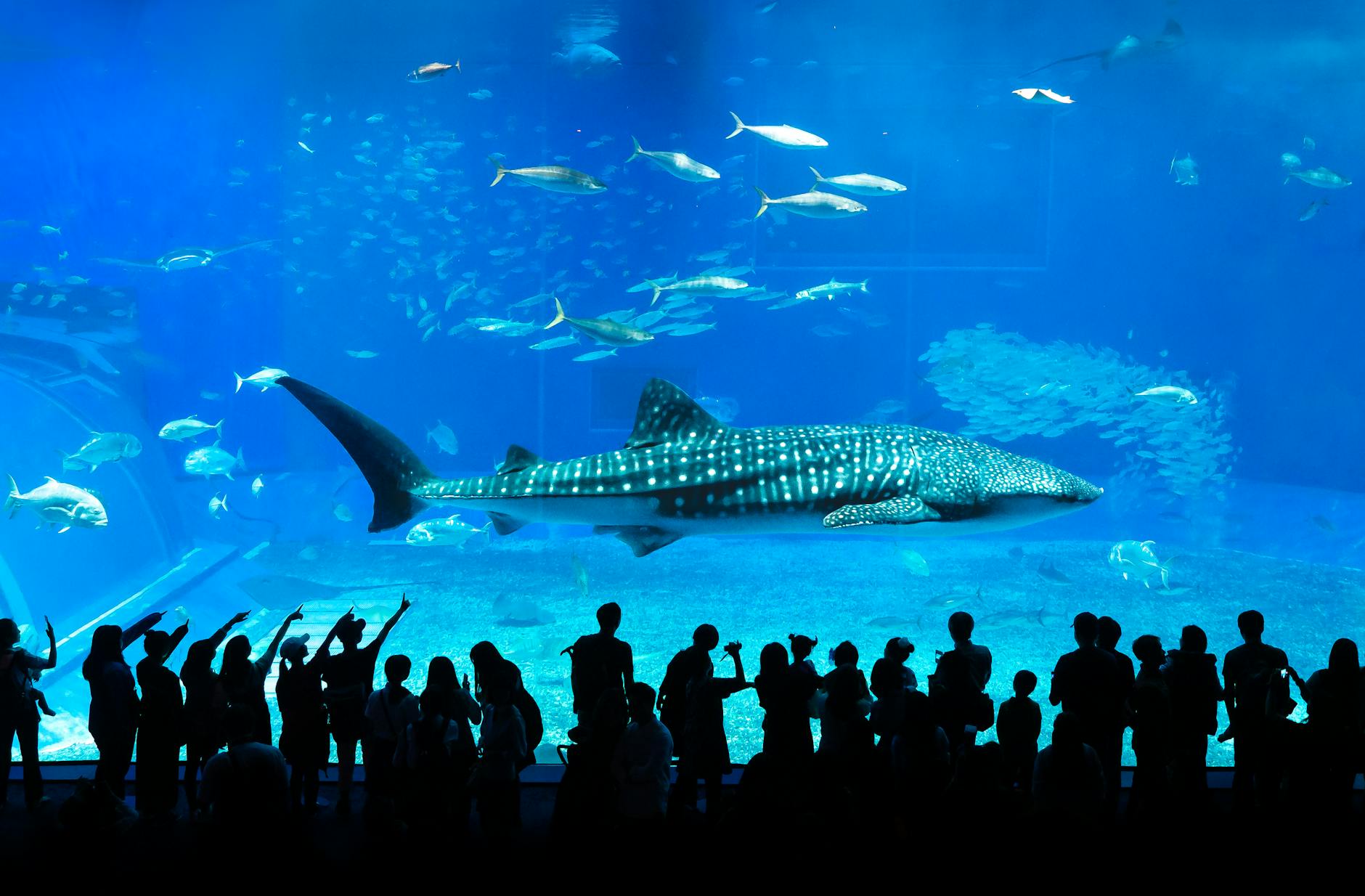
Kaiyukan is one of the world’s largest and most beautifully designed aquariums. The central Pacific Ocean tank is a nine-meter-deep, 5,400-cubic-meter structure that houses whale sharks, manta rays, and thousands of fish. The genius of the aquarium’s design is a spiral walkway that takes visitors from the top of the building down to the ocean floor, passing through 15 distinct habitats representing the Pacific Rim — from the Aleutian Islands to the Antarctic.
The touch pool at the end allows hands-on encounters with sharks and rays. Evening visits (after 5:00 PM) offer a more atmospheric experience with mood lighting and smaller crowds.
Practical details: Open daily 10:00 AM to 8:00 PM (last entry at 7:00 PM). Admission is 2,700 yen for adults. Nearest station is Osakako (Osaka Metro Chuo Line). Allow two to three hours. Combined tickets with the adjacent Tempozan Ferris Wheel (800 yen separately) are available.
Tempozan Harbor Village
The area surrounding Kaiyukan offers several additional attractions. The Tempozan Giant Ferris Wheel stands 112 meters tall and offers spectacular views of Osaka Bay, the city skyline, and on clear days, as far as Mount Ikoma and Awaji Island. Transparent-floor gondolas are available for those who want the full thrill. The Legoland Discovery Center is perfect for families with younger children, featuring rides, a 4D cinema, and an impressive miniature Osaka made entirely from Lego bricks.
Temples, Shrines, and Historical Sites
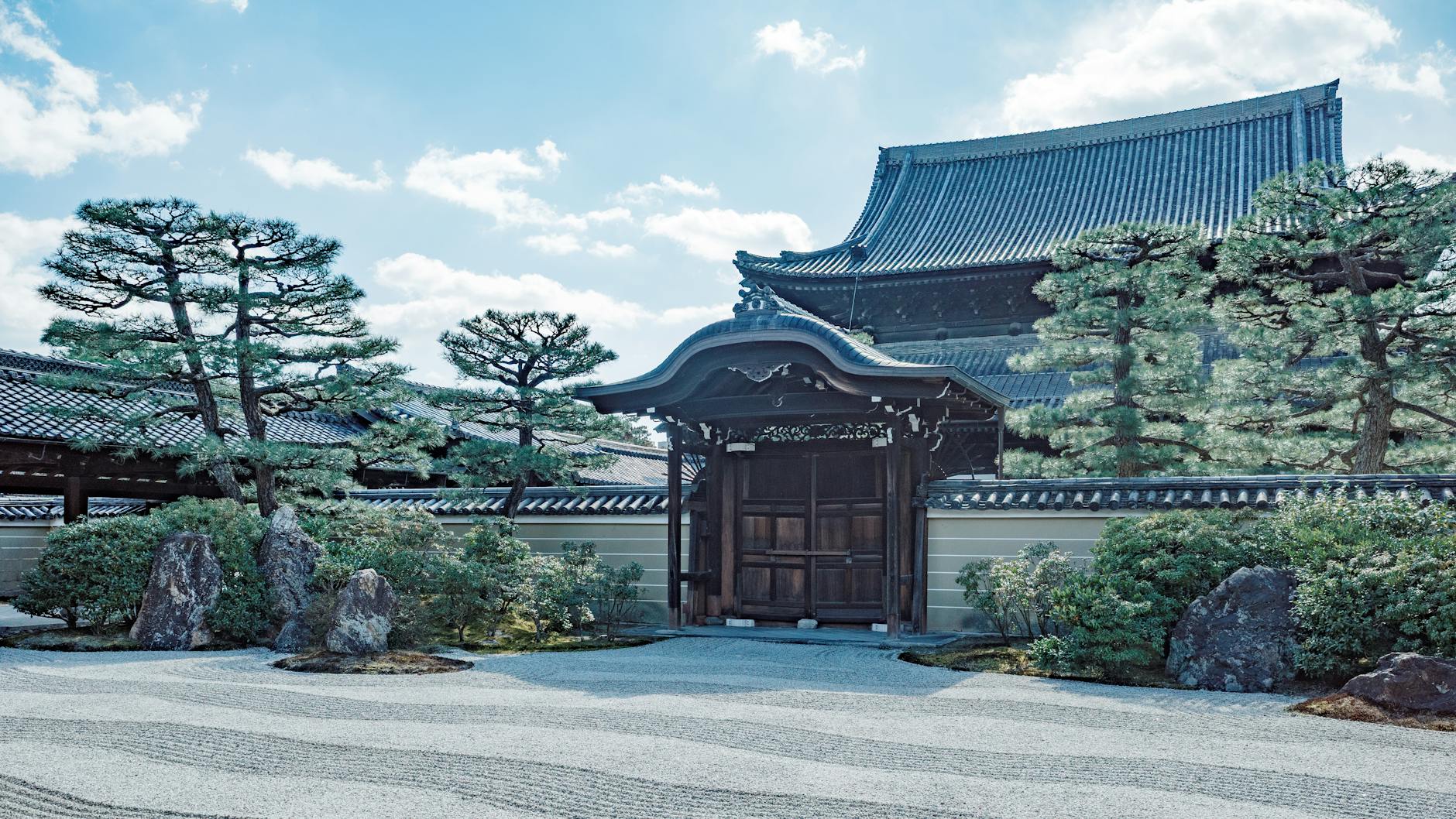
Osaka’s history stretches back more than 1,400 years. While the city is known for its modern energy, it harbors dozens of temples and shrines that reveal the spiritual and cultural foundations beneath the neon surface.
Sumiyoshi Taisha
Sumiyoshi Taisha is Osaka’s most important shrine and the head shrine of roughly 2,300 Sumiyoshi shrines across Japan. Established in the third century, the shrine’s main buildings are constructed in the Sumiyoshi-zukuri style — one of the oldest forms of shrine architecture, predating the influence of Chinese Buddhist design. This makes Sumiyoshi one of the most architecturally significant religious sites in the country.
The iconic arched Sorihashi bridge at the entrance is one of the most photographed structures in Osaka. According to local belief, crossing the steep bridge purifies visitors before they approach the main shrine. The spacious grounds host several annual festivals, the largest being Sumiyoshi Matsuri in late July, which draws over a million visitors.
Practical details: Free to enter. Open 6:00 AM to 5:00 PM (grounds always accessible). Nearest station is Sumiyoshi Taisha (Nankai Main Line). Allow one to two hours.
Shitennoji Temple
Founded in 593 AD by Prince Shotoku, Shitennoji is Japan’s oldest state-established Buddhist temple and one of the most historically significant religious sites in the country. The temple’s layout — a south-facing gate, pagoda, main hall, and lecture hall arranged in a straight line — established the standard template for Japanese temple construction.
The sprawling 11-hectare grounds include a five-story pagoda, a stone torii gate (unusual for a Buddhist temple), and the Gokuraku-jodo Garden, a beautiful paradise garden modeled on the Western Pure Land of Buddhist cosmology. On the 21st and 22nd of each month, Shitennoji hosts a massive flea market (the Shitennoji Flea Market) that draws hundreds of vendors selling antiques, kimono, pottery, and street food.
Practical details: Temple grounds are free; inner precinct is 300 yen, garden is 300 yen. Open 8:30 AM to 4:30 PM. Nearest station is Shitennoji-mae Yuhigaoka (Osaka Metro). Allow one to two hours.
Hozenji Temple
Tucked in a narrow alley just behind Dotonbori, Hozenji is a tiny Jodo Buddhist temple that offers one of the most atmospheric experiences in central Osaka. Visitors pour water over the moss-covered stone statue of Fudo Myoo (a fierce Buddhist guardian deity) while making a wish. The thick layer of green moss covering the statue is itself a testament to the thousands of wishes made here over the centuries. The lantern-lit alley leading to the temple, Hozenji Yokocho, is lined with traditional restaurants and bars.
Namba Yasaka Shrine
This Shinto shrine in Namba is famous for its enormous lion-head shaped stage building (Shishi-den), which stands 12 meters tall with a gaping mouth that is said to swallow up evil spirits and bad luck. Originally a stage for traditional Noh performances, the giant lion head has become one of the most Instagram-worthy sites in Osaka and is considered a power spot for success in business and examinations.
Osaka Tenmangu Shrine
Dedicated to Sugawara no Michizane, the Shinto patron deity of learning, Osaka Tenmangu draws thousands of students before exam season. The shrine is also the starting point for the Tenjin Matsuri (July 24 to 25), one of Japan’s three greatest festivals, which culminates in a spectacular procession of illuminated boats on the Okawa River.
Observation Decks and City Views
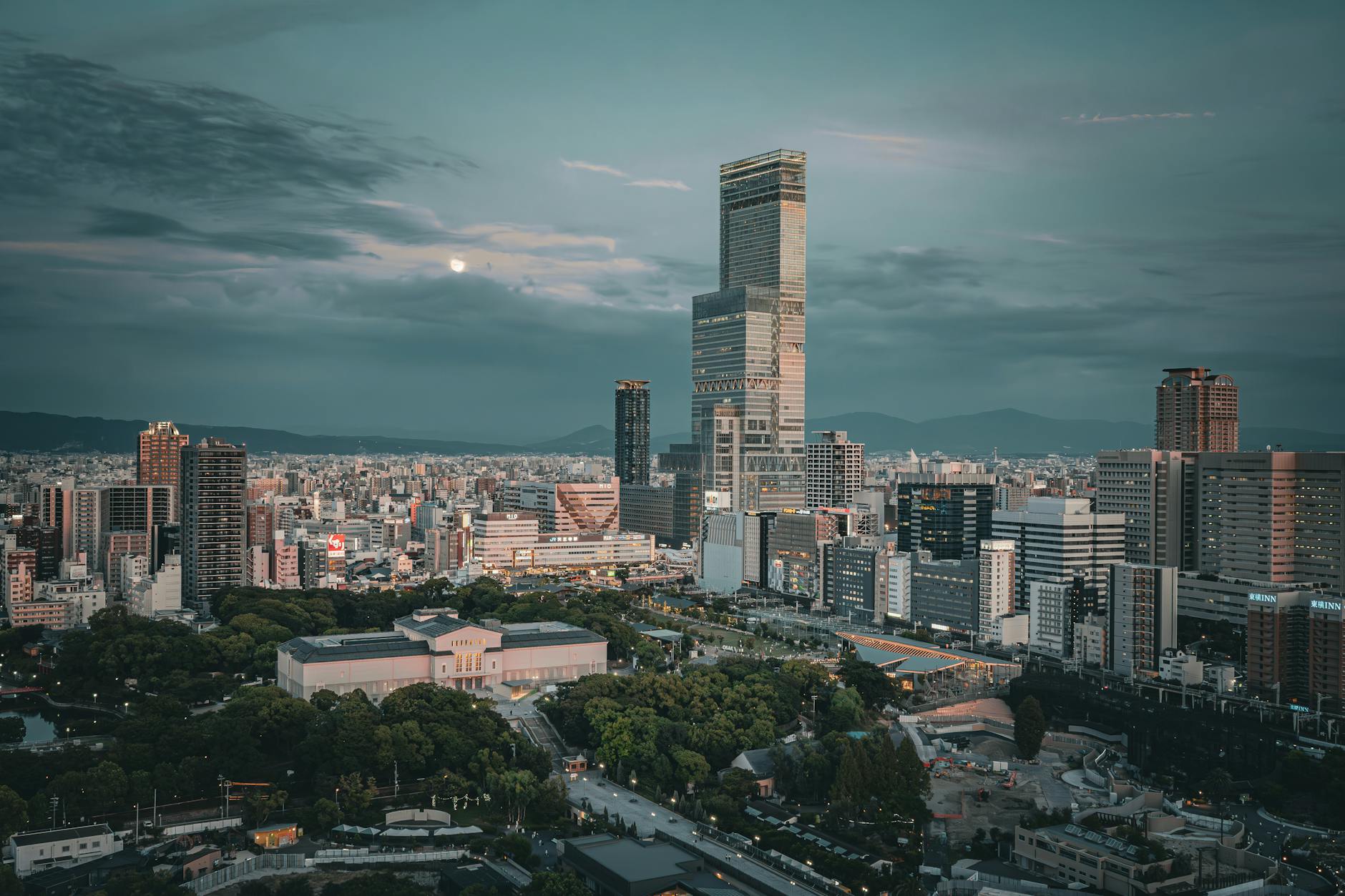
Osaka’s skyline is one of the most underrated in Asia. Several observation platforms offer stunning panoramic views from different vantage points across the city.
Abeno Harukas (Harukas 300)
Standing at 300 meters, Abeno Harukas was Japan’s tallest building from its completion in 2014 until 2023 and remains the tallest structure in western Japan. The observation deck, called Harukas 300, occupies floors 58 through 60 and provides unobstructed 360-degree views spanning the entire Osaka metropolitan area. On clear days, visibility extends to Kobe, Nara, Kyoto, and even the distant outline of Awaji Island in the Seto Inland Sea.
The experience is spread across three floors: an indoor gallery on the 58th floor, an outdoor terrace on the 60th floor (weather permitting), and a connecting staircase. Sunset and evening visits are particularly impressive as the city lights spread out below.
Practical details: Open daily 9:00 AM to 10:00 PM. Admission is 1,800 yen for adults. The EDGE THE HARUKAS experience (a guided walk on the outer rim at 300 meters with harness) costs 3,000 yen for an unforgettable thrill. Directly connected to Tennoji Station (JR, Osaka Metro).
Umeda Sky Building
The Umeda Sky Building is a bold piece of architectural imagination. Two 40-story towers are connected at the top by the Kuchu Teien (Floating Garden) Observatory — a circular, open-air platform that appears to hover between the twin buildings at 170 meters. The unique crossed-escalator ride to the top, passing through a glass tube that ascends between the towers, is an experience in itself.
The open-air rooftop, which has a luminous pathway embedded in the floor that glows at night, offers a more intimate viewing experience than Harukas 300. The surrounding Shin-Umeda City at ground level includes the Takimi-Koji Alley, a charming recreation of an early 20th-century Osaka street with restaurants and shops.
Practical details: Open daily 9:30 AM to 10:30 PM (last entry 10:00 PM). Admission is 1,500 yen for adults. Nearest station is Osaka/Umeda (a 10-minute walk through the underground passage). Allow one to two hours.
Parks, Gardens, and Outdoor Activities
Osaka may be one of Japan’s densest urban areas, but it has no shortage of green spaces, waterways, and natural escapes.
Osaka Castle Park
Beyond the castle itself, the 105-hectare park is one of the city’s most beloved green spaces. The Nishinomaru Garden (200 yen admission during cherry blossom season) offers the classic view of the castle framed by cherry blossoms. The park also features jogging paths, a plum grove that blooms in February, and the free Osaka Museum of History nearby.
Minoo Park (Minoh)
Just 30 minutes north of central Osaka by train, Minoo Park is a lush forested valley with a 2.8-kilometer walking trail leading to the 33-meter Minoo Falls — one of Japan’s designated top 100 waterfalls. The trail follows a stream through ancient woodland and is especially beautiful during autumn (mid-November) when the maple leaves turn vivid shades of red, orange, and gold. Wild monkeys inhabit the forest, and you can try the local specialty: momiji tempura (deep-fried maple leaves).
Nakanoshima Park
A long, narrow island sandwiched between the Dojima and Tosabori rivers in the heart of northern Osaka, Nakanoshima is lined with beautiful rose gardens (free, blooming in May and October), elegant Meiji-era stone buildings, and waterside promenades. The east end houses the neoclassical Osaka Central Public Hall (a National Important Cultural Property) and the Museum of Oriental Ceramics.
Osaka Bay Area Walks
The waterfront around Tempozan and the ATC (Asia and Pacific Trade Center) offers pleasant walking paths with views across Osaka Bay. On a clear day, the Akashi Kaikyo Bridge linking Honshu to Awaji Island is visible in the distance. The Cosmo Tower observation deck (256 meters) in the ATC provides another excellent viewing option.
River Cruises and Boat Tours
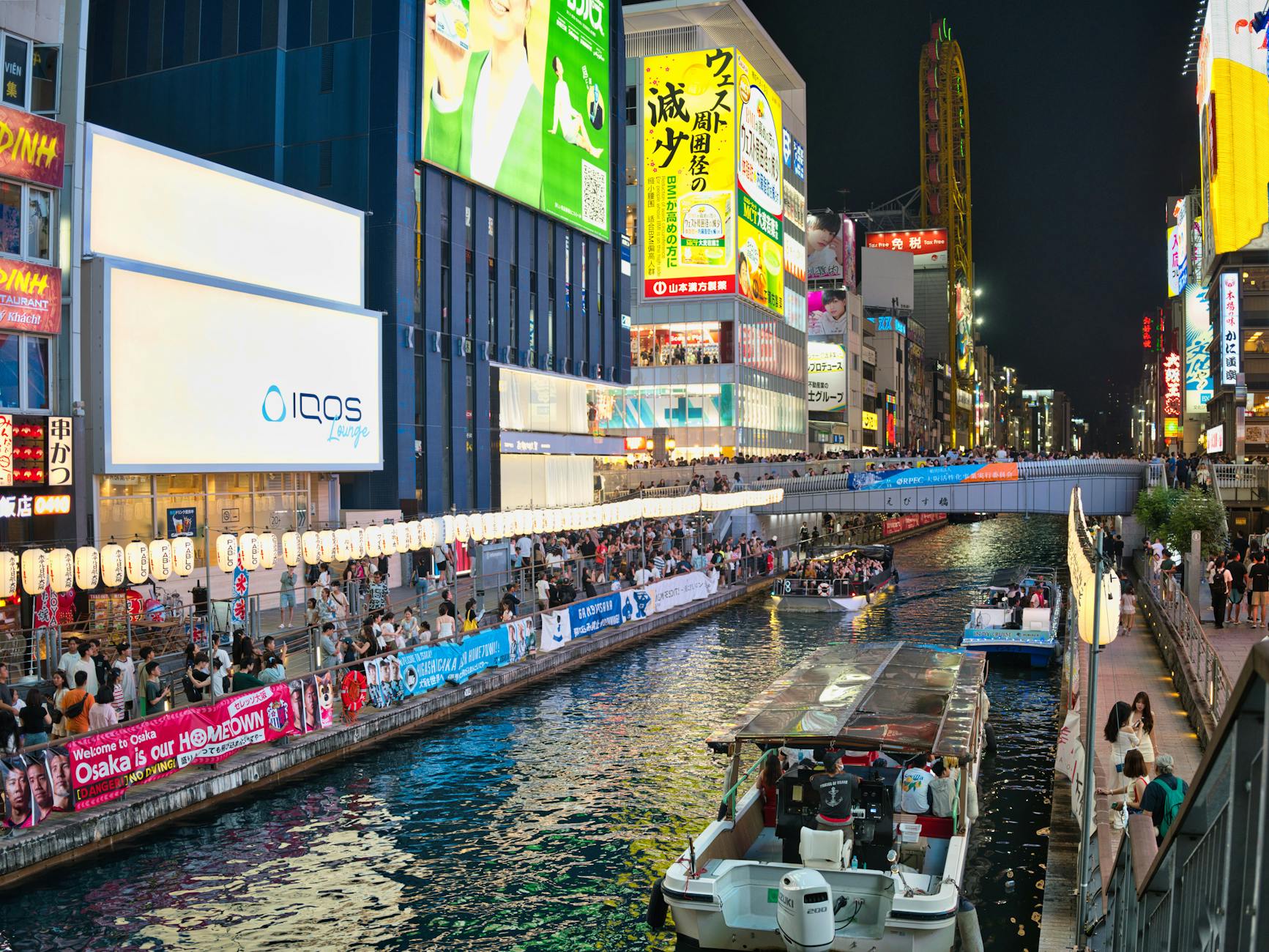
Osaka is a city built on water, with more bridges than Venice — over 800 by some counts. Exploring the waterways by boat offers a completely different perspective.
Tombori River Cruise
This 20-minute cruise departs from Tazaemon Bridge in Dotonbori and passes under nine bridges, offering views of the canal’s famous neon-lit buildings from water level. Departures run every 30 minutes from 1:00 PM to 9:00 PM daily. Tickets cost 1,000 yen for adults and include lively commentary. The evening cruises, when the neon reflections light up the water, are especially recommended.
Aqua-Liner (Osaka Castle and Nakanoshima)
The Aqua-Liner is a larger sightseeing boat that circuits a 55-minute loop along the Okawa River, passing Osaka Castle, Nakanoshima, and the historic Tenmabashi area. The glass-roofed vessels provide unobstructed views — the roof even descends hydraulically to pass under low bridges. Departures from Osaka Castle Port, with boats running roughly hourly. Tickets are approximately 1,500 yen for adults.
Osaka Water Bus (Various Routes)
Multiple water bus routes connect different parts of the city, including a route from Osaka Castle area to the Bay Area. These are functional transport as well as scenic rides, and the one-day pass (around 1,200 yen) covers unlimited travel across all routes.
Museums and Cultural Institutions
Osaka has a rich museum scene that goes well beyond what most visitors expect.
Osaka Museum of History
Located directly next to Osaka Castle Park, this excellent museum takes visitors through the city’s history from its origins as the ancient capital of Naniwa to the modern era. The 10th-floor gallery features a full-scale recreation of a Naniwa Palace hall, and the panoramic windows offer views directly onto Osaka Castle. Admission is 600 yen for adults.
National Museum of Art, Osaka (NMAO)
One of Japan’s premier modern and contemporary art museums, NMAO is located underground beneath an eye-catching steel sculpture in Nakanoshima. The collection spans Japanese and international art from the post-war period to the present. Admission varies by exhibition, typically 430 yen for the permanent collection.
Osaka Museum of Housing and Living (Kurashi no Konjakukan)
This unique museum recreates an entire Edo-period (1830s) Osaka neighborhood inside a building. Visitors walk through full-scale streets, shops, and houses, and can rent kimono (500 yen) to complete the time-travel experience. The lighting changes to simulate day and night cycles, and seasonal events recreate festivals and market days. Admission is 600 yen for adults.
Cup Noodles Museum Osaka Ikeda
Located in the suburb of Ikeda where instant noodles were invented in 1958, this museum celebrates the legacy of Momofuku Ando. The highlight is My CUPNOODLES Factory, where you design your own cup and choose your soup and toppings from 5,460 possible combinations. Entry is free; the noodle-making experiences cost 400 to 600 yen. A popular half-day excursion.
Shopping Districts and Markets
Osaka rivals Tokyo for shopping, with distinct districts catering to every taste.
Shinsaibashi-suji is the city’s premier shopping arcade — a 600-meter covered street with over 180 shops spanning luxury brands, Japanese chains, and independent boutiques. More than 100,000 people pass through on weekends.
Amerikamura (American Village) is the epicenter of Osaka’s youth and vintage culture, packed with approximately 2,500 shops selling secondhand clothing, vinyl records, streetwear, and imported goods.
Den Den Town is Osaka’s electronics and otaku (anime/manga) district in Nippombashi, with shops selling retro games, figures, and collectibles at prices often more competitive than Tokyo’s Akihabara.
Kuromon Market (“Osaka’s Kitchen”) is a 600-meter covered market operating since 1902, where vendors sell fresh seafood, wagyu beef skewers, seasonal fruit, and Japanese sweets.
Tenjinbashi-suji Shopping Street stretches an incredible 2.6 kilometers, making it the longest shopping street in Japan. It offers a more local, less touristy experience than Shinsaibashi, with hundreds of independent shops, restaurants, and izakayas.
Nightlife and Entertainment
Osaka’s nightlife scene is more accessible, more affordable, and more welcoming to outsiders than Tokyo’s. The main areas include:
Dotonbori transitions from street food haven to bar-hopping territory after 9:00 PM, with the energy lasting until the first trains at 5:00 AM.
Ura-Namba (the back streets behind Namba Station) features narrow alleys packed with intimate izakayas, standing bars, and craft cocktail spots at reasonable prices.
Kitashinchi is Osaka’s upscale cocktail district with over 3,000 establishments, including world-class whisky bars and sophisticated lounges. Cocktails typically range from 1,500 to 3,000 yen.
Karaoke is everywhere, with private rooms available at chains like Round1, Joysound, and Big Echo. All-you-can-drink packages typically cost 1,500 to 2,500 yen for 90 to 120 minutes.
Seasonal Highlights and Festivals
Osaka’s calendar is packed with seasonal events that can elevate a trip from great to extraordinary.
Cherry Blossom Season (late March to early April): Osaka Castle Park, the Mint Bureau (which opens for one special week each year), and the banks of the Okawa River are the top spots. Evening illuminations at Osaka Castle create a magical atmosphere.
Tenjin Matsuri (July 24 to 25): One of Japan’s three greatest festivals, culminating in a grand procession of 100+ illuminated boats on the Okawa River and a spectacular fireworks display. Over a million people attend.
Sumiyoshi Matsuri (July 30 to August 1): Centered on Sumiyoshi Taisha, this festival features traditional dances, Noh performances, and a dramatic portable shrine procession.
Kishiwada Danjiri Matsuri (September): One of the most exhilarating festivals in Japan, where massive carved wooden floats (danjiri) weighing four tons are pulled at breakneck speed through narrow streets. The atmosphere is electric and utterly unique to the Osaka region.
Winter Illuminations (November to February): The Midosuji Illumination transforms the main boulevard into a tunnel of four million LED lights, while the Osaka Hikari Renaissance fills the Nakanoshima area with projection-mapped art and light installations.
Free Things to Do in Osaka
Budget travelers will be pleased to know that many of Osaka’s best experiences cost nothing at all. Walking through Dotonbori and Shinsaibashi, exploring Osaka Castle Park grounds, visiting Sumiyoshi Taisha and Shitennoji Temple grounds, strolling through the Nakanoshima Rose Garden, photographing Namba Yasaka Shrine’s giant lion head, exploring the retro Nakazakicho neighborhood, walking the Tenjinbashi-suji shopping street, watching the sunset from the Yodo River banks, and experiencing the electric atmosphere of Amerikamura are all entirely free.
Planning Your Things to Do in Osaka
With so many attractions and activities, deciding what to prioritize can be overwhelming. Here is a quick framework based on your interests:
First-time visitor (3 days): Focus on Osaka Castle, Dotonbori, Shinsekai, one observation deck, a temple visit, and as much eating as possible.
Culture lover: Prioritize Sumiyoshi Taisha, Shitennoji, Osaka Museum of History, the Museum of Housing and Living, and Nakazakicho.
Families with kids: Universal Studios Japan (full day), Osaka Aquarium Kaiyukan, Tempozan area, Cup Noodles Museum, and Osaka Castle Park.
Foodies: Dotonbori, Kuromon Market, Shinsekai (kushikatsu), department store depachika, and a cooking class.
Budget travelers: Explore the many free attractions, eat street food, get an Osaka Amazing Pass for free entry to 20+ paid attractions, and visit during shoulder seasons.
For deeper dives into each of these topics, explore our detailed supporting guides — from individual attraction guides to neighborhood walks, seasonal event calendars, and more. Every thing to do in Osaka listed here links to a more comprehensive standalone article as they are published.
For official visitor information, check the Osaka Convention and Tourism Bureau. To plan your overall trip, start with our comprehensive Osaka travel guide.