This article contains advertising. Our booking links are routed through a partner that adds commission tracking automatically, so if you book through one we earn a commission from the provider, at no extra cost to you. It never affects what we recommend. Affiliate disclosure
Osaka’s most famous foods could almost have been designed to test a Muslim traveller. The ramen leans on pork bone, the classic okonomiyaki is laid with strips of pork belly, the gyoza are filled with minced pork, and the drink on most tables is beer. Even the dishes that look safe, a bowl of udon or a glazed piece of grilled fish, are often seasoned with mirin (sweet rice wine) or sake.
None of that means going hungry. The halal food Osaka has to offer is better than its reputation, but it rewards a little homework: knowing what Japanese labels say, telling a certified restaurant from one that simply leaves out the pork, and knowing where to pray between meals. This guide covers how halal certification works in Japan, the ingredients to watch for in ordinary Japanese food, restaurants in the city that serve halal or Muslim-friendly food, prayer spaces from Kansai Airport to the city’s mosques, and the phrases that make ordering easier.
How halal works in Japan
The first thing to understand is that Japan has no single national halal standard. The Japan National Tourism Organization says so plainly: there is no central agency for halal accreditation in Japan, so certification comes from a number of independent bodies, each with its own rules. The same official guidance makes two other points worth remembering. Some restaurants describe themselves as halal-friendly without having a separate halal-only kitchen, and alcohol is served in most Japanese restaurants, including many that offer halal dishes.
One of the certifiers is based in Osaka itself. The Japan Halal Association, a non-profit with its office in Honmachibashi in Chuo-ku, says it is recognised as a certification body by halal authorities including JAKIM in Malaysia, MUIS in Singapore and BPJPH in Indonesia, and its website keeps a list of the companies it has certified. If a restaurant displays a certificate, it is reasonable to look at who issued it and when it expires; certificates normally show both.
In practice, Osaka’s restaurants fall into three groups, and it helps to know which one you are walking into:
- Halal-certified. A certifier has inspected the meat supply and the kitchen. This is the standard many visitors from Malaysia and Indonesia look for.
- Muslim-friendly. The restaurant uses halal meat, or no meat at all, and cooks without pork or alcohol, but has no certificate. Plenty of South Asian and Middle Eastern restaurants run by Muslim owners fall here, and many Muslim visitors are comfortable with them.
- Pork-free or “no pork, no alcohol” menus. A Japanese restaurant has adapted a dish, for example a ramen with chicken broth, but the meat is not halal-slaughtered and the kitchen may be shared.
Which of those is acceptable is your decision, not ours. What matters is asking the right questions, and the sections below give you the words for them.
What to watch for in ordinary Japanese food
The obvious risk is pork, and Japanese cooking uses a lot of it. Less obvious are the animal fats, the gelatine and above all the alcohol, which turns up in many Japanese seasonings. These are the words to look for on packaging and menus:
| What it is | Japanese | Where it hides |
|---|---|---|
| Pork | 豚 (buta), 豚肉, ポーク | Gyoza, katsu, okonomiyaki, fried rice, ham and bacon |
| Pork bone | 豚骨 / とんこつ (tonkotsu) | Ramen broth |
| Lard | ラード | Fried food, pastries, some ramen |
| Gelatine | ゼラチン | Sweets, jellies, yoghurt |
| Sweet rice wine | みりん (mirin) | Teriyaki, simmered dishes, glazes, dipping sauces |
| Sake and cooking sake | 酒, 料理酒 | Marinades, simmered fish, soups |
| Alcohol (ethanol) | アルコール, 酒精 | Packaged foods, where ethanol is used as a preservative |
| Meat extract | エキス (for example ポークエキス) | Instant noodles, sauces, snacks |
A few dishes deserve a special mention. Japanese stock, dashi, is normally made from dried bonito flakes and kelp, which many Muslims are happy with, but ramen broth is a different thing and is often pork or a pork-and-chicken blend. Soy sauce is brewed, and the ordinary kind can contain a little alcohol, either from fermentation or added; check the label for アルコール if that matters to you. And beef and chicken in a normal Japanese restaurant are not halal-slaughtered unless the restaurant tells you so, which rules out most yakiniku, sukiyaki and fried chicken outside the places listed below.
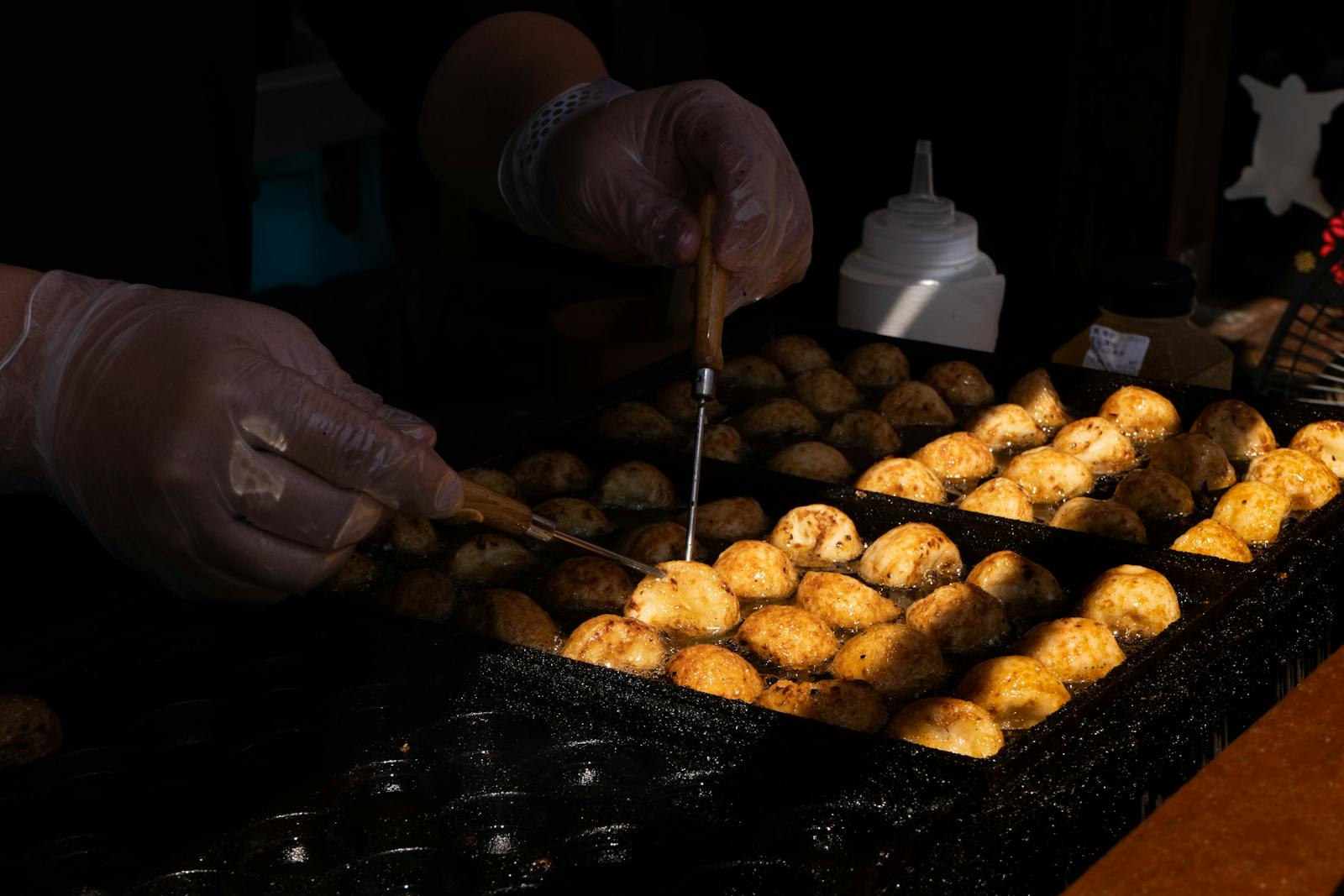
Seafood is easier. Sushi and sashimi are raw fish on rice, but the rice is seasoned with vinegar and sometimes mirin, and some sushi restaurants brush fish with a sweet soy glaze that contains it. Whether octopus, squid and shellfish are acceptable depends on your school of thought, which matters in Osaka because the city’s signature snack, takoyaki, is octopus in batter. Most takoyaki stalls are not certified, the batter usually contains dashi, and the sauces and mayonnaise vary from maker to maker, so ask at the counter if you want to try it.
Osaka’s famous dishes, one by one
Osaka is a city of signature dishes, and most visitors arrive with a list. This is how each one stands for a Muslim visitor:
| Dish | The catch | What to do |
|---|---|---|
| Takoyaki | Octopus, a batter usually made with dashi, sauces that vary by maker, shared griddles | Ask at the stall what is in the batter and sauce |
| Okonomiyaki | The classic version is topped with pork belly, and the sauce varies | Ask for a seafood version with no pork, and ask about the sauce |
| Kushikatsu | Meat skewers, pork among them, fried in shared oil | Skip it unless a shop tells you otherwise |
| Ramen | Pork-bone broth; alcohol in the seasoning sauce | Only at a shop that states it is halal |
| Udon and soba | Dashi broth, often sweetened with mirin | Ask about mirin in the broth and dipping sauce |
| Sushi | Vinegared rice, sometimes with mirin; sweet soy glazes | Ask how the rice is seasoned and skip glazed pieces |
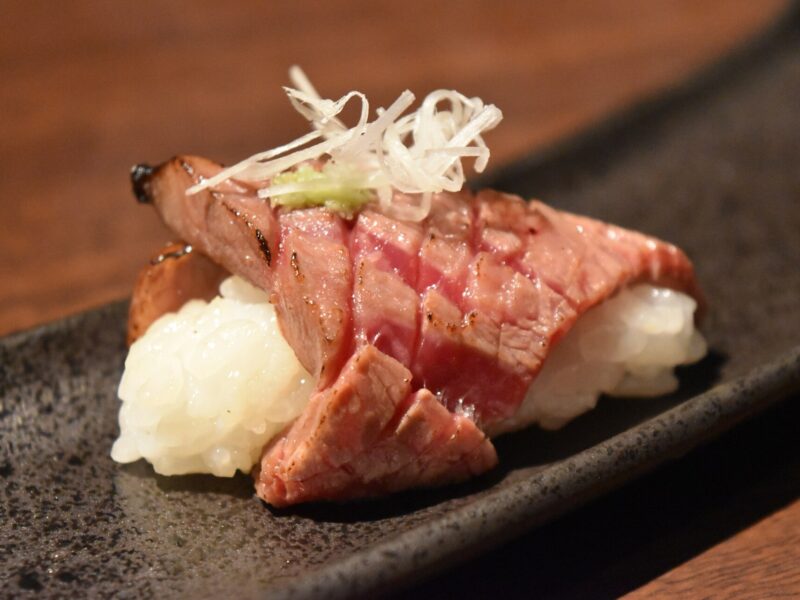
| Wagyu and yakiniku | Ordinary beef is not halal-slaughtered | Eat it at a halal restaurant such as the two below |
That list makes the city sound harder than it is. Kushikatsu and ramen are the real losses; most of the rest can work with a question or two, and halal wagyu is a genuine Osaka treat rather than a consolation prize. For the full picture of the dishes themselves, see our guide to Osaka street food.
Halal and Muslim-friendly restaurants in Osaka
Halal restaurants come and go quickly in Osaka, and a lot of what circulates online is out of date: places that have closed, moved or quietly stopped offering halal dishes. The restaurants below set out their halal status themselves, on their own websites or in their own announcements, and their status is given here in their own words. Even so, check before you set out, and ask any restaurant which body certified it if that matters to you.
Halal Wagyu Yakiniku PANGA, Shinsaibashi
The name says most of it. PANGA serves Japanese wagyu as yakiniku, thin slices that you grill yourself over a burner set into the table, and its website says the restaurant has obtained halal certification, although the page doesn’t name the certifying body. It is an evening place. Both of its Osaka shops open 17:30–23:00, with last orders at 22:30.
- Main shop: Shinsaibashisuji 2-3-31, Chuo-ku, about five minutes’ walk from Namba Station on the Sennichimae and Yotsubashi lines or six minutes from Shinsaibashi Station on the Midosuji Line. It has 28 seats and no regular closing day.
- Secret Base: 2F, Marusei Building, Higashi-Shinsaibashi 1-17-15, a minute from Shinsaibashi Station. It has 18 seats and closes on irregular days.
With so few seats at each, book ahead, particularly at weekends. Wagyu is not a budget meal, so check the current menu and prices on PANGA’s own site before you go. For background on grades, cuts and what an A5 rating actually tells you, see our guide to wagyu in Osaka.
Dotonbori Mitsuru Sohonten, Namba
Dotonbori Mitsuru is a big yakiniku restaurant that buys whole A5-grade Kuroge Wagyu cattle, and since 1 July 2026 its main store has served yakiniku courses made with halal-certified beef. According to the operator’s announcement in September 2026, the preparation is done in its own central kitchen, which is certified by the Japan Halal Foundation, and the halal courses are served at the main store only, not at its Shinsaibashi or Uehommachi branches.
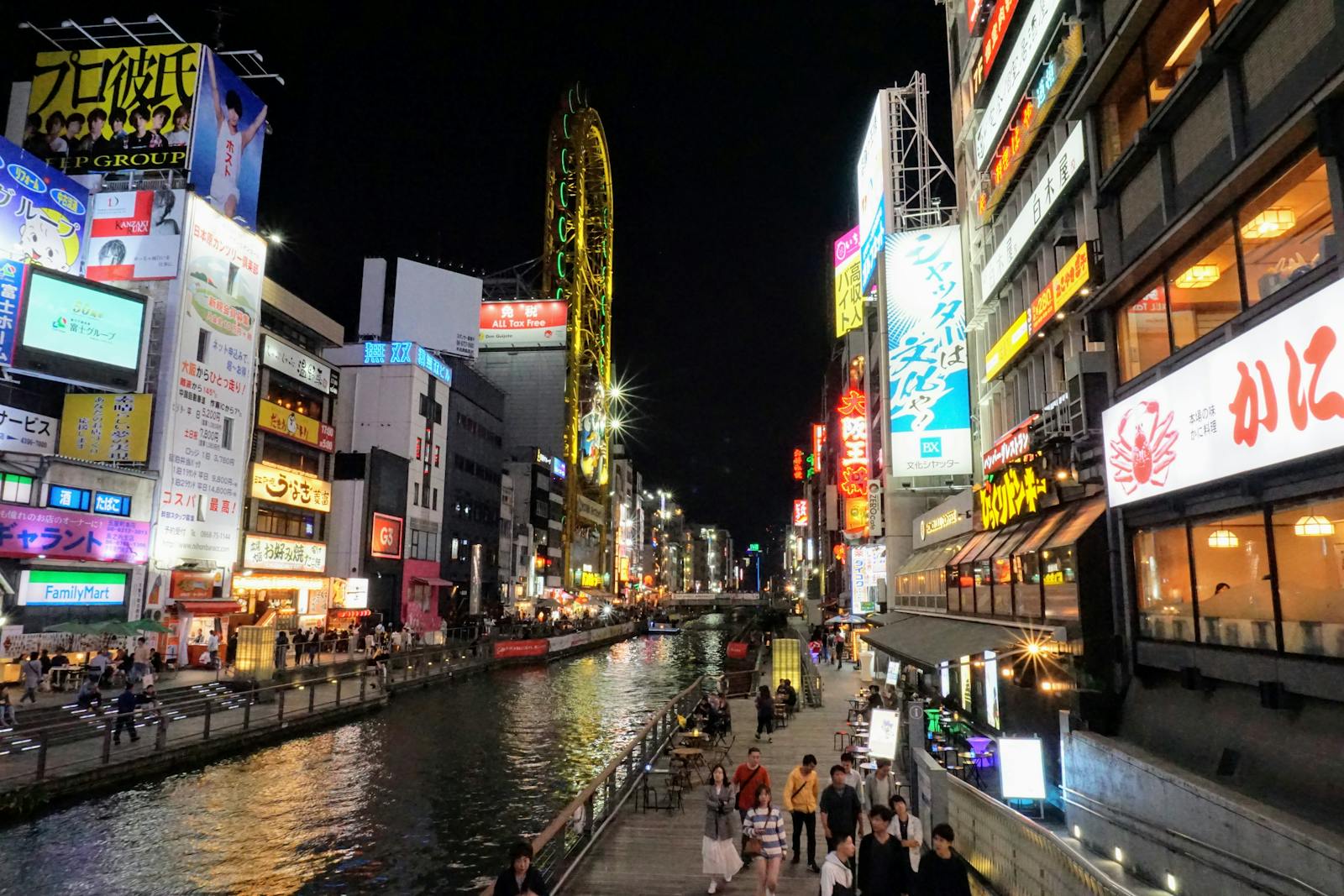
The announcement gave the halal courses as starting at ¥11,000 for two or more people, with the Halal Standard Course at ¥11,000, a premium course at ¥16,500 and an omakase course at ¥22,000, plus a ¥5,500 course for groups of 20 or more, all including tax; there is a 15% surcharge after 22:00. The restaurant opens 11:00 to 01:00 (last orders at midnight) with no closing day, which suits a late dinner. Look for the building with a FamilyMart on the ground floor, on the Dotonbori River opposite the former Shochiku Kadoza theatre, three minutes’ walk from Osaka-Namba Station on the Hanshin line and five minutes from the other Namba stations. It has 193 seats over three floors, so this is the one to call if you are eating as a large group. Confirm the halal course when you book, since it is a separate menu.
Ali’s Kitchen, Shinsaibashi
For something other than grilled beef, Ali’s Kitchen describes itself on its website as a halal restaurant serving Pakistani and Arabic food, and says it serves halal wagyu too. The menu runs from biryani to lamb kabsa. It doesn’t name a certifier on its site, so ask if you need certification rather than a Muslim-run kitchen. It is at Shinsaibashi-suji 1-10-12 in Chuo-ku. Check its opening hours before you go, because they vary.
Finding more
For anything beyond this short list, go to the source. The Japan Halal Association publishes its list of certified companies on its own website, and a restaurant that holds a certificate will normally show it near the entrance or produce it if you ask. Your hotel’s front desk is worth asking too, especially at larger hotels used to international guests. And treat any list you find online, including this one, as a starting point: phone or message ahead, because a restaurant that was halal once may not be now.
Vegetarian and vegan restaurants are a useful fallback, since they use no meat or animal fat at all, but they are not automatically halal: mirin and sake are as common in vegetarian Japanese cooking as anywhere else, so ask the same alcohol questions. Our vegan and vegetarian guide lists the best of them.
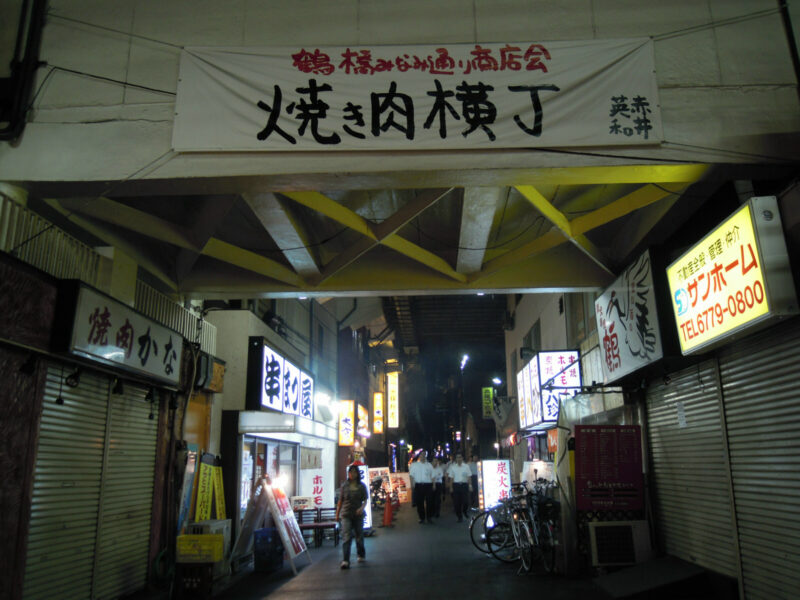
Two kinds of meal need more planning. If you are booking one of Osaka’s Michelin-starred restaurants, tell them your requirements when you reserve: kaiseki and kappo kitchens cook with sake and mirin as a matter of course, and only advance notice gives the chef a chance to adapt. And if you have read about the yakiniku alleys of Tsuruhashi in our Tsuruhashi guide, remember that the restaurants there serve ordinary meat unless they tell you otherwise, so ask before you sit down.
Where to pray in Osaka
Osaka has no mosque on every corner, but there are prayer rooms in two of the places visitors pass through most, the main railway station and the international airport, and there are mosques in and near the city.
The prayer room at Osaka Station
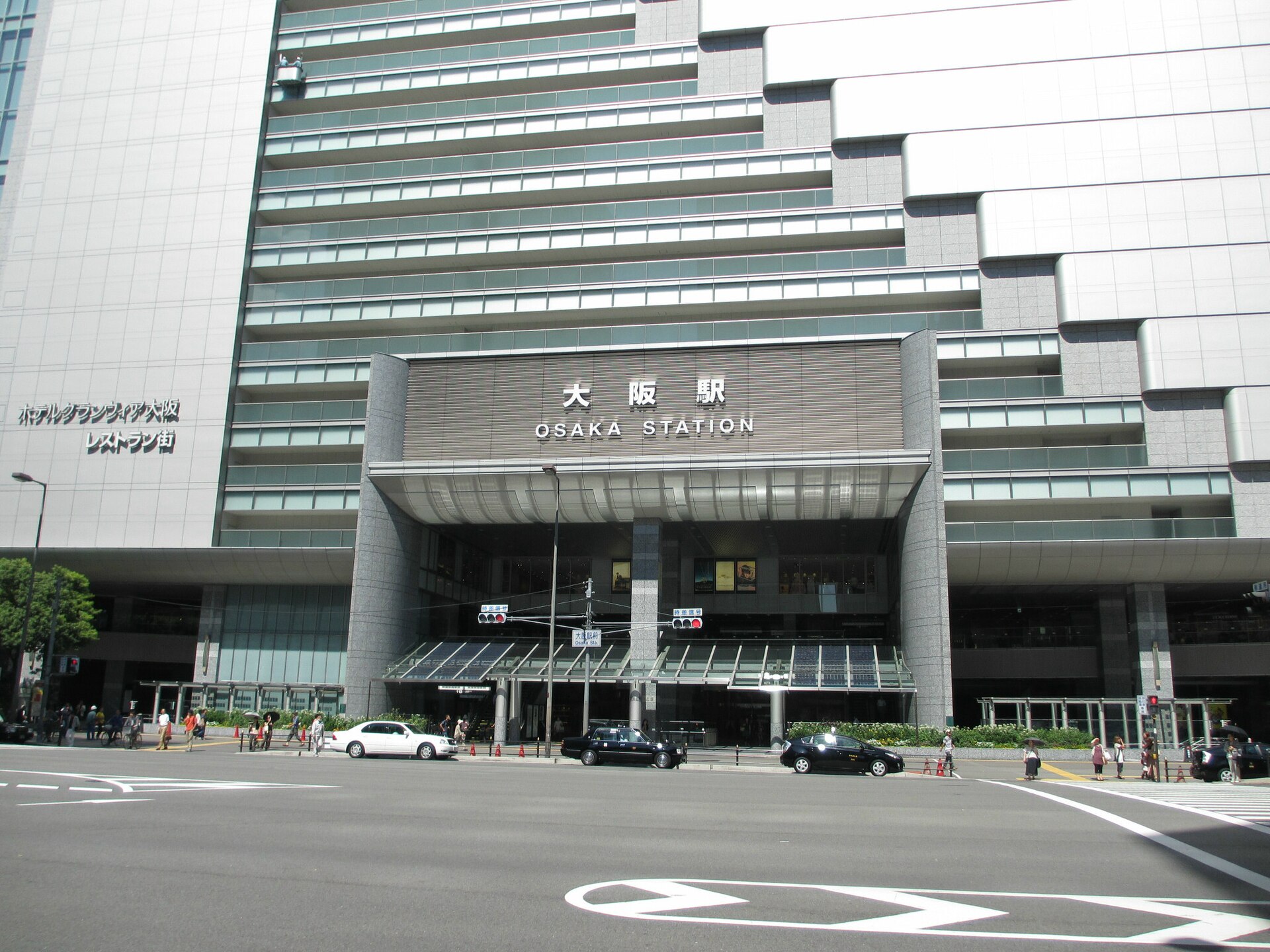
A useful prayer room is at JR Osaka Station, run by Osaka Station City. It is on the first floor of the South Gate Building, at the South Gate Plaza, with separate rooms so that men and women can pray apart, and a small ablution facility in each room for washing before prayer. It is open to people of any faith. You have to ask first: on the day, go to Osaka Station City Information on the third floor of the North Gate Building before you use the room. Osaka Station City’s Japanese site gives the hours as 11:00–18:00, with the last entry at 17:30; its English leaflet says it opens at 10:00, so plan on the later time.
Kansai International Airport
Kansai Airport lists a prayer room on the third floor of Terminal 1. If you are flying from Terminal 2, check with the airport’s information counters or its official site before you travel. For getting between the airport and the city, see our guide to Kansai Airport transfers.
Mosques
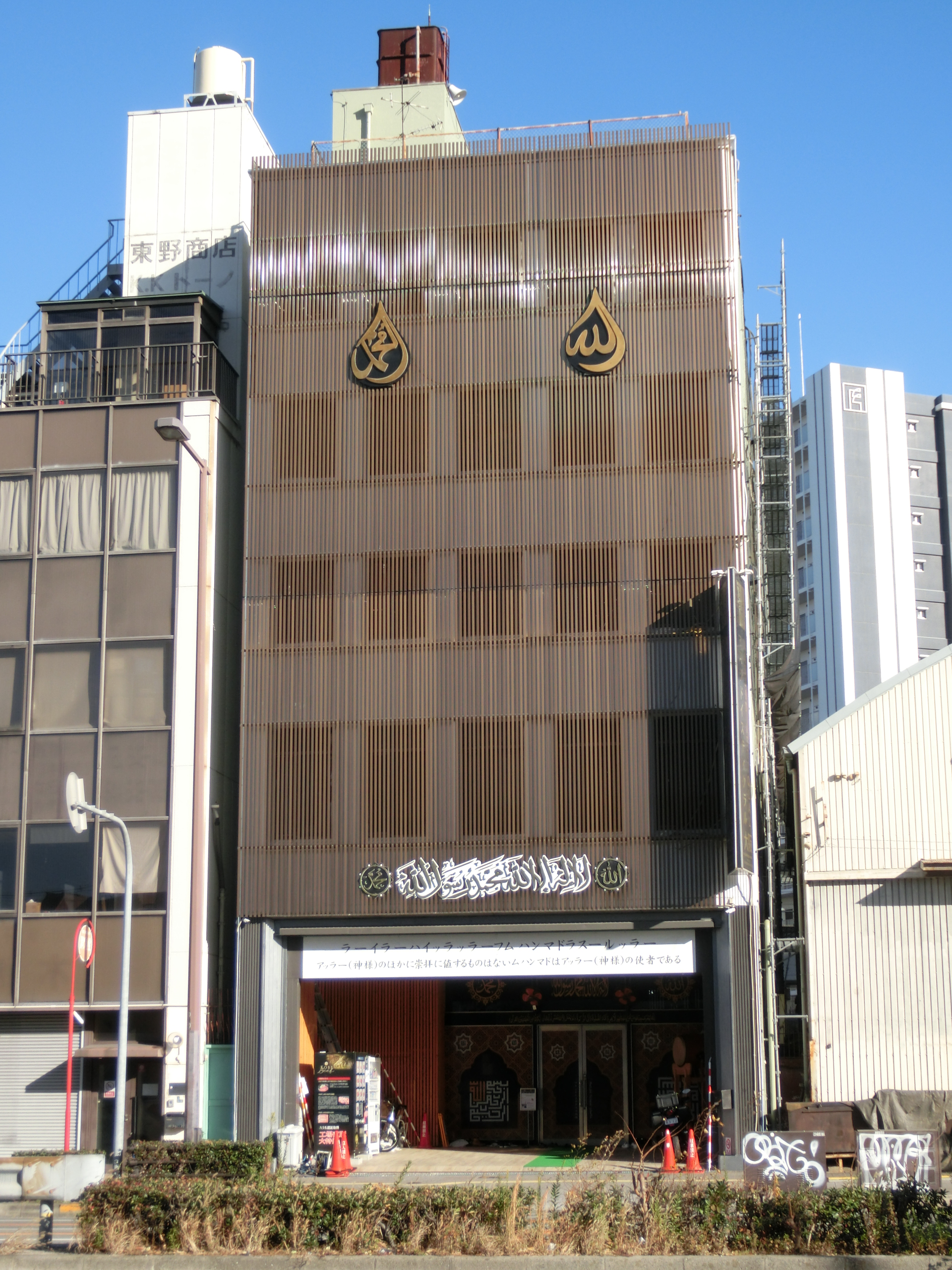
The Osaka Ibaraki Mosque, at 4-6-13 Toyokawa in Ibaraki City, north of Osaka, holds Friday prayers and lists non-Muslim and international visitors among the guests it welcomes. It is outside Osaka city itself, so check the mosque’s own website for directions before you set out. Inside the city, Masjid Istiqlal Osaka occupies a narrow building with gold calligraphy on its front; check its website for its address and prayer times before visiting.
Elsewhere in the city
In 2018 Kaiyukan announced a prayer room on the third floor of Tempozan Marketplace, the shopping centre next to the Kaiyukan aquarium; ask at the information desk whether it is still available. For anywhere else, the information desks at large department stores, stations and attractions are the people to ask, and a prayer-times app will handle the times and the direction of Mecca.
If you are spending a day at Universal Studios Japan, check the park’s official website for Muslim-friendly food and prayer space before your visit, or ask Guest Services when you arrive, since the arrangements change.
Convenience stores and supermarkets
Japan’s convenience stores are open late, they are everywhere, and packaged food carries a full ingredient label, which makes them more useful than they first appear. They are not halal shops, and few products on the shelves carry a halal certificate, but a careful label-reader can usually find fruit, plain rice balls, salads without meat, bread, nuts, yoghurt and drinks. Read each label for the words in the table above, especially 酒精, which appears on many packaged foods. Our guide to Osaka’s convenience stores explains the chains and how they work.
Supermarkets and department-store food halls have a wider choice of fresh fish, fruit and vegetables, which is useful if your accommodation has a kitchen. For halal meat, you need a specialist shop or a restaurant that sources it.
Ordering: the phrases that help
Most staff in central Osaka will try hard to help, and a short written note works better than a long explanation. These phrases cover most situations:
- Butaniku wa haitte imasu ka? (豚肉は入っていますか?) Does this contain pork?
- Arukōru wa haitte imasu ka? (アルコールは入っていますか?) Does this contain alcohol? Mirin and sake count, and staff may not think of them unless you mention them.
- Mirin ya sake mo dame desu. (みりんや酒もだめです) I can’t have mirin or sake either.
- Harāru desu ka? (ハラールですか?) Is this halal?
- Watashi wa Musurimu desu. (私はムスリムです) I am Muslim.
A card that says “no pork, no lard, no alcohol, including mirin and cooking sake” in Japanese does the job even better, because it puts the request in front of the cook, not just the server. For more useful phrases, see our guide to Japanese phrases for Osaka.
A halal day in Osaka, start to finish
Put the pieces together and a full day of eating looks something like this. Breakfast is often the trickiest meal. Hotel buffets lean on bacon, sausages and ham, so ask which dishes are pork-free, or pick up fruit, yoghurt and bread from a convenience store the night before, reading the labels as you go.
Spend the morning around Umeda, and use the prayer room at Osaka Station, which opens at 11:00; remember to stop at the information desk on the third floor of the North Gate Building first. From there it is three stops south on the Midosuji Line to Shinsaibashi for a late lunch at Ali’s Kitchen, then an afternoon on the covered shopping streets of Shinsaibashi, where it is easy to find a quiet corner of a department store to rest. Dinner is wagyu. PANGA opens at 17:30 and has few seats, so book; if you would rather eat late after a night walk along the canal in Dotonbori, Mitsuru serves until last orders at midnight.
On a day out of the city, plan ahead. None of the restaurants in this guide is anywhere near Kyoto, Nara or Kobe, and the snacks on sale at stations and temples are ordinary Japanese food, so research halal options at your destination before you go, and pack something from a convenience store, label-checked, in case you are caught out.
Frequently asked questions
Is Osaka Muslim-friendly?
It takes planning. Certified halal restaurants are few, and alcohol in everyday seasonings is a common trap, but there are halal wagyu restaurants in Shinsaibashi and Namba, a prayer room at Osaka Station and another at Kansai Airport, and packaged food lists every ingredient.
Can I eat halal wagyu in Osaka?
Yes. Halal Wagyu Yakiniku PANGA has two shops in Shinsaibashi and says it has obtained halal certification, and Dotonbori Mitsuru’s main store has served halal-certified beef courses since July 2026, from ¥11,000 for two or more people. Ali’s Kitchen in Shinsaibashi says it serves halal wagyu as well.
Where can I pray in Osaka?
At the prayer room in Osaka Station City’s South Gate Building (ask first at the information desk on the third floor of the North Gate Building), at the prayer room on the third floor of Kansai Airport’s Terminal 1, at the Osaka Ibaraki Mosque in Ibaraki City, or at Masjid Istiqlal Osaka.
Is ramen halal?
Usually not. Ramen broth is often made with pork bone, and the seasoning sauces frequently contain alcohol. Only eat ramen where the shop clearly states that it is halal.
Is takoyaki halal?
Most takoyaki stalls are not certified. Whether octopus is acceptable depends on your school of thought, the batter usually contains dashi, and sauces and mayonnaise vary, so ask at the stall.
Is convenience store food halal?
Very little of it is certified, but every packet lists its ingredients. Check for 豚 or ポーク (pork), ラード (lard), ゼラチン (gelatine), and みりん, 酒 or 酒精 (alcohol) before you buy.
Is there halal food at Universal Studios Japan?
Check USJ’s official website before your visit or ask Guest Services on the day, since its food and facilities change through the year.
Where to go from here
For the bigger picture of eating in the city, start with our Osaka food guide. Our cheap eats and food tours guides are worth reading alongside this one, although food tour operators vary a lot in how well they handle dietary needs, so ask before you book. If you are staying around Minami, our guides to Namba and Shinsaibashi put the restaurants above in context, and our etiquette guide covers the rest of the city’s unwritten rules.
Restaurant details, certification wording and prayer room arrangements checked in November 2026 against the restaurants’ own sites and announcements, Osaka Station City, Kansai Airport, the Osaka Ibaraki Mosque, the Japan Halal Association and the Japan National Tourism Organization.
Photo Credits
South Gate Building, Osaka Station: JR Osaka Station – panoramio (31) by DVMG, CC BY 3.0, via Wikimedia Commons.
Masjid Istiqlal Osaka: Masjid Istiqlal Osaka by Abasaa, public domain, via Wikimedia Commons.