This article contains advertising. Our booking links are routed through a partner that adds commission tracking automatically, so if you book through one we earn a commission from the provider, at no extra cost to you. It never affects what we recommend. Affiliate disclosure
Some of the best art in Japan sits underground on a small island in the Seto Inland Sea, and you can only see it at the time printed on your ticket. Getting there from Osaka takes a bullet train, a slow local train and a ferry across a strait dotted with fishing boats. You step off at a quiet harbour with a red polka-dot pumpkin on the quay, and later that morning you can be standing in front of Claude Monet’s water lilies in a room lit by daylight.
That is Naoshima, and it is one of the most memorable trips you can make from Osaka, provided you plan it properly. This guide covers getting to Naoshima from Osaka by train and ferry, what the journey costs, whether a rail pass helps, which museums to book and when they close, how to get around the island, and the honest case for staying the night rather than rushing it as a day trip. It also covers the closures that matter this winter, because several of the island’s headline sights shut for maintenance between late November 2026 and March 2027.
Is Naoshima worth the trip from Osaka?
Yes, if you care about art or architecture, and especially if you have already done Kyoto and Nara and want something entirely different. Naoshima is home to Benesse Art Site Naoshima, a cluster of museums and installations built over several decades, many of them designed by the architect Tadao Ando. The island itself is small and rural. What makes it extraordinary is the way the buildings and the art use the landscape: galleries dug into hillsides, works placed on beaches and piers, and old wooden houses turned into installations.
It is less worth it if you are short on time, if museums leave you cold, or if you can only go on a Monday, when nearly everything on the island is closed. And it is a long way to go for a day. The journey from Osaka is a chain of trains and boats, the main museums run on timed tickets, and the ferries don’t wait for anyone. Our honest advice: stay at least one night, and if you can only spare one day, plan it to the minute.
Timing matters more than usual this winter. The Naoshima New Museum of Art is closed from 24 November to 11 December 2026, reopening at noon on 12 December. In January most of the island’s art sites close for a week of maintenance, and the Chichu Art Museum, the main reason many people come, is closed from 12 January to 19 March 2027. If you are travelling in that window, read the section on when to go before you book anything.
Getting from Osaka to Naoshima
There are two routes from Osaka, and both start with the bullet train to Okayama. The usual one continues by local train to the port of Uno and crosses to Naoshima by ferry. The other goes over the Seto Ohashi bridge to Takamatsu on the island of Shikoku and takes a longer ferry from there. Uno is quicker and cheaper; Takamatsu is useful if you want to go on to Shikoku or make a loop of it.
Step 1: the Shinkansen to Okayama
From Shin-Osaka Station, take the Sanyo Shinkansen west to Okayama. The Naoshima Tourism Association gives the journey as about 50 minutes. Fares and seat types vary with the train, so check the current price on JR West’s site or at a ticket machine; if you hold a rail pass, see the section below first.
Step 2: Okayama to Uno
From Okayama, the JR Uno Line runs south to Uno, the port for Naoshima, in about 50 minutes according to Benesse Art Site Naoshima. The catch is that direct trains are not frequent. In JR West’s timetable for a weekday in late November 2026, direct trains from Okayama to Uno leave at 05:49, 06:15 and 07:40 in the morning, and then hourly from 15:15 into the evening. In the hours between, you take a train towards Kojima and change at Chayamachi, where the Uno Line branches off, so allow time for the connection. Check the day’s timetable before you travel, because it varies by date.
There is also a Ryobi bus from Okayama to Uno, which Benesse Art Site Naoshima puts at about 45 minutes, although the bus company’s information is only in Japanese. From Uno Station, the ferry port is about three minutes’ walk.
Step 3: the ferry from Uno to Naoshima
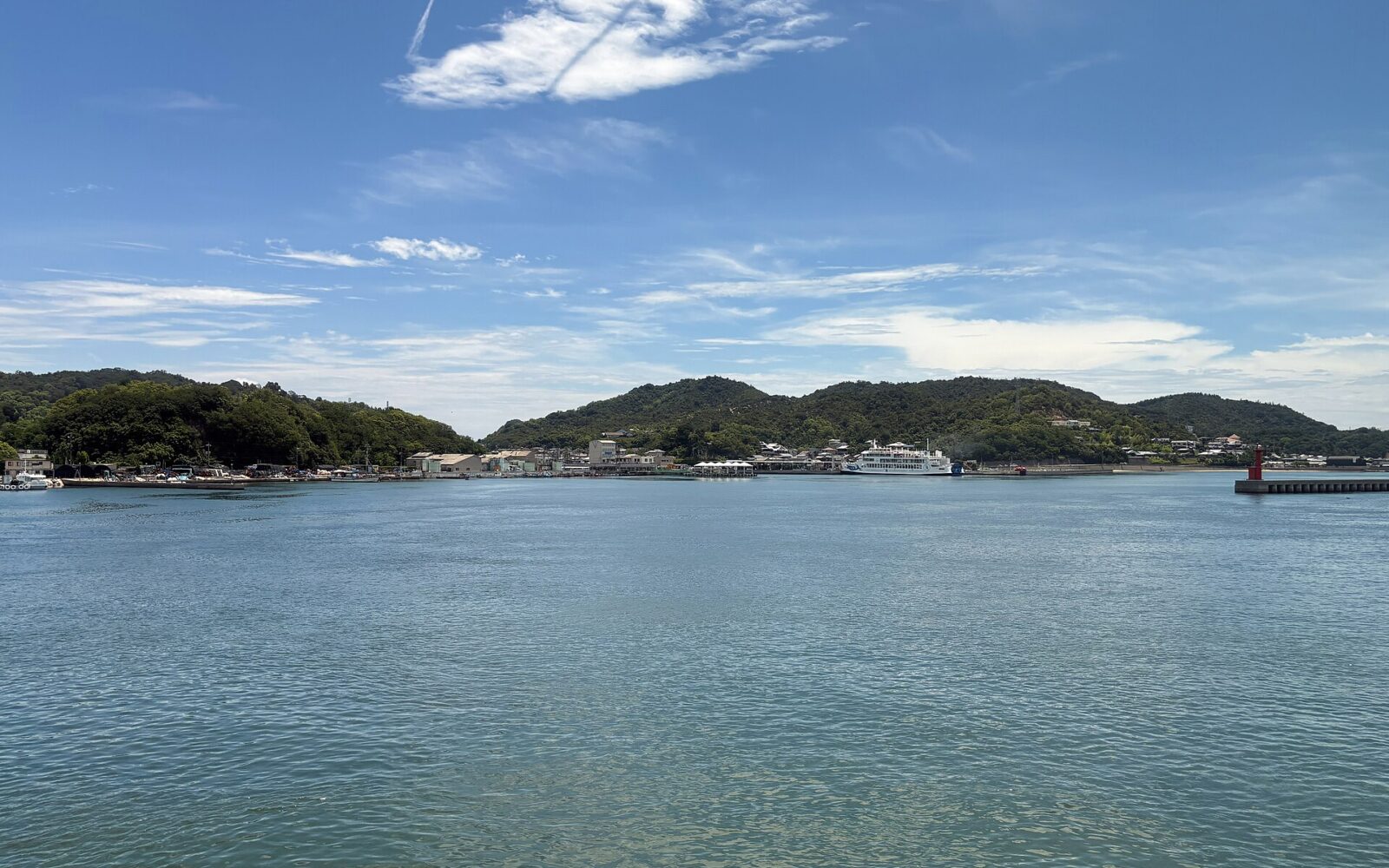
Shikoku Kisen runs both a car ferry and a smaller passenger boat from Uno to Miyanoura, Naoshima’s main port. The ferry takes about 20 minutes and the passenger boat about 15, and the adult fare is ¥370 one way (¥190 for children), or ¥730 on the late-night boat. This is the current car ferry timetable as Shikoku Kisen publishes it:
| Direction | Car ferry departures |
|---|---|
| Uno to Miyanoura | 06:10, 06:30, 07:20, 08:22, 09:22, 11:00, 12:15, 14:25, 15:30, 16:30, 17:05, 18:53, 20:25 |
| Miyanoura to Uno | 06:00, 06:40, 07:50, 08:52, 09:52, 11:10, 12:45, 14:55, 16:02, 16:35, 17:35, 19:02, 20:25 |
The passenger boat fills some of the gaps: it leaves Uno at 13:30, 22:30 and 00:35, and Miyanoura at 13:55, 21:15 and 00:15, with a late-night surcharge on the latest sailings. There is also a passenger boat from Uno to Honmura, on the east side of the island near the Art House Project, which leaves Uno at 07:25, 11:55, 16:50, 17:45 and 18:35 and Honmura at 06:45, 07:55, 13:00, 17:20 and 18:10, taking about 20 minutes.
Two warnings. Shikoku Kisen’s timetable pages don’t say which season they cover, and the Naoshima tourism association’s own list marks some sailings as suspended, so check the operator’s site the day before you go. And notice the gaps in the morning: miss the 09:22 and the next car ferry is not until 11:00, which can wreck a timed museum booking.
The alternative: via Takamatsu
From Okayama, the JR Marine Liner rapid crosses the Seto Ohashi bridge to Takamatsu, with departures at :13 and :42 past most daytime hours in JR West’s timetable. From Takamatsu, Shikoku Kisen’s ferry takes about 50 minutes to Miyanoura (about 60 coming back) for ¥680 one way, and its high-speed boat takes about 30 minutes for ¥1,590. Ferries leave Takamatsu at 08:12, 10:14, 12:40, 15:35 and 18:05 and Miyanoura at 07:00, 09:07, 11:30, 14:20 and 17:00; the high-speed boat leaves Takamatsu at 07:20, 09:20 and 20:30 and Miyanoura at 06:45, 08:40 and 19:45. The ferries and the high-speed boats leave from different piers at both ends, so check which one you need.
The Takamatsu route takes longer and costs more, but it makes a good loop on an overnight trip: arrive from Uno, leave for Takamatsu, and break the journey back to Osaka on Shikoku.
Is the JR Kansai Wide Area Pass worth it for Naoshima?
The JR Kansai Wide Area Pass costs ¥12,000 for five consecutive days (¥6,000 for children), and it covers reserved seats on the Sanyo Shinkansen between Shin-Osaka and Okayama, plus Special Rapid, Rapid and Local trains on JR West and JR Shikoku conventional lines within its area, which reaches Okayama and Takamatsu. It does not cover expressway buses, and the ferries are not part of it. Check the pass’s area map to confirm that your train to Uno is inside the covered area before you rely on it.
For Naoshima alone, the pass is unlikely to pay. Price the return Shinkansen fare between Shin-Osaka and Okayama on JR West’s site and compare it with ¥12,000; the pass makes sense only when Naoshima is one of several long trips you pack into five days. A strong combination is Naoshima plus Kurashiki and Okayama, Himeji on the way back, and a night at Kinosaki Onsen. Our guides to Kansai rail passes and the JR passes for Osaka and Kansai work through the numbers.
What to see on Naoshima
Almost everything worth seeing belongs to Benesse Art Site Naoshima, and almost all of it closes on Mondays. When a Monday is a national holiday, the sites open that day and close on the Tuesday instead. Most venues sell tickets online for slightly less than at the door, and visitors aged 15 and under get in free at most of the museums below (the bath charges a reduced fare).
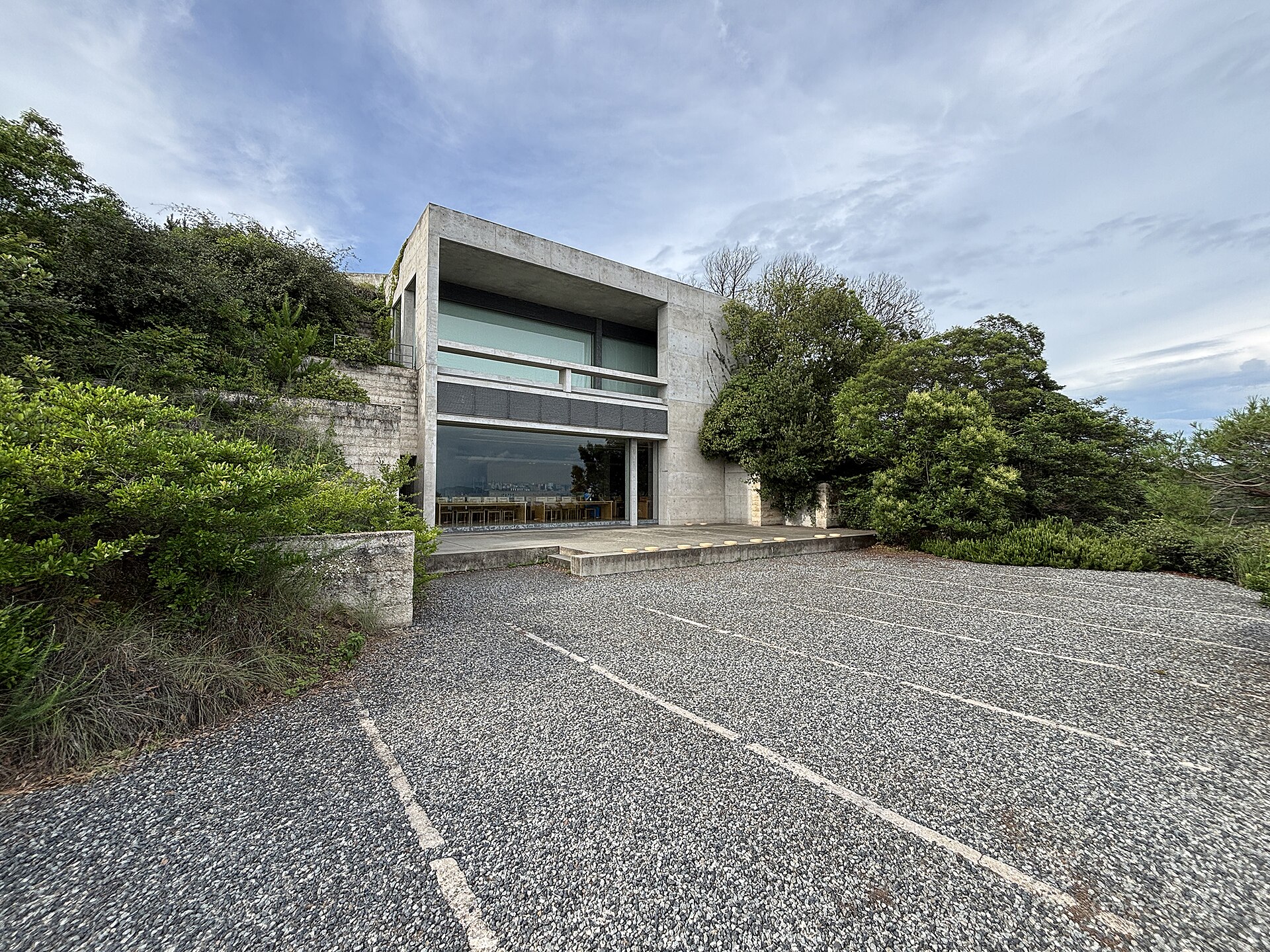
Chichu Art Museum
Chichu means “in the earth”, and the museum is just that: a building designed by Tadao Ando and set largely underground so as not to spoil the scenery of the Inland Sea. It holds permanent works by only three artists, Claude Monet, James Turrell and Walter De Maria, and each has a space designed around the work. Monet’s late Water Lilies paintings hang in a room designed around them and lit by natural daylight, and the effect is quietly overwhelming. Benesse describes the whole museum as one very large site-specific artwork, and after an hour inside it is hard to disagree.
You must book a date and time slot in advance, and if the online tickets sell out there are no sales at the door. Tickets cost ¥2,500 online or ¥2,800 on site on weekdays, and ¥2,700 online or ¥3,000 on site at weekends and on holidays. The museum opens 10:00–17:00, with last admission at 16:00, and it closes on Mondays. It is also closed for maintenance from 12 January to 19 March 2027. Book this first, then plan the rest of the day around your slot.
Benesse House Museum and the yellow Pumpkin
Benesse House is a museum and a hotel in one, an Ando building on high ground overlooking the sea, with art inside the galleries and scattered through the grounds, along the shore and into the woods. It keeps far longer hours than the other museums, 08:00–21:00 with last entry at 20:00, and it is open year-round outside its maintenance closure from 12 to 18 January 2027, when all its outdoor works are off limits too. Tickets cost ¥1,300 online or ¥1,500 on site, and hotel guests get in free.
Out on the pier below stands one of the island’s best-known works, Yayoi Kusama’s yellow-and-black Pumpkin, first installed there in 1994. After the artist’s death in 2026, Benesse Art Site published a tribute describing the Pumpkin and her Narcissus Garden, unveiled in 2022, as iconic symbols of the island’s scenery. Her second pumpkin, the Red Pumpkin, stands at Miyanoura Port, installed there by the town of Naoshima, and it greets the ferries as they come in. In busy seasons, be ready to wait your turn for a photo of either.
Lee Ufan Museum
Down in a quiet valley between Benesse House and Chichu, the Lee Ufan Museum is a collaboration between the artist Lee Ufan and Tadao Ando: a semi-underground building holding Lee’s paintings and sculptures from the 1970s onwards. It is a still, almost meditative place, and a good contrast to the crowds at the Pumpkin. It opens 10:00–17:00, with last entry at 16:30, and closes on Mondays; tickets cost ¥1,200 online or ¥1,400 on site. On 19 December 2026 it opens only from 10:00 to 13:00.
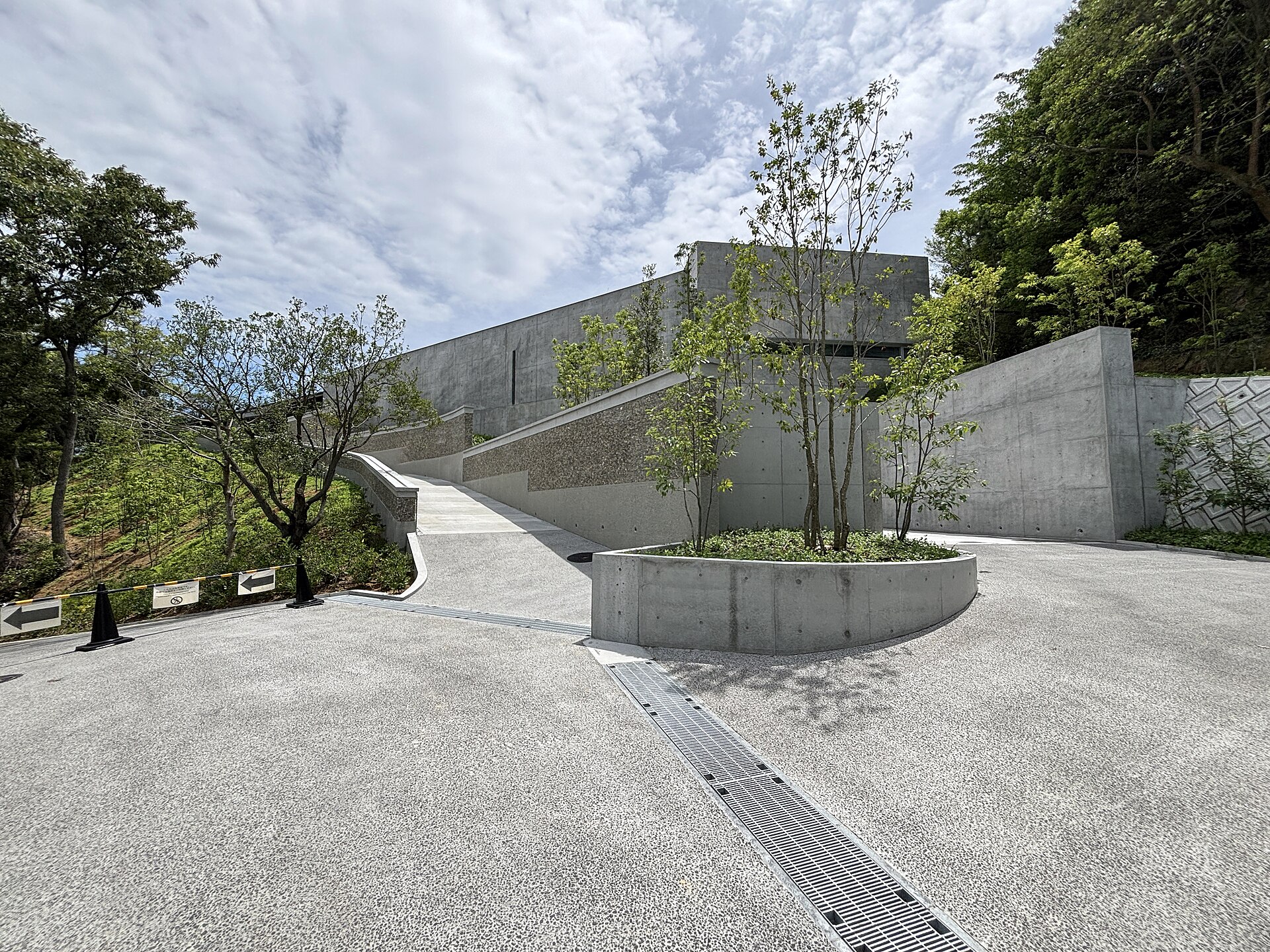
Naoshima New Museum of Art
The newest addition opened in spring 2025, and Benesse calls it Tadao Ando’s tenth building for Benesse Art Site Naoshima. It has a ground floor and two basement floors, and it collects and shows major and commissioned works by artists from across Asia, Japan included, alongside special exhibitions, talks and workshops. It opens 10:00–16:30 (last entry 16:00), closes on Mondays, and costs ¥1,500 online or ¥1,700 on site. Remember the temporary closure from 24 November to 11 December 2026; it reopens at noon on 12 December.
The Art House Project in Honmura
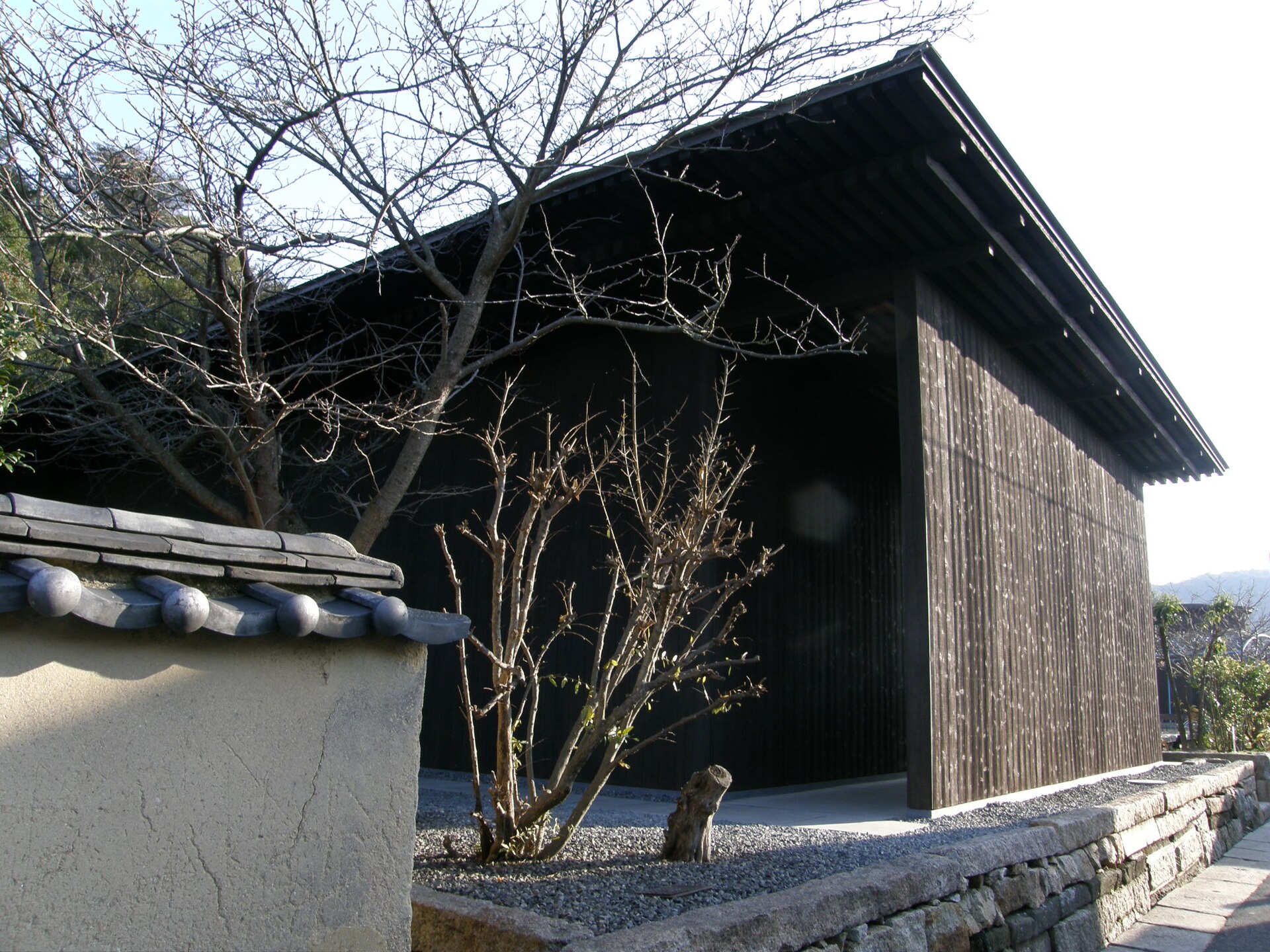
On the other side of the island, in the old village of Honmura, artists have taken over empty houses, a shrine and a temple site and turned each into a work of art. The project began in 1998 with Kadoya and now has seven sites: Kadoya, Minamidera, Kinza, Go’o Shrine, Ishibashi, Gokaisho and Haisha. The most famous is Minamidera, a new building designed by Ando to house James Turrell’s Backside of the Moon; go in, sit in the dark and give your eyes time.
Buy tickets at the Honmura Lounge & Archive, a former agricultural co-operative supermarket that doubles as an information centre, or online. A Multi-Site Ticket covers five of the houses (not Minamidera or Kinza), and single-site tickets are also sold; check the current prices on Benesse’s site. Opening times vary by house. Kadoya, Ishibashi and Haisha open 10:00–12:00 and 13:00–16:30, Go’o Shrine and Gokaisho 10:00–13:00 and 14:00–16:30, and Minamidera 10:00–16:30 with last entry at 16:05. Kinza, normally by reservation only, has been closed for maintenance since 13 October 2026, and Benesse’s notices give different reopening dates in January 2027, so check before you plan around it. In the winter maintenance period, Haisha closes from 12 January to 22 February 2027 and the other houses from 12 to 18 January.
More to fit in
- ANDO MUSEUM: an Ando-designed concrete space set inside a wooden house about a century old, with photographs, sketches and models of his work and the island’s history. Open 10:00–13:00 and 14:00–16:30 (last entry 16:00), closed Mondays, ¥600 online or ¥700 on site.
- Hiroshi Sugimoto Gallery: Time Corridors: 11:00–15:00 (last entry 14:00), ¥1,600 online or ¥1,700 on site, including tea and sweets; closed 12–18 January 2027.
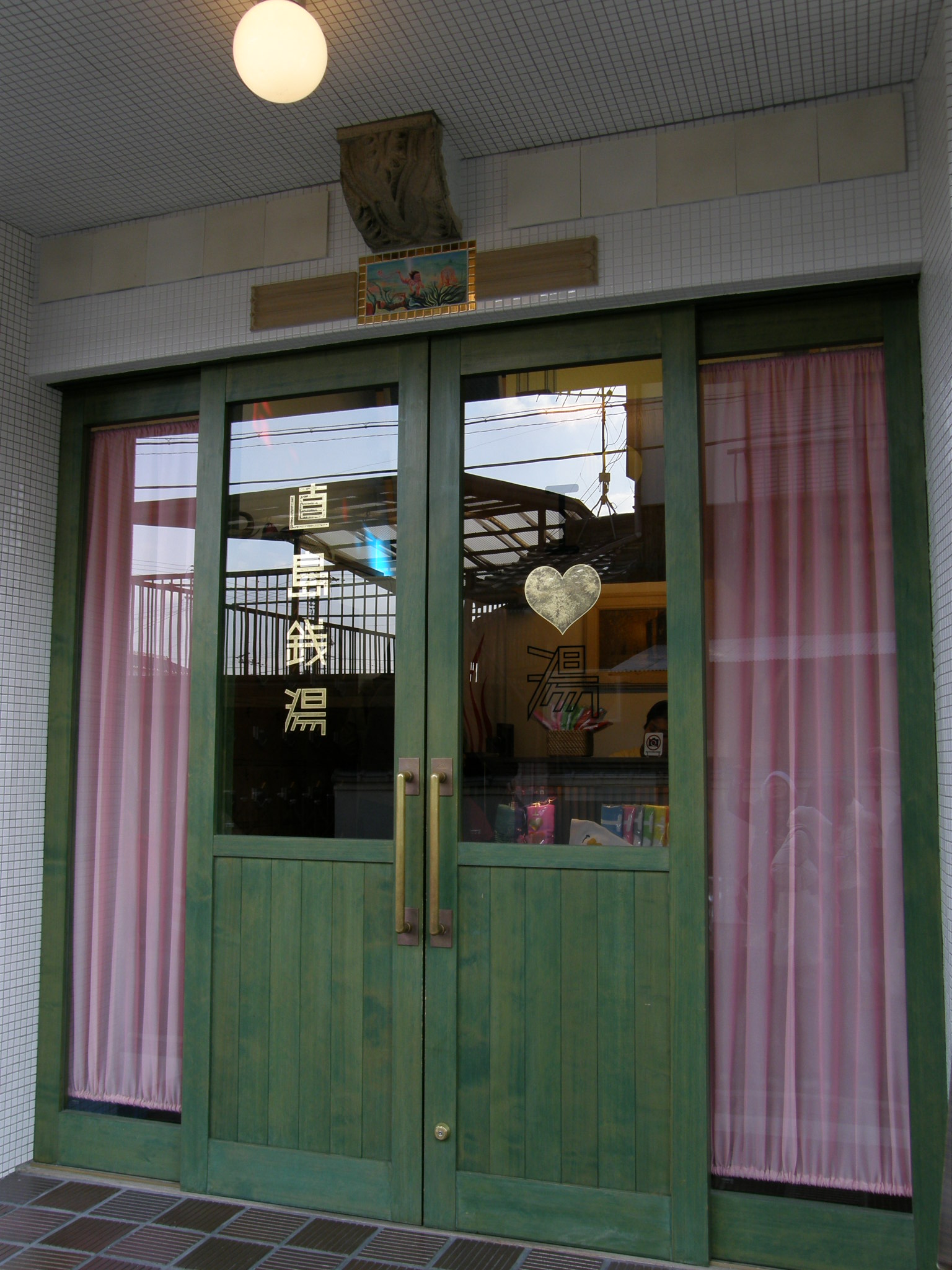
- Naoshima Bath “I♥湯”: a working public bath created by the artist Shinro Ohtake, where you can soak inside the artwork. Open 13:00–21:00, closed Mondays and occasionally for maintenance, ¥660 for adults and ¥310 for those aged 15 and under. It closes for its yearly maintenance from 12 to 25 January 2027. Soap and shampoo are provided but towels are not lent, so bring one or buy one at the counter, and follow the same etiquette as any Japanese bath; our guide to Osaka’s onsen and sento explains it.
Getting around the island
Naoshima is small, but the sights are spread out, from Miyanoura in the west to Honmura in the east and the museums on the southern hills. The Naoshima town bus runs between Miyanoura Port, Honmura and Tsutsujiso, which is the end of the line, and costs ¥100 a ride for adults (¥50 for children from five to elementary school age). From Tsutsujiso, Benesse runs a free shuttle bus to its museums, but not on Mondays. Buses can be busy when a ferry has just come in, so leave some slack in your plans.
Cycling is the other classic option, and the island’s lanes and sea views make it a pleasure on a fine day. There are rental bike shops on the road opposite Miyanoura port and one in Honmura; in busy seasons there are not many bikes to go round, so reserve ahead.
Day trip or overnight?
A day trip from Osaka is possible, but it means an early start and a long day, and it only really works if you limit yourself to Chichu plus one or two other sights. A realistic plan is to be at Okayama in time for the 07:40 direct train to Uno, which puts you at the port for the 09:22 ferry and on the island before ten. Book Chichu for late morning, take the shuttle on to Benesse House and the Pumpkin, and finish in Honmura or at the bath before heading back. Ferries from Miyanoura to Uno run into the evening, with the last car ferry at 20:25 and passenger boats at 21:15 and 00:15, but check the last train from Uno to Okayama and the last Shinkansen to Osaka before you commit to a late boat.
Staying the night changes the trip completely. You can see the museums at an unhurried pace, walk to the Pumpkin in the evening light, and soak at I♥湯 without one eye on the ferry timetable. Benesse House, the museum hotel, is the famous choice, and its guests get into Benesse House Museum free; book through Benesse Art Site’s own site. There are smaller places to stay elsewhere on the island too, and the Naoshima Tourism Association’s site is the place to start. If you leave your main luggage in the city, our guide to luggage storage in Osaka has the options.
When to go
Avoid Mondays, check the closure calendar on Benesse Art Site’s website for the exact dates you want, and book Chichu as soon as you know them. Beyond that, the calendar for the coming months looks like this:
- 24 November to 11 December 2026: the Naoshima New Museum of Art is closed; it reopens at noon on 12 December.
- 19 December 2026: the Lee Ufan Museum opens only from 10:00 to 13:00.
- 12 to 18 January 2027: the winter maintenance week, when Benesse House Museum (including its outdoor works), the Naoshima New Museum of Art, the Lee Ufan Museum, the ANDO MUSEUM, the Sugimoto Gallery and most of the Art House Project close.
- 12 to 25 January 2027: the I♥湯 bath is closed.
- 12 January to 19 March 2027: the Chichu Art Museum is closed.
- 12 January to 22 February 2027: Haisha in the Art House Project is closed.
The Setouchi Triennale, the international art festival held across the Inland Sea islands every three years, had its last edition in 2025, and Naoshima is one of its venues. Kagawa Prefecture’s call for entries sets out the 2028 festival in three sessions: 14 April to 28 May, 25 July to 20 August, and 29 September to 12 November 2028. Festival seasons bring extra art and much bigger crowds, so book ferries, beds and museum slots early if you go then.
Otherwise, spring and autumn are the most comfortable seasons for cycling and walking between sites, while summer is hot and the outdoor works bake in the sun. Late March, once Chichu reopens, is a good moment to go before the spring crowds build. If you are travelling in the colder months, our guide to Osaka in winter covers the rest of the season.
Frequently asked questions
Can you do Naoshima as a day trip from Osaka?
Yes, but it is a long day and you will only see part of the island. Start early enough to catch the 07:40 direct train from Okayama to Uno, book Chichu in advance, and check the last train back from Uno before you choose your return ferry. An overnight stay is far more relaxing.
How long does it take to get to Naoshima from Osaka?
The legs add up to most of a morning: about 50 minutes by Shinkansen to Okayama, about 50 minutes by train to Uno (longer if you change at Chayamachi), a three-minute walk to the port and a 15- to 20-minute crossing, plus the waits for connections.
Do I need to book the Chichu Art Museum?
Yes. Chichu sells tickets for a date and time slot in advance, and if the online tickets sell out there are no sales at the door. Book as soon as your dates are fixed.
Is the JR Kansai Wide Area Pass worth it for Naoshima?
Only if Naoshima is one of several long trips within five days. The pass costs ¥12,000 and covers the Shinkansen from Shin-Osaka to Okayama and JR lines within its area, but not the ferries. Compare it with the return fare to Okayama before you buy.
What day is Naoshima closed?
Monday. Nearly all of the Benesse Art Site venues close on Mondays, opening instead on a Monday that is a national holiday and closing the next day. The free Benesse shuttle bus doesn’t run on Mondays either.
Can I see the yellow Pumpkin?
Yes. Kusama’s Pumpkin stands on the pier outside Benesse House Museum and can be seen whenever the outdoor works are open; they are off limits during the maintenance closure from 12 to 18 January 2027 and may close in bad weather.
Where to go from here
Naoshima is one of the longer trips in our Kansai region guide, which shows how it fits into a longer trip through western Japan. If you are stopping in Okayama on the way, our Kurashiki and Okayama guide covers the canal town and the garden, and Hiroshima is further along the same Shinkansen line. For more art without leaving the city, see our guides to Osaka’s art galleries and museums, and for other trips out of town, our day trips from Osaka.
Museum hours, prices and closures, ferry timetables and fares, and the train times checked in November 2026 against Benesse Art Site Naoshima, Shikoku Kisen, JR West and the Naoshima Tourism Association.
Photo Credits
Miyanoura port: Miyanoura Port 2025 by Fotointheworld, CC BY 3.0, via Wikimedia Commons.
Chichu Art Museum: Chichu Art Museum exterior open space 2025 by Fotointheworld, CC BY 4.0, via Wikimedia Commons.
Naoshima New Museum of Art: Naoshima New Museum of Art 2025 by Fotointheworld, CC BY 4.0, via Wikimedia Commons.
Minamidera, Art House Project: Art house project in Naoshima, Minami-dera PC193351 by 松岡明芳, CC BY-SA 3.0, via Wikimedia Commons.
Naoshima Bath I♥湯: Naoshima Bath I♥湯 直島銭湯 Akiyoshi Matsuoka PC182188 by 松岡明芳, CC BY-SA 3.0, via Wikimedia Commons.