This article contains advertising. Our booking links are routed through a partner that adds commission tracking automatically, so if you book through one we earn a commission from the provider, at no extra cost to you. It never affects what we recommend. Affiliate disclosure
On the riverbank at Hachikenyahama, by Tenmabashi in the middle of Osaka, a marker records the spot where pilgrims from Kyoto stepped off the river boats and began walking south. For centuries this was the start of the road to Kumano: a month on foot for emperors, aristocrats and, eventually, so many ordinary people that the procession was likened to a line of ants. Nearby stood Kubotsu-oji, the first of the ninety-nine small wayside shrines that marked the way to the three great shrines of the Kii Peninsula.
Nobody walks it from Osaka now. The modern version starts two and a quarter hours down the coast by limited express and a bus ride into the hills, where the old paths through cedar and cypress forest are still in use, still lined with shrines and still ending at the same three sanctuaries. Like the Camino de Santiago, with which it is formally twinned, the Kumano Kodo is a UNESCO-listed pilgrimage route, and it is the most rewarding multi-day walk within reach of Osaka. This guide covers which route to choose, how the main one breaks down day by day, how to get there and back, where to sleep, and the honest truth about how much time it needs.
The Kumano Kodo in brief
Kumano is the old name for the deeply forested southern end of the Kii Peninsula, south of Osaka, which Japanese tradition has treated as sacred ground for well over a thousand years. Three grand shrines, the Kumano Sanzan, sit at its heart: Kumano Hongu Taisha in the mountains, Kumano Hayatama Taisha on the coast at Shingu, and Kumano Nachi Taisha beside Japan’s tallest waterfall. The Kodo, or “old roads”, are the network of pilgrimage trails that lead to them.
The pilgrimage reached its height between the eleventh and thirteenth centuries, when retired emperors made the journey from Kyoto again and again; one of them, Go-Shirakawa, is said to have done it more than thirty times. Kumano was unusual in welcoming everyone, regardless of class, sex or belief, and by the medieval period the stream of commoners was large enough that people spoke of the “ants’ pilgrimage to Kumano”. In 2004 the shrines and the routes were inscribed together, with Koyasan and the Yoshino and Omine mountains, as the World Heritage Site Sacred Sites and Pilgrimage Routes in the Kii Mountain Range.
Two symbols turn up everywhere on the trail. The oji are the small subsidiary shrines along the routes, traditionally ninety-nine of them, where pilgrims stopped to pray; many survive as a simple stone or a clearing in the trees. The Yatagarasu is a three-legged crow, the messenger of the Kumano gods, which guided the legendary first emperor through these mountains. You will see it on shrine banners, stamps and souvenirs, and, if you follow Japanese football, on the crest of the national team.
Which route?
There are five main routes. Almost everyone visiting from Osaka should walk the first.
| Route | From – to | Days | Character |
|---|---|---|---|
| Nakahechi | Takijiri (near Tanabe) – Kumano Hongu Taisha, then on to Nachi | 3 to Hongu, 5 including Nachi | The Imperial Route. Best facilities, best maintained, most villages. The classic. |
| Kohechi | Koyasan – Hongu | 3–4 | About 70 km over three passes above 1,000 m. Remote, steep, few places to sleep. For experienced hikers. |
| Iseji | Ise Jingu – Kumano, down the east coast | Many, usually done in sections | Coastal villages and stone-paved passes such as Magose-toge. Quieter. |
| Ohechi | Tanabe – Kushimoto, along the south-west coast | Several, in sections | Sea views and fishing villages. Little-walked. |
| Kiiji | Osaka and Kyoto – Tanabe | Many | The original approach from the capital. Now largely urban; of historical interest more than walking interest. |
The Nakahechi is the right choice for a first visit for three practical reasons. It is the best served by accommodation, so you can book a bed at the end of every stage; it is the best signposted, with numbered marker posts roughly every five hundred metres; and it is the easiest to reach from Osaka, because Kii-Tanabe, the gateway town, is on the main limited-express line. The rest of this guide concentrates on it.
The Kohechi deserves a word for anyone who has already visited Koyasan. It starts at the monastery town and heads straight south over the mountains to Hongu, and it is a superb, serious walk: long days, big climbs, and stretches with no shops, no vending machines and very little phone signal. Walk the Nakahechi first.
The Nakahechi, day by day
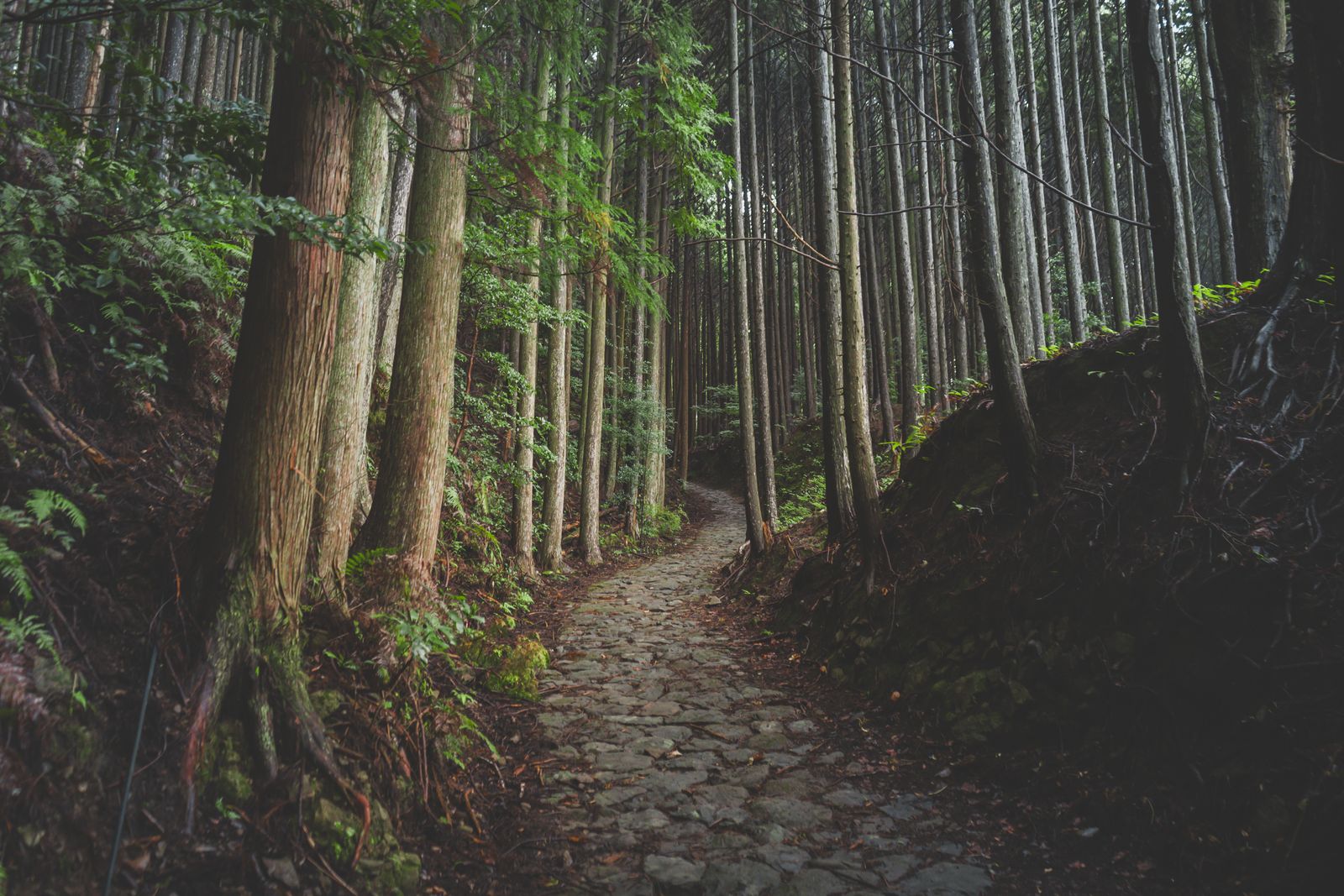
The standard walk from Takijiri to Hongu is about 38 kilometres, usually spread over three days, with around 2,240 metres of climbing in total. That sounds modest, and the distances are short, but the trail climbs and descends constantly on stone steps, roots and forest paths, and most people walk far slower here than they would on a flat path at home. The figures below are typical walking times without long stops.
Day 1: Takijiri-oji to Takahara, just under 4 km
The bus from Kii-Tanabe drops you at Takijiri-oji, one of the most important of the oji shrines and the traditional entrance to the sacred mountains. The Kumano Kodokan pilgrimage centre nearby has maps and exhibits about the route. Then the trail goes straight up. This first climb, around 430 metres of ascent on the way to Takahara, is one of the steepest of the whole route, and it includes Tainai-kuguri, a narrow gap under a boulder that pilgrims crawl through as a symbolic rebirth. It is a tight squeeze, and entirely optional.
Most people take two to three hours to reach Takahara, a hilltop village with views across layers of forested ridges. Many walkers start this stage in the early afternoon, straight off the morning train from Osaka, and spend the first night here, which is the single best piece of planning advice for the Nakahechi: it turns a rushed first day into a gentle one.
Day 2: Takahara to Chikatsuyu or Nonaka, 10–13 km
The second day is the heart of the route: a long, rolling stretch through deep forest, past a string of oji, with almost no villages until the end. Chikatsuyu, about ten kilometres from Takahara, is the main overnight stop, a riverside village with several inns. Pushing on to Nonaka, about thirteen kilometres in total and six to eight hours of walking, makes the third day easier. At Nonaka, Tsugizakura-oji stands among enormous old cedars, and just below it is Nonaka-no-Shimizu, a spring celebrated as one of the finest sources of water in Japan. Fill your bottle.
Day 3: Nonaka to Kumano Hongu Taisha, about 21 km
The last day to Hongu is the longest, around twenty-one kilometres and seven to eleven hours from Tsugizakura-oji, with close to a thousand metres of climbing and rather more of descent. It passes through some of the loveliest stretches of the route before reaching Hosshinmon-oji, the “gate of awakening”, which marks the entrance to Hongu’s sacred precinct. From there it is around seven kilometres of gentler walking, through forest and small hamlets, down to the back of Kumano Hongu Taisha.
If that sounds like too much, it is common, and entirely respectable, to take a local bus for part of it, and many walkers ride from Chikatsuyu or Nonaka to Hosshinmon-oji and walk the final section only. The walk is a pilgrimage, not an endurance test, and the oji will not mind.
Days 4 and 5: Hongu to Nachi, over the passes
The pilgrimage traditionally continues from Hongu to the other two shrines. The walking route to Nachi takes two hard days: the Kogumotori-goe to the riverside hamlet of Koguchi, and then the Ogumotori-goe, a long, steep climb and descent that is the toughest day on the whole Nakahechi, ending at Nachi Taisha. These sections are remote, with nowhere to buy food in between, and accommodation at Koguchi is limited. They are wonderful if you are fit and have booked ahead. If not, do what most visitors do and travel from Hongu to Shingu by bus, or by the traditional river boat down the Kumano-gawa in the warmer months, then on to Nachi by train and bus.
If you only have a day or two
The full Nakahechi needs at least three nights away from Osaka. If you cannot spare them, these shorter walks give a real taste of it:
- Hosshinmon-oji to Hongu Taisha, about 7 km and two to three hours. The most popular single walk on the Kumano Kodo for good reason: forest, villages, views and a proper arrival at the shrine. Take the bus out from Hongu and walk back.
- Takijiri-oji to Takahara, just under 4 km. The steep, atmospheric start of the trail, and an easy one to fit into the afternoon you arrive.
- Daimonzaka to Nachi Taisha, around half an hour to forty minutes. A stone stairway lined with huge old cedars, climbing from the bus stop to the shrine and the falls. Short, steep and beautiful, and often the only walk people do at Nachi.
A realistic two-night version from Osaka looks like this: train to Kii-Tanabe in the morning and bus to Hongu; walk Hosshinmon-oji to Hongu in the afternoon; sleep in Yunomine or Kawayu Onsen; visit Oyunohara and the shrine in the morning, then bus to Shingu and Nachi; second night in Kii-Katsuura; train back to Osaka. You will have seen two of the three shrines, walked the best short section and soaked in two hot springs.
The three grand shrines
Kumano Hongu Taisha
The spiritual centre of the pilgrimage, reached up a long flight of stone steps through the trees, with its halls roofed in thick layers of cypress bark. It is calmer and plainer than many visitors expect, which is part of its power. Until 1889 the shrine stood on Oyunohara, a sandbank at the meeting of rivers a few minutes’ walk away, when a great flood swept most of it away; the surviving buildings were moved up to the present site. Oyunohara is now marked by an enormous steel torii gate, about 34 metres tall and one of the largest in Japan, standing over open fields. Walk out to it, especially early in the morning. The Kumano Hongu Heritage Center, opposite the shrine, has exhibits and visitor information.
Kumano Hayatama Taisha
In the coastal town of Shingu, at the mouth of the Kumano-gawa, Hayatama Taisha is the most colourful of the three, painted vermilion and set beside a sacred tree said to be around a thousand years old. It is easily reached by bus from Hongu and on foot from Shingu station, and it pairs well with a visit to Kamikura-jinja, a small shrine perched on a giant boulder high above the town, reached by a famously steep stone stairway.
Kumano Nachi Taisha and Nachi Falls
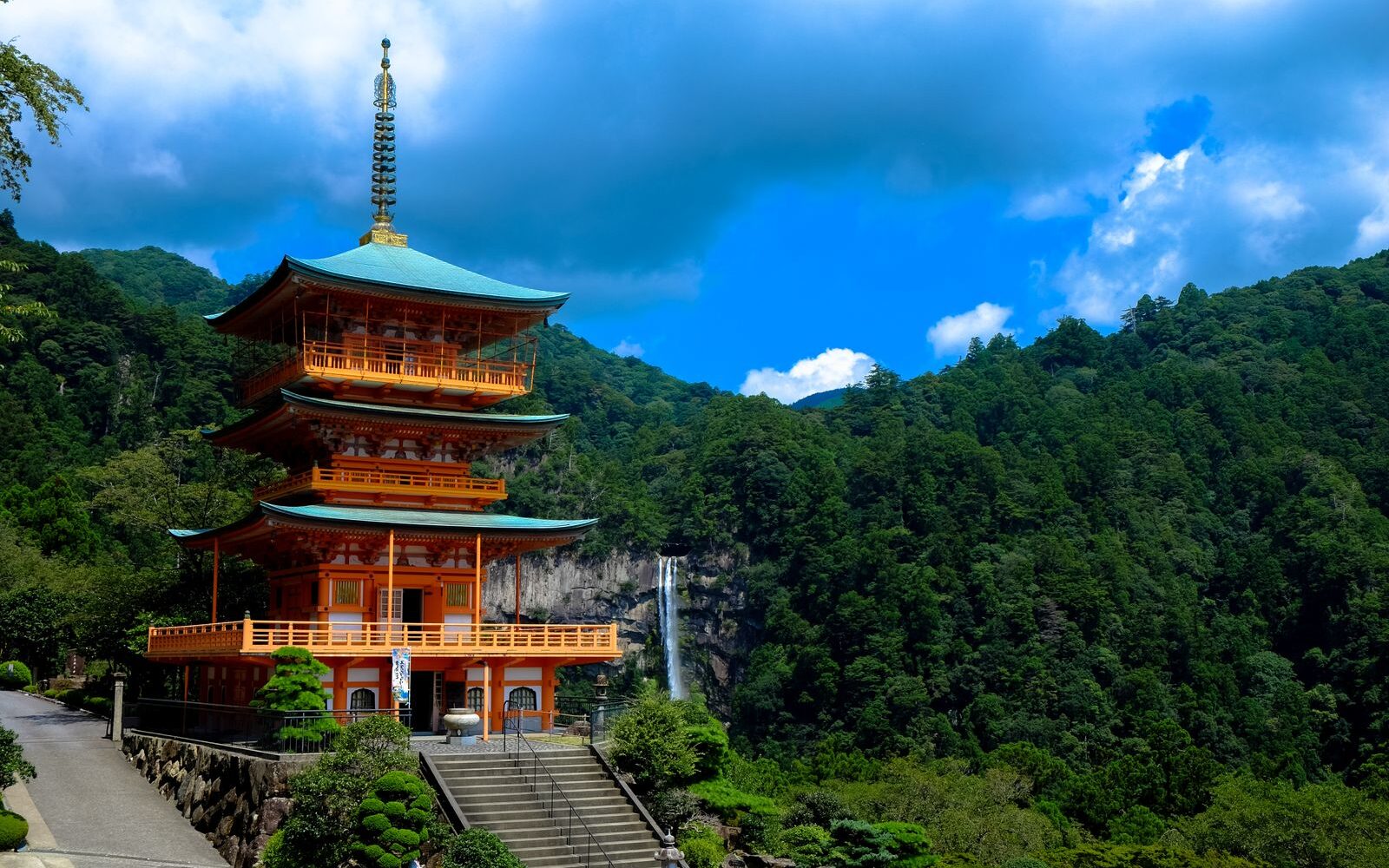
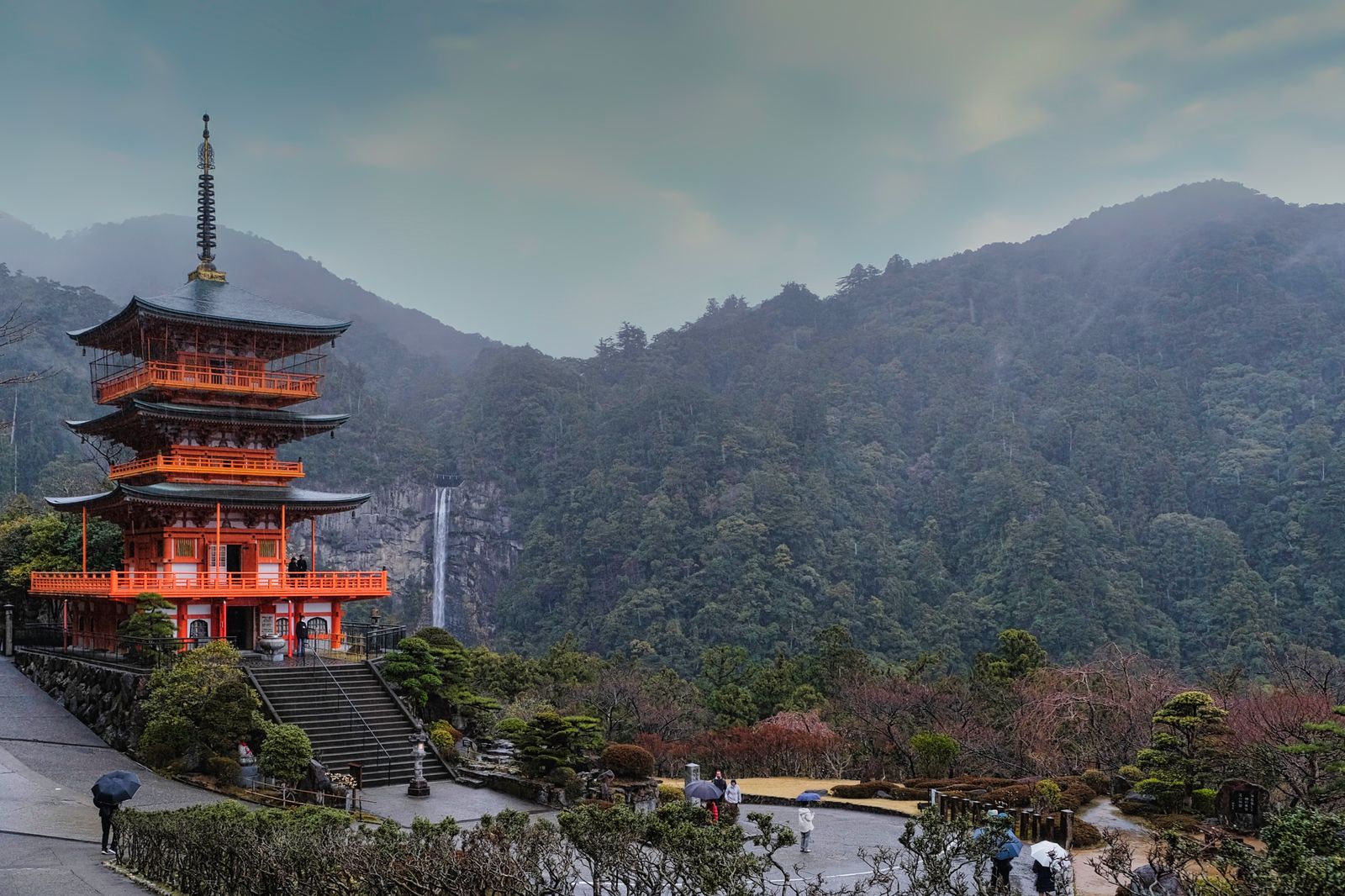
The third shrine sits high on a mountainside beside Seiganto-ji, a Buddhist temple that is the first stop on the thirty-three-temple Saigoku Kannon pilgrimage, a reminder that Shinto and Buddhism were worshipped together here for most of Kumano’s history. Below them both, Nachi Falls drops 133 metres in a single fall, the highest in Japan, and is itself worshipped as a deity. The view from beside the temple’s red three-storey pagoda, with the falls behind, is the picture that sells the whole region, and it is just as good in person. Arrive by the Daimonzaka stairway if you can.
The onsen: the reward at the end of each day
The hot springs around Hongu are not an add-on to the Kumano Kodo; for the old pilgrims they were part of it, a place to purify before visiting the shrine. Three onsen villages sit within a short bus ride of Hongu, and spending at least one night in one of them is the best decision you can make on this trip.
- Yunomine Onsen is a tiny village in a narrow valley, said to be one of the oldest hot springs in Japan. Its centrepiece is Tsuboyu, a small wooden hut over a rock pool in the stream, which is the only hot spring in the world that is part of a World Heritage Site and that you can actually bathe in. It is tiny, bathers take it in turns of about half an hour, and there is a small fee. Expect a queue at busy times.
- Kawayu Onsen is a stretch of river where hot water bubbles up through the gravel bed, so you can dig your own warm pool on the riverbank. In winter, roughly December to February, the village digs the Sennin-buro, a vast open-air bath in the river itself.
- Watarase Onsen has some of the largest outdoor baths in the area, and is the easiest choice for a long soak.
The usual bath etiquette applies everywhere: wash thoroughly before you get in, keep your towel out of the water, and check the tattoo policy before you go. Our guide to onsen and sento covers the rules, and Japanese etiquette in Osaka explains why they matter.
Getting there from Osaka
- To the Nakahechi trailhead. Take the JR limited express Kuroshio from Shin-Osaka or Tennoji to Kii-Tanabe, about two and a quarter hours from Shin-Osaka. From Kii-Tanabe station, local buses run to Takijiri-oji in about forty minutes and continue into the mountains towards Chikatsuyu and Hongu; Hongu is around two hours from Kii-Tanabe by bus.
- To Nachi and Shingu. The same Kuroshio line continues along the coast past Shirahama to Kii-Katsuura, the station for Nachi, and Shingu, about four hours from Shin-Osaka. Buses connect Kii-Katsuura with Daimonzaka and Nachi Taisha.
- Between the shrines. Buses link Hongu with Kii-Tanabe, Shingu and the onsen villages. Services are infrequent, sometimes only a few a day, so carry the timetable, plan your walking around the last bus, and carry cash, because not every bus takes IC cards.
- To the Kohechi. Nankai trains from Namba to Gokurakubashi, then the cable car up to Koyasan. Our Mount Koya guide covers the journey.
The Kuroshio leaves from Shin-Osaka’s conventional JR platforms, not the Shinkansen side, so allow a few minutes for the walk if you are changing trains there.
More in our Shin-Osaka station guide.
On passes: the JR Kansai Wide Area Pass, around ¥12,000 for five consecutive days, covers the Kuroshio and reaches the Kumano region, and it is worth pricing up against individual tickets if your trip includes the full loop from Osaka to Tanabe, round the coast to Kii-Katsuura and back. The Ise–Kumano–Wakayama Area Pass covers the wider southern loop if you plan to combine Kumano with Ise. Check whether a pass includes any of the local buses before you count on it; most do not. Our Kansai rail passes guide does the comparison, and Osaka luggage storage covers sending big bags ahead or leaving them behind in the city.
Where to sleep
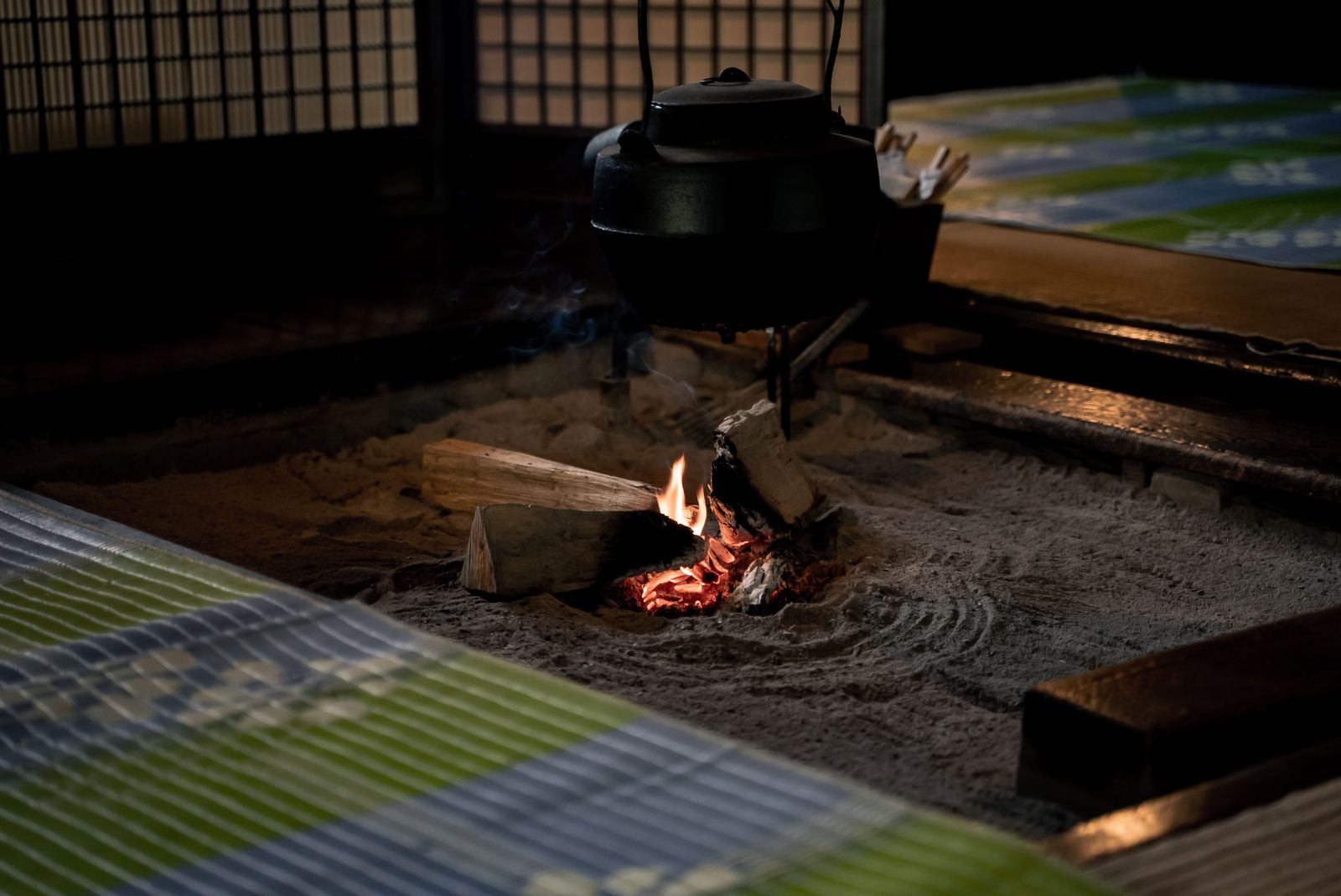
Accommodation on the Kumano Kodo is mostly small family-run minshuku guesthouses and traditional inns, with a few guesthouses and hotels in Hongu and the onsen villages. Rooms are usually Japanese-style, with futons on tatami, shared bathrooms in the cheaper places, and a set dinner and breakfast included in the price, which is quoted per person rather than per room. Dinner tends to be served early and breakfast at a fixed time, so check before you plan a late arrival. Tell your hosts in advance about any dietary needs; vegetarians and vegans should read our vegan Osaka guide for the questions to ask.
The key overnight stops are Takahara, Chikatsuyu, Nonaka and Hongu with its onsen villages, Yunomine, Kawayu and Watarase. Rooms are limited everywhere and fill months ahead for spring and autumn, so book accommodation first and then plan the walking around what you secured. The Kumano Travel reservation system, run by the Tanabe City Kumano Tourism Bureau, books many of the inns along the Nakahechi and also arranges luggage transfers between them for a fee, so you can walk with a day pack. It is the most useful single resource for the trip.
The alternative, if you would rather not move every night, is to base yourself in one of the onsen villages near Hongu for two or three nights and use buses to reach different sections of the trail each day.
When to go
- Spring, March to May, and autumn, October to November, are the best seasons: mild temperatures, clearer skies, cherry blossom in late March and early April, autumn colour in November. They are also the busiest, and accommodation books up early.
- The rainy season, roughly June into July, brings frequent heavy rain, and the Kii Peninsula is one of the rainiest corners of Japan even in a normal month. Stone steps and roots become slippery.
- Summer, July and August, is hot and very humid. Walking is possible with early starts and plenty of water, but it is hard going.
- Typhoon season, roughly August to October, can bring storms that close sections of trail and disrupt buses and trains. Landslides after big storms have closed parts of the route for long periods in the past. Check the official trail status before you go.
- Winter, December to February, is quiet, cold at night and usually dry, with occasional snow on the higher passes and short days. Kawayu’s giant river bath makes it the season for onsen.
For the weather back in Osaka at each time of year, see Osaka weather and the best time to visit Osaka.
What to pack, and other practicalities
- Footwear. Proper hiking shoes or boots with good grip. The stone paving is beautiful and treacherous when wet.
- Rain gear, whatever the forecast, and a cover for your pack.
- Water and snacks. There are long stretches without shops or vending machines, especially on day two and beyond Hongu. Carry at least a litre and a half.
- Cash. Many inns, buses and small shops do not take cards. There are few ATMs on the trail; get cash in Osaka or Tanabe. Our money and payments guide covers which ATMs take foreign cards.
- A map, and a timetable. The Nakahechi is well marked, but the official trail maps and bus timetables are worth carrying, and phone signal can be patchy in the valleys.
- Daylight. Start early and aim to finish by mid-afternoon. It gets dark early under the trees, especially in autumn and winter.
- Wildlife. The Kii mountains have a small population of black bears. Encounters on the trail are rare, and many walkers carry a bell. Stay on the path.
- Stamps. Many oji and the shrines have stamps for your pilgrimage book. Collecting them is part of the fun, and walkers who have also completed the Camino de Santiago can register as a “Dual Pilgrim” at the tourist offices in Tanabe and Hongu.
Is the Kumano Kodo worth it from Osaka?
Yes, if you can give it the time. It is the most memorable thing within reach of Osaka for anyone who likes walking: ancient, beautiful, quiet, and very different from the cities. But it is not a day trip, and trying to treat it as one is the most common mistake people make. Kii-Tanabe is more than two hours each way by limited express before the bus, Hongu is two hours further by bus, and the buses are few. A day trip gives you six hours of travel for three hours of trail.
The minimum that makes sense is two nights for the short version, three to four for the Nakahechi to Hongu, and five or more with Nachi. If you have only a week in Japan and have not seen Kyoto, it is probably not your trip this time. If you have ten days or more, or you have been to Japan before and want something completely different from the cities, it may be the best part of your trip. For other overnight escapes from the city, our Kansai region guide compares Kumano with Koyasan, Kinosaki and Ise.
Sample plans from Osaka
Three nights: the classic Nakahechi
- Day 1. Morning Kuroshio to Kii-Tanabe, bus to Takijiri. Walk to Takahara. Night in Takahara.
- Day 2. Takahara to Chikatsuyu or Nonaka. Night there.
- Day 3. On to Hosshinmon-oji, walking or partly by bus, then down to Hongu Taisha and Oyunohara. Night in Yunomine or Kawayu Onsen.
- Day 4. Morning bath, then bus to Kii-Tanabe and the train back to Osaka, or on to Shingu and Nachi if you have another night.
Five nights: the full pilgrimage
As above, then two days over the Kogumotori-goe and Ogumotori-goe to Nachi, a night in Kii-Katsuura, and the long train ride back up the coast past Shirahama. This is the version that visits all three grand shrines on foot, and it needs good fitness and accommodation booked months ahead.
Two nights: the taste
The short version described above: Hosshinmon-oji to Hongu on day one, onsen night, Hongu, Shingu and Nachi on day two, a second night on the coast, and back to Osaka on day three.
Kumano Kodo FAQ
How long is the Kumano Kodo?
It depends on the route. The Nakahechi from Takijiri to Hongu is about 38 km and usually takes three days; continuing to Nachi adds two more hard days. The Kohechi from Koyasan is about 70 km over three to four days. The short Hosshinmon-oji to Hongu section is about 7 km.
Can I do the Kumano Kodo as a day trip from Osaka?
Not sensibly. Travel alone takes three hours or more each way to the start of the trail, and buses are infrequent. Plan at least two nights for a short version and three or four for the classic walk.
How do I get to the Kumano Kodo from Osaka?
Take the JR limited express Kuroshio from Shin-Osaka or Tennoji to Kii-Tanabe, about two and a quarter hours from Shin-Osaka, then a local bus to Takijiri-oji, about forty minutes, for the start of the Nakahechi. For Nachi, stay on the train to Kii-Katsuura.
Do I need a guide?
No. The Nakahechi is well marked, with numbered posts, and most visitors walk it independently using official maps. Guided and self-guided packages, with accommodation and luggage transfer arranged, are an option if you would rather not plan it yourself.
When is the best time to walk the Kumano Kodo?
Spring, from March to May, and autumn, from October to November. Avoid the rainy season in June and July if you can, and keep an eye on typhoon forecasts from August to October.
Is the JR Kansai Wide Area Pass worth it for the Kumano Kodo?
It can be, if your trip includes the full loop from Osaka down to Tanabe, round the coast to Kii-Katsuura and back, especially combined with another long JR trip within the same five days. Price the individual tickets first. No JR pass covers the local buses.
Where to go next
The Kumano Kodo is the most ambitious trip in our Kansai region guide, which sets it alongside the region’s other overnight escapes. If you want a taste of sacred Kii mountain culture with less walking, start with Koyasan, where the Kohechi begins and where you can sleep in a temple. For shorter outings, see our full list of day trips from Osaka, and for the history of the pilgrims’ starting point in the city, our Osaka temples and shrines guide.
Back in the city, the Osaka itinerary hub shows how to fit a few days of walking into a longer trip, and the ryokan guide has traditional stays for the nights either side.